

metro
Nigeria’s Mall Retail Falters as Shoprite Completes Shutdown After 20 Years

Nigeria’s Mall Retail Falters as Shoprite Completes Shutdown After 20 Years
Nigeria’s bustling mall economy, estimated to be worth about ₦2.5 trillion, has taken a significant hit with the final shutdown of South Africa‑origin retail giant Shoprite across the country after more than 20 years of operations. The supermarket chain — once a key anchor tenant in major retail complexes — has now closed all its outlets, triggering losses across the broader retail ecosystem.
Retail industry analysts estimate that approximately ₦1.4 trillion in economic activity may have been lost with Shoprite’s departure, as hundreds of ancillary businesses that depended on the supermarket’s presence are now experiencing sharp revenue declines or closure. Many suppliers, workers, and small business owners who thrived on Shoprite‑driven foot traffic are struggling to stay afloat amid the fallout.
Impact on Jobs, Supply Chains and Small Businesses
Vanguard’s investigations reveal the shutdown has directly affected thousands of staff and suppliers. Shoprite served not just as a retail outlet for groceries and household goods but also as a bulk purchaser for local producers, including food manufacturers, beverage suppliers and distributors of Nigerian‑made products. With its exit, these suppliers have lost a major sales channel, forcing some to scale down or entirely halt operations.
Inside many malls where Shoprite operated — such as Festac Mall and Apapa Mall in Lagos, Dugbe and Ring Road malls in Ibadan, and various complexes in Abuja and Akure — smaller stores that thrived on customer spill‑over traffic have seen business plunge. Boutique owners, eateries, pharmacies, phone accessories shops, and cinema outlets say sales have dropped significantly since Shoprite’s shelves went empty and doors closed permanently.
READ ALSO:
- Iran Launches ‘Massive’ Drone Strikes on Israel, US Bases
- Petrol Prices Reach ₦1,080 Per Litre in Lagos as Global Oil Prices Soar
- Daniel Bwala Faces Backlash After Al Jazeera Interview With Mehdi Hasan
A fashion retailer at Apapa Mall told our correspondent that her sales dropped sharply after Shoprite shut down in mid‑2025, with customer flow dwindling from consistent daily shoppers to sporadic walk‑ins. “People came to Shoprite for groceries and then checked other shops. Now only a few customers show up,” she said.
The Downward Spiral: From Crowded Shelves to Empty Aisles
Shoprite first entered Nigeria in 2005, rapidly expanding to about 25 outlets across 13 states due to strong consumer adoption. The brand transformed grocery and household shopping for many Nigerians and became a cornerstone of the mall retail culture.
However, a combination of long‑term financial pressures — including rising foreign exchange costs, logistics challenges, import tariff increases, post‑pandemic disruptions, and persistent inventory shortages — gradually weakened the business. In 2021, Shoprite Holdings Limited of South Africa exited direct ownership, selling the Nigerian operations to Retail Supermarkets Nigeria Limited (RSNL), owned in part by Ketron Investment Limited and Persianas Investment.
Under NESNL leadership, led by entrepreneur Toby Amusan, optimism briefly returned as festive seasons saw renewed activity, and families once again flocked to Shoprite stores. Yet by 2024, customers began noticing empty shelves at several locations, and by late 2025, multiple outlets in Lagos and other cities had shut their doors entirely.
In Kano, the Ado Bayero Mall Shoprite — once a lively retail hub — closed as early as January 2024. Residents said the mall, once buzzing with activity, now recorded low foot traffic with many stalls empty or operating at minimal capacity.
Economy, Employment and Community Voices
Across Akure in Ondo State, the shuttered Shoprite outlet on Igbatoro Road now stands under lock and key, with empty aisles and deserted premises. Former staff, such as sales attendant Fatima Ogundari, described how the closure left employees stranded with few alternatives. “I started a POS business just to survive. Many of my colleagues are still searching for new means of livelihood,” she said.
READ ALSO:
- Army rescues 12 abducted residents, arrests two suspects in Enugu
- Troops kill bandit leader Kachallah, 44 others as three soldiers die in Katsina
- Recapitalisation: 30 Nigerian banks meet CBN minimum capital requirement
Local retailers also say their supply chains have been disrupted, forcing them to pivot to other customers or reduce stock. A boutique sales representative said: “Shoprite used to buy in bulk from suppliers, helping many businesses grow. Now we’re stuck with unsold products and fewer outlets for distribution.”
At Festac Mall, while unrelated attractions like the hotel and club still draw visitors, many smaller shops have scaled back operations due to a steep drop in customers. A sports shoe seller explained sales that once reached over ₦2.5 million weekly now barely pull ₦1 million, making it difficult to cover rent and utilities.
Ibadan and Abuja Feel the Pain Too
In Ibadan, the closure of Shoprite outlets at Dugbe and Ring Road turned once‑lively malls into near‑quiet spaces. Shop shelves that once offered competitive pricing and weekly deals now sit mostly empty, with reduced foot traffic affecting shops and suppliers alike. Former staff report layoffs and modest severance arrangements that did little to offset job losses.
One supervisor at the Ring Road outlet described how rumours of irregularities circulated before the closure, but most employees were unaware of the full reasons. A local food supplier said the supermarket’s exit affected his turnover, forcing him to target smaller retailers with lower demand.
In Abuja, Shoprite’s closure at Silverbird Mall since September 2025 left a large retail void. Mall managers say business hasn’t collapsed entirely, but the absence of a major anchor tenant has altered customer flow patterns, reducing overall visits. Some complexes have begun attracting new tenants. In Novare Central, for example, SPAR is poised to take over the former Shoprite space, offering cautious optimism that foot traffic and sales might recover once operations fully commence.
Warri & Kaduna: Varying Experiences
In Warri, Delta State, the Shoprite outlet at Effurun roundabout remains open but struggling. Customers and ancillary vendors report slow sales due to ongoing mall reconstruction projects and reduced attraction from surrounding shops. Some independent supermarkets have opened around the Shoprite building, but local operators complain of weak patronage and lower demand for goods that Shoprite previously drew into the area.
In Kaduna, the Shoprite outlet on Independence Way stands completely shut, with no staff or customers in sight — a sign that the shutdown was part of a nationwide winding‑down strategy rather than isolated store closures.
’Not an Exit, But a Reset’ — RSNL’s Position
While many Nigerians view the shutdown as a final departure, Retail Supermarkets Nigeria Limited (RSNL) insists the process represents a “comprehensive business model reset” aimed at aligning operations with current economic realities. Chief Strategy Officer Bunmi Cynthia Adeleye said the reset is intended for long‑term sustainability amid macroeconomic headwinds, but did not provide a clear timeline for reopening or large‑scale return.
For now, questions linger over when or if Shoprite outlets will resume large‑scale operations in Nigeria. Until then, the shutdown continues to weigh heavily on the mall economy, consumer confidence, and the interconnected web of small businesses that once thrived in Shoprite’s shadow.
Nigeria’s Mall Retail Falters as Shoprite Completes Shutdown After 20 Years













metro
Jailbreak Saga: Guard Bagged 2.5 Years for Helping 10 Inmates Escape Through Toilet Hole
Jailbreak Saga: Guard Bagged 2.5 Years for Helping 10 Inmates Escape Through Toilet Hole
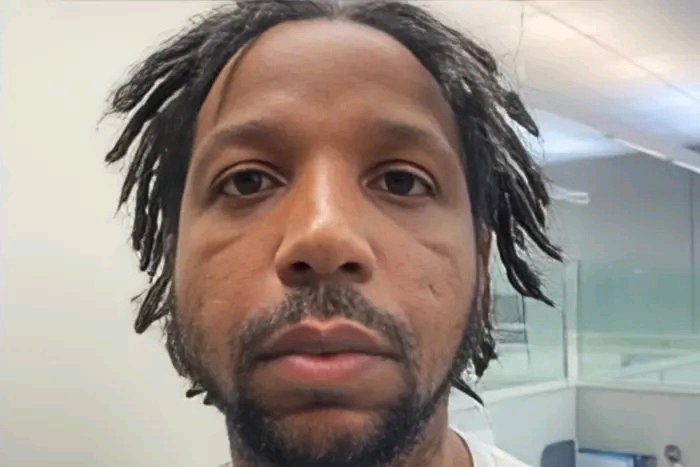
A former jail worker in New Orleans, Sterling Williams, has been sentenced to two and a half years in prison for his role in a daring jailbreak that saw ten inmates escape through a hole behind a toilet.
The shocking incident, which occurred in May 2025, left authorities red-faced after the fleeing inmates left behind a mocking note that simply read: “Too Easy.”
According to reports, Williams, who was entrusted with supervising the facility, compromised security protocols to facilitate the escape. Investigators revealed that the inmates managed to breach the wall behind a toilet fixture, crawling to freedom through the opening.
The jailbreak sparked a massive manhunt across the city, though all ten inmates were eventually recaptured. Williams’ sentencing brings a close to a case that exposed significant security lapses within the Orleans Parish facility.
Prosecutors argued that Williams abused his position of trust, endangering public safety. The court agreed, handing down the 30-month sentence this week.
The Orleans Parish Sheriff’s Office has since stated that stricter security measures and structural inspections have been implemented to prevent future breaches.
Jailbreak Saga: Guard Bagged 2.5 Years for Helping 10 Inmates Escape Through Toilet Hole
metro
Five Arraigned Over Kidnapping of 20 Prospective NYSC Members in Imo

Five Arraigned Over Kidnapping of 20 Prospective NYSC Members in Imo
The Department of State Services (DSS) has arraigned five suspects before the Imo State High Court over the kidnapping of 20 prospective National Youth Service Corps (NYSC) members and four other individuals in two separate abduction cases that jolted the nation earlier this month.
The three prime suspects linked to the corps members’ abduction—Usman Aliyu (25), also known as Chonge; Babangida Aliyu (21); and Mohammed Ali (23), alias Smallie Pepper—were brought before the Oru Judicial Division of the High Court in Mgbidi on Tuesday. They face charges of conspiracy, hostage-taking, and unlawful possession of firearms. According to the charge sheet presented by the DSS, the trio and other suspects still at large allegedly abducted the prospective corps members on October 1, 2026, along the Owerri–Mgbidi–Onitsha Expressway. The victims were travelling from Ibadan, Oyo State, to their orientation camps in Abia and Akwa Ibom states when their vehicles were intercepted.

Prosecutors told the court that the defendants demanded a staggering ₦950 million ransom for the release of the 20 captives. It was further alleged that the suspects actually collected ₦48 million and an undisclosed amount in United States dollars before the victims regained their freedom. The DSS also accused the defendants of unlawfully possessing three AK-47 rifles, four magazines, a pistol, and 81 rounds of live ammunition. All five defendants pleaded not guilty to the charges when they were read to them. Following their plea, the trial judge, Justice Emeka Orafu, ordered that they be remanded at the DSS facility pending further proceedings. The case has been adjourned for hearing on various dates in late October.
In a related development, two other suspects—Aminu Haliru (27) and Tange Ibrahim (20), also known as Jijji—were arraigned in connection with the abduction of four individuals around Owerri and Mgbidi on October 4. The prosecution alleged that the pair and others at large collected ₦8 million for the release of those victims. They were also charged with illegal possession of an AK-47 rifle and a pump-action gun, with ₦1.8 million reportedly recovered from them.
The abduction of the 20 prospective corps members occurred in the early hours of October 1 along the busy Owerri-Onitsha road near Umunoha in the Mbaitoli Local Government Area of Imo State. The incident sparked widespread outrage and concern over the safety of young Nigerians travelling for national service. Following the abduction, security agencies launched a coordinated search-and-rescue operation. The Imo State Police Command had disclosed that its operatives located the kidnappers’ hideout using drone surveillance but faced difficulties accessing the camp after discovering it had been planted with improvised explosive devices (IEDs). Additional equipment, including bulldozers and armoured personnel carriers, was subsequently deployed. The victims were eventually released on October 7, exactly one week after their abduction. They were subsequently taken to the DSS hospital in Owerri for medical attention and debriefing.
While security agencies maintained that the victims were rescued through a joint operation involving the DSS, military, and police, the circumstances of their release have remained a subject of controversy. Some parents of the rescued corps members had earlier told journalists that they paid millions of naira in ransom to secure their children’s freedom, contradicting the official rescue narrative. Reports indicated that some families paid between ₦3 million and ₦6 million, with payments allegedly made in Ibadan and subsequently converted to dollars for delivery in Imo State. The Human Rights Writers Association of Nigeria (HURIWA) had called for transparency, questioning whether the victims were genuinely rescued by security forces or released after ransom negotiations. The Imo State Government, however, distanced itself from the ransom claims. The arraignment of the suspects marks a significant step in the investigation, as security agencies continue efforts to apprehend other members of the kidnapping gang who reportedly fled with gunshot wounds during the intelligence-led operations that led to the arrests in Port Harcourt and Aba between October 10 and 14.
Five Arraigned Over Kidnapping of 20 Prospective NYSC Members in Imo
metro
Ebola: Ogun Tracks 111 Travellers as FAAN Tightens Airport Surveillance
Ebola: Ogun Tracks 111 Travellers as FAAN Tightens Airport Surveillance
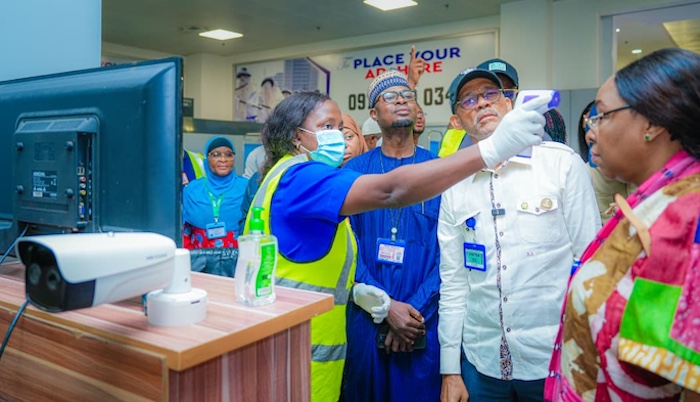
The Ogun State Government has stepped up surveillance and emergency preparedness, while the Federal Airports Authority of Nigeria has intensified health monitoring across airport operations following the confirmation of an Ebola Virus Disease case in the Federal Capital Territory.
Ogun said it had identified and monitored 111 persons of interest linked to travel from high-risk countries, while assuring residents that no Ebola case had been recorded in the state as of October 21, 2026.
The parallel measures by the state government and FAAN underscore growing efforts to strengthen surveillance, improve early detection and prevent the spread of the potentially deadly disease following the reported case in Abuja.
Ogun State Commissioner for Health, Dr Tomi Coker, disclosed the state’s response in a statement on Wednesday, saying the government had been on heightened alert since Ebola was declared in the Democratic Republic of the Congo in March 2026.
According to her, the 111 persons identified for monitoring had completed the required surveillance period and were subsequently discharged from follow-up.
Coker said the state’s Public Health Emergency Operations Centre was coordinating preparedness and response activities to ensure the prompt identification, reporting and management of suspected cases.
She added that the government had strengthened the capacity of Disease Surveillance and Notification Officers, port health officers, health educators, clinicians and community informants through training on appropriate response procedures.
Relevant national guidelines and protocols had also been adapted and deployed, while public sensitisation and infection prevention and control measures in healthcare facilities were being intensified.
The commissioner urged residents to remain vigilant, observe preventive measures and avoid panic or spreading unverified information.
She explained that Ebola is a serious viral disease capable of causing severe illness and death, with early symptoms that may resemble those of other common illnesses.
The symptoms include fever, severe weakness, fatigue, headache, muscle pain, sore throat, vomiting, diarrhoea and abdominal pain. Unexplained bleeding or bruising may also occur in some cases.
According to Coker, symptoms can develop between two and 21 days after exposure. However, she cautioned that experiencing these symptoms does not automatically mean a person has Ebola, stressing the importance of prompt professional medical assessment, particularly where there has been possible exposure or travel to a high-risk area.
She said the virus spreads through direct contact with the blood or body fluids of an infected person who has developed symptoms, the body of someone who has died from the disease, or materials contaminated with such fluids.
Meanwhile, FAAN said it had heightened health surveillance across airport operations in response to the confirmed case in Abuja.
In a statement issued on Tuesday by its Director of Public Affairs and Consumer Protection, Henry Agbebire, the authority said it was working with the Nigeria Centre for Disease Control and Prevention, Port Health Services, the Nigerian Civil Aviation Authority and other relevant agencies to support ongoing containment efforts.
FAAN noted that the early identification of the case and the commencement of contact tracing highlighted the importance of effective surveillance, established public health protocols and inter-agency collaboration in responding to potential health threats.
The authority said it would maintain heightened vigilance across airport operations and continue to coordinate with public health authorities to implement additional guidance and measures considered necessary to protect passengers, airport personnel and the wider public.
It also urged passengers, airport users, airlines and other stakeholders to remain calm, vigilant and cooperative with health officials.
Both the Ogun government and FAAN advised the public to rely on verified information from official health authorities and avoid circulating unconfirmed reports.
The developments highlight the importance of coordinated surveillance, timely reporting and public cooperation in containing potential outbreaks, particularly at points of entry and in communities with links to international travel.
-

 metro20 hours ago
Army Major, Soldiers Killed in ISWAP Ambush in Yobe State
-

 News2 days ago
FG Challenges World Bank’s 124% Debt-to-Revenue Warning, Cites Rising Income
-

 metro2 days ago
NAFDAC Probes Corps Member’s Death at Enugu Camp as Fake Drug Claims Emerge
-

 Politics2 days ago
Buhari Feared Tinubu Presidency, Resisted Pressure to Back Him – Baba-Ahmed Claims
-

 metro2 days ago
Ogun House Fire Horror: Husband Arrested After Wife Dies Following Domestic Dispute
-

 News2 days ago
NLC, Falana Mobilise Nigerians Against Petrol Price Hike, Mount Pressure on Tinubu Govt
-

 metro19 hours ago
Breaking: Afenifere Leader Pa Fasoranti Dies at 100
-

 Entertainment2 days ago
Nollywood Mourns as Actress, Beauty Queen Tenia Abraham Dies at 32