

metro
Sharia Demand for Oyo Abductees’ Release: Kidnappers Do Not Speak for Islam — Muslim Community
Sharia Demand for Oyo Abductees’ Release: Kidnappers Do Not Speak for Islam — Muslim Community
The Muslim Community of Oyo State has strongly condemned the recent Sharia-related demands made by abductors holding pupils and teachers hostage in Oriire Local Government Area, declaring that terrorists do not represent Islamic values and cannot speak for Muslims.
The leadership of the community issued this statement on Friday, June 5, 2026, following recent criminal acts where kidnappers attempted to justify their actions using religious rhetoric. The community clarified that Islam strictly forbids kidnapping, terrorism, and the extortion of innocent citizens, emphasizing that legitimate Sharia advocates for justice, peace, and the protection of human life—principles that directly contradict the violent actions of criminals.
Newstrends reports that no fewer than 39 students and seven teachers were abducted when terrorists attacked three schools in Ahoro-Esiele and Yawota communities in Oriire Local Government Area of Oyo State on May 15, 2026. Two of the abducted victims have been killed, while the remaining captives—including toddlers as young as two years old—remain in captivity, exposed to harsh conditions in the forests. The attack marked one of the first mass school abductions of its scale in the South-West, a region previously considered relatively insulated from the mass kidnapping crises that have plagued Northern Nigeria. The assailants reportedly stormed Baptist Nursery and Primary School, Yawota; Community Grammar School, Esiele; and L.A. Primary School, Esiele, in a highly coordinated operation.
According to reports, the kidnappers have expanded their demands beyond financial ransom to include ideological and political conditions. The group is reportedly demanding ₦1 billion to be paid into a bank account in the Republic of Benin, two Hilux vehicles, the release of suspected accomplices held in Oyo and Ibadan prisons, and the implementation of Sharia law in Oyo State. The development was reportedly attributed to the Speaker of the Oyo State House of Assembly, who disclosed that the abductors had moved beyond financial demands to include ideological and political conditions. The Oyo State House of Assembly has since rejected negotiations with the abductors, insisting on intensified rescue operations instead.
Reacting to developments that have trailed the government’s efforts to secure the release of the abductees, the Muslim community in Oyo, in a statement signed by its chairman, Alhaji Ishaq Kunle Sanni, and secretary-general, Alhaji Murisiku Abidemi Siyanbade, issued a clear condemnation of the abductors’ demands. The group stated: “In the Holy Qur’an, Chapter 3, verse 32, Almighty Allah says: ‘Therefore, We have ordained that he who slays a soul for spreading mischief on earth shall be as if he had slain all mankind, and he who saves a life shall be as if he had given life to all mankind. And indeed, again and again, did our messengers come to them with clear directives, yet many of them continue to commit excesses on earth.'” The leadership called on all Muslims and residents of Oyo State to remain vigilant, report suspicious activities, and reject any attempts to distort the peaceful teachings of Islam.
READ ALSO:
- Kidnapping in South-West Is a Business, Not a Religious War — Ex-Minister Olanrewaju
- Osun 2026: Accord Party Chairman Shot in Osogbo as Police Begin Investigation
- FG Considers Tougher Age Limits for Social Media Use by Children
The League of Imams and Alfas in Yorubaland, the foremost Islamic umbrella body representing the Muslim Ummah across the South-West, has also strongly condemned the abduction and dismissed any association between the kidnappers’ demands and authentic Islamic teachings. In a statement signed by top Islamic leaders including the Chief Imam of Ekiti State, Sheikh Jamiu Kewulere; the Chief Imam of Oyo State, Sheikh AbdulGaniy Agbotomokekere; and the Grand Mufti of Yorubaland, Sheikh AbdulRasaq AbdulAzeez Ishola, the group declared that such criminal acts are unacceptable and contrary to the teachings of Islam. “Such criminal acts against innocent children, educators, and law-abiding citizens are unacceptable, condemnable, and contrary to the teachings of Islam,” the League stated. “Islam places great value on the sanctity of human life, security, and social harmony.” Quoting from the Qur’an, the clerics referenced Surah Al-Ma’idah 5:32: “Whoever kills a soul unless for a soul or for corruption [done] in the land – it is as if he had slain mankind entirely. And whoever saves one – it is as if he had saved mankind entirely.” They also cited the Hadith of Prophet Muhammad (SAW): “A Muslim is the one from whose tongue and hand people are safe.”
The Muslim community, under the aegis of the Chief Imam of Ibadanland and Grand Chief Imam of Oyo State, Sheikh Al-Imam Abdul-Ganiyy Abubakar Agbotomokekere, has announced a special prayer for the speedy and safe return of abductees from schools in Oriire Local Government Area. The prayer is scheduled for Sunday at Yidi Agodi Praying Ground, Ibadan, and will be led by the Chief Imam himself. “We implore all Muslims in Oyo State to join us at the prayer session,” the statement added. This follows previous spiritual interventions by the League of Imams and Alfas, who have commenced special prayers, supplications, and spiritual engagements across Yorubaland, seeking Allah’s intervention for the restoration of peace, security, and harmony in the region. Notably, during the recent Eid El-Kabir prayers at the same Agodi Eid Praying Ground, worshippers had already offered prayers for the safe return of the abducted victims.
The Muslim Community of Oyo State reiterated its full support for law enforcement agencies and urged authorities to track down the perpetrators swiftly. “We appreciate the intervention of the Oyo State government, the Federal Government of Nigeria, and pray to Almighty Allah to help them in their onerous intervention,” the statement read. “We also pray for our security agencies for the help and guidance of Allah in their rescue efforts so that there will not be any collateral casualty, as they conquer the criminals and bring back home safely the abductees, amongst whom are toddlers as young as 2 years old, exposed to very cruel treatment in the forests, in such a harsh condition. Our hearts bleed.” The League of Imams and Alfas similarly appealed to security agencies to intensify efforts to secure the lives and properties of all Nigerians irrespective of their sex, age, tribe or religion, and to arrest and prosecute those criminal elements fueling kidnapping, ritual killings, armed robberies, and other criminal activities in the country.
The Oyo State Government has urged journalists to refrain from publicizing details of negotiations with the kidnappers, warning that disclosure of sensitive information could jeopardize rescue efforts and lead to fatalities. The Inspector-General of Police, Olatunji Disu, has visited the affected communities and ordered intensified rescue operations, with additional tactical and intelligence assets deployed to reinforce ongoing operations within the area and adjoining forests. The Defence Headquarters has also deployed special forces and aerial surveillance assets to Oyo State, with the Chief of Defence Staff, Gen. Olufemi Oluyede, ordering a comprehensive security reinforcement across the general area. Security operatives have reportedly been slowed down by the presence of mines and improvised explosive devices planted by the kidnappers, who are also using the victims, especially children, as human shields. As the crisis continues, the Muslim community in Oyo State has made its position unequivocally clear: the abductors’ demand for Sharia law does not represent Islamic values, and terrorists cannot speak for the faith.
Sharia Demand for Oyo Abductees’ Release: Kidnappers Do Not Speak for Islam — Muslim Community









metro
Former Delta Governor Emmanuel Uduaghan Dies at 71, Three Days to 72nd Birthday
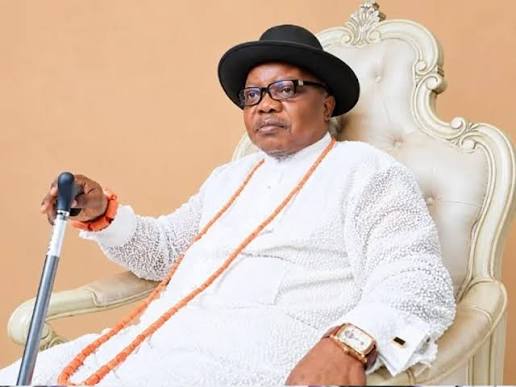
Former Delta Governor Emmanuel Uduaghan Dies at 71, Three Days to 72nd Birthday
ASABA — The political landscape of Delta State and Nigeria at large was thrown into mourning on Monday following the demise of former Governor, Dr. Emmanuel Eweta Uduaghan, who passed away at the age of 71.
According to a statement released by his family, the former two-term governor died in the early hours of Monday, October 19, 2026, following a brief illness. His passing comes just three days shy of his 72nd birthday, as he was born on October 22, 1954.
The family’s statement, signed by Toju Anire Uduaghan, described the death as an “immeasurable loss.” They remembered the late politician as a “source of strength, a father figure, a beloved brother and uncle, and a respected elder” whose life and service touched countless people across Delta State and the nation.
A Legacy of Service
Dr. Uduaghan leaves behind a robust political legacy that spanned over a decade and a half in the public service of Delta State.
He began his political career as the Commissioner for Health between 1999 and 2003 under the administration of Governor James Ibori. His administrative acumen saw him elevated to the position of Secretary to the State Government (SSG) from 2003 to 2007, a role in which he played a pivotal part in the state’s governance structure.
In 2007, he successfully contested and won the governorship seat, succeeding his mentor, Ibori. He was re-elected for a second term, governing the oil-rich state until 2015. During his tenure, Uduaghan was widely known for his “Delta Beyond Oil” economic diversification agenda, an initiative aimed at shifting the state’s economic dependence from crude oil to agriculture, infrastructure, and human capital development. He was also fondly referred to as the “Talk and Do” governor due to his penchant for completing projects.
Outpouring of Grief
Following the announcement, tributes have begun to pour in from across the country. Political associates, friends, and constituents have taken to social media and traditional media to express their shock and sorrow at the passing of the former governor.
Many recall his time in office as a period of relative peace and infrastructural growth in Delta State. His family has requested privacy during this difficult time as they mourn the loss of their patriarch.
Funeral arrangements are expected to be announced by the family in the coming days.
Former Delta Governor Emmanuel Uduaghan Dies at 71, Three Days to 72nd Birthday
metro
Farmers-Herders Clash in Abuja Leaves Three Dead as Houses, Shops Burn
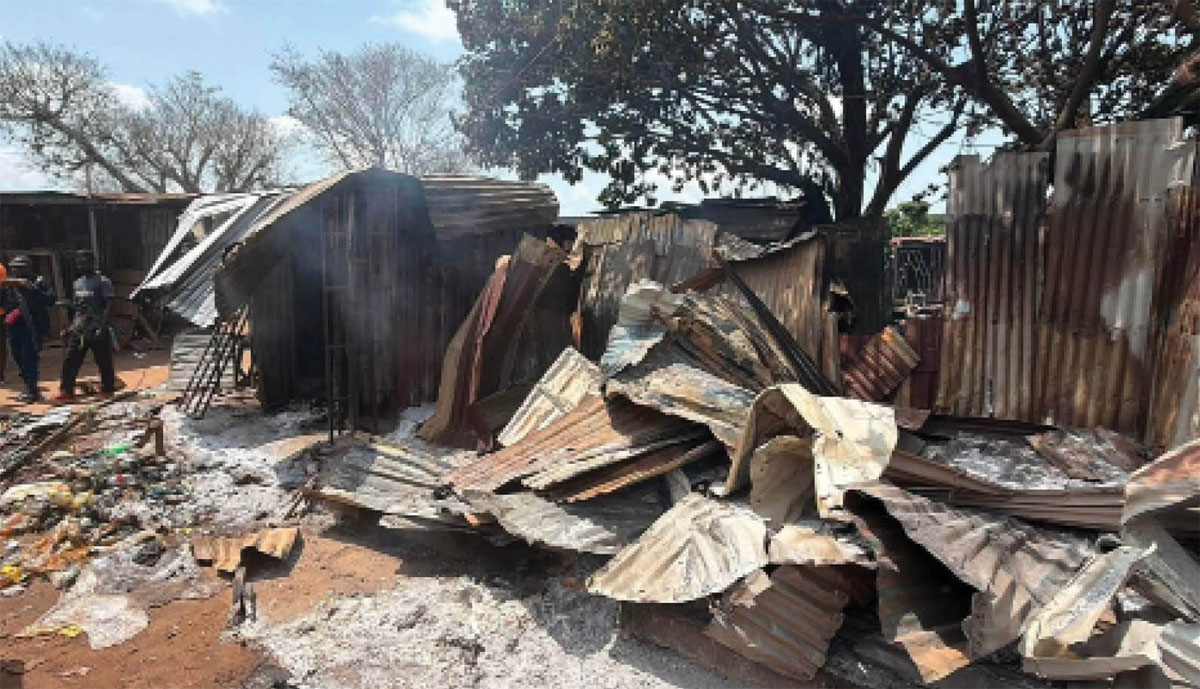
Farmers-Herders Clash in Abuja Leaves Three Dead as Houses, Shops Burn
At least three people have reportedly been killed in a renewed farmers-herders clash in Paikon-Kore community, Gwagwalada Area Council of the Federal Capital Territory (FCT), with several others injured and properties destroyed.
The violence, which reportedly began on Saturday afternoon and continued until Sunday morning, October 18, left houses, shops and a motorcycle burnt, while goods in the affected shops were destroyed.
However, another report put the death toll at five, with eyewitnesses saying both farmers and herders were among those killed. The exact number of casualties had yet to be officially confirmed as of the time of reporting.
A resident, Danlami Ibrahim, said the latest confrontation began after cattle allegedly entered a groundnut farm containing crops that were yet to be harvested.
According to him, the farm owner confronted the herders, leading to an argument that escalated into violence. One of the herders allegedly attacked a farmer with a cutlass, severing one of his hands.
The incident reportedly triggered anger among residents and led to retaliatory attacks in which three herders were said to have been killed. Several other people sustained injuries and were taken to hospitals in Gwagwalada for treatment.
READ ALSO:
- Nollywood Mourns as Actress, Beauty Queen Tenia Abraham Dies at 32
- FG Challenges World Bank’s 124% Debt-to-Revenue Warning, Cites Rising Income
- Mbappé Runs Riot as Real Madrid Crush Sevilla 4-1 Ahead of El Clásico
The Secretary of the Miyetti Allah Cattle Breeders Association of Nigeria (MACBAN), Gwagwalada Area Council chapter, Mohammed Usman, confirmed that three herders had died, although he said he was still gathering information about the number of injured people.
Usman said he had informed the Gwagwalada Area Council chairman, Kasim Mohammed Ikwa, about the incident.
Ikwa visited the affected community on Sunday alongside the Divisional Police Officer, SP Aaron H. Kaura, and other security personnel. He condemned the violence and called on residents to remain calm.
The council chairman said a stakeholders’ meeting would be convened to address the crisis and identify ways to prevent further clashes. He urged farmers, herders, youths and community leaders to embrace dialogue and avoid retaliatory attacks.
Ikwa also advised farmers whose crops were damaged by cattle to report such incidents to security agencies rather than resort to self-help. He urged residents to cooperate with security personnel deployed to restore peace.
The FCT Police Command spokesperson, SP Josephine Adeh, had yet to publicly respond to enquiries about the incident as of the time of the report.
The latest violence follows previous confrontations in Paikon-Kore and neighbouring communities, including a clash in August that reportedly left a farmer with a severed hand and three other people with machete injuries.
Recurring disputes over cattle grazing, destruction of crops, access to farmland and grazing routes have fuelled tensions between farming and herding communities across parts of the FCT.
Herders have also complained about the encroachment of designated grazing areas by farms, housing estates and other developments, while farmers have repeatedly raised concerns about livestock entering their fields and destroying crops.
The Federal Government has identified the FCT as one of the priority areas for efforts to address farmers-herders conflicts. The Ministry of Livestock Development has also announced plans to work with the FCT Administration and pastoralist groups to rehabilitate grazing reserves and improve livestock management.
Security analysts have called for stronger early-warning systems, impartial law enforcement, compensation for damaged crops and effective mediation to prevent local disputes from escalating into deadly violence.
The latest clash has renewed concerns about the safety of rural communities around Abuja and the need for a lasting solution to recurring disputes between farmers and herders.
Farmers-Herders Clash in Abuja Leaves Three Dead as Houses, Shops Burn
metro
Ogun House Fire Horror: Husband Arrested After Wife Dies Following Domestic Dispute
Ogun House Fire Horror: Husband Arrested After Wife Dies Following Domestic Dispute
Police in Ogun State have arrested a 56-year-old man, Madarikan Emehinola, following the death of his 40-year-old wife, Igbagbo Erobe, in a house fire in Igbo-Edu, Ogun Waterside Local Government Area.
The incident, suspected to be a case of arson, reportedly occurred at about 8:30pm following a domestic dispute, according to an eyewitness quoted by PUNCH Metro.
The Ogun State Police Command said the incident was reported at the Abigi Divisional Police Headquarters on Sunday, October 18, 2026, after information was received that a residential building had been set ablaze, resulting in the woman’s death.
The suspect was subsequently arrested as investigators began efforts to establish the circumstances surrounding the tragedy.
The eyewitness account suggests that the fire occurred after a disagreement between the couple. However, the precise sequence of events leading to the fire, the cause of the blaze and whether it was deliberately set have yet to be conclusively established by the police.
The deceased’s body has been deposited at a mortuary for a post-mortem examination to help determine the cause of death and provide further evidence for the investigation.
READ ALSO:
- NLC, Falana Mobilise Nigerians Against Petrol Price Hike, Mount Pressure on Tinubu Govt
- Buhari Feared Tinubu Presidency, Resisted Pressure to Back Him – Baba-Ahmed Claims
- NAFDAC Probes Corps Member’s Death at Enugu Camp as Fake Drug Claims Emerge
The police said the case was being processed for transfer to the State Criminal Investigation Department (SCID), Eleweran, Abeokuta, for a more detailed investigation.
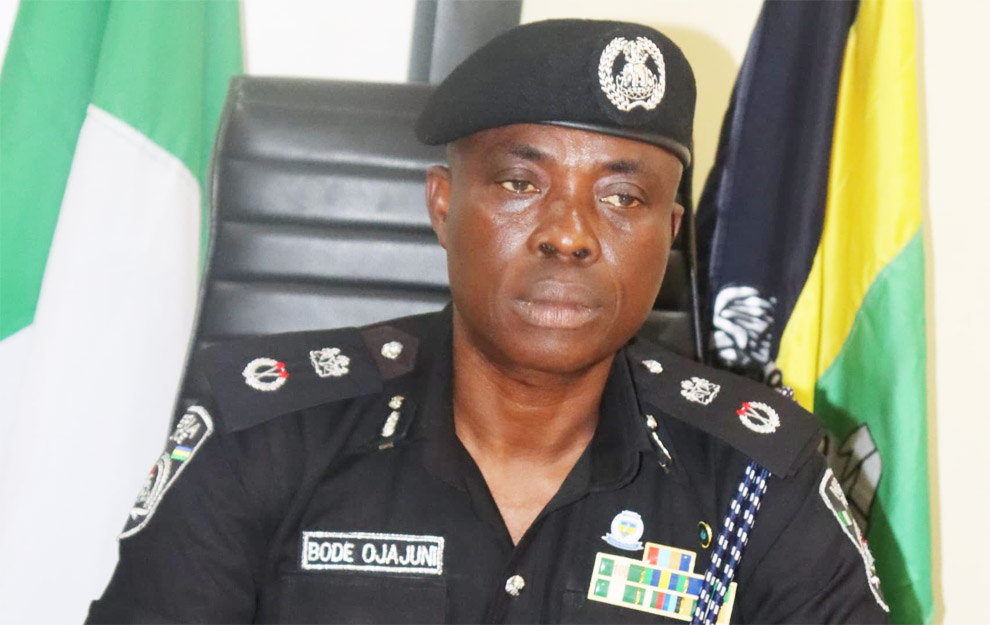
The Commissioner of Police in Ogun State, Bode Ojajuni, assured residents that the matter would be investigated thoroughly and professionally in accordance with the law.
He reiterated the command’s commitment to protecting lives and property and ensuring that allegations involving serious crimes receive appropriate investigative attention.
The police also urged members of the public to report suspicious activities and provide credible information that could assist investigators in establishing what happened.
Although the incident is being investigated as suspected arson, the available information has not conclusively established how the fire started or the motive behind it. The eyewitness account of a domestic dispute is an allegation that investigators will need to examine alongside other evidence.
The outcome of the post-mortem examination and further police inquiries is expected to provide additional information about the woman’s death.
The suspect’s arrest does not establish guilt. He remains entitled to due process as investigators work to determine the circumstances surrounding the fatal fire.
Ogun House Fire Horror: Husband Arrested After Wife Dies Following Domestic Dispute
-

 metro3 days ago
Suspended Archbishop Ibezim Drags Anglican Primate to Court, Challenges Six-Month Leave
-

 metro3 days ago
Imodi-Ijebu Muslim Community Bets on 20 Chiefs to Drive Education, Economic Growth
-
 metro3 days ago
NAPTIP Raises Alarm as Parents Allegedly Trade Children for Sex, Arrests Woman in Abuja
-

 News3 days ago
FG Draws Red Line on Fuel Subsidy, Warns of Naira Crisis if Reforms Are Reversed
-

 News3 days ago
Tinubu Reappoints INEC Commissioner, Nominates Six Others Ahead of 2027 Elections
-

 Auto3 days ago
Tesla’s Flying Roadster Rekindles Race to Put Cars in the Sky
-
 metro3 days ago
DSS Arrests Maina’s Fugitive Son in Abuja After Six Years on the Run
-

 metro2 days ago
FG Begins Rollout of 3,700 Telecom Towers to Connect 20m Nigerians