
International
US Government Accused of Cover-Up in Trump Epstein Sexual Abuse Files
US Government Accused of Cover-Up in Trump Epstein Sexual Abuse Files
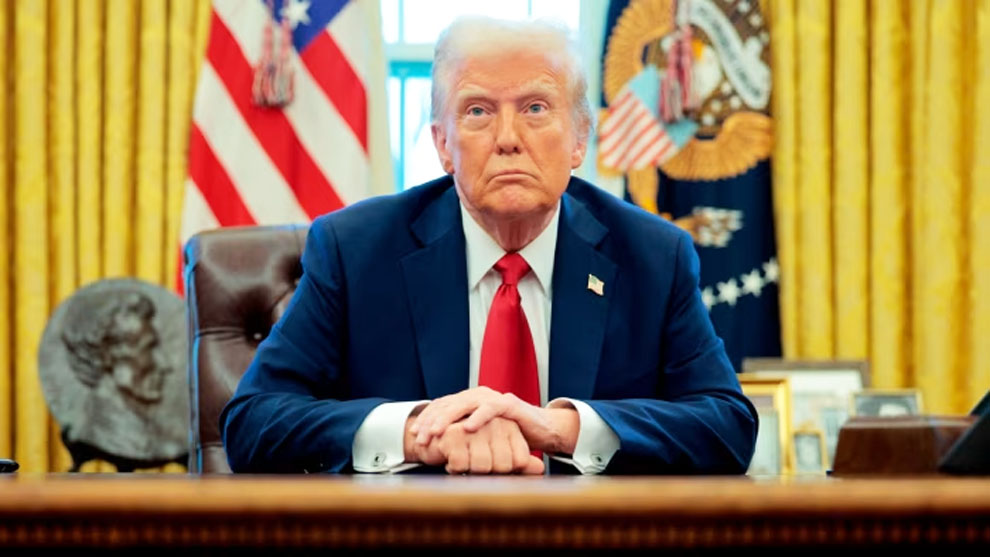
Democratic lawmakers have accused the United States government of orchestrating the “largest government cover-up in modern history” over allegations that crucial documents relating to Donald Trump and Jeffrey Epstein were withheld from the public. The controversy centers on missing FBI interview summaries tied to a 2019 sexual abuse complaint against the former U.S. president.
The House Oversight Committee, led by Representative Robert Garcia, claims that the Department of Justice (DOJ) failed to release more than 50 pages of interview notes with a woman who alleges she was sexually abused by Trump in the mid-1980s, when she was 13 to 15 years old. While the DOJ released millions of pages under the Epstein Files Transparency Act, investigators and media outlets, including NPR, found that only one summary focusing on Epstein’s actions appears publicly, leaving key follow-up materials missing.
“This is the largest government cover-up in modern history. We are demanding answers,” said Democrats on the Oversight Committee in a statement. Garcia confirmed that his team reviewed unredacted DOJ logs and concluded that FBI interviews with the survivor were not properly disclosed. He announced a parallel congressional investigation to ensure all records are produced.
READ ALSO:
- Gunmen Kill 25, Burn Homes in Twin Adamawa Village Attacks
- ‘Peter Obi Fuels Political Tension in Edo’ — Govt Responds After ADC Attack in Benin City
- Tinubu Urges Senate to Amend Constitution for State Police Amid Rising Insecurity
The DOJ has denied any wrongdoing, explaining that some materials may fall under exempt categories, such as duplicates, privileged records, or documents linked to ongoing investigations. Officials added that any documents improperly tagged or temporarily removed for privacy reasons will be restored. The department stated it is reviewing flagged files to ensure compliance with the law.
The woman at the center of the allegations first contacted authorities in July 2019, shortly after Epstein’s arrest on sex trafficking charges. Internal DOJ references describe her claim that Epstein introduced her to Trump, who then allegedly assaulted her. However, the public FBI summary does not evaluate the credibility of these allegations, and follow-up interview notes remain unavailable.
Trump has repeatedly denied any wrongdoing, insisting that the release of the Epstein Files exonerates him. White House statements dismissed cover-up claims as politically motivated, asserting that no law enforcement agency has accused Trump of criminal conduct related to Epstein.
Legal experts and transparency advocates warn that withholding such key materials undermines public trust in U.S. institutions, particularly in high-profile cases involving political figures. The unfolding investigation is expected to intensify scrutiny on the DOJ’s handling of sensitive documents and the broader accountability of government agencies in politically charged cases.
US Government Accused of Cover-Up in Trump Epstein Sexual Abuse Files







International
Pope Leo XIV Rejects Trump Criticism, Says “I Am Not Afraid of the US President”
Pope Leo XIV Rejects Trump Criticism, Says “I Am Not Afraid of the US President”
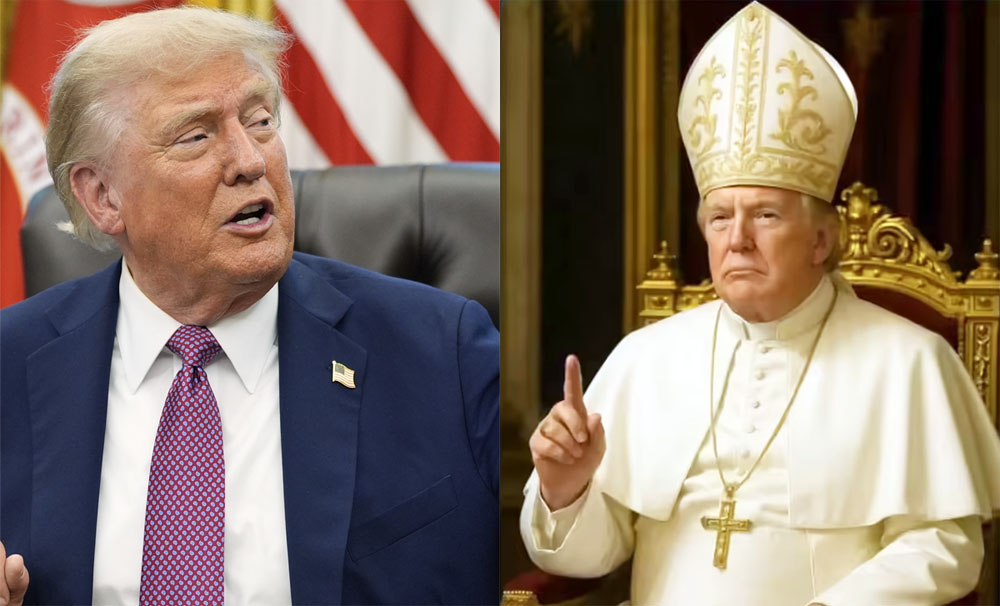
Pope Leo XIV has pushed back against criticism from U.S. President Donald Trump, insisting he will not be intimidated and reaffirming his global calls for peace amid rising international tensions.
The pontiff made the remarks on Monday while speaking to journalists aboard a papal aircraft en route to Algiers, the first stop on his Africa diplomatic tour, where he is expected to hold meetings focused on interfaith dialogue, migration, and conflict resolution across the continent.
Responding to Trump’s recent comments, Pope Leo said his appeals for peace were not political attacks but part of his spiritual mission.
“The things I say are not meant as attacks on anyone,” he said. “I am not a politician. I am inviting all people to look for ways of building bridges of peace and reconciliation, of looking for ways to avoid war any time that’s possible.”
He added firmly: “I am not afraid of the Trump administration.”
The comments come after Trump, speaking on his Truth Social platform, criticised the Pope’s foreign policy stance, accusing him of being overly critical of U.S. positions on global security issues. Trump also suggested that Leo’s election as pope was influenced by expectations that a U.S.-born pontiff would handle relations with him more effectively.
READ ALSO:
- Trump Claims 158 Iranian Ships Destroyed as US Enforces Naval Blockade in Gulf Region
- Wike Denies ADC Was Blocked From Using Eagle Square for Convention
- Judge Dismisses Trump’s $10bn Defamation Suit Against WSJ Over Epstein Report
“If I wasn’t in the White House, Leo would not be in the Vatican,” Trump wrote, also arguing that he does not support any global leadership approach that would tolerate Iran acquiring nuclear weapons.
During the in-flight press briefing, Pope Leo reaffirmed that his role is guided by the teachings of the Gospel, not political alignment.
“The message of the Gospel is very clear: ‘Blessed are the peacemakers,’” he said. “I will not shy away from announcing the message of the Gospel.”
He rejected attempts to frame his remarks as political confrontation with the U.S. administration, stressing that the Church’s mission is centered on peacebuilding, reconciliation, and humanitarian concerns.
“To put my message on the same plane as what the president has attempted to do here is not understanding what the message of the Gospel is,” he added. “I am sorry to hear that, but I will continue with what I believe is the mission of the Church in the world today.”
The exchange has drawn global attention, highlighting growing tensions between religious leadership and political rhetoric amid ongoing conflicts in several regions worldwide. Vatican officials have not issued any additional statement beyond the Pope’s in-flight remarks, while the White House has also not released an official response.
The Pope’s Africa visit is expected to continue with engagements focused on peace advocacy, religious cooperation, and discussions on global stability.
Pope Leo XIV Rejects Trump Criticism, Says “I Am Not Afraid of the US President”
International
Trump Claims 158 Iranian Ships Destroyed as US Enforces Naval Blockade in Gulf Region

Trump Claims 158 Iranian Ships Destroyed as US Enforces Naval Blockade in Gulf Region
U.S. President Donald Trump has claimed that Iran’s naval forces have been “completely obliterated,” alleging that 158 Iranian naval vessels have been destroyed, while issuing a fresh warning that any remaining ships approaching the U.S.-enforced blockade will be “immediately eliminated.”
Trump made the remarks in a post on Truth Social, where he stated that Iran’s navy had been “laid at the bottom of the sea,” adding that only a small number of fast-attack boats remain operational. He warned that any such vessels nearing the blockade zone would face an “immediate” and decisive military response.
The statement comes as the United States begins full enforcement of a naval blockade on Iran, confirmed by the U.S. Central Command (CENTCOM), covering key maritime zones including the Arabian Gulf, Gulf of Oman, and approaches to the Strait of Hormuz.
According to CENTCOM, the operation—activated at 10:00 a.m. Eastern Time—is aimed at restricting all maritime traffic in and out of Iranian ports and coastal waters. Officials said the move is part of a broader strategy to increase pressure on Tehran over its nuclear programme and regional activities.
READ ALSO:
- Wike Denies ADC Was Blocked From Using Eagle Square for Convention
- Judge Dismisses Trump’s $10bn Defamation Suit Against WSJ Over Epstein Report
- OAU Students Begin 72-Hour Lecture Boycott Over Transport Crisis
The U.S. military further stated that the blockade applies to all vessels attempting to access Iranian ports regardless of nationality, while allowing monitored passage through international shipping lanes such as the Strait of Hormuz, one of the world’s most strategic oil routes.
The escalation reportedly follows the collapse of weekend diplomatic negotiations held in Pakistan, where U.S. and Iranian representatives failed to reach a de-escalation agreement.
Trump’s latest comments combined updated claims of Iranian naval losses with a renewed warning that any surviving fast-attack craft would be “immediately eliminated” if they challenge U.S. forces enforcing the blockade.
Global oil markets reacted sharply to the developments, with reports indicating that crude prices surged above $100 per barrel amid fears of disruption to global energy supplies passing through the Middle East.
The Strait of Hormuz, through which nearly 20% of global oil trade flows, remains the central flashpoint in the crisis, with analysts warning that any sustained disruption could trigger a wider global energy shock.
Iran has not yet issued an official response to the blockade or Trump’s latest claims. However, Iranian authorities have previously warned that any attempt to restrict its maritime access would be considered a violation of sovereignty and could provoke retaliation.
International observers have expressed concern over the rapid escalation, warning that heightened naval deployments by both sides could increase the risk of direct confrontation in the Gulf region.
Military activity in the area remains ongoing, and officials say the situation is still evolving with further developments expected.
Trump Claims 158 Iranian Ships Destroyed as US Enforces Naval Blockade in Gulf Region
International
Judge Dismisses Trump’s $10bn Defamation Suit Against WSJ Over Epstein Report

Judge Dismisses Trump’s $10bn Defamation Suit Against WSJ Over Epstein Report
A U.S. federal judge has dismissed a $10 billion defamation lawsuit filed by Donald Trump against The Wall Street Journal, its parent company Dow Jones, and media executive Rupert Murdoch, ruling that the president failed to meet the strict legal threshold required for public figures to prove defamation.
Delivering the ruling in Miami, U.S. District Judge Darrin P. Gayles dismissed the case without prejudice, giving Trump’s legal team until April 27 to file an amended complaint if they choose to continue the legal battle.
The lawsuit, filed in 2025, stemmed from a report by The Wall Street Journal linking Trump to late financier Jeffrey Epstein. The article referenced a “bawdy” birthday message allegedly bearing Trump’s name, which was included in a commemorative album compiled for Epstein’s 50th birthday in the early 2000s.
Trump’s lawyers argued that the report was false, defamatory, and caused significant reputational and financial damage. The suit named Dow Jones, Murdoch, and two reporters involved in the publication, accusing them of acting with malice.
READ ALSO:
- OAU Students Begin 72-Hour Lecture Boycott Over Transport Crisis
- Ghanaian Footballer Dominic Frimpong Shot Dead in Berekum Chelsea Bus Attack
- Man Allegedly Kills Two Sisters, Five-Year-Old Daughter in Ondo
However, in his ruling, Judge Gayles held that Trump did not sufficiently demonstrate “actual malice”—a key legal standard in U.S. defamation law requiring public figures to prove that a statement was published either with knowledge of its falsity or with reckless disregard for the truth.
“Because President Trump has not plausibly alleged that Defendants published the Article with actual malice, both counts must be dismissed,” the judge wrote.
Court filings and legal analysis indicate that the newspaper had taken standard journalistic steps before publication, including seeking comment from Trump and incorporating his denial into the story—factors that weighed against claims of reckless or malicious intent.
In response to the ruling, The Wall Street Journal welcomed the court’s decision, maintaining that its reporting met established editorial and legal standards.
The dismissal marks another chapter in Trump’s ongoing legal confrontations with major media organisations over coverage of his past associations, particularly those connected to Epstein. The original report was published in July 2025, shortly after U.S. lawmakers released documents related to Epstein’s network and contacts.
Legal experts say the ruling reinforces the high bar for defamation claims involving public figures in the United States, where courts consistently require clear evidence of intentional wrongdoing or reckless journalism.
Although the case has been dismissed, Trump retains the option to amend and refile his complaint, leaving open the possibility of further legal proceedings.
Judge Dismisses Trump’s $10bn Defamation Suit Against WSJ Over Epstein Report

-

 metro3 days ago
JUST IN: FG Publishes List of 48 Individuals, Groups Linked to Terrorism Financing in Nigeria
-

 metro2 days ago
BREAKING: Troops Arrest 15-Year-Old Linked to Killing of Gen Braimah in Borno
-

 Politics3 days ago
2027: Oyo APC Governorship Aspirant Saheed Oladele Resigns From Party
-

 metro2 days ago
Fayose Warns Makinde May Query Olubadan Over Absence at Ibadan Coronation Event
-
 metro2 days ago
Zulum Defends NAF Airstrike, Says Jilli Market Closed Five Years Ago
-

 Railway2 days ago
FG pushes high-speed train, expands rail links to seaports
-

 metro2 days ago
BREAKING: 56 Killed in Accidental Bombing at Borno–Yobe Border Market
-

 Politics2 days ago
Lagos 2027: APC Succession War Intensifies as Tinubu Reportedly Backs Hamzat