

International
US Government-linked wallet loses $20 million in suspected hack

US Government-linked wallet loses $20 million in suspected hack
Crypto wallets linked to the United States government have lost over $20 million in suspected compromission by bad actors.
The transaction was picked up by Blockchain Intelligence firm Arkham Intelligence which raised alarm on the suspected compromission of the wallets linked to the United States government.
The US government wallets in question have been quite busy on chain with documented seized funds being pulled from Aave.
However, the wallet mysteriously lost $20 million recently in a suspected hack by bad actors.
Arkham intelligence shared its finding on X pinpointing the specific wallet addresses involved in the compromise while also detailing the address the funds were moved and the activity they carried out after the compromise.
“𝗨𝗣𝗗𝗔𝗧𝗘: 𝗨𝗦 𝗚𝗼𝘃𝗲𝗿𝗻𝗺𝗲𝗻𝘁 𝗹𝗶𝗻𝗸𝗲𝗱 𝗮𝗱𝗱𝗿𝗲𝘀𝘀 𝗮𝗽𝗽𝗲𝗮𝗿𝘀 𝘁𝗼 𝗵𝗮𝘃𝗲 𝗯𝗲𝗲𝗻 𝗰𝗼𝗺𝗽𝗿𝗼𝗺𝗶𝘀𝗲𝗱 𝗳𝗼𝗿 $𝟮𝟬𝗠. $20M in USDC, USDT, USD, and ETH has been suspiciously moved from a USG-linked address ; 0xc9E6E51C7dA9FF1198fdC5b3369EfeDA9b19C34c to an attacker 0x3486eE700CcaF3E2F9C5eC9730a2e916a4740A9f.
READ ALSO:
- Edo court acquits UNIBEN lecturer of rape allegations
- IMF denies involvement in Nigeria’s fuel subsidy removal
- NANS threatens to shut down UNILAG over fee hike
”0xc9E received USG seized funds linked to the Bitfinex hackers from 9 separate USG seizure addresses, including 0xE2F699AB099e97Db1CF0b13993c31C7ee42FB2ac, an address named in the court documents relating to the Bitfinex seizure. The funds were moved to wallet 0x348 which has begun selling the funds to ETH.
”We believe the attacker has already begun laundering the proceeds through suspicious addresses linked to a money laundering service.” Arkham tweeted.
In another Hacking development, Arkham Intelligence revealed a court document from the case against Bitfinex hackers Ilya Lichtenstein and Heather Rhiannon Morgan. The case references Aave, Curve Finance, and Yearn Finance, as well as the “0xE2F” wallet. According to the document, it states:
”Approximately 1,999,723.976 in tether (USDT) contained within Yearn Finance Liquidity Pool address 0xaC8, approximately 3,689,545.195 USDT contained within Yearn Finance Liquidity Pool address 0xE2F, and approximately 1,700,000 USDT contained within Yearn Finance Liquidity Pool address [0x681].”
“The funds were moved to wallet 0x348 which has begun selling the funds to ETH,”
“We believe the attacker has already begun laundering the proceeds through suspicious addresses linked to a money laundering service,” Arkham added
These two cases are the latest and ongoing cases of hacks in the crypto industry as pointed out by Arkham intelligence.
There has been no official comment from US authorities over the Hack that occurred on Wallets linked to the US government.
US Government-linked wallet loses $20 million in suspected hack


International
Nine Killed as Learjet Crashes Into Florida Residential Area, Erupts in Flames
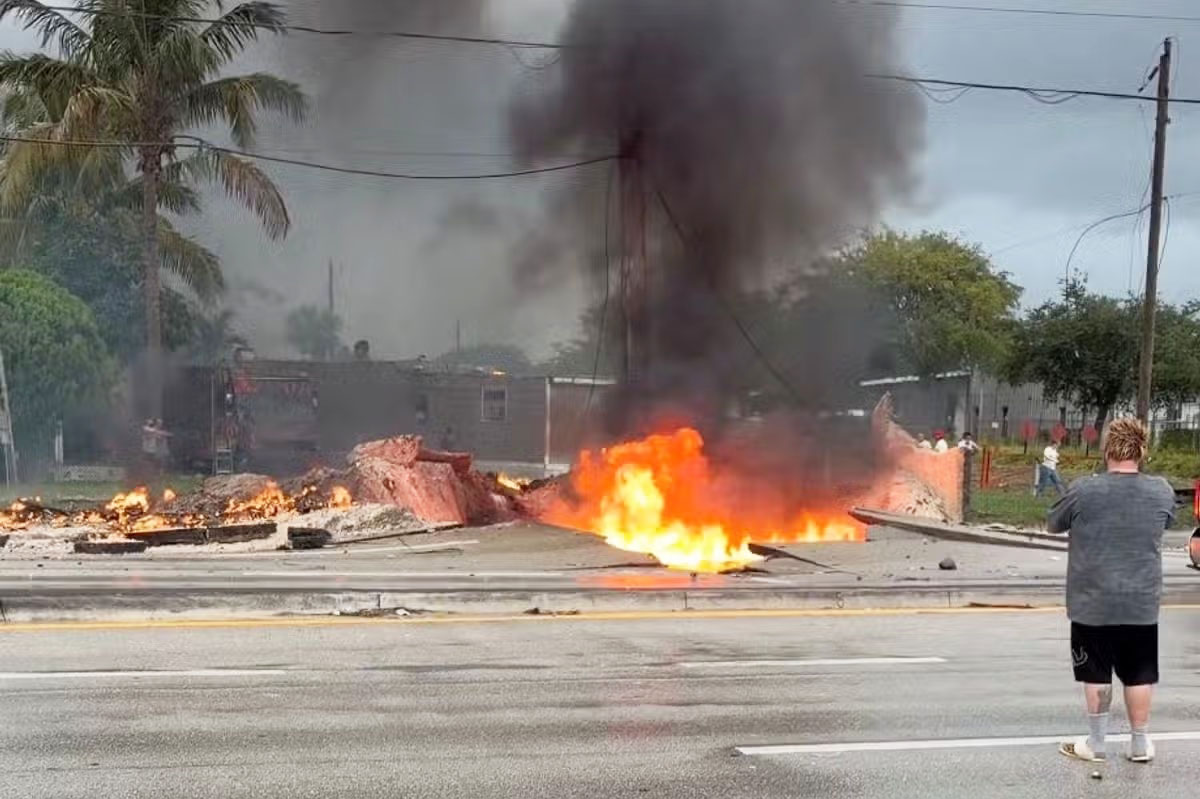
Nine Killed as Learjet Crashes Into Florida Residential Area, Erupts in Flames
Nine people have been killed after a private Learjet 60 aircraft crashed into a residential area in Palm Beach County, Florida, United States, and burst into flames, triggering an emergency response and the evacuation of hundreds of residents.
The aircraft, which was travelling from Texas to the Bahamas, crashed at approximately 12:50 p.m. local time on Sunday, November 1, 2026, near Military Trail, between Cresthaven Boulevard and 10th Avenue North.
US Transportation Secretary Sean Duffy confirmed that all nine people aboard the aircraft died in the crash, describing the incident as a horrific tragedy.
The Federal Aviation Administration (FAA) said the Learjet 60 departed from Austin-Bergstrom International Airport in Texas and was heading to North Eleuthera Airport in the Bahamas when the accident occurred.
Videos recorded by motorists and other witnesses showed the aircraft descending rapidly before plunging towards the ground and exploding into a massive fireball. Thick black smoke subsequently billowed above the neighbourhood as emergency responders rushed to the scene.
The impact created a large crater beside the roadway, scattering aircraft debris across the surrounding area and damaging nearby infrastructure.
Florida Governor Ron DeSantis, who visited the crash scene, described the incident as a catastrophic accident.
He said the aircraft appeared to have plunged towards the ground like a missile, leaving a large crater along the road.
DeSantis added that there were no immediate reports of deaths or injuries among people on the ground, apart from those aboard the aircraft.
However, the crash prompted authorities to evacuate approximately 600 residents from a nearby mobile home community as emergency teams secured the area and assessed possible dangers.
READ ALSO:
- 2027 Election: Seun Okinbaloye Explains ‘Rigging’ Remark, Says Warning Was Not Against Any Party
- Christians Still Under Attack in Nigeria, US Lawmaker Tells Trump
- Gunmen Abduct 100-Level Female Student, Shoot Another Person in Plateau
Palm Beach County Commissioner Joel Flores said the affected residents were being assisted with temporary shelter and other emergency support at two designated locations.
The evacuation was necessary to protect residents while investigators and emergency personnel worked around the crash site.
Preliminary information from air traffic control recordings has provided some insight into the aircraft’s final moments before it crashed.
According to recordings of communications between the pilots and air traffic controllers, the crew reported ice accumulating on the aircraft while encountering moderate turbulence at high altitude.
The pilot initially described the icing as manageable but later reported worsening weather conditions and requested permission to climb to a higher altitude.
The situation deteriorated shortly afterwards as the aircraft began losing altitude rapidly.
In one of the final communications, the pilot declared an emergency and reported that the aircraft was descending at an alarming rate.
The crew initially reported a descent of about 10,000 feet per minute before indicating that the rate had increased to approximately 20,000 feet per minute.
The pilot eventually issued a distress warning, saying the aircraft was going to crash into the ground.
Flight-tracking information indicated that the jet lost approximately 27,000 feet in altitude within about a minute before tracking data stopped.
However, investigators have not established whether ice accumulation, turbulence, thunderstorms, mechanical failure or another factor caused the aircraft to lose control.
The Federal Aviation Administration and the National Transportation Safety Board (NTSB) have launched investigations to determine the circumstances surrounding the disaster.
The NTSB is leading the investigation, with support from the FAA. Investigators are expected to examine the wreckage, flight records, aircraft systems, weather conditions and communications between the crew and air traffic controllers.
The investigation will also seek to establish whether the aircraft experienced a technical malfunction or encountered conditions that affected its ability to maintain controlled flight.
The aircraft’s manufacturer, Bombardier, has indicated its willingness to cooperate with investigators.
Authorities had not publicly released the identities of the nine victims or provided a detailed breakdown of the passengers and crew as of the latest reports.
The crash site remained subject to emergency restrictions, with authorities closing sections of Military Trail and advising motorists to avoid the area.
The Florida accident has been described as one of the deadliest aviation disasters in the United States in 2026.
According to records cited by CNN, it was the second-deadliest US plane crash of the year, following a skydiving aircraft crash in Butler, Missouri, in June that killed 12 people.
The Learjet 60 accident was also reported as the deadliest crash involving the aircraft model.
The tragedy has renewed attention on aviation safety, particularly the risks associated with severe weather conditions and the importance of determining what happened during the aircraft’s final moments.
For families of the nine victims, the immediate concern remains the confirmation of identities and the circumstances surrounding the deaths, while investigators work to establish the cause of the disaster.
Nine Killed as Learjet Crashes Into Florida Residential Area, Erupts in Flames
International
Christians Still Under Attack in Nigeria, US Lawmaker Tells Trump
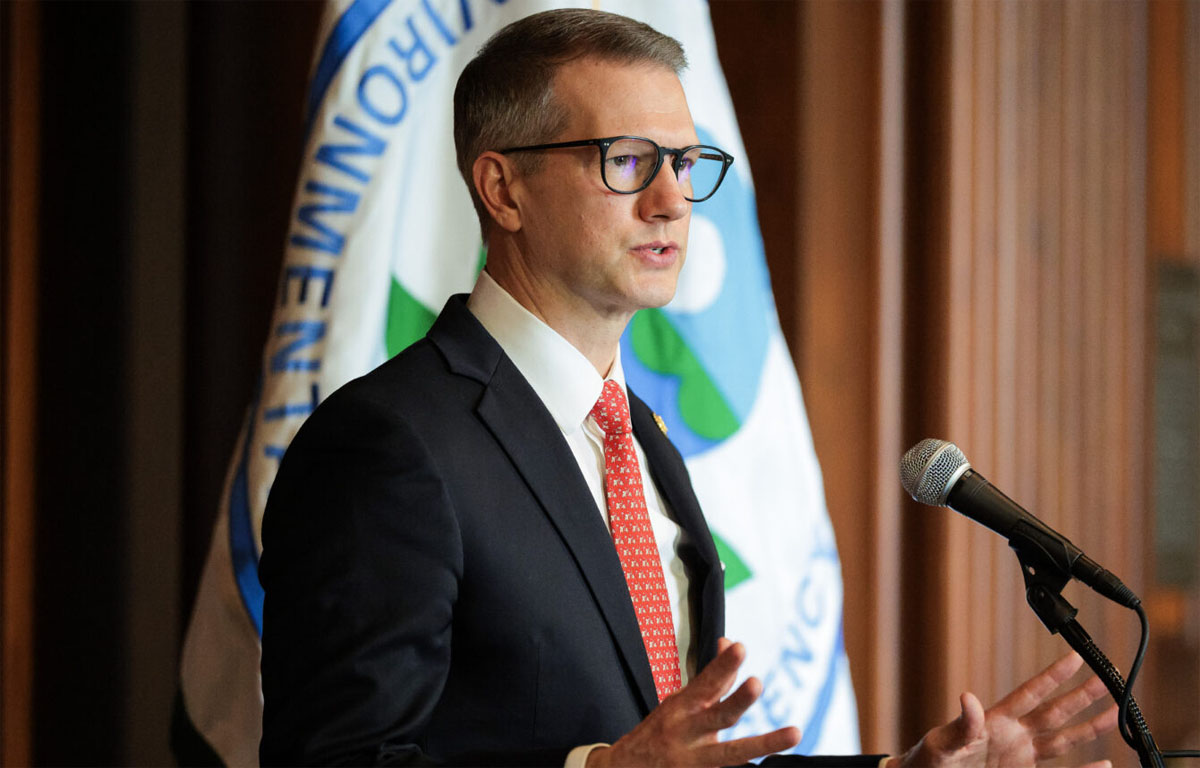
Christians Still Under Attack in Nigeria, US Lawmaker Tells Trump
United States Congressman Riley Moore has said Christians in Nigeria continue to face severe violence and persecution, calling for renewed international efforts to protect religious communities one year after President Donald Trump redesignated Nigeria as a Country of Particular Concern (CPC).
Moore made the remarks in a statement posted on his X account to mark the anniversary of the designation, which was announced by Trump in November 2025 over concerns about religious freedom and attacks on Christian communities.
“Christians in Nigeria, and around the world, continue to face unspeakable violence. On this anniversary, we must rededicate our efforts to defend Christians in Nigeria and anywhere they face persecution,” the US lawmaker said.
He also defended Trump’s decision to place Nigeria on the CPC list, describing it as the right move and praising efforts by Republican lawmakers and faith-based organisations to press for stronger action against religious persecution.
In his post, Moore credited Trump’s leadership, alongside work by Republicans on the House Appropriations Committee, for what he described as progress in addressing attacks on Christians in Nigeria.
He specifically praised efforts by House Appropriations Republicans to introduce conditions on US assistance to Nigeria, including requirements for the Nigerian government to demonstrate concrete steps towards protecting Christian communities.
According to the congressman, pressure from the US government and advocacy by religious organisations had begun to produce results.
He claimed that Nigeria experienced its first Christmas without a massacre of Christians in recent memory, although he acknowledged that much more needed to be done to address the security challenges.
Moore also commended the Nigerian government, saying it had shown signs of willingness to confront violence against Christian communities.
READ ALSO:
- Gunmen Abduct 100-Level Female Student, Shoot Another Person in Plateau
- Tinubu Approves SUVs for FCT Traditional Rulers, Four Buses for Youths, says Wike
- Two Europe-Bound Nigerians Excrete 200 Cocaine Wraps at Abuja Airport
His latest comments are part of an ongoing campaign by some US lawmakers to draw international attention to attacks on Christians in Nigeria and push for stronger measures against those responsible.
Nigeria’s Country of Particular Concern designation
Nigeria was first designated a Country of Particular Concern by the United States in December 2020 under Trump’s first administration over concerns about violations of religious freedom.
However, the administration of former US President Joe Biden removed Nigeria from the list in 2021, a decision that attracted criticism from some American lawmakers and religious organisations.
Trump restored the designation in November 2025 after returning to the White House, citing concerns over attacks on Christian communities, particularly in parts of northern and central Nigeria.
The CPC classification is provided under the US International Religious Freedom Act and allows Washington to consider diplomatic and policy measures, including sanctions and restrictions on certain forms of assistance, against countries identified as engaging in or tolerating particularly severe violations of religious freedom.
The renewed designation has also intensified discussions between Nigerian and American authorities over insecurity, religious freedom and the protection of vulnerable communities.
US-Nigeria disagreement over religious persecution
The Nigerian government has repeatedly rejected the characterisation of the country’s security crisis as a campaign of religious persecution targeted exclusively at Christians.
The Federal Government maintains that insecurity in Nigeria is complex and involves terrorism, banditry, kidnapping, communal violence and farmer-herder conflicts, which have affected both Christians and Muslims.
It has also pointed to ongoing security operations, cooperation with international partners and efforts to protect vulnerable communities in states including Benue, Plateau and Kaduna.
Moore’s latest statement comes amid continuing international scrutiny of Nigeria’s response to insecurity and growing pressure on the government to strengthen the protection of religious communities.
The congressman, who has previously visited Nigeria as part of a US congressional investigation into religious freedom concerns, has continued to advocate stronger American involvement in addressing the violence.
In February 2026, Moore and fellow US Congressman Chris Smith introduced the Nigeria Religious Freedom and Accountability Act of 2026, seeking a comprehensive report on US efforts to address alleged religious persecution and mass atrocities against Christians in Nigeria.
The proposed legislation reflects continuing efforts by some members of the US Congress to make religious freedom and accountability central to Washington’s engagement with Nigeria.
Christians Still Under Attack in Nigeria, US Lawmaker Tells Trump
International
Badenoch Rejects Slave Trade Apology, Says African Kingdoms Also Profited From Slavery

Britain’s Conservative Party leader, Kemi Badenoch, has rejected calls for the United Kingdom to issue a fresh formal apology for its role in the transatlantic slave trade, arguing that African kingdoms, rulers and merchants also participated in and profited from the trade.
Badenoch said it would be unfair to focus exclusively on Britain’s involvement while overlooking the role played by African authorities and traders who captured, sold and supplied enslaved people.
Her comments have reignited debate over Britain’s historical responsibility for slavery, following renewed calls for an official apology ahead of the forthcoming Commonwealth Heads of Government Meeting in Antigua and Barbuda.
In a statement published on her X account on Saturday, October 31, the Conservative Party leader argued that slavery was a global evil involving people from different continents, insisting that Britain’s role in abolishing the transatlantic slave trade should also be recognised.
She challenged Caribbean countries demanding a formal apology from Britain to consider whether similar demands should be directed at descendants of African kingdoms, rulers and merchants who participated in capturing and selling enslaved Africans.
“If Caribbean countries are asking Britain for a formal apology for Britain’s role in the transatlantic slave trade, will they also be asking the same of the descendants of African kingdoms, rulers and merchants who captured, sold and profited from the trade?” she asked.
Badenoch also rejected demands for slavery reparations, whether through direct financial compensation or debt relief, arguing that present-day British taxpayers should not be held financially responsible for events that occurred generations ago.
She described the renewed push for an apology as a distraction from more pressing economic and security challenges facing Commonwealth countries.
READ ALSO:
- ‘My Only Hope’: Mother Mourns Son Found Beheaded in Cross River
- Umahi Disowns Peter Obi, Says South East Has No Presidential Candidate for 2027
- NDLEA Arrests Woman With 266 Rounds of Live AK-47 Ammunition on Abuja-Kaduna Expressway
According to her, the Commonwealth should concentrate on strengthening economic partnerships, improving prosperity and deepening military and security cooperation rather than repeatedly revisiting historical grievances.
Badenoch also questioned whether British leaders should continue attending Commonwealth summits if such meetings increasingly became platforms for demands for financial compensation.
She maintained that Britain had already expressed regret over its historical involvement in the slave trade, referring to comments made by former Prime Minister Tony Blair nearly two decades ago.
However, the distinction between an expression of regret and a formal state apology remains central to the current debate. The Associated Press reported that Britain has never formally apologised for its role in the transatlantic slave trade.
The debate intensified after British Prime Minister Andy Burnham indicated that his government was open to discussing a formal apology ahead of the Commonwealth Heads of Government Meeting scheduled to take place in Antigua and Barbuda.
In an article published in The Guardian, Burnham described the slave trade as a grave historical injustice and argued that Britain needed to confront both its involvement in human trafficking and its subsequent role in abolition.
He, however, ruled out direct financial reparations, proposing instead that Britain could work with other wealthy countries and investors to help poorer Commonwealth nations restructure their debts on more favourable terms.
Burnham also indicated that former British Prime Minister Gordon Brown would assist with the proposed debt-restructuring initiative.
The proposal received a cautious welcome from Caribbean leaders, who have long demanded acknowledgement, reparatory justice and compensation for the consequences of slavery.
The Caribbean Community, known as CARICOM, said an apology would represent an important first step but warned that an apology without meaningful reparative measures would remain incomplete.
Philip J. Pierre, Prime Minister of Saint Lucia and CARICOM chairman, welcomed Burnham’s willingness to discuss the issue but maintained that Caribbean countries were seeking a broader response.
Their demands include investment in education and healthcare, development programmes for Indigenous communities, debt cancellation, repatriation and financial compensation.
King Charles III, who is currently visiting the Caribbean, has also acknowledged the suffering and injustices associated with the region’s history of slavery, although he has not announced a formal apology or reparations.
Historically, Britain became involved in the transatlantic slave trade in the 16th century and eventually emerged as one of its largest operators. According to the Associated Press, British traders transported more than three million Africans across the Atlantic.
The British Parliament outlawed the slave trade in 1807, while slavery was abolished across most of the British Empire in 1833.
Although British abolitionists played a significant role in the campaign against slavery, Britain’s earlier participation in the trade and the economic benefits derived from it remain central to demands for historical accountability.
The disagreement between Badenoch and Burnham therefore reflects a wider debate over whether Britain’s historical acknowledgement of slavery should extend to a formal apology and what responsibilities, if any, should follow such an apology.
Badenoch Rejects Slave Trade Apology, Says African Kingdoms Also Profited From Slavery
-

 metro2 days ago
Ogun Murder: Suspect Reveals How He Strangled, Macheted Retired Civil Servant Over N3.45m
-
 Politics2 days ago
2027: G100 Coalition Moves to Unite Opposition as Leaders Meet Cardinal Onaiyekan
-
 metro2 days ago
₦50,000 Monthly Relief: FG Begins Cash Payments to Vulnerable Nigerians
-

 International2 days ago
Romance Scam: FBI Declares Nigerian Woman Wanted, Offers ₦6.7m Reward
-

 metro2 days ago
N100,000 Deposit: FG Opens Homeownership Window for Teachers, Nurses, Police Officers
-

 metro3 days ago
‘You Must Treat Me With Respect’ – Oshiomhole Blasts Rufai Oseni During Heated Live TV Interview
-
 metro2 days ago
Ghanaian Teen Chased, Shot Dead on Way to School in New York
-

 Politics2 days ago
2027: INEC Rejects Adebutu, Gwarzo, Clears Pantami as Ogun, Kano Opposition Parties Face Setback