
International
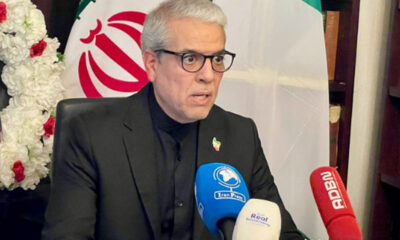
Biden vows US, G7 response after Iran attack on Israel

Biden vows US, G7 response after Iran attack on Israel
WASHINGTON (AP) — President Joe Biden has declared the United States and the G7 would response militarily against Iran, which carried out organised attacks on Israel Saturday.
Biden has also lauded American forces who helped Israel down “nearly all” of the drones and missiles fired by Iran.
He vowed to coordinate a global response to Tehran’s unprecedented attack, according to an Associated Press report.
The Pentagon said its forces intercepted “dozens of missiles” and drones launched from Iran, Iraq, Syria and Yemen that were headed toward Israel.
With regional tensions at their highest since the Israel-Hamas war began six months ago, Biden pledged that American support for Israel’s defense against attacks by Iran and its proxies is “ironclad.” The attack marked the first time Iran has launched a direct military assault on Israel, risking a wider regional conflict.
The US and Israel had been bracing for an attack for days after Iran said it would retaliate for a suspected Israeli strike this month on an Iranian consular building in Syria that killed 12 people, including two senior Iranian generals in the Revolutionary Guard’s elite Quds Force.
“At my direction, to support the defense of Israel, the U.S. military moved aircraft and ballistic missile defense destroyers to the region over the course of the past week,” Biden said in a statement late Saturday. “Thanks to these deployments and the extraordinary skill of our servicemembers, we helped Israel take down nearly all of the incoming drones and missiles.”
Defense Secretary Lloyd Austin in a statement said the U.S. took out dozens of the attacks, but did not provide details on ships or aircraft involved in the operation that commanders had been preparing for over the past two weeks.
“Our forces remain postured to protect U.S. troops and partners in the region, provide further support for Israel’s defense, and enhance regional stability,” Austin said, adding that troops are standing ready to prevent any further conflict.
READ ALSO:
- Electricity workers demand withdrawal of new tariff
- Police inspector reportedly commits suicide in Borno
- [updated]Twenty arrested over invasion of Oyo Secretariat, House of Assembly – Police
Biden had cut short a weekend stay at his Delaware beach house to meet with his national security team at the White House on Saturday afternoon, returning to Washington minutes before Israeli officials confirmed that they had detected drones being launched toward their territory from Iran.
He convened a principals meeting of the National Security Council in the White House Situation Room to discuss the unfolding situation, the White House said, before speaking with Israeli Prime Minister Benjamin Netanyahu late Saturday.
“I told him that Israel demonstrated a remarkable capacity to defend against and defeat even unprecedented attacks – sending a clear message to its foes that they cannot effectively threaten the security of Israel,” Biden said.
Biden added that he would convene a meeting of the Group of Seven advanced democracies on Sunday “to coordinate a united diplomatic response to Iran’s brazen attack.”
The Pentagon reported that Austin had spoken twice, including late Saturday night, with his Israeli counterpart to praise the “extraordinary defensive measures and strong cooperation undertaken to defeat this Iranian attack against Israel” and again stated clearly that “Israel could count on full U.S. support to defend Israel against any future attacks by Iran and its regional proxies.” National security adviser Jake Sullivan also spoke with his counterpart to reinforce Washington’s “ironclad commitment to the security of Israel.”
National Security Council spokesperson Adrienne Watson said in a Saturday statement that “Iran has begun an airborne attack against Israel.” She added: “The United States will stand with the people of Israel and support their defense against these threats from Iran.”
Biden on Friday said the United States was “devoted” to defending Israel and that “Iran will not succeed.” Asked by reporters what his message was for Iran, the president’s only reply was: “Don’t.”
He ignored a question about what would trigger a direct U.S. military response.
The U.S., along with its allies, have sent direct messages to Tehran to warn against further escalating the conflict.
During the Israel-Hamas war in Gaza, there have been near-daily exchanges of fire between Israeli forces and the Iran-backed Hezbollah militant group along the Israel-Lebanon border. U.S. officials have recorded more than 150 attacks by Iran-backed militias in Iraq and Syria on U.S. forces at bases in those countries since war started on Oct. 7.
One attack in late January killed three U.S. service members in Jordan. In retaliation, the U.S. launched a massive air assault, hitting more than 85 targets at seven locations in Iraq and Syria.
Meantime, on Saturday, commandos from Iran’s paramilitary Revolutionary Guard rappelled from a helicopter onto an Israeli-affiliated container ship near the Strait of Hormuz and seized the vessel.
Watson, the NSC spokesperson, said the U.S. strongly condemned the seizure and urged Iran to release the ship and crew immediately.
“We will work with our partners to hold Iran to account for its actions,” she said.
Also Saturday, the Israeli-occupied West Bank also saw some of the worst violence since Hamas’ attack on Israel.
Biden vows US, G7 response after Iran attack on Israel








International
Iran Security Chief Fires Warning at Trump as US-Iran Tensions Escalate
Iran Security Chief Fires Warning at Trump as US-Iran Tensions Escalate
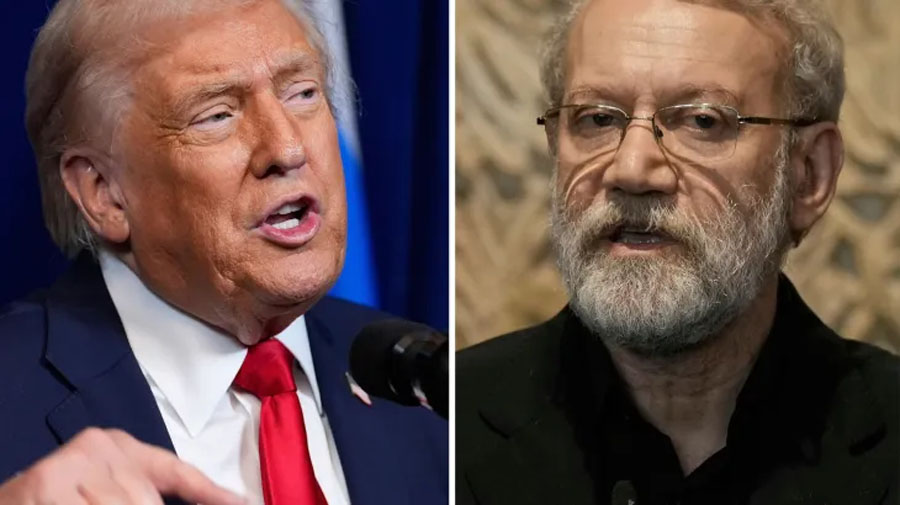
Tensions between Iran and the United States have escalated sharply as Ali Larijani, Secretary of Iran’s Supreme National Security Council, issued a direct warning to President Donald Trump amid the ongoing Middle East war and heightened regional hostilities. The warning comes after Trump threatened decisive action if Iran disrupted oil shipments through the Strait of Hormuz, a strategic chokepoint for global energy supplies.
In a message posted on X, Larijani said: “The sacrificial nation of Iran doesn’t fear your empty threats. Even those bigger than you couldn’t eliminate Iran. Be careful not to get eliminated yourself.” He dismissed Trump’s rhetoric as hollow and emphasized Iran’s resilience, signaling potential consequences for any aggressive actions targeting the country.
The warning follows Trump’s post declaring that the US would respond twenty times harder if Iran interfered with oil transit through the Strait of Hormuz, describing such moves as a serious threat to global energy security. Analysts say Larijani’s statement reflects Tehran’s strategy of strong public messaging to deter escalation while asserting the country’s influence in the Gulf.
Escalating Military and Regional Context
The rhetoric coincides with heightened military activity in the Gulf. US forces have conducted intense airstrikes on Iranian positions, while Tehran has launched missile and drone attacks targeting US and allied sites. The conflict has disrupted shipping through the Strait of Hormuz, raising concerns about global oil supply and triggering volatility in international energy markets.
READ ALSO:
- Egypt Raises Fuel Prices Up to 30% as Middle East War Drives Global Energy Costs
- Nothing Will Happen if You Die, Afenifere Director Tells Peter Obi
- Viral Video Shows Children Armed With Guns in Borno, Sparking National Outrage
Experts warn that the exchange of threats increases the risk of miscalculation or unintended clashes between US and Iranian forces. The standoff has also drawn attention from global leaders urging de-escalation, including calls for diplomatic interventions to prevent the conflict from spilling further across the region.
Strategic and Economic Implications
Iran’s warning comes at a time when global oil markets are highly sensitive, with prices spiking due to fears of supply disruptions. The Strait of Hormuz, through which nearly 20% of the world’s crude passes, remains a focal point of international concern. Analysts note that both Tehran and Washington are using public rhetoric as a psychological strategy, signaling strength to domestic and international audiences while attempting to influence energy markets.
The message underscores how the ongoing US-Iran standoff extends beyond military posturing, affecting regional security, global trade, and energy stability. Observers say continued escalation could have profound consequences for the Middle East, international shipping, and global oil prices.
Iran Security Chief Fires Warning at Trump as US-Iran Tensions Escalate
International
Strait of Hormuz Crisis: Iran Threatens to Stop Gulf Oil Shipments
Strait of Hormuz Crisis: Iran Threatens to Stop Gulf Oil Shipments
Iran has threatened to halt oil exports from the Gulf region as its conflict with the United States and Israel intensifies, raising fears of a major disruption to global energy supplies.
The warning comes despite assurances from Donald Trump that the war could soon come to an end.
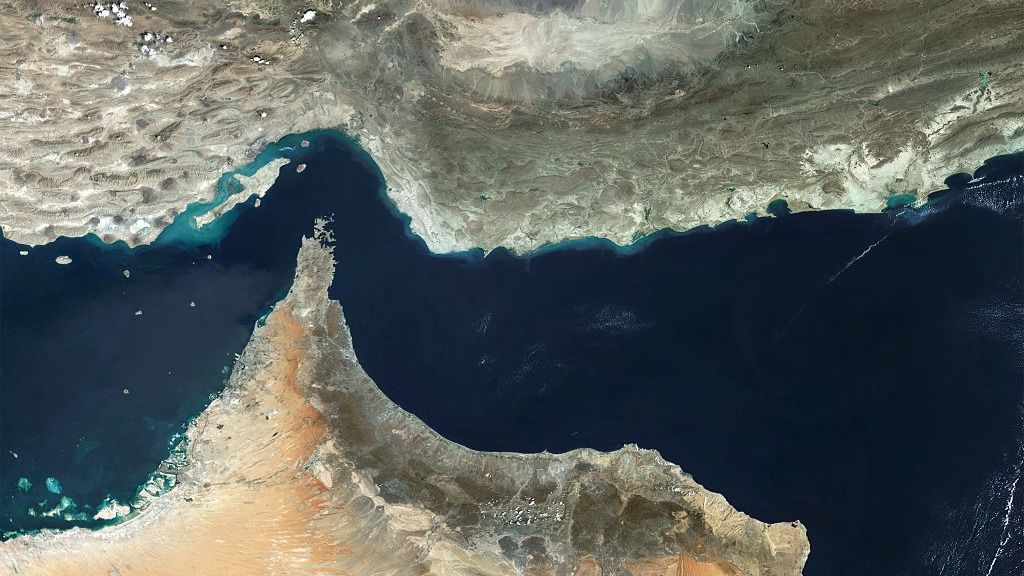
Tehran’s stance follows attacks on vessels travelling through the Strait of Hormuz, a narrow but critical maritime corridor through which nearly 20 per cent of the world’s crude oil passes to markets in Asia and Europe.
The waterway connects major oil producers such as Saudi Arabia, Iraq, Kuwait, and the United Arab Emirates to global energy markets, making it one of the most important chokepoints for international oil trade.
The disruption has already unsettled global oil markets and heightened concerns over possible oil supply shortages.
Earlier in the week, oil prices surged above $100 per barrel after reports that Iranian strikes and rising security risks forced shipping traffic to slow across the Gulf. Prices later eased after Trump said the war would be “ended soon,” helping calm markets that had reacted sharply to the escalating tensions.
However, Iran’s Islamic Revolutionary Guard Corps (IRGC) dismissed the claim, insisting that neither Tehran nor Washington would determine when the war ends.
According to the IRGC, the Iranian armed forces “will not allow the export of a single litre of oil from the region to the hostile side and its partners until further notice.”
READ ALSO:
- Turaki‑Led PDP Rejects Court of Appeal Ruling, Heads to Supreme Court
- US to Designate Sudanese Muslim Brotherhood as Terrorist Organisation
- NRC Investigates Assault Allegation Against UI Lecturer at Moniya Station
Iran’s Foreign Minister, Abbas Araghchi, also signalled the country was ready for a prolonged confrontation.
He said Iran was prepared to continue missile strikes against its enemies “as long as needed and as long as it takes,” while suggesting that further diplomatic negotiations with Washington were unlikely in the near term.
Meanwhile, countries across the region are moving to contain the fallout from the escalating crisis.
In Egypt, authorities have raised fuel prices by as much as 30 per cent in response to rising global oil costs, while Pakistan has offered naval escorts for commercial vessels travelling through the Gulf to protect shipping lanes.
France has also deployed warships to the region to help secure maritime traffic amid fears of further attacks on tankers.
Energy industry leaders have warned that a prolonged disruption in the Strait of Hormuz could have severe consequences for the global economy.
The chief executive of Saudi Aramco, Amin Nasser, cautioned that the longer the disruption continues, the more serious the impact on global oil markets.
He warned that “catastrophic consequences” could follow if shipping through the vital energy corridor fails to resume quickly.
To reduce the impact of potential disruptions, Saudi Arabia has begun redirecting part of its oil exports through its East-West pipeline to the Red Sea port of Yanbu, allowing some shipments to bypass the Strait of Hormuz.
However, energy analysts say the alternative route cannot fully replace the massive volumes of crude normally transported through the Gulf.
Experts warn that if the conflict escalates further and shipping through the Strait of Hormuz is significantly disrupted, as much as 15 million barrels of oil per day could be removed from global supply.
Such a shock could push oil prices toward $150 per barrel, trigger higher global fuel prices, and intensify inflation pressures across economies worldwide.
Strait of Hormuz Crisis: Iran Threatens to Stop Gulf Oil Shipments
International
US Seeks Control of Iranian Oil, Not Peace – Envoy to Nigeria
US Seeks Control of Iranian Oil, Not Peace – Envoy to Nigeria
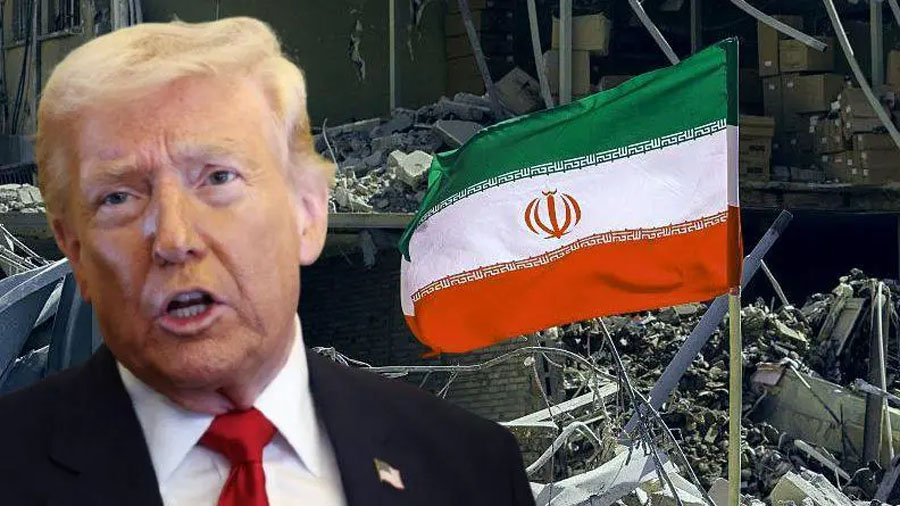
Abuja, Nigeria — The Iranian Ambassador to Nigeria, Gholamreza Mahdavi Raja, has accused the United States of using the ongoing Middle East conflict to secure control over Iran’s energy reserves, describing Washington’s actions as driven by hegemonic ambitions. His comments were made on Trust TV’s Daily Politics on Monday and reflect Tehran’s view that US policy prioritizes oil dominance over peacebuilding.
Raja said the recent US and Israeli airstrikes on Iran are part of a broader strategy to weaken the country and seize its oil-rich territories. “The main aim of the United States and the Zionist regime for such brutal and unprovoked aggression is to seize Iranian energy reserves. The Zionist regime seeks Iran’s disintegration—they announced it themselves,” he stated. Despite repeated attacks on infrastructure, Raja emphasized that Iran’s government continues to function normally and that the Iranian people remain united in defending their sovereignty.
READ ALSO:
- Turaki‑Led PDP Rejects Court of Appeal Ruling, Heads to Supreme Court
- US to Designate Sudanese Muslim Brotherhood as Terrorist Organisation
- NRC Investigates Assault Allegation Against UI Lecturer at Moniya Station
The ambassador rejected any external interference in Iran’s political affairs, particularly regarding the appointment of Ayatollah Mojtaba Khamenei as Supreme Leader, son of the late Ayatollah Ali Khamenei. He said, “Iran is an independent country. We make our own decisions without outside interference,” countering claims of US influence over Tehran’s leadership succession.
On the humanitarian impact of the conflict, Raja accused US missiles of hitting civilian targets, including a school in Minab City, claiming many children were killed. He insisted that Iranian strikes target only military bases, while Washington and Israel allegedly conduct “false flag operations” to blame Tehran.
Raja also denied accusations that Iran sponsors terrorism in Nigeria, stating that its relations with the Islamic Movement of Nigeria (IMN) are purely spiritual and cultural, dismissing Israeli claims as politically motivated. He emphasized that Iran is willing to assist Nigeria in combating extremism, citing shared concerns over groups like Boko Haram and ISWAP.
Addressing global energy concerns, the ambassador warned that further military escalation could destabilize the region and drive global oil prices higher. He refuted reports of Iran closing the Strait of Hormuz, stressing that Tehran’s goal is defense, not disruption of international energy flows. Raja’s comments come amid a broader conflict that began after joint US‑Israeli strikes in February 2026, which triggered regional tensions and disrupted global energy markets. Analysts say the situation underscores US-Iran tensions, the struggle over energy dominance, and the potential for wider Middle East instability.
US Seeks Control of Iranian Oil, Not Peace – Envoy to Nigeria

-

 News3 days ago
Tinubu Approves Salary, Allowance Increase for Nigerian Armed Forces
-
 International2 days ago
Top 10 Strongest Militaries in the World in 2026 – Full Ranking
-

 metro1 day ago
Viral Video Shows Man Disarming Robbers After Minna Bank Heist, ₦10m Stolen
-
 Business2 days ago
NNPCL, Marketers Increase Petrol Price Again Within 24 Hours After Dangote Refinery Hike
-

 metro2 days ago
EFCC Intercepts Wife of Federal High Court Chief Judge With $160,000 Cash
-

 metro1 day ago
Tragedy in Ibadan as Woman, 26, Dies at Boyfriend’s Residence
-

 metro1 day ago
Students Escape as Four-Storey School Building Collapses in Lagos
-

 News2 days ago
Strait of Hormuz Crisis Threatens Nigeria’s Food Inflation Progress as Oil Prices Surge