
International
US jails Nigerian over $6m inheritance fraud

US jails Nigerian over $6m inheritance fraud
Okezie Ogbata, a 36-year-old Nigerian national, was sentenced to 97 months in prison in the United States for his involvement in a $6 million transnational inheritance fraud conspiracy.
The US Department of Justice announced this in a statement issued on Monday.
Ogbata was determined to be a member of a network of fraudsters that sent personalised letters to elderly people across the United States for numerous years.
The scheme conned approximately 400 people, the majority of whom were elderly or fragile, causing losses of more than $6 million.
The letters falsely claimed that the sender was a representative of a bank in Spain and that the receiver was entitled to receive a multimillion-dollar bequest left for the recipient by a family member who had died overseas years previously.
Ogbata pleaded guilty to the charges and admitted to stealing over $6 million from more than 400 people.
According to court documents, Ogbata and his co-conspirators duped victims by demanding that they pay various expenses, such as shipping charges, taxes, and other costs, before receiving their alleged inheritance in order to evade official inspection.
“Ogbata and his co-conspirators collected money sent in response to the fraudulent letters through a complex web of U.S.-based former victims, whom the defendants convinced to receive and forward funds to them or their associates.
“Victims who sent money never received any purported inheritance funds,” the statement read.
According to the statement, acting Assistant Attorney General Yaakov Roth of the Justice Department’s Civil Division described the case as demonstrating the need for international collaboration in combating transnational crime.
READ ALSO:
- Suspected Super TV boss killer, Chidinma, claims her statements made under duress
- Ibadan serial investment fraudster Olaniyan Amos jailed for 63 years
- FBI, others to release Tinubu US probe reports May 2
“I want to thank our U.S. law enforcement partners, as well as those who assisted across the globe, including the Portuguese Judicial Police and Public Prosecution Service of Portugal, for their outstanding contributions to this case,” Roth said.
Furthermore, the U.S. Attorney Hayden Byrne for the Southern District of Florida emphasised the determination of American authorities to pursue fraudsters globally.
“The long arm of the American justice system has no limits when it comes to reaching fraudsters who prey on our nation’s most vulnerable populations, including the elderly.
“We will not allow transnational criminals to steal money from the public we serve,” Byrne said.
Acting Postal Inspector in Charge Steven Hodges of the U.S. Postal Inspection Service Miami Division shared a similar sentiment: “The USPIS has a long history of protecting American citizens from these types of schemes and bringing those responsible to justice.
“Today’s sentencing is a testament to the dedicated partnership between the Department of Justice’s Consumer Protection Branch, HSI, and USPIS.”
Special Agent in Charge Francisco Burrola of Homeland Security Investigations Arizona condemned the exploitation of the elderly.
“It’s inconceivable to imagine any human being robbing from those who’ve spent a lifetime working and building a life and then are duped out of it all,” he said. “Together with our law enforcement partners, we will not tolerate this kind of behaviour; we will bring justice to those who have wronged and stolen from so many people.”
Ogbata’s punishment comes just days after the Federal Bureau of Investigation (FBI) announced the arrest of 22 Nigerian nationals in connection with a series of sextortion schemes, underscoring ongoing efforts to prevent cyber-enabled fraud against US people.
US jails Nigerian over $6m inheritance fraud











International
Iran Threatens US-Linked Universities in Middle East Amid Escalating Tensions
Iran Threatens US-Linked Universities in Middle East Amid Escalating Tensions
March 29, 2026
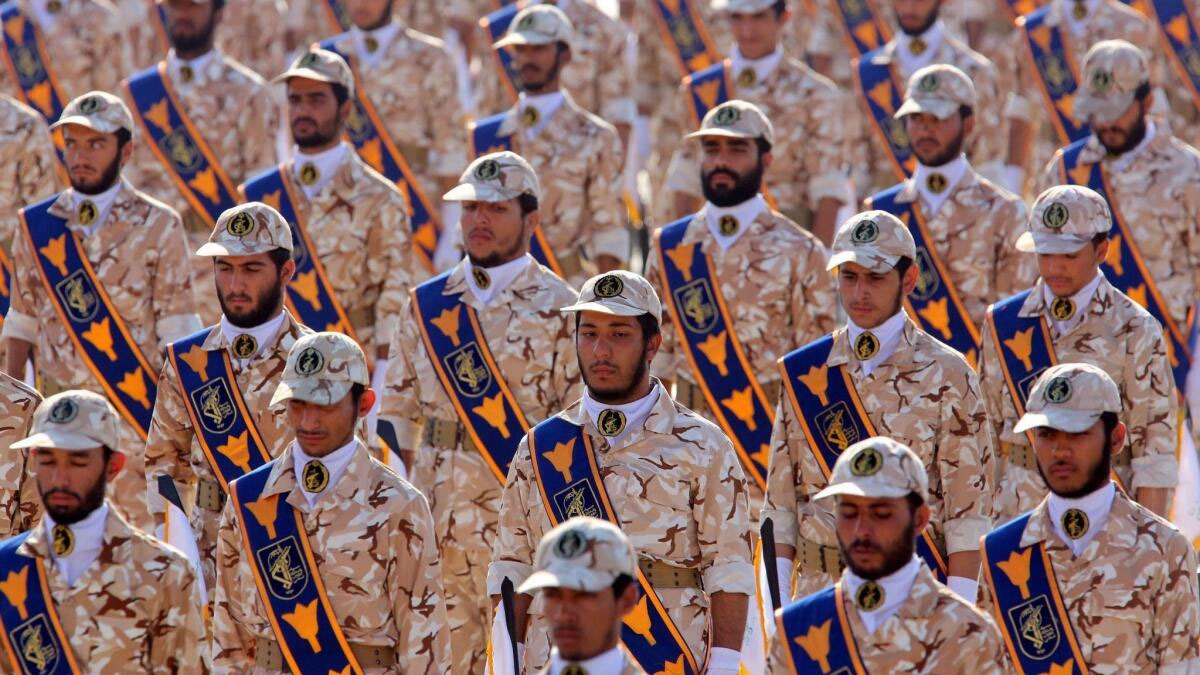
Iran has issued a stark warning that American-affiliated universities operating in the Middle East could become potential targets, as tensions between Iran and the United States continue to rise.
The threat, attributed to Iran’s powerful Islamic Revolutionary Guard Corps (IRGC), follows allegations that Iranian universities were damaged in recent strikes linked to the ongoing conflict. Iranian officials have not publicly provided detailed evidence of the alleged attacks but have condemned what they describe as violations of sovereignty and international norms.
In statements carried by international media, the IRGC warned that institutions with ties to the United States in the region could be considered “legitimate targets” if hostilities persist. Authorities also advised civilians to avoid such facilities, raising concerns about the safety of students, faculty, and staff across several countries in the Middle East.
While the rhetoric signals a dangerous expansion of potential targets beyond military installations, there has been no widely verified confirmation from major global outlets of a specific ultimatum or deadline tied to the warning. Analysts say the language used reflects an escalation in tone but stops short of confirming imminent attacks.
The development comes amid an increasingly volatile regional environment, with both nations exchanging accusations over recent incidents tied to the broader conflict. Diplomatic efforts to de-escalate tensions have so far yielded little progress, as global powers call for restraint.
Security experts warn that any attack on educational institutions would mark a significant shift in the conflict, potentially drawing widespread international condemnation and increasing the risk of further escalation.
Governments in the region are said to be reviewing security arrangements around foreign-linked institutions, while universities are reportedly monitoring the situation closely.
As of press time, officials from the United States had not issued a formal response specifically addressing the threat to universities, though Washington has repeatedly condemned attacks on civilian infrastructure and reiterated its commitment to protecting American interests abroad.
Iran Threatens US-Linked Universities in Middle East Amid Escalating Tensions
International
Trump Claims Iran Sent Oil Shipments Amid Backchannel Talks
Trump Claims Iran Sent Oil Shipments Amid Backchannel Talks
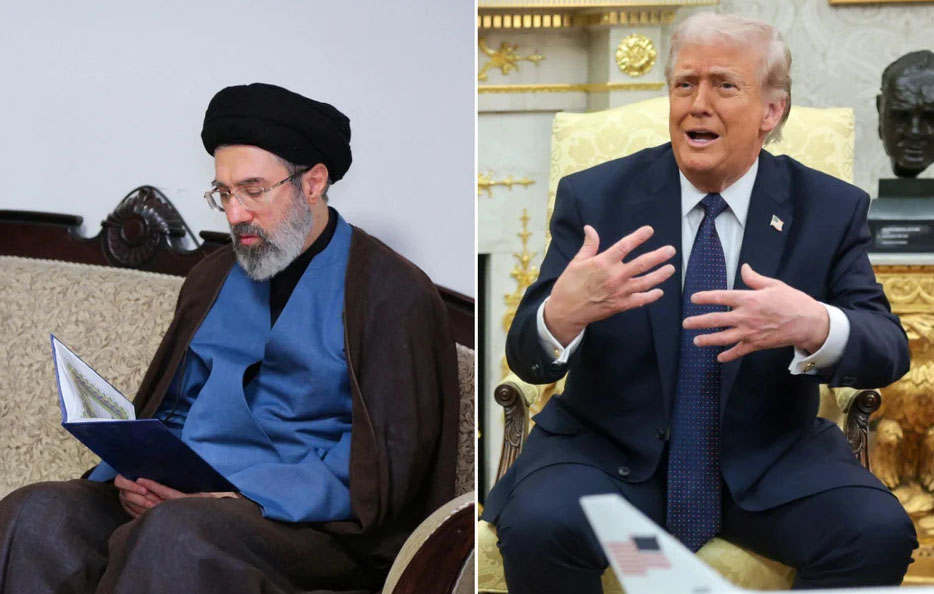
U.S. President Donald Trump has claimed that Iran dispatched ten oil tankers to the United States as part of indirect negotiations aimed at easing ongoing tensions between the two nations.
According to a report by Sky News on Friday, March 27, 2026, Trump made the assertion while speaking at the Future Investment Initiative in Miami. He suggested that the shipments were a gesture of goodwill, possibly intended as an acknowledgment of ongoing diplomatic engagements.
“It turned out I was right,” Trump said, referring to earlier claims that talks were underway between Washington and Tehran—claims initially denied by Iranian authorities. “They were negotiating, which they admitted two days later.”
Providing further details, Trump stated that Iran had first proposed sending eight oil ships before increasing the number to ten. “They said, ‘we’re going to send you eight ships of oil.’ They actually said, ‘we’re going to add an extra two,’ and they added an extra two,” he said. “So we had ten ships, and then people realized we were actually negotiating.”
Trump also struck a confident tone regarding developments in the Middle East, declaring that the region was “closer than ever” to being free from what he described as Iranian “terror, aggression and nuclear blackmail.”
However, Iranian officials have firmly rejected the claims of formal negotiations. Authorities in Iran insist that no direct talks are taking place with the United States, maintaining that any communication occurs strictly through third-party intermediaries, including Pakistan.
Tehran’s continued denial underscores the sensitive nature of any potential engagement with Washington, particularly amid domestic political pressures and broader regional dynamics.
The contrasting narratives highlight the uncertainty surrounding U.S.-Iran relations, with both sides presenting differing accounts of ongoing diplomatic efforts.
Trump Claims Iran Sent Oil Shipments Amid Backchannel Talks
International
Iranian Strike on Saudi Base Damages US Spy Plane, Injures 12 Troops
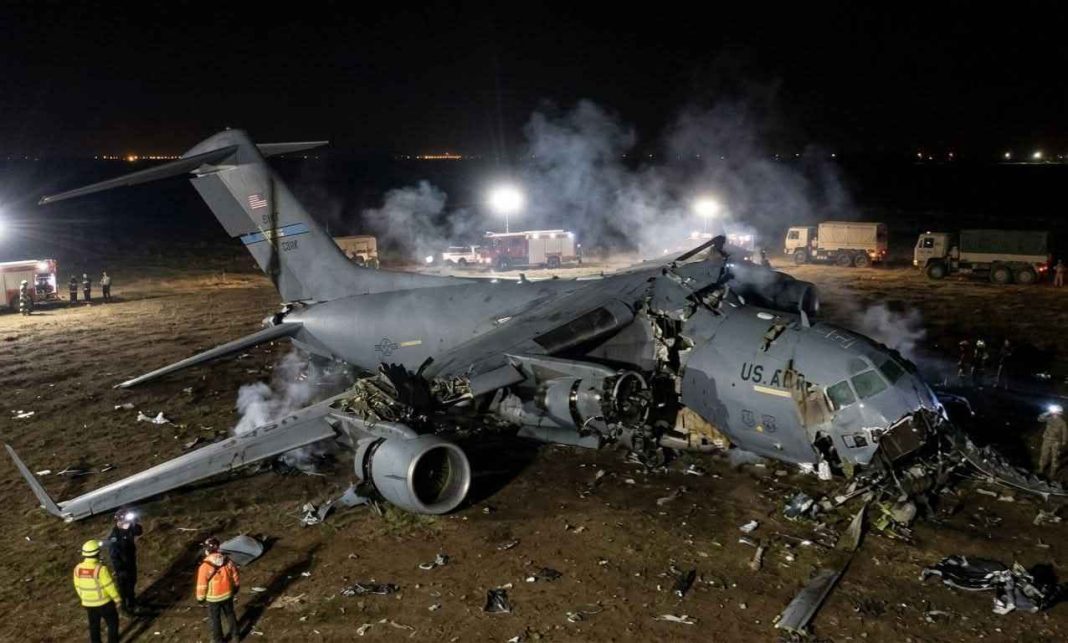
Iranian Strike on Saudi Base Damages US Spy Plane, Injures 12 Troops
Tensions in the Middle East have intensified following a major strike by Iranian forces on a United States military installation in Saudi Arabia, leaving several American personnel injured and damaging high-value military assets.
Iran reportedly launched a coordinated attack involving ballistic missiles and drones on the Prince Sultan Air Base on Saturday, targeting U.S. Air Force equipment stationed at the facility.
Initial reports from outlets including Daily Post Nigeria and Fox News indicated that a U.S. E-3 Airborne Warning and Control System (AWACS) aircraft—estimated to be worth about $700 million—was destroyed in the strike. The aircraft serves as a critical airborne radar and command center, capable of detecting threats and coordinating air operations over vast distances.
However, more recent and verified accounts suggest that the aircraft, identified as the Boeing E-3 Sentry, was damaged but not confirmed destroyed, raising questions about the accuracy of early claims surrounding the extent of the losses.
In addition to the AWACS aircraft, at least one KC-135 Stratotanker was reportedly struck during the ആക്രമation and caught fire, further compounding the scale of the incident.
U.S. officials confirmed that 12 American service members were injured in the attack. According to Fox News, two of the wounded personnel were listed in serious condition, while the remaining casualties sustained lighter injuries.
Military analysts note that the strike demonstrates Iran’s growing capability to conduct coordinated long-range attacks using a combination of drones and precision-guided missiles, posing a significant threat to U.S. assets in the region.
The latest escalation comes amid an ongoing conflict between the United States and Iran, which has persisted for approximately one month. The war has already led to significant casualties and heightened geopolitical tensions across the Middle East, particularly following reports of high-profile killings involving senior Iranian figures.
As of press time, there has been no official confirmation from the U.S. Department of Defense regarding the total extent of damage to the aircraft or whether any assets were completely destroyed.
Security experts warn that the attack could trigger further retaliation, raising fears of a broader regional confrontation involving key global powers and strategic allies in the Gulf.
Iranian Strike on Saudi Base Damages US Spy Plane, Injures 12 Troops

-

 metro3 days ago
“We Pay Men to Sleep With Us in Germany” — Nigerian Woman Laments Loneliness Abroad
-

 metro2 days ago
Tragedy in Aramoko: Trailer Rams Residential Building, Kills 300‑Level Student
-

 Entertainment3 days ago
Tragedy in Music Industry as ‘Show Your Style’ Singer Sabinus Dies
-

 News2 days ago
Final Notice: FG Orders Civil Servants to Complete PASGA Verification by March 31
-

 metro2 days ago
El-Rufai’s Mother, Hajiya Umma, Dies Amid Son’s Legal Battle
-

 Entertainment2 days ago
Nollywood Actress Declares Love for Ibrahim Chatta, Offers to Pay Her Own Dowry
-

 Business3 days ago
Relief in Sight as Dangote Refinery Lowers Petrol Price
-

 Entertainment3 days ago
Gospel Singer Onos Brisibi Dies at 55 After Prolonged Illness