
International
US military drone crashes into Black Sea after Russian intercept

A Russian fighter jet on Tuesday dumped fuel on an American drone over the Black Sea and then collided with it, causing the drone to crash, the US military said, slamming the manoeuvre as “reckless”.
US European Command said two Russian Su-27 fighters intercepted the unmanned MQ-9 Reaper over international waters and one clipped its propeller.
“Several times before the collision, the Su-27s dumped fuel on and flew in front of the MQ-9 in a reckless, environmentally unsound and unprofessional manner,” it said.
Moscow denied causing the crash of the drone, which the Pentagon said was on a routine ISR (intelligence, surveillance, reconnaissance) mission.
“As a result of a sharp manoeuvre… the MQ-9 unmanned aerial vehicle entered an uncontrolled flight with loss of altitude and collided with the surface of the water,” the Russian Defense Ministry said, adding that the two Russian jets had no contact with the US aircraft and did not use their weapons.
The US State Department said it had summoned Russia’s ambassador to protest.
White House national security spokesman John Kirby later said, “obviously, we refute the Russians’ denial” and added that the United States is trying to prevent the fallen drone from getting into the wrong hands.
READ ALSO:
- BREAKING: 10 killed in fresh attack on Kaduna village
- FG begins construction of 11 flyovers at Lagos level crossings
- Nigerian bagged life imprisonment for murder in South Africa
“Without getting into too much detail, what I can say is that we’ve taken steps to protect our equities with respect to that particular drone -– that particular aircraft,” Kirby told CNN.
“We obviously don’t want to see anybody getting their hands on it beyond us.”
Regular intercepts
Russian intercepts over the Black Sea are common, Kirby told journalists in Washington, but this one “is noteworthy because of how unsafe and unprofessional it was, indeed reckless that it was”.
NATO diplomats in Brussels confirmed the incident, but said they did not expect it to immediately escalate into a further confrontation.
A Western military source, speaking to AFP on condition of anonymity, said that diplomatic channels between Russia and the United States could help limit any fall-out.
“To my mind, diplomatic channels will mitigate this,” the source said.
Russia’s invasion of Ukraine in February last year has led to heightened fears of a direct confrontation between Moscow and the NATO alliance, which has been arming Kyiv to help it defend itself.
Reports of a missile strike in eastern Poland in November briefly caused alarm before Western military sources concluded that it was a Ukrainian air defence missile, not a Russian one.
‘Unflyable and uncontrollable’
The United States uses MQ-9 Reapers for both surveillance and strikes and has long operated over the Black Sea keeping an eye on Russian naval forces.
“Our MQ-9 aircraft was conducting routine operations in international airspace when it was intercepted and hit by a Russian aircraft, resulting in a crash and complete loss of the MQ-9,” said US Air Force General James Hecker, commander of US Air Forces Europe and Air Forces Africa.
“In fact, this unsafe and unprofessional act by the Russians nearly caused both aircraft to crash.
READ ALSO:
- Wike is a drunk, spends N50m on alcohol per week – Amaechi
- Only Yakubu’s resignation would restore INEC’s dignity to conduct further elections – Obi supporters
- FG moves to create jobs through regulation of Halal Sector
“US and allied aircraft will continue to operate in international airspace and we call on the Russians to conduct themselves professionally and safely,” he added.
Pentagon spokesman Brigadier General Pat Ryder told journalists the drone was “unflyable and uncontrollable so we brought it down”, adding that the collision also likely damaged the Russian aircraft, which he said was able to land following the incident.
Several US Reapers have been lost in recent years, including to hostile fire.
One was shot down in 2019 over Yemen with a surface-to-air missile fired by Huthi rebels, the US Central Command said at the time.
According to media reports, a US MQ-9 crashed in Libya in 2022, while another went down during a training exercise in Romania earlier in the same year.
Reapers can be armed with Hellfire missiles as well as laser-guided bombs and can fly for more than 1,100 miles (1,770 kilometres) at altitudes of up to 15,000 metres (50,000 feet), according to the US Air Force.
Meanwhile, Russian President Vladimir Putin was expected to meet with Syrian leader Bashar al-Assad in Moscow on Wednesday to discuss “Russian-Syrian cooperation in the political, trade, economic and humanitarian spheres”.
The two countries have been staunch allies, even as both have found themselves isolated over the years — Syria for its bloody civil war, and Russia for its invasion of Ukraine.
With relations between Middle Eastern states currently undergoing a realignment, analysts have said Moscow is trying to bridge the divide between Syria and Turkey — both Russian allies whose relations were strained by Syria’s war.
AFP





International
Israeli Fire Kills Three UN Peacekeepers in Southern Lebanon
Israeli Fire Kills Three UN Peacekeepers in Southern Lebanon
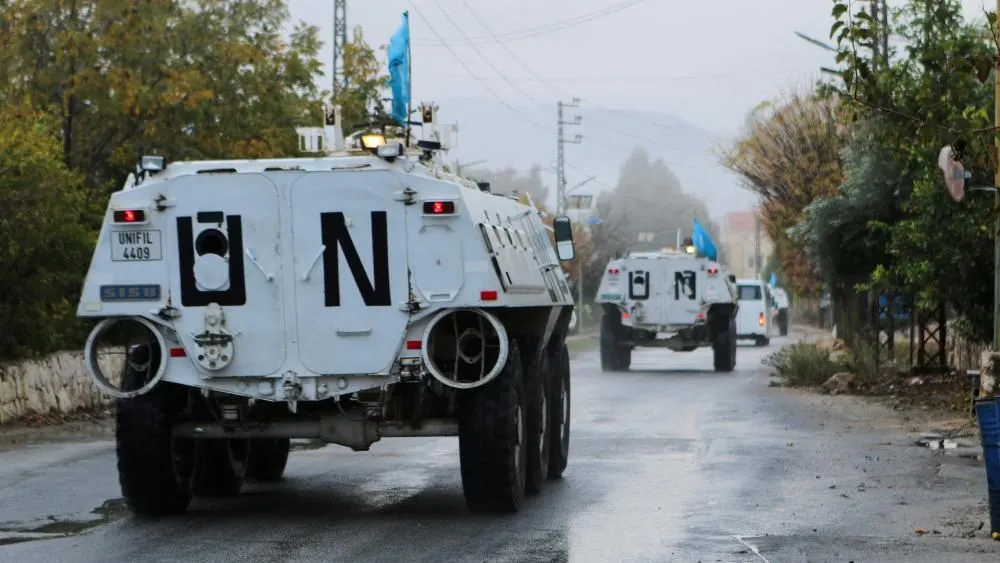
Three United Nations peacekeepers have been killed in southern Lebanon, with others seriously injured, as clashes between Israeli forces and Hezbollah militants intensify. The fatalities, all members of Indonesia’s UNIFIL contingent, mark one of the deadliest attacks on peacekeepers in recent years.
The first incident occurred on Sunday, March 29, when a projectile exploded near a UNIFIL position in Adchit al-Qusayr, killing one peacekeeper and seriously injuring another. Evidence suggests the projectile may have been fired from an Israeli tank, though investigations are ongoing. The following day, two more Indonesian peacekeepers were killed when a logistics convoy vehicle was destroyed by an explosion of unknown origin near Bani Hayyan, leaving additional personnel injured.
UN Secretary-General António Guterres condemned the killings, calling them “grave violations of international humanitarian law” and emphasizing that “no one should ever have to die while serving the cause of peace.” He extended condolences to the families of the deceased and wished a speedy recovery to the injured.
READ ALSO:
- Iyabo Ojo Quits Mediation Between Funke Akindele, Toyin Abraham
- 2027: Badagry elders rally Tinubu to back zone’s first Lagos governor
- Nigerian Man Gets 15-Year US Prison Term for $1.5M Romance Scam
The incidents have prompted the UN Security Council to convene an emergency session to address the attacks. Several European countries, including France, the United Kingdom, and Belgium, issued a joint statement urging all parties to ensure the safety of UNIFIL personnel in accordance with international law. South Korea and other nations also condemned the attacks, highlighting the critical need to protect peacekeepers in conflict zones.
The deaths come amid escalating hostilities between Israel and Hezbollah, which have involved airstrikes, rocket fire, and ground operations along the Israel-Lebanon border. Civilians in southern Lebanon have been severely affected, with thousands displaced and casualties mounting on both sides.
The Indonesian government has called for a transparent investigation into the deaths of its personnel and stressed the importance of accountability. Meanwhile, UNIFIL continues to operate along the Blue Line, though the recent attacks underscore the growing risks faced by peacekeepers in volatile regions.
Israeli Fire Kills Three UN Peacekeepers in Southern Lebanon
International
Nigerian Man Gets 15-Year US Prison Term for $1.5M Romance Scam

Nigerian Man Gets 15-Year US Prison Term for $1.5M Romance Scam
A U.S. federal court has sentenced Nigerian national Saheed Sunday Owolabi to 15 years in prison for orchestrating an international wire fraud and money laundering scheme that defrauded victims of over $1.5 million. The sentence follows his conviction for conspiracy to commit wire fraud and conspiracy to commit money laundering, highlighting the U.S. government’s crackdown on cross-border cybercrime.
According to the U.S. Department of Justice, Owolabi was a key figure in a sophisticated online scam in which he posed as a woman to build fake romantic relationships with U.S. victims—a tactic commonly known as a romance scam. Once trust was gained, the victims were persuaded to wire money into accounts controlled by Owolabi, who then laundered the funds to Nigeria.
READ ALSO:
- Céline Dion Announces Stage Comeback After Four-Year Health Battle
- Senate Passes ₦68.32trn 2026 Budget, Increases Tinubu’s Proposal
- FG Raises Gas Price to $2.18/MMBtu, Signals Fresh Economic Pressure for Nigerians
Investigations by the Federal Bureau of Investigation (FBI) revealed that Owolabi and his co-conspirators also used victim-provided accounts to launder money from other fraudulent operations. In one case, a single victim in the Eastern District of North Carolina lost more than $120,000, with many other victims nationwide affected by the scheme.
U.S. Attorney Ellis Boyle described Owolabi as a “cheat” and said the sentence underscores the FBI’s commitment to identifying, disrupting, and dismantling international fraud and money-laundering networks targeting American citizens.
The court proceedings, led by Assistant U.S. Attorney Brad DeVoe, highlighted Owolabi’s role as an organiser in the fraud, using complex money-laundering methods to conceal illicit proceeds. The case is part of broader U.S. enforcement efforts against online fraud, cybercrime, and cross-border financial crimes, particularly schemes leveraging digital platforms to exploit victims.
Authorities say the sentence serves as a strong deterrent to others involved in international scams and demonstrates that sophisticated internet fraud operations will be pursued rigorously, regardless of the perpetrators’ location.
Nigerian Man Gets 15-Year US Prison Term for $1.5M Romance Scam
International
US Warns Iran Against Closing Strait of Hormuz, Cites “Severe Consequences”
US Warns Iran Against Closing Strait of Hormuz, Cites “Severe Consequences”
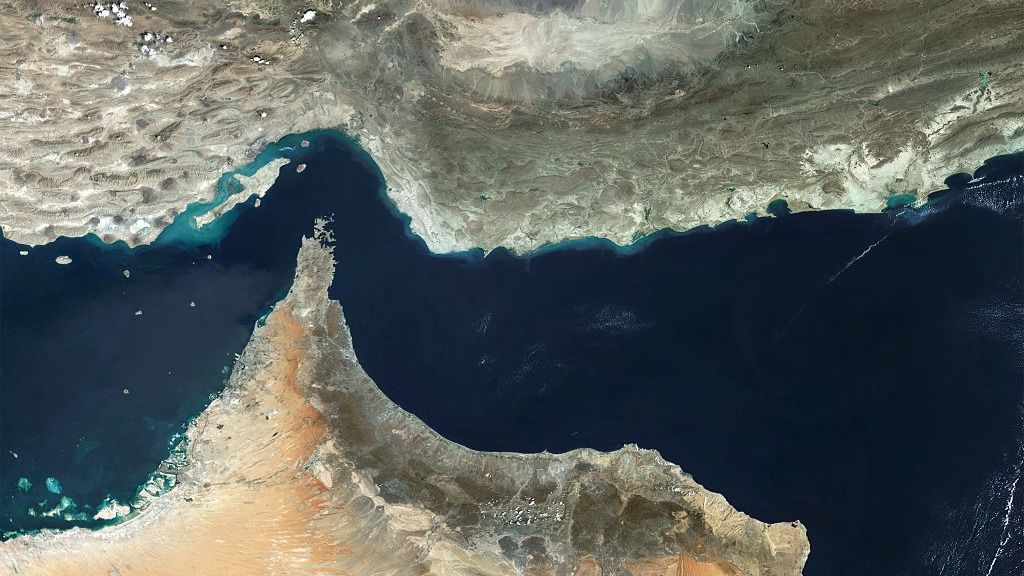
Washington, D.C. — The United States has issued a strong warning to Iran over any potential move to shut down the strategic Strait of Hormuz following ongoing military operations in the region, with Secretary of State Marco Rubio cautioning that such an action would attract “severe consequences.”
Rubio, speaking amid heightened tensions in the Middle East, stressed that the vital waterway must remain open to global shipping, describing any attempt by Iran to block access as unacceptable and destabilising.
“The Strait of Hormuz is an international waterway that must remain open,” Rubio said. “If Iran chooses to close it after military operations conclude, it will face serious consequences. The United States will ensure that freedom of navigation is maintained.”
The Strait of Hormuz is one of the world’s most critical oil transit routes, serving as a gateway for nearly a fifth of global petroleum supplies. Any disruption to its operations could send shockwaves through international energy markets and significantly impact global trade.
Tensions have escalated in recent days following military developments involving the United States and its regional allies, alongside growing concerns over Iran’s response. Analysts say Tehran has previously hinted at the possibility of leveraging the strait as a strategic pressure point during periods of conflict.
READ ALSO:
- China Thanks ‘Relevant Parties’ as Ships Cross Strait of Hormuz Amid Tensions
- Osimhen Among Highest-Paid African Footballers in 2026 — See Full List
- Lagos NURTW Chairman Sego Distributes Exotic Cars, Luxury Items to Cabinet Members (Video)
Security experts warn that a closure of the narrow waterway could trigger a broader regional crisis, potentially drawing in global powers and leading to military confrontations at sea. The U.S. Navy, which maintains a strong presence in the region, has historically conducted operations to safeguard commercial shipping routes.
While Iranian officials have not formally announced any decision to block the strait, past rhetoric from Tehran has included threats to disrupt maritime traffic if its national interests are threatened.
In response, U.S. officials reiterated their commitment to maintaining stability and ensuring the uninterrupted flow of commerce. Rubio emphasised that any move to interfere with international shipping lanes would not only affect the United States but also have far-reaching consequences for the global economy.
Observers note that the warning underscores the strategic importance of the Strait of Hormuz and highlights the fragile security situation in the Gulf region. With tensions still simmering, diplomatic efforts are expected to continue alongside military preparedness.
As the situation unfolds, the international community remains watchful, with many nations urging restraint to avoid further escalation in an already volatile region.
US Warns Iran Against Closing Strait of Hormuz, Cites “Severe Consequences”

-

 Entertainment2 days ago
Funke Akindele, Toyin Abraham Spark Reactions Over Alleged Snub at Iyabo Ojo’s Premiere
-

 metro2 days ago
Jos Attack: Plateau Govt Declares 48-Hour Curfew After Deadly Assault
-

 Education1 day ago
WAEC Releases 2026 WASSCE Timetable for School Candidates
-

 Auto1 day ago
Lagos NURTW Chairman Sego Distributes Exotic Cars, Luxury Items to Cabinet Members (Video)
-

 News2 days ago
UK Raises Visa Costs, Tightens Immigration Rules From April 8
-

 metro1 day ago
Cars Torched as South Africans Protest Alleged Nigerian ‘Igbo King’ Coronation
-

 Auto2 days ago
Motoring World marks 30 years, set to rally industry leaders in Lagos
-

 International3 days ago
Iran Threatens US-Linked Universities in Middle East Amid Escalating Tensions