
International
US Under Fire Over Alleged $1bn Immigration Fees Without Services
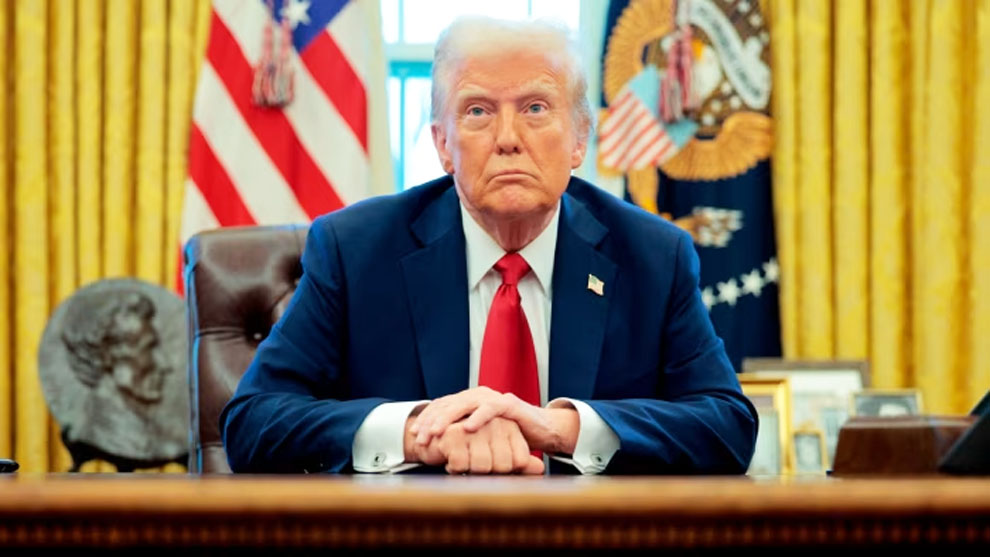
US Under Fire Over Alleged $1bn Immigration Fees Without Services
The United States government is facing growing scrutiny over allegations that more than $1 billion in immigration-related fees have been collected without corresponding services being delivered to applicants, raising concerns about fairness, transparency, and compliance within the immigration system.
The controversy was highlighted during a Senate hearing by policy analyst David J. Bier, who argued that processing delays and policy restrictions have effectively stalled many immigration applications while fees continue to be collected.
“This is the largest fraud in the history of the US immigration system,” Bier told lawmakers, adding that the situation represents “the first $1 billion theft of processing fees for services never rendered.”
The claims come amid broader debates over immigration policies introduced and enforced under the administration of Donald Trump, which critics say have contributed to widespread backlogs and processing freezes across multiple visa and residency categories.
According to the allegations raised, applicants from several countries—including Nigeria, Iran, and Haiti—have been affected by entry restrictions and visa limitations. In some cases, individuals reportedly proceed through application stages, including interviews, without being informed of their ineligibility in advance, leading to non-refundable fees being paid for applications that are ultimately denied or left unresolved.
READ ALSO:
- Mohamed Salah Confirms Liverpool Exit After Nine Years at Anfield
- MultiChoice Sets March 29 for AMVCA 2026 Nominees Reveal
- Court Orders Meta to Pay $375m Over Child Safety Misleading Claims
Additional concerns have been raised over policies affecting individuals already residing in the United States. Reports indicate that certain immigration benefits, such as work permits and permanent residency applications, have faced indefinite delays or suspensions regardless of applicants’ length of stay or eligibility status.
The United States Department of State has also been cited in discussions surrounding the suspension of immigrant visa processing for nationals of multiple countries, reportedly over concerns related to public welfare dependency and security screening. Critics argue that such broad measures may conflict with immigration laws requiring case-by-case adjudication rather than nationality-based restrictions.
The Diversity Visa (DV) lottery programme has also been impacted, with applicants still able to submit entries and attend interviews, but experiencing delays or non-issuance of visas in certain instances, further contributing to frustration among applicants.
Immigration fees in the United States are typically structured across multiple stages, including petition filing, biometric services, visa processing, and work authorisation. For example, sponsoring a spouse can cost several thousand dollars when all required fees are combined, making the alleged lack of service delivery particularly significant for applicants.
Lawmakers have begun expressing concern over the situation. Senator John Kennedy described the reports as alarming, while calling for greater oversight and accountability in how immigration services are administered and funded.
Bier has urged Congress to intervene, recommending the immediate resumption of application processing and clearer adherence to statutory requirements governing immigration adjudication. He argued that while applicants who do not meet eligibility criteria can lawfully be denied, fees should not be collected without the provision of meaningful processing services.
“If someone cannot establish their eligibility, they can be denied under the law,” he said. “But there is no reason to take people’s fees and fail to provide the service the law entitles them to.”
The debate adds to ongoing national discussions about immigration reform in the United States, particularly around processing efficiency, administrative transparency, and the balance between national security concerns and fair access to legal immigration pathways. Observers say the issue could prompt further congressional scrutiny and potential policy reviews in the coming months.
US Under Fire Over Alleged $1bn Immigration Fees Without Services













International
Court Orders Meta to Pay $375m Over Child Safety Misleading Claims

Court Orders Meta to Pay $375m Over Child Safety Misleading Claims
A court in New Mexico has ordered Meta Platforms Inc. to pay $375 million after a jury found the company misled users about the safety of its platforms for children, in a landmark ruling tied to allegations of widespread exposure of minors to harmful and explicit content.
The verdict, delivered after a seven-week trial, found Meta liable under New Mexico’s Unfair Practices Act for allegedly misrepresenting the safety of its platforms, including Facebook and Instagram, which the company owns alongside WhatsApp.
Jurors concluded that Meta’s platforms exposed children to sexually explicit material and facilitated contact with sexual predators, while the company publicly maintained that its services were safe for younger users. The total penalty was calculated based on thousands of violations, each carrying a statutory fine under state law.
New Mexico Attorney General Raúl Torrez described the verdict as “historic,” noting that it represents the first successful state-level lawsuit against Meta over child safety concerns. He argued that Meta executives were aware of the risks but failed to act decisively, prioritising engagement metrics over user safety.
READ ALSO:
- Tinubu Govt Launches Unified System to Lift 50 Million Nigerians Out of Poverty
- Colleagues, Community Rally GoFundMe for Nigerian Nurse Killed in US Wrong-Way Crash
- Kwankwaso Set to Join ADC Wednesday as Defection Talks Intensify
Meta Platforms Inc
During the trial, prosecutors presented internal company documents and testimony from former employees, including whistleblower Arturo Béjar, who testified that internal research showed underage users were exposed to sexualized content on Instagram. He also alleged that Meta’s systems did not adequately prevent predatory behaviour targeting minors.
State evidence reportedly indicated that a significant percentage of users had encountered unwanted sexual content at various points, reinforcing claims that Meta’s content recommendation systems contributed to the problem.
The lawsuit, filed in 2023, accused Meta of using algorithm-driven recommendation systems that could steer young users toward harmful material, including explicit content and interactions linked to exploitation. Prosecutors argued that the company failed to implement sufficient safeguards, such as robust age verification and effective moderation tools.
Meta, led by chairman and CEO Mark Zuckerberg, denied wrongdoing and said it would appeal the ruling. A company spokesperson maintained that Meta has invested heavily in safety measures, including parental controls, content moderation systems, and features designed specifically for teens.
Meta pointed to updates such as “Teen Accounts” on Instagram, which allow younger users and their parents more control over privacy and content exposure. The company has also introduced tools aimed at detecting sensitive interactions and alerting parents when potentially harmful activity is identified.
The case has drawn wider attention amid a growing wave of litigation in the United States involving social media companies and their impact on children and teenagers. Meta is currently facing additional lawsuits, including cases alleging that its platforms are designed to be addictive and harmful to young users.
New Mexico’s lawsuit argued that Meta “steered” minors toward inappropriate content through its algorithms, while ignoring internal warnings and failing to adequately disclose risks to the public. The state said the company’s conduct violated consumer protection laws by creating a misleading impression of platform safety.
Legal experts say the ruling could set a precedent for similar cases across the country, as regulators and states increasingly scrutinize how major technology companies design and manage platforms used by minors.
Court Orders Meta to Pay $375m Over Child Safety Misleading Claims
International
Iran Opens Strait of Hormuz to ‘Non-Hostile Vessels’ Under Strict Conditions
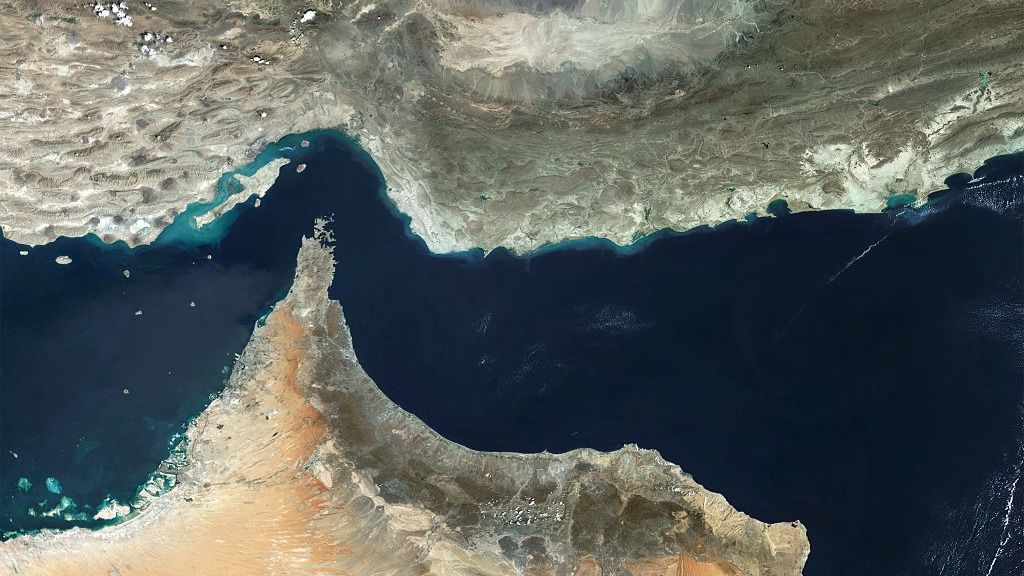
Iran Opens Strait of Hormuz to ‘Non-Hostile Vessels’ Under Strict Conditions
Iran has announced that “non-hostile vessels” can transit the Strait of Hormuz under strict conditions, as tensions in the region continue to disrupt global shipping and energy markets.
In a formal communication to the International Maritime Organization (IMO), Tehran stated that only vessels that do not support hostile actions against Iran and fully comply with its security protocols will be granted safe passage.
According to the statement issued by Iran’s foreign ministry and circulated by the IMO to member states and maritime stakeholders, ships must coordinate their movement with designated Iranian authorities before attempting to pass through the vital waterway.
Iran stressed that vessels linked to the United States and Israel — as well as any parties it accuses of participating in aggression — would not qualify for what it described as “innocent or non-hostile passage.”
The communication further blamed Washington and Tel Aviv for escalating tensions in the region, accusing both countries of waging an “unlawful and destabilising war” that has endangered maritime security and global trade.
Despite the announcement, the Strait of Hormuz remains largely constrained, with maritime traffic significantly reduced due to security risks. The waterway, which connects the Persian Gulf to the Gulf of Oman, is one of the world’s most critical oil routes, handling roughly 20 per cent of global oil and gas shipments. Since the outbreak of hostilities on February 28, following coordinated strikes involving the United States and Israel, shipping activity has dropped sharply as vessel operators avoid the region.
READ ALSO:
- 8 High-Paying Remote Careers to Pursue in 2026
- Alex Iwobi Victim of Violent Burglary at UK Residence, Valuables Worth £500,000 Stolen
- Gunmen Ambush Convoy in Kwara, Kill Two Hunters
- WhatsApp Launches Message Translation Feature for Global Users
Industry reports indicate that a large number of vessels have either been delayed or rerouted, while thousands of seafarers remain stranded across affected areas due to the deteriorating security environment.
The partial shutdown of the Strait has already triggered a surge in global energy prices, with oil markets reacting to fears of prolonged supply disruptions. Security analysts warn that even with Iran’s conditional allowance for certain vessels, the risks remain high due to continued military activity, including reported missile threats, naval patrols, and the potential use of sea mines.
The situation has prompted renewed discussions among Western and allied nations over the possibility of coordinated naval operations to safeguard commercial shipping in the region.
Iran’s latest position effectively places it in control of access to a key global chokepoint, allowing limited passage while maintaining pressure on adversaries. Observers say the move reflects a broader strategy to balance economic considerations — including avoiding a total collapse of maritime trade — with military and geopolitical objectives.
For now, the Strait of Hormuz remains open in principle but tightly controlled in practice, leaving global shipping and energy markets in a state of uncertainty.
Iran Opens Strait of Hormuz to ‘Non-Hostile Vessels’ Under Strict Conditions
International
Trump Signals Push for Iran Deal as Israel Expresses Doubt
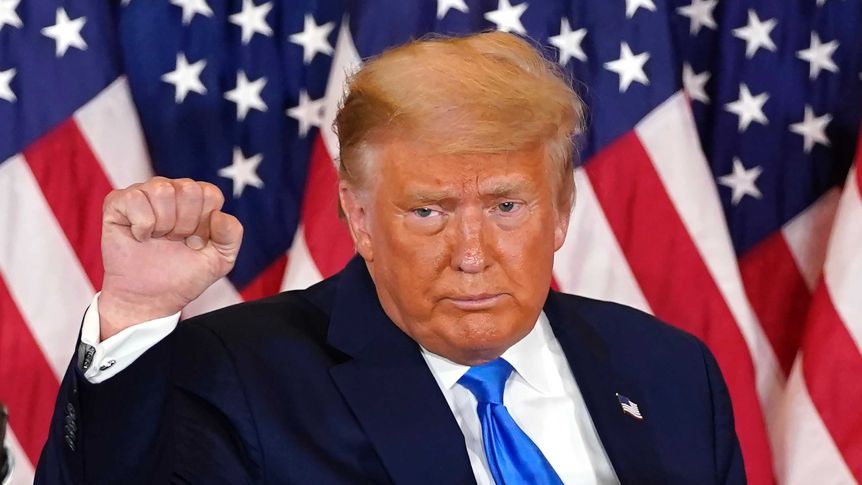
Trump Signals Push for Iran Deal as Israel Expresses Doubt
U.S. President Donald Trump is reportedly determined to reach a diplomatic agreement with Iran aimed at de-escalating hostilities in the Middle East, according to three senior Israeli officials who spoke on condition of anonymity.
The officials said that while Trump appears committed to negotiations, they remain skeptical that Iran would agree to U.S. demands in any renewed round of talks, which they noted previously collapsed on February 28 amid rising tensions linked to the broader U.S.-Israel confrontation with Iran.
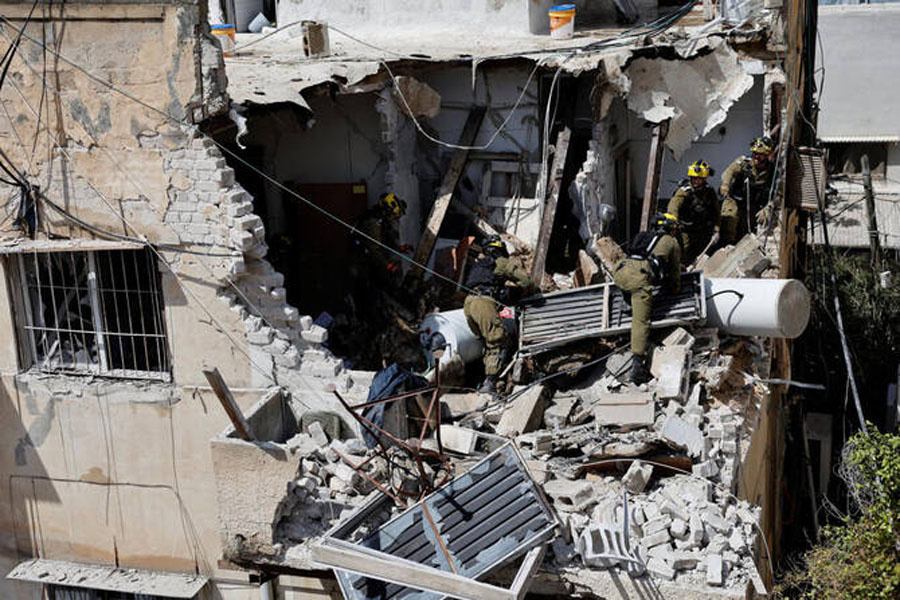
Israeli soldiers inspect the site of a damaged building following barrages of Iranian missiles, amid the U.S.-Israeli conflict with Iran, in Tel Aviv, Israel, March 22, 2026. REUTERS/Amir Cohen
They added that any potential agreement would likely include strict limitations on Iran’s nuclear program as well as its ballistic missile capabilities—longstanding points of contention between Washington and Tehran.
Trump had earlier indicated on social media that the United States and Iran had engaged in what he described as “very good and productive” discussions toward achieving a “complete and total resolution of hostilities in the Middle East.” However, Iranian authorities quickly pushed back on that claim, stating that no formal negotiations had taken place.
Iranian officials have repeatedly denied engaging in direct talks with the United States, maintaining that any diplomatic engagement must occur under conditions that respect Iran’s sovereignty and national interests. In response to Trump’s remarks, Iranian parliamentary speaker Mohammad Bagher Qalibaf dismissed the claims as misinformation, suggesting they were intended to influence global financial and oil markets.
READ ALSO:
- Corps Member’s Death: NYSC Inspector Gets Bail, Remanded Pending Conditions
- Fatal Truck Crash in Ibadan Leaves Multiple Dead, Several Injured
- El-Rufai Remains in Custody as Court Adjourns Bail Hearing
The conflicting narratives come as the regional conflict continues to intensify. Reports indicate that missiles struck central Tel Aviv on Tuesday, as Iran sustained its attacks targeting Israeli territory and, in some instances, Gulf Arab states. The exchanges mark one of the most serious escalations in recent months, raising concerns about wider regional instability.
Meanwhile, Trump has reportedly delayed a deadline requiring Iran to reopen the strategic Strait of Hormuz for international shipping or face potential airstrikes on its power infrastructure. The strait remains a critical global energy chokepoint, and any disruption could have significant implications for oil supply and global markets. The temporary delay was seen as a move to allow space for diplomacy, even as tensions remain high.
The situation has heightened fears of a broader conflict, particularly amid warnings that strikes on energy infrastructure could affect electricity supply across Iran and neighboring Gulf countries. Analysts have also cautioned that any damage to desalination plants or nuclear facilities could trigger severe humanitarian and environmental consequences.
Israeli Prime Minister Benjamin Netanyahu has signaled that military operations will continue despite ongoing discussions about a possible ceasefire. “There’s more to come,” he said, indicating that Israel intends to sustain pressure on Iran and its regional allies, including Lebanon-based groups.
Iran’s Foreign Minister Abbas Araghchi has meanwhile been engaged in a series of diplomatic consultations with counterparts across several countries, including Azerbaijan, Egypt, Oman, Pakistan, Russia, South Korea, Türkiye, and Turkmenistan. These discussions are part of broader efforts by Tehran to rally international support and manage the geopolitical fallout from the ongoing conflict.
As diplomatic signals remain inconsistent and military activity continues, uncertainty persists over whether renewed negotiations between the United States and Iran will materialize or lead to any meaningful breakthrough. Israeli officials remain doubtful, arguing that deep disagreements over nuclear restrictions, missile programs, and sanctions relief continue to stand in the way of a comprehensive agreement.
Trump Signals Push for Iran Deal as Israel Expresses Doubt

-

 Entertainment3 days ago
Baba Ijesha Speaks Out After Prison Release, Denies Sexual Assault Conviction
-

 metro19 hours ago
Fatal Truck Crash in Ibadan Leaves Multiple Dead, Several Injured
-

 metro3 days ago
Over 150 Bandits Reportedly Die in Sokoto Water Accident
-

 Education2 days ago
Mock UTME 2026: JAMB Warns No-Show Candidates, Extends Exam Duration to Four Hours
-

 Education2 days ago
NDDC Opens Applications for 2026/2027 Foreign Postgraduate Scholarship Programme
-

 News3 days ago
Nigerian Army Opens Portal for 91st Regular Recruits Intake
-

 Entertainment3 days ago
Abiodun Ayoyinka Rebrands as Bondu Alaska Amid Papa Ajasco Identity and Brand Dispute
-

 Business17 hours ago
8 High-Paying Remote Careers to Pursue in 2026