

Railway
Railway track vandalism: Urgent need for laws prohibiting scrap/metal picking to protect critical assets
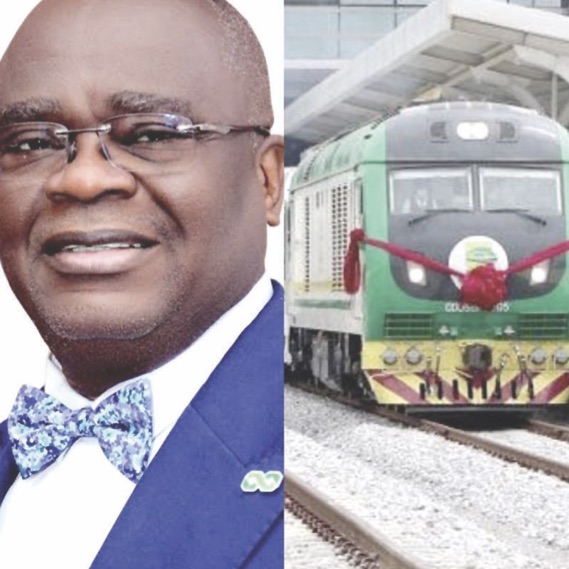
Railway track vandalism: Urgent need for laws prohibiting scrap/metal picking to protect critical assets
By Onyedikachi Stanley Onovo
The wanton destruction and theft of Nigeria’s railway infrastructure and other critical public assets represent one of the gravest threats to national development and security.
Across the nation—from the Warri-Itakpe line to Abuja-Kaduna, the Eastern and Western Districts, Lagos-Ibadan, and throughout the Northern network—vandals systematically dismantle tracks, steal armoured cables, and pillage essential equipment. This crisis demands an immediate and robust legislative response.
The unending menace
The vandalism is perpetrated by a network of individuals, from local miscreants (“iron condemn”) to organised merchants who purchase and export stolen materials. Security reports and countless arrests underscore the scale of the problem:
In December 2023, a private security firm arrested 13 suspects for vandalising Abuja Mass Transit Rail assets. The suspects were said to be casual workers engaged by a Chinese company working on the railways, but said to have used the opportunity to steal the materials.
On June 2024, The Cable reported that the Nigerian Army arrested 47 suspected rail track vandals in Kaduna State.
In October 2025, police arrested a suspect vandalising railway electrical installations also in Kaduna State.
Radio Nigeria in December 2025 announced the arrest of three persons in Kwara State for vandalizing and stealing Railway clips and nuts in Offa.
In May 2021, TVC reported some individuals, including one Ejike Okeke were apprehended in Enugu with stolen sleepers and tracks.
On the 30th of January 2026 the Nigerian Television Authority reported that the NSCDC, Bauchi State Command arrested five suspects and intercepted a truck carrying vandalized railway tracks.
This relentless assault has plagued successive management of the Nigerian Railway Corporation (NRC), defying conventional counter-strategies.
A transformative leadership initiative
A pivotal shift began under the administration of President Bola Ahmed Tinubu with the appointment of Dr. Kayode Opeifa as Managing Director/CEO of the NRC.
Dr. Opeifa introduced a fundamental paradigm shift by redesignating what was carelessly termed “scrap” as “unserviceable critical national assets.”
This reframing has driven a transformative partnership with experts to manage these assets responsibly. The era of controversial public auctions—which often saw valuable national iron assets disappear, depriving Nigeria of materials for repurposing and industrialisation—is now over.
Today, a systematic process ensures these materials are reused or responsibly processed, with revenue reinvested into the Corporation. This home-grown solution is a commendable breakthrough that proves Nigerians can effectively solve national challenges.
The critical legislative gap: Targeting the market
While the NRC’s internal reforms are laudable, they alone cannot stem the tide. The root enabler of this vandalism is the thriving, unregulated market for stolen metal. To kill the vandal’s incentive, we must eradicate the demand.
Therefore, there is an urgent need for the National Assembly to enact legislation that:
1. Prohibits the buying and selling of any railway materials (serviceable or unserviceable) on the open market.
2. Imposes severe penalties on buyers and merchants of vandalised public assets, effectively targeting the economic drivers of this crime.
3. Mandates stringent federal regulation of all scrap metal dealers nationwide.
THE SCRAP DEALER NEXUS
The opaque operations of scrap dealers are a major concern. Their compounds are often shrouded, hiding the provenance of their materials. This unregulated space fuels not only railway vandalism but also community theft—from iron crossing bars in homes to street lamp holders.
Trailers loaded with questionable materials move freely from cities and expressways to unknown destinations. Without regulating this sector, our fight against vandalism remains superficial.
CONCLUSION
The partnership and innovation under Dr. Opeifa’s leadership at the NRC demonstrate what is possible with commitment and vision.
However, to secure our railways, power installations, and other critical assets, we must complement this institutional resolve with strong, deterrence-based law. Legislation that dismantles the market for stolen public property is not an option; it is a national imperative for Nigeria’s security and industrial future.
*Onyedikachi Stanley Onovo, Ph.D
FCAI, ANIPR
onyedikachionovo1@gmail.com excellentdikachi@yahoo.com







Railway
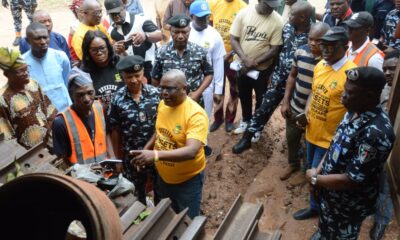
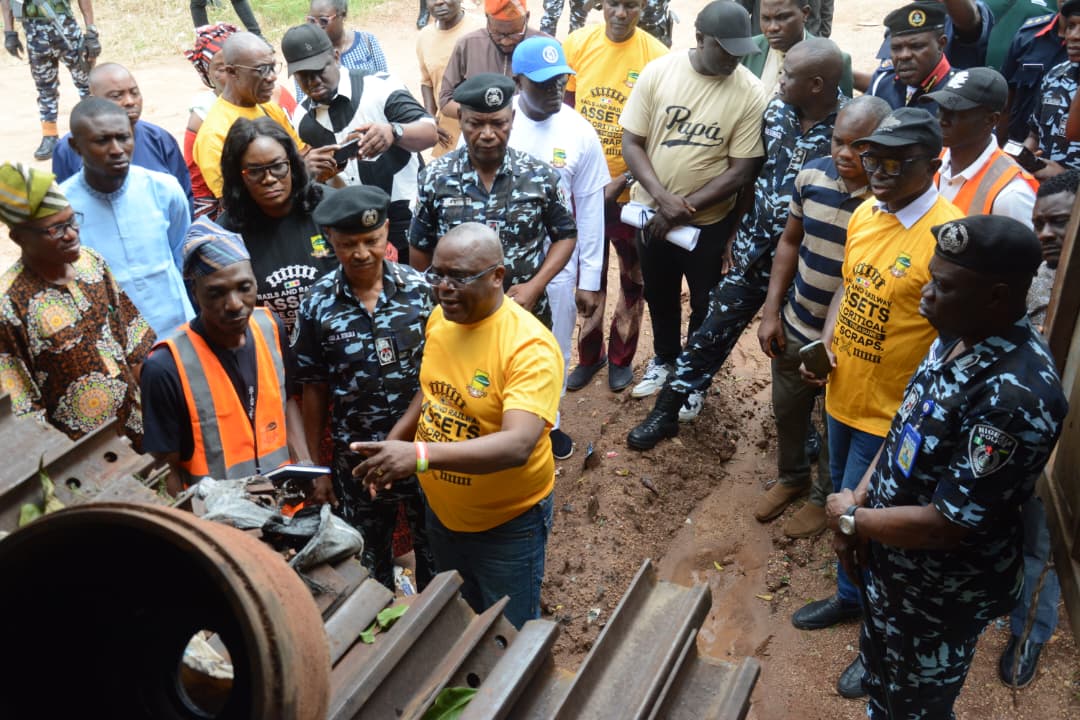
NRC, Police Intensify Crackdown on Railway Vandals as Opeifa Pushes for Tougher Asset Protection
NRC, Police Intensify Crackdown on Railway Vandals as Opeifa Pushes for Tougher Asset Protection
Managing Director of the Nigerian Railway Corporation (NRC), Dr. Kayode Opeifa, has vowed to strengthen the Corporation’s partnership with the Nigeria Police Force and other security agencies to combat vandalism and safeguard Nigeria’s railway infrastructure, following the recent arrest of three suspected railway vandals and the recovery of stolen materials valued at about ₦200 million.
Opeifa made the pledge on Friday during a courtesy visit to the Commissioner of Police, Oyo State Command, CP Olugbenga Ayodeji Abimbola, at the Command Headquarters in Eleyele, Ibadan.
He described the nation’s railway infrastructure as a strategic national asset that must be protected from criminal activities capable of disrupting rail operations and undermining the Federal Government’s investments in the sector.
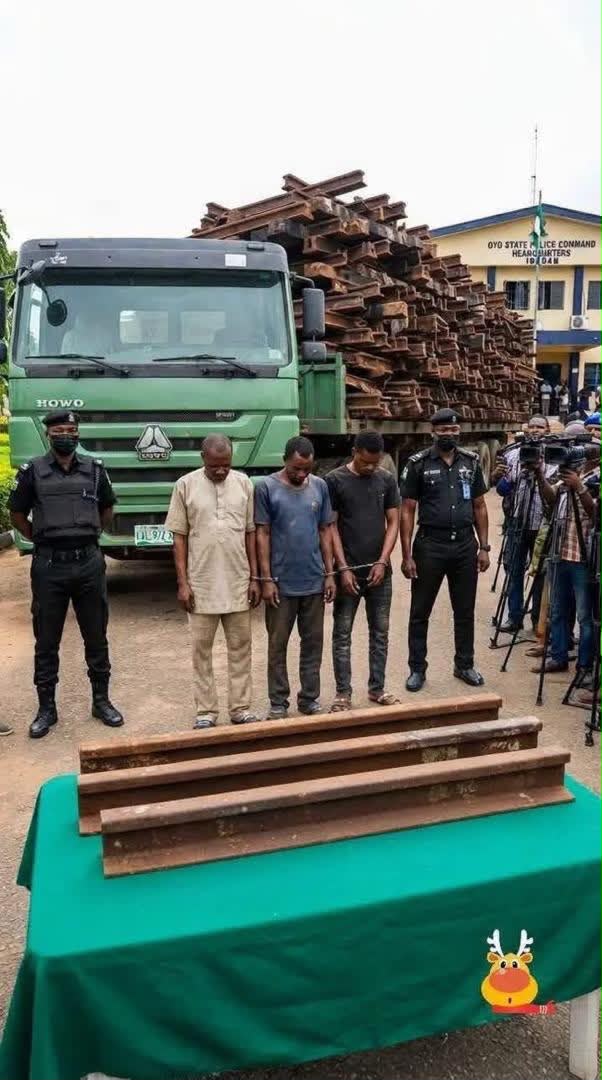
Accompanied by the Commissioner of Police, Nigeria Railway Police Command, CP Lasisi Titilola, Opeifa said the NRC would continue to work closely with security agencies to ensure that all suspects arrested for vandalising railway facilities are thoroughly investigated and prosecuted to serve as a deterrent to others.
The NRC boss praised the Oyo State Police Command and the Nigeria Railway Police Command for their professionalism, vigilance and swift response, which led to the arrest of the three suspects during an intelligence-led operation.
The suspects were intercepted while allegedly transporting vandalised railway materials from Niger State to Lagos, with the recovered items estimated to be worth about ₦200 million.
Describing the operation as a significant breakthrough in the fight against railway vandalism, Opeifa said the success underscored the value of sustained collaboration between the Corporation and security agencies in protecting critical public infrastructure.
He reaffirmed the Corporation’s resolve to deepen cooperation with the police, other security agencies, state governments, host communities and relevant stakeholders to curb vandalism, theft and sabotage across the country’s railway network.
Opeifa also appealed to members of the public to support the campaign against railway vandalism by providing credible and timely information that could help security agencies prevent attacks on railway facilities.
“The Nigerian Railway Corporation remains committed to delivering safe, reliable and sustainable rail transportation while working closely with security agencies and other stakeholders to protect the nation’s railway infrastructure,” he said.
Responding, the Commissioner of Police, Oyo State Command, CP Olugbenga Ayodeji Abimbola, called on the National Assembly to review existing laws on vandalism of critical national infrastructure by prescribing stiffer penalties for offenders.
He warned vandals and other criminal elements to stay away from Oyo State, assuring that the Command would continue to track, arrest and prosecute anyone involved in the destruction or theft of public infrastructure.
Abimbola added that the three suspects and the recovered railway materials would be handed over to the Nigeria Railway Police Command for further investigation and prosecution.
The renewed security collaboration comes as the NRC intensifies efforts to protect rail infrastructure amid ongoing investments by the Federal Government to modernise Nigeria’s railway network and improve the safety and reliability of rail transport nationwide.
Railway
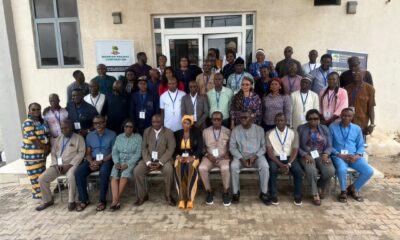
NRC Begins Major Operational Reset with Review of 150 Standard Procedures
NRC Begins Major Operational Reset with Review of 150 Standard Procedures
The Managing Director of the Nigerian Railway Corporation (NRC), Dr. Kayode Opeifa, has launched a comprehensive review of more than 150 Standard Operating Procedures (SOPs) in a major push to improve safety, operational efficiency, accountability and service delivery across Nigeria’s railway network.
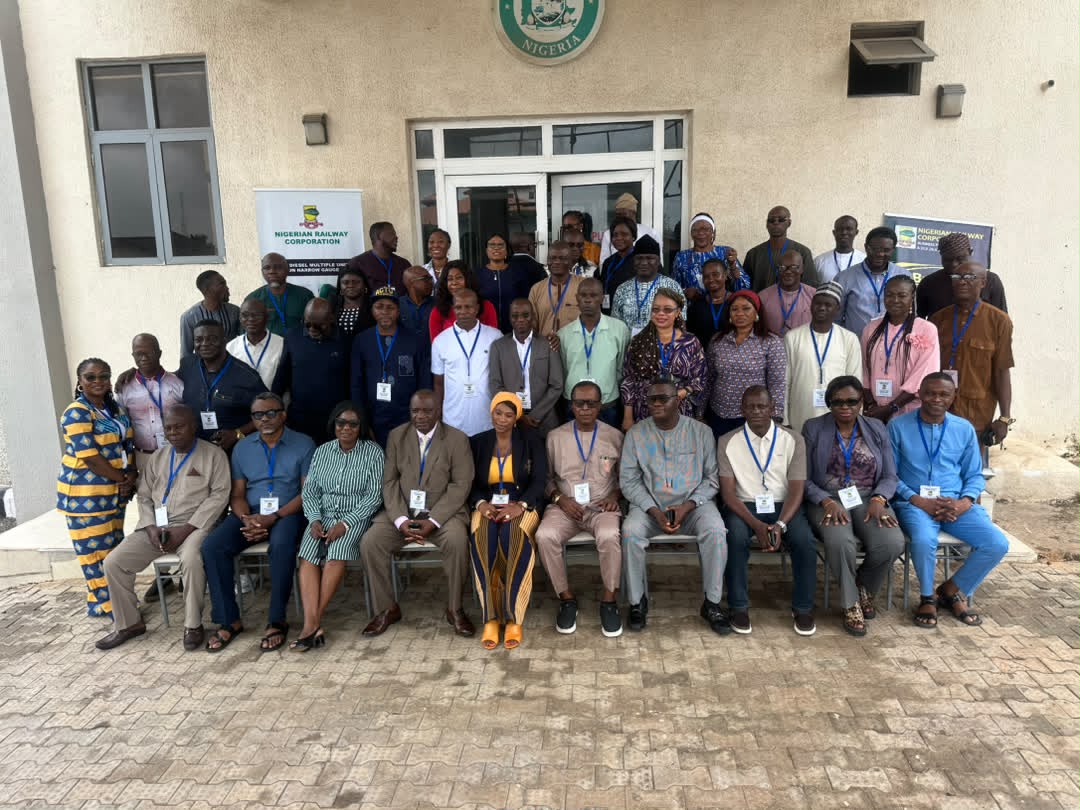
Speaking at the opening of a two-day Executive Standard Operating Procedure Review and Familiarisation Retreat in Abeokuta, Ogun State, Opeifa said the exercise would provide the Corporation with practical and enforceable operational guidelines capable of reducing risks, standardising procedures and driving excellence across all departments.
Represented by the Head of the Business Process Efficiency and Due Diligence (BuPED) Desk, Mr. Oyekunle Oyewole, the NRC boss stressed that the initiative was central to the Corporation’s transformation agenda.
According to a statement by the NRC’s Chief Public Relations Officer, Callistus Unyimadu, Opeifa described an SOP as more than a bureaucratic requirement.
“An SOP is not bureaucracy. It is a practical document that tells every member of staff—from the track to the boardroom—what to do, how to do it, and who is responsible,” he said.
He noted that well-designed SOPs would strengthen operational efficiency, enhance safety standards and align the Corporation’s operations with global best practices.
Opeifa urged directors and other participants to critically assess the existing procedures and produce documents that reflect the realities of a modern railway system.
“Review with the eye of a leader. Challenge existing gaps and own the solutions. Let us leave here with SOPs that are practical, enforceable and fit for the railway we are building today,” he charged.
The retreat, which commenced on Wednesday aboard the Lagos-Ibadan Train Service conference coach en route to Abeokuta, brought together directors, deputy directors, assistant directors, management staff and members of the BuPED team.
READ ALSO:
- Two Arrested for Smoking on Air Peace Flight from South Africa – Police
- “I Just Learned I Filed for Divorce” – Nnamdi Kanu’s Wife Breaks Silence
- NIS Releases Step-by-Step Guide for Contactless Passport Renewal Abroad
In his opening remarks, Oyekunle disclosed that over 150 SOPs were being reviewed to build a stronger, more efficient and better-coordinated organisation.
He added that increased collaboration among departments would improve teamwork and accelerate the Corporation’s transformation.
The Managing Director’s Technical Adviser on Train Operations, Mr. Adeife Akin Olukolade, described the SOP as a living document that must evolve with the changing demands of railway operations.
Drawing from more than two decades of railway experience across three continents, he expressed confidence that codifying the procedures would usher the NRC into a new era of operational excellence.
Also speaking, the Director of Operations, Mr. Akin Oshinowo, said the review would help reduce operational incidents, improve efficiency, ensure consistency in service delivery, strengthen compliance with established standards, guarantee value for money and promote a proactive work culture where employees perform their duties with minimal supervision.
He assured participants of management’s commitment to providing the necessary support for the successful implementation of the reviewed SOPs and embedding them into the Corporation’s operational culture.
The Director of Administration and Human Resources, Dr. Monsurat Omotayo, who presented the first technical paper on the role of capacity building in implementing SOPs, emphasised continuous staff training, effective leadership, a strong compliance culture and performance measurement as critical to successful implementation.
During the interactive session, participants underscored the importance of strict adherence to the SOPs by all categories of staff.
The Director of Civil Engineering and New Lines, Engr. Adekunle Ayeni, stressed that attitudinal change and effective consequence management would be key to successful implementation, advocating a balanced system of rewards for compliance and sanctions for violations.
The Managing Director’s Special Adviser on Media and Strategic Communication, Mr. Adeyinka Aderibigbe, described the retreat as a milestone, expressing optimism that the final document would become a benchmark for railway operators and service providers across the industry.
Similarly, the Deputy Director of Finance, Alhaji Abdullah, said the exercise marked the first time the Corporation would have a comprehensive operational document developed through the collective input of key departments, making it practical, inclusive and implementable.
The review covered SOPs for the Corporate Planning, Medical, Finance, Legal, Internal Audit, Information and Communications Technology (ICT), Procurement, Operations and Commercial, Civil Engineering, Mechanical, Electrical, Signal and Telecommunications (MEST), and Human Resources departments.
Closing the retreat, Dr. Omotayo thanked participants for their robust contributions and urged them to sustain the momentum as the Corporation moves to the implementation phase of the revised operational framework.
NRC Begins Major Operational Reset with Review of 150 Standard Procedures
Railway
Lagos Makes History as NRC Grants Permanent Rail Licence to Run Train Services
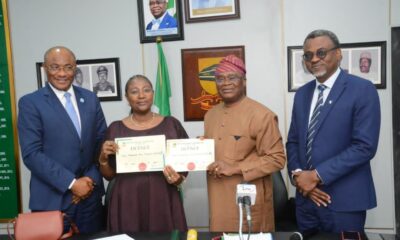
Lagos Makes History as NRC Grants Permanent Rail Licence to Run Train Services
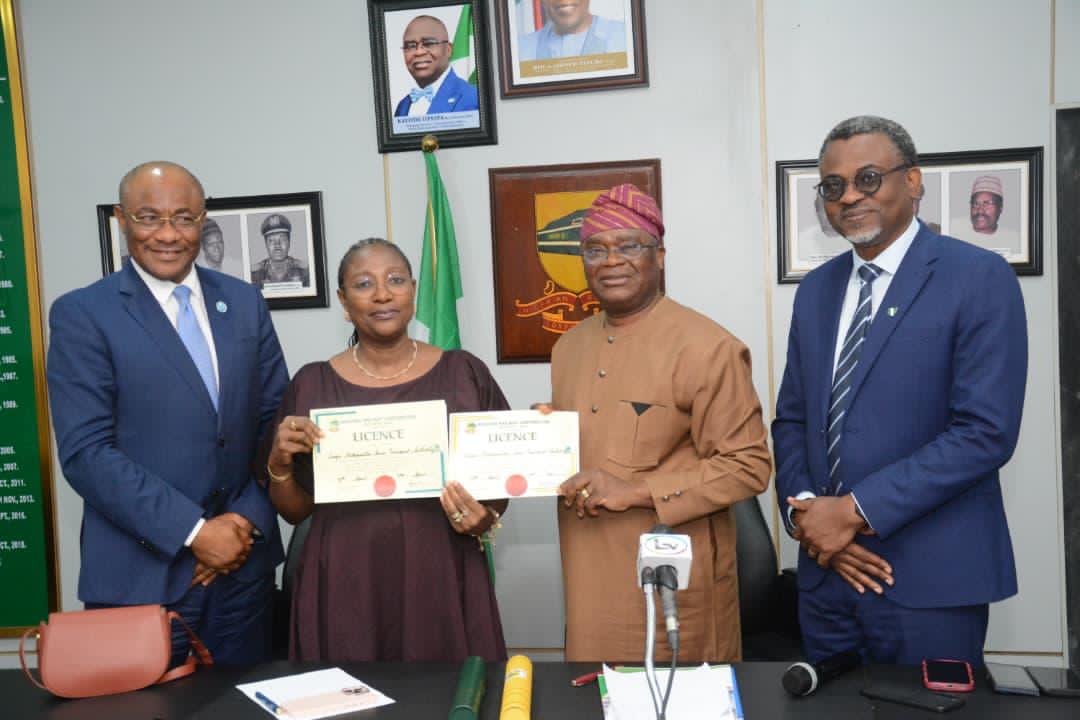
Lagos State has become the first state government in Nigeria to receive a permanent licence to operate railway services after the Nigerian Railway Corporation (NRC) formally authorised it to run both passenger and freight operations under the Lagos Rail Mass Transit (LRMT) Red Line, marking a major milestone in the country’s rail sector reforms.
The NRC on Tuesday presented the permanent operating licence to the Lagos State Government, officially authorising it to operate the Red Line under the existing Track Sharing Agreement.
The approval makes Lagos the first sub-national government in Nigeria to obtain a permanent licence to operate the full complement of railway services, covering both passenger and freight transportation.
Presenting the licence, the Managing Director of the NRC, Dr. Kayode Opeifa, described the development as a watershed moment in the nation’s railway industry, saying it signalled a transition from the era when the NRC was the country’s sole rail operator to a regulated system that accommodates multiple operators.
According to him, the permanent licence empowers the Lagos Metropolitan Area Transport Authority (LAMATA) to continue operating on the shared rail corridor while also giving the Lagos State Government the legal backing to develop and operate other rail systems in line with global best practices.
Opeifa recalled that the journey began in April 2012 when former President Goodluck Jonathan approved the transfer of two federal rail tracks to Lagos State for the development of the LRMT Red Line, a project that has since become one of Nigeria’s most significant urban transport initiatives.
He noted that passenger services on the Red Line commenced on October 15, 2024, following its inauguration by President Bola Tinubu, adding that the NRC played a key role in the project’s success through technical collaboration and personnel training.
READ ALSO:
- Sanwo-Olu Orders Emergency Dredging of 28 Channels as Lagos Battles Flash Floods
- Gunmen Kidnap Pastor, Two Worshippers in Benue Church Attack
- NELFUND Warns Institutions Against Withholding Student Loan Refunds, Arbitrary Fee Hikes
The NRC boss explained that Lagos State was initially granted a temporary operating licence to enable the implementation of the Track Sharing Agreement while operational assessments were carried out. He said the successful completion of the evaluation process paved the way for the issuance of the permanent licence.
He commended the Lagos State Government for its sustained investment in rail infrastructure, rolling stock and mass transit, describing the achievement as a product of visionary leadership, political commitment and long-term planning.
Opeifa also urged other state governments to emulate Lagos by investing in rail transportation, stressing that expanding rail infrastructure across the country would ease road congestion, reduce logistics costs, improve passenger mobility, stimulate economic activities and accelerate national development.
He reaffirmed the NRC’s commitment to partnering with state governments and other stakeholders to build an integrated, safe and sustainable railway network across Nigeria.
Responding, LAMATA Managing Director, Engr. Abimbola Akinajo, described the permanent licence as the culmination of years of rigorous assessments and collaboration with the NRC.
She praised the corporation for its technical support throughout the process, saying LAMATA had benefited immensely from the partnership with the over 100-year-old railway institution.
Akinajo said the Lagos State Government had already procured three additional train sets in anticipation of the permanent licence. According to her, the new rolling stock will increase daily Red Line services from the current nine trips to 24.
She added that when fully operational, the Red Line is expected to transport more than 200,000 passengers daily, while reaffirming the state’s commitment to expanding rail transport as part of Governor Babajide Sanwo-Olu’s THEMES+ Agenda and its vision of an integrated intermodal transport system.
Background
The Lagos Rail Mass Transit Red Line is one of the flagship rail projects designed to tackle traffic congestion and improve urban mobility in Africa’s largest city. Built largely on an existing Nigerian Railway Corporation corridor, the line links Agbado to Oyingbo and forms part of Lagos State’s broader strategy to develop a modern, integrated public transportation system.
The permanent operating licence comes as the Federal Government continues to implement railway sector reforms aimed at encouraging greater participation by state governments and private operators. Industry stakeholders believe the move could accelerate investment in rail infrastructure and modernise transportation across the country.
Lagos Makes History as NRC Grants Permanent Rail Licence to Run Train Services
-

 metro1 day ago
FG Arraigns Three Suspects Over Abduction of Oyo Schoolchildren, Teachers
-

 metro3 days ago
Mary Habila: NYCN gives David Umahi seven days to resign, threatens nationwide protest
-
 News1 day ago
Just in: Supreme Court Orders Final Forfeiture of Emefiele’s Assets, Ends Legal Battle
-

 News2 days ago
Senate passes Bill proposing N50,000 fine for preaching, hawking in commercial buses
-
 metro2 days ago
CAC Commences Deregistration of 100,000 Companies Over Unfiled Annual Returns
-

 Education2 days ago
Trump limits Nigerian, other foreign students to four-year US stay under new visa rule
-

 Politics1 day ago
BREAKING: Hamzat Didn’t Know Running Mate Until APC Picked Her
-

 News2 days ago
Appeal Court Restores INEC Guidelines, Paves Way for 2027 General Elections