
Opinion
Wasiu Ayinde: The shame of a nation (2)
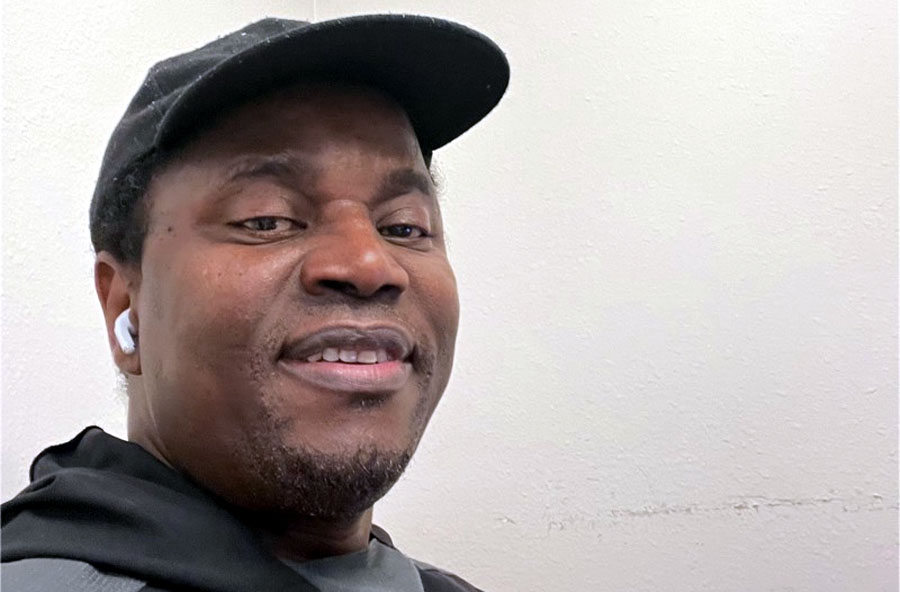
Wasiu Ayinde: The shame of a nation (2)
Tunde Odesola
(Published in The PUNCH, on Friday, August 22, 2025)
Welcome, the ancient Land of Akoko beckons, where man lived in peace with nature until the day when the king, OlúfimoÀkókó, decided to let his wife into the secrets of Orò, forgetting the stern warning, “A woman is free to partake in Egúngúnfestival, she is free to partake in Gèlèdé festival, but the day she sets her eyes on Orò, she’s doomed!” Juju music legend, King Sunny Ade, amplifies this forewarning in his 1974 chart-bursting album, ‘E Kilo F’omo Ode’, crooning, “Awo egúngúnl’obirin le se, awo gèlèdé l’obirin le mo, b’obirin f’oju d’oro, oro a gbe! E kilo f’omo ode…”
Anyone who commits an unprecedented abomination, his eyes will witness an unexampled calamity, goes a Yoruba proverb captured thusly, ‘Eni ba se ohun ti enikan o se ri, oju re a ri ohunti enikan o ri ri’. Wasiu Ayinde’s ignominy at the Nnamdi Azikiwe International Airport, Abuja, was not a solitary case in the history of infamy. By its sheer repulsiveness, Wasiu’s àsàkasà ranks alongside the desecration of royalty by Oba Olúfimo Àkókó, a long time ago, when the eyes were at the knees.
But let’s be clear; the eyes were never located on the knees, literally. ‘When the eyes were at the knees’ is an imagery that explains the limited view, the eyes can see if they are embedded in the knees, as opposed to how far they can see when they are socketed in the head. ‘When the eyes were at the knees’ is a Yoruba expression which means ‘when there was little awareness’.
So, the story of Olúfimo Àkókó and his clingy wife, as documented in the Ifa corpus by Orunmila, dates back to ‘time immemorial’, with ‘time immemorial’ being the white man’s equivalent of ‘when the eyes were at the knees’.
According to the story rendered to me by the one and only Awise Agbaye, Prof. Wande Abimbola, the wife of Oba Olúfimo Àkókó knelt before the throne, saying, “My lord, I wish to know how the egúngún metamorphoses in the grove.” The bewildered king screamed, “Ha! No! Never! No woman sees the robing and the derobing of the egúngún. Èwò! Abomination!”
But the queen won’t take no for an answer. “Please, my lord,” she begged, cringing on her knees and blinking tears away from her eyes. For a minute, time and air froze between the king and the queen. “Uhmm!,” the kabiyesi exhaled, tilting his head to the left in thought as his horsetail sashayed in his right hand.
READ ALSO:
- EFCC hunts for Atiku’s son-in-law over money laundering
- Femi Otedola: I lost N200bn to oil crash, missed bets
- Court restrains police from summoning Nedu Wazobia over business dispute
“Okay, my queen. You will hide in my footstool. From there, you can watch the egúngún metamorphosis,” the king said. “Thank you, my king,” the happy queen rolled on the floor to the right and the left, in gratitude.
As planned, the ruler hid his queen in the footstool and placed his feet on it. The atmosphere was charged as different shades and sizes of egúngún sprouted in the grove and stormed out to the delight of the ‘moríwo’, egúngún adherents. The queen watched how the ‘visitors from heaven’ chanted and sang in guttural voices while performing the rites of passage from the grove to the outer world.
Paje-Polobi is an amazing egúngún in Oyo. Its chief priest, the Alagbaa, shouted, “Paje-Polobi o o o o!” The egúngún burst forth in its colourful attire, running and jumping, chasing and dancing…out of the grove. One after the other, various egúngúnemerged from the grove. Alapansanpa was resplendent, so also was Oloolu, followed by Ologbojo, a most fearsome egúngún.
No matter how long the egúngún festival lasts, the child of the Alágbáà will eventually return to eating cornmeal. So, the festival came and went. And, Akokoland looked forward to the egúngún festival next year, even as the incoming Oro festival looms around the corner.
The Akoko queen had long fancied the Oro festival. So, she went to the king and poured out her heart’s desire, cooing in soft tones the sagas that mythify Akoko in honour and glory. “Impossible!” the king boomed, “No woman sees the Oro!” The queen whimpered, “My lord, no one saw me in the grove of egúngún; how can anyone see me in the grove of Oro when I’m inside the protection of your footstool?”
“Woman, pray, this endeavour won’t kill you,” the king blurted out, “Ok, we’ll repeat the egúngún tactics.” “Thank you, my lord,” the daredevil smiled, eyed the king flirtatiously and sang his panegyrics.
The Oro deity is chauvinistic and patriarchal. On the first night of the Oro festival, spirits and gods are evoked to commune with the sons of man. In the custom of the grove, young oros engage in call-and-response chants. The first oro booms, “Ewe meje-meje ni ege ni! (Cassava has seven leaves)” But, instead of the chant reverberating in and outside the grove, it hardly left the mouth of the oro. “What is going on?” Oro disciples began to wonder. A second oro chants, “Ewe meje-meje ni…,” but the second oro couldn’t finish the chant. Clearly, something was amiss. The third Oro burst into the chant, “Ewe me…,” and stopped abruptly like a rat caught in a gum trap.
READ ALSO:
- 50 bodies recovered after Katsina mosque attack, search continues
- Nigeria’s FX reserves at $41bn highest in four years
- Israel pounds Gaza City ahead of ‘intolerable’ new offensive
The gods are angry. The chief priest rose, looked up and down, and brought out his kola nuts for divination. He threw them on the ground. None looked up. “There’s an intruder in the grove,” he declared. Wizened with age and wisdom, the chief priest sang, “Baye ba ye won tan, iwa ibaje ni won n wu. O difa fun Olufimo Akoko ti o fi aya re mo oro, a pe ita, ita o je, a pe oro, oro o mi titi; e jeka ye inu apere oba wo, e je a ye inu apere oba wo. Translation: When they become successful, they begin to misbehave. This is the Ifa tale of Olufimo Akoko, who showed the secret of Oro to his wife; we called ‘ita’, ita didn’t respond, we called oro, oro didn’t vibrate – let’s look into the footstool of the king!)
Therefore, the footstool was flung open. The queen was brought out. A sword was unsheathed before her eyes, but she never lived to see it sheathed – ‘won ti oju e yo ida, won ti eyin e kiibo’.
Abimbola, a former vice chancellor of Obafemi Awolowo University, concludes in Yoruba, “Wasiu has become successful; he is now misbehaving. When you become successful, you should be careful. The plane would have cut his head off like the wife of Olufimo Akoko was beheaded. May our land not witness evil. Wasiu should be careful.”
What is in a name? Wasiu calls himself Arabambi, a name similar to Olubambi, the name of Sango, the Yoruba god of thunder and lightning, whose death was wrapped in mystery and controversy. Some say Sango committed suicide by hanging, but some say he never did. Abimbola said, “It’s a lie. Sango never committed suicide. It’s not in the Ifa corpus. The lie that he committed suicide was spun by the Anglican Mission to malign the memory of Sango. Sango’s name was not Arabambi; he was Olubambi.”
Well, Wasiu is a music icon and cultural asset to Nigeria, but may he not use his hands to undo himself, I pray. I say this prayer because a psychoanalysis of Wasiu’s actions reveals an expert in the art and science of arrogance and bootlicking. In the video of his disrespectful telephone conversation with President Tinubu, Wasiu put his left hand behind him – a sign of respect – when he talked to the President respectfully, using the pronoun ‘e’, but he put the same hand in his pocket when he talked to the President disrespectfully, using the pronoun ‘o’, like he was talking to his band boy.
READ ALSO:
- Saudi Foreign Ministry accuses Israel of ‘genocide’ in Gaza
- US court overturns $464m civil fraud penalty against Trump
- Ooni: Britain recognised Alaafin as head of Yoruba, says Oba Owoade
In his unbashful character, Wasiu, in an old video, boasted on stage that he could stop a traveller from landing at the Murtala Muhammed International Airport, Lagos: “Emi gangan, walahi, ti n ba ni o ni de Murtala, o le wo Murtala; eniti o mo oba lo n fi oba sere o.” Jatijati.
The conciliatory way the police, NCAA, FAAN and Keyamohandled Wasiu’s case, in contrast to the way authorities hurriedly bundled the daughter of a nobody, Emmanson, into prison, paints the picture of tigers tearing at the godfatherlessand a pride of lions caressing a bull. The Federal Government’s appointment of Ayinde as aviation security ambassador without the conclusion of the investigation amounts to an abuse of justice.
Some argue that Wasiu should not be brought to justice because he had tendered an apology. If an apology were the price for freedom for offenders, there would be no convicts in Nigerian prisons. R. Kelly and P. Diddy, by music achievements and success, are far better than Wasiu. But they are behind bars in the US today for criminal offences. If ‘I’m sorry’ could fetch them freedom, both would churn out Grammy-winning monster hits. If ‘I’m sorry’ could fetch ex-CBN Governor, Godwin Emefiele, freedom, the 64-year-old banker would use numbers to write “I’m sorry”. Despite saying sorry, the troublemaking singer, Portable, was arrested and made to pay fines when he beat up Ogun State environmental officials. He also corrected the building infraction he committed.
With a brand of Fuji relying more on beats than pearls of wisdom, Wasiu has endeared Fuji to the younger generation who prefer form to substance, but with his airport show of shame, he has dragged Fuji into the mud of shame.
Can Wasiu ever change? I doubt it. In his first show after the meltdown, Wasiu, in a most unrepentant manner, referenced the airport saga as ‘isele kekere’ (a minor incident), in a song in which he was begging for forgiveness. To say Wasiu cannot replicate his Abuja dishonourable display in countries such as the US, UK, Canada, etc., is far-fetched. He cannot do such in the Republic of Benin. I doubt if he could do that in Anambra, Abia, Rivers, etc. Cowards bully in their areas of influence.
One thing still beats me in all of this Fuji House of Commotion; it is the shocking realisation that some passengers on the Value Jet plane have not come together to file a class action lawsuit against Wasiu for endangering their lives. If I were on that plane, I would personally and jointly sue Wasiu, who needs to be taught a lesson.
Can Wasiu ever change? Yes, when the cock grows teeth.
* Concluded.
Email: tundeodes2003@yahoo.com
Facebook: @Tunde Odesola
X: @Tunde_Odesola
////////////////////////////////////////
NB: This column goes on a break from next week.
See you!
…
Wasiu Ayinde: The shame of a nation (2)





Opinion
El Rufai’s Arise News mind game with Ribadu, By Farooq Kperogi

El Rufai’s Arise News mind game with Ribadu, By Farooq Kperogi
El Rufai’s Arise News mind game with Ribadu, By Farooq Kperogi
Opinion
Oshiomhole: Behold the 13th disciple of Christ
Oshiomhole: Behold the 13th disciple of Christ
Opinion
AFCON 2025: Flipping Content Creation From Coverage to Strategy

AFCON 2025: Flipping Content Creation From Coverage to Strategy
By Toluwalope Shodunke
The beautiful and enchanting butterfly called the Africa Cup of Nations (AFCON) emerged from its chrysalis in Khartoum, Sudan, under the presidency of Abdelaziz Abdallah Salem, an Egyptian, with three countries—Egypt, Sudan, and Ethiopia—participating, and Egypt emerging as the eventual winner.
The reason for this limited participation is not far-fetched. At the time, only nine African countries were independent. The remaining 45 countries that now make up CAF’s 54 member nations were either pushing Queen Elizabeth’s dogsled made unique with the Union Jack, making supplications at the Eiffel Tower, or knocking at the doors of the Palácio de Belém, the Quirinal Palace, and the Royal Palace of Brussels—seeking the mercies of their colonial masters who, without regard for cultures, sub-cultures, or primordial affinities, divided Africa among the colonial gods.
From then until now, CAF has had seven presidents, including Patrice Motsepe, who was elected as the seventh president in 2021. With more countries gaining independence and under various CAF leaderships, AFCON has undergone several reforms—transforming from a “backyard event” involving only three nations into competitions featuring 8, 16, and now 24 teams. It has evolved into a global spectacle consumed by millions worldwide.
Looking back, I can trace my personal connection to AFCON to table soccer, which I played alone on concrete in our balcony at Olafimihan Street—between Mushin and Ilasamaja—adjacent to Alafia Oluwa Primary School, close to Alfa Nda and Akanro Street, all in Lagos State.
Zygmunt Bauman, the Polish-British sociologist who developed the concept of “liquid modernity,” argues that the world is in constant flux rather than static, among other themes in his revelatory works.
For the benefit of Millennials (Generation Y) and Generation Z—who are accustomed to high-tech pads, iPhones, AI technologies, and chat boxes—table soccer is a replica of football played with bottle corks (often from carbonated drinks or beer) as players, cassette hubs as the ball, and “Bic” biro covers for engagement. The game can be played by two people, each controlling eleven players.
I, however, enjoyed playing alone in a secluded area, running my own commentary like the great Ernest Okonkwo, Yinka Craig, and Fabio Lanipekun, who are all late. At the time, I knew next to nothing about the Africa Cup of Nations. Yet, I named my cork players after Nigerian legends such as Segun Odegbami, Godwin Odiye, Aloysius Atuegbu, Tunji Banjo, Muda Lawal, Felix Owolabi, and Adokiye Amiesimaka, among others, as I must have taken to heart their names from commentary and utterances of my uncles resulting from sporadic and wild celebrations of Nigeria winning the Cup of Nations on home soil for the first time.
While my connection to AFCON remained somewhat ephemeral until Libya 1982, my AFCON anecdotes became deeply rooted in Abidjan 1984, where Cameroon defeated Nigeria 3–1. The name Théophile Abéga was etched into my youthful memory.
Even as I write this, I remember the silence that enveloped our compound after the final whistle.
It felt similar to how Ukrainians experienced the Battle of Mariupol against Russia—where resolute resistance eventually succumbed to overwhelming force.
The Indomitable Lions were better and superior in every aspect. The lion not only caged the Eagles, they cooked pepper soup with the Green Eagles.
In Maroc ’88, I again tasted defeat with the Green Eagles (now Super Eagles), coached by the German Manfred Höner. Players like Henry Nwosu, Stephen Keshi, Sunday Eboigbe, Bright Omolara, Rashidi Yekini, Austin Eguavoen, Peter Rufai, Folorunsho Okenla, Ademola Adeshina, Yisa Sofoluwe, and others featured prominently. A beautiful goal by Henry Nwosu—then a diminutive ACB Lagos player—was controversially disallowed.
This sparked outrage among Nigerians, many of whom believed the referee acted under the influence of Issa Hayatou, the Cameroonian who served as CAF president from 1988 to 2017.
This stroll down memory lane illustrates that controversy and allegations of biased officiating have long been part of AFCON’s history.
The 2025 Africa Cup of Nations in Morocco, held from December 21, 2025, to January 18, 2026, will be discussed for a long time by football historians, raconteurs, and aficionados—for both positive and negative reasons.
These include Morocco’s world-class facilities, the ravenous hunger of ball boys and players (superstars included) for the towels of opposing goalkeepers—popularly dubbed TowelGate—allegations of biased officiating, strained relations among Arab African nations (Egypt, Algeria, Tunisia, and Morocco), CAF President Patrice Motsepe’s curt “keep quiet” response to veteran journalist Osasu Obayiuwana regarding the proposed four-year AFCON cycle post-2028, and the “Oga Patapata” incident, where Senegalese players walked off the pitch after a legitimate goal was chalked off and a penalty awarded against them by DR Congo referee Jean-Jacques Ndala.
While these narratives dominated global discourse, another critical issue—less prominent but equally important—emerged within Nigeria’s media and content-creation landscape.
Following Nigeria’s qualification from the group stage, the Super Eagles were scheduled to face Mozambique in the Round of 16. Between January 1 and January 3, Coach Eric Chelle instituted closed-door training sessions, denying journalists and content creators access, with media interaction limited to pre-match press conferences.
According to Chelle, the knockout stage demanded “maximum concentration,” and privacy was necessary to protect players from distractions.
This decision sparked mixed reactions on social media.
Twitter user @QualityQuadry wrote:
“What Eric Chelle is doing to journalists is bad.
Journalists were subjected to a media parley under cold weather in an open field for the first time in Super Eagles history.
Journalists were beaten by rain because Chelle doesn’t want journalists around the camp.
Locking down training sessions for three days is unprofessional.
I wish him well against Mozambique.”
Another user, @PoojaMedia, stated:
“Again, Eric Chelle has closed the Super Eagles’ training today.
That means journalists in Morocco won’t have access to the team for three straight days ahead of the Round of 16.
This is serious and sad for journalists who spent millions to get content around the team.
We move.”
Conversely, @sportsdokitor wrote:
“I’m not Eric Chelle’s biggest supporter, but on this issue, I support him 110%.
There’s a time to speak and a time to train.
Let the boys focus on why they’re in Morocco—they’re not here for your content creation.”
From these three tweets, one can see accessibility being clothed in beautiful garments. Two of the tweets suggest that there is only one way to get to the zenith of Mount Kilimanjaro, when indeed there are many routes—if we think within the box, not outside the box as we’ve not exhausted the content inside the box.
In the past, when the economy was buoyant, media organisations sponsored reporters to cover the World Cup, Olympics, Commonwealth Games, and other international competitions.
Today, with financial pressures mounting, many journalists and content creators seek collaborations and sponsorships from corporations and tech startups to cover sporting events, who in turn get awareness, brand visibility, and other intangibles.
As Gary Vaynerchuk famously said, “Every company is a media company.” Yet most creators covering AFCON 2025 followed the same playbook.
At AFCON 2025, most Nigerian journalists and content creators pitched similar offerings: on-the-ground coverage, press conferences, team updates, behind-the-scenes footage, analysis, cuisine, fan interactions, and Moroccan cultural experiences.
If they were not interviewing Victor Osimhen, they were showcasing the stand-up comedy talents of Samuel Chukwueze and other forms of entertainment.
What was missing was differentiation. No clear Unique Selling Proposition (USP). The result was generic, repetitive content with little strategic distinction. Everyone appeared to be deploying the same “Jab, Jab, Jab, Hook” formula—throwing multiple jabs of access-driven content in the hope that one hook would land.
The lesson is simple: when everyone is jabbing the same way, the hook becomes predictable and loses its power.
As J. P. Clark wrote in the poem “The Casualties”, “We are all casualties,” casualties of sameness—content without differentiation. The audience consumes shallow content, sponsors lose return on investment, and creators return home bearing the “weight of paper” from disappointed benefactors.
On November 23, 1963, a shining light was dimmed in America when President John F. Kennedy was assassinated.
As with AFCON today, media organisations sent their best hands to cover the funeral, as the who’s who of the planet—and if possible, the stratosphere—would attend. Unconfirmed reports suggested that over 220 VVIPs were expected.
While every newspaper, radio, and television station covered the spectacle and grandeur of the event, one man, Jimmy Breslin, swam against the tide. He chose instead to interview Clifton Pollard, the foreman of gravediggers at Arlington National Cemetery—the man who dug John F. Kennedy’s grave.
This act of upended thinking differentiated Jimmy Breslin from the odds and sods, and he went on to win the Pulitzer Prize in 1986.
Until journalists and content creators stop following the motley and begin swimming against the tide, access will continue to be treated as king—when in reality, differentiation, aided by strategy, is king.
When every journalist and content creator is using Gary Vaynerchuk’s “Jab, Jab, Jab, Hook” template while covering major sporting events, thinkers among them must learn to replace one jab with a counterpunch—and a bit of head movement—to stay ahead of the herd.
Toluwalope Shodunke can be reached via tolushodunke@yahoo.com

-

 metro2 days ago
IKEDC Sets Feb 20 Deadline for Customers to Submit Valid IDs or Face Disconnection
-

 Education2 days ago
Supreme Court Affirms Muslim Students’ Right to Worship at Rivers State University
-

 metro2 days ago
Lagos Police Launch Manhunt for Suspect in Brutal Ajah Murder
-

 News2 days ago
Aso Rock Goes Solar as Tinubu Orders National Grid Disconnection
-

 Business3 days ago
Naira Could Trade Below ₦1,000/$ With Dangote Refinery at Full Capacity — Otedola
-

 metro2 days ago
Army University Professor Dies in Boko Haram Captivity After Nearly One Year
-

 International2 days ago
Trump Halts Minnesota Immigration Crackdown After Fatal Shootings, Protests
-

 Politics3 days ago
City Boy Movement Receives Bus Donations from Zenco, Obi Cubana for Tinubu’s Campaign