

Opinion
Wasiu Ayinde: The shame of a nation (1)

Wasiu Ayinde: The shame of a nation (1)
Tunde Odesola
(Published in The PUNCH, on Friday, August 15, 2025)
Unenviable bee life. Despite buzzing from pillar to post in the field, transporting tonnes of nectar sugar to its hive for honey, the bee, like the Value Jet aircraft passenger, is ultimately deboarded from its hive in an extractive process to yield nature’s sweetest and goldiest liquid, honey; a perfect example of the product outvaluing the producer.
As a youth looking forward to sitting the secondary school-leaving certificate examination, the release of the album, Talazo’84, by the new kid on the Fuji music bloc, Wasiu Ayinde Barrister, presented to me an opportunity for defiance, self-belief and entertainment.
But my admiration for Wasiu had to be in secret because my no-nonsense parents preferred the rich and instructive music of Tunde Nightingale, Adeolu Akinsanya, Haruna Ishola, Jim Reeves, Jim Rex Lawson, I.K. Dairo, Victor Olaiya, Osita Osadebe; Chief Commander Ebenezer Obey, King Sunny Ade, Victor Uwaifo, Fela Anikulapo-Kuti, Orlando Owoh, Ofege, etc, to the originality-lacking music of Wasiu of those days.
In my father’s home, there was an unwritten, but effective law. If you’re watching a programme on TV or listening to the radio, and a Fuji song wafts in, you must change the channel or frown, stand up and walk away. That was the disdain my family had for Fuji, a music genre considered vulgar and lowlife.
And, if you pretend as if you didn’t notice the Fuji song on the radio or TV, my father, Pa Adebisi Odesola, of blessed memory, in the most sarcastic of voices, would twist a sentence in the music, like, “Wese Boy ko, Wese girl ni; o ti gbe rubbish yen kuro ki n to wa gba eti e! Will you turn off the rubbish music before I slap you!?”
But in the eyes of a teenager born on Lagos Island and bred in Mushin, Wasiu was a symbol of possibility. He felt like a big brother and folk hero, whose musical breakthrough whispered to me, “This is Wasiu, young and successful; if Wasiu can achieve musically, you too can, academically.”
Well, 41 years after the release of Talazo’84, I remain a fan of Wese Boy, but now with a better understanding of what enduring music is, an example of which is the music of Fuji Oracle, the late Chief Sikiru Ayinde Barrister, whose songs are truly timeless.
Although I still love Wasiu Ayinde, I hate his lifestyle. The ambivalence between his life and music takes me back to the bee and the honey metaphor – the creation and the creator. This ambivalence prompts the questions: Can the artist be separated from his art, and should fans appreciate and enjoy the music of a morally deficient artist?
READ ALSO:
- You’re too desperate for power- Abure knocks Peter Obi
- Abia govt secures $125m loan from Islamic Bank
- NLC threatens nationwide strike, gives FG 7-day ultimatum
While he lived, King of Pop, Michael Jackson, was a matchless talent in voice and dance. Though not convicted, Jackson faced longstanding allegations of child sexual abuse, making many feel uncomfortable supporting his work, and raising the question: Can the powerful messages in his songs like “Man in the Mirror” or “Heal the World” be separated from the allegations against him?
“Mute R. Kelly” became a widespread movement after American R&B god, Robert Sylvester Kelly, was convicted of multiple sex crimes, including against minors. His conviction caused a sharp drop in public support, with many refusing to stream his music. Unlike the music of Jackson, however, R Kelly’s music brims with autobiographical themes, making the separation of the artist from his art more difficult.
Back home in Nigeria, Fela Anikulapo-Kuti needs no introduction. Though celebrated for his fight against corruption and government highhandedness, Fela was criticised for ruling his Kalakuta Republic with the same highhandedness he criticised public officials for. While some believe his personal flaws shouldn’t be magnified to overshadow his socio-political relevance, others say his activism was no excuse for extremism.
After 41 years in Fuji limelight, controversy is no stranger to the son of Anifowose, who has made a fortune by ingratiating himself with high-end politicians such as ministers, senators, governors and incumbent President Bola Tinubu, singing their praises for a fee.
However, his lack of discretion and unbecoming arrogance, two flaws many blame on the absence of adequate formal education, saw him record a personal phone call with President Tinubu and put the audio call online, breaching the protocol of the Office of the Nigerian President. Sadly and quite worrisomely, the Office of the President did not sanction Wasiu’s recklessness on that particular occasion.
A few days after thoughtlessly exposing President Tinubu’s phone conversation with him, Wasiu grew wings and perched on the roof of his Ijebu-Ode home, looking down on Islamic alfas, who graced his mother’s burial, describing them as interlopers who opened their mouths like an umbrella when there was no rain or sunshine. “Ile baba mi ni Fidipote, awon alfa, won lo be. Ibi ni gbogbo won wa se kinni, ni won wa ganu si,” Wasiu said.
In an attempt to douse the heat generated by his numerous controversies, including the allegations of maltreatment levelled by his former drummer, Kunle Ayanlowo, and the President’s phone call leak, KWAM 1 granted an interview to online TV, Agbaletu, owned by multitalented journalist and music aficionado, Dele Adeyanju, in April 2025.
In the interview, Igi Jegede, clad in a Yoruba attire, with a purple and beige colour thinking cap to match, gave a good account of himself as he denied the allegations of maltreatment, arrogance, highhandedness, vindictiveness and ruthlessness levelled against him. Interspersing the Yoruba interview with some unilluminating English grammatical expressions, Omogbolahan cut the picture of a man sinned against, rather than he sinned.
However, he shot himself in the foot when he highlighted to Agbaletu TV the virtues someone of his social status is expected to possess. His words, “At this juncture in my life, the responsibilities I carry are so many. Wasiu Ayinde is the one you know (but) Wasiu Ayinde has different meanings in various communities, especially in Yorubaland and Nigeria as a whole. Wasiu Ayinde is the Oluomo of Lagos – a very prestigious title and responsibility. This will constrain me from saying some things the way I should, but I won’t be able to say them the way I should. So, also, Wasiu Ayinde is the Mayegun of Yorubaland. Someone who is Mayegun is a peacemaker; no one hears foul words from the mouth of Mayegun.”
READ ALSO:
- EFCC arraigns 23 fraudsters arrested near Obasanjo library
- Obasanjo library not target in sting operation, says EFCC
- Count us out of terrorism, APC replies Canadian court
With the thinking cap still firmly on his head, the Oluaye Fuji continued, “Mayegun should not talk, and people go asking, ‘Was it the Mayegun that said such?’ The greatest of the greatest honour (is my title) as Olori Omoba of Ijebuland; that’s also so big, the society must not hear bad things from my mouth. There are many things I will overlook or choose not to hear or respond to. It’s not that I overlook or wave such things off, but because no one hears foul words from the mouth of Abore (the chief priest). I have two more years to turn 70. Imagine someone who has all these titles, and the things you hear from him are still controversial.”
I wonder where K1 De Ultimate put the thinking cap he wore while granting the Agbaletu interview when, on Tuesday, August 5, 2025, he exhibited a behaviour unbefitting of an Omoluabi, a Mayegun and an Olori Omoba, at the Nnamdi Azikiwe International Airport, Abuja, where he stood in the path of an aeroplane – boasting and threatening – trying to prevent it from taking off, like NURTW members would threaten yellow buses in Lagos. Arabambi became grumpy and baptised the members of Value Jet airline’s cabin crew with w(h)ate(ve)r was the content of his flask, prompting the airline to bar him from travelling, even as he moved the battle to the front tyre of the plane, blocking it from moving.
Until the clips of his shameful airport saga went viral, Wasiu, shortly after dodging the wing of the fast-moving plane in an ‘ariku yeri’ fashion, played the victim, claiming he was in the right, and threatening the owner of Value Jet airline, Kunle Soname, his fellow Ijebu tribesman, saying, “Soname will feel me.” Oniyeye. Ironically, the Wasiu, who, in a song, warns a mother about her child climbing the branchless pawpaw tree, is the one engaging in eregele in front of a plane.
Ayinde’s mentee, Kunle Alabi Pasuma, aka Lagata, likens ere ’gele to the dangerous play by a young boy, Ade, who recklessly rides his bicycle along the road where an egg seller displays her wares, upturning crates of eggs and incurring a huge debt. Pasuma, also known as Iba Wasi, stretches the recklessness metaphor a bit further by likening Ade’s tale to a drunk, who also convulses, saying it is a double whammy for a drunk to convulse, “Ade ma n sere ’gele, Ade n gun keke, nibiti iya eleyin joko…”
According to a leaked audio, Arabambi said he needed water ‘every second’, yes, ‘every second’, and I quote, “I need water. I am dehydrated, I constantly take water…I am a patient. I needed this water, every second, I needed it. You don’t want to see me shut down.”
To ensure fairness and clarity, I placed Wasiu’s claim of needing water ‘every second’ on the table of medical doctors. A medical doctor and associate professor in the Department of Psychiatry, Ladoke Akintola University of Technology, Adeoye Oyewole, said, “It is a lie. No dehydration would be on that level. If dehydration gets to that level, the patient would be placed on IV fluid to prevent renal failure. It is a lie.” Speaking on anonymous condition, another medical doctor, who owns a hospital in Lagos State, said, “If Wasiu claims to need water constantly, the question to ask is, ‘Does he not sleep at night?’ Does he not play for hours without drinking? If he needs water constantly, as he claims, such water must be ORS containing sugar and salt; it can’t be ordinary water. He’s lying.” Yet another medical doctor in the service of Osun State dismissed Wasiu’s claim. The doctor, nicknamed BJ, said, “Wasiu was just looking for an excuse. His claim lacks medical backing if subjected to medical analysis. He’s a joker.”
READ ALSO:
- 17 killed in Israel strikes, says Gaza civil defence
- Tambuwal returns to Sokoto after EFCC arrest, says he can’t be intimidated
- Saudi Arabia knocks Israel over move to annex Palestinian land
Hours after Wasiu’s blowup, Nigeria’s Minister of Aviation, Festus Keyamo (SAN), acting like he was in a just and serious country, swiftly condemned the bad action of the bard as ‘totally unacceptable’, and placed him on a no-fly list, an action that drew a resounding applause from Nigerians. Following Keyamo’s action, a jittery Wasiu quickly clambered down his high horse and ate the humble pie, making a public apology in which he begged Tinubu, Keyamo, NCAA, and FAAN for forgiveness. But, in what he called an apology, the haughty way Olasunkanmi Ayinde described himself as an ambassador of the country in the past 50 years, highlights a refrain in his Talazo’84 album, ‘ko seni to le na mi lore, loju tani, Asiwaju Ahmeda o….’ Wasiu’s limited knowledge precluded him from knowing that nobody appoints themselves an ambassador – an authority needs to appoint someone an ambassador.
It appears the scales of utopia were to later fall off Keyamo’s eyes as he soon realised the minstrel in the eye of the storm was the canary ‘son’ of Tinubu, whose privileged position defies justice and defiles integrity. As an intelligent politician, Keyamo probably took a cue from the fate that befell some Lagos elders, who gathered under the aegis of the Governor’s Advisory Council, and advised Tinubu on the need not to meddle in the removal of Lagos State Speaker, Mudashiru Obasa, by Lagos State House of Assembly members. Bourdillon refused the counsel of the elders and facilitated the reinstatement of Mudashiru in a brazen manner, which echoes a line from Wasiu’s song, “E mo egbé e yín ke jòkó jé…”
To underscore Ayinde’s arrogance, I reproduce basically the viral phone conversation he had with Tinubu when he lost his mother early this year: How can you (Tinubu) be in power and I (Wasiu) will suffer tribulation. You (Tinubu) can’t be in power, and I (Wasiu) will suffer. That is impossible in the Nigeria that you (Tinubu) are president; the Nigeria that you (Tinubu) have in your hands.
At this point, it is pertinent to peep into the mind of Wasiu and psychoanalyse what constitutes the keys to success for him. This exercise will give an idea of why he behaves the way he does.
Giving what looks like a pep talk in a viral video, Wasiu enumerates three fundamental keys to success in life. According to him, these keys are ‘money, boldness and connection’. Simple! In the short video clip, Baba Sultan was actually referring to Baddo, Nigeria’s hip-hop sensation. For a man close to 70 to assert that ‘money, boldness and connection’ are his three key recipes for success, it goes to say that the power show at the Abuja airport reveals a man whose id dominates his ego and superego. If a man dominated by moral conscience were to give such a pep talk, he would list integrity, hard work, kindness, morality, patience, fairness, commitment and justice as keys to success.
When people describe Nigeria as a puppet on a string controlled by the powerful, the administrations of Muhammadu Buhari and Bola Tinubu readily come to mind, not forgetting those of Olusegun Obasanjo, Musa Ya’Adua and Goodluck Jonathan. Do you still remember the indicted cop, DCP Abba Kyari, who was heard on a recorded phone conversation negotiating access to the cocaine seized from two criminal suspects? Hahaha, that’s Naija for you.
A sane mind would think Kyari would have been brought to justice. But is Nigeria a sane country? Kyari’s indictment for drug crime came on the heels of his indictment by the US in the multinational fraud involving Ramon Abbas, aka Hushpuppi, currently serving an 11-year jail term for international wire fraud after he was arrested in Dubai by the FBI in 2020 and consequently sentenced.
The Buhari administration turned down the request by US authorities for the extradition of Kyari to face criminal charges, maintaining the disgraced cop was on trial in Nigeria, already. Subsequently, the court barred journalists from covering Kyari’s trial, which began in March 2022, saying the identities of witnesses needed to be protected. However, journalists have yet to resume covering the case even as Kyari has been released on bail for not escaping when the gates of the Kuje prison were flung open during an attack on July 5, 2022. Chibunna Patrick Omebi and Emeka Ezenwa, the suspects in possession of 21.25kg of cocaine, have since been released after serving their time in prison, but Kyari is still on trial in Naija. Hahahaha!
Kyari is a northerner like Buhari. Wasiu is a south-westerner like Tinubu. Ushie Rita Uguamaye, aka Raye, is from the south-south creek of Cross River State. She is the National Youth Service Corps member, whose certificate of national service is being withheld by the NYSC in controversial circumstances – after she described President Tinubu as a ‘terrible leader’ overseeing a worsening national economy.
For Raya to receive a pardon like Wasiu, she might need to wait till 2060 when her kinsman might emerge Nigerian president. By then, the foundation of the ethnic bias laid by Jonathan, built by Buhari and cemented by Tinubu would have long become an enduring law in the Nigerian Constitution.
But Raya is not as lucky as Comfort Emmanson, the Air Ibom female passenger, who let all hell loose in a fit of rage that saw her wig, bag, shoes, and all flying in different directions during a free-for-all with cabin crew members inside a plane that arrived in Lagos from Uyo. Unlike Raya, Wasiu and Emmanson have reportedly been appointed as ambassadors by various organisations, but a mass protest led by human rights activist, Omoyele Sowore, to enforce Raya’s rights, was overlooked by Tinubu while Wasiu, his ‘son’, got his hand raised in triumph as if he just won a Grammy.
Emmanson should thank her stars that the timing of her fight coincided with the time when the overpampered ‘son’ of Tinubu was showing the world that this is the best time to be a Yoruba.
Email: tundeodes2003@yahoo.com
Facebook: @Tunde Odesola
X: @Tunde_Odesola
To be continued.









Opinion
2027: Competence, Not Zoning, Should Decide Nigeria’s Next President — Imasuagbon
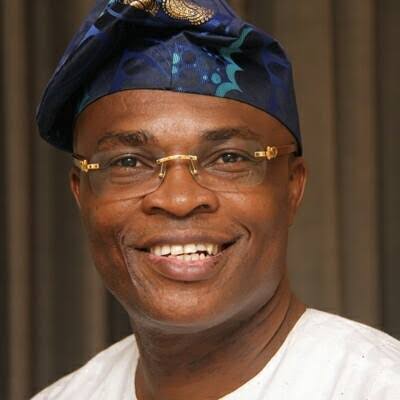
Nigerians should look beyond ethnicity, region and the longstanding debate over rotational presidency when choosing the country’s next leader, according to a chieftain of the African Democratic Congress (ADC), Kenneth Imasuagbon.
The former Edo State governorship aspirant said the priority ahead of the 2027 election should be finding a president with the ability to confront Nigeria’s economic, security and infrastructure challenges.
Speaking to journalists in Benin, Imasuagbon argued that presidential rotation is not a requirement of the Nigerian Constitution and should therefore not outweigh the question of competence.
He said voters should be more concerned about replacing poor schools with better ones, improving healthcare and addressing hardship than debating where the next president comes from.
Imasuagbon specifically appealed to voters in the South to support former Vice President Atiku Abubakar, who is contesting the 2027 presidency on the ADC platform.
According to him, Atiku has demonstrated the experience and determination needed to improve the country, describing the former vice president as someone capable of promoting national unity and fairness.
He also accused the Bola Tinubu administration of worsening economic pressure through policies including the removal of fuel subsidy, while expressing concern about the condition of roads, electricity and other infrastructure.
Imasuagbon argued that the next administration must focus on practical improvements in areas such as power, transportation, employment, security and public services.
The ADC chieftain also dismissed the idea that the ruling All Progressives Congress (APC) would automatically benefit from its incumbency advantage in 2027.
He maintained that the electorate ultimately determines the outcome of an election, arguing that voters could change the political direction of the country if they were determined to do so.
Imasuagbon further criticised what he described as regional and ethnic considerations in the distribution of political appointments and opportunities, insisting that the next president should give Nigerians across different parts of the country a sense of belonging.
His comments come as political parties and their candidates intensify preparations for the 2027 presidential election.
Opinion
Lesson from Dotun Oladipo’s Brave Daughters, by Bamidele Johnson
Lesson from Dotun Oladipo’s Brave Daughters, by Bamidele Johnson
I hope to grow old. I want to see my kids become real adults, find their own feet, make mistakes, recover from them, and perhaps one day complain that their own children are giving them grey hairs. I want that plainly stated before anything else, as everything that follows might read as a man agreeing to an early exit rather than a man simply being honest about the odds.
I want the decades. I want to become the grandfather who repeats the same stories until nobody bothers correcting him anymore. But wanting a thing and being granted are different things. The last year has made that difference harder to ignore than I would like. I have lost many friends recently to keep thinking that optimism is my natural resting state. Some of these men had better blood pressure than mine, better habits, better everything that is supposed to count. It did not save them.
There is no formula I know that reliably separates the men who make it to 70 from those who do not. Anyone who says he knows one is selling something. So, I do not assume that old age is an already booked destination. Even if I once did, which I doubt, the last three years have cured me of such an illusion. As such, I treat it as a hope rather than an expectation, and I have found that a more honest way to live.
It is exactly why I want something placed on record now, while I am still able to place things on record, rather than leave it for people to guess what my wishes were in the fog of a funeral week. If I do not make old bones, my children are not to be asked to read tributes at my funeral. Not one line, however short, however lovingly written.
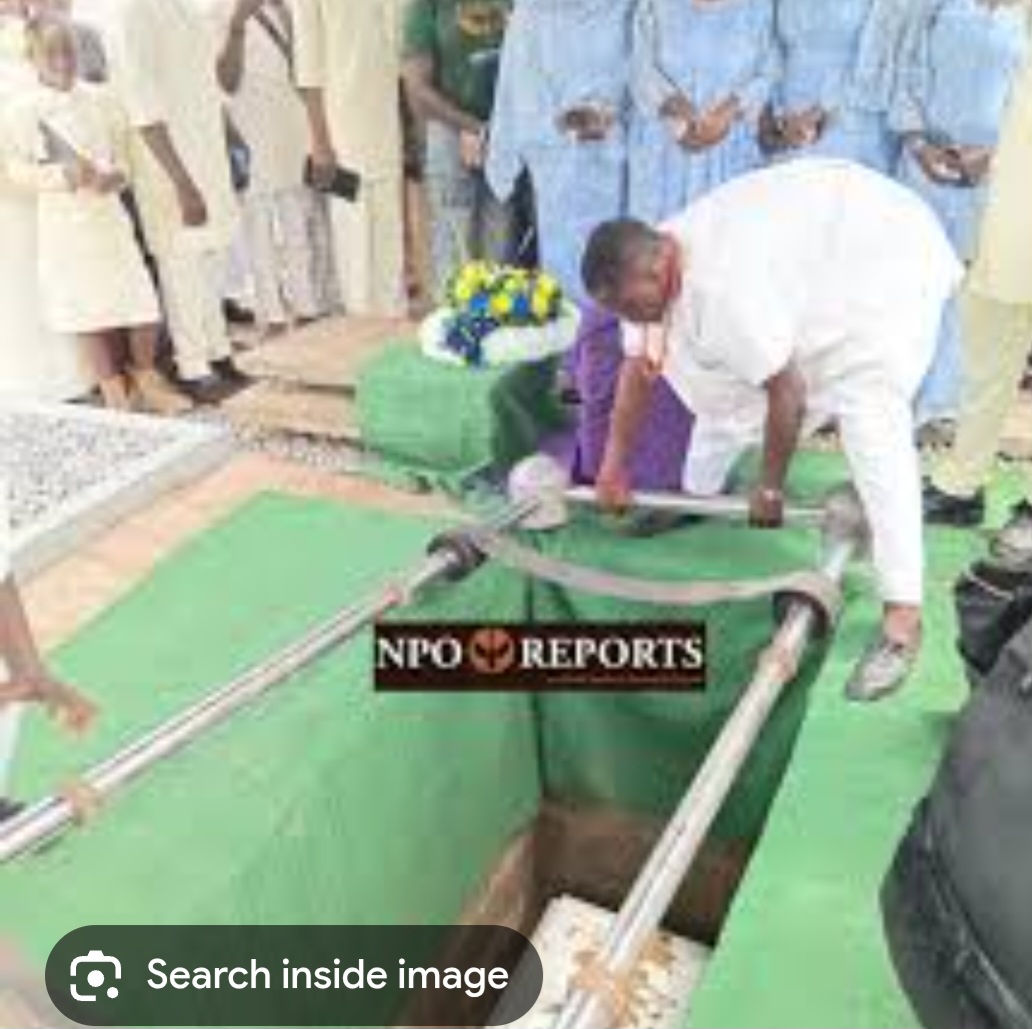
This, for me, was settled today rather than re-opened. At Dotun Oladipo’s funeral service, his three daughters took turns to read their tributes to their dad, and I found myself watching them with awe. There was a kind of strength in them that I do not possess. It is the strength needed to stand in front of a hall brimming with grieving adults and speak about a man they have just lost. Forever. Strength, however, is not the same as ease. I could see plainly what that strength was costing them as they read. Their voices caught. Their composure held and then did not hold and then held again through sheer will.
In front of them, in the pews, men and women considerably older than them came undone in ways the girls themselves were somehow managing to resist. I went mightily close. Some of the sobbing was quiet, the type people try to fold into a handkerchief. Some of it was not quiet at all, the kind that announces itself whether or not you want it.
Those young women honoured their father with a grace that is beyond me. What they did was astonishing. So, what I am attempting is an observation of a custom I have now watched wound people. This was not the first time I had watched this particular ritual extract more than it should from people already running on fumes. I saw an earlier and harder version of it at a friend’s wake back in 2015.
The first son was called forward to read his father’s tribute, and he could not do it. He tried, but the words would not come, and he stood there in front of a crowd of mourners, with his grief simply refusing to organise itself into sentences. The officiating minister, rather than releasing him from the task, urged him to continue. I sat fizzing with sorrow and ire. He could not go on and, eventually, the minister accepted, but not before insisting a while longer than it should have reasonably taken. His younger brother was called up next, presumably on the theory that if one grieving son could not manage it, maybe another one could. He flunked it in the same way. Grief does not distribute itself more conveniently among siblings just because a programme has been printed and needs to be followed.
I have turned that memory over many times since, trying to work out why this part of the rites is treated as mandatory in the first place. I have not found a satisfying answer. Maybe it comes from a belief that a child’s words carry more weight than anyone else’s, which may even be true, but weight is exactly the problem when those carrying it are struggling to hold themselves together with nothing but adrenaline and the fear of dissolving in public.
Maybe it is simply inertia, the reason we still do a hundred things at funerals that nobody can explain the original purpose of. Either way, I have stopped looking for the justification. I no longer think one exists that is good enough to weigh against what I watched happen to that boy in 2015.
So, let this stand as my instruction rather than my preference, the kind of thing I would rather state plainly now than leave for my children to infer later from how uncertain I sound when the subject comes up in passing. If I do not get the old age I am hoping for, my children will not be asked to read a single word over my body. Someone else can speak for me. A friend, a stranger with a steadier voice and a smaller stake in the loss, anyone whose grief will not be quite so total that standing upright becomes almost impossible.
My children, of course, will sit in front and fall apart if that is what the day requires of them, but without the microphone. That, at least, is one small mercy I intend to arrange for them while I am still here to arrange it.
Dotun deserved every bit of the send-off his daughters gave him today, and I suspect he would have been the first to tell them to sit down and let someone else carry the weight for a while. He did not get a say in that, as none of us ever do once we are the ones being spoken of rather than the ones speaking. Rest well, Dotun. You raised three young women whose strength I will not soon forget. That alone says everything worth saying about the man you were.
Opinion
‘Tinubu Will Win Again in 2027’ — Charismatic Bishops’ Secretary
‘Tinubu Will Win Again in 2027’ — Charismatic Bishops’ Secretary
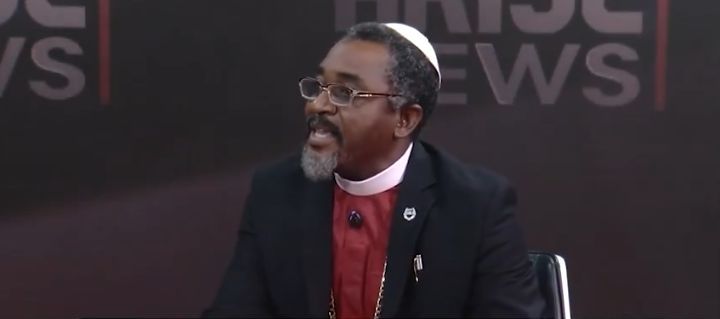
A senior Nigerian cleric, Archbishop Chivir Chianson, has declared that President Bola Tinubu will retain the presidency after the 2027 general election, attributing the prediction to a message he said came from God.
Chianson, who serves as Secretary General of the Charismatic Bishops’ Conference of Nigeria, made the statement while appearing on Arise Television on Saturday.
Rather than basing his prediction on political calculations, the archbishop said his confidence came from what he described as the prophetic role of bishops.
He maintained that the conference had previously spoken about Tinubu’s political future based on what he said was divine revelation and that the President would return for another term.
Chianson also predicted that Tinubu’s performance would improve if he wins the 2027 election.
READ ALSO:
- DSS warns Osun churches, mosques, markets over alleged terrorist attack plot ahead of 2027
- ‘Tinubu Will Win Again in 2027’ — Charismatic Bishops’ Secretary
- Fake miracles, bogus grants: How clerics allegedly fleece Nigerians of millions
Addressing the political opposition, the cleric said the bishops could not be blamed if rival parties failed to unite or organise themselves effectively ahead of the election.
He also sought to clarify the position of the bishops when dealing with government, saying their role in speaking truth to power did not mean they should approach political leaders with hostility or disrespect.
According to him, the Constitution, alongside their religious convictions, should guide how they engage the President and the country.
Chianson said he was sufficiently confident in his prediction to promise that he would return to the Arise TV studio after the 2027 election, when he expects the result to demonstrate that the bishops’ prophecy was correct.
His comments add a religious dimension to the increasingly active political conversation surrounding the 2027 presidential race.
‘Tinubu Will Win Again in 2027’ — Charismatic Bishops’ Secretary
-

 metro3 days ago
Ondo Herbal Drink Tragedy: Survivor Vows Never to Drink Again as Death Toll Tops 30
-
 Business3 days ago
Dangote: ₦525 Refinery Shares Could Rise to ₦10,000
-

 metro3 days ago
Sokoto Cleric Stabbed Twice in Neck After Juma’at Prayer, Attacker Killed
-
 News1 day ago
SERAP Threatens Legal Action Over ₦126bn INEC Electoral Funds
-

 metro2 days ago
MURIC fires back at Peter Obi: Forget Sallah ceremony, free Nigerian Muslims
-

 metro2 days ago
Abia Police Arrest Father, Three Others Over Alleged Attempt to Sell 16-Month-Old Daughter
-
 International2 days ago
Trump Tells Supporters to ‘Cheat Like Hell’ Ahead of US Election
-
 metro2 days ago
FG Targets 2 Million Creative Jobs by 2030