

metro
Why China is reluctant to fund Lagos’ fourth mainland bridge
Why China is reluctant to fund Lagos’ fourth mainland bridge
With an estimated population of over 22 million and a landmass of just 3,575 square kilometres, Lagos currently has Nigeria’s highest vehicle density, with about 1.2 million registered vehicles. This represents over 30 per cent of the country’s total vehicle population.
Over the years, traffic congestion in the state has gone beyond inconvenience to become a structural barrier to economic growth, mental well-being, and environmental sustainability. A 2023 study by the Danne Institute for Research, a not-for-profit trust, revealed that Lagos loses a staggering N4tn annually due to severe traffic congestion. The report underscores the urgent need for interventions to mitigate the economic and social toll on residents.
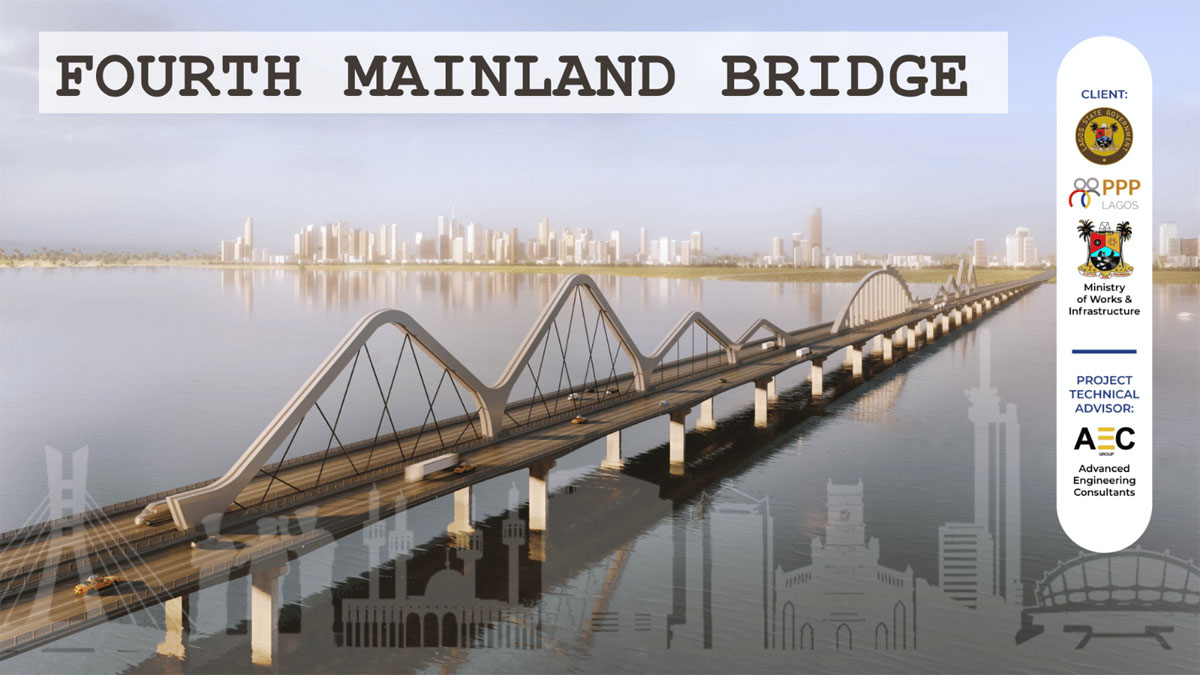
The proposed Fourth Mainland Bridge aims to ease the heavy traffic on the existing Third Mainland Bridge and other key routes such as the Carter and Eko bridges. It is also expected to stimulate economic growth by opening new areas for development through improved connectivity.
Construction was initially planned to begin in the first quarter of 2024, with completion slated for 2027 — before the end of Governor Babajide Sanwo-Olu’s tenure. However, execution has stalled. The project is structured as a public–private partnership (PPP), a long-term arrangement between a government and private sector entities, where private capital finances public projects up front and recoups investment through revenue from taxpayers and/or users over time.
A consortium of China’s state-owned firms is the preferred bidder for the Fourth Mainland Bridge project. THE WHISTLER learnt that China is reluctant to undertake high-cost projects with long payback periods that would require substantial upfront investment and years to recover funds. Instead, China prefers projects with minimal risk — to build and be paid for the work directly.
In 2023, the Lagos State Government announced that it had secured over $1.3bn in partnership deals with the African Export-Import Bank and Access Bank for the bridge and related infrastructure, including the 2nd Phase of the Blue Line rail from Mile 2 to Okokomaiko. In January, Governor Sanwo-Olu revealed that financiers were requesting a sovereign guarantee — a commitment from the Federal Government to secure funding for the bridge.
he governor stressed that Lagos is cautious about its debt profile, particularly amid currency fluctuations.
“We have looked at the financial sustainability of Lagos. Any development you want to do at that scale and you are subnational, you need to be able to look at your sustainability ratios.
“Everybody that has raised funding to help us develop that project—that’s a $2bn project—they aree asking for a sovereign guarantee.
“They are asking for you to get a commitment from the central government. So, we have not been able to push that,” Sanwo-Olu explained during an interview on TVC.
READ ALSO:
- Alleged Killing of Christians: Don’t test Trump, U.S. Rep, War Secretary warn Tinubu
- Police prosecute masquerade, group leader for assault, extortion in Akwa Ibom
- Reps consider bill to pay ₦3,500 daily wage to rural workers
A consortium of China Civil Engineering Construction Corporation (CCECC) and China Railway Construction Investment Group (CRCCIG) is the preferred bidder for the Fourth Mainland Bridge PPP.
The Lagos State Government announced the CCECC-CRCCIG Consortium as the preferred bidder in December 2022.
The bidding process began in November 2019, with 52 responses received, out of which 32 were deemed responsive.
According to the former Special Adviser to the Governor on PPPs, Ope George, after evaluating the Request for Quotation (RFQ), six bidders advanced to the Request for Proposal (RfP) phase, with CCECC-CRCCIG eventually selected as the preferred bidder.
“You will recall that the Lagos State government commenced a Competitive Bidding process for the selection of a Concessionaire, by the issuance of the Request for Expressions of Interest (REOI) on 27th of November, 2019. A total of 52 responses were received with 32 being responsive,” George explained during a briefing.
“Subsequently, a Request for Quotation (RFQ) was issued on 10th February 2020 to the 32 eligible applicants and responses were received on 15th April, 2020 with a total of 15 responses. Upon evaluation, six bidders met the criteria to progress to the Request for Proposal (RfP) stage.”
George added that while the CCECC-CRCCIG Consortium emerged as the preferred bidder, the Mota-Engil (Nigeria & Africa), CCCC & CRBC Consortium was named the reserved bidder.
The PPP agreement includes a 40-year concession for the operator to run and maintain the bridge in order to recoup its investment.
China’s Real Estate Crisis
China’s real estate sector is in distress, with property prices on a downward spiral for the past four years. The sector, a key contributor to China’s GDP, has suffered a major downturn, leading to reduced revenues from land sales, higher costs from stimulus measures, and slowing economic growth. This has caused financial instability and strained local government finances.
The crisis has also affected the global economy — weakening trading markets, raising risks for foreign investors, and stressing the international monetary system. To address the problem, the Chinese government has introduced measures such as re-lending to commercial banks, lowering down-payment thresholds, reducing mortgage rates, and loosening qualification criteria for first-time buyers.
A PPP expert and Chairman of Altra Capital, John Davie, said the real estate crisis is dampening China’s appetite for investment risks overseas.
He noted that the Fourth Mainland Bridge project carries significant risks and that China’s domestic economic challenges are influencing its decisions abroad.
READ ALSO:
- FG seeks fresh $1bn World Bank loan
- Mass stabbing on UK train leaves nine with life-threatening injuries
- FG moves to end doctors’ strike with N11.9bn arrears payment, mass recruitment drive
“China’s domestic demand remains weak due to a struggling property market and low consumer confidence which is putting strains on its willingness to take risks overseas, and the Fourth Mainland Bridge PPP does have huge risks attached,” Davie told THE WHISTLER.
“With China’s real estate sector trapped in a four-year crisis of oversupply and developer bankruptcies, local governments facing a mountain of debt, and consumers tightening their belts as unemployment rises, the government’s reliance on industrial investment amid the downturn is coming home to roost.”
Need For A Sovereign Guarantee
Davie explained that the Fourth Mainland Bridge project carries a high-risk profile and therefore requires a sovereign guarantee for execution.
He said that because the project has a long concession period, its financial returns are uncertain and not significantly better than its risks.
“The project is a very expensive piece of infrastructure with a concession period of 40 years, which suggests that it is not a clear winner financially. Many bridge PPPs are for 20 – 25 years so 40 years means the income is not as secure as it should be,” he said.
Davie noted that sovereign guarantees are often needed in Nigerian PPPs to attract private investment by mitigating risks that private investors cannot bear alone.
“Among these is the real issue of currency fluctuations on large long term projects which will require international finance; in this case Chinese investment – estimated to cost around $2.5bn which is unprecedented at this scale for a sub-national entity in Nigeria and potentially all of Africa,” he said.
It remains unclear what type of sovereign guarantee the Chinese are requesting for the Fourth Mainland Bridge. However, large PPP projects are typically financed through a Project Finance model.
A PPP expert, Dr Chukwuma Katchy, explained that in Project Finance, there is no collateral — if the project fails, the lenders lose their money. Therefore, lenders usually demand performance guarantees such as Demand Risk and MAGA (Material Adverse Government Action) guarantees.
He described a guarantee as an explicit additional layer of protection ensuring that certain obligations in the PPP contract will be honoured by the government or that damages will be paid.
“In reality, nobody can accurately predict the future, and so it is practically impossible for any reputable lender to finance a project without any form of guarantee, such as a performance guarantee,” Chukwuma told THE WHISTLER.
“Demand Risk guarantee simply requests the government to pay the difference between the estimated demand and actual demand if the actual demand falls below the estimated demand.”
He cited the Sydney Cross City Tunnel in Australia — a PPP project commissioned in 2005 — which had an estimated demand of 90,000 cars per day but recorded only 45,000, leading to bankruptcy within two years.
READ ALSO:
- Alleged coup: N11bn found in detained military officer’s accounts
- JUST IN: PDP replaces Acting National Chairman amid ongoing power struggle
- EFCC suspends officials over alleged ₦10 million extortion of rapper Oladips
Chukwuma stressed that while sovereign guarantees cover all risks, they are not commonly used in PPPs except in fragile or conflict-affected states.
“Lenders will always require a Demand Risk guarantee for green field projects such as the Lagos Fourth Mainland bridge since a greenfield project is highly unpredictable. Lagos State Government should arrange with the Federal Government to provide a Demand Risk and a MAGA Risk Guarantees,” he added.
Bridge Background
The Fourth Mainland Bridge is a 37-kilometre structure with a design speed of 140 km/h. It will span from Abraham Adesanya in Ajah to the northwest, connecting to the Lagos-Ibadan Expressway through Owutu/Isawo in Ikorodu.
Proposed in 2006, the project is estimated to cost about $2.5bn. Upon completion, it is expected to be the longest bridge in Africa, featuring three toll plazas, nine interchanges, and a 4.5-kilometre lagoon crossing.
In May 2016, former Governor Akinwunmi Ambode signed a Memorandum of Understanding (MoU) with a consortium of firms and finance houses, including the Africa Finance Corporation (AFC), Access Bank, Julius Berger Nigeria Plc, Nigerian Westminster Dredging and Marine, J.P. Morgan, Hi-Tech Construction Limited, Eldorado Nigeria Limited, and Visible Asset Limited.
However, in May 2017, the government announced the cancellation of the deal, citing delays by the consortium in commencing the project.
Nigeria’s Debt To China
China is Nigeria’s largest bilateral creditor. According to data from the Debt Management Office (DMO) for Q1 2025, Nigeria owes China $5.16bn of its $6bn bilateral debt.
As of December 2024, the figure stood at about $5.3bn. France is Nigeria’s second-largest bilateral creditor, with $609m in loans.
Nigeria has obtained at least 17 Chinese loans for various capital projects and will continue servicing them until around 2038 — the maturity date for some of the loans.
In June 2020, the DMO reported that Nigeria’s borrowing from China stood at $3.121bn as of March 31, 2020, meaning the debt has risen by close to $2bn in five years.
PPP Challenges In Lagos
Past PPPs in Lagos have faced significant hurdles. A key example is the Lekki-Epe Expressway PPP, awarded in 2003. Although construction began in 2006, financial closure was not reached until two years later — a delay experts have described as a major flaw.
The project also faced strong public opposition to toll fees, as well as financial and regulatory challenges with the concession agreement. Consequently, the Lagos State Government eventually bought back the concession from the Lekki Concession Company (LCC).
This experience may explain China’s insistence on sovereign guarantees. Given the high-risk profile of the Fourth Mainland Bridge, the Federal Government is unlikely to provide such a guarantee at this time.
A Managing Consultant at James Daniel Consulting, Emeka Ibe, told THE WHISTLER that a sovereign guarantee is standard practice for a project of this magnitude.
He explained that since Lagos is a subnational entity, the Federal Government would need to provide a guarantee for the state.
“Lagos State Government is not Sovereign but a state of the Sovereign Nigeria, LASG government doesn’t have a central bank and all international payments must pass through CBN,” Ibe said.
“The request for a sovereign guarantee is a standard for international financiers in this type of project. This means that the Federal Government of Nigeria (Federal Ministry of Finance/ Debt Management Office will have to guarantee the Lagos State Government.”
Why China is reluctant to fund Lagos’ fourth mainland bridge







metro
Lagos Task Force Denies Stopping Driver Over Toyota Tacoma Inscription

Lagos Task Force Denies Stopping Driver Over Toyota Tacoma Inscription
The Lagos State Environmental and Special Offences Enforcement Unit, popularly known as the Lagos State Task Force, has denied stopping a motorist or demanding a permit over an inscription displayed on his Toyota Tacoma.
The denial followed a viral social media video shared by Jay Scotch Automobile Ltd, in which the driver alleged that officials stopped him over the words “TRD 4×4 Sport Tacoma” displayed on his vehicle.
The motorist claimed the officials treated the inscription as an advertisement requiring a government permit. He further alleged that they threatened to damage the vehicle’s side mirror if he failed to produce the required permit.
He disputed the demand, explaining that the inscription was part of the vehicle when he purchased it in the United States and was not an advertisement subsequently placed on the vehicle in Lagos.
However, the Task Force distanced itself from the incident.
The agency’s Director of Press and Public Affairs, Raheem Gbadeyanka, said residents sometimes mistake personnel from different government agencies for Task Force operatives, particularly when officers are wearing similar uniforms.
READ ALSO:
- Abuja Police Arrest Woman, Two Hotel Workers Over Man’s Body Dumped Under Bridge
- Bauchi Police Arrest 26-Year-Old Man Over Rape Of 50-Year-Old Woman
- 2027: Lawal Challenges Wike To Clarify Allegiance Over Rainbow Coalition
Gbadeyanka said the Task Force was not involved in the encounter and maintained that demanding a permit for a vehicle inscription was outside the agency’s mandate.
The controversy has nevertheless drawn attention to Lagos regulations governing vehicle branding and mobile advertising.
The Lagos State Signage and Advertisement Agency (LASAA) is responsible for regulating signage and advertising in the state, including mobile advertising and branding on vehicles. Its regulatory framework covers various vehicle categories, including cars, pickups, SUVs, buses and trucks.
LASAA also operates systems for registering and verifying authorised vehicle branding, while its published fee structure contains different categories for mobile advertisements and vehicle branding.
The distinction means that the Task Force’s denial does not amount to a blanket exemption for vehicle advertising or commercial branding in Lagos. Rather, the agency is disputing responsibility for the particular encounter and says enforcement of such permits is not within its mandate.
The Task Force has continued to enforce other road, environmental and public-safety regulations across Lagos, including restrictions affecting commercial motorcycles, road obstructions, illegal roadside activities and unauthorised use of restricted traffic corridors.
The incident has therefore raised a separate question of agency jurisdiction, particularly over which government body is authorised to enforce regulations concerning inscriptions, branding or advertisements displayed on private vehicles.
For now, the motorist’s account and the Task Force’s denial remain the two publicly stated versions of the encounter. No independent evidence has been publicly presented to establish that Task Force officials stopped the driver specifically because of the inscription.
Lagos Task Force Denies Stopping Driver Over Toyota Tacoma Inscription
metro
Abuja Police Arrest Woman, Two Hotel Workers Over Man’s Body Dumped Under Bridge
Abuja Police Arrest Woman, Two Hotel Workers Over Man’s Body Dumped Under Bridge
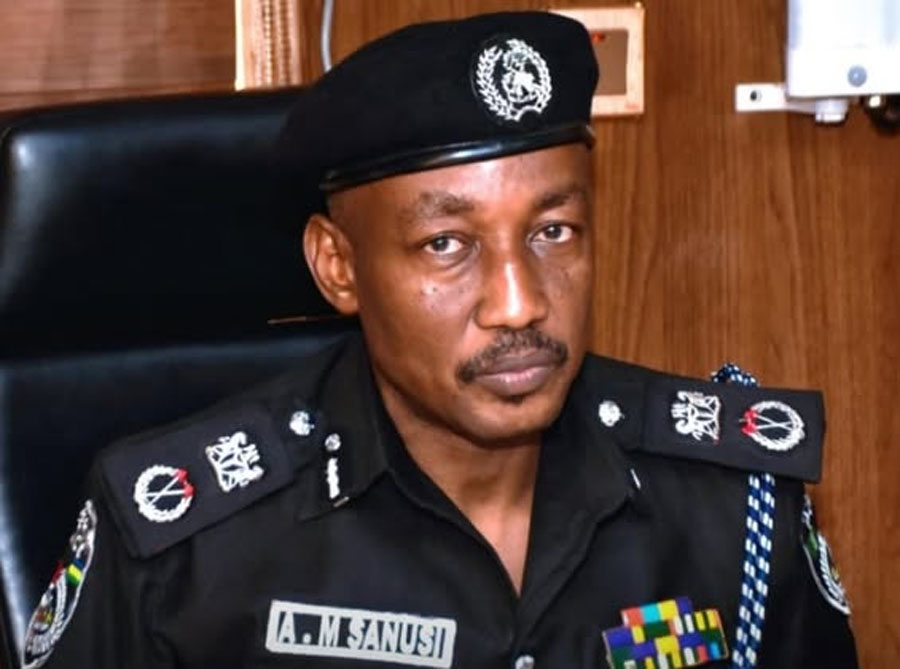
The Federal Capital Territory (FCT) Police Command has arrested a married woman and two workers of a guest house in Abuja over the death of a man whose body was found under Katampe Bridge along the Kubwa Expressway.
The FCT Commissioner of Police, CP Ahmed Sanusi, said the man was first reported missing by his family. His body was subsequently discovered by the roadside under the bridge on August 26, 2026.
The discovery initially prompted speculation about possible kidnapping or one-chance robbery, but investigators later uncovered a different line of inquiry after establishing that the deceased’s mobile phone was missing.
Police said efforts to trace the phone and identify the deceased’s last known contact led investigators to Rukayat Muhammed, a resident of Garki Area 2, Abuja, who was allegedly in a romantic relationship with the man.
Further investigation linked the pair to Good Samaritan Guest House on Second Avenue, Gwarinpa, where they had reportedly lodged before the man was found dead.
According to the police account, Muhammed told investigators that she discovered the man was no longer breathing while they were at the guest house. She allegedly took his phone and left without reporting the incident.
READ ALSO:
- Bauchi Police Arrest 26-Year-Old Man Over Rape Of 50-Year-Old Woman
- 2027: Lawal Challenges Wike To Clarify Allegiance Over Rainbow Coalition
- Unexplained Wealth: Obasanjo, Osinbajo, Others for Shittu’s Book Launch
Hours later, hotel management reportedly gained access to the room after staff were unable to reach the occupants and found the man’s body.
Two hotel workers, identified as Ibrahim Omeiza and Kefat Bitrus, allegedly removed the body from the room and transported it to the Kubwa Expressway near Katampe Bridge, where it was abandoned.
The police said their investigation has linked the woman and the two hotel workers to the events surrounding the man’s death and the subsequent disposal of his body.
However, the exact cause and circumstances of the man’s death remain undetermined. Police said further investigation will establish what happened at the guest house before the body was later found under the bridge.
The identities of the deceased and further details of the circumstances surrounding his death have not been publicly disclosed.
The arrested woman and the two hotel workers remain suspects and are presumed innocent unless proven guilty by a court of competent jurisdiction.
The police said anyone found culpable in the man’s death or the subsequent concealment and abandonment of his body would face prosecution.
Abuja Police Arrest Woman, Two Hotel Workers Over Man’s Body Dumped Under Bridge
metro
Bauchi Police Arrest 26-Year-Old Man Over Rape Of 50-Year-Old Woman
Bauchi Police Arrest 26-Year-Old Man Over Rape Of 50-Year-Old Woman
The Bauchi State Police Command has arrested a 26-year-old man, identified as Lukman Alhaji Nasiru, over the alleged rape of a 50-year-old woman described as living with mental health challenges.
The arrest followed a report received by the police concerning the alleged sexual assault of the woman, with detectives subsequently taking the suspect into custody for investigation.
According to the report, the police are investigating the circumstances surrounding the alleged incident and gathering evidence as part of the process that could determine the next legal steps in the case.
READ ALSO:
- 2027: Lawal Challenges Wike To Clarify Allegiance Over Rainbow Coalition
- Unexplained Wealth: Obasanjo, Osinbajo, Others for Shittu’s Book Launch
- MURIC Blasts Nigeria Over UNGA Stance on Palestine, Netanyahu
The victim’s vulnerability has heightened concerns about the protection of people living with mental health conditions from sexual abuse and other forms of exploitation. Cases involving vulnerable adults can present additional challenges in reporting, investigation and access to justice.
The arrest is not a determination of guilt, and the suspect remains presumed innocent unless proven guilty by a court of competent jurisdiction.
The police are expected to continue their investigation before deciding whether to charge the suspect to court.
The case also adds to the wider concern over gender-based violence and sexual abuse in Nigeria, where law-enforcement agencies and other institutions continue to face calls for prompt investigation and effective protection of survivors and other vulnerable people.
Authorities routinely urge members of the public to report suspected cases of rape and sexual violence to the police or other appropriate authorities so that investigations can be initiated and victims can receive necessary support.
Bauchi Police Arrest 26-Year-Old Man Over Rape Of 50-Year-Old Woman
-
 metro3 days ago
Police Probe Alleged Self-Kidnapping of Adeleke’s Aide in Osun
-

 metro3 days ago
Lagos Arrests Man Over Viral Video of Toddler Being Flogged
-
 metro3 days ago
Tinubu, Fani-Kayode Face Proposed $36m US Lawsuit Over Alleged Threats
-

 News2 days ago
Anambra Releases ₦473m Salary Arrears Document as Obi’s Debt Claim Sparks Fresh Dispute
-

 Sports3 days ago
Former Super Eagles Captain Troost-Ekong Embraces Islam, Recites Shahadah in Doha
-

 Politics3 days ago
Osun APC Warns Adeleke Govt Over Alleged Victimisation of Local Govt Workers
-
 metro3 days ago
Kwara Police Deny Shooting Motorcyclist at Oyun Bridge, Explain Viral Video
-
 News1 day ago
Keyamo: ₦70,000 Minimum Wage No Longer Enough as Cost of Living Soars