
metro
Yahaya Bello: EFCC witness tenders massive dollar payments in money laundering trial
Yahaya Bello: EFCC witness tenders massive dollar payments in money laundering trial
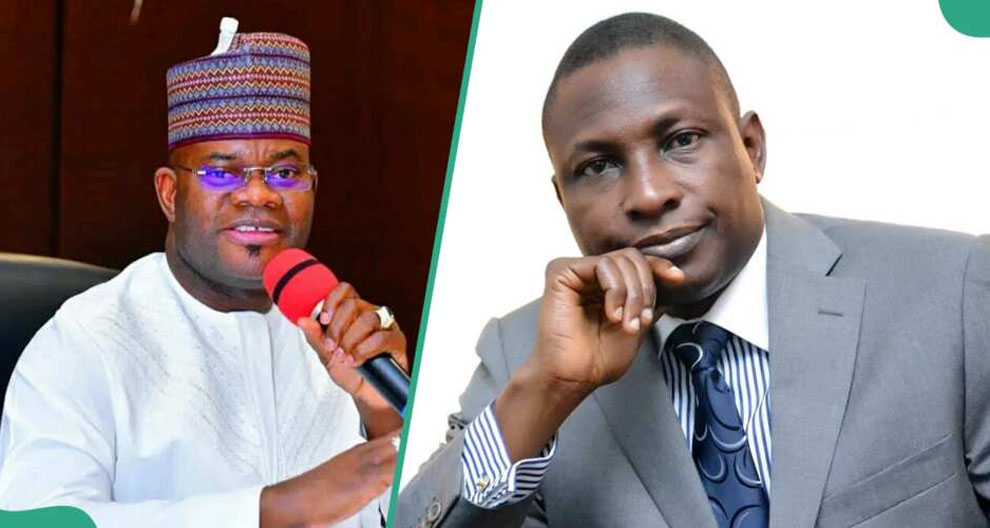
Jamilu Abdullahi, an Abuja-based Bureau de Change (BDC) operator and third prosecution witness in the ongoing trial of Ali Bello, testified on Thursday, before Justice Obiora Egwuatu of the Federal High Court in Maitama, Abuja, detailing financial transactions involving the Kogi State government under former governor Yahaya Bello.
Abdullahi recounted how former Governor Bello made multiple payments in dollars through his companies to cover the school fees of his three daughters.
Bello’s nephew, Ali Bello, who currently serves as the Chief of Staff to Kogi State Governor Usman Ododo, is facing prosecution by the Economic and Financial Crimes Commission (EFCC) on 18 charges related to money laundering and the misappropriation of over N3 billion.
He is on trial alongside Abba Daudu, Yakubu Adabenege, and Iyada Sadat.
Led in evidence by the prosecution counsel, Rotimi Oyedepo, SAN, Abdullahi revealed that on one occasion, Abba Daudu, the second defendant, brought $300,000 in cash for the payment of school fees for Yahaya Bello’s daughters.
“Abba Daudu called me about a transaction. Despite it being a weekend, I went to my office, and three individuals arrived. Two came inside while one stayed in the car. A friend of Daudu, carrying a black leather bag containing $300,000, introduced himself as a business partner and handed me the money,” Abdullahi testified.
He explained that he was unable to count the cash immediately due to a power outage, so he secured it in his office safe.
READ ALSO:
- Oil&gas industry operators owe FG $6bn, N66bn – NEITI report
- Forex: Naira hits N1,675/$ at parallel market
- Tapping phones can’t make you rich – Tutor mocks Kombat CEOs
According to Abdullahi, the sum was later confirmed, and four receipts, each for $75,000, were issued.
These payments covered Yahaya Bello’s daughter, Naima Ohunene Bello, for her school fees at the American International School (AIS).
Abdullahi also detailed other transactions, including a $42,170 payment made through Aleshua Solutions Services for Naima Ohunene Bello and a $78,160 payment for another daughter, Fatima Oziohu Bello.
Additionally, he identified a $44,675 payment for Naima Bello, noting that a $25 bank charge had been deducted from the total amount.
He further revealed that several large sums were transferred from Daudu’s company, Keyless Nature Limited, to his own company, Kunfayakun, and other accounts.
These transactions included multiple payments of N100 million, N400 million, N90 million, and other significant amounts between December 2021 and early 2022.
Abdullahi provided a detailed breakdown of the inflows into his accounts, including payments from Remita International and further large deposits from Keyless Nature Limited.
He also testified about additional transactions made through his companies, E-Traders International Limited and Kunfayakun, noting several cash deposits totaling hundreds of millions of naira over multiple months in 2021 and 2022.
The defense counsel, A.M. Aliyu, representing Ali Bello, requested an adjournment to allow more time to review the voluminous financial records and figures presented in the case.
Despite objections from the prosecution, Justice Egwuatu granted the request and adjourned the trial to October 25, 2024, and further hearings on November 5 and 6, 2024.
In earlier testimony on September 24, 2024, Abdullahi had identified payments of $11,000 made by Whales Oil and Gas to AIS for one of Yahaya Bello’s daughters, Zahra Bello.
He also testified about various other payments captured in the case’s exhibits, totaling significant amounts for school fees and other transactions related to the former governor’s family.
The trial continues as the court seeks to unravel the financial dealings connected to Yahaya Bello’s administration and the role of his associates in the alleged money laundering scheme.
Yahaya Bello: EFCC witness tenders massive dollar payments in money laundering trial








metro
Blessing CEO Used Another Patient’s Cancer Report to Seek Donations – NMA

Blessing CEO Used Another Patient’s Cancer Report to Seek Donations – NMA
The Nigerian Medical Association (NMA), Delta State chapter, has alleged that popular social media personality Blessing Okoro, widely known as Blessing CEO, presented a falsified cancer report belonging to another patient in a bid to solicit public donations.
In a statement that has stirred widespread public reaction, the association disclosed that the histology report circulated online to support Blessing CEO’s claim of battling breast cancer was not originally issued to her, but rather to a different patient whose identity has been linked to one Deborah Mbara.
According to the NMA, investigations revealed that the original medical report was issued in May 2025 at a diagnostic facility in Asaba, Delta State, following a confirmed diagnosis of breast cancer. However, the version shared by Blessing CEO was allegedly doctored and altered, with her personal details inserted to give the impression that she was the patient in question.
The association further noted that the diagnostic centre referenced in the document has denied issuing any such report in Blessing CEO’s name, reinforcing claims that the document in circulation is not authentic.
The controversy deepened after the alleged original owner of the report, Deborah Mbara, publicly accused the influencer of using her medical record without consent. She described the act as distressing and unethical, raising concerns over privacy violations and the misuse of sensitive health information.
Blessing CEO had earlier taken to social media to announce that she was battling stage 4 breast cancer, a claim that generated sympathy and reportedly attracted financial support from members of the public. However, she later retracted the stage 4 diagnosis, attributing it to a “miscommunication,” while acknowledging that she received significant monetary donations during the period.
Reacting to the development, the NMA warned that falsification of medical records is a serious ethical and legal issue that could erode public trust in healthcare systems and professionals. The association urged Nigerians to exercise caution and verify medical claims, especially those tied to public fundraising campaigns.
The incident has also drawn the attention of the Nigerian Cancer Society, which has called for a thorough investigation into the matter. The group expressed concern that such allegations could undermine genuine cancer awareness efforts and discourage public support for legitimate patients in need.
Observers note that the case highlights growing concerns around accountability in online fundraising, particularly involving influencers with large followings. Legal experts suggest that if the allegations are proven, the matter could lead to charges related to fraud, impersonation, and violation of patient confidentiality laws.
As of the time of filing this report, Blessing CEO has yet to issue a detailed response to the specific allegations raised by the NMA and the alleged victim.
Blessing CEO Used Another Patient’s Cancer Report to Seek Donations – NMA
metro
Women in Plateau Block Burial of 28 Palm Sunday Attack Victims Over Arrests

Women in Plateau Block Burial of 28 Palm Sunday Attack Victims Over Arrests
Residents of Angwan Rukuba in Jos, Plateau State, were left in shock on Tuesday as a funeral service for victims of the Palm Sunday attack was disrupted by protesting women demanding the release of detained youths. The attack, which occurred on Palm Sunday, claimed the lives of at least 28 people, leaving several others injured.
The protesters, many armed with leaves and chanting songs, blocked the entrance to the church where the mass burial was scheduled, insisting that the burial could not proceed until authorities freed three youths reportedly arrested following the killings. Rhoda Aliyu, one of the women leading the protest, said, “We will not allow the burial to take place until our sons are released.” Another protester, Mathew Bulus, added, “Those arrested are innocent. The government should go after the real perpetrators and leave our youths alone.”
The demonstration heightened tensions as about seven bodies were brought to the church. Community sources confirmed that the women, supported by several youths, were calling for the unconditional release of the detained teenagers before proceeding with the burial.
READ ALSO:
- Security Forces Deployed as Bandits Kill Three Residents in Niger Communities
- Resident Doctors Resume Work as FG Reverses Allowance Decision
- FG Deports US Missionary Alex Barbir Over Alleged Role in Nigeria Insecurity
The Palm Sunday attack involved armed assailants—suspected bandits—who stormed Angwan Rukuba and the Gari Ya Waye neighborhoods around 8 p.m., firing indiscriminately at residents and leaving widespread devastation.
President Bola Tinubu, who visited Plateau State following the attack, expressed condolences and directed security agencies to apprehend the offenders. He also ordered the installation of over 5,000 AI-enabled CCTV cameras across the state to enhance 24-hour surveillance and prevent future attacks.
Governor Caleb Mutfwang, who had visited the affected areas, condemned the killings as a well-planned attempt to destabilize the state. He assured residents that justice would be served and urged traditional rulers, religious leaders, and community stakeholders to collaborate with security forces to restore peace. He also commended the people for maintaining calm and avoiding retaliation despite the provocation.
As of press time, security agencies had not responded publicly to the arrests or ongoing tensions. The protest underscores the deep frustration and fear among residents in bandit-affected communities in Plateau State, highlighting ongoing challenges in securing vulnerable areas and ensuring justice for victims.
Women in Plateau Block Burial of 28 Palm Sunday Attack Victims Over Arrests
metro
Security Forces Deployed as Bandits Kill Three Residents in Niger Communities
Security Forces Deployed as Bandits Kill Three Residents in Niger Communities
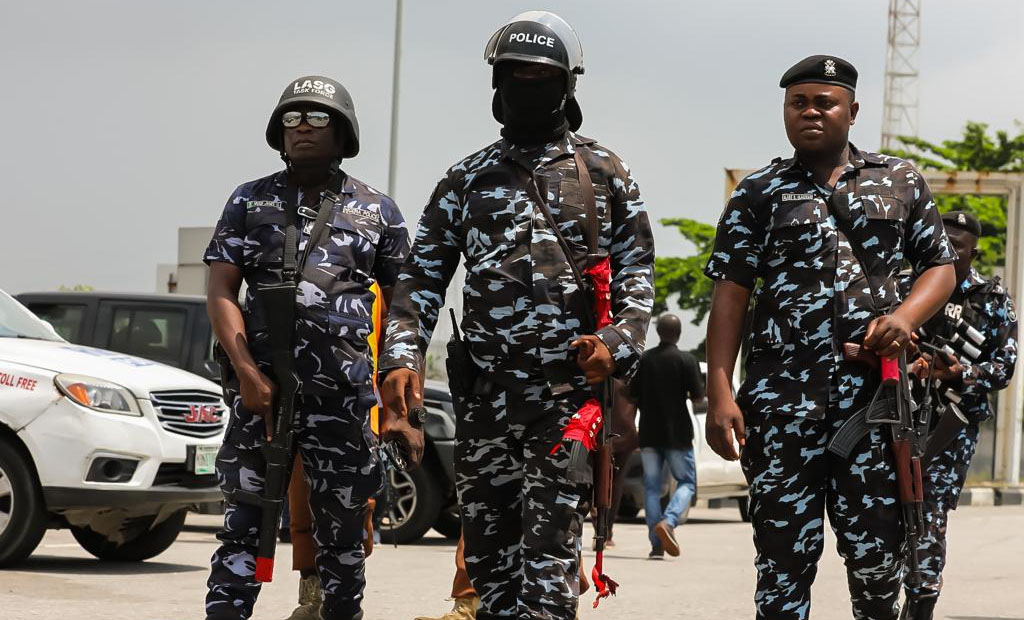
At least three residents have been killed and several others injured after armed bandits attacked the Lanta, Tunga, and Bagna communities in the Erena ward of Shiroro Local Government Area, Niger State. The attacks, which began around 10:30 a.m. on Tuesday, mark another deadly incident in the region’s growing insecurity crisis.
Eyewitnesses said the assailants arrived in large numbers on motorcycles, operating for several hours without resistance, looting properties and opening fire on residents before fleeing. Local sources warned that the death toll could rise as families continue to account for missing relatives. Many residents have reportedly fled to Erena town, considered a safer nearby settlement.
A local resident said, “So far, we have recovered three bodies. Many others sustained injuries of varying degrees. Many people have fled… We are calling on the government to come to our rescue.”
READ ALSO:
- Resident Doctors Resume Work as FG Reverses Allowance Decision
- FG Deports US Missionary Alex Barbir Over Alleged Role in Nigeria Insecurity
- Iran Lists Tough Conditions for Peace Talks with US
Maurice Bello Magaji, Niger State Commissioner for Homeland Security, confirmed the incident and stated that the government is working with security forces to respond to the attacks and restore order. Officials say reinforcement teams and patrols have been deployed to the affected communities to prevent further casualties.
The attack highlights the deepening insecurity in rural Niger State, where armed bandits have frequently targeted villages, abducted residents, and caused widespread fear. Analysts note that bandits often exploit the remote terrain to carry out raids with minimal resistance, killing civilians, looting homes, and displacing populations.
Local leaders and residents have condemned the attacks, urging both state and federal authorities to intensify security measures and protect vulnerable communities. Meanwhile, displaced residents face uncertainty as they seek safety and access to basic services.
Security agencies have promised to track down the perpetrators, but analysts warn that sustained and coordinated action is necessary to curb banditry in Niger State and prevent further attacks.
Security Forces Deployed as Bandits Kill Three Residents in Niger Communities

-
 metro5 hours ago
FG Deports US Missionary Alex Barbir Over Alleged Role in Nigeria Insecurity
-
 metro1 day ago
MURIC Backs Egba Imams’ Call for Inclusive Leadership in Ogun 2027 Governorship Race
-

 International2 days ago
Netanyahu Condemns ‘Christian Persecution’ in Nigeria in Easter Message
-
 metro8 hours ago
Lagos Announces Partial Road Closures for Project Commissioning
-
 Politics3 days ago
ADC Crisis Halts Makinde, Bala, Lawmakers’ Defections
-

 metro2 days ago
Hajiya Hadiza Attahiru Jega, Wife of Former INEC Chairman, Dies in Abuja
-

 Politics2 days ago
2027: Atiku Signs $1.2m US Lobbying Deal to Engage Trump
-

 Business1 day ago
Tax Evasion: Lagos Government Sues Bi-Courtney, DAAR, 33 Others