

International
Young men trapped between war and conscription in Myanmar’s Rakhine
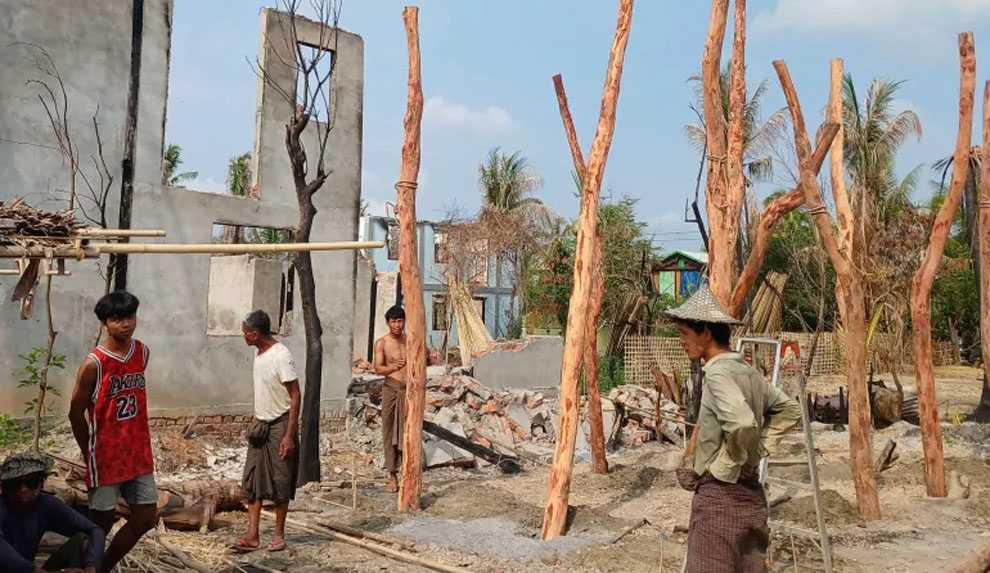
Young men trapped between war and conscription in Myanmar’s Rakhine
Since war resumed in his native Rakhine State last November, Thura Maung has seen his options narrow.
The 18-year-old, from the state’s ethnic Rakhine majority, first fled his home in the coastal town of Myebon in December, when clashes between the military and autonomy-seeking Arakha Army – formerly known as the Arakan Army – seemed imminent.
He and his family escaped by boat, travelling along river inlets at night to avoid being seen by the military. They returned a few days later, but fled twice more over the following months as the fighting escalated.
By February, the military and AA were battling for control over Myebon, and Thura Maung could hear shelling from the village where he had taken shelter. The military had also blocked the movement of goods and shut down the internet in areas affected by the conflict, leaving his family struggling to make ends meet.
With his university effectively closed due to the fighting, he felt his dreams slipping away. “There were no opportunities for my life to develop, and I saw no future,” he said.
It’s a feeling shared by Zubair, an ethnic Rohingya from Rakhine State’s northern Maungdaw township. The 24-year-old was doing an internship with a civil society organisation focused on peacebuilding when the fighting broke out and his office closed.
Soon, he was running from the war as well as a military conscription drive targeting Rohingya men. “We weren’t able to stay at home, go to work or even sleep on time,” he said. “Time that we could’ve spent working on our futures was wasted.”
Zubair and Thura Maung are part of a new generation of young people across Myanmar whose lives have been turned upside down by the 2021 military coup. In Rakhine State, people had already lived through years of communal conflict and a brutal 2017 military crackdown on the mostly Muslim Rohingya. The escalating violence between the military and AA has only made matters worse, according to Karen Simbulan, a human rights lawyer specialising in conflict sensitivity in Rakhine.
READ ALSO:
- Varsities workers threaten fresh industrial action over withheld salaries
- JUST IN: Court quashes dethronement of Emir Bayero, others
- BREAKING: Court scraps Ondo LCDAs
“With the most recent renewed fighting and the looming threat of forced conscription, many who had persisted and stayed in Rakhine despite everything are seeing their futures taken away from them,” she said. “Many are taking significant risks to flee to safety, often putting themselves in highly vulnerable situations just to survive.”
Al Jazeera spoke with four young men from Rakhine State about the effects of the conflict on their lives. They have all been given pseudonyms to protect their safety.
‘Stirring up communal tensions’
The renewed fighting is the latest crisis to hit Rakhine State, home to Daingnet, Mro, Khami, Kaman, Maramagyi, Chin and Hindu minorities as well as the Rohingya, and the mostly Buddhist Rakhine majority. A category four cyclone hit the region last May, following successive waves of violence in the decade leading up to the coup.
In 2012, mobs of ethnic Rakhine and Rohingya people attacked each other with sticks and knives and burned each other’s homes, leaving dozens dead and some 140,000 forced from their homes. Afterwards, the military imposed tough restrictions on Rohingyas’ movement and access to services, while continuing to deny them citizenship under a discriminatory 1982 law.
The situation deteriorated dramatically in 2016 and 2017 when the military killed thousands of Rohingya civilians and committed widespread sexual violence and arson following attacks on military outposts by a Rohingya armed group. Its “clearance operations” in northern Rakhine State drove more than 750,000 people into neighbouring Bangladesh, and the crackdown is the subject of continuing genocide proceedings at the International Court of Justice.
The AA stepped up its fight for autonomy in late 2018; over the next two years, Rakhine State endured some of the most intense armed clashes seen in Myanmar in decades. The military also indiscriminately bombed and shelled civilian areas, committing what Amnesty International identified as war crimes.
The military and AA reached an informal ceasefire in November 2020, just three months before the generals seized power from the elected government of Aung San Suu Kyi. Weeks later, the military cracked down on peaceful protests across Myanmar with gunfire and arrests. An armed uprising soon followed; by mid-2021, all-out war had erupted across the country.
Existing ethnic armed organisations trained and fought alongside anti-coup People’s Defence Forces (PDF), but the AA mostly stayed out of the fray, instead focusing on establishing governance mechanisms in its territory through its administrative wing, the United League of Arakan.
That changed last October, when the AA joined ethnic armed groups fighting on Myanmar’s eastern border with China to launch Operation 1027 declaring their intent to eradicate “oppressive military dictatorship”. Within weeks, they had seized strategic territory and other resistance groups were launching new offensives across the country. On November 13, the AA brought the war to Rakhine soil with coordinated attacks on military positions.
READ ALSO:
- 1 killed, 2 policemen injured as hoodlums unleash mayhem in Kano
- Court remands 11 persons over alleged cultism, robbery in Lagos
- Binance: India slams heavy fine on crypto firm for non-compliance
The AA and its allies have since driven out the military from most of central and northern Rakhine State as well as Paletwa township in neighbouring Chin State. Following tactics it has long used to punish communities harbouring armed resistance, the military has retaliated with full-scale attacks on AA-controlled and contested areas by air, land and water while cutting off transit routes, communication channels and access to medical care for entire populations.
Hundreds of civilians have been injured or lost their lives and more than 185,000 people displaced across Rakhine State and Paletwa since November out of more than three million that the United Nations says have been displaced across the country, mostly as a result of the coup.
Through its forced conscription of Rohingya men as well as by demanding they protest against the AA, the military is also deliberately working to threaten years of fragile progress towards reconciliation between Rakhine and Rohingya communities, according to Simbulan, the conflict sensitivity specialist.
“The military is once again resorting to stirring up communal tensions because it is desperately losing ground in Rakhine,” she said. “As the expected de facto authority in Rakhine, the AA needs to heed its own words that this is a military tactic to divide communities, and not fall into the trap the military has set.”
Fear of conscription
Zubair, in Maungdaw, said that the conflict and military conscription drive left him feeling like the military was attempting to “destroy our Rohingya youth … from every angle”.
Since November, he has repeatedly been forced to flee his home due to the conflict. “Our village was attacked a lot, so we moved to another village which was less attacked,” he said. By February, he was also running from military conscription. Human Rights Watch reported in April that the military had used methods including false offers of citizenship, nighttime raids and abduction at gunpoint to conscript at least 1,000 Rohingya men, some of whom it sent to fight on the front lines against the AA.
In Maungdaw, Zubair said he had been unable to sleep since military soldiers took his neighbours from their home one night in March because he was fearful he might be next. The military was also blocking the roads between villages, leaving him and other young people with few places to go. “We ran inside the village,” said Zubair. “When we heard that [soldiers] were coming from one direction, we ran in another.”
Then, the military ordered the Maungdaw hospital to close, leaving Zubair’s father, who needs to use an inhaler because of a respiratory disease, unable to access medical care.
By April, heavy fighting between the military and AA had reached Rakhine State’s northern townships, alongside a series of devastating arson attacks across neighbouring Buthidaung township whose perpetrator remains disputed.
With a fight for control over Maungdaw looming, Zubair and his parents sneaked across the Naf river into Bangladesh one night at the end of May.
Now staying in the world’s largest refugee camp, Zubair rarely leaves his shelter, fearing that he could be robbed by other camp residents or arrested by Bangladeshi police, who sent back more than 300 people between February and April, according to the research and advocacy group Fortify Rights.
READ ALSO:
- 34 die, scores hospitalised after taking alcohol in India
- JUST IN: Lagos: 21 people die in fresh 401 cholera cases
- Court postpones ruling on Kano Emirate tussle
“I need to be cautious every time I go outside,” he told Al Jazeera.
After escaping to nearby villages, Thura Maung, the Rakhine youth, also left the state due to the conflict. On February 9, he travelled by boat for two days to the state capital of Sittwe, and then boarded a plane bound for Myanmar’s largest city of Yangon.
He landed to find a city in chaos. While he was in transit, the military had announced plans to activate conscription from April, prompting a mass exodus from areas under its control. Thura Maung, who had planned to enrol in language classes in Yangon, could not find a course accepting new students and also feared conscription himself. So a week later, he began the trip back to Myebon, which had just been captured by the AA.
As soon as his flight touched down in Sittwe, however, he was arrested at the airport along with the other passengers on his flight. Held without charge at a Buddhist religious centre, military soldiers took his mugshot, interrogated him and searched through his phone.
He is among hundreds of people who have been detained by the military while travelling to or within Rakhine State since February. In March, the military also ordered travel agents and bus operators to stop issuing tickets to Rakhine State natives.
While these actions may have been intended to stop the flow of information and recruits to the AA, for Thura Maung, they had the opposite effect. Nearly a week after he was arrested, he sneaked away and headed towards an AA camp. “I felt lost,” he said. “I attempted to enter the AA without letting my parents know, because I thought it was the only certain thing I could do.”
A relative talked him out of it, however; now back in Myebon, where he is safe from military conscription because the AA controls the town, he still fears he could become the next victim of the military’s attacks. “I feel safer living in Myebon, but I still have to worry about air strikes,” he said.
‘Survival is my priority’
Tun Tun Win, a 24-year-old ethnic Rakhine, was also arrested at Sittwe airport. He had been attending language classes in Yangon when fighting broke out between the military and AA; although he had initially stayed in the city, he changed his plans in February. “Although there is ongoing conflict in Rakhine, I felt more secure living with my family than living alone in Yangon under the conscription law,” he said.
READ ALSO:
- Presidency responds to Aisha Yesufu’s allegations regarding Tinubu in S’Africa
- Negotiator killed after delivering N16m ransom, 3 bikes to bandits in Kaduna
- Arsenal ditches Osimhen for Girona’s Dovbyk as NFF denies banning Napoli strike
Fleeing one danger, however, he was soon caught up in another. Like Thura Maung, soldiers took him away at the airport and interrogated him for several days at a Buddhist religious centre before he managed to sneak away. Now back home in Myebon, he faces a new set of struggles. “Currently, survival has become my priority rather than pursuing my ambition and plans,” he said.
Arkar Htet, a 27-year-old ethnic Rakhine from a village on the outskirts of Sittwe, also saw his plans fall apart after the conflict broke out. He was running an online delivery service and working as a dance instructor but stopped both after the military imposed a nighttime curfew and stepped up its surveillance and arrests. “I feared going outside even in the afternoon,” he said.
But even at home, he did not feel safe. As the military and AA battled for control over the town of Pauktaw, 30 kilometres (19 miles) northeast, military shells whizzed over his roof, as well as jet fighters on their way to bomb the town.
By January, the AA controlled Pauktaw, but the military had burned most of it down. As the fighting shifted to areas around Sittwe, Arkar Htet and his family fled by boat on February 29. Stray fire injured a passenger on the way; back in the city, about a dozen people died when shelling hit a portside market.
Arkar Htet and his family managed to reach a village under the AA’s control in Ponnagyun township, and in early April, he told Al Jazeera that he felt “70 percent safe”.
Less than two months later, on May 29 and 30, the military raided Byaing Phyu village, just a few kilometres from the village from which Arkar Htet had fled. According to the AA, military forces killed 72 civilians and raped three women; the military has denied the claims.
Then on June 1, the military bombed a village in Ponnagyun township next to the one where Arkar Htet had taken shelter, killing two civilians. Al Jazeera has been unable to get in touch with him since.
Young men trapped between war and conscription in Myanmar’s Rakhine








International
Trump’s White House Press Secretary Quits After Just Five Days as Credentials Storm Erupts

WASHINGTON, DC — US President Donald Trump’s new White House press secretary, Katie Zacharia, has left her position after just five days on the job, following criticism of her first press briefing and questions about her professional credentials.
Zacharia’s departure was reported on Friday, October 16, 2026, after Trump disclosed that he had advised her to reconsider remaining in the high-profile position. A White House official subsequently confirmed that she was leaving the role.
The departure came just days after Trump announced her appointment to succeed Karoline Leavitt on Friday, October 9. Zacharia began work on Monday, October 12, and held her first White House press briefing the following day, Tuesday, October 13.
The brief tenure quickly became controversial after Zacharia’s first interaction with journalists attracted criticism. The briefing lasted approximately 14 minutes, during which she took questions from only three reporters, prompting scrutiny of her performance as the administration’s principal spokesperson.
The controversy deepened on Thursday, October 15, when questions emerged about her professional credentials. During an interview with Fox News host Sean Hannity, Zacharia acknowledged that she had not passed the bar examination, despite holding a law degree from Pepperdine University.
READ ALSO:
- Imodi-Ijebu Muslim Community Bets on 20 Chiefs to Drive Education, Economic Growth
- Suspended Archbishop Ibezim Drags Anglican Primate to Court, Challenges Six-Month Leave
- Toyin Abraham Breaks Silence as Leaked Audio Sparks Fresh Nollywood Feud
In the United States, obtaining a law degree does not automatically qualify a graduate to practise as a licensed attorney. Admission to practise generally requires passing the relevant bar examination and satisfying other requirements set by the jurisdiction.
The revelation intensified scrutiny of how Zacharia’s legal background had been presented before her appointment, further complicating her early days in the White House role.
Zacharia defended her handling of the first briefing, explaining that she had limited time to prepare. She also indicated that the session was intentionally brief because Trump was expected to speak to reporters later that morning.
Trump, meanwhile, said he had encouraged her to consider whether the position was right for her, arguing that the media scrutiny surrounding the job could make it difficult to remain in the role.
The White House press secretary is responsible for communicating the president’s positions, explaining administration policies and responding to questions from journalists. The position frequently involves contentious exchanges with the media and intense public scrutiny.
Before joining the White House, Zacharia worked in communications for Trump Media, the company behind the president’s Truth Social platform. She had also held a position at the Department of Homeland Security and worked as a conservative political commentator.
Her exit leaves the Trump administration needing to determine who will handle daily press briefings and serve as its principal spokesperson. As of Friday, October 16, the White House had not publicly announced a successor.
Zacharia’s departure followed a compressed timeline: Trump announced her appointment on October 9, she began work on October 12, delivered her first briefing on October 13 and left the position on October 16. The five-day description refers to her working tenure rather than five full days from the date her appointment was announced.
Trump’s White House Press Secretary Quits After Just Five Days as Credentials Storm Erupts
International
School Turns Death Trap as Roof Collapse Claims 22 Lives
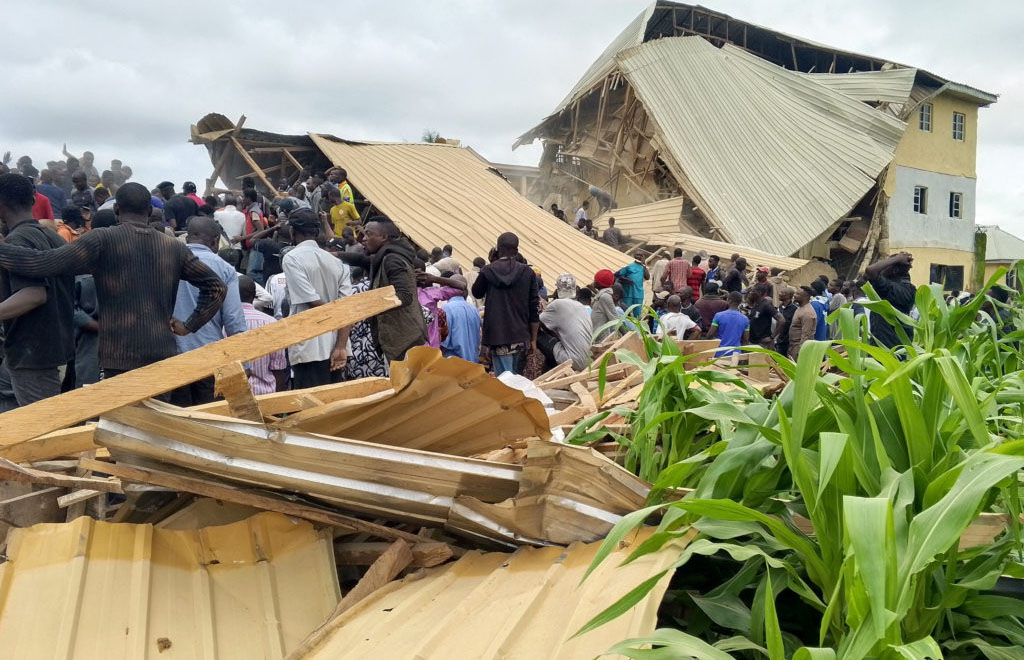
School Turns Death Trap as Roof Collapse Claims 22 Lives
At least 21 children and a teacher have been killed after the roof of a private school collapsed in Peshawar, north-western Pakistan, triggering an emergency rescue operation as authorities searched for people feared trapped beneath the rubble.
The incident occurred on Thursday, October 15, 2026, in the Dir Colony area of Peshawar, the capital of Khyber Pakhtunkhwa province. The victims were pupils attending the school when the roof gave way, according to reports citing local officials and hospital authorities.
More than 40 people were reportedly injured in the collapse, with several taken to hospital for treatment. Some of the injured were said to be in critical condition, raising concerns that the death toll could increase as rescue efforts continued.
Mohammad Asim, a spokesperson for Lady Reading Hospital, confirmed that children and a teacher were brought to the facility after the incident. Early reports said the children killed were all aged 13 or younger.
Emergency responders, including personnel from Rescue 1122, were deployed to the scene to remove debris, search for survivors and transport injured pupils to medical facilities. Rescue workers continued to check the wreckage for anyone who might still be trapped beneath the collapsed structure.
READ ALSO:
- Outrage as Residents Scoop Groundnut Oil From Lagos Tanker Crash Scene
- Shettima Attacks Atiku Over Tinubu Remarks, Questions Subsidy Plan
- 2027: We Know How to Stop Tinubu From Getting Second Term – Momodu
The cause of the collapse had not been established at the time of reporting. Authorities are expected to investigate the circumstances surrounding the incident, including the condition of the school building and whether construction and safety standards were observed.
Pakistan’s Prime Minister, Shehbaz Sharif, expressed sorrow over the loss of lives and extended condolences to the bereaved families. He also prayed for the strength of the families affected by the tragedy.
The disaster has renewed concerns about building safety and construction standards in Pakistan, where structural collapses have repeatedly caused deaths and injuries. Poor construction materials and weak enforcement of safety regulations have been cited in reports on previous incidents, although the cause of the Peshawar collapse remains unconfirmed.
In June 2026, a roof collapse at a tutoring centre in Lahore killed at least 14 children. The recurring incidents have intensified calls for stricter inspections of educational facilities and stronger enforcement of building regulations to protect pupils and school staff.
Authorities are expected to establish what caused the latest collapse and determine whether any safety breaches contributed to the tragedy.
School Turns Death Trap as Roof Collapse Claims 22 Lives
International
Nigeria Secures UN Human Rights Council Seat With 172 Votes
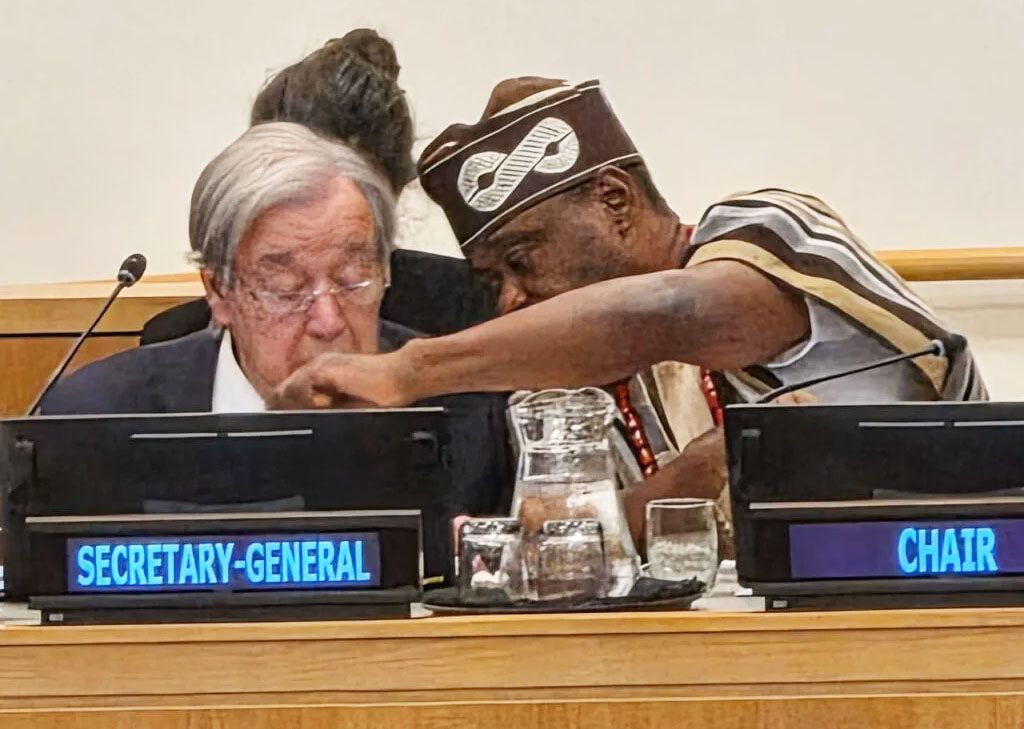
Nigeria has secured a seat on the United Nations Human Rights Council (UNHRC) after receiving 172 votes in an election by the UN General Assembly, earning the country a three-year term on the international body responsible for promoting and protecting human rights worldwide.
The election was held on Tuesday, October 13, 2026, at the United Nations headquarters in New York. Nigeria will serve on the 47-member council from January 1, 2027, to December 31, 2029.
Nigeria was among 15 countries elected to the council for the new term. The other successful candidates included Zambia, Ghana, Burundi, Brazil, the Dominican Republic, Uruguay, Germany, Ireland, Japan, Jordan, Kuwait, Nepal, Moldova and Ukraine.
Among the African candidates, Zambia received 177 votes, Ghana secured 173, Nigeria obtained 172, while Burundi received 160 votes.
The election gives Nigeria an opportunity to participate in international deliberations on human rights standards, alleged violations and measures aimed at improving the protection of fundamental freedoms across the world.
However, the process has attracted criticism from human rights organisations because the election was uncontested. Regional groups nominated exactly as many candidates as there were available seats, meaning there was no competitive ballot among rival candidates within the respective groups.
The UN Human Rights Council is an intergovernmental body based in Geneva, Switzerland. Established in 2006, it is mandated to address human rights violations, promote respect for fundamental freedoms and make recommendations to governments and the international community.
READ ALSO:
- Houthi Missile Targeting Riyadh Shot Down as Debris Injures Four, Damages 15 Homes
- Outrage as Israeli Settlers Torch Mosque, Burn Vehicle in Occupied West Bank
- Attempted Suicide: ‘If You Survive, We’ll Jail You’ – Akpabio
The council comprises 47 member states elected by the UN General Assembly through a secret ballot. Its seats are allocated among five regional groups to ensure geographical representation, and members serve staggered three-year terms.
The body examines human rights situations in individual countries, conducts its Universal Periodic Review of UN member states and considers complaints and reports concerning alleged abuses. It can also appoint independent experts, establish commissions of inquiry and authorise fact-finding missions to investigate serious allegations.
Although the council plays an important role in international human rights oversight, it does not operate as a criminal court and cannot independently impose criminal sentences on individuals accused of abuses.
Nigeria’s election comes amid continuing international scrutiny of human rights conditions in several countries, including concerns about police conduct, accountability, freedom of expression and the treatment of vulnerable groups.
The selection of countries with contested human rights records has been criticised by advocacy organisations, which argue that uncontested elections can weaken accountability and reduce pressure on candidates to demonstrate their commitment to protecting fundamental rights.
The criticism has also raised questions about how elected countries will use their positions on the council to address allegations of abuses and support international human rights standards.
For Nigeria, membership offers a platform to contribute to debates on issues such as unlawful killings, torture, discrimination, the rights of women and children, freedom of expression and the protection of civilians during armed conflicts.
The country will also be expected to participate in council sessions, consider resolutions and engage with other member states on international human rights concerns.
Nigeria’s three-year membership begins in January 2027. Its performance on the council will be watched alongside its domestic human rights record, including how authorities address allegations of misconduct and strengthen accountability and protection for citizens.
The election is therefore both a diplomatic achievement for Nigeria and an opportunity for the country to demonstrate its commitment to the principles the council was established to uphold.
Nigeria Secures UN Human Rights Council Seat With 172 Votes
-
 metro22 hours ago
Army Major, Soldiers Killed in ISWAP Ambush in Yobe State
-
 News2 days ago
FG Challenges World Bank’s 124% Debt-to-Revenue Warning, Cites Rising Income
-

 metro3 days ago
NAFDAC Probes Corps Member’s Death at Enugu Camp as Fake Drug Claims Emerge
-

 Politics3 days ago
Buhari Feared Tinubu Presidency, Resisted Pressure to Back Him – Baba-Ahmed Claims
-

 metro3 days ago
Ogun House Fire Horror: Husband Arrested After Wife Dies Following Domestic Dispute
-

 News3 days ago
NLC, Falana Mobilise Nigerians Against Petrol Price Hike, Mount Pressure on Tinubu Govt
-
 metro22 hours ago
Breaking: Afenifere Leader Pa Fasoranti Dies at 100
-

 Entertainment2 days ago
Nollywood Mourns as Actress, Beauty Queen Tenia Abraham Dies at 32