Your assessment misleading, APC tackles Obi over socio-economic situations
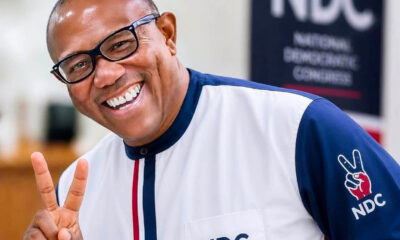
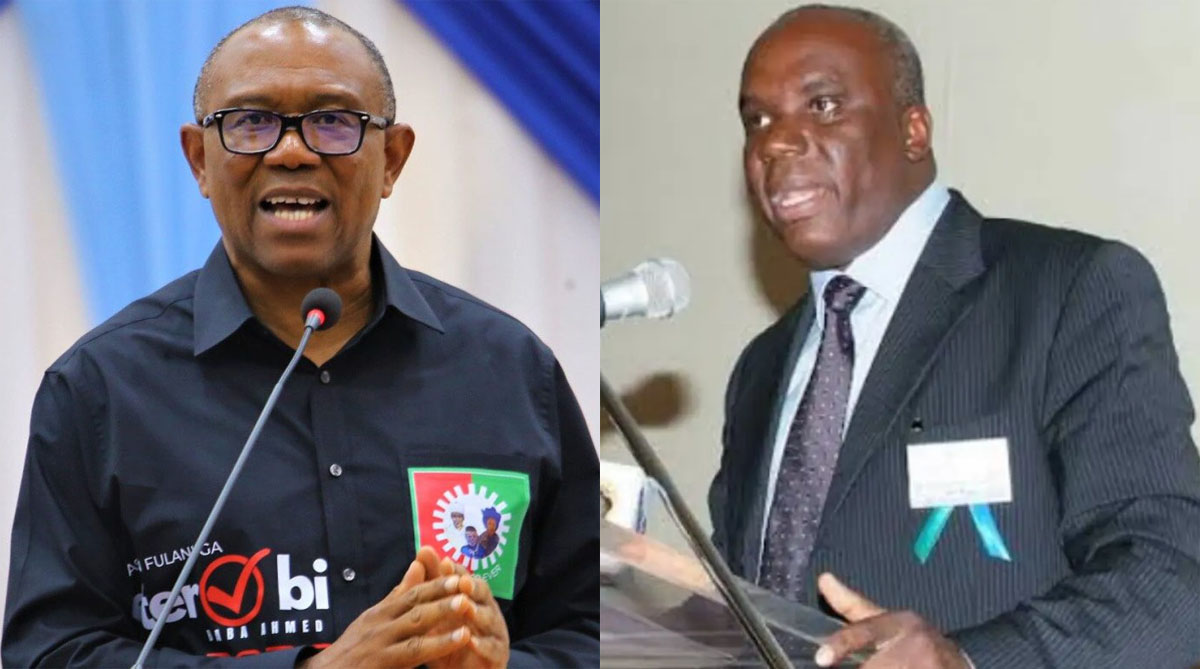
One-time Anambra State Governor Peter Obi came under a scathing criticism yesterday from the ruling All Progressives Congress (APC) over his assessment of the security and economic situation of the country.
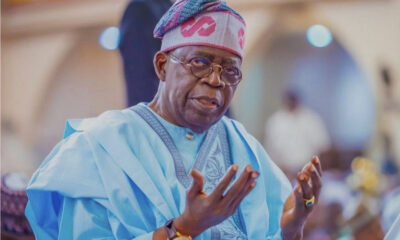
At a news conference, Obi disagreed with the claims of President Bola Ahmed Tinubu in his New Year Day address which chronicled the feats attained by the APC-led administration.
Obi alleged that the political, economic and security situations in the country have worsened under the incumbent administration.
But the APC, through its National Publicity Secretary, Felix Morka carpeted Obi, describing his assessment as jaundiced, misleading and an attempt to score cheap political points.
In a statement, Morka put a lie to Obi’s claims.
He noted that Obi’s assessment was at variance with all indicators that showed that the nation’s economy is rebounding in significant measure across all sectors.
Dismissing Obi’s claims, Morka said: “While Nigerians celebrated the New Year with hope for a more glorious 2025, Peter Obi, former Governor of Anambra State and former presidential candidate of the Labour Party (LP) in the 2023 general elections, was seemingly stuck in replay of his jangling, gloom-ridden wish-list for our country.
“Obi’s new year message, in which he claimed that the political, economic and security situation of our dear country is worsening daily, is misleading and appears intended to score cheap political points.
“This claim, at a time when all indicators show that our country is rebounding in significant measure across all sectors, casts Obi, squarely, as Nigeria’s leading doomsayer.”
Morka, who reeled out the achievements of the APC-led administration, said: “In reality, 18 months later, the economy under President Bola Ahmed Tinubu’s administration, has showed steady record of progress.”
He listed the landmarks as:
The ruling party further argued: “Despite these and other initial beneficial outcomes of ongoing unprecedented reforms, the administration is doubling its effort to ensuring that the reforms deliver their fullest benefits for the sustainable growth and transformation of our country.”
The ruling party said that the Presidential New Year message acknowledged that the “cost of food and essential drugs remained a significant concern for many Nigerian households. And to reverse this trend, Mr. President assured that his administration was committed to lowering food prices by boosting food production and promoting local production of drugs.”
The party also highlighted Tinubu’s resolve to crash the current inflation rate from 34 per cent to 15 per cent in the course of this fiscal year as a move to addressing the threat inflation poses to the country’s economy.
The statement further reads: “With the vigour in the administration’s war on corruption, evidenced by ongoing investigations and trial of well-heeled Nigerians, Obi’s pontification on the urgent need to tame corruption is a clear case of carrying coal to Newcastle.”
Faulting Obi, the party said: “It is a thing of irony that Peter Obi, who now arrogates to himself to be omniscient and philosopher’s stone, when it comes to our nation’s challenges, left no record of significant achievement, let alone transformation of any kind, in his eight-year tenure as Governor of Anambra State.
“Like his co-travellers in the Peoples Democratic Party (PDP), Obi’s obsessive pessimism and endless but futile effort to incite public outrage against the administration is borne out of their realisation that President Tinubu is unwittingly cementing their ultimate political irrelevance by his visionary and full-throttle reform and transformation of the fundamental pillars of our national life.”
Appealing for citizens’ support and patience, the APC spokesman assured Nigerians that “under the banner of the Renewed Hope Agenda (RHA), President Tinubu is dutifully turning our nation’s fortunes around.
“He (Tinubu) deserves the support and patience of Nigerians in order to consolidate on the deep economic foundation he has laid, and deliver a vibrant, prosperous new Nigeria for the good of all. We urge Nigerians to remain confident of better days ahead.”
Your assessment misleading, APC tackles Obi over socio-economic situations
The Economic and Financial Crimes Commission (EFCC) has confirmed freezing Osun State Government accounts, citing an ongoing N11 billion fraud investigation and suspicious transfers detected days before the governorship election. Governor Ademola Adeleke has rejected the action as unconstitutional and vowed to challenge it in court, while the Nigerian Bar Association has also faulted the agency’s move.
The Economic and Financial Crimes Commission (EFCC) has publicly defended its decision to freeze the bank accounts of the Osun State Government, insisting the action was a preventive measure to safeguard public funds and was not politically motivated. The anti-graft agency confirmed that it directed First Bank to place a “Post No Debit” (PND) order on the state government’s statutory allocation account, effectively halting all withdrawals. This development comes just ten days before the state’s governorship election scheduled for August 15, 2026, sparking fierce political backlash and raising concerns about the timing and legality of the intervention. In a statement issued on August 5, 2026, by the EFCC’s Head of Media and Publicity, Dele Oyewale, the Commission revealed that it has been investigating the Osun State Government since March 2026 over the alleged fraudulent handling of Ecology Funds, Intervention Funds, and Federal Account Allocation Committee (FAAC) allocations totaling approximately N11 billion. The statement disclosed that several state officials, including the Accountant General of the state, had already been questioned as part of the ongoing probe, demonstrating the depth and seriousness of the investigation.
According to the EFCC, the investigation alone would not have warranted freezing the account. However, the Commission said it was forced to act after detecting what it described as “precipitate and unwarranted” movement of funds beginning on August 2, 2026. Investigators observed large transfers of money from the state government’s accounts into various corporate entities deemed suspicious, prompting the swift intervention to halt further transactions. The agency maintained that it could not stand idly by while public funds were allegedly being diverted, emphasizing that the action was part of its statutory responsibility to protect public resources. “The Commission noticed huge transfers of funds into different corporate entities and had to swiftly halt the trend by freezing the accounts from which such heavy funds are being moved,” the EFCC statement read. The agency further explained that the freeze was a temporary measure designed to preserve the integrity of the investigation and prevent further dissipation of public funds.
Responding to accusations that the move was politically motivated and aimed at influencing the upcoming governorship election, the EFCC insisted that its actions were independent of the electoral process. While acknowledging the imminent election, the Commission argued that it could not use the political calendar as an excuse to neglect its legal duties and allow potential financial crimes to go unchecked. “It will be uncharitable for the Commission to allow an excuse of an upcoming election to fold its arms to perform its legally-assigned functions,” the EFCC stated. The anti-graft agency also revealed that it is monitoring the finances of several other states across Nigeria, emphasizing that Osun is not being singled out for political reasons. This assertion was aimed at countering claims that the EFCC was being used as a tool for political persecution ahead of the gubernatorial poll. “The Commission has always pointed out that it is non-partisan and non-sectarian but always working in the overall interests of Nigerians. The Osun State Government account was frozen to save public funds from being looted,” the statement added. The EFCC urged the public to disregard what it described as false narratives and attempts to discredit its operations, calling on citizens to support its efforts in combating corruption and financial crimes.
However, the EFCC’s explanation has done little to appease the Osun State Government, which has described the account freeze as unconstitutional and a threat to democracy. Governor Ademola Adeleke criticized the EFCC for acting without a court order and vowed to challenge the decision in court, setting the stage for a legal showdown between the state and the federal anti-graft agency. “This action was taken without any court order. We are supposed to be in a democracy, where the Rule of Law must always prevail. We will therefore not accept a situation where federal agencies trample on the constitutional rights of subnational governments,” Adeleke said during a press conference in Osogbo. The governor’s strong words reflected the deep frustration within his administration over what they perceive as executive overreach and political interference.
The governor further alleged that the account freeze was part of a coordinated campaign of intimidation against his administration, orchestrated by political opponents ahead of the August 15 governorship poll. He claimed that the state had experienced months of disruption to local government administration, police raids, and harassment of political supporters, with over 60 members of his party arrested and detained without charges. These allegations, if true, paint a troubling picture of political tension in the state as the election approaches. Adeleke has since instructed the state Attorney-General, Oluwole Jimi-Bada, to initiate legal proceedings against the EFCC at the Federal High Court in Osogbo. The Attorney-General argued that while the commission has the authority to investigate financial records, it cannot freeze a state government’s accounts without first obtaining a court order, which the EFCC failed to secure. “EFCC can investigate the accounts, but it can’t freeze the accounts without an order of court,” Jimi-Bada said. He warned that the restriction could hamper the government’s ability to meet its obligations and administer the state effectively, potentially affecting the payment of salaries and the delivery of essential services to citizens.
The Nigerian Bar Association (NBA) has also faulted the EFCC over the account freeze, stating that the anti-graft agency lacks the constitutional power to impose a blanket restriction on a state’s finances without due legal process. NBA President, Afam Osigwe (SAN), warned that any directive restricting withdrawals from accounts belonging to a state government would effectively cripple governance and amount to an abuse of power. “No government agency or any person has the right or the power to restrict withdrawals from the account of any state because, first of all, the order has the effect of grounding the activities of a government,” Osigwe said. He maintained that any decision to freeze the account of an individual or government institution must be supported by sufficient legal grounds and a valid court order, emphasizing the importance of judicial oversight in such matters.
Other Senior Advocates of Nigeria also weighed in on the controversy, offering diverse legal perspectives on the issue. Isiaka Olagunju (SAN) described the freezing of the bank account as a serious violation of the 1999 Constitution and contrary to the principles of federalism, arguing that states should not be subjected to such unilateral actions by federal agencies. However, Professor Damilola Olawuyi (SAN) defended the use of account freezing as a recognized preventive tool in tackling economic and financial crimes, provided it is exercised within the limits of the law. He cautioned that such powers “should not be used as a cudgel to settle political scores,” highlighting the need for balance between anti-corruption efforts and the protection of constitutional rights. Wolemi Esan (SAN) explained that the EFCC could place a temporary stop order on a suspected account for up to 72 hours without first obtaining a court order under Section 7(6) of the Money Laundering (Prevention and Prohibition) Act, but any restriction beyond that period must be backed by judicial authorization. This legal nuance adds complexity to the ongoing dispute, as both sides present arguments rooted in different interpretations of the law.
The controversy has also drawn reactions from civil society organizations, with some calling for restraint and due process while others support the EFCC’s proactive stance against corruption. The situation remains fluid, with the legal challenge and the upcoming election adding layers of political and legal uncertainty.
Army Arrests Two Soldiers for Acting as Bouncers at TikToker Peller’s Lavish Lagos Wedding
The Nigerian Army has arrested two serving soldiers over their alleged involvement in providing unauthorised private security at the lavish wedding ceremony of popular TikTok personality Habeeb Hamzat, known as Peller, and fellow content creator Jarvis in Lekki, Lagos State. Military sources confirmed that the arrests followed credible intelligence indicating that the soldiers participated in an illegal deployment during the star-studded event held over the weekend. The two personnel were apprehended on Tuesday morning as investigations commenced into the incident. The arrested soldiers have been identified as Private Onasanya Ifeoluwa, with service number 23NA/85/10007, and Private Ukpai Onyinyechi, with service number 23NA/85/7885. Both are attached to the 81 Division Medical Services and Hospital (81DMSH) in Obalende, Lagos.
The arrests came after videos from the high-profile wedding circulated widely on social media, showing uniformed military personnel providing security services and controlling access to parts of the venue. One widely shared clip allegedly showed a soldier acting as a personal bouncer for TikTok personality Ivanna, escorting her through the crowded venue. The footage triggered widespread criticism online, with many Nigerians questioning why serving military personnel were allegedly deployed to a private social event involving influencers and celebrities. The Nigerian Army has repeatedly maintained that serving personnel are prohibited from undertaking unauthorised private security duties or participating in illegal deployments without official approval. A military source stated: “Following credible intelligence on the involvement of Nigerian Army personnel in illegal deployment during popular social influencer’s wedding known as Peller at Lekki, Lagos, the Group arrested the personnel. Preliminary investigation is ongoing to establish the extent of their involvement and identify other personnel connected with the incident.”
Peller and Jarvis’ wedding, held on August 1, 2026, attracted several prominent entertainers, social media influencers, and content creators. The couple, who have built a massive following through TikTok livestreams and relationship content, had about 400 guests expected to wear the wedding Aso Ebi, with the eight-yard version priced at ₦700,000. Videos from the ceremony dominated social media platforms, with large crowds of fans and guests in attendance. The event became one of the most talked-about celebrity occasions of the weekend, but controversy soon followed after clips surfaced showing men in military uniforms managing access to parts of the venue and escorting some attendees.
The Nigerian Army is now investigating whether the soldiers acted on their own, received unofficial instructions, or were involved through another channel. The military has reiterated its commitment to professionalism and discipline, stating that any personnel found to have violated regulations will be sanctioned in accordance with the Armed Forces Act. Military sources said the soldiers would face disciplinary proceedings if the ongoing investigation establishes that they breached military regulations. The Army emphasised that military uniforms, weapons, and official authority must never be used for personal gain or private commercial engagements. At the time of this report, there is no indication that Peller or the event organisers are under investigation, and neither party has publicly reacted to the development. The focus of the military inquiry remains on the conduct of the soldiers and whether any superior officer or other authority approved their participation.
Army Arrests Two Soldiers for Acting as Bouncers at TikToker Peller’s Lavish Lagos Wedding
Canada Deports 205 Nigerians, 10,607 Illegal Immigrants in June Crackdown
No fewer than 205 Nigerian nationals were among the 10,607 illegal immigrants deported from Canada in June 2026, according to official data released by the Canada Border Services Agency (CBSA) , as the Canadian government intensified enforcement of its immigration laws. The latest Immigration Removal Statistics show that Nigeria accounted for nearly two per cent of all deportations during the month, ranking 9th among the countries with the highest number of immigration removals for the first half of 2026. India recorded the highest number of deportations, with 3,323 nationals removed, followed by Mexico with 1,573, Haiti with 431, and the United States with 372. Other countries with significant numbers of nationals deported included Colombia (354), Romania (293), Bangladesh (227), Pakistan (207), and Chile (190), according to the CBSA data.
The latest figures bring the total number of Nigerians deported from Canada to 643 between January 2025 and June 2026, making Nigeria the only African country to appear among the top 10 nationalities removed from Canada during the period. Data shows that 438 Nigerians were deported in 2025, placing Nigeria 10th among countries with the highest number of immigration removals that year. Between January and June 2026, another 205 Nigerians were deported, moving the country to 9th position on the list.
The deportation figures for Nigeria have fluctuated over the past six years: 302 Nigerians were deported in 2020, 242 in 2021, and 200 in 2022. Nigeria dropped out of the top 10 list in 2023 and 2024 before returning in 2025. For the first six months of 2026, the top nationalities removed were India (3,323), Mexico (1,573), Haiti (431), United States (372), Colombia (354), Romania (293), Bangladesh (227), Pakistan (207), Nigeria (205), and Chile (190).
According to the CBSA, the vast majority of deportations resulted from non-compliance with Canada’s immigration laws , particularly involving refugee claimants. In 2025, 19,225 removals involved refugee claimants found inadmissible due to non-compliance, while 2,549 non-claimants were removed on similar grounds. Other deportations were linked to criminality , organized crime , misrepresentation , and other violations under Canada’s Immigration and Refugee Protection Act.
Canada has significantly increased immigration enforcement in recent years. Total deportations rose from 12,858 in 2020 to a record 23,160 in 2025. In the first half of 2026 alone, the country recorded 10,607 enforced removals, suggesting another high-deportation year is likely if the current trend continues. The CBSA is currently removing approximately 400 inadmissible individuals every week. Through Canada’s Border Plan, the agency received $30.4 million to strengthen its capacity to complete 20,000 removals annually. As of June 30, 2026, the CBSA reported 40,827 removal cases in progress , while its overall immigration enforcement inventory exceeded 572,000 active files. The agency has also stepped up enforcement against individuals linked to extortion-related activities. As of June 18, 2026, the CBSA had opened 484 immigration investigations, issued 139 removal orders, and removed 81 individuals in connection with extortion cases. In the Pacific Region, 46 individuals have been removed; in the Greater Toronto Area, 17; and in the Prairie Region, 18. Commenting on the enforced removals, the CBSA said: “Removing individuals who do not have the right to enter or stay in Canada is essential to maintaining the integrity of Canada’s immigration program and to ensuring fairness for those who come to this country lawfully.”
Canada Deports 205 Nigerians, 10,607 Illegal Immigrants in June Crackdown