

metro
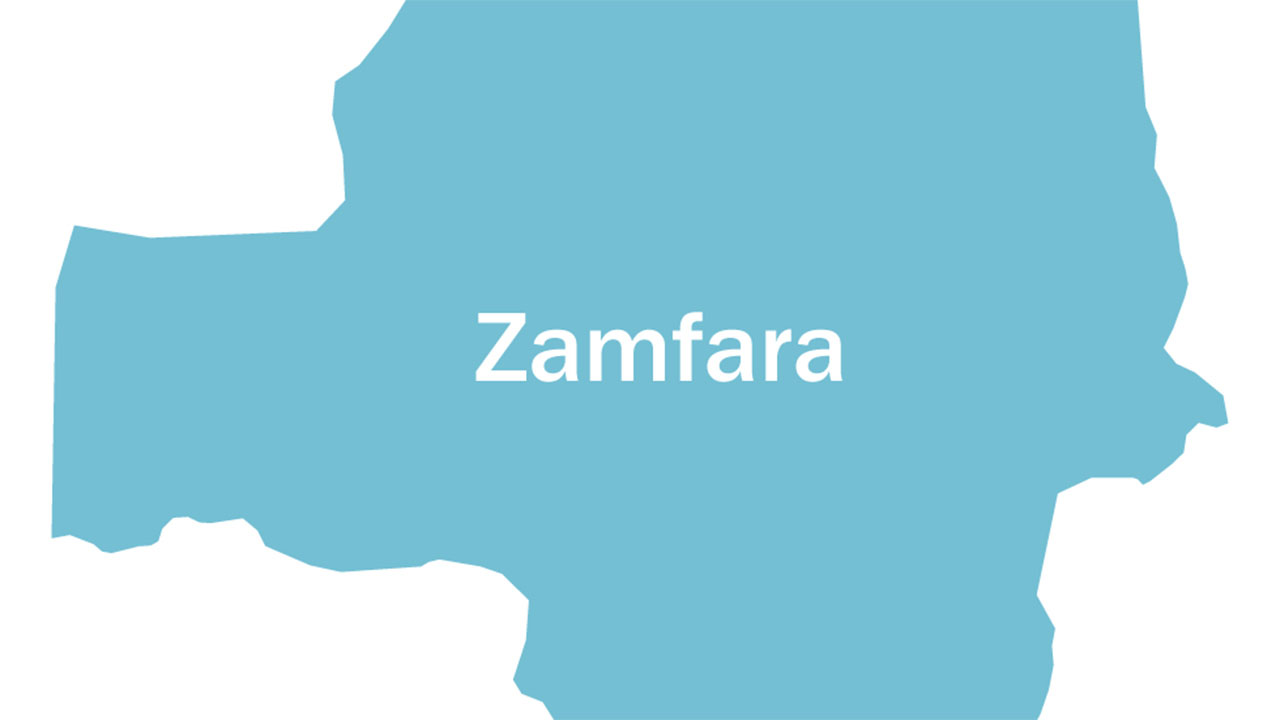
Zamfara residents broke after paying N500m to bandits
Zamfara residents broke after paying N500m to bandits
Residents across Zamfara State are being extorted by armed bandits who demand levies running into hundreds of millions of naira in exchange for allowing the people to remain in their homes, findings by Daily Trust have revealed.
The levies, enforced under the threat of abduction, violence or death, have left communities in a state of fear and financial ruin.
Since January 2025, it was gathered that over N500 million has been paid by various communities to different bandit groups in a desperate bid to avoid attacks.
In January alone, the late bandit kingpin, Isuhu Yellow, imposed a N172.7 million levy on 25 villages, including demands for agricultural produce.
Over 12,000 women suffer cervical cancer annually in Nigeria – Pate
For instance, Gijinzama village was charged N8.5 million, Dakolo N5 million plus 20 bags of beans, Kibari, Kunchin Kalgo N20 million, Sungawa N15 million, and Yalwa N2.7 million, among others.
Shortly after, another notorious bandit leader, Dogo Gide, demanded N100 million from 23 communities in Tsafe LGA, prompting mass displacement.
The affected communities included Kunchin-Kalgo (N20m), Sungawa (N15m), Rakyabu (N15m), and Kwaren Mai-Saje (N10m)
More recently, on Sunday, April 20, bandits issued a fresh demand of N60 million from residents of Dankurmi village in Maru LGA.
According to locals, they were given until Wednesday to comply or face dire consequences-yet kidnappings had already commenced before the deadline.
A former councillor, Hon. Iliyasu Salisu Dankurmi, told BBC Hausa that the levy followed a military operation in the area.
“The army recently raided the area, and the bandits are now demanding N60 million as compensation. They have threatened to make life unbearable if we don’t pay,” he said.
He also revealed that eight people had already been abducted from the Zargado community, with their release contingent upon payment.
The village head of Dankurmi, Alhaji Sani Usman, identified other affected areas to include Manya, Kaboso, Yalwa, Bafadan Makini, Huda, Dargazo, Danhayan-Dargazo, and Koloma.
He noted that the bandits were enraged by a forest fire-believed to have been caused by residents-and are punishing neighbouring villages collectively.
‘Levies drain our resources’
A resident of Kwalfada village in Tsafe Local Government Area, who requested anonymity, confirmed that bandits have been imposing levies on several villages in the area.
He said, “This is the third levy in three months. The first one, we paid N8 million, the second was N7 million, and recently they placed a N4 million levy on us. Wallahi, we are completely broke in this village-bandits have taken everything we have.
“I don’t think you can find a single resident in this village with N20,000 in cash. We’ve exhausted all our resources paying these levies.
“In recent days, the bandits have stormed our village with their stolen cows. As I speak to you, the cows have taken over our houses, and no one dares to chase them out. They brought the cows from a nearby village, fearing an attack by soldiers. They are now taking shelter among residents in villages close to the forest.”
Also speaking to Daily Trust on the phone, a resident of Dan Jibga village, who identified himself as Muhammad Dogo, said the bandits had imposed a N10 million levy on the Gama Lafiya community after killing two persons – one on Sunday and another on Monday.
Dogo further revealed that other villages affected by the levies include Unguwar Tofa (N26.6 million), Makera (N15 million), Sungawa (N20 million), Rakyabu (N7 million), Yalwa (N8 million), Kwarin Mai Saje (N11 million), and Langa-Langa, where the levy ranges between N20 million and N30 million.
He added that Gidan Dawa, Rijiyar Tsakar Dawa, Dan Jibga, and Bilbis villages have also been levied by the bandits.
Malam Ibrahim Maru, a resident of Mara town in Maru Local Government Area, lamented that the issue of banditry had worsened significantly in the Maru axis in recent days.
He said, “The road from Talata Mafara to Maru town has become a death trap for many travellers. Commercial drivers have stopped using the road after 4pm.
We are being driven out by levies – Dansadau residents
In Dansadau, another volatile area, residents lamented that the levies are forcing families to flee.
A resident who spoke under anonymity described the crisis as “a double tragedy”.
“We are extorted by both bandits and security forces. When we request military assistance, they claim they have no fuel unless we contribute. By the time help arrives, the bandits are gone,” he said.
He added that Kabaro village, after being deserted, was asked to pay N6 million to return-later increased to N10.5 million, with an extra N500,000 allegedly requested for ‘recharge cards’ to facilitate communication with the criminals.
“In another village just 1.5km from Dansadau, the initial demand was N5 million. It was negotiated down to N3 million, but while returning from the bandits’ camp, residents were robbed of their phones and money by another group,” he said.
He also said more than 300,000 hectares of farmland-around 60% of Dansadau’s cultivable land-have been abandoned as farmers flee to other states in search of work.
“Dansadau used to account for nearly 40% of Zamfara’s agricultural output. That is no longer the case. Just last Saturday, I was in a truck with about 300 farmers relocating to Gusau to work as labourers,” the source said.
The Zamfara State Commissioner of Police, Ibrahim Maikaba, said the police are doing their best to discourage villagers from paying levies to bandits.
“We are doing our very best to protect residents in banditry-prone villages. Currently, we have deployed combined security teams comprising the police, soldiers, community protection guards (CPGs), and local hunters.
“We are also planning to establish permanent security bases in villages frequently attacked by bandits. We have already set up one in Keita village in Tsafe, and the area is now secure.
Daily Trust except headline










metro
State Police Bill Faces Hurdle as Only Four States Approve

State Police Bill Faces Hurdle as Only Four States Approve
The push to establish state police in Nigeria is facing a fresh legislative hurdle, with only Edo, Osun, Oyo and Rivers states having so far approved the proposed constitutional amendment.
The development comes as several other State Houses of Assembly are either still studying the proposal, yet to begin deliberations or say they have not received the harmonised bill from the National Assembly.
The National Assembly transmitted the 1999 Constitution (Sixth Alteration) Bill, 2026 to the 36 state legislatures on September 16 for consideration and concurrence.
The state assemblies were asked to communicate their resolutions within 30 days. However, the 30-day period is an administrative target rather than a constitutional deadline.
Under Section 9 of the 1999 Constitution, a constitutional amendment requires the approval of at least two-thirds of the 36 state Houses of Assembly before it can proceed to the next stage.
This means at least 24 state legislatures must approve the proposed amendment.
With only four states currently on record as having approved the bill, 20 more state assemblies must give their concurrence for the constitutional threshold to be met.
In the South-West, Osun and Oyo have approved the proposal, while Ondo and Ekiti are still studying it. Ogun has constituted a committee to examine the bill before it is considered by the full House.
READ ALSO:
- Benue Boat Accident: One Dead, Eight Missing as Mourners’ Boat Capsizes
- Court Restricts Osun Accounts Over $13.9m Arbitration Award
- Tension as Kidnappers Threaten to Kill Abducted Oyo Corps Members
The Lagos State House of Assembly has previously endorsed the establishment of state police in principle and urged the 36 state legislatures to accelerate consideration of the constitutional amendment. However, its formal approval of the latest constitutional amendment package had not been publicly confirmed.
In Osun, lawmakers passed the bill clause by clause on September 22 without amendments and began arrangements to transmit their resolution to the National Assembly.
The Oyo State House of Assembly also passed the bill after considering its provisions clause by clause at plenary. The approval made Oyo the fourth state to formally endorse the proposed amendment.
In the South-South, Rivers and Edo have approved the amendment, while Cross River has commenced consideration after the bill passed its first reading.
The Delta State House of Assembly has confirmed receipt of the bill and is consulting stakeholders before taking a position, while Bayelsa had yet to formally debate or vote on the proposal.
In Rivers, lawmakers unanimously endorsed the amendment, with Speaker Martin Amaewhule saying the proposed framework would help strengthen Nigeria’s security architecture.
The proposal seeks to create a constitutional framework for State Police Services while retaining the Nigeria Police Force as the federal police service.
In the Northern states, the process has been slower. Some assemblies have received the bill but are yet to debate or vote on it, while others say the National Assembly has not formally transmitted the document to them.
READ ALSO:
- Oyo Corps Members Abductors Demand ₦950m Ransom, Threaten to Kill Victims
- Adeleke Rejects Ataoja Palace Appointment, Reaffirms Oyebode as Osun Iyaloja-General
- Flydubai Co-Pilot Attacked Captain With Axe in Attempted Terrorist Act, UAE Says
Kano, Kwara, Kebbi, Taraba and Gombe were among states that reported not having received the bill at the time of the latest checks.
Kogi had received the proposal but had yet to deliberate on it, while Yobe had received it but had not listed it for consideration. Borno had read the bill at plenary but had yet to take a position.
Plateau had commenced consideration, while Bauchi had constituted a committee to examine the proposal.
The proposed state police system is being promoted against the backdrop of persistent security challenges across Nigeria, including kidnapping, banditry, communal violence and other forms of criminality.
Supporters argue that decentralising policing would bring security operations closer to local communities, improve intelligence gathering and enable faster responses to threats.
However, concerns remain over funding, accountability, political interference and the possibility of state police being used for partisan purposes.
The proposed constitutional framework is therefore expected to address issues including national minimum policing standards and the relationship between state police services and the federal police structure.
For the amendment to move forward, the proposal must first secure the support of at least 24 of the 36 State Houses of Assembly.
With only four states having approved it so far, the proposed state police bill still faces a substantial legislative hurdle before Nigeria can move to the next stage of the constitutional amendment process.
State Police Bill Faces Hurdle as Only Four States Approve
metro
Benue Boat Accident: One Dead, Eight Missing as Mourners’ Boat Capsizes
Benue Boat Accident: One Dead, Eight Missing as Mourners’ Boat Capsizes
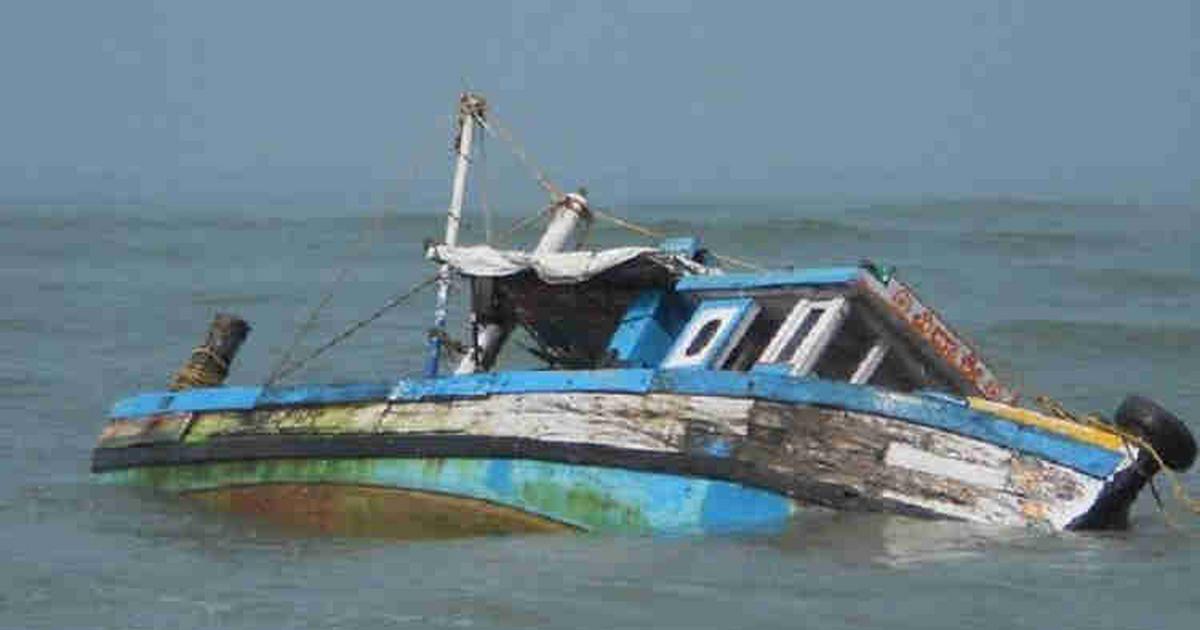
At least one person has died and eight others are missing after a boat carrying mourners capsized on the Buruku River in Buruku Local Government Area of Benue State.
The incident occurred around 11am on Saturday, October 3, as the mourners were returning from a burial ceremony across the river.
The passengers were reportedly travelling on a wooden boat that was also carrying several motorcycles when the vessel developed an engine fault close to the riverbank.
The situation reportedly became chaotic as the boat began taking in water before eventually capsizing. Strong waves were said to have compounded the difficulty faced by the passengers.
The Buruku Local Government Area chairman, Raymond Zege, said the boat was carrying more than 70 passengers and over 30 motorcycles when the accident occurred.
He said a rescue operation was launched after the incident, with several passengers pulled from the river.
The Benue State Emergency Management Agency (SEMA) later confirmed that one person had died, eight remained missing and three others were receiving medical treatment.
The agency said other passengers had been rescued, while search operations continued for those still unaccounted for.
READ ALSO:
- Court Restricts Osun Accounts Over $13.9m Arbitration Award
- Tension as Kidnappers Threaten to Kill Abducted Oyo Corps Members
- Oyo Corps Members Abductors Demand ₦950m Ransom, Threaten to Kill Victims
The exact number of people aboard the boat remains unclear, as initial reports put the number at about 70, while other accounts gave different figures.
The Benue State Government has since directed relevant agencies and boat operators to intensify efforts to locate the missing passengers and support the rescue operation.
The Commissioner for Marine and Blue Economy, Denis Iyaghigba, appealed for calm and urged boat operators and their unions to participate actively in the search-and-rescue efforts.
The incident has renewed concerns about waterway safety in Benue, particularly the risks associated with overloading, inadequate enforcement of safety regulations and the use of boats without sufficient safety equipment.
Zege said the local government had provided life jackets for people using the waterway but acknowledged challenges in ensuring that passengers consistently use them.
Authorities have urged residents who use the river crossing to comply with safety regulations and avoid overloading boats.
Meanwhile, families of the missing passengers remain anxious as rescue teams and local boat operators continue the search along the Buruku River.
The latest Benue boat accident has also raised fresh concerns about safety measures for communities that depend on waterways for transportation, particularly during periods when river conditions become difficult to navigate.
Benue Boat Accident: One Dead, Eight Missing as Mourners’ Boat Capsizes
metro
Court Restricts Osun Accounts Over $13.9m Arbitration Award

Court Restricts Osun Accounts Over $13.9m Arbitration Award
The Federal High Court in Lagos has ordered several commercial banks to place a “Post No Debit” restriction on accounts belonging to the Osun State Government over an unpaid $13.924 million arbitration award in favour of Gamji Nigeria Company Limited.
The interim order, issued by Justice D.E. Osiagor, also covers ₦157.5 million in arbitration fees awarded to the company.
The court order followed an application by Gamji Nigeria Company Limited, which is seeking to preserve the Osun State Government’s funds pending steps to enforce the arbitral award.
The dispute arose from contracts0000 awarded by the Osun State Government to Gamji in June 2017 for the construction of water infrastructure in Ilesa West Local Government Area.
The projects involved the construction of transmission mains, booster pump stations and water reservoirs under a wider water supply and sanitation programme.
According to documents before the court, the projects were initially valued at about $15.98 million and $9.70 million, respectively. Gamji later claimed that design changes and variations increased the contract values.
The company said about 93 per cent of the works had been completed by October 2023 and that the state government issued a Substantial Completion Certificate in November 2024.
READ ALSO:
- Tension as Kidnappers Threaten to Kill Abducted Oyo Corps Members
- Oyo Corps Members Abductors Demand ₦950m Ransom, Threaten to Kill Victims
- Adeleke Rejects Ataoja Palace Appointment, Reaffirms Oyebode as Osun Iyaloja-General
A dispute subsequently developed over issues including extensions of time, variations, price adjustments and additional costs incurred during execution of the projects.
After attempts to resolve the disagreement failed, Gamji commenced arbitration proceedings against the Osun State Government.
The arbitral tribunal eventually delivered its final award on July 24, 2026, directing the state government to pay Gamji $13,924,343.32, alongside ₦157.5 million in reimbursable arbitration fees.
The award also provided for 20 per cent annual interest on the outstanding amount after the specified compliance period.
Gamji told the Federal High Court that the deadline for payment expired on August 24, 2026, without the award being settled.
The company consequently approached the court for an interim order to prevent the state government from dissipating funds that could be required to satisfy the award.
Justice Osiagor subsequently directed the affected banks to place a Post No Debit restriction on the relevant Osun State Government accounts and preserve funds up to the value of the award.
The affected financial institutions include Guaranty Trust Bank, Access Bank, First Bank, Zenith Bank, United Bank for Africa, Ecobank, Fidelity Bank, Stanbic IBTC, Sterling Bank, Union Bank and Wema Bank, among others.
The order is an interim preservation measure and does not amount to a final transfer of the state government’s funds to Gamji. The substantive legal proceedings concerning enforcement of the award remain before the court.
The Federal High Court has adjourned the matter until October 22, 2026, when the relevant applications are expected to be considered.
The latest development is separate from the earlier restriction placed on some Osun State Government accounts in connection with an Economic and Financial Crimes Commission (EFCC) investigation. That restriction was subsequently lifted.
The current case centres on the contractual dispute between the state government and Gamji and the company’s attempt to enforce the $13.9 million arbitration award and associated naira payment.
The court’s decision could have significant financial implications for the Osun State Government if the arbitral award is ultimately enforced.
Court Restricts Osun Accounts Over $13.9m Arbitration Award
-
 metro3 days ago
Workers to Begin Nationwide Warning Strike Over Petrol Price, Wage Award
-
 metro3 days ago
[UPDATED] Imo Highway Attack: 10 Rescued after Gunmen Abducted NYSC Prospective Members
-

 Politics3 days ago
2027: Amaechi Recalls How APC Defeated PDP, Orders ADC Mobilisation
-

 Entertainment2 days ago
Phyna Knocks Out Nkechi Blessing in Fourth Round, Wins ₦50m, New Car
-
 Business3 days ago
Dangote Sets 40-Month Deadline for $16bn East Africa Refinery in Kenya
-

 News3 days ago
Independence Day: Tinubu Unveils Plan to Cut Living Costs, Expand Jobs
-

 metro2 days ago
2027 Hajj: Nigeria Secures 10,000 Extra Slots, Allocation Hits 60,000
-

 News3 days ago
Atiku Challenges Tinubu’s Prosperity Claim, Says Nigerians Can Barely Afford to Live