

International
Zelensky steps up criticism of West, demanding weapons and sanctions

Ukrainian President Volodymyr Zelensky is demanding that the United States and its allies send more weapons and ratchet up sanctions, portraying some leaders as timid in the face of Russian aggression. His escalation of criticism comes one day after President Biden extemporaneously declared that Russian President Vladimir Putin “cannot remain in power.”
“I’ve talked to the defenders of Mariupol today,” Zelensky said in a video address on Sunday, praising the southern port city that has come under horrendous bombardment by Russian forces. “Their determination, heroism and firmness are astonishing,” he said. “If only those who have been thinking for 31 days on how to hand over dozens of jets and tanks had one percent of their courage.”
In a separate interview with The Economist, Zelensky asserted that some countries had drawn a red line at sending more offensive weapons to Ukraine “because they are afraid of Russia. And that’s it. And those who say it first are the first to be afraid.”
Zelensky was responding to a question about French President Emmanuel Macron, who had said earlier that Biden’s remarks about Putin during a speech in Poland risked an “escalation of words and actions.” Macron, who is continuing efforts to negotiate as a go-between Russia and Western allies, also said he wouldn’t “use those kinds of terms” when he communicates with Putin.
Zelensky argued that Western nations, which have already imposed historic sanctions on Russia, hadn’t gone far enough in their efforts to cripple the country’s economy because they “have not completed the sanctions on disconnecting the banking system from SWIFT.” Zelensky was referring to the international consortium used to move money among banks. Although Western allies disconnected some Russian financial institutions from the system, they didn’t block Russia’s access entirely.
He called for a full embargo on Russian oil and gas exports rather than what he called “incomplete” sanctions. “We are not guinea pigs to be experimented on.”
Biden’s remarks in Warsaw at the end of his three-day European trip were intended to demonstrate Western resolve, but Zelensky seems to have used them as an opportunity to question it.
READ ALSO:
- INEC list doesn’t nullify me as PDP candidate, says Babayemi
- Buhari knocks PDP over APC convention criticism
- Eight die in Lagos crashes, police await call to victim’s locked phone
The Ukrainian leader has previously taken advantage of his global platform to rally nations to Ukraine’s defense while pressuring them to take more direct action, such as by enforcing a no-fly zone. NATO member countries have steadfastly resisted that call. This weekend, Zelensky repeated his earlier pleas for the West to send him additional planes, tanks, and armored personnel vehicles.
Western officials contend that they have already provided an extraordinary amount of financial and military support to Ukraine and have promised to continue.
About two-thirds of NATO members are providing lethal assistance, Julianne Smith, the U.S. permanent representative to the body, said Sunday. Since January 2021, the United States has provided $2 billion worth of lethal assistance, including Stinger and Javelin missiles, Smith said.
“Every ally is making a contribution. Some are providing humanitarian support. Some are providing lethal. Most are doing both,” she said on CNN’s “State of the Union.”
Ahead of Biden’s speech on Saturday, Russia extended its attacks in western Ukraine, with a pair of powerful rocket attacks on Lviv. The city has been a relative haven and gathering point for officials, journalists and aid workers.
The timing of the attacks wasn’t seen as coincidental coming the same day as Biden’s visit to Poland, and they drew attention to Russia’s ability to escalate the conflict at ease.
The Russian strikes injured at least five people and ignited a fuel depot. Police in Lviv said they had detained two men on suspicion of espionage for Russia.
More than 3.8 million people have fled Ukraine since the war began, while approximately 10.2 million people — about a quarter of the total population — have been forcibly displaced inside the country, according to the United Nations.
Casualty figures for civilians and the armed forces have been hard to determine. The latest report released by the United Nations said that more than 1,000 people have been killed, though the organization notes that the accurate figures “are likely much higher and will continue to rise as hostilities rage on.”
NATO estimates that at least 7,000 and as many as 15,000 Russian soldiers have been killed in the fighting. Moscow’s official estimates are dramatically lower and widely considered not credible.
As casualties mounted, Zelensky accused the West of playing “ping-pong” over a Polish proposal to send MiG fighter jets to Ukraine, which the United States opposes. It has become a symbol of Western division over how many and what kinds of lethal weapons to give Ukrainian forces.
Underlying the Western debate is the anxiety that Putin could resort to nuclear weapons if he feels cornered or directly threatened by NATO, according to U.S. and European officials, who have said they are providing weapons only for Ukrainian forces to defend themselves.
But as Western antitank and antiaircraft missiles pour into Ukraine, questions abound over whether Putin makes a distinction between those weapons and others that Western leaders have resisted providing.
Amid that uncertainty, the White House was quick to backpedal Biden’s remarks about Putin, which were initially read as a significant shift in U.S. policy. When a reporter asked Biden on Sunday after he attended church in Washington whether he wanted Putin removed and was calling for regime change, the president replied “no.”
Administration officials again clarified on Sunday that the United States doesn’t have a policy of removing Putin from power, even if they supported his ouster through popular means.
“I think the president, the White House made the point last night that, quite simply, President Putin cannot be empowered to wage war or engage in aggression against Ukraine or anyone else,” Secretary of State Antony Blinken said during a news conference in Jerusalem.
“As you know, and as you’ve heard us say repeatedly, we do not have a strategy of regime change in Russia, or anywhere else for that matter. In this case, as in any case, it’s up to the people of the country in question. It’s up to the Russian people,” Blinken said.
Biden’s remarks muddied positions among allies at a moment when analysts say Russia’s assault has stalled and sanctions are taking a bite out of the country’s economy.
READ ALSO:
- Wike Declares For Presidency, Says ‘I’ve Capacity To Remove APC’
- Presidency Defends Ex-PDP Members In APC Exco
- Sit-at-home: Soludo Orders Schools, Banks, Shops, Parks to Open on Mondays
Ukraine’s ambassador to the United States said the country was prepared to negotiate with Russia but would not surrender its territory.
“There should be a solution and push and diplomatic pressure to stop Russia,” Oksana Markarova told NBC’s “Meet the Press.”
“So no, we are not ready to give up our territories. We are not ready to give up our people. We are asking everyone who can put pressure on Putin or who can help us to bring him to the table to stop this war,” Markarova said.
The next round of in-person talks between Ukraine and Russia will be held this week in Turkey, Ukrainian negotiator David Arakhamia said Sunday.
Negotiations have continued throughout the conflict, and officials from both countries have at times expressed cautious optimism about the possibility of coming to a consensus for an end to the war.
With diplomatic channels open but fruitless, the war in Ukraine has arrived at an uncertain turning point. Russian forces appeared to be recalibrating their strategy, having failed to capture the capital city of Kyiv in a lightning strike as originally planned, U.S. and European analysts said.
The Pentagon reported that Russian forces around Kyiv were moving into defensive positions and halting their offensive. And Russia says it is focusing its attention on fighting in Ukraine’s east, where pro-Kremlin separatist forces have long been fighting with the Ukrainian government.
Russia is also calling up military reinforcements as its combat losses continue to grow, the Pentagon said on Friday, citing its latest intelligence assessments.
While additional Russian forces may bring temporary relief to those fighting in Ukraine, they are unlikely to change the war’s course, according to military experts. They note that Russia cannot redeploy foreign-based troops in significant numbers without creating vulnerabilities in other hot spots, and its military probably does not have enough skilled personnel in the pipeline to keep those stations adequately staffed.
The head of Ukraine’s military intelligence on Sunday said Russia is trying to divide the country in two — “to create North and South Korea in Ukraine” — with the east controlled by Moscow.
In a message on Telegram, Kyrylo Budanov said Putin is “changing the main operational directions” — focusing on efforts to link Crimea in the southeast to areas in the east under its control.
In Washington, Republican lawmakers were quick to pounce on Biden’s comments about Putin.
Sen. James E. Risch (Idaho), the ranking Republican on the Senate Foreign Relations Committee, said Sunday that Biden had made a “horrendous gaffe” at the end of what had been “a good speech” in Poland.
Sen. Rob Portman (R-Ohio) said Biden’s comment “plays into the hands of the Russian propagandists” and was a mistake.
“We’re in a crisis. We’re in a war situation,” Portman said on “Meet the Press.” “And so clarity is incredibly important.”
Risch and Portman were among a group of Senate Republicans who signed a letter earlier this month calling on Biden to give more military aid to Ukraine, including fighter planes. The administration, however, said U.S. intelligence agencies believe such moves would be read by Russia as an escalation that could spark a wider war.
A new poll showed Americans worried about just that. About 82 percent of those surveyed by NBC News were concerned that the war could eventually involve nuclear weapons, and three-quarters of Americans said they feared U.S. combat troops could end up fighting in Ukraine.
The poll also found little support for Biden’s leadership in the crisis. Only 12 percent expressed a “great deal” of confidence in the president’s ability to manage the crisis, while 44 percent expressed “very little” confidence.
THE WORSHINGTON POST












International
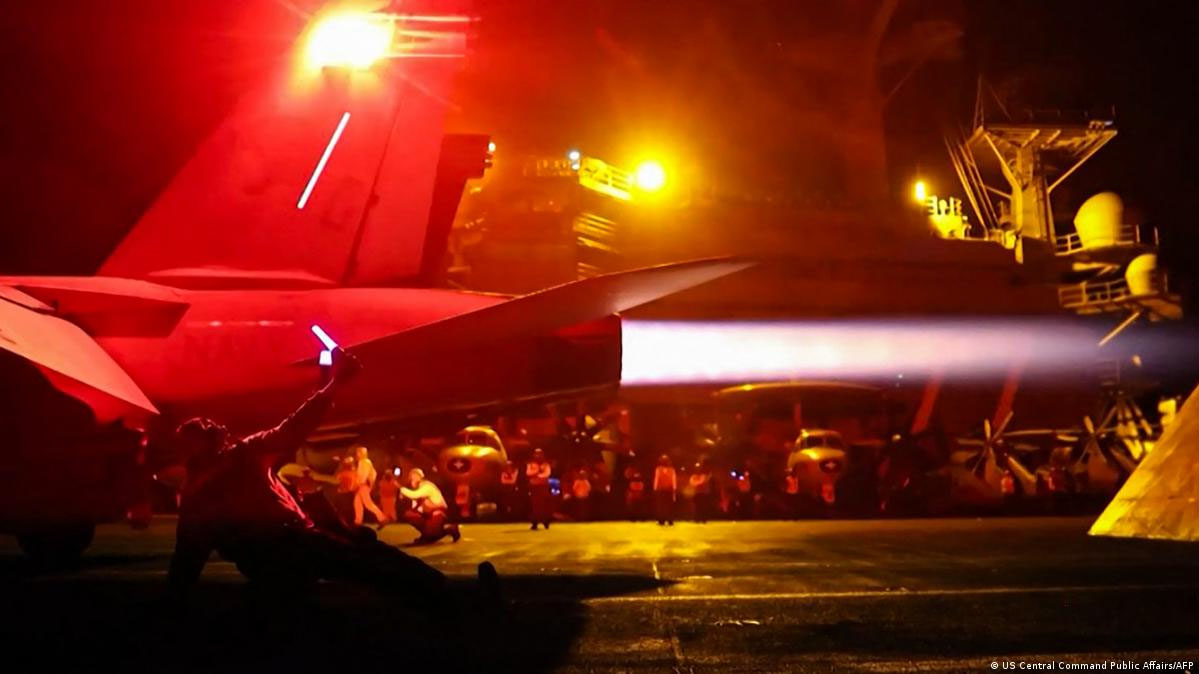
Houthis Launch Missile at Saudi Arabia as Regional Tensions Escalate Amid US-Iran Strikes
International
166,000 Evacuated as Unprecedented Wildfires Rage Across France, Spain
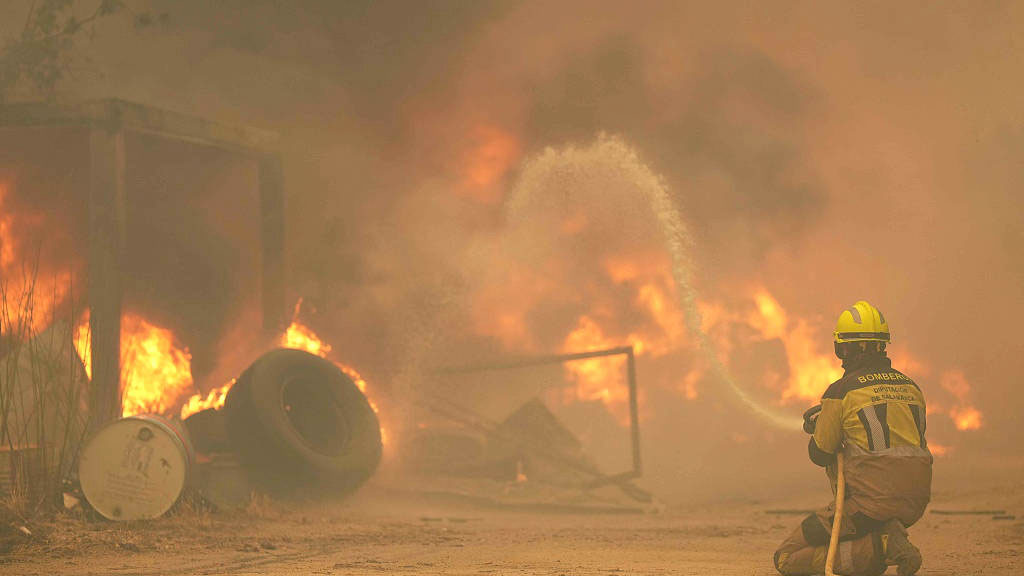
166,000 Evacuated as Unprecedented Wildfires Rage Across France, Spain
More than 166,000 people have been forced to flee their homes and holiday destinations as unprecedented wildfires, fueled by extreme heat, drought, and strong winds, continue to ravage vast areas across France and Spain. The blazes have threatened major cities, including Bordeaux and Madrid, destroyed hundreds of homes, and prompted the deployment of military personnel and European Union emergency assistance. French President Emmanuel Macron has ordered the army to mobilise in response to what officials have described as the worst wildfire France has ever seen, while Spanish authorities have declared a national emergency for only the second time in the country’s history as flames approach the capital, Madrid.
In southwestern France, more than 141,000 people have been evacuated as wildfires tear through the Gironde and Landes regions. The Gironde blaze, described by local prefect Sophie Brocas as an “XXL fire”, has burned through more than 19,000 hectares of forest and destroyed approximately 80 homes. Around 44,000 people fled the up-market Cap Ferret peninsula south of Bordeaux, where the only road was threatened by flames. Hundreds were evacuated by boat, while others drove off the peninsula, known for its millionaire residences. More than 50 houses there have been destroyed. Authorities ordered the evacuation of towns near Bordeaux “as a precaution” against the approaching inferno, while traffic information website Bison Futé urged drivers to avoid roads in the area to free up access for emergency services.
French Interior Minister Laurent Nunez said the country had never before seen such fires on this scale and pledged to “do everything” to protect Bordeaux. “We are going to reorganise our response so we can fight it from the ground and prevent it from advancing toward Bordeaux,” Nunez told French broadcaster TF1, warning that the fire was “self-sustaining” and changing direction. Prime Minister Sebastien Lecornu called a crisis meeting of key ministers late Friday and said a total of 1,000 military personnel would be deployed to confront the flames. In addition, “1.5 million FFP2 masks will be delivered as of tonight to Gironde in order to protect the personnel involved and the populations exposed to smoke that is harmful to health,” he said on X. About 40 of the 1,000 firefighters battling the Cap Ferret blaze have been injured, authorities confirmed. Three firefighters have died in wildfires in France and Italy this week.
READ ALSO:
- PFICP scandal: How ₦1.3bn ‘fake agency’ traced to Buhari’s government entered 2026 budget
- INEC urges eligible Nigerians to complete Continuous Voter Registration as deadline ends Sunday
- Court grants Blessing CEO N20m bail in alleged N69.15m property fraud case
The situation in Spain is equally dire, with at least 25,000 people evacuated in the Madrid region and another 40,000 told to lock themselves indoors. Spain’s government has declared a national emergency for only the second time in the country’s history, allowing the central government to assume overall command and coordinate national and regional emergency resources. Carlos Novillo, the Madrid regional government’s emergency management chief, said the wildfire near the capital was “at its peak and is currently beyond the capacity of firefighters to contain”. “It’s not possible to attack the fire in that area, so defensive measures are being taken,” he added.
Two of the three major wildfires west of Madrid have merged into one, threatening suburban towns. The fire is heading towards Navas del Rey, around 50 kilometres from the capital, and officials fear the blaze could combine with another wildfire in the neighbouring Castilla y Leon region, creating an even larger catastrophe. Madrid’s regional president Isabel Díaz Ayuso described it as the “worst fire in the history of the region”, with the area facing a “perfect storm” of high temperatures, relentless wind, and merging fire fronts. The Military Emergency Unit has been mobilised to try to halt the advance of the flames, with its main focus protecting areas near the town of El Escorial. “The smoke was incredibly thick,” Jose Cobos, who fled his home southwest of Madrid with his wife and three dogs, told Antena 3 television. “You couldn’t breathe.” In the village of Chapinería, 33-year-old Joaquin Espinosa told The Associated Press: “All around the town was smoke and fire, I was scared. Everything was fire and smoke, people were nervous.”
Madrid and Paris have called in EU emergency assistance as flames whipped up by strong winds and drought tore through tinder-dry forests. Following appeals for assistance, the European Commission said it was sending four water-bombing planes to Spain and three to France. Macron said France would receive reinforcements including two Croatian Canadair firefighting aircraft, two Portuguese Air Tractor aircraft, and two heavy-lift Black Hawk helicopters from the Czech Republic and Slovakia. Spanish Interior Minister Fernando Grande-Marlaska said Italy and Greece are each sending two Canadair water-dumping aeroplanes. Emergency shelters were set up in schools and gymnasiums in southwestern France for tourists and residents left wondering what they would return to. In the village of Andernos, Maria Lalanne, a 90-year-old from Lege Cap Ferret, sat on a camp bed in a gym without her glasses or hearing aid, which she had left behind. “I have heart disease, high blood pressure and problems with my eyes,” she said. “I don’t know how long all this will last. I don’t know how my house is, whether it has burnt.”
Some European regions have suffered at least two heatwaves since May. Drought blamed on human-fuelled climate change has heightened the threat from wildfires this year, the World Weather Attribution group said in a study published this week. Southern Europe has seen multiple large fires this summer, with Europe being the world’s fastest-warming continent, with temperatures increasing twice as quickly as the global average since the 1980s. Spain’s Prime Minister Pedro Sánchez has called for a pact between political parties to fight climate change, which he said is key to adapting to a more fire-prone climate. So far this year, 44,000 hectares have been burned in France, more than the average, Nunez said. In Spain, more than 1,140 square kilometres have already burned this year, more than five times the burned terrain through the first half of 2025. The unprecedented scale of these wildfires serves as a stark reminder of the growing impact of climate change on Europe’s fire seasons, with experts warning that such extreme events are likely to become more frequent and severe in the coming years.
166,000 Evacuated as Unprecedented Wildfires Rage Across France, Spain
International
UN calls for urgent evacuation of 6,000 sailors stranded in Strait of Hormuz
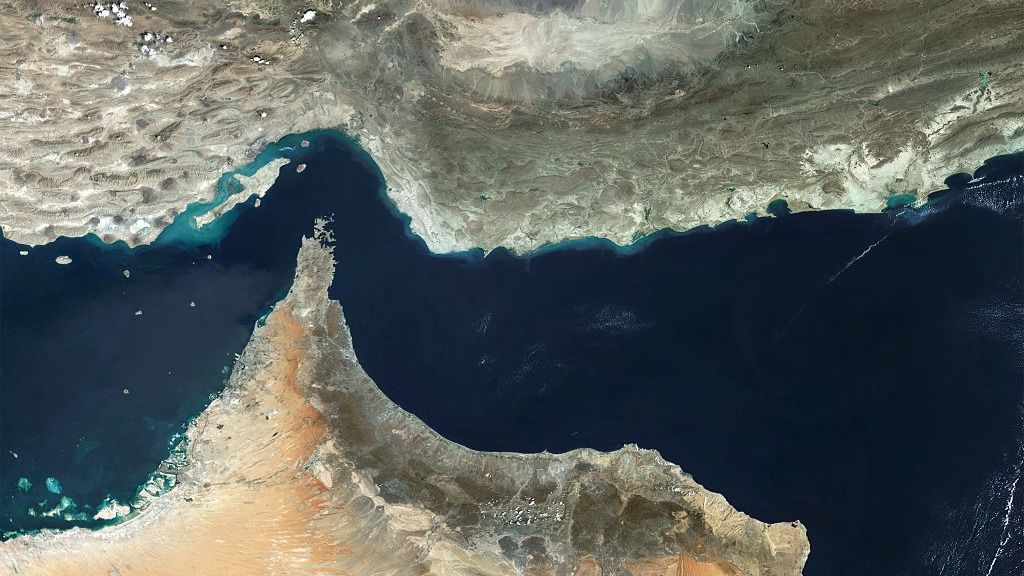
UN calls for urgent evacuation of 6,000 sailors stranded in Strait of Hormuz
The United Nations has called for the urgent evacuation and repatriation of about 6,000 sailors stranded aboard commercial vessels in the Strait of Hormuz, warning that the prolonged crisis poses serious humanitarian, human rights and maritime safety concerns as conflict in the Middle East continues to threaten one of the world’s busiest shipping lanes.
The appeal was made by UN High Commissioner for Human Rights Volker Türk, who urged all parties involved in the conflict to prioritise the safety of civilian seafarers and facilitate their immediate evacuation. He stressed that thousands of crew members have remained trapped aboard vessels for weeks despite the announcement of a ceasefire, with many unable to disembark or safely return home because of persistent security threats.
Speaking in Geneva, UN human rights spokeswoman Shabia Mantoo said estimates from the International Maritime Organization (IMO) indicate that approximately 6,000 seafarers remain stranded on hundreds of ships operating in or around the Strait of Hormuz.
She said all parties to the conflict must urgently ensure safe passage for the affected crews, guarantee access to essential humanitarian supplies and respect international humanitarian law, which prohibits attacks on civilian vessels.
According to the UN, stranded sailors require immediate access to food, clean water, medical care, communication facilities, mental health support and consular assistance while arrangements are made for their evacuation and repatriation.
Türk also appealed to governments, shipping companies, flag states and international maritime organisations to work together to protect seafarers whose safety has been endangered by the escalating regional conflict.
READ ALSO:
- Petrol price hits N1,400 per litre as transport fares rise across Nigeria
- Dalung gives Mutfwang 72-hour ultimatum to withdraw apology to Igbos over civil war role
- Counterterrorism: Military says air strikes kill 23 suspected ISWAP fighters in Borno
The humanitarian appeal comes amid renewed military tensions involving the United States, Iran and Iran-backed Houthi fighters following attacks on commercial oil tankers and other merchant vessels operating in the Red Sea and surrounding waters.
Although U.S. military officials have maintained that the Strait of Hormuz remains open to international commercial shipping, security risks have continued to disrupt maritime operations, forcing several shipping companies to suspend or reroute voyages while others delay sailings until the security situation improves.
The renewed conflict has also triggered sharp increases in global oil prices, with Brent crude climbing above $100 per barrel, raising fresh concerns about global energy supplies, inflation and the cost of international freight.
Industry analysts say the rising geopolitical tension has led to higher war-risk insurance premiums, increased shipping costs and greater uncertainty for global supply chains that depend heavily on uninterrupted maritime trade through the Gulf.
The Strait of Hormuz, located between Iran and Oman, remains one of the world’s most strategically important maritime chokepoints. Before the latest escalation, nearly 20 per cent of the world’s oil supply and significant volumes of liquefied natural gas passed through the narrow waterway each day, making any disruption a major threat to international energy markets and global commerce.
The International Maritime Organization has repeatedly warned that civilian seafarers should never become casualties of armed conflicts, stressing that shipping crews perform essential services that keep global trade moving and deserve protection regardless of geopolitical disputes.
Maritime labour organisations have also expressed concern over the welfare of stranded crews, reporting that many sailors have remained onboard far beyond the expiration of their employment contracts while facing shortages of supplies, delayed crew changes and growing psychological stress caused by prolonged uncertainty.
The International Transport Workers’ Federation (ITF) has urged governments to accelerate diplomatic efforts to secure humanitarian corridors that would allow stranded crews to leave the conflict zone safely.
Shipping experts warn that prolonged instability in the Strait of Hormuz could have far-reaching economic consequences, including higher fuel prices, increased transportation costs, supply chain disruptions and inflationary pressures across many economies.
The UN has reiterated that protecting civilian shipping remains a legal obligation under international law and urged all parties to exercise maximum restraint to prevent further escalation while ensuring the safe evacuation of thousands of sailors caught in the conflict.
UN calls for urgent evacuation of 6,000 sailors stranded in Strait of Hormuz
-

 metro3 days ago
Kano Woman Arrested for Severing Boyfriend’s Manhood Over Plan to Marry Another
-
 metro2 days ago
Gunmen Kill 5 Siblings, 25 Others in Midnight Attack on Kaduna Community
-

 Politics2 days ago
Tinubu tells 2027 rivals: We’ll wrestle ourselves to the finishing line
-

 metro2 days ago
Oyo Receives Two Surveillance Aircraft Worth ₦7.7 Billion to Strengthen Security Operations
-

 Education2 days ago
BUK, Northwest University students demand prompt payment of NELFUND upkeep allowances
-
 metro3 days ago
PFIPC scandal: How Accountant-General exposed Adeniyi Adeyemi’s fake presidential agency
-

 metro2 days ago
Army Colonel Killed, Wife, Aides Injured as Gunmen Storm Home in Coordinated Attack
-
 Politics2 days ago
Osun 2026: APC Inaugurates 292-Member Campaign Council, Declares Victory a Must