

Africa
ECOWAS court declines Niger junta’s request to lift sanctions

ECOWAS court declines Niger junta’s request to lift sanctions
The Community Court of the Economic Community of West African States (ECOWAS) has dismissed an application by the Republic of Niger praying the court to, among others, suspend sanctions imposed on the country by the ECOWAS Authority of Heads of State and Government.
The court, in the ruling delivered by it’s President, Justice Edward Amoako Asante, agreed that it has prima facie jurisdiction over the substantive case.
It however held that it could not grant the request for interim orders sought by the applicants because they were yet to meet the additional requirement for the court to assume jurisdiction over the case.
The court noted that the Republic of Niger, as currently controlled by the military junta, lacked prima facie capacity before the Court, making the substantive application prima facie inadmissible.
It held that the substantive application was, on the face of it, inadmissible as it relates to the other applicants within the meaning of Articles 9(2) and 10(c) of the Protocol of the Court.
The court was of the view that an entity, resulting from an unconstitutional change of government, and not acknowledged by ECOWAS as a government of a member state, inherently lacks the capacity to initiate a case before the court with the aim of obtaining benefits or reprieve.
READ ALSO:
- Two more of abducted youth corps members regain freedom — NYSC
- Emefiele bubbling in our custody, no DSS, EFCC’s threats, says NCoS CG
- Osimhen battles Salah, Hakimi for CAF best player award 2023
It held that it could exercise jurisdiction over the substantive suit and the application for interim orders, which were brought in the name of the Republic of Niger, “by an unconstitutional and unrecognized governmental authority.”
It added that the other seven applicants, who the court described as “non-state applicants, suing alongside the Republic of Niger,” failed to provide specific details regarding the nature and extent of the harm suffered by each of them from the measures imposed on Niger.
The court noted that their failure to differentiate their legal interests in the case from those of the Republic of Niger was fatal to their case.
At the hearing held on 21 November, 2023 the applicants, represented by a team of lawyers led by Moukaila Yaye, argued that the sanctions imposed by the Authority of Heads of State and Government of ECOWAS have had adverse effect on the Nigerien people including shortage of food, medicine and electricity, due to the closure of borders and suspension of electricity supply by Nigeria.
They asked the court for interim orders that will compel the Authority of Heads of State and Government to immediately suspend the sanctions.
They said that ECOWAS overreacted by imposing the sanctions and that Niger was unequally and unfairly treated compared to three other ECOWAS member states (Mali, Burkina Faso and Guinea) that have experienced coup d’états in recent years.
Lawyer to the ECOWAS Authority and other respondents in the case, François Kanga-Penond,
told the court the that the Republic of Niger is currently controlled by a military junta which seized power unconstitutionally in violation of ECOWAS legal instruments.
Kanga-Penond contended that since such an unconstitutional government which had been denounced by ECOWAS and the international community could not be legally deemed to represent the country, both the substantive application and request for provisional measures were inadmissible.
He therefore urged the Court to decline the request for interim orders.
In the substantive application, the applicants -the Republic of Niger, six Nigerien organisations and a Nigerien national – had prayed the court to declare the measures taken by the ECOWAS Authority of Heads of State and Government of ECOWAS during its extraordinary sessions of 30 July and 10 August 2023, to restore constitutional order in the Republic of Niger illegal.
They urged the court to nullify all decisions of these ECOWAS organs imposing sanctions, including the decision to resort to military intervention in the Republic of Niger.
ECOWAS court declines Niger junta’s request to lift sanctions











Africa
Djibouti Boat Disaster: 139 Migrants Dead, Dozens Missing
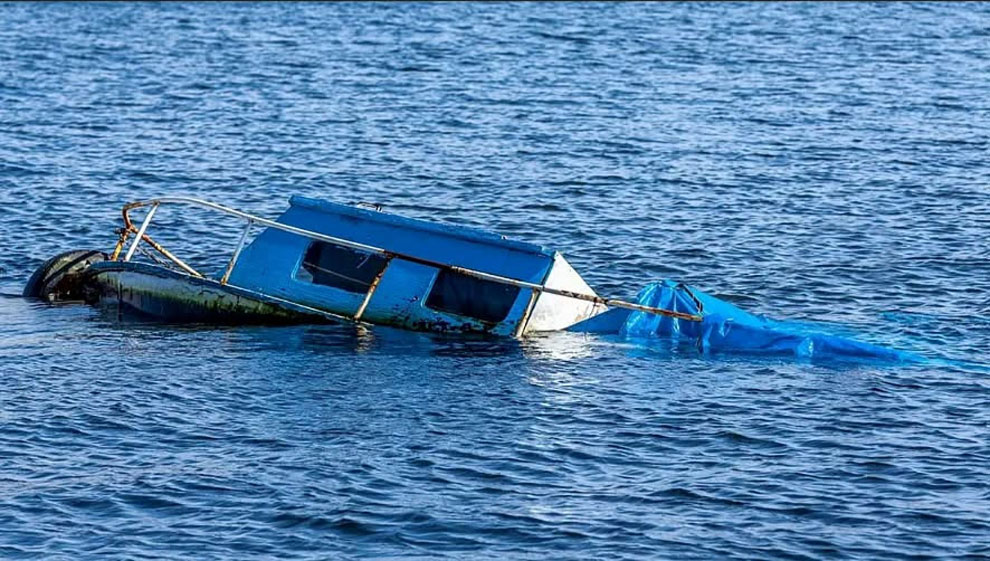
Djibouti Boat Disaster: 139 Migrants Dead, Dozens Missing
At least 139 migrants, including 15 children, have died after an overcrowded boat capsized off the coast of Djibouti while carrying passengers towards Yemen, in one of the deadliest recent disasters along the migration route to Gulf countries.
The International Organization for Migration (IOM), a United Nations agency, said the vessel was carrying more than 300 people when it overturned near Guhere, north of Obock, during the night of October 8–9, 2026.
Initial reports put the death toll at 109, including 15 children, with more than 116 people missing. Subsequent reporting by Reuters and the Associated Press cited an updated toll of at least 139 dead, with about 84 people still missing. The figures may continue to change as authorities verify recoveries and survivors.
The boat was reportedly carrying around 305 people, according to the IOM’s later account. At least 82 people survived the disaster, although early reports gave a slightly different survivor count.
The 15 children among the initially reported dead comprised nine girls and six boys. The IOM also reported that 52 of the bodies recovered were men and 42 were women.
The vessel capsized shortly after setting out on the perilous journey across the waters separating Djibouti and Yemen. Survivors said the boat was overcrowded, while the IOM described the incident as a devastating reminder of the dangers confronting people attempting the crossing.
The agency’s Chief of Mission in Djibouti, Alexandre Coissac, said its teams were working with local authorities to provide emergency assistance to survivors and affected families.
READ ALSO:
- Oshiomhole Accuses Umahi of Bias in Road Projects, Demands Repairs Before New Construction
- 2027: Pantami Breaks Silence as INEC Excludes Him From Final Gombe Governorship List
- US Names 24 More Nigerians in Fresh Fraud, Money Laundering Crackdown
- How Bauchi Court Jailed Three 21 Years Each for Abducting Seven Children
Djiboutian authorities continued search-and-rescue operations as concerns mounted over the fate of those still missing. Local authorities were also providing medical care and arranging burials for recovered bodies.
The IOM said survivors were receiving assistance at its migrant response centre in Obock, including healthcare, food and psychosocial support.
The tragedy highlights the risks faced by migrants travelling along the Eastern Route, which connects the Horn of Africa to Yemen and, for many, onward destinations in the Gulf region.
Many people undertaking the journey are from Ethiopia and Somalia. They seek employment and better living conditions, while others are fleeing insecurity, conflict, drought and other hardships.
Despite the dangers, migrants continue to cross the Bab el-Mandeb Strait in the hope of reaching wealthier Gulf countries. The journey exposes them to shipwrecks, trafficking, exploitation and other serious threats.
The risks have been compounded by instability in Yemen, where fighting continues between the internationally recognised government and Houthi forces, alongside wider regional tensions. Meanwhile, renewed conflict and difficult living conditions in parts of Ethiopia have added to the pressures driving people to leave.
According to the IOM, more than 900 migrants died or went missing along the Eastern Route in 2025, as the number of people attempting the journey increased.
The UN agency has called for greater support for Djibouti’s response, including search-and-rescue operations and emergency assistance for migrants.
The latest shipwreck has renewed calls for safer and legal migration pathways, as humanitarian agencies warn that people will continue to risk dangerous sea crossings while seeking security and economic opportunities.
As recovery operations continue, the final death toll may rise further as authorities verify missing-person reports and establish the number of people who were aboard the vessel.
Djibouti Boat Disaster: 139 Migrants Dead, Dozens Missing
Africa
FBI Raids Ghana Scam Centre, Detains Over 130 in $10m Fraud Probe
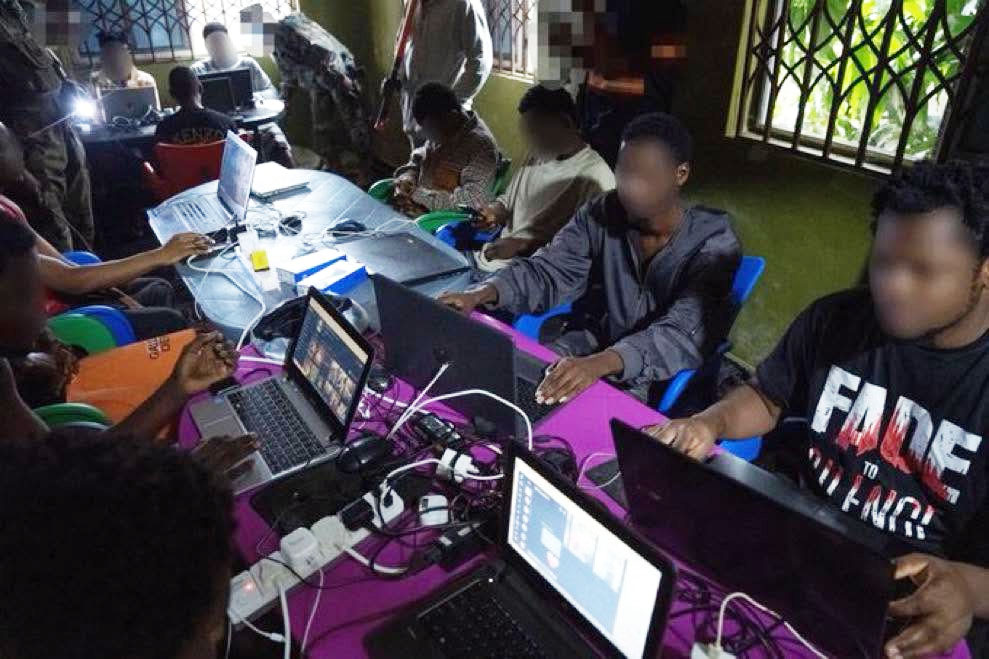
FBI Raids Ghana Scam Centre, Detains Over 130 in $10m Fraud Probe
The Federal Bureau of Investigation (FBI) has raided a suspected scam centre in Ghana, detaining more than 130 people and uncovering nearly $10 million in identified losses linked to an international fraud operation targeting Americans.
The operation, carried out under the FBI’s Operation Blackout, also led to the seizure of more than 300 electronic devices, while investigators identified 89 victims, FBI Director Kash Patel said.
Patel announced the operation on Thursday, saying the Ghana raid was part of the FBI’s wider campaign against transnational scam networks operating through so-called scam compounds.
However, the FBI has not classified everyone detained as a suspected fraudster.
Patel specifically said the more than 130 people arrested or detained included victims who are expected to be repatriated to their home countries, suggesting that some people found at the facility may have been trafficked into the operation rather than involved in running the scams.
The FBI has not disclosed the exact location of the Ghana operation, the identities or nationalities of those detained, or the Ghanaian agencies that participated in the raid.
It also remains unclear how many of those detained will face criminal charges in Ghana or possible prosecution or extradition proceedings in the United States.
Patel said the investigation was continuing, warning that scam compounds are increasingly being used to target American citizens and inflict substantial financial losses.
READ ALSO:
- Court Grants Alleged Fake JAMB Registrar N50m Bail, Sets Strict Conditions
- NESREA to Honour Lagos Baale After Dramatic Rescue of Endangered Sea Turtle
- How Six Members of a Family Were Murdered in Oyo
The Ghana operation is the latest action under Operation Blackout, which the FBI says is targeting organised fraud networks around the world.
According to Patel, the broader operation has so far resulted in roughly $17 billion in assets seized, hundreds of alleged scammers arrested and thousands of trafficked workers freed.
More than 10,000 Americans have also reportedly been warned before losing money, with the FBI estimating that about $670 million in losses were prevented.
The Ghana raid comes amid growing concern over the international expansion of online fraud and scam compounds, with law-enforcement agencies increasingly reporting links between cyber-enabled fraud and human trafficking.
In such operations, workers can be recruited through false employment offers and allegedly transported or coerced into participating in online fraud against victims in other countries.
Ghana has previously cooperated with U.S. authorities in investigations involving transnational fraud.
In July 2026, Ghanaian national Frederick Kumi, also known as Abu Trica, was extradited to the United States after being arrested in Ghana in December 2025. U.S. prosecutors accused him of participating in a romance-fraud network that allegedly targeted more than 80 elderly Americans and caused losses exceeding $8 million.
The extradition involved cooperation between Ghanaian authorities and several U.S. and Ghanaian law-enforcement bodies, including the FBI’s Legal Attaché Office in Accra.
The latest FBI operation also comes as international enforcement agencies increase pressure on scam networks operating outside traditional fraud hotspots in Southeast Asia.
The FBI has not released further details about the Ghana raid, and the investigation remains ongoing.
The bureau is expected to provide additional information as investigators establish the roles of those detained and determine which individuals, if any, will face prosecution.
Those accused of criminal offences are presumed innocent unless proven guilty in court.
FBI Raids Ghana Scam Centre, Detains Over 130 in $10m Fraud Probe
Africa
Zimbabwe Tycoon Wicknell Chivayo, Wife Among Six Killed in Helicopter Crash

Zimbabwe Tycoon Wicknell Chivayo, Wife Among Six Killed in Helicopter Crash
Zimbabwean businessman Wicknell Chivayo and his wife, Lucy Muteke, have been killed in a helicopter crash that claimed six lives in Marondera Rural, east of the Zimbabwean capital, Harare.
The crash occurred at about 5pm local time on Wednesday, September 30, 2026, with the helicopter carrying six people, including Chivayo, his wife and two pilots.
Family spokesperson Herbert Chivayo confirmed the deaths, while Zimbabwean authorities said there were no survivors.
The aircraft came down in the Marondera area, about 72 kilometres east of Harare, before catching fire. Emergency responders and investigators were deployed to the scene after the crash.
Zimbabwean aviation authorities said preliminary information indicated that fuel spilled after the impact before a fire broke out. However, officials stressed that the information did not establish what caused the helicopter to crash.
READ ALSO:
- Tinubu Returns After 30 Days in Europe, Says ‘I’m Healthy and Ready to Work’
- NMDPRA Moves Against Fuel Pump Fraud, Threatens Licence Revocation
- $2.1m Land Suit: Court Orders Wike’s Son to Produce American Passport
The cause of the crash remains under investigation, with aviation officials and other investigators examining the wreckage and circumstances surrounding the incident.
Police said the bodies were badly burned in the post-crash fire, making formal identification necessary. Forensic specialists were subsequently involved in the identification and investigation process.
Chivayo, 43, was one of Zimbabwe’s most prominent and publicly visible businessmen. He was known for his high-profile lifestyle, philanthropy and extensive social-media presence, where he frequently displayed luxury cars, properties and other expensive possessions.
He also maintained close links with senior political figures in Zimbabwe, including President Emmerson Mnangagwa.
READ ALSO:
- Tinubu Returns After 30 Days in Europe, Says ‘I’m Healthy and Ready to Work’
- NMDPRA Moves Against Fuel Pump Fraud, Threatens Licence Revocation
- $2.1m Land Suit: Court Orders Wike’s Son to Produce American Passport
His business activities and political connections had previously attracted public scrutiny, including allegations relating to government contracts and political financing. Chivayo denied wrongdoing in connection with such allegations.
News of his death triggered reactions across the region, with political and business figures expressing condolences to his family.
Kenyan President William Ruto was among those who mourned Chivayo, describing the Zimbabwean businessman as a friend.
The crash has generated significant attention in Zimbabwe because of Chivayo’s prominence and his public profile, but authorities have not attributed the accident to any specific mechanical, weather or human factor.
Investigators are expected to examine the aircraft, flight circumstances, weather conditions, pilot actions and other available evidence as they work to determine what caused the fatal helicopter crash.
Authorities have not announced a final finding on the cause of the accident.
Zimbabwe Tycoon Wicknell Chivayo, Wife Among Six Killed in Helicopter Crash
-

 metro2 days ago
Money Rituals: Four Arrested in Kwara Over Suspected Human Parts
-

 metro2 days ago
Osogbo Cultism Crackdown: Six Suspects Arrested as Police Recover Drugs, Charms
-

 Politics3 days ago
2027: Tompolo Unveils 57 Tinubu Campaign Vehicles, Warns Lagosians Against 2023 Repeat
-

 Politics2 days ago
2027: Adeleke’s Camp Promises 1.5 Million Votes for Tinubu in Osun
-

 News2 days ago
2027 Elections: INEC Reveals Why Pantami, Adebutu, Others Were Excluded
-

 metro4 hours ago
₦130m Toyota Tundra Wrecked: Lagos Dealer Questions Police Over Suspect’s Release
-

 metro2 days ago
IPOB Denies Monday Sit-at-Home Return, Challenges Police to Produce Evidence
-
 metro1 day ago
Borno Woman Jailed Two Years for Sexual Exploitation of 16-Year-Old Girl