

Africa
Tinubu to Mali, Burkina Faso, Niger: Re-consider decision to pull out of ECOWAS

Tinubu to Mali, Burkina Faso, Niger: Re-consider decision to pull out of ECOWAS
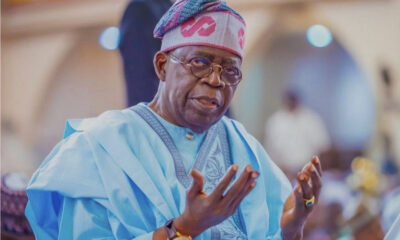
President Bola Tinubu on Saturday urged Mali, Burkina Faso and Niger to re-consider their decision to pull out of the Economic Community of West African State (ECOWAS).
Tinubu, who is ECOWAS chairman, in his welcome address on the Extra-Ordinary Summit on the Peace, Political and Security situation in the ECOWAS Sub-Region, in Abuja on Saturday, said times like what the sub-region is currently facing demanded that the leaders took difficult but courageous decisions that put the plight of the people at the centre of their deliberations.
“Democracy is nothing more than the political framework and the path to addressing the basic needs and aspirations of the people. This is why we must re-examine our current approach to the quest for constitutional order in four of our Member States.
“I therefore urge them to re-consider the decision of the three of them to exit their home and not to perceive our organization as the enemy,” he said.
According to Tinubu, “we are gathered here to address pressing developments in our sub-region surrounding the peace and security as well as the political situations in the Republics of Niger, Burkina Faso, Guinea, and Mali. We must approach these issues with a sense of unity and commitment to the well-being of our people.
“Permit me to say that the complexities of the issues at hand necessitate a comprehensive and collaborative approach. Accordingly, it is incumbent upon us to engage in constructive dialogue, exercise prudent judgement, and work collectively towards finding enduring solutions that will lead to sustainable peace and security as well as political stability in our region.”
READ ALSO:
- Cement sells for N11,000 in Lagos
- Police nab armed robbery suspects using army uniform, recover weapons, cash
- ‘Exclusion from federal cabinet’ – We’ll reply their mistake at the right time – El-Rufa’i
Tinubu said the gravity of their responsibilities as leaders in these challenging times could not be overstated “and it is through our concerted efforts and a deep sense of history that we can address these challenges in the spirit of shared vision, solidarity and collective responsibilities.
“I come before you today burdened by the weight of the challenges confronting us. I am equally buoyed by the spirit of collective resolve that defines our ECOWAS community. This extraordinary summit was convened at a critical juncture that demands our focused attention on regional issues.
“In the course of this Summit, therefore, we would receive a Memorandum from the ECOWAS Commission President on the peace, security and political situation in the region. The Memorandum will give us an update on the current situation in the Republics of Burkina Faso, Guinea, Mali and Niger.
“On that note, our decisions must be guided by our commitment to safeguarding the constitutional order, upholding democratic principles, and promoting the social and economic well-being of the citizens of the aforementioned countries.”
The ECOWAS chairman stated that the leaders would deliberate on the announced withdrawal from ECOWAS by the Republics of Burkina Faso, Mali and Niger and that in the spirit of collective security and African solidarity, the community realised that the stability of these nations is intricately linked to the overall peace and security of West Africa.
“As such, it is pertinent that we engage in constructive deliberations to examine the actions taken by these countries and ensure that the citizens are not denied the benefits derived from our regional integration initiatives. In our ensuing discussions, we must put the plight of people, the ordinary citizens at the centre of our decisions.
“In a similar vein, the recent decision by the Constitutional Council of Senegal to annul the postponement of the electoral process is a matter that demands our attention. We commend our brother Macky Sall for agreeing to
abide by the Court’s decision to organize election as soon as possible and to step down in line with the rule of law. We must all commend his courage and statesmanship as we wish him the very best in his future endeavours,” he added.
Tinubu said these challenges, though daunting, presented an opportunity for ECOWAS to reaffirm its commitment to the vision of its founding fathers and the principles underpinning their commitment to peace, security, and regional integration.
“We must stand united in our resolve to promote economic integration, democracy, and human rights, with a view to fostering sustainable development across all our member states.
“I am confident that through our collective efforts and determination, we will navigate the challenges before us and chart a course towards a more peaceful, secure, and prosperous West Africa,” he stated.
Tinubu to Mali, Burkina Faso, Niger: Re-consider decision to pull out of ECOWAS






Africa
South Africa: 27 Killed, 26 Injured in Separate Mass Shootings
South Africa: 27 Killed, 26 Injured in Separate Mass Shootings
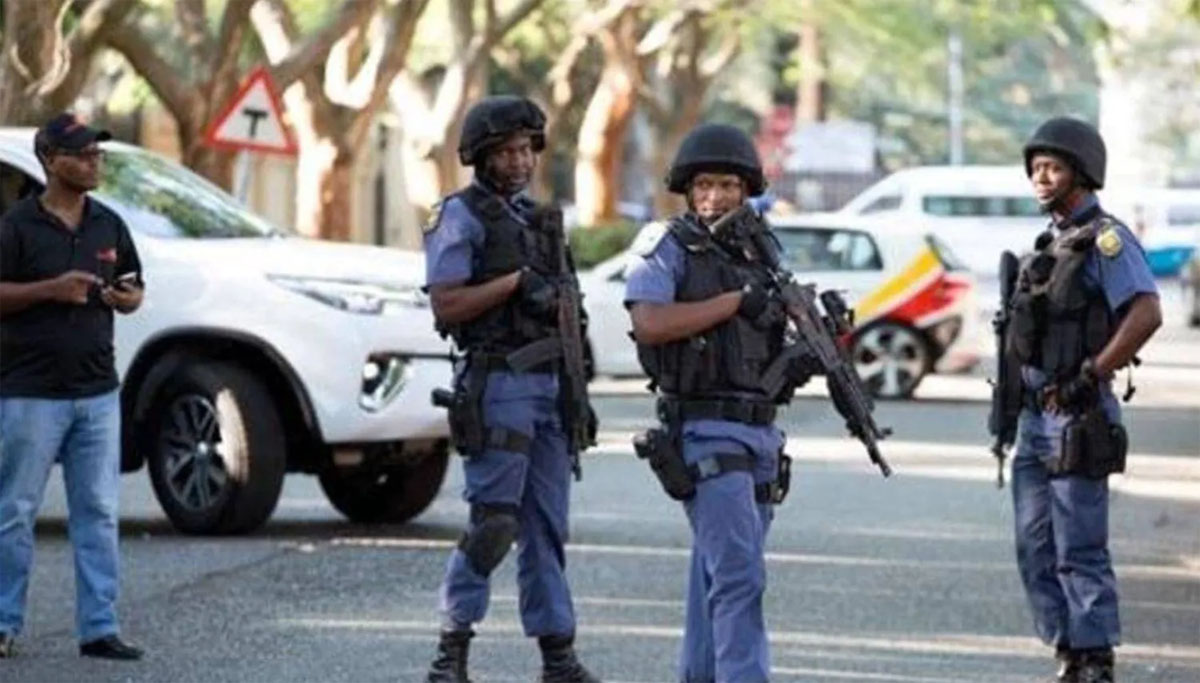
At least 27 people have been killed and 26 others injured in two separate mass shootings in South Africa, with police launching investigations and manhunts for the attackers.
The shootings occurred within hours of each other in Gauteng and Western Cape provinces, with the first attack reported at a tavern in Wedela, southwest of Johannesburg, on Saturday night, followed by another shooting at an entertainment venue in Lwandle, near Cape Town, in the early hours of Sunday.
In Wedela, police said gunmen opened fire on patrons at a tavern at about 9:30 p.m. on Saturday.
The South African Police Service (SAPS) said 17 people were killed in the attack, comprising 13 men and four women.
At least 15 people were also injured and taken to medical facilities for treatment.
According to the police, the attackers were armed with AK-47 rifles and pistols. They allegedly opened fire on people outside the tavern before entering the premises and continuing the shooting.
READ ALSO:
- Abuja Police Arrest Woman, Two Hotel Workers Over Man’s Body Dumped Under Bridge
- Bauchi Police Arrest 26-Year-Old Man Over Rape Of 50-Year-Old Woman
- 2027: Lawal Challenges Wike To Clarify Allegiance Over Rainbow Coalition
The gunmen also reportedly searched some patrons and took their mobile phones before escaping in two unidentified vehicles.
Police have launched a manhunt for the suspects, while investigations are ongoing to establish the motive for the attack and identify those responsible.
A few hours later, another shooting occurred at an entertainment venue in Lwandle, a township near Cape Town.
Police said gunmen entered the venue, which also operates as a shisanyama, a popular South African establishment serving grilled meat, at about 1:46 a.m. on Sunday and opened fire on people inside.
The attack left 10 people dead and 11 others injured.
Five victims reportedly died at the scene, while five others later died after being taken to medical facilities.
Western Cape police commissioner Lieutenant General Sizakhele Dyantyi established a multidisciplinary investigative team led by serious violent crime detectives to investigate the attack and pursue the perpetrators.
No arrests had been announced in connection with either shooting at the time of the latest police updates.
The two incidents came days after another deadly shooting in KwaMakhutha, south of Durban, where 11 people were killed and three others injured at a house party.
The KwaZulu-Natal attack occurred on Tuesday night, September 22, according to police.
Authorities said some of the victims were known to Crime Intelligence in connection with alleged illegal activities, although investigators had not established a definitive motive. Police said a possible conflict between rival groups was among the lines of inquiry.
The three shootings have renewed concerns over gun violence in South Africa, particularly deadly attacks involving groups of armed suspects.
However, authorities have not established any connection between the shootings in Wedela, Lwandle and KwaMakhutha. Investigations into the individual incidents remain ongoing.
South Africa: 27 Killed, 26 Injured in Separate Mass Shootings
Africa
South Africa: Two Women Arrested Over Alleged Rape, Kidnap of E-Hailing Driver
South Africa: Two Women Arrested Over Alleged Rape, Kidnap of E-Hailing Driver
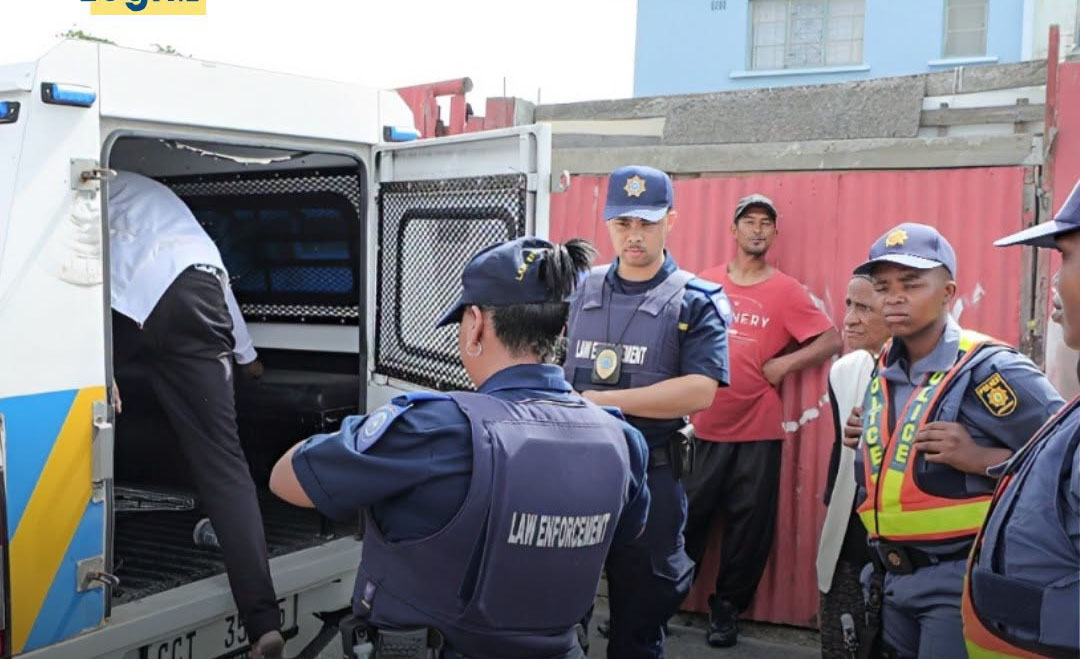
South African police have arrested five suspects, including two women and a teenager, after a 25-year-old e-hailing driver was allegedly kidnapped, sexually assaulted and held for ransom in Cape Town.
The incident occurred in the Steenberg area of Cape Town on Saturday, September 12, 2026, after the driver reportedly went to meet a woman he had previously connected with through his e-hailing business.
Police said the driver’s brother alerted authorities after the suspects allegedly contacted him and demanded R4,000 in cash for the driver’s release.
Following the report, Steenberg police launched an investigation and used a vehicle tracking device to establish the driver’s location.
The tracking information led officers to Southampton Road in Heathfield, where they found and rescued the 25-year-old driver.
According to police, the victim had met one of the female suspects about a week before the incident through his e-hailing business.
The two reportedly exchanged telephone numbers and remained in contact for several days before arranging to meet.
Police allege that when the driver went to meet the woman on Saturday, he was instead kidnapped by the group and taken to another location.
The two female suspects allegedly sexually assaulted the driver while the other suspects were involved in holding him captive.
The five suspects arrested comprise two women aged 23 and 34, two men aged 42 and 48, and a 16-year-old boy.
The teenager is the youngest of the suspects arrested in connection with the case.
The arrests followed the alleged ransom demand made to the victim’s brother. After receiving the report, police acted on information from the vehicle tracking system and were able to locate the driver and bring him to safety.
READ ALSO:
- Four-Storey Building Collapses in Enugu, Workers Trapped Inside
- 27-Year Wait Ends as Construction Begins on New Dutse Emir’s Palace
- Mother ‘sold daughter’s abuse videos for $300’: Nigeria child pornography case shocks nation
The suspects are expected to appear before the Wynberg Magistrate’s Court on Monday, September 14, 2026, where they are expected to face charges relating to the alleged kidnapping and rape.
The case has drawn attention to the safety challenges confronting e-hailing drivers, who regularly meet passengers, customers and other contacts at different locations, sometimes without knowing the people they are meeting.
The incident also highlights the fact that men can be victims of rape and sexual violence. Sexual assault can affect people of any gender, and the circumstances of an alleged attack should be treated with the same seriousness regardless of whether the victim is male or female.
However, the suspects have not been convicted of any offence. The allegations against them will be tested before the court, and they remain entitled to due process under South African law.
Police have not disclosed further details about the alleged sexual assault or indicated whether additional arrests are expected.
Investigations are continuing as authorities work to establish the full circumstances surrounding the alleged kidnapping, sexual assault and ransom demand.
The incident comes amid broader concerns about the safety of e-hailing operators in Cape Town and other parts of South Africa, with driver associations and operators repeatedly calling for stronger measures to protect drivers from attacks and criminal activities while carrying out their work.
South Africa: Two Women Arrested Over Alleged Rape, Kidnap of E-Hailing Driver
Africa
Murder of Nigerian Bishop in South Africa Sparks Outcry Over Unsolved Killings

Murder of Nigerian Bishop in South Africa Sparks Outcry Over Unsolved Killings
Family and community leaders rally for justice after 58-year-old cleric from Ekiti is assassinated in his Johannesburg residence.
To his congregation and loved ones, Nigerian clergyman Bishop Taiwo Michael Fakunle was a pillar of faith and moral guidance. But that sanctuary was violently shattered inside his Kensington home in Johannesburg when two gunmen forced their way inside and opened fire at point-blank range.
Hit more than seven times, the 58-year-old Ekiti native died at the scene, sending shockwaves across the Nigerian expatriate community and turning deep grief into a collective cry for justice.
Leading the push for accountability, the Nigerian Citizens Association South Africa (NICASA) voiced the community’s sorrow and growing frustration with violent crime.
READ ALSO:
- Jetour T2 PHEV Storms Abuja as Jetour Steps Up Nigeria Expansion
- Obi Explains Why He Won’t Step Down for Atiku in 2027
- ASUU Threatens Nationwide Strike Over Unpaid Salaries, Unimplemented Agreement
Association leaders stressed that Bishop Fakunle’s family, church, and compatriots deserve clear answers rather than empty reassurances.
Urging South African investigators to act with speed and transparency, the group warned authorities against letting the tragedy become another forgotten statistic in an endless stack of unsolved homicides.
As detectives at Jeppe Police Station proceed with the murder inquiry, community heads are calling for robust oversight from Nigerian diplomats while urging the public to exercise restraint.
Despite the intense anger surrounding the brazen attack, leaders emphasized that justice must be pursued through legitimate legal channels.
As mourners across South Africa and Nigeria remember the slain bishop, their message to investigators remains clear: the community will not look away until those responsible are brought before a judge.
Murder of Nigerian Bishop in South Africa Sparks Outcry Over Unsolved Killings
-
 metro3 days ago
$155m Left Behind, $750m Liabilities: Anambra Govt Opens Fresh Obi Files
-
 News2 days ago
Fake Agency Scandal: Gbajabiamila Says He Never Betrayed Tinubu’s Trust
-

 metro3 days ago
Unexplained Wealth: Obasanjo, Osinbajo, Others for Shittu’s Book Launch
-

 metro2 days ago
Woman Busted With Alleged Alcohol Hidden in Water Pack at Ogun Prison
-
News2 days ago
Anambra Govt Demands Unreserved Apology From Peter Obi Over Debt Claims
-

 International2 days ago
Iran Claims Capture of Second US Underwater Drone in Strait of Hormuz
-

 metro3 days ago
Why I Accept My Daughters’ Same-Sex Relationships — Charly Boy
-
 Politics2 days ago
2027: NDC State Chairmen Reject Obi-Kwankwaso Movement’s Parallel Structures