
International
Zelenskyy Rejects Russia’s Claim of Drone Attack on Putin’s Residence, Warns of Escalation
Zelenskyy Rejects Russia’s Claim of Drone Attack on Putin’s Residence, Warns of Escalation
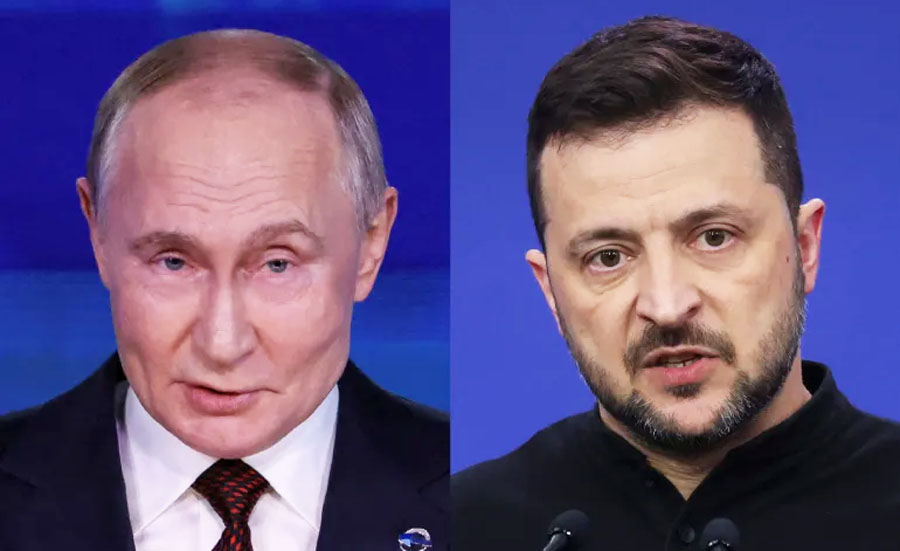
Ukrainian President Volodymyr Zelenskyy has dismissed Russia’s claim that Ukraine launched a drone attack on a residence belonging to Russian President Vladimir Putin, describing the allegation as a fabrication that could be used to justify further military escalation.
Russia’s Foreign Minister Sergei Lavrov alleged that 91 long-range drones were launched overnight on Sunday at Putin’s state residence in the Novgorod region, northwest Russia. According to Moscow, all the unmanned aerial vehicles (UAVs) were intercepted by Russian air defences, with no casualties or damage recorded. The Kremlin did not clarify whether Putin was present at the location at the time.
Responding on Monday, Zelenskyy described the accusation as “typical Russian lies,” warning that it could serve as a pretext for intensified attacks on Ukraine and a hardening of Russia’s stance in ongoing peace negotiations.
“Everyone must be vigilant now. Absolutely everyone. A strike may be launched on the capital,” Zelenskyy told journalists, calling Russia’s statement a “threat” and accusing Moscow of seeking excuses to prolong the war.
In a post on X, the Ukrainian leader urged the international community not to remain silent, warning that Russia must not be allowed to sabotage efforts toward a lasting ceasefire.
READ ALSO:
- Amotekun Arrests 39 Suspected Terrorists Fleeing Sokoto After US Airstrikes
- Nigeria vs Uganda: Key Super Eagles Players Risk Suspension Ahead of AFCON Clash
- Malami, Son, Wife Remanded Over ₦Billions Money Laundering Charges
Lavrov, in a statement published on Telegram, said Moscow would reconsider its negotiating position, citing what he termed the “final degeneration” of Ukraine’s leadership. However, he said Russia would not withdraw from talks with the United States, according to Russian news agency Tass.
On Tuesday, the Kremlin said it would not provide evidence to support its claim, with a spokesperson confirming that Russia would now “toughen” its negotiating stance.
Ukraine’s Foreign Minister Andrii Sybiha rejected the allegation, insisting that Russia had failed to present any credible proof.
“Almost a day has passed, and Russia still hasn’t provided any plausible evidence to its accusations of Ukraine’s alleged attack on Putin’s residence. And they won’t — because there is none,” Sybiha wrote on X.
The controversy follows US-Ukraine talks in Florida on Sunday, where US President Donald Trump and Zelenskyy discussed a revised peace plan. Zelenskyy later told Fox News that there was a “possibility to end the war in 2026,” stressing that Ukraine would require continued US support.
He disclosed that Washington had proposed 15-year security guarantees, with Trump saying negotiations were “95 per cent complete.” Zelenskyy identified territorial disputes, the Russian-occupied Zaporizhzhia nuclear power plant, and unresolved issues in the Donbas region as major sticking points.
The White House confirmed that Trump held what it described as a “positive call” with Putin following the US-Ukraine talks. Kremlin aide Yuri Ushakov said Putin raised the alleged drone incident during the conversation, claiming it occurred shortly after what Washington viewed as a successful diplomatic engagement.
Trump later told reporters he was informed of the incident by Putin and was “very angry,” though he acknowledged that it was also possible the attack had not occurred.
Zelenskyy Rejects Russia’s Claim of Drone Attack on Putin’s Residence, Warns of Escalation








International
Muslim Nations Condemn Israel’s New Death Penalty Law for Palestinians

Muslim Nations Condemn Israel’s New Death Penalty Law for Palestinians
Several Muslim-majority countries have strongly condemned Israel’s new death penalty law, which reintroduces capital punishment for certain terrorism-related offenses, warning that it could further escalate tensions in the Middle East. The legislation, passed by Israel’s Knesset on March 30, 2026, allows death by hanging as the default sentence for Palestinians convicted in military courts of deadly attacks classified as terrorism, with executions scheduled within 90 days of conviction.
The foreign ministers of Saudi Arabia, Egypt, Jordan, Indonesia, Pakistan, Qatar, Turkey, and the United Arab Emirates issued a joint statement criticizing the law, describing it as a discriminatory measure that undermines the fundamental rights of Palestinians in the occupied West Bank. The ministers warned that the legislation reinforces an apartheid-like system and could inflame tensions on the ground.
READ ALSO:
- Lagos Ranks Fourth Most Expensive City for House Rent in Africa — Report
- China Blames US‑Israeli Strikes on Iran for Strait of Hormuz Blockage
- Soaring Fuel Prices Drive Nigerians Toward Electric Vehicles
Human rights organizations, including the Association for Civil Rights in Israel and the International Bar Association’s Human Rights Institute, have opposed the law, filing petitions with Israel’s Supreme Court to block it. Critics argue that the legislation disproportionately targets Palestinians, applying primarily in military courts in the occupied territories, while allowing Israeli civilians discretion in sentencing for terrorism-motivated murder.
The law was introduced by the far-right Otzma Yehudit party, led by National Security Minister Itamar Ben-Gvir, who argued that stricter penalties are necessary to deter terrorism and protect citizens. However, opponents say that the measure risks undermining the rule of law and exacerbating ongoing conflicts.
The legislation has drawn strong international criticism. The Palestinian Authority condemned the law as a violation of international law, potentially amounting to a war crime under the Fourth Geneva Convention. UN human rights officials have also expressed concern, highlighting the risk to civilian safety, due process, and human rights protections.
Muslim nations and international observers continue to call for restraint and adherence to international legal standards. They emphasize that reinstating the death penalty in a volatile conflict zone could heighten instability and hinder prospects for peace.
Muslim Nations Condemn Israel’s New Death Penalty Law for Palestinians
International
China Blames US‑Israeli Strikes on Iran for Strait of Hormuz Blockage

China Blames US‑Israeli Strikes on Iran for Strait of Hormuz Blockage
China has accused the United States and Israel of being the “root cause” of the disruption of shipping in the Strait of Hormuz, following recent military strikes on Iran. Chinese foreign ministry spokeswoman Mao Ning said on Thursday that the interruption to navigation resulted directly from what Beijing described as “illegal military operations” by Washington and Tel Aviv against Tehran.
The Strait of Hormuz, a crucial maritime corridor connecting the Persian Gulf to the Gulf of Oman, is one of the world’s busiest shipping lanes for crude oil and liquefied natural gas (LNG). Iran has effectively restricted access to the strait in retaliation for the joint strikes, escalating tensions in the Middle East and threatening global energy supply chains.
China, as the largest importer of Iranian crude, has been particularly affected. Mao Ning warned that further military escalation would not resolve the crisis, saying, “Military means cannot fundamentally solve the problem, and the escalation of conflicts is not in the interests of either side.” Beijing called for an immediate ceasefire and de-escalation to restore safe passage and regional stability.
READ ALSO:
- Soaring Fuel Prices Drive Nigerians Toward Electric Vehicles
- Ogun Partners with NAHCON, Names Key Hajj Leadership Team
- Timi Frank: INEC Actions Threaten Democracy, Calls on Trump to Support Nigeria
The remarks came after U.S. President Donald Trump urged nations dependent on oil shipments through the strait to “take care of that passage” themselves. Trump also indicated that the conflict could continue for another two to three weeks, with potential strikes targeting critical Iranian infrastructure if negotiations fail.
The disruption has already sent shockwaves through global energy markets, with oil prices surging between 40 to 50 percent. Industries reliant on fuel have been hard hit, including airlines such as Air China, which announced increases in fuel surcharges on domestic routes. Analysts warn that sustained instability in the strait could prolong energy price volatility and further strain global supply chains.
Market experts say that reopening the Strait of Hormuz is crucial for stabilising international energy flows. Private and public sectors are closely monitoring developments, with international diplomacy expected to play a key role in resolving the crisis. China’s call for a negotiated solution highlights its strategic interest in protecting maritime energy imports and preventing long-term disruption to global oil supply.
China Blames US‑Israeli Strikes on Iran for Strait of Hormuz Blockage
International
Qatar Petitions UN Over Iranian Missile Strikes on Maritime Assets

Qatar Petitions UN Over Iranian Missile Strikes on Maritime Assets
The government of Qatar has formally appealed to Antonio Guterres, strongly condemning what it described as Iranian drone and cruise missile attacks on its territory and maritime infrastructure, calling them clear violations of international law and national sovereignty.
In a detailed communication to the United Nations, Qatari authorities outlined a series of incidents that occurred between March 28 and April 1, 2026, describing them as “unlawful acts” that pose a serious threat to regional stability and global energy security. The letter is part of a broader diplomatic push, with Qatar submitting multiple complaints to the UN and Security Council in recent weeks over what it calls sustained aggression by Iran.
The most recent and severe incident took place on April 1, when three cruise missiles were launched from Iranian territory toward Qatari waters. According to officials, Qatari air defense systems intercepted two of the missiles, while a third struck the Aqua 1 fuel oil tanker operating within Qatar’s territorial waters. The vessel is leased to state-owned QatarEnergy.
QatarEnergy confirmed that all 21 crew members aboard the tanker were safely evacuated. Authorities reported no casualties and no environmental damage, but warned that the attack underscores growing risks to maritime safety and critical energy infrastructure in the Gulf.
READ ALSO:
- Macron Hits Back at Trump, Says Marriage Jibe “Not Worth a Response”
- Akwa Ibom Barber Jailed 14 Years for Defiling 12-Year-Old Girl
- Lagos Taskforce Launches Anti‑Crime Patrol Unit to Curb Rising Criminality
Qatar invoked Article 51 of the UN Charter, affirming its right to self-defense, and indicated that a full assessment of damages and losses is ongoing. The government also called for urgent international intervention, accountability, and enhanced protection of vital shipping lanes and offshore facilities.
Officials stressed that repeated attacks on commercial vessels and energy assets threaten not only Qatar but also the broader global economy, given the Gulf’s strategic role in oil and gas exports. The incidents have intensified concerns among Gulf states about the vulnerability of energy infrastructure, commercial shipping routes, and key maritime corridors.
The latest escalation comes amid heightened regional tensions involving Iran, the United States, and Israel, with fears growing that continued hostilities could spiral into a wider conflict. Maritime security bodies, including the United Kingdom Maritime Trade Operations, have continued to monitor the situation closely and warn of increased risks in the Gulf.
Despite the attacks, QatarEnergy stated that operations at affected facilities remain fully operational, signaling resilience in the country’s energy sector. However, analysts warn that sustained threats could disrupt supply chains and shake investor confidence if the situation deteriorates further.
Qatar has repeatedly emphasized that such actions are inconsistent with principles of good neighborliness and international norms, urging the global community to act decisively to prevent further escalation.
As of now, there has been no official response from Iran regarding the latest accusations.
Qatar Petitions UN Over Iranian Missile Strikes on Maritime Assets

-

 Education3 days ago
WAEC Releases 2026 WASSCE Timetable for School Candidates
-

 Auto2 days ago
Lagos NURTW Chairman Sego Distributes Exotic Cars, Luxury Items to Cabinet Members (Video)
-

 metro2 days ago
Cars Torched as South Africans Protest Alleged Nigerian ‘Igbo King’ Coronation
-

 Railway1 day ago
Easter train: NRC increases Lagos-Ibadan trips, offers free Osun holiday transit
-

 Sports2 days ago
Osimhen Among Highest-Paid African Footballers in 2026 — See Full List
-

 Education2 days ago
JAMB Releases 2026 UTME Mock Results, Delists Over 20 CBT Centres
-

 Business2 days ago
Bottles of Death: SWAN rallies media to combat ₦472bn illicit alcohol crisis
-

 Politics2 days ago
Adebayo Adelabu Resigns as Power Minister to Run for Oyo State Governorship