

metro
13 Months After Abduction, Family Of 13-Year-Old Abducted Student Live In Pain, Hope

-
What we miss about him
-
‘Student hypnotised, unwilling to return home’
-
It’s untrue, we believe he’s willing to come back – Family
For Mary Peter, Treasure Ayuba, is not just a grandson. She said, “He is my blood and flesh. His mother only gave birth to him, but I am his everything. He and I had a strong bond even before he was born.”
For this reason, when her sleep was interrupted around 2am on July 5, 2021 to be told that the young Ayuba, who had just turned 12 three days earlier, was abducted from his school dormitory, Mrs Peter broke into tears.
“I rushed to wake his mother up and the rest of the people in the house. We spent the rest of the night crying and praying before we rushed out to the school at dawn,” she recalled the moment in an interview with Daily Trust Saturday in the family’s small bungalow in Kaduna’s suburb of Mahuta.
Her grandson was among the 121 students abducted from the Bethel Baptist High School, located at Maraban Damishi in Chikun Local Government of Kaduna State last year.
During the overnight raid, which was allegedly masterminded by a bandit kingpin in the area, Tukur Sharme, two military personnel on guard duty at the school – Private Salisu Rabiu and Ordinary Seaman Bilal Mohammed – were killed.
READ ALSO:
- Bandits Invade Zamfara Mosque, Abduct Worshippers
- Police arrest Pastor for defiling, impregnating 12-yr-old girl in Ogun
- Senior student forces JSS 1 scholar to take poisonous soaked Garri in Ebonyi school
Ayuba was a new student enrolled into the school to begin his journey for secondary education. The school was chosen because his mother – who finished from the school – believed it would be a good place for moral and educational development of her child. She had no premonition that the boy’s journey in her alma mater would be short and end in tragedy.
For the family, Ayuba’s abduction was a reincarnation of a recent tragedy. Four months earlier, Ayuba’s aunt, Jennifer Peter, was kidnapped from the Federal School of Forestry, Afaka, when gunmen attacked the school on March 5, 2021. She was to stay in captivity for two months before she regained her freedom after much furore and negotiations. Mrs Peter participated in the many protests by parents of the kidnapped students, demanding for rescue of their children. Eventually, Jennifer was released.

Mrs Mary Peter, Ayuba’s grandmother
“The trauma of her abduction was still with us when this news came. She was kidnapped from school three weeks after her sister, Treasure’s mother, had sustained fracture from an accident. We were not yet out of the shock when this (Ayuba’s abduction) took place.
“She (Jennifer) was the worst hit by that news because she had experienced it. She knew what she went through. She told us that her concern was not the time he would spend with the abductors but the suffering they would go through trekking to the camps. She is still living with the trauma of her own experience,” Mrs Peter said.
For the family, it is the beginning of another chapter of agony, which they had no premonition it could drag this long.
Mrs Peter, who was widowed a year earlier, led the rest of the family to join families of the other abducted students in the quest to bring back Ayuba and his mates.
The fight for freedom
The fight was manifold. The parents deployed everything to see to the freedom of their children – talking to the state government and relevant security agencies and protesting, sometimes under the rains to draw attention to the plight of their children. They also opened negotiation with the abductors when it appeared that no result was forthcoming from official quarters.
Through a tortuous negotiation and ransom payment, 120 students were released piecemeal over the course of six months. The last freed student, Daily Trust Saturday learnt, was the one released on January 1, 2022.
With every news of freed students, the family of Treasure Ayuba would rush to see if the young boy they adore was lucky to be out of the kidnappers’ den. They always came back in disappointment.
Despite promises and receiving payments, Ayuba has remained with his abductors, to the anguish of the family.
“At another time, my son-in-law volunteered, along with his friend, to go and deliver the ransom. The two of them were held by the kidnappers. They demanded that I pay ransom to before they would release them. They said they knew I had grains, that I should sell and give them the money. What do I do when my in-law and someone else’s children are held captive? I had to sell other things and add to what his family raised. My brother and I went to pay and get them out,” she said.
The family had joined others in prayer crusade for divine intervention. With the school authority and local leadership of the Christian community in the area, parents and other well-wishers engaged in spirited rounds of supplications for months.
READ ALSO:
- Ronaldo agrees deal to join Fenerbahce
- Seven die as flood overruns seven Niger councils
- Ondo court remands Okada rider for raping mentally ill married woman
Gradually, with more and more victims freed, the prayer group thinned out. Mrs Peter and only a handful of close family members remained consistent.
“I had to call off the prayer sessions because it turned out that only the old man leading the prayers remained with us. His mother was also becoming emotionally drained; every time we went there she would come back depressed. The father is old and sick, so at the end, it was only I and few others, so I asked them to suspend the sessions,” she said.
Beyond the communal prayer sessions, Mrs Peter said she had travelled to many places of worship for special devotions in her quest to get her grandson back.
‘What we miss about him’
In the 13 months since Ayuba’s abduction, the family holds on tight to his memories, signified by his last picture before the incident.
For his mother, Janet Peter, the photo of young Ayuba, snapped on July 3, 2021, a day after his 12th birthday, evokes a strong emotion. That day, she and other members of the family had gone to visit the boy and deliver a cake specially made to commemorate his birthday.
Looking at the photo, which shows Ayuba in his school uniform holding the cake, sets tears rolling down the cheeks of his mother; yet, it is the closest she had been to him in over a year.
Ms Peter said she had fond memories of her son, who she described as her look-alike.
Beyond that, he was a caring son in spite of his young age as he assisted the mother with laundry and dry-cleaning while she was nursing her broken leg.
“When I saw him ironing my cloths I would ask: Why bother when I am not going out in the cloth? But he would say he just wanted me to look good, even while at home.
“Treasure is someone who really cared about everybody in this house, especially my mum. She is not finding it easy,” Ms Peter said in tears.
As disclosed by her daughter, Mrs Janet confessed to having a rough time since the event of July 5, 2021. For her, Ayuba was a “helper” who showed responsibility beyond his age. “He is not just a boy. If you know the meaning of his name, Treasure, you would find him fitting of the name.”
Despite the passing days and months, Ms Peter holds on to a wish for another opportunity to see her son.
‘Student hypnotised, unwilling to return home’
Daily Trust Saturday gathered that there are fears that Ayuba was hypnotised by his captors and indoctrinated him into their wayward lifestyle.
Sources involved with negotiations for his release said the boy may have been influenced by the abductors, making him unwilling to return home.
“During the early days of the abduction, the leader of the kidnappers told the go-between that he liked the boy because of his courage and would want to keep him. We thought they were joking, but they are making that threat real,” a source who didn’t want to be named said.
READ ALSO:
- 2023: I like what Peter Obi is doing, will host him soon — Umahi
- Serena Williams: I thank everyone for decades of support; bows out after US open singles loss
- Ice Prince sent to Ikoyi Prison over alleged assault of policeman
The proprietor of the Bethel Baptist High School, who is also the president of the Kaduna Baptist Conference, The Rev Ishaya Adamu, confirmed the “reluctance” of the teenager to return home, but said it was not the only reason Ayuba is still with the abductors.
“I am looking for money to go and bring the boy,” he said, explaining that “part of it is the issue of money, but the boy in question has been reluctant to come back home. We have paid money and we sent someone to go and bring the boy, but he was reluctant. But we are still discussing with them. They are expecting us to bring money. They need serious money, but we don’t have it,” he said.
Asked if the boy was acting on his own or being restrained by his captors, Adamu said, “I am not sure this boy can take a decision on his own now. Whatever he is doing there must be influence.”
It’s untrue, we believe he’s willing to come back – Family
But the family of the teenager said it was unbelievable that the boy would choose the criminals holding him over them.
“I don’t believe what they are saying. It is impossible for a 12-year-old who was forcefully taken away. He did not leave to go and join the bandits on his own. People are insinuating different things instead of helping us with prayers.
“Those who spread falsehood and slander us and the little kid instead of helping us with prayer will be shamed. I have a firm belief that the boy would be back and the truth would be known
Mrs Peter expressed anger over what she described as twisted narratives and conspiracy, which she said were generating stigma for them.
Despite many broken promises by the abductors, the family said they would not give up in the fight to get Treasure Ayuba back home.
Daily Trust











metro
Lagos Task Force Denies Stopping Driver Over Toyota Tacoma Inscription

Lagos Task Force Denies Stopping Driver Over Toyota Tacoma Inscription
The Lagos State Environmental and Special Offences Enforcement Unit, popularly known as the Lagos State Task Force, has denied stopping a motorist or demanding a permit over an inscription displayed on his Toyota Tacoma.
The denial followed a viral social media video shared by Jay Scotch Automobile Ltd, in which the driver alleged that officials stopped him over the words “TRD 4×4 Sport Tacoma” displayed on his vehicle.
The motorist claimed the officials treated the inscription as an advertisement requiring a government permit. He further alleged that they threatened to damage the vehicle’s side mirror if he failed to produce the required permit.
He disputed the demand, explaining that the inscription was part of the vehicle when he purchased it in the United States and was not an advertisement subsequently placed on the vehicle in Lagos.
However, the Task Force distanced itself from the incident.
The agency’s Director of Press and Public Affairs, Raheem Gbadeyanka, said residents sometimes mistake personnel from different government agencies for Task Force operatives, particularly when officers are wearing similar uniforms.
READ ALSO:
- Abuja Police Arrest Woman, Two Hotel Workers Over Man’s Body Dumped Under Bridge
- Bauchi Police Arrest 26-Year-Old Man Over Rape Of 50-Year-Old Woman
- 2027: Lawal Challenges Wike To Clarify Allegiance Over Rainbow Coalition
Gbadeyanka said the Task Force was not involved in the encounter and maintained that demanding a permit for a vehicle inscription was outside the agency’s mandate.
The controversy has nevertheless drawn attention to Lagos regulations governing vehicle branding and mobile advertising.
The Lagos State Signage and Advertisement Agency (LASAA) is responsible for regulating signage and advertising in the state, including mobile advertising and branding on vehicles. Its regulatory framework covers various vehicle categories, including cars, pickups, SUVs, buses and trucks.
LASAA also operates systems for registering and verifying authorised vehicle branding, while its published fee structure contains different categories for mobile advertisements and vehicle branding.
The distinction means that the Task Force’s denial does not amount to a blanket exemption for vehicle advertising or commercial branding in Lagos. Rather, the agency is disputing responsibility for the particular encounter and says enforcement of such permits is not within its mandate.
The Task Force has continued to enforce other road, environmental and public-safety regulations across Lagos, including restrictions affecting commercial motorcycles, road obstructions, illegal roadside activities and unauthorised use of restricted traffic corridors.
The incident has therefore raised a separate question of agency jurisdiction, particularly over which government body is authorised to enforce regulations concerning inscriptions, branding or advertisements displayed on private vehicles.
For now, the motorist’s account and the Task Force’s denial remain the two publicly stated versions of the encounter. No independent evidence has been publicly presented to establish that Task Force officials stopped the driver specifically because of the inscription.
Lagos Task Force Denies Stopping Driver Over Toyota Tacoma Inscription
metro
Abuja Police Arrest Woman, Two Hotel Workers Over Man’s Body Dumped Under Bridge
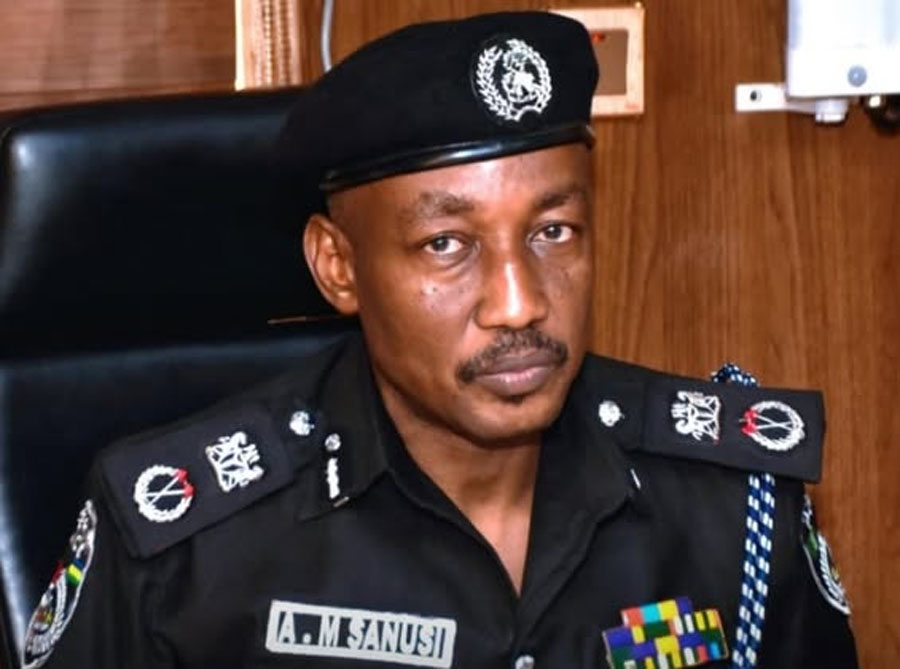
Abuja Police Arrest Woman, Two Hotel Workers Over Man’s Body Dumped Under Bridge
The Federal Capital Territory (FCT) Police Command has arrested a married woman and two workers of a guest house in Abuja over the death of a man whose body was found under Katampe Bridge along the Kubwa Expressway.
The FCT Commissioner of Police, CP Ahmed Sanusi, said the man was first reported missing by his family. His body was subsequently discovered by the roadside under the bridge on August 26, 2026.
The discovery initially prompted speculation about possible kidnapping or one-chance robbery, but investigators later uncovered a different line of inquiry after establishing that the deceased’s mobile phone was missing.
Police said efforts to trace the phone and identify the deceased’s last known contact led investigators to Rukayat Muhammed, a resident of Garki Area 2, Abuja, who was allegedly in a romantic relationship with the man.
Further investigation linked the pair to Good Samaritan Guest House on Second Avenue, Gwarinpa, where they had reportedly lodged before the man was found dead.
According to the police account, Muhammed told investigators that she discovered the man was no longer breathing while they were at the guest house. She allegedly took his phone and left without reporting the incident.
READ ALSO:
- Bauchi Police Arrest 26-Year-Old Man Over Rape Of 50-Year-Old Woman
- 2027: Lawal Challenges Wike To Clarify Allegiance Over Rainbow Coalition
- Unexplained Wealth: Obasanjo, Osinbajo, Others for Shittu’s Book Launch
Hours later, hotel management reportedly gained access to the room after staff were unable to reach the occupants and found the man’s body.
Two hotel workers, identified as Ibrahim Omeiza and Kefat Bitrus, allegedly removed the body from the room and transported it to the Kubwa Expressway near Katampe Bridge, where it was abandoned.
The police said their investigation has linked the woman and the two hotel workers to the events surrounding the man’s death and the subsequent disposal of his body.
However, the exact cause and circumstances of the man’s death remain undetermined. Police said further investigation will establish what happened at the guest house before the body was later found under the bridge.
The identities of the deceased and further details of the circumstances surrounding his death have not been publicly disclosed.
The arrested woman and the two hotel workers remain suspects and are presumed innocent unless proven guilty by a court of competent jurisdiction.
The police said anyone found culpable in the man’s death or the subsequent concealment and abandonment of his body would face prosecution.
Abuja Police Arrest Woman, Two Hotel Workers Over Man’s Body Dumped Under Bridge
metro
Bauchi Police Arrest 26-Year-Old Man Over Rape Of 50-Year-Old Woman
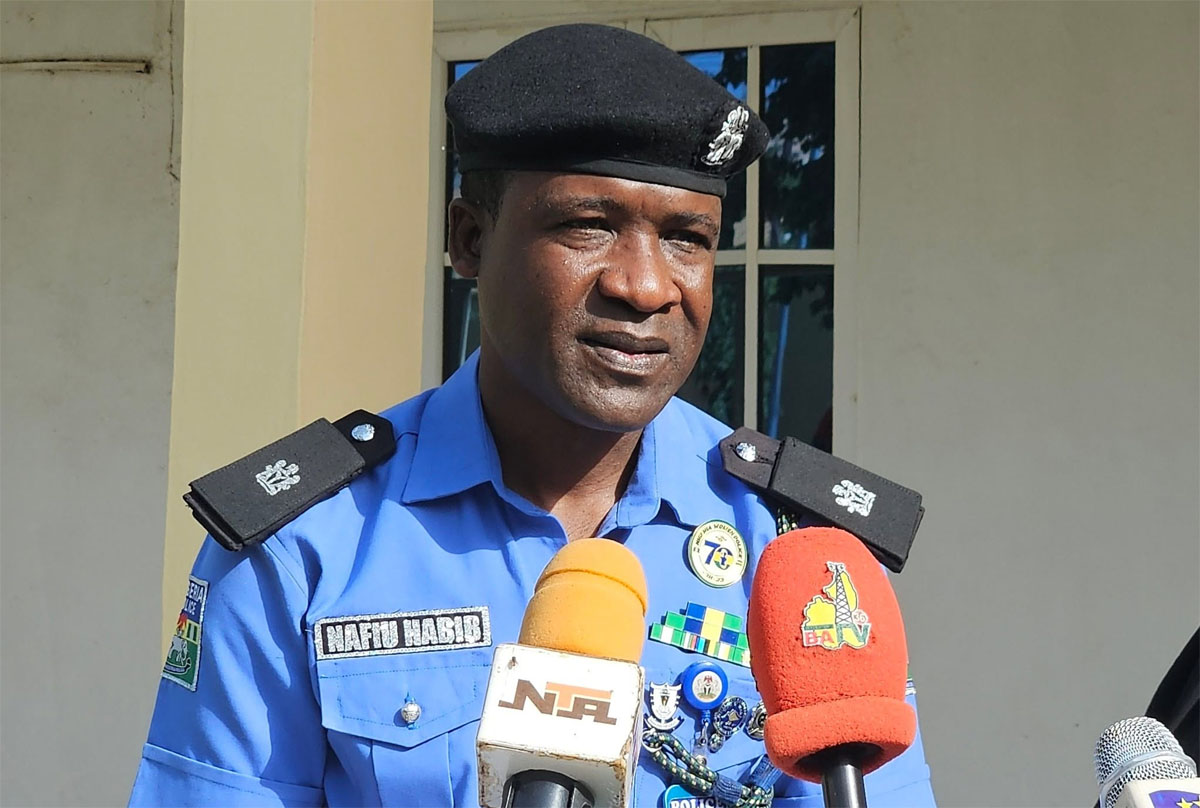
Bauchi Police Arrest 26-Year-Old Man Over Rape Of 50-Year-Old Woman
The Bauchi State Police Command has arrested a 26-year-old man, identified as Lukman Alhaji Nasiru, over the alleged rape of a 50-year-old woman described as living with mental health challenges.
The arrest followed a report received by the police concerning the alleged sexual assault of the woman, with detectives subsequently taking the suspect into custody for investigation.
According to the report, the police are investigating the circumstances surrounding the alleged incident and gathering evidence as part of the process that could determine the next legal steps in the case.
READ ALSO:
- 2027: Lawal Challenges Wike To Clarify Allegiance Over Rainbow Coalition
- Unexplained Wealth: Obasanjo, Osinbajo, Others for Shittu’s Book Launch
- MURIC Blasts Nigeria Over UNGA Stance on Palestine, Netanyahu
The victim’s vulnerability has heightened concerns about the protection of people living with mental health conditions from sexual abuse and other forms of exploitation. Cases involving vulnerable adults can present additional challenges in reporting, investigation and access to justice.
The arrest is not a determination of guilt, and the suspect remains presumed innocent unless proven guilty by a court of competent jurisdiction.
The police are expected to continue their investigation before deciding whether to charge the suspect to court.
The case also adds to the wider concern over gender-based violence and sexual abuse in Nigeria, where law-enforcement agencies and other institutions continue to face calls for prompt investigation and effective protection of survivors and other vulnerable people.
Authorities routinely urge members of the public to report suspected cases of rape and sexual violence to the police or other appropriate authorities so that investigations can be initiated and victims can receive necessary support.
Bauchi Police Arrest 26-Year-Old Man Over Rape Of 50-Year-Old Woman
-

 metro3 days ago
Police Probe Alleged Self-Kidnapping of Adeleke’s Aide in Osun
-

 metro3 days ago
Lagos Arrests Man Over Viral Video of Toddler Being Flogged
-
 metro3 days ago
Tinubu, Fani-Kayode Face Proposed $36m US Lawsuit Over Alleged Threats
-

 News1 day ago
Anambra Releases ₦473m Salary Arrears Document as Obi’s Debt Claim Sparks Fresh Dispute
-

 Sports3 days ago
Former Super Eagles Captain Troost-Ekong Embraces Islam, Recites Shahadah in Doha
-

 Politics3 days ago
Osun APC Warns Adeleke Govt Over Alleged Victimisation of Local Govt Workers
-

 metro3 days ago
Kwara Police Deny Shooting Motorcyclist at Oyun Bridge, Explain Viral Video
-

 News1 day ago
Keyamo: ₦70,000 Minimum Wage No Longer Enough as Cost of Living Soars