

metro
Boat Operators Rescue Woman Who Jumped Into Lagos Lagoon From Carter Bridge

Boat Operators Rescue Woman Who Jumped Into Lagos Lagoon From Carter Bridge
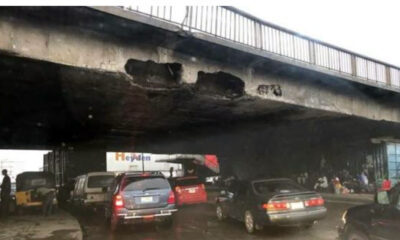
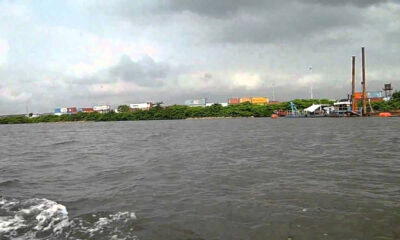
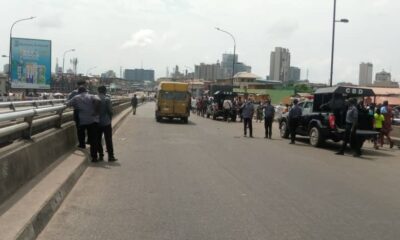
Panic broke out around the Idumota-Carter Bridge in Lagos on Tuesday after a woman was rescued from the Lagos Lagoon, in what witnesses described as an apparent suicide attempt. The incident drew the attention of commuters, pedestrians, and local boat operators, who responded swiftly to bring her to safety. Eyewitnesses said the woman plunged into the lagoon on Tuesday afternoon before nearby boat operators quickly moved towards her and successfully pulled her out of the water alive. A video of the incident, shared on X by user CHUKS (@ChuksEricE), showed the woman seated inside a wooden canoe moments after she was brought out of the water. She appeared visibly shaken and disoriented as one of the fishermen paddled the canoe away from the bridge. The footage captured bystanders gathered on the bridge, with many expressing concern about the woman’s condition and speculating about what may have driven her to jump into the lagoon. A woman speaking in Yoruba was heard asking, “What were you thinking to that extent?” while another bystander remarked, “I can never kill myself because of thinking.” Some members of the public were also heard appealing to the boat operator not to immediately hand the woman over to the police, reflecting concerns about her emotional state. Others responded, “Pray to never be in that position.” The successful rescue has highlighted the importance of a swift emergency response, as the presence of boat operators in the area—who are often close to the water—can be critical during such emergencies. The incident has also sparked conversations online about the growing need for mental health awareness, emotional support systems, and timely intervention for individuals experiencing psychological distress. Reacting to the video, an X user, James JERRY, questioned why the woman appeared to be sitting alone in the canoe after being rescued. “But why is she alone? What if she jumps again? The man is paddling his canoe, who will help out, then?” he wrote. Another user, Kingkosec, described the rescue as both a blessing and a challenge for the woman, writing, “Worst and best thing that can happen to anyone is to be rescued like her. Worst for not fulfilling your wish, best that you will still live again.”
As of the time of filing this report, authorities had not issued an official statement on the incident, and details about the woman’s identity, age, and condition remain unknown. It is also not clear whether she was taken to a hospital, placed in the care of relatives, or referred for psychological support. The Lagos State Police Command and the Lagos State Emergency Management Agency (LASEMA) have not commented on the rescue. The absence of an official update has left many concerned about the woman’s post-rescue care, particularly given the psychological trauma associated with such incidents.
READ ALSO:
- Tinubu Approves Historic 30–80% Military Pay Rise, N924bn Annual Wage Bill
- Trump Warns Iran: Open Hormuz or Get ‘Hit Very Hard’ as 48-Hour Deadline Looms
- Primate Ayodele Predicts Obi, Kwankwaso Will ‘Go Nowhere’ in 2027
The incident adds to a growing list of cases involving people entering the Lagos Lagoon from major bridges in the city. In recent months and years, there have been several similar occurrences, with some ending tragically and others resulting in successful rescues. In June 2026, the Marine Police Unit of the Lagos State Police Command rescued a 23-year-old man, Joshua Babalola, after he jumped into the lagoon from the Third Mainland Bridge. He told authorities he had acted out of overwhelming financial difficulties and feelings of hopelessness. Police confirmed he was the second person in three months to be rescued from the lagoon. In July 2025, police operatives from the Rapid Response Squad (RRS) rescued an elderly woman from Carter Bridge. She was counselled and released into the care of her husband and son. The police had earlier in the year rescued a 35-year-old woman from the lagoon at Falomo Bridge in Ikoyi, with the state government offering her psychological and social support. In April 2023, the Lagos State Fire and Rescue Service confirmed the death of a man, identified as Buka Abana, after he entered the lagoon from the Lekki-Ikoyi Link Bridge. His body was recovered two days later. There have also been several other successful rescue efforts: in July 2020, police operatives rescued a 45-year-old man, Adeyinka Abiodun, who reportedly attempted to enter the lagoon from a bridge. At the time, the incident was described as the eighth such attempt prevented within two months. In September 2021, police stopped a 54-year-old Oworonsoki resident, Akinlolu Ajayi, from entering the lagoon at the Third Mainland Bridge. In April 2022, a 67-year-old Ogun State resident, Oluwatoye Bamigboye, was rescued after a similar incident on the Third Mainland Bridge. In May 2023, police reportedly prevented a 25-year-old street hawker, Rabiu Nafiu, from entering the lagoon from the Third Mainland Bridge. In November 2023, soldiers attached to the 81 Division of the Nigerian Army rescued Francesca Spark after she entered the lagoon at the 81 Division Officers’ Mess in Marina. In June 2024, passersby and officers of the Rapid Response Squad of the Lagos State Police Command intervened to prevent an American citizen from entering the lagoon from the Third Mainland Bridge.
Experts say the priority after such incidents should be ensuring the person’s immediate safety and connecting them with appropriate medical, psychological, and social support. Rather than judging or ridiculing people in distress, members of the public can help by listening, offering support, and directing them to professional assistance. The Lagos State Government, through the Ministry of Health, has in the past offered counselling and rehabilitation support to individuals rescued from such situations. However, many residents have called for more robust mental health infrastructure and greater public awareness to prevent such incidents from occurring in the first place. If you or someone you know is experiencing emotional distress or suicidal thoughts, please reach out to a mental health professional or call a helpline. You are not alone.
Boat Operators Rescue Woman Who Jumped Into Lagos Lagoon From Carter Bridge






metro
Oyo Police: Student Who Died by Suicide Was Charged With Assault, Not ₦8,000 Debt
Oyo Police: Student Who Died by Suicide Was Charged With Assault, Not ₦8,000 Debt
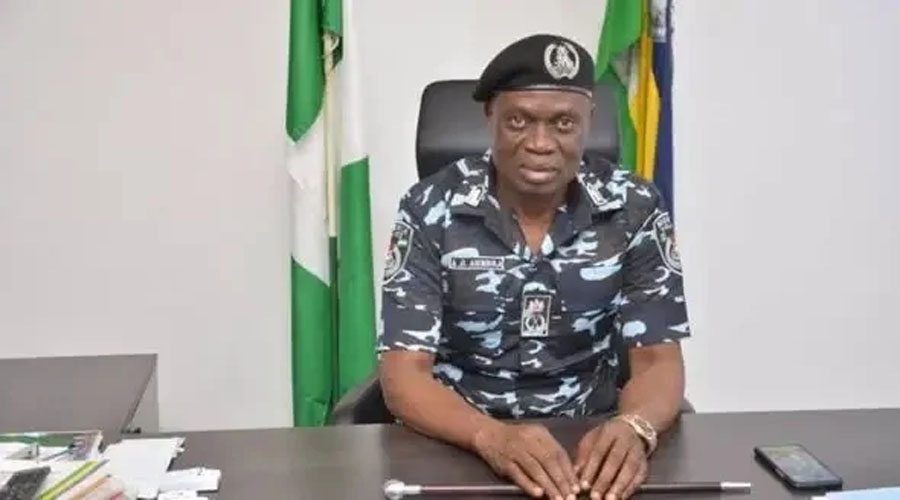
The Oyo State Police Command has denied that it arrested and prosecuted 30-year-old student Al-Amin Mohammed over an outstanding ₦8,000 debt, saying he was instead charged with assault and malicious damage following a dispute with a female Point-of-Sale (POS) operator.
The clarification followed reports about Mohammed’s detention and subsequent death by suicide three days after his release from the Agodi Correctional Centre, Ibadan.
Mohammed died on September 17, 2026, three days after he was released from custody. His family had alleged that he was arrested and taken to court following a dispute over an ₦8,000 balance owed to a POS operator and that the experience left him distressed.
However, the police described the claim that Mohammed was arrested and charged because of the ₦8,000 debt as false, unfounded and misleading.
According to the Command, Mohammed initially approached the POS operator to collect ₦23,000 in cash, with the understanding that he would transfer the same amount to her through a POS transaction.
The police said the operator handed him the money, but he allegedly left without completing the transfer or returning the cash.
After efforts to recover the money, Mohammed reportedly returned ₦15,000, leaving an outstanding balance of ₦8,000.
The police said the POS operator subsequently took possession of Mohammed’s mobile phone pending repayment of the balance.
The dispute later escalated, according to the Command, when Mohammed allegedly went to the complainant’s residence at about 10pm on September 8, 2026.
The police alleged that he assaulted the woman and, during the confrontation, damaged her Airtel SIM registration machine, which was valued at ₦177,000.
READ ALSO:
- Delta Police Intercept Sienna With Military Uniforms, Suspected Drugs
- Jehovah’s Witnesses Adjust Blood Transfusion Rules, Allow Personal Choice
- Ogun 2027: APC Highlights Adeola’s Projects, Challenges Adebutu
Members of the community reportedly intervened in an attempt to settle the dispute, but the effort failed. Mohammed was subsequently handed over to vigilantes, who brought him and the complainant to the police station.
The Command said officers heard both sides and made a further attempt to resolve the matter amicably, but the complainant insisted on pursuing the case in court.
The police therefore said Mohammed was charged with assault and malicious damage, rather than with owing the ₦8,000.
The Command also clarified that the student’s continued detention at the correctional centre was not a decision by the police to hold him over the debt.
According to the police, Mohammed was granted bail after his arraignment but remained at the Agodi Correctional Centre because he could not immediately meet the conditions imposed by the court. He was released after the bail conditions were eventually fulfilled.
Mohammed’s family, however, has given a different account of the events.
His mother, Simiat Mohammed, said her son had borrowed ₦23,000 from the POS operator and repaid ₦15,000, leaving the ₦8,000 balance.
She said the operator seized his mobile phone over the outstanding amount and that Mohammed later returned to retrieve it.
The family disputed the police account that he assaulted the woman and damaged her equipment, maintaining that the confrontation occurred in the course of the dispute over his phone.
The family said Mohammed was subsequently detained and taken to court before being remanded at the correctional centre. His parents later stood as sureties to secure his release.
According to his mother, Mohammed’s condition changed significantly after he returned home on September 14.
She said he became withdrawn, ate little and repeatedly complained about the humiliation he believed he had suffered after being arrested, taken to court and remanded.
Three days after his release, Mohammed reportedly ingested a poisonous substance and later died.
His family has called for an investigation into the circumstances surrounding his arrest, detention, court proceedings and death.
The police, however, cautioned against drawing a direct causal link between the criminal case and Mohammed’s death without verified evidence.
The Command said the circumstances surrounding his death should be established through an appropriate investigation rather than through what it described as an inaccurate or incomplete account.
The case has therefore left competing accounts of how the dispute escalated from an ₦8,000 outstanding balance into a police case.
While the family links Mohammed’s ordeal to the debt dispute, the police maintain that the criminal proceedings were based on allegations of assault and damage to a ₦177,000 SIM registration machine.
The available accounts establish that the ₦8,000 was connected to the original financial transaction, but they differ over the circumstances that followed, including the alleged assault, property damage and the events leading to Mohammed’s detention.
The circumstances surrounding Mohammed’s death and whether any direct connection exists between the events remain matters for further investigation.
Oyo Police: Student Who Died by Suicide Was Charged With Assault, Not ₦8,000 Debt
metro
Delta Police Intercept Sienna With Military Uniforms, Suspected Drugs
Delta Police Intercept Sienna With Military Uniforms, Suspected Drugs
The Delta State Police Command has intercepted a Toyota Sienna allegedly conveying military camouflage uniforms, boots, hats and cartons of suspected illicit drugs, arresting the driver in the process.
The interception was carried out on Friday, September 18, 2026, by operatives of the command’s Anti-Cult Unit (CACU), Asaba, following intelligence about the movement of the vehicle from Onitsha in Anambra State towards Ondo State.
The police said operatives mounted surveillance along the anticipated route and intercepted a green Toyota Sienna with registration number KP 527 AAA at about 4:50am.
The vehicle was allegedly driven by Isaac Urji, 45, from Abia State, who was arrested after the search.
According to the police, officers recovered cartons of substances suspected to be Tramadol and other illicit drugs, alongside military camouflage uniforms, boots and hats.
The Delta State Police Public Relations Officer, SP Bright Edafe, disclosed the development in a statement made available to journalists in Warri on Saturday.
Edafe said investigation had commenced to determine the source and intended destination of the recovered items and identify other people who may have been connected with the consignment.
The interception comes amid a wider crackdown by the command on kidnapping, cultism, illicit drugs and illegal firearms across Delta State.
In a separate operation on September 18, operatives of the Special Anti-Kidnapping Unit (SAKU), Sector III, Ubulu-Uku, arrested two suspected cultists at Alisheme Community in Ika South Local Government Area.
READ ALSO:
- Jehovah’s Witnesses Adjust Blood Transfusion Rules, Allow Personal Choice
- Ogun 2027: APC Highlights Adeola’s Projects, Challenges Adebutu
- Akpabio Links Okowa’s APC Defection to EFCC Investigation
The suspects, identified as Destiny Okafor, 18, and Sunday Bryan, 22, were allegedly linked to cultism and kidnapping-related activities.
Police said preliminary investigations indicated that the two suspects identified themselves as members of the NBM Confraternity. Officers reportedly recovered a locally fabricated single-barrel gun, a battle axe, two cutlasses, mobile phones and a laptop.
In another operation on September 15, police and other security personnel conducted a cordon-and-search operation around Ogboli Quarter and other areas of Issele-Uku in Aniocha North Local Government Area following intelligence about suspected cult activities.
Four suspected cultists were arrested during the operation, while police said they recovered two locally made pistols, one pump-action gun and six live cartridges.
The arrests and recoveries are part of the Delta Police Command’s intelligence-led operations targeting criminal activities across the state.
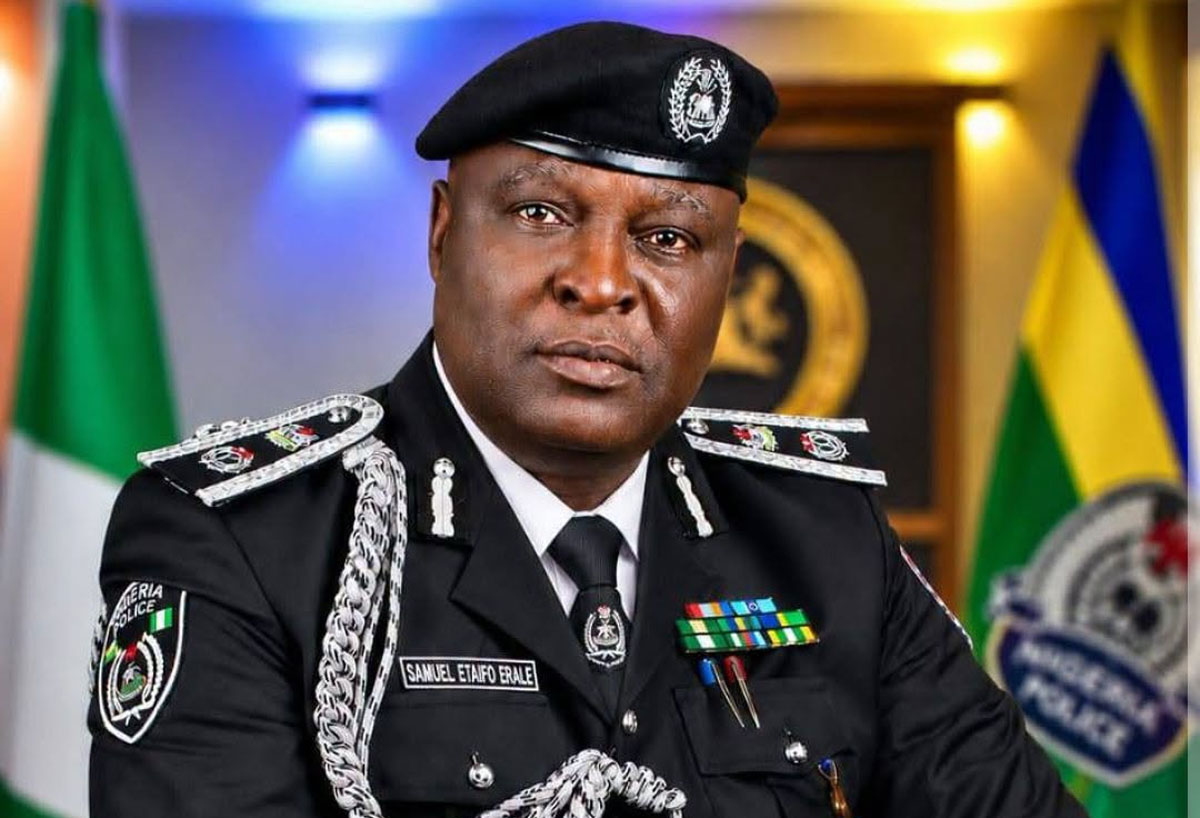
The Commissioner of Police, CP Samuel Erale, said the command would sustain operations against kidnapping, cultism and the proliferation of illegal firearms.
He also urged residents to continue providing credible information to security agencies, assuring the public that information supplied to the police would be treated confidentially.
Meanwhile, the driver arrested in connection with the intercepted Sienna remains in police custody as investigators work to establish the circumstances surrounding the movement of the military uniforms and suspected illicit drugs.
The police have not announced any charges against the suspect, and the investigation is expected to determine whether other individuals were involved in the consignment.
Delta Police Intercept Sienna With Military Uniforms, Suspected Drugs
metro
Jehovah’s Witnesses Adjust Blood Transfusion Rules, Allow Personal Choice
Jehovah’s Witnesses Adjust Blood Transfusion Rules, Allow Personal Choice
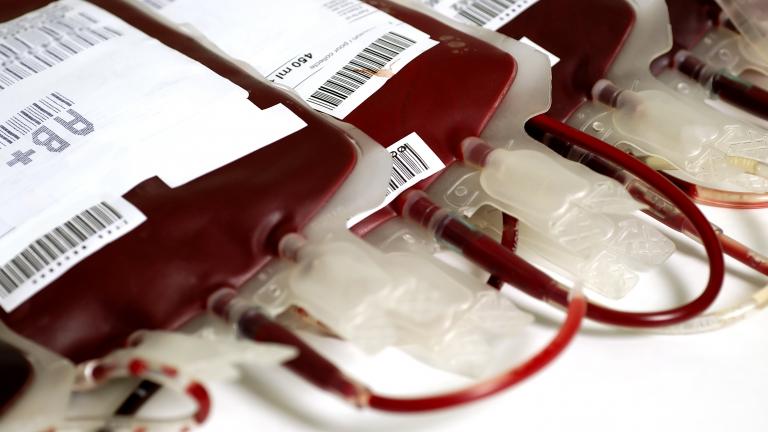
The Jehovah’s Witnesses have announced a major adjustment to their longstanding blood transfusion policy, allowing individual members to decide according to personal conscience whether to accept or donate four major blood components.
The new position covers red blood cells, white blood cells, plasma and platelets derived from another person’s blood. The decision was announced by the organisation’s Governing Body on Friday, September 18, 2026, from its World Headquarters in Warwick, New York.
Under the revised policy, members can personally decide whether to accept medical treatment involving any of the four components. They can also decide whether to donate blood for the production of components or fractions intended for another person’s treatment.
The organisation stressed that its prohibition on whole-blood transfusions remains unchanged. The position is based on its interpretation of the biblical instruction to “abstain from blood.”
Jehovah’s Witnesses said decisions involving the four components are now matters of individual conscience, meaning local congregations are not to interfere with or judge members over such choices.
International spokesman Paul Gillies said the organisation continued to regard blood and life as sacred while recognising that decisions concerning the four components should be made personally by individual Witnesses.
READ ALSO:
- Ogun 2027: APC Highlights Adeola’s Projects, Challenges Adebutu
- Akpabio Links Okowa’s APC Defection to EFCC Investigation
- Barau Sacks Aide Over ‘Abba Must Go’ Social Media Posts
The adjustment follows a policy clarification announced in March 2026 concerning the use of a member’s own blood during medical procedures. That position also left the decision to individual conscience where blood is removed, stored and subsequently returned during treatment.
According to the organisation, the latest decision reflects its interpretation that the Bible does not specifically address whether members should accept the four primary blood components in medical treatment.
The organisation said its members seek professional medical care and do not practise faith healing. It also said healthcare professionals should discuss individual decisions concerning blood components directly with patients and respect those choices.
The medical uses of the components vary. Red blood cells can be used to replace blood lost through surgery or serious injury, while platelets help manage certain bleeding conditions. Plasma is used in several treatments involving bleeding and clotting disorders, while white blood cells have more specialised clinical applications.
The Associated Press reported that the revised policy permits members to receive products derived from donated blood while retaining the prohibition on whole-blood transfusions.
Jehovah’s Witnesses said the organisation has more than nine million members worldwide, with congregations in more than 200 countries and territories.
The September decision represents a significant change in the organisation’s approach to the four major blood components, with responsibility for accepting or donating them now placed on individual members.
The ban on whole-blood transfusions, however, remains in place.
Jehovah’s Witnesses Adjust Blood Transfusion Rules, Allow Personal Choice
-

 metro3 days ago
Niger Mosque Abductions: Terrorists Execute 30 of 500 Captive Muslim Worshippers
-
 Business2 days ago
Fuel Prices Climb to ₦1,500 per Litre Across Nigeria, Sparking Calls for Urgent Action
-
 News3 days ago
OAU Investigates Death of Final-Year Student as Police Begin Probe
-
 News2 days ago
ECOWAS Biometric Card Expands as Seven Countries Begin Rollout
-
 metro3 days ago
US-Based Nigerian Lawyers Disbarred: Full List of Fraud, Theft and Misconduct Cases
-
 Politics3 days ago
Aisha Buhari Visits Atiku Amid Opposition Coalition Activities
-

 Business2 days ago
NCAA Moves Against Airlines Over Rising Flight Delays
-
 Interview3 days ago
He Does Not Lose Elections”: Abdulmumin Jibrin Predicts 65% Landslide for Tinubu in 2027