

metro
15 Power plants boosted electricity generation in Q1—NERC

15 Power plants boosted electricity generation in Q1—NERC
The Nigerian Electricity Regulatory Commission (NERC) said that fifteen power plants across the country recorded increased available generation capacities in the first quarter of 2025.
According to NERC’s Q1 2025 report, average available generation capacity rose by 69.99 megawatts (MW), from 5,296.89MW in Q4 2024 to 5,366.88MW in Q1 2025, an increase of 1.32 per cent.
This growth was driven largely by the performance boost across fifteen of the country’s twenty-eight grid-connected power plants.
The plants include five hydro, two steam, nineteen Open Cycle Gas Turbine (OCGT), and two Combined Cycle Gas Turbine (CCGT) facilities.
The improved capacity had a ripple effect on actual power generation, with average hourly generation increasing by 563.18 megawatt-hours per hour (MWh/h), a 13.39 per cent rise from 4,207.41MWh/h in Q4 2024 to 4,770.59MWh/h in Q1 2025.
Cumulatively, the total energy generated in the quarter stood at 10,304.47 gigawatt-hours (GWh), up by 10.92 per cent (1,014.52GWh) from the 9,289.95GWh recorded in the previous quarter.
NERC attributed this growth not only to the improved plant capacities but also to increased energy offtake by grid-connected customers, including electricity distribution companies (DisCos).
The commission also declared that it issued 55 licenses, permits and certifications in the quarter under review.
READ ALSO:
- BREAKING: LG boss suspended for suing Niger govt
- JUST IN: APC members protest in Lagos, want chairman removed
- Amotekun officer dies after alleged attack by soldier in Osun
These include four off-grid generation licenses with a combined nameplate capacity of 66.49MW, one new electricity trading license, four Independent Electricity Distribution Network (IEDN) licenses, and two embedded generation licenses.
The Commission also approved sixteen captive generation permits with a gross capacity of 952.64MW, along with seven mini-grid permits.
On metering, NERC said thirteen certifications were issued to Meter Service Providers, while eight permits went to Meter Asset Providers (MAPs).
It will be recalled that Nigeria recorded a $11.44m revenue shortfall from its six international bilateral customers in the first quarter of 2025.
The six international bilateral customers purchased electricity from Nigeria’s grid-connected Generation Companies (GenCos) within the period under review.
NERC, in its 2025 first quarter report, stated that the six international bilateral customers paid only 33.70 per cent of their total invoice in the first quarter of 2025, resulting in a significant shortfall of $11.44m.
The commission disclosed that the customers collectively remitted $5.80m out of the $17.2m invoiced to them by the Market Operator (MO) for services rendered during the period.
“The remittance performance of the international bilateral customers stood at 33.70 per cent in Q1 2025,” the report noted.
The international bilateral customers are Société Nigérienne d’Electricité (NIGELEC) of Niger Republic, Compagnie Energie Electrique du Togo (CEET), Société Béninoise d’Energie Electrique (SBEE) of Benin Republic, among others.
However, domestic bilateral customers showed a stronger commitment during the period, paying ₦1.86bn of the ₦2.57bn billed to them, representing a 72.24 per cent remittance rate.
15 Power plants boosted electricity generation in Q1—NERC






metro
Nigerian military’s X account hacked as attackers push crypto scam

Nigerian military’s X account hacked as attackers push crypto scam
The official X account of Nigeria’s Defence Headquarters (DHQ), @DHQNigeria, has been compromised, with hackers using the platform to promote a cryptocurrency scam to its nearly one million followers.
The account, which had about 982,900 followers, was taken over on Saturday, with unauthorised posts promoting Firelight FXRP rewards and directing users to a cryptocurrency claims portal.
The breach was confirmed by the Defence Headquarters in a statement signed by the Director of Defence Information, Major General Samaila Uba.
Uba said the military was treating the incident as a cybersecurity matter and had activated measures to secure the account and prevent further unauthorised activity.
He urged Nigerians to disregard any “suspicious, unauthorised or misleading content” published through the account while efforts continued to restore full control.
The DHQ also advised members of the public, journalists and other stakeholders to rely on its verified accounts on other social media platforms for official information during the recovery process.
READ ALSO:
- Peterside Demands INEC Explain Hours-Long Delay in Uploading Final Osun Election Results
- From Pulpit to Ifá Shrine: Ex-Pastor Exposes ‘Deceit’ in Christianity, Embraces Yoruba Tradition
- Osun election: Adeleke widens lead as Oyinlola, Omisore lose polling units
The compromised account has been an important communication channel for the Nigerian Armed Forces, providing updates on military operations, security developments, official activities and other information from the Defence Headquarters.
Screenshots reviewed after the breach indicated that the last clearly identifiable military-related post on the account was published on August 7, before the cryptocurrency-related content began appearing.
The account, created in May 2013, had built a substantial following over the years and retained its established identity even after the compromise, making the unauthorised posts potentially more convincing to unsuspecting users.
The attackers reportedly used the account to promote Firelight FXRP rewards and encourage users to visit a cryptocurrency claims portal. The Defence Headquarters has not endorsed the scheme and warned the public against relying on the unauthorised posts.
The exact method used to compromise the DHQ X account remains unknown. The military has not disclosed whether the attackers gained access through stolen login credentials, social engineering, a compromised device or another method.
The Defence Headquarters has also not identified the individuals or group responsible for the breach and has not disclosed whether anyone suffered financial losses after interacting with the cryptocurrency content.
The incident highlights the growing security risks faced by verified social media accounts, particularly those belonging to government institutions and other organisations with large audiences.
Cybercriminals have increasingly targeted high-profile accounts because control of an established platform can give fraudulent messages an appearance of legitimacy and expose large numbers of followers to potentially harmful links.
In the case of the Nigerian military’s X account, the security implications extend beyond the cryptocurrency scam because the platform is also used to communicate official information concerning national security and the activities of the Armed Forces.
The DHQ has therefore cautioned the public against treating posts from the compromised account as official until the military confirms that it has regained full control.
Nigerians have also been advised not to click on suspicious links, connect cryptocurrency wallets, transfer funds or submit personal information in response to the unauthorised posts.
The Defence Headquarters said efforts to recover and secure the hacked X account were ongoing and that further information would be provided as the situation develops.
For now, the military’s warning remains clear: any cryptocurrency-related content appearing on @DHQNigeria should be treated as unauthorised until the Defence Headquarters announces that control of the account has been fully restored.
Nigerian military’s X account hacked as attackers push crypto scam
metro
From Pulpit to Ifá Shrine: Ex-Pastor Exposes ‘Deceit’ in Christianity, Embraces Yoruba Tradition
From Pulpit to Ifá Shrine: Ex-Pastor Exposes ‘Deceit’ in Christianity, Embraces Yoruba Tradition
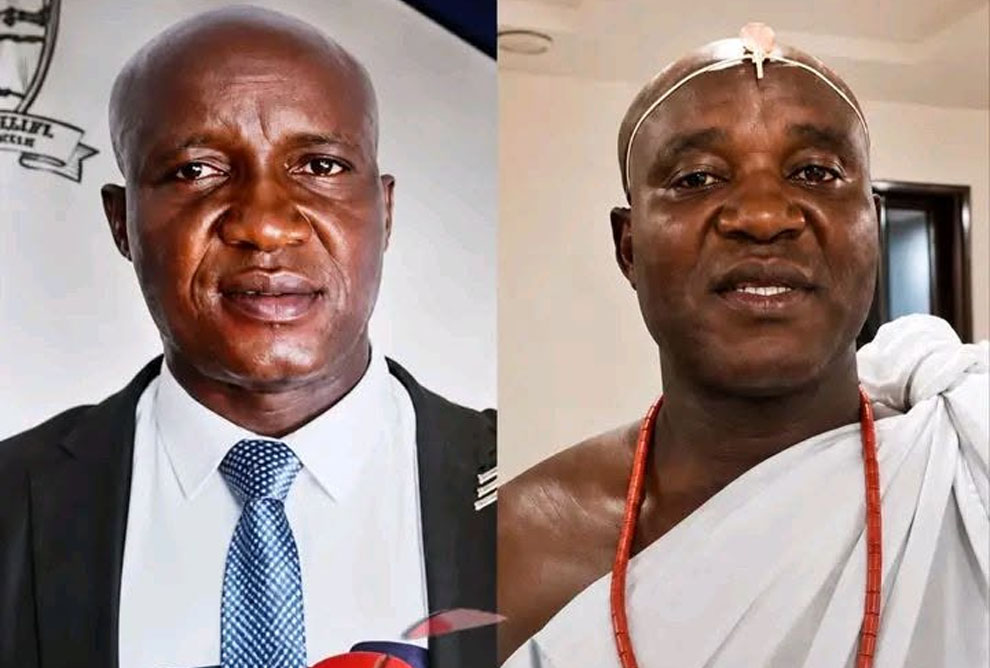
After a two-year soul-searching journey, an Ondo State-based cleric has publicly abandoned his pastoral ministry to embrace Ìṣẹ̀ṣe, the traditional Yoruba spiritual practice, citing widespread deception among Christian leaders and contradictions in the Bible.
Olabanjo Felix, who once led the Image of God Evangelical and Prophetic Ministries in Ibaka, Oka Akoko, Ondo State, has officially transitioned from Christianity to become a Babalawo (Ifá priest). In a viral video that surfaced on Thursday, Felix announced his new spiritual identity as Ifawamiri Aworan Olodumare, declaring his allegiance to the indigenous Yoruba faith. The former pastor told Sunday PUNCH that his decision was not impulsive but the culmination of a two-year period of intense spiritual introspection. During this time, he became deeply troubled by what he perceived as contradictions within the Bible and what he described as the commercialisation and manipulation of Christianity by Nigerian pastors. He emphasised that he publicly announced his transition to stop people from continuing to address him as a pastor, stating that he could not accept a title that no longer reflected his beliefs.
Felix did not mince words in his criticism of the Christian faith as practised in Nigeria. He alleged that there is “no true pastor of the Bible in Nigeria,” with the exception of Pastor Gbile Akanni, and accused many church leaders of turning Christianity into a family business designed to enrich themselves and brainwash their congregations. He claimed that his deep understanding of the Bible, acquired through years of study, made him increasingly uncomfortable with the inconsistencies he found in the scriptures. Felix further alleged that many pastors who publicly condemn traditional religions secretly consult Ifá practitioners for divination, a hypocrisy he said he could no longer tolerate. His frustration, he explained, was not with God but with the institutionalised deception he witnessed, which ultimately drove him to seek spiritual authenticity elsewhere.
READ ALSO:
- Osun election: Adeleke widens lead as Oyinlola, Omisore lose polling units
- 2027: Atiku’s suit seeking Tinubu’s disqualification meets deadline, faces procedural hurdle
- APC Humiliates Aregbesola, Wins His Polling Unit in Osun Governorship Election
Before settling on Ifá, Felix revealed that he had seriously considered converting to Islam. He consulted a Muslim cleric who advised him to study the Quran, and he subsequently downloaded the Yoruba translation of the holy book. However, after reading it, he concluded that he found the same level of deception that had driven him away from Christianity. This realisation, he said, solidified his resolve to look inward toward his ancestral heritage, leading him to explore the traditional Yoruba spiritual system of Ifá. He began searching for genuine Ifá priests who could mentor him, determined to find a path that felt authentic and free from the manipulation he had experienced in the Abrahamic religions.
Felix’s search for guidance eventually led him to the Araba of Isararemọ, Oluṣẹgun Latunji Aifuwapẹ, whom he discovered on Facebook. He reached out to the revered traditional priest and expressed his intention to learn Ifá. Since joining the Araba’s spiritual community, Felix said he has been engaged in prayers, supplications, and the study of herbs and roots, which he described as potent and effective. He insisted that his practice is not fetish, as many outsiders assume, but rather a disciplined spiritual system focused on healing, destiny, and connection to the divine through the Orishas and ancestors. He noted that foreigners from around the world visit the Araba’s centre to learn about Ifá, a testament to the growing global interest in the tradition.
A significant factor in Felix’s decision to embrace Ifá was his personal experience with traditional herbs and roots. He said that his conviction was strengthened by witnessing their potency, which he contrasted with what he perceived as the empty rituals and ineffective prayers of modern Christianity. For Felix, the tangible results of traditional medicine and spiritual practices validated the Ifá system in a way that Christianity could not. He now views Ìṣẹ̀ṣe not as a primitive or backward belief system but as a sophisticated spiritual science that has sustained the Yoruba people for centuries, long before the arrival of colonial religions.
READ ALSO:
- Oyo Police Smash Human Parts Syndicate: 10 Arrested, Heart, Skull Recovered
- Heavy Security, Long Queues, Massive Turnout Mark Osun Governorship Election in Ede
- Protest in Osogbo Over Ballot Paper Shortage, Missing Voter Names
Felix’s public renunciation of Christianity has generated significant buzz on social media, with reactions sharply divided. Some online users have applauded his courage to follow his convictions and reconnect with his ancestral roots, while others have questioned the sincerity of his years in ministry. A number of commentators speculated that Felix may have always been a traditional practitioner in disguise, while others expressed sympathy for his former congregation, who had trusted his pastoral leadership. The viral video has also reignited broader conversations about the role of Christianity in Nigeria, the legacy of colonialism, and the growing movement of Nigerians returning to indigenous spiritual practices.
Felix’s story is part of a larger trend across the African diaspora, where individuals are increasingly rejecting foreign religions in favour of indigenous spiritual systems like Ifá, Vodun, and Candomblé. This movement is often framed as an act of decolonisation—a reclamation of identity, culture, and spirituality that was suppressed during the transatlantic slave trade and colonial era. For many, embracing Ifá is not merely a religious choice but a political and cultural statement about the importance of ancestral heritage and self-determination. Felix’s journey underscores this shift, as he described his transition as a homecoming to a faith that feels more authentic and aligned with his identity as a Yoruba man.
Now known as Ifawamiri Aworan Olodumare, Felix has fully embraced his new role as a Babalawo. He expressed gratitude to his mentor, the Araba of Isararemọ, for guiding him through the transition. While he acknowledged that his decision has attracted criticism, he remains firm in his conviction, stating that he cannot continue to live a lie. He said he will now dedicate his life to the practice and propagation of Ifá, focusing on healing, spiritual counselling, and the preservation of Yoruba cultural heritage. He also reiterated that his practice is transparent and open, in contrast to the hidden hypocrisy he claims to have witnessed in Christian circles.
Olabanjo Felix’s journey from Christian pastor to Ifá priest is a deeply personal and controversial one, reflecting broader tensions between tradition and modernity, faith and authenticity, and colonialism and cultural reclamation. While his allegations against Christianity have drawn sharp criticism from religious leaders, his story has resonated with many who feel disconnected from the faiths imposed on their ancestors. Whether viewed as a betrayal or a homecoming, Felix’s transition highlights the complex spiritual landscape of contemporary Nigeria and the enduring power of indigenous belief systems.
From Pulpit to Ifá Shrine: Ex-Pastor Exposes ‘Deceit’ in Christianity, Embraces Yoruba Tradition
PUNCH
metro
Oyo Police Smash Human Parts Syndicate: 10 Arrested, Heart, Skull Recovered
Oyo Police Smash Human Parts Syndicate: 10 Arrested, Heart, Skull Recovered
-

 News3 days ago
FG to Attach 300 NYSC Corps Members to CNG Workshops for Skills Training
-

 International3 days ago
Iran Had Detailed Intel on Trump’s Location Before Secret Turkey Escape
-
 metro3 days ago
Seven Miners Killed in Plateau Mining Pit Collapse, Renewing Urgent Calls for Safety Reform
-

 Politics3 days ago
INEC reprints Osun ballot papers, result sheets, includes SDP candidate
-

 News1 day ago
UK Opens 2026/27 Commonwealth Fellowship Applications for Nigerians – How to Apply
-

 Education2 days ago
JAMB Aggregate Score 2026/2027: How Nigerian Universities Calculate Your Admission Chances
-
 Politics2 days ago
Osun Governorship: Accord Party Faction Withdraws Support for Adeleke, Endorses APC’s Oyebamiji
-
 Sports3 days ago
WAFCON: Chawinga sisters fire Malawi into historic final