

News
2021 Hajj: Saudi announces strict conditions, allows only 60,000 pilgrims
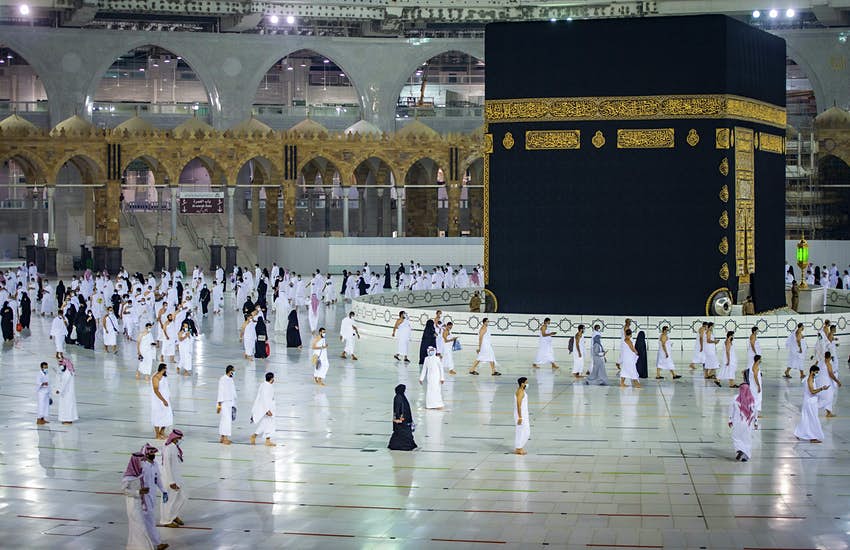
Saudi Arabia has announced a number of strict conditions for the 2021 Hajj, which it says will be performed only by 60,000 Muslims globally.
The conditions, which were aimed at preventing the spread of COVID-19, include limiting the pilgrimage to only those within 18 and 60 years, who have not been to hospital over any ailment six months before the journey for the Hajj rites.
The Saudi health ministry said they are allowing overseas Hajj pilgrims for the annual event in July but it would be on a smaller scale compared to the pre-pandemic time.
The Saudi health ministry said 45,000 pilgrims would come from outside the country and 15,000 from inside the Kingdom.
A report from one of the multiple online reports, Siasat, gives the highlights of conditions as follows:
Key points for the Hajj 2021:
Only 60,000 Hujjaj will be scheduled to perform Hajj this year which includes local and foreign pilgrims.
Those performing Hajj must be between the age of 18-60 years of Age.
Those performing Hajj must be in a good stated of health.
Those performing Hajj must not have been in hospital for any illness within the past six months prior to travelling for Hajj. (proof Is required)
The pilgrims must have had both doses of the vaccine with a vaccination card provided by the individual countries Health Organisation / Hospital / Ministry. (proof required)
The vaccine taken must be on the approved list that is recognised by the ministry of health within the Kingdom of Saudi Arabia.
The pilgrims must quarantine for three days if they are classed as foreign pilgrims as soon as they arrive in the Kingdom of Saudi Arabia.
The first dose of the vaccine must have been taken by the 1st Shawaal 1442. Note: This day has passed and was the day of the Eid Ul Fitr 1442.
The second dose of the vaccine must be taken by the 14th day before arriving within the Kingdom of Saudi Arabia.
The conditions of social distancing and the wearing of the mask and other precautionary measures will continue to protect pilgrims.
When a pilgrim arrives at their residence:
The pilgrims will undergo thermal screening.
The accomodation and hotels pilgrims will stay at must comply with the ministry of tourism, the ministry of Hajj, and other bodies.
There will be an implementation of precautionary measures to prevent crowding inside the rooms and hotels.
They will therefore provide catering services for every pilgrim in their room without the need to gather in dining halls and prevent open buffets.
All international pilgrims must quarantine for three days and will also conduct PCR Swabs at the place of residence.
Pilgrims will be educated that if they have symptoms, they are to go consult a doctor directly, in order to ensure their own safety and the safety of others.
The Hajj pilgrims will be dispatched in less batches compared to previous years in order to comply with social distancing. There will be meeting points for groups in all areas in fewer numbers compared to previous years.
All baggage for pilgrims must be disinfected & workers will be given the role to ensure this.
Security personnel have been assigned to organise the entry & exit of pilgirms according to the time allotted to them.
The protocol accommodation facilities
For Arafah
A bus will be specified for each group and a seat number will be assigned to each pilgrim during the entire trip, with follow-up on the implementation of precautionary measures when getting on and off the buses.
Pilgrims will not be allowed to stand during the journey.
Families will be allowed to sit together.
If a pilgrim has COVID-19 the bus will be disinfected and other procedures will follow.
The number of passengers will not exceed 50% of the total capacity.
In the bus, there will be an empty seat between each passenger.
Passengers must carry their luggage.
Food should only be prepackaged.
Preventing of gatherings and maintain social distancing.
The number of pilgrims will not exceed 50 per 50 square metres of the area of the tents.
Pilgrims will be provided with stones in sterilised bags packed by the organizer.
The pilgrims departure to and from the Jamarat facility must be scheduled so that the number does not exceed 50 pilgrims for each floor of the Jamarat facility.
For Al Haram mosque in Mecca
Pilgrims must have a permit to perform the Hajj from the electronic Hajj portal or via an electronic application.
Pilgrims must ensure social distancing and prevent over crowding issues.
Thermal imaging cameras are in place to measure the temperature at the entrances.
In the event of high temperatures or suspicions, the pilgrim will be prevented from entering and referred to the specialists at the Ministry of Health.
Carpets at Masjid Al Haram will be removed.
Stickers are marked on floors allowing 2 metres Social Distancing between pilgirms.
Food will be prevented from being allowed in the Mosque.
Educational lessons will continue to be suspended inside the Mosque.
Educational material however will be distributed.
Cleaning and disinfecting will take place around the clock.
Earlier this week, the Kingdom of Saudi Arabia announced that it would allow pilgrims from outside the country to perform Hajj this year.
Last week, Saudi Arabia warned citizens against traveling to 13 countries including India without permission due to security concerns and instability in several countries, while the COVID-19 pandemic continued and new strains of the virus spread to some other countries.
Earlier in March, the kingdom of Saudi Arabia health ministry said that will only allow people who have been vaccinated against COVID-19 to attend the Hajj this year.
The Corps Marshal of the Federal Road Safety Corps (FRSC), Dr Boboye Oyeyemi has advised, that the only solution to the problems of Nigeria’s transportation challenges is to adopt a multi-modal system, stressing that the pressure on the road system is too high.
Dr Boboye also decried the non-implementation of the National Transport Policy (NTP), 29 years after it was drafted.
Speaking on the topic: “Improving Nigeria Transportation Systems: The Way Forward” at the 8th Nigeria Annual Transport Lecture held recently at Sheraton Hotel, Dr Oyeyemi said there is need for improvement of the inter-modal transport system.
Boboye warned that the road system is not only dominant but its preference, totalling 95 per cent of all modes, has serious road safety concerns in the form of traffic crashes and infrastructure decays
Noting that road crashes have increased, the Corps Marshal said “the pressure is too much on the road. Fatality has been on the high. We used to have an average of 100 lives lost on the roads weekly. Speed is a major aspect we need to address”.
The FRSC boss maintained that utilising other modes of transport, including air, water, road, pipeline and rail as an alternative will decongesting traffic gridlocks in coastal cities in the country, and also has the potential to boost the economy from travel tourism perspective.
According to him, there has not been a balanced development of the country’s transportation system, pointing out that increase in road construction activities and some developmental challenges being experienced by the other sectors of transportation, the movement of people, goods and services is dominated by road transport.
Proffering solutions for the intermodal transport system to work, Boboye said “government should expand and upgrade existing air travel infrastructures so as to boost confidence in the industry with respect to air safety; encourage more investments to bring about healthy competition such that more people can opt for the mode as against the road especially for long-distance travel. This will largely reduce ‘fatigue’ induced and tyre related crashes on the road”.
According to him, greater investments as a follow up of the MoU between NIWA, NEXIM and Sealink Promotional Co. Ltd should be activated.
He also canvassed for the dredging of identified potential waterways in the country to improve safety and enhance navigation amongst others.
Commending the efforts of the present government, Boboye said “government should continue to improve on existing security framework to enhance investors and customers confidence in all modes of transportation in the country. The current state of transportation in the country is an improvement on what it used to be”.
FAAC disbursement drops N63bn to N616bn in May
The three tiers of government shared a total of N616.886 billion received from the federation accounts allocation committee (FAAC).
This is the revenue from April as allocation for May.
Henshaw Ogubike, director of information, press and public relations, at the office of accountant general of the federation (OAGF), disclosed this in a statement on Friday.
Of the total revenue derived in April, the federal government, in May, received N244.011 billion, while the state and local government councils got N193.432 billion and N143.298 billion, respectively.
This figure shows a decline of N63.45 billion when compared to FAAC disbursements for revenue accrued in March.
With increased revenue in March, the sum of N680.33 billion was shared among the three tiers of government in April.
In March, gross statutory revenue was N466.687 billion, value added tax revenue was N181.712 billion and exchange gain was N2.931 billion.
But according to the statement, gross statutory revenue fell to N429.733 billion in April.
Revenue from the value added tax also reduced to N164.340 billion while revenue from the exchange gain dipped to N2.250 billion.
The OAGF said the excess bank charges recovered was N0.563 billion, while revenue from non-oil was N20 billion.
For non-oil revenue, the federal government received N10.536 billion, the state government got N5.344 billion and the local governments was allocated N4.120 billion.
“In April 2021, the sum of N79.468 billion was the total deductions for cost of collection, statutory transfers and refunds,” the statement reads.
“The balance in the Excess Crude Account was $72.413 million.”
It noted that oil-producing states received the sum of N36.145 billion as 13 percent derivation revenue.
The statement also noted that from the gross statutory revenue, N207.477 billion was given to the federal government, the state governments received N105.235 billion while the local government councils received N81.132 billion.
“The Federal Government received N24.651 billion from the gross Value Added Tax (VAT) revenue of N164.340 billion, the state governments received N82.171billion and local government councils received N57.519 billion,” it reads.
The statement added that the federal government received N1.051 billion, the state governments receive N0.533 billion, the local government councils received N0.411 billion and N0.255 billion was given to the relevant states as 13 percent derivation revenue from the exchange gain revenue.
It added that petroleum profit tax and excise duty recorded a significant increase, while companies income tax, oil and gas royalties, VAT and import duty suffered a declin








News
NLC Backs ₦500 Petrol Demand, Workers Propose ₦500,000 Salary
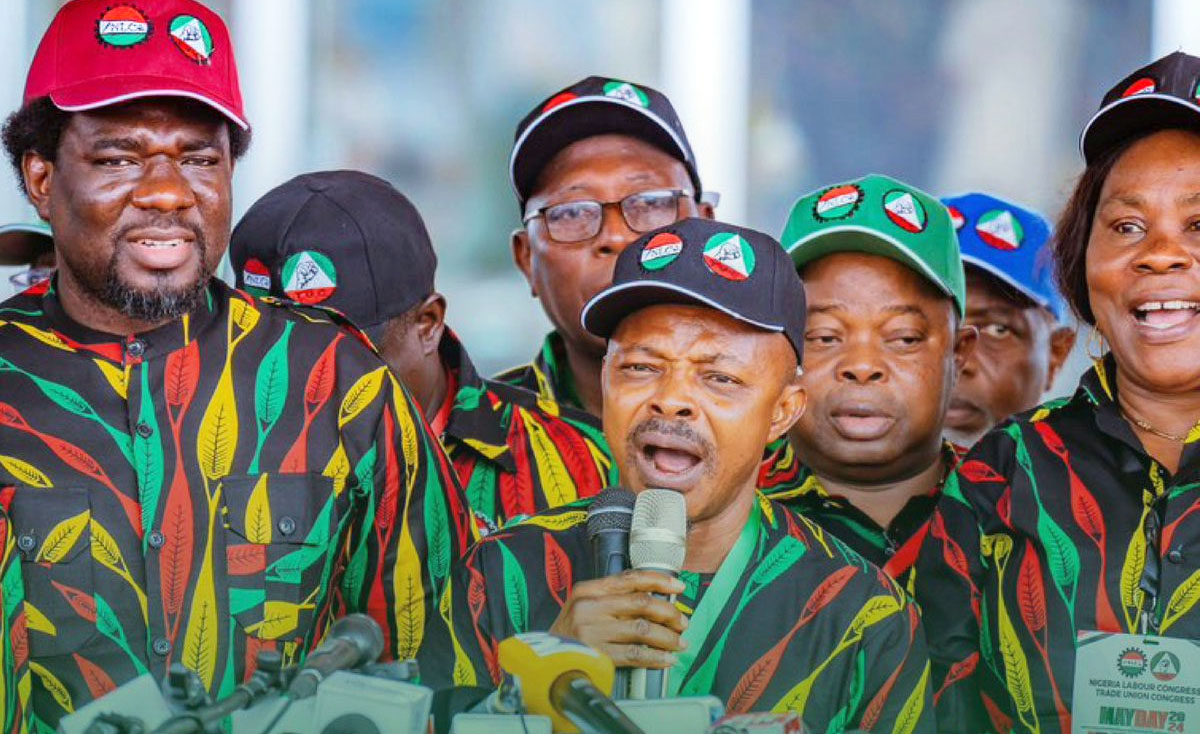
NLC Backs ₦500 Petrol Demand, Workers Propose ₦500,000 Salary
The Nigeria Labour Congress (NLC) has backed demands by public-sector workers for the Federal Government to reduce the price of petrol to ₦500 per litre, while the workers have proposed a minimum monthly salary of ₦500,000 for Grade Level 01, Step 1 officers under a new public-service salary structure.
The demands were contained in a letter by the Trade Union Side of the Joint National Public Service Negotiating Council (JNPSNC) to President Bola Ahmed Tinubu, amid renewed concerns over rising fuel prices and the worsening cost-of-living crisis.
The workers gave the Federal Government until September 30, 2026, to respond to their demands, which cover petrol prices, wage awards, salary reviews and negotiations for a new wage structure.
The JNPSNC called for an intervention capable of bringing the petrol pump price down to ₦500 per litre, arguing that the rising cost of fuel has significantly increased transportation expenses and contributed to higher prices of food and other essential goods and services.
The demand comes amid another increase in petrol prices in Nigeria, with pump prices rising in several parts of the country following higher crude oil prices in the international market.
The labour movement has argued that the impact of rising fuel costs extends beyond motorists, as increased transportation and energy expenses raise the cost of moving agricultural produce, manufacturing goods and other commodities.
The NLC has therefore called for measures to cushion workers and households from the effects of the latest price increases.
On wages, the JNPSNC proposed a new salary structure under which a Grade Level 01, Step 1 public servant would earn ₦500,000 monthly.
The figure is important because it is a proposal by the workers, not an approved national minimum wage.
The proposed ₦500,000 salary is also specifically linked to the public-service salary structure being sought by the JNPSNC ahead of January 2027. It should not be presented as though the Federal Government has agreed to increase Nigeria’s statutory national minimum wage to ₦500,000.
READ ALSO:
- UK Student Visa: 63 Countries Exempt From Proof of Funds, Nigeria Excluded
- Lagos Intensifies Surveillance as Adulterated Palm Oil Raises Food Safety Concerns
- Saudi Arabia Rejects Nigeria’s Request for More 2027 Hajj Slots
Nigeria’s current statutory national minimum wage remains ₦70,000 per month, following the 2024 wage agreement and legislation.
The workers are seeking negotiations for a new wage structure while also asking for an immediate Wage Award for employees at the Federal, State and Local Government levels as a short-term response to current economic pressures.
The proposed wage award is separate from the longer-term salary review and any future agreement on the national minimum wage.
The JNPSNC wants the National Salaries, Incomes and Wages Commission (NSIWC) to begin discussions with labour representatives and other stakeholders on the proposed wage award and salary adjustments.
The workers said rising inflation, transportation costs, food prices, housing expenses, healthcare costs and education fees had reduced the purchasing power of existing salaries.
They also called for salaries and allowances across the public service to be reviewed upward and for future salary adjustments to take inflation into account.
According to the workers, linking periodic salary reviews to inflation would help prevent employees’ earnings from losing substantial purchasing power between major wage negotiations.
The labour side also demanded subsidised transportation and affordable housing for public servants as part of measures to ease the pressure on workers.
On the petroleum sector, the workers backed calls for greater availability of crude oil in naira to local refineries, arguing that increased domestic refining and local crude supply could reduce exposure to international oil-market shocks.
The NLC has previously advocated measures to strengthen local refining and improve domestic energy security as part of efforts to reduce pressure on consumers.
The workers also rejected the idea of relying mainly on food palliatives to address the hardship, arguing that temporary relief does not adequately compensate for the loss of purchasing power caused by higher transportation and living costs.
They instead called for measures that would address the underlying drivers of the rising cost of living.
The latest demands come as the downstream petroleum market faces renewed price pressure despite increased domestic refining capacity.
Higher international crude prices have raised input costs for refiners, contributing to increases in the wholesale and retail prices of petrol.
The development has renewed debate over how much protection Nigeria’s expanding domestic refining capacity can provide against global oil-price movements.
For organised labour, however, the immediate concern is the effect of higher fuel prices on workers and households.
The JNPSNC expects the Federal Government to respond to its demands by September 30, while also looking ahead to negotiations for a new salary and wage framework from January 2027.
The council has indicated that it expects the President’s forthcoming Independence Day address to address some of the concerns raised by workers.
The proposed ₦500,000 salary therefore remains a labour demand awaiting negotiation and possible government consideration. It is not the current national minimum wage and does not mean that all Nigerian workers are automatically entitled to ₦500,000 monthly.
Similarly, the proposed ₦500 petrol price is a demand for government intervention and does not represent the current regulated or prevailing pump price across Nigeria.
The labour demands reflect growing pressure from organised workers for government action as households and businesses contend with higher fuel prices, transportation costs and living expenses.
NLC Backs ₦500 Petrol Demand, Workers Propose ₦500,000 Salary
News
MURIC Warns FG: Any Move Against Atiku Now Lacks Tact
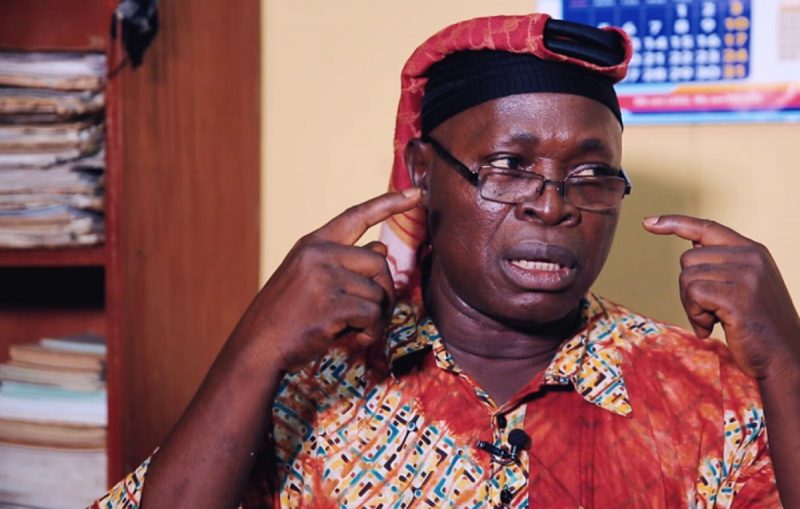
MURIC Warns FG: Any Move Against Atiku Now Lacks Tact
The Muslim Rights Concern (MURIC) has warned the Federal Government against any move to arrest, interrogate or otherwise take action against former Vice-President Atiku Abubakar over a fresh petition before the Economic and Financial Crimes Commission, saying such a step at this time could send the wrong signal to Nigerians.
The warning came as the controversy over a renewed call for the EFCC to investigate allegations dating back to Atiku’s tenure as Vice-President intensified, with opposition figures and the petitioner trading sharply different arguments over the matter.
In a statement issued on Tuesday, September 22, 2026, MURIC Founder and Executive Director, Professor Ishaq Akintola, said the government should exercise caution, particularly with the 2027 general elections approaching.
According to MURIC, the renewed allegations have assumed greater sensitivity because Atiku is now the presidential candidate of the African Democratic Congress and a leading opposition figure.
“We warn that such an attempt at this point in time will send the wrong signal to Nigerians,” the group said, adding that with the 2027 elections “at the doorsteps,” the Federal Government should carefully consider the consequences of any action against the former Vice-President.
MURIC described any such move as lacking tact and “short” of emotional intelligence, while urging the government to avoid conduct that could create the impression that state institutions were being used against political opponents.
The organisation also warned against what it described as a damaging “body language” capable of portraying Nigeria as a “banana republic.”
MURIC said that although the country had already lost some ethical ground, its democratic values and norms remained important safeguards that should not be compromised.
“Our corporate image in the global community is sinking fast,” the group added.
READ ALSO:
- JAMB Allows Candidates to Change Lost SIM, Email Addresses
- How Nigerians Can Get Federal High Court Affidavit Online Without Visiting Court
- Plateau Violence: Several Killed as Fresh Attacks Trigger Mass Exodus
The statement followed renewed controversy over a petition by former House of Representatives member, Ehiozuwa Agbonayinma, asking the EFCC to revisit allegations concerning Atiku’s activities while he was Vice-President.
Reports indicate that the petition relates to allegations investigated by the EFCC between 2005 and 2006. Agbonayinma reportedly gave the anti-graft agency a 14-day ultimatum to act and threatened legal action if the commission failed to respond.
Former Senator Dino Melaye has strongly opposed the renewed petition, describing it as an attempt to “resurrect the dead.” Melaye argued that the matter had previously been dealt with and questioned the basis for bringing it back almost two decades later.
The dispute, however, has escalated beyond the original petition, with Agbonayinma hitting back at Melaye and challenging him to produce documentary evidence for his claim that the allegations had been investigated and dismissed.
In a statement reported on September 20, Agbonayinma insisted that he was asking the EFCC to perform its statutory responsibility and argued that the substance of the allegations should be addressed rather than his personality or political affiliation.
“You cannot defend Atiku Abubakar from an EFCC petition by attacking me,” Agbonayinma was quoted as saying, while urging the anti-graft agency to determine whether the allegations warranted further investigation.
The renewed controversy has also brought attention to the distinction between a petition seeking investigation and a finding of criminal guilt. The existence of a petition does not, by itself, establish that the person named in it committed an offence.
There is also a historical legal dimension to the allegations. Reports on the previous proceedings state that a Lagos State High Court set aside an EFCC administrative indictment against Atiku in December 2006, while no criminal conviction against him resulted from the allegations.
Atiku has continued to deny wrongdoing and has challenged anyone with credible evidence against him to present it through the appropriate legal channels.
Meanwhile, there was no confirmed announcement from the EFCC, as of the latest reports reviewed, that it had arrested Atiku or formally invited him over the fresh petition. A separate and more recent EFCC investigation reported on September 20 concerns individuals connected to allegations surrounding the Mambilla Power Project, which is distinct from the 2005–2006 allegations at the centre of the present political dispute.
The MURIC intervention has therefore added a fresh dimension to an increasingly heated political controversy, with the organisation urging the Federal Government to exercise restraint and protect public confidence in Nigeria’s democratic institutions.
With the 2027 elections approaching, the dispute over the renewed EFCC petition is expected to remain a significant political issue, particularly if the anti-graft agency decides to take further steps.
For MURIC, however, the timing of any action is crucial. The organisation wants the Federal Government to ensure that whatever steps are taken by law-enforcement agencies are grounded in due process and do not create the perception of political persecution.
The group’s central warning is that Nigeria must guard its democratic reputation and avoid actions that could further erode public confidence in its institutions at a particularly sensitive period in the nation’s political calendar.
MURIC Warns FG: Any Move Against Atiku Now Lacks Tact
News
NiMet Predicts Thunderstorms, Rain Across Nigeria Till Wednesday
NiMet Predicts Thunderstorms, Rain Across Nigeria Till Wednesday
The Nigerian Meteorological Agency (NiMet) has predicted thunderstorms and rainfall across several parts of Nigeria from Monday to Wednesday.
The agency, in its weather outlook released on Sunday, also warned that strong winds could occur ahead of thunderstorms in some areas.
For Monday, NiMet expects thunderstorms and light rain over parts of Taraba and Kebbi during the morning. Later in the day, moderate rainfall is expected across several areas in the North-East, Kaduna, Taraba and Kebbi.
In the North-Central region, parts of Niger State could experience thunderstorms and light rain in the morning, while most parts of the region may record thunderstorms with moderate rainfall by afternoon or evening.
The southern states are also expected to experience wet conditions. NiMet forecasts cloudy skies in the morning, with isolated thunderstorms and light rain over parts of Bayelsa, Rivers, Akwa Ibom and Cross River. More thunderstorms and light rain are expected later in the day.
Tuesday and Wednesday Forecast
On Tuesday, the northern region is expected to have patches of cloud in the morning, with thunderstorms and light rain possible in parts of Taraba.
By afternoon or evening, most parts of the region could experience thunderstorms accompanied by moderate rain.
In the North-Central, parts of the Federal Capital Territory, Niger, Nasarawa and Plateau states are expected to receive thunderstorms and moderate rainfall later in the day.
Southern areas, including parts of Ebonyi, Enugu, Abia and the South-South, may also experience thunderstorms and light rain.
NiMet expects more widespread rainfall on Wednesday, particularly across northern and North-Central states. Borno, Bauchi, Gombe, Kaduna, Adamawa and Taraba are among the areas listed for morning thunderstorms and moderate rain.
The agency also forecasts thunderstorms and moderate rainfall across much of the South later on Wednesday.
NiMet advised residents to secure loose objects and take precautions against strong winds. Motorists were urged to avoid driving during heavy rainfall, while residents were advised to disconnect electrical appliances during thunderstorms and stay away from tall trees.
Airline operators were also advised to obtain airport-specific weather information when planning flights.
NiMet Predicts Thunderstorms, Rain Across Nigeria Till Wednesday
-
 metro3 days ago
Oyo Police: Student Who Died by Suicide Was Charged With Assault, Not ₦8,000 Debt
-
 International1 day ago
18 Suspects Transferred to US Over 2021 Killing of Haitian President Moïse
-

 metro2 days ago
Irreconcilable Developments: Wedding Cancelled 24 Hours Before Ceremony
-
 metro1 day ago
My Heart Has Always Been Home With You — Tinubu’s Powerful Message to Oluremi at 66
-

 Auto2 days ago
Abuja Demand Rises as Jetour Brings X70 Plus Experience to FCT
-
 Politics2 days ago
2027: NDC Predicts Wider Obi Victory Over Tinubu in Lagos
-

 Sports1 day ago
Messi Fires Stunning 75th Career Free-Kick to Reach 930 Goals in Inter Miami Draw
-
 Sports2 days ago
Enough Is Enough: Muslim Supporters Demand Change of New Man United Owners