

Politics
2023: APC clears air on video of Tinubu giving cash to elderly man

Barrister Hannatu Musa Musawa, the Deputy Spokesperson of the Bola Tinubu/Kashim Shettima Presidential Campaign Council (PCC), on Wednesday lamented that the viral video of her principal giving money to a man during a town-hall meeting in Abuja on Monday, has been widely misinterpreted.
POLITICS NIGERIA reports that members of the opposition had claimed that Tinubu was “caught red-handed sharing money to politicians” ahead of the 2023 presidential election, but Barr. Musawa, who filmed the moment and posted it on social media, said the clip “was a visual reflection of my principals’ compassion towards the needy”.
READ ALSO:
- Just in: Taraba Assembly speaker resigns
- Saudi restores Nigeria’s 90,000 Hajj slots, removes age limit
- Buhari okays Manyahaya as Fed Poly Ede new rector
According to her, the elderly man who approached Tinubu, “was clearly in need”.
Read her full statement below:
My attention has been drawn to the dishonest, erroneous and incorrect narrative spun by unctuous, dissipated, debauched and desperate elements within the opposition to turn a perfectly innocent video I posted of a kind act I witnessed my Principals carrying out into something mendacious and devious.
As I watch the negative chronicle being spun by the opposition Svengali’s, trying to enforce a specific negative narrative on the public, it is clear that the falsehood being spread stems from the devious imagination and wicked machinations of a desperate and self combusting opposition.
I would have dismissed the musings as the rantings of an inconsequential opposition, however I am compelled to make this response because of innocent Nigerians that may be misled by such devious rhetoric.
On Monday the 19th December 2022 at approximately 4:48 pm, I watched with appreciation and approbation as my two principals, Asiwaju Bola Ahmed Tinubu and Alhaji Kashim Shetima performed an act of kindness towards a poor and disabled man who was truly in need. After watching them, I was further convinced that these were two men of precious faith that have the heart of kindness, empathy and compassion. And I believed it was a story that needed to be told.
In the Bible under Psalm (112:5-9), it is written “It is well with the man who is gracious and lends; He will maintain his cause in judgment. For he will never be shaken; The righteous will be remembered forever. He will not fear evil tidings; His heart is steadfast, trusting in the Lord.”
Equally under Proverbs 19:17, it is taught, “One who is gracious to a poor man lends to the Lord, And He will repay him for his good deed.”
In Islam we are taught that The prophet (PBUH) says the following in a hadith: “Muslims help each other only by passing the bridge of almsgiving.”
Furthermore, in the Holy Quran (2:274) it is expressed that,” Those who in charity spend of their goods by night and by day, in secret and in public, have their reward with their Lord: on them shall be no fear, nor shall they grieve.”
Almsgiving by virtue of the two holy teachings, giving charity and alms specifically to help the poor becomes a core tenant for Muslims and Christian to abide by.
A few days ago I attended a gathering with the Presidential candidate of the APC Asiwaju Bola Ahmed Tinubu and his running mate, Alhaji Kashim Shetima where they had a robust engagement with persons with disability. During the event, our principals had the opportunity to interact with a poor and disabled elderly gentleman. Borne purely out of compassion, my principals spoke to this gentleman, listened to him and performed the tenant of charity and alms giving towards him.
READ ALSO:
- Buhari seeks N819bn supplementary budget approval to fix infrastructure
- Soludo rules out Christmas rice for Anambra civil servants
- Wasiu Ayinde, MC Oluomo, Nollywood stars unveil new platform, vehicles for Tinubu, Sanwo-Olu campaign
As I watched this tender moment between the three men, I wanted to capture it and show the world the empathy that organically runs through the veins of my principals, and that raw spirit of charity that they both imbibe.
I posted the video, not out of mistake, but with the intention of telling the compassionate story of the empathetic leadership that Asiwaju Bola Ahmed Tinubu, supported by Alhaji Kashim Shetima will surely give to Nigeria after they emerge victorious in the upcoming election, by the grace of The Almighty.
Having the honor of traversing the country with my two principals during this campaign, has given me the peace of mind that Nigeria will be in good hands under their leadership. This is not only because they come with the capacity, character, commitment, clout, courage, vision, and honesty of purpose to identify the most troubling challenges our beautiful nation faces and find lasing solutions to them but also because they both carry that element of empathy and compassion needed to understand the needs of Nigerians and being aware of our feelings and thoughts.
That 2 minute video clip was a visual reflection of my principals compassion towards the needy.
Rather than commend Asiwaju Bola Ahmed Tinubu and Alhaji Kashim Shetima, for a kind act towards a man that was clearly in need, the opposition have regrettably decided to put a negative spin on a story of good will and sheer kindness.
While it is unfortunate that the opposition refuses to contain the campaign to an issue-based campaign, which focusses on the action plan, manifestos and programs they have for Nigerians, it is clear that they are clutching and grasping at straws and adopting unusual and extreme methods because their ideas have failed even before they have started.
With the trajectory of the upcoming election showing that the pendulum is swinging to the benefit of an APC victory, there is no question that the opposition is behaving like the proverbial “drowning man” determined to pull others down with them. And while there is hardly any purpose in joining issues with a losing opposition, it is important to highlight their diversionary rhetoric and tactics.
If there is any lesson to be learnt from the magniloquence attached to the short clip I took and wholeheartedly stand by, is the manipulative devices and palette of tools the opposition is adopting, out of desperation, in order to sell a false narrative to the public. From this one incident, it is now imperative for Nigerians to interrogate every single ‘out of context’ video clip and pieces of information, or rather, propaganda, the opposition comes out with.
READ ALSO:
- Police neutralize two kidnappers, arrests three others in Ekiti
- Fani-Kayode reveals Tinubu’s source of wealth
- 100,000 vehicles, 4,200 boats needed for 2023 elections – INEC
- How Obasanjo, Atiku wasted $16bn on electricity, punished me for being in opposition – Tinubu
Even though I do understand the despondency and misery of the PDP, who have been hit worse than the Titanic racing towards the iceberg with their loss of 5 ‘brightly shining’ governors and the anguish and despair of the Labour party who have a ‘Constitutional Impossibility’ of winning the next election based on Section 134 of The Constitution, it would be advisable for them to remain on the issues while they try to sort out their inhouse complications. If they concentrate on the task ahead, they might have a smidgen of hope of gaining a tiny bit of ground, all though it is unlikely.
I would honestly like to urge the opposition to focus on emphasizing their own policy proposals or highlighting their candidate’s attributes rather than soiling the atmosphere with lies, negative campaigning, ‘out of context’ spins, character assassinations, pejorative language and shameful insinuate rumors.
Negative campaigning will not help the opposition to win votes; Only Nigerians can. And I have thorough confidence that, come February 25th 2023, Nigerians will exercise their constitutional right and resoundingly vote for the emergence of Asiwaju Bola Ahmed Tinubu as the 17th President of the Federal Republic of Nigeria.
I also urge Nigerians to disregard any fabrication attached to my video of an act of kindness and compassion, and rather concentrate on collectively working to move our nation forward by making the upcoming voting exercise the freest and fairest elections Nigerian will ever have.
As for me, I will not be distracted or blackmailed by the obstinate desperation of the opposition and will stand strong and remain focused as we move ‘onward and upward.’ And neither will APC, every member of our team, nor our principals.
In both the Christian and Muslim faiths, ‘the bridge that ensures the order and security in the social life of human beings is almsgiving and mutual assistance.’ That bridge has already been crossed by Asiwaju Bola Ahmed Tinubu, who is already gearing to, perhaps, become the best leader Nigeria will ever have! Under his Presidency we will be ‘one nation bound in freedom, peace and unity’… “You heard it hear first!”
May The Almighty Bless, Guide and Protect Asiwaju Bola Ahmed Tinubu and Alhaji Kashim Shetima and they coast to victory.
Long Live the Federal Republic of Nigeria. God Bless us all.
I thank you.







Politics
APC Wins Four of Five By-Elections as APM Takes Bauchi Seat
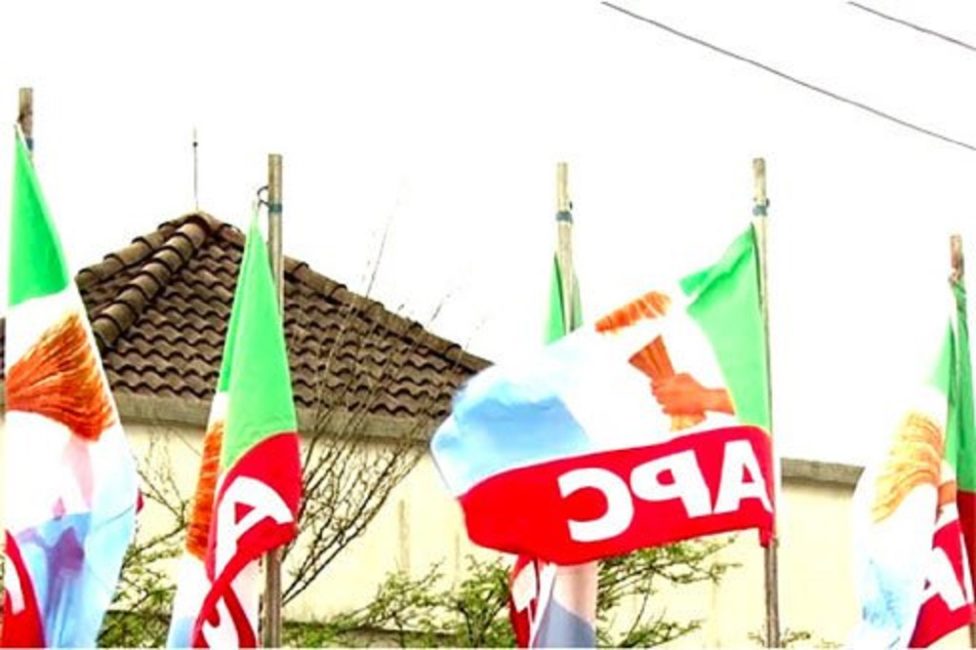
APC Wins Four of Five By-Elections as APM Takes Bauchi Seat
The All Progressives Congress (APC) won four of the five legislative by-elections conducted across Gombe, Kano, Bauchi and Delta states, while the Allied Peoples Movement (APM) secured the remaining seat in Bauchi.
The elections, conducted by the Independent National Electoral Commission (INEC) on Saturday, September 19, 2026, were held to fill one vacant federal constituency seat and four vacant state assembly seats.
The APC victories came in the Gombe/Kwami/Funakaye Federal Constituency of Gombe State, Dawakin Kudu State Constituency in Kano, Udu State Constituency in Delta and Disina State Constituency in Bauchi.
The APM won the Sakwa State Constituency in Zaki Local Government Area of Bauchi State.
In Gombe, APC candidate Kallamu Usman MaiJama’a won the Gombe/Kwami/Funakaye Federal Constituency election with 41,121 votes. The Labour Party candidate polled 3,553 votes, while the APM candidate received 872 votes.
In Kano, APC candidate Husseini Datti emerged winner of the Dawakin Kudu State Constituency election with 22,890 votes. The Peoples Redemption Party scored 270 votes, while the Peoples Democratic Party recorded 108 votes. Other parties recorded lower figures.
In Delta State, APC candidate Okolosi Ator won the Udu State Constituency seat with 8,724 votes, while the PDP candidate polled 214 votes.
The APC also secured the Disina State Constituency seat in Bauchi, where its candidate, Yakubu Ali, obtained 5,846 votes. The APM candidate scored 5,225 votes, while the PRP candidate received 3,701 votes.
The second Bauchi contest produced a different result, with Adamu Yakubu of the APM winning the Sakwa State Constituency seat with 8,515 votes. The APC polled 3,771 votes, the PDP 2,076, and the PRP 727.
The results followed INEC’s conduct of the five polls across the four states after the seats became vacant through different circumstances, including death, resignation and defection.
READ ALSO:
- Atiku Offers Scholarship to Viral Niger Teen Miner After 37 Miners’ Deaths
- NDLEA Seizes N3.4bn Drugs, Arrests Fake Police Officer in Nationwide Crackdown
- Oyo: Police Arrest Serving Air Force Personnel Over Alleged Robbery, Abduction
The Gombe/Kwami/Funakaye federal seat became vacant following the death of the former lawmaker, Yaya Bauchi Tongo, in June 2026. In Bauchi, the Sakwa seat became vacant following the death of its former occupant, while the Disina seat became vacant after the lawmaker resigned to pursue another political position.
The Udu seat in Delta became vacant following the defection of its former occupant, Collins Egbetamah, from the APC to the Nigeria Democratic Congress. The Dawakin Kudu seat in Kano became vacant after its former occupant, Rabiu Shuaibu, left the state assembly to contest the Dawakin Kudu/Warawa Federal Constituency election.
Ahead of the polls, INEC deployed sensitive materials and electoral personnel to the affected constituencies, while security agencies announced deployments aimed at maintaining order before, during and after voting.
INEC Chairman, Professor Joash Amupitan, monitored the elections from the commission’s National Situation Room in Abuja and described the exercise as an important operational test ahead of the 2027 general elections.
Amupitan said the five by-elections would provide the commission with lessons on logistics, technological deployment and the readiness of field personnel.
He stressed that bye-elections should not be treated as routine exercises because each poll provides an opportunity for INEC to assess and improve its electoral processes ahead of larger elections.
Reports from the four states indicated that voting was generally peaceful, although some operational challenges were recorded.
In parts of Gombe and Kano, reports indicated relatively low voter turnout, while some Bimodal Voter Accreditation System (BVAS) challenges were reported during the Delta election.
The Bauchi election also recorded a security incident, with the state police command reporting the arrest of 47 suspects in parts of Shira Local Government Area.
According to the police, the suspects allegedly posed as members of a state-owned security outfit and were found in possession of items including guns, cutlasses and sticks. The arrests were made in connection with the election security operation.
The results have also drawn attention because of their timing ahead of the 2027 general elections, although the outcome of five constituency-level by-elections does not by itself determine the outcome of the wider 2027 elections.
APC National Chairman, Professor Nentawe Yilwatda, congratulated the party’s candidates who won the four seats and commended APC members, campaign teams and party leaders involved in the contests.
Yilwatda also acknowledged voters, INEC, security agencies and other stakeholders who participated in the elections, while urging the successful candidates to remain committed to their constituents.
President Bola Ahmed Tinubu also congratulated the successful candidates. He urged the newly elected lawmakers to justify the confidence placed in them by their constituents and called on unsuccessful candidates to accept the results in good faith.
The INEC election results portal continued to receive result sheets from the five constituencies after the polls, providing an electronic record of results uploaded from polling units.
The commission is scheduled to conduct the next nationwide presidential and National Assembly elections on January 16, 2027, followed by governorship and state House of Assembly elections in participating states on February 6, 2027.
The September 19 by-elections therefore provide INEC and participating political parties with an opportunity to review electoral logistics, voter participation, technology deployment and election security before the larger 2027 electoral cycle.
APC Wins Four of Five By-Elections as APM Takes Bauchi Seat
Politics
2027: NDC Predicts Wider Obi Victory Over Tinubu in Lagos
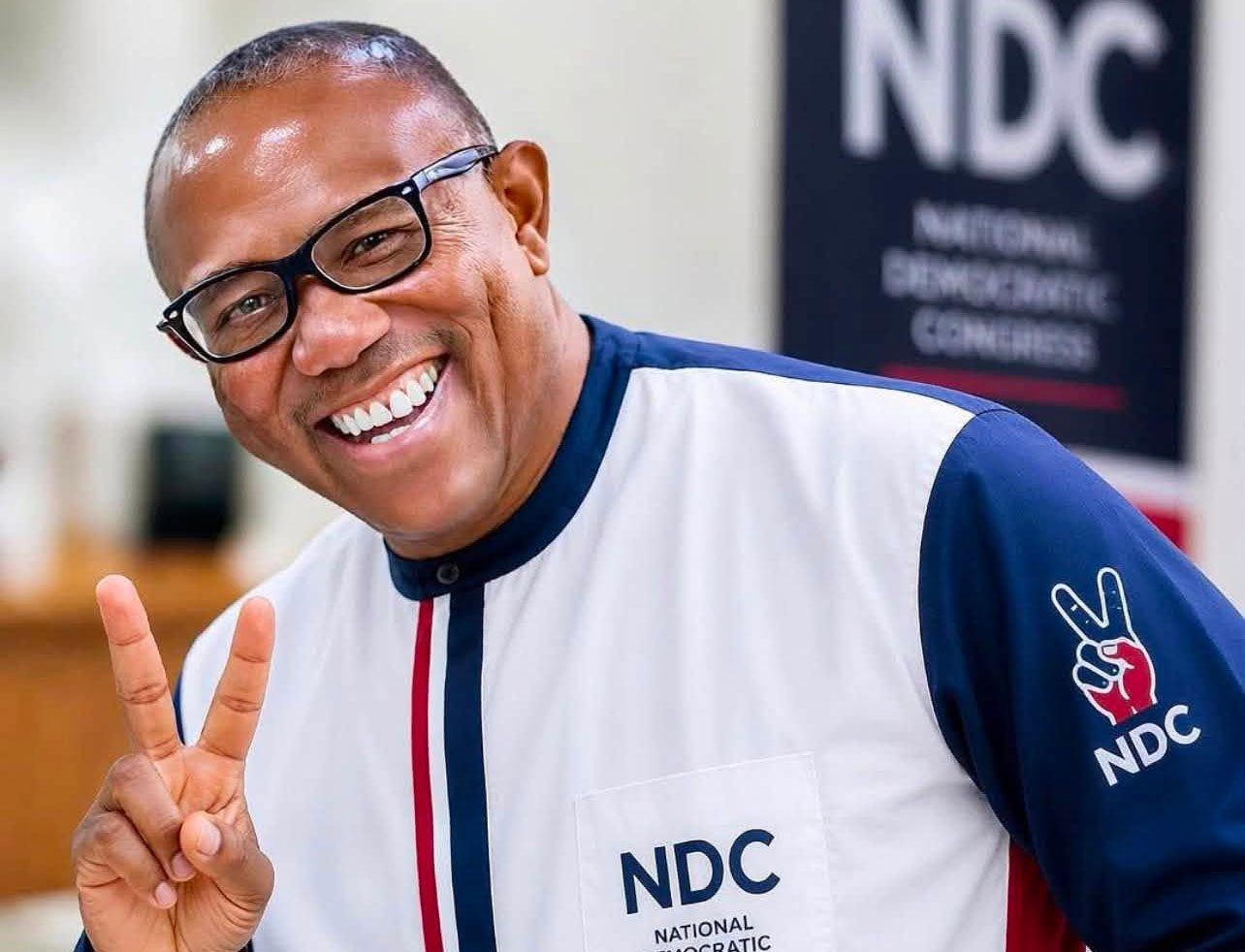
2027: NDC Predicts Wider Obi Victory Over Tinubu in Lagos
The Nigeria Democratic Congress (NDC) has expressed confidence that its presidential candidate, Peter Obi, will defeat President Bola Ahmed Tinubu in Lagos State in the 2027 presidential election, predicting that the former Anambra State governor will win by a wider margin than he did in 2023.
The party’s National Publicity Secretary, Osa Director, said Obi’s victory over Tinubu in Lagos during the 2023 presidential election was not accidental, describing it as a reflection of the political mood in the state.
Director said the NDC expected Obi to build on his previous performance if the 2027 election was conducted under conditions the party considers free and fair.
He also challenged the All Progressives Congress (APC) and its supporters to allow voters to determine the outcome of the election without intimidation, violence, inducement or other forms of electoral malpractice.
According to him, the NDC has studied the lessons of the 2023 election and is preparing to strengthen its structures and protect its votes across the country.
Director said the party was prepared to confront any challenges that could arise during the election, including alleged attempts to intimidate voters or disrupt the electoral process.
Another NDC candidate in Lagos, Ladipo Johnson, also expressed confidence in Obi’s prospects in the state, attributing the expected improvement to what he described as dissatisfaction with the Tinubu administration.
Johnson said Obi would win Lagos again and by a wider margin, adding that the NDC had become stronger following the realignment of opposition politicians and political groups ahead of the 2027 election.
READ ALSO:
- Olawepo-Hashim: My Political Ideology Differs From Obi, Atiku
- Ortom and His 23 Cars’ ‘Bonus’, by Dele Sobowale
- Abuja Demand Rises as Jetour Brings X70 Plus Experience to FCT
He also raised concerns about possible voter intimidation, harassment and vote buying, urging Nigerians to protect their votes and ensure that electoral choices are respected.
However, the claims by Director and Johnson about Obi’s expected performance in Lagos are political predictions by NDC officials and do not constitute an established election outcome.
The 2023 presidential election remains the latest completed presidential contest in Lagos. Obi won the state with 582,454 votes, narrowly ahead of Tinubu, who polled 572,606 votes, according to results declared by the Independent National Electoral Commission (INEC).
Obi won nine of Lagos State’s 20 local government areas, including Ajeromi-Ifelodun, Amuwo-Odofin, Eti-Osa, Ikeja, Kosofe, Oshodi-Isolo, Somolu, Ojo and Alimosho.
Tinubu won the remaining 11 local government areas: Agege, Apapa, Badagry, Epe, Ibeju-Lekki, Ifako-Ijaiye, Ikorodu, Lagos Island, Lagos Mainland, Mushin and Surulere.
The result made Lagos one of the closely watched states in the 2023 presidential contest, particularly because Tinubu had previously served as governor of the state and maintained a significant political structure there.
The political landscape has since changed considerably ahead of the 2027 election.
INEC has published its final list of presidential candidates, with 18 candidates cleared to contest the January 16, 2027 presidential election.
Tinubu is listed as the APC presidential candidate, while former Vice President Atiku Abubakar is contesting under the African Democratic Congress (ADC). Obi is listed as the presidential candidate of the NDC, with former Kano State Governor Rabiu Musa Kwankwaso as his running mate.
The changes mean that the party alignments and political structures involved in the 2027 contest are different from those that shaped the 2023 election.
Obi’s move from the Labour Party to the NDC has also changed the political platform through which he is seeking the presidency, while Kwankwaso’s emergence as his running mate has brought another major political bloc into the NDC structure.
For the NDC, Lagos remains an important target as it seeks to expand Obi’s support beyond the areas where he performed strongly in 2023.
The party’s argument is based partly on the margin by which Obi won Lagos in 2023 and its assessment of the current political environment in the state.
The APC, meanwhile, remains a major political force in Lagos, where it has maintained a strong organisational structure over several election cycles.
The 2027 contest will therefore take place against a different political backdrop, with new party alliances, candidates and campaign structures competing for the support of Lagos voters.
Beyond Lagos, the NDC is seeking to build a nationwide campaign around Obi’s candidacy, while the APC and other parties are also working to consolidate their respective support bases.
Issues likely to shape the campaign include the economy, cost of living, security, employment, governance, electoral credibility and the performance of the federal government.
The NDC has continued to emphasise the need for a credible electoral process, with its officials urging security agencies, electoral authorities and political parties to ensure that voters can cast their ballots without intimidation.
For now, the prediction that Obi will defeat Tinubu by a wider margin in Lagos remains the stated expectation of the NDC and its candidates.
The actual result will depend on the votes cast and officially declared in the 2027 presidential election.
2027: NDC Predicts Wider Obi Victory Over Tinubu in Lagos
Politics
Olawepo-Hashim: My Political Ideology Differs From Obi, Atiku

Olawepo-Hashim: My Political Ideology Differs From Obi, Atiku
Accord Party presidential candidate Gbenga Olawepo-Hashim has sought to distinguish his political philosophy from those of former Anambra State Governor Peter Obi and former Vice President Atiku Abubakar, saying the three politicians do not share the same political ideology.
Olawepo-Hashim’s position comes as political parties and opposition figures continue to realign ahead of the 2027 presidential election, with competing platforms emerging from the broader opposition movement.
The former presidential aspirant has repeatedly argued that Nigerian politics should be driven by clearly defined policies and ideology rather than alliances formed principally around personalities or the immediate objective of winning elections.
His comments also reflect his longstanding emphasis on economic policy, federalism, electoral reform, institutional governance and political restructuring.
Olawepo-Hashim has particularly used the issue of fuel subsidy removal to highlight differences between his position and that of Atiku.
He has criticised Atiku’s past position on petroleum subsidy and questioned subsequent calls for a targeted subsidy, arguing that politicians who change their positions on major economic policies should explain the reasons for such changes to Nigerians.
The Accord candidate has maintained that he opposed the removal of petroleum subsidy and believes government policy should take into account its effect on households, businesses and the productive economy.
Beyond subsidy policy, Olawepo-Hashim has argued that Nigeria’s political challenges cannot be resolved simply by changing the occupants of political offices.
READ ALSO:
- Ortom and His 23 Cars’ ‘Bonus’, by Dele Sobowale
- Abuja Demand Rises as Jetour Brings X70 Plus Experience to FCT
- Enough Is Enough: Muslim Supporters Demand New Man United Owners
He has advocated stronger institutions and a more decentralised political system, while distinguishing federalism from the practice of rotating political offices among geopolitical zones.
His position on political restructuring has been a recurring feature of his public interventions, including his criticism of the country’s electoral system and the role of institutions in guaranteeing credible elections.
The politician has also become embroiled in a legal dispute over his status as the Accord Party presidential candidate for the 2027 election.
Following the publication of the final list of candidates, Olawepo-Hashim’s name was omitted. He subsequently maintained that he remained the party’s duly nominated candidate and that the dispute was before the courts.
He said he emerged from an Accord presidential primary held on May 30, 2026, which he said was monitored by electoral officials, and argued that an administrative decision could not finally determine a candidate’s eligibility where a court case was pending.
The development has added another dimension to the political contest involving Olawepo-Hashim and Accord as parties prepare for the 2027 election.
Meanwhile, the opposition landscape has continued to change following the formation of a coalition involving Atiku, Obi and other political figures.
Obi is now the presidential candidate of the Nigeria Democratic Congress (NDC), while Atiku is the presidential candidate of the African Democratic Congress (ADC). The earlier coalition that brought the two politicians and other opposition leaders together has since developed into separate political platforms.
Olawepo-Hashim has therefore positioned his campaign separately from both politicians, stressing what he describes as differences in political philosophy and policy priorities.
His comments come against the backdrop of renewed efforts by opposition groups to build alliances ahead of the 2027 poll. However, disagreements over presidential candidates, party structures, zoning and policy positions have continued to shape the opposition landscape.
For Olawepo-Hashim, the distinction between his political approach and those of Obi and Atiku goes beyond party affiliation.
He has argued that Nigerians should assess political leaders based on their policy programmes, ideological positions, institutional reform proposals and approach to governance, rather than simply on the strength of political alliances.
His campaign has continued to focus on issues including economic restructuring, democratic reform, electoral credibility, federalism and strengthening institutions.
The differences he has highlighted between himself, Obi and Atiku are therefore part of his broader effort to establish a distinct political identity ahead of the 2027 Nigeria presidential election.
As the election approaches, the competing positions of opposition politicians are likely to remain a major feature of the political debate, particularly as parties continue negotiations and legal disputes over candidates and alliances.
Olawepo-Hashim: My Political Ideology Differs From Obi, Atiku
-
 News3 days ago
ECOWAS Biometric Card Expands as Seven Countries Begin Rollout
-

 Sports3 days ago
Ballon d’Or 2026: Mbappe Responds to Yamal’s Bold Claim
-
 metro3 days ago
FG Suspends Niger NSCDC Commandant As 37 Suspected Illegal Miners Die In Custody
-
 International3 days ago
Ninth Body Discovered in South Africa: Nigeria Issues Urgent Safety Alert to Nationals
-

 Politics3 days ago
Toyin Abraham Rejects Lagos APC Campaign Council Inclusion
-

 Politics3 days ago
2027: Sowore Says He’d Rather Die Than Travel Abroad For Medical Treatment
-

 International2 days ago
BREAKING: Bloodbath at Pakistan Mosque as Suicide Blast Kills 21, Injures 103
-

 metro2 days ago
Niger Miners’ Deaths: Families Demand Compensation, Justice for Victims