

metro
2023: Atiku, Shettima, Obi Proffer Solutions To Nigeria’s Challenges

Leading presidential candidates in the 2023 general elections have proffered solutions to some of the challenges facing the country.
Atiku Abubakar of the Peoples Democratic Party (PDP), Peter Obi of the Labour Party (LP) and vice presidential candidate of the All Progressives Congress (APC), Kashim Shettima, spoke yesterday at the opening plenary of the Annual General Meeting (AGM) of the Nigerian Bar Association (NBA) in Lagos.
The presidential candidate of the New Nigeria Peoples Party (NNPP), Rabiu Kwankwaso, did not attend the ceremony, while that of the APC, Asiwaju Bola Tinubu, was represented by Shettima.
The presidential candidate of the All Progressives Grand Alliance (APGA),
Professor Peter Umeadi, also attended the conference.
The candidates were invited as panellists to speak on “Democratic Transitions in the 21st Century Nigeria: 2023 and Beyond”.
I’ll attract local, foreign investment in health, education – Atiku
Atiku, who lamented that Nigeria had never found itself in a critical point as it was today, called on the citizens to choose right in 2023 in order to address the challenges.
He said, “Today, we have all the negative indices. Today, we are all disunited in the nation. We had never experienced this level of poverty. We had never experienced this state of insecurity. We had never experienced this level of unemployment. We have recognised all these negative developments in our history.
“This is where history and experience beckon on us to make sure that we don’t get it wrong at this point in time; otherwise if we get it wrong, I don’t know when we will ever get it right.
READ ALSO:
- How Kwankwaso Tricked, Betrayed Us – Shekarau
- Gunmen kill Kwara hotel owner, abduct friend
- Beans price rises by 23%, rice 13.5% – NBS
- Chelsea boss Tuchel blames bus, others for 3-0 loss at Leeds
“I was involved in the struggle to return this country to democracy in the time of military days. In fact, I can say I am lucky to be alive because so many of my contemporaries have been killed in this struggle, but by the grace of God I have survived till this point in time.”
The former VP proposed reforms to create an enabling environment for foreign and local investors to invest in various sectors, including healthcare and education.
He said the federal government did not have the resources to be solely responsible for development.
He submitted that, “The only way is to make sure that a conducive environment is available for the local and foreign investors to participate in the development of our country; whether it is infrastructure, education or healthcare.”
You should vote for competence, Obi tells citizens
Obi of the LP said the country’s woes had gotten so bad that the 2023 elections would not be about religion or tribe, but about who had the character and competence to deliver the country from its current mess.
He said, “Nigeria is in a mess. We got here simply because of the accumulative effects of bad leadership. The coming elections are not about tribe or religion, but about character and competence. We need a bold transition from a highly insecure state to a highly secure state.”
We’ll lead our troops to frontlines – Shettima
Shettima on his part promised that the APC would lead Nigerian troops in its fight against terrorists and bandits terrorising major parts of the country. He said his principal, Tinubu, would concentrate on the economy and transform it to be the best in Africa.
He further said, “Nigerians should follow the man who knows the road. From day one, we will hit the ground running. We will promptly address the issue of the economy, ecology and security. And we have the antecedence. I built some of the best schools in Nigeria. Go to Borno and see wonders; you will never believe that it is a state in a state of war. So, we are going to replicate our achievements in Lagos, in Borno and some of the frontline states so that our nation will be a better place.”
READ ALSO:
- Reno Omokri criticises Tinubu, Kwankwaso for shunning NBA conference
- Osimhen nets 30th goal for Napoli
- Military cannons destroy camp of ISWAP leader Fiya Ba Yuram, kill scores in Sambisa
Nigeria starved of heroes
Award-winning writer, Chimamanda Ngozie Adichie, who was the event’s keynote speaker, lamented that Nigeria was starved of heroes to mentor its citizens, particularly the youths. She said, “We are starved of heroes. Our young people do not find people to look up to anymore.”
The author of “Half of a Yellow Sun” called on Nigerians to embrace self-criticism and untangle the knot of injustice so that peace and good governance could thrive.
She said, “There is need for resurrection. We cannot avoid self-criticism, but criticise the government. We cannot hide our own institutional failure while demanding transparency from the government.”
Naira rains for female footballers
Meanwhile, the author mobilised participants at the event to raise over N3m for the female NBA team. During her address, she noted that there was “injustice” in the monetary compensation which the male and female NBA teams would receive in the football competition.
After her speech, several personalities, including the Director General (DG) of the Bola Tinubu Presidential Campaign Organisation, Governor Simon Lalong of Plateau State, and the Minister of Works and Housing, Babatunde Fashola, donated to raise the prize money of the female NBA team to N3.2m from the initial N200,000. The winning prize for the male team, it was learnt, is N500,000.
Shettima’s dress stirs social media buzz
The social media came alive yesterday as netizens shared their reactions on the outfit of Shettima at the NBA conference.
Shettima was dressed in a suit and tie, accompanied by a pair of gym shoes, which many people found odd.
No fewer than 13,000 lawyers nationwide attended the opening ceremony of the NBA Annual General Conference (AGC) which was declared open by the acting Chief Justice of Nigeria (CJN), Justice Olukayode Ariwoola.
The CJN, who was represented by the Chief Judge (CJ) of Lagos State, Justice Kassim Alogba, said the conference was the largest gathering of lawyers on the face of the earth.
He commended the NBA President, Olumide Akpata, for his leadership qualities.
Lagos State Attorney General, Moyosore Onigbanjo, represented Governor Babajide Sanwo-Olu.
The theme for this year’s NBA AGC is “Bold Transition” and is being held at the Lagos Eko Atlantic City between August 19 and 25.
Daily Trust






metro
Xenophobia: FG Brings 33 More Nigerians Home From South Africa
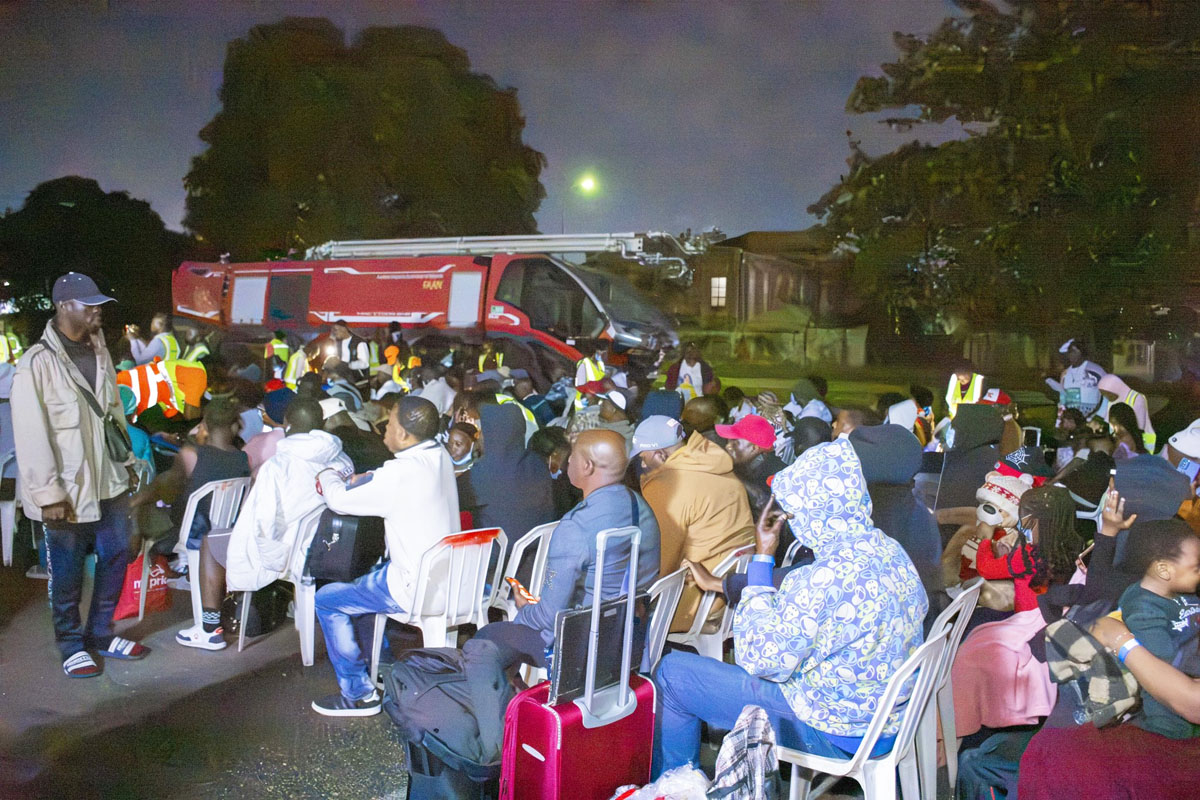
Xenophobia: FG Brings 33 More Nigerians Home From South Africa
The Federal Government has facilitated the return of another 33 distressed Nigerians from South Africa, bringing to 1,716 the number of Nigerians repatriated under the ongoing consular evacuation exercise since June 10, 2026.
The latest group, comprising 17 adults and 16 minors, arrived in Nigeria aboard South African Airways flight SA060 at about 8:30 p.m. on Wednesday, September 16.
Officials of the Federal Ministry of Foreign Affairs, the Nigerians in Diaspora Commission (NiDCOM), the National Agency for the Prohibition of Trafficking in Persons (NAPTIP) and other government agencies received the returnees upon arrival.
The latest operation is the 12th consular evacuation from South Africa since the exercise began in June, as the Nigerian government continues efforts to assist citizens who have become distressed or vulnerable in the country.
According to the government, it has fully funded the evacuation of 1,388 Nigerians, representing about 81 per cent of the total number repatriated so far.
The latest batch was supported through private funding initiatives involving Nigerian organisations and individuals.
The Private Nigerian Group of Business Friends (PNGBF) funded the return of 26 of the 33 Nigerians, while the Nigerian Lawyers Association in South Africa (NLASA) supported five others. A private citizen from Bayelsa State also funded the return of three Bayelsa indigenes.
Another 28 Nigerians were recently assisted to return home by the Igbo Lawyers Association South Africa.
The continued repatriation comes amid growing concerns over xenophobic and Afrophobic attacks involving Nigerians and other African nationals in South Africa.
READ ALSO:
- Falconets Thrash England 3-0, Face Colombia in U-20 World Cup Quarter-Finals
- Replace Fuel Subsidy With Vehicle Credit to Drive Mobility, Jobs,LCCI, Ilekuba tell FG
- Tinubu, Macron Hold Private Dinner in Paris, Reaffirm Nigeria-France Ties
The Federal Government has said it is concerned about the safety and security of Nigerians living in the country and has raised the issue at regional and continental levels, including with the ECOWAS Authority of Heads of State and Government and the African Union Assembly of Heads of State and Government.
The government has also indicated that it is considering further measures to secure stronger cooperation from South African authorities in addressing attacks and protecting the rights and dignity of Nigerians in the country.
The latest evacuation also follows reports of the deaths of two Nigerian nationals in South Africa earlier in September.
The Nigerian Foreign Ministry identified the victims as James Uchechukwu Nwankwo, who died in Cape Town on September 5 following what Nigerian authorities described as alleged abusive interrogation by South African police officers, and Bishop Taiwo Michael Fakunle, who was killed at his residence in Kensington, Johannesburg, on September 4.
The circumstances surrounding both deaths have generated concern in Nigeria, with authorities calling for appropriate investigations and accountability.
The incidents have further strained concerns surrounding Nigeria-South Africa relations, particularly over the safety of Nigerians living and doing business in South Africa.
Nigeria’s National Assembly has also suspended official visits to South Africa and boycotted legislative activities hosted by the South African Parliament amid concerns over the safety of Nigerians and other bilateral issues.
The Federal Government has meanwhile urged Nigerians still living in South Africa to remain vigilant, obey local laws and maintain contact with the Nigerian High Commission in Pretoria and the Nigerian Consulate General in Johannesburg whenever they require consular assistance.
The government has also appealed to state governments to complement its efforts by assisting their indigenes who want to return home.
Minister of State for Foreign Affairs Bianca Ojukwu said some Nigerians returning from South Africa had been forced to leave behind properties, businesses and other livelihoods because of the difficult circumstances they faced.
She has also commended state governments and private organisations supporting Nigerians returning to the country.
Among them is the Enugu State Government, which recently received 77 families comprising 112 indigenes returning from South Africa and provided financial assistance to help them rebuild their lives.
Nigeria’s Acting High Commissioner to South Africa, Temitope Ajayi, has also said that more than 1,600 Nigerians had returned through government sponsorship and various private interventions.
Ajayi noted that the challenges affecting Nigerians in South Africa extend beyond xenophobic attacks, explaining that some Nigerians who entered the country legally later encountered difficulties with residence documentation because of delays within the immigration system.
The Federal Government has continued diplomatic engagement with South African authorities while supporting Nigerians who voluntarily seek to return home.
The arrival of the latest 33 returnees brings the total number repatriated since June 10 to 1,716, highlighting the scale of the ongoing government and community response to concerns affecting Nigerians in South Africa.
The government is expected to continue monitoring the situation while pursuing diplomatic measures aimed at improving the safety and welfare of Nigerians who remain in the country.
Xenophobia: FG Brings 33 More Nigerians Home From South Africa
metro
Nigeria Wins $3.38bn Mambilla Arbitration Battle As ICC Rejects Sunrise Claims
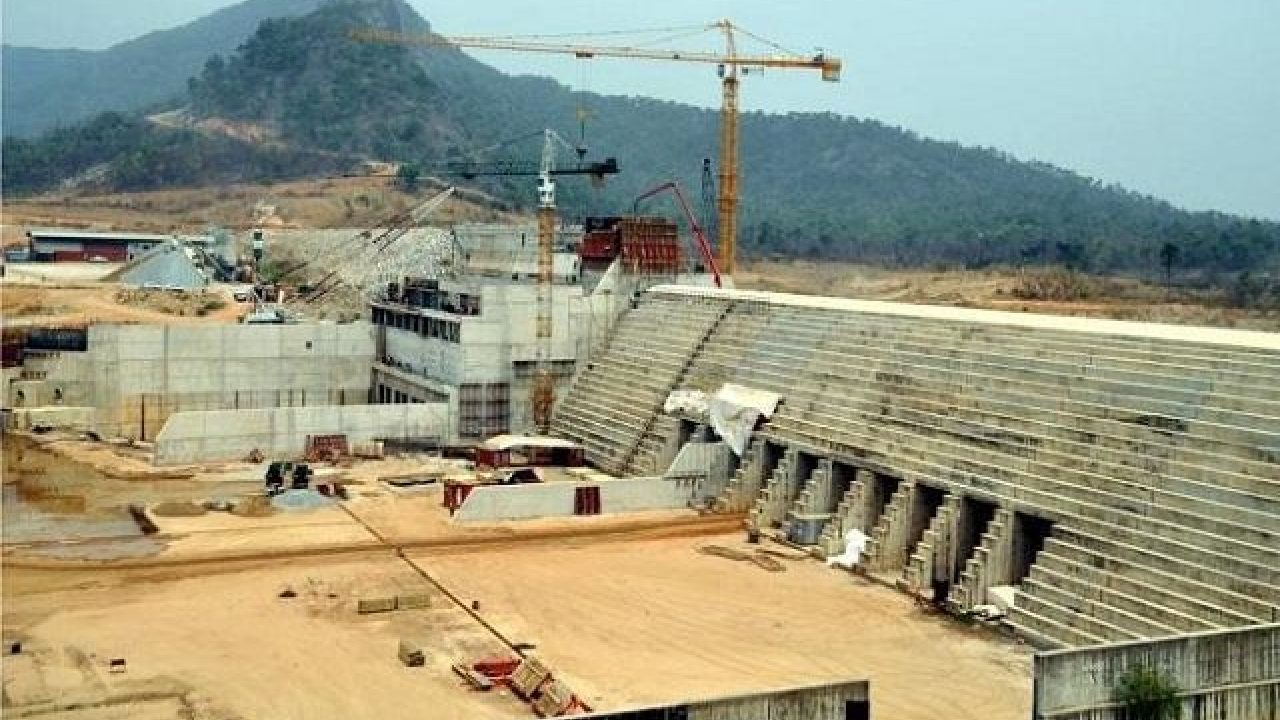
Nigeria Wins $3.38bn Mambilla Arbitration Battle As ICC Rejects Sunrise Claims
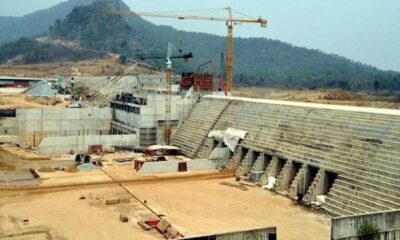
Nigeria has won a major international arbitration battle over the long-delayed Mambilla Hydroelectric Power Project, after an International Chamber of Commerce (ICC) tribunal in Paris rejected claims by Sunrise Power and Transmission Company Limited that had put the country’s potential financial exposure at more than $3.38 billion.
The ruling, issued on September 17, 2026, is a significant development for the proposed 1,500MW Mambilla power project in Taraba State, which has been stalled for years by a combination of legal, contractual, financing and implementation challenges.
President Bola Ahmed Tinubu welcomed the decision, describing it as the removal of what he called the biggest legal obstacle to the project’s progress.
The dispute dates back to a 2003 agreement concerning the development of the Mambilla project. Sunrise Power subsequently commenced arbitration proceedings against Nigeria at the ICC in October 2017, initially seeking about $2.35 billion over an alleged breach of contract.
The parties later entered into a settlement agreement in 2020 under which Nigeria was to pay Sunrise $200 million. A subsequent disagreement over the implementation of that agreement led to another arbitration.
In the latest proceedings, Sunrise sought about $680 million, including the settlement sum and interest. A separate claim connected to disputes over the development of the Mambilla project was valued at more than $2.7 billion in compensation and interest.
Together, the related claims created potential exposure of more than $3.38 billion for Nigeria.
The ICC tribunal rejected Sunrise’s claim that Nigeria had breached its obligations under the settlement agreement and its addendum. It also dismissed the company’s request for Nigeria to pay $400 million, comprising the $200 million settlement sum and an additional $200 million claimed as a default payment.
READ ALSO:
- 2027: Sowore Says He’d Rather Die Than Travel Abroad For Medical Treatment
- Toyin Abraham Rejects Lagos APC Campaign Council Inclusion
- FG Suspends Niger NSCDC Commandant As 37 Suspected Illegal Miners Die In Custody
The tribunal further held that Leno Adesanya, the promoter of Sunrise Power, was bound by the arbitration agreement under the settlement arrangement. It also confirmed its jurisdiction over Nigeria’s counterclaim against Adesanya and his firm.
Rather than ordering Nigeria to pay the amounts sought by Sunrise, the tribunal directed Sunrise and Adesanya to reimburse Nigeria for 75 per cent of its legal fees and expenses incurred in the arbitration.
The legal costs were assessed at approximately $11.82 million. About $2.5 million is expected to be recovered from funds held in escrow by the ICC, while Sunrise and Adesanya are required to pay the remaining $9.32 million, with interest at 10 per cent annually, compounded annually, from notification of the final award until payment.
The tribunal also fixed the arbitration costs at approximately $1.66 million, with Sunrise and Adesanya responsible for 75 per cent and Nigeria responsible for the remaining 25 per cent.
The three-member tribunal was chaired by Melaine van Leeuwen, with Stavros Brekoulakis and Simon Nesbitt serving as co-arbitrators. Nigeria’s external legal team was led by Elizabeth Oger-Gross and Tolu Obamuroh of Paul Hastings LLP.
The outcome ends a major phase of a dispute that has followed the Mambilla power project for nearly a decade in international arbitration and more than two decades from the original project agreement.
The original proposal envisaged a 3,050MW hydroelectric plant in Taraba State under a build-operate-transfer arrangement. The project was subsequently revised as the government sought to reduce its cost and improve its prospects of attracting financing.
In 2021, the Federal Government announced that the planned capacity would be reduced by about half, from 3,050MW to approximately 1,525MW. The scheme was subsequently rescoped to around 1,500MW to make it more financially viable and “bankable” for lenders.
The original project had been associated with an estimated cost of roughly $5 billion to $5.8 billion, while the rescoped project has been put at around $4 billion in previous government discussions.
The prolonged delay has meant that the Mambilla scheme has yet to become an operational source of electricity despite its potential to significantly increase Nigeria’s generation capacity.
President Tinubu, in his reaction to the ICC ruling, commended Attorney-General of the Federation and Minister of Justice, Lateef Fagbemi, officials of the Federal Ministry of Justice and Nigeria’s external legal team for their role in defending the country.
He also acknowledged former President Olusegun Obasanjo and the late former President Muhammadu Buhari, who testified during the arbitration proceedings, as well as former Ministers of Power Babatunde Fashola and Suleiman Adamu and other witnesses and experts.
Tinubu also credited the National Security Adviser and the Economic and Financial Crimes Commission (EFCC) for their roles in the broader matter.
The President said Nigeria remained committed to working with genuine investors and honouring its legal obligations while defending the country against claims it considers detrimental to the national interest.
The original 2003 contract has also been the subject of separate domestic legal proceedings and investigations. Tinubu said the contract was not authorised by the Federal Executive Council (FEC). Those domestic proceedings are distinct from the ICC arbitration, which has now been decided in Nigeria’s favour.
The arbitration victory, however, does not mean that the 1,500MW Mambilla project is immediately ready for construction or electricity generation.
The government still has to address major issues involving project financing, construction, engineering, transmission infrastructure and implementation arrangements. Previous plans have included financing discussions involving the Export-Import Bank of China, while the project’s restructuring was intended to improve its bankability.
With the arbitration dispute now resolved, the focus shifts to securing the funding and completing the arrangements required to move the Mambilla project from a long-delayed proposal to actual construction and, ultimately, electricity generation.
Nigeria Wins $3.38bn Mambilla Arbitration Battle As ICC Rejects Sunrise Claims
metro
FG Suspends Niger NSCDC Commandant As 37 Suspected Illegal Miners Die In Custody
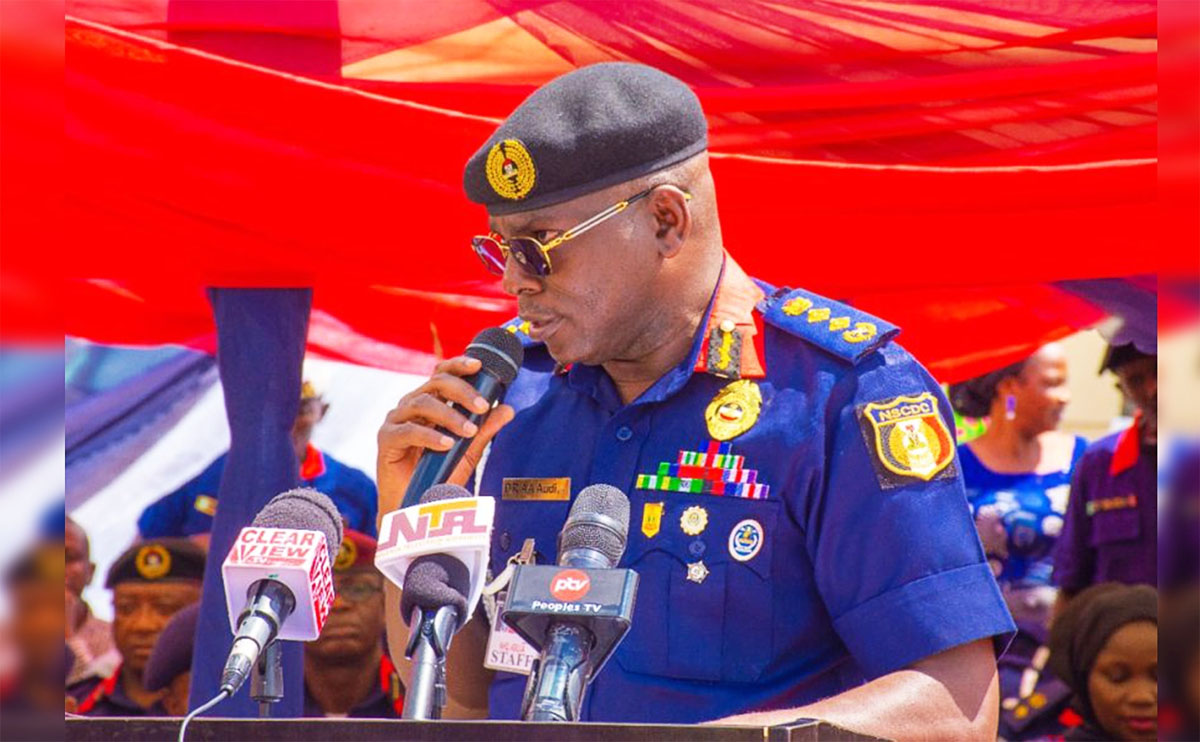
FG Suspends Niger NSCDC Commandant As 37 Suspected Illegal Miners Die In Custody
The Federal Government has suspended the Niger State Commandant of the Nigeria Security and Civil Defence Corps (NSCDC), Suberu Siyaka Aniviye, following the deaths of 37 suspected illegal miners in the Corps’ custody in Minna, Niger State.
The suspension was ordered by the Minister of Interior, Olubunmi Tunji-Ojo, on Friday, September 18, 2026, alongside a directive for a full investigation into the circumstances surrounding the deaths.
The incident occurred after the NSCDC carried out enforcement operations against suspected illegal mining activities in parts of Niger State on September 15 and 16. The operation reportedly focused on the M.I. Wushishi and Lukoto areas of Minna, where scores of suspects were arrested and various exhibits recovered.
The deaths were discovered in the early hours of Thursday, September 17, after the suspects had been taken into custody.
The Niger State NSCDC initially attributed the deaths to a suspected disease outbreak, but the Corps’ national headquarters subsequently cautioned against drawing conclusions about the cause of death before medical and laboratory examinations were completed.
The NSCDC said the bodies had been deposited at the General Hospital, Minna, for medical examination to establish the actual cause of death.
Although early reports put the death toll at 33, Niger State Governor Mohammed Umaru Bago confirmed that 37 suspected illegal miners had died in custody.
The differing figures reported in the immediate aftermath underscore the importance of the ongoing investigation and medical examination in establishing the definitive number of victims and the circumstances of each death.
Following the incident, NSCDC Commandant-General Ahmed Abubakar Audi ordered the constitution of a high-powered investigative team headed by the Deputy Commandant-General in charge of Intelligence and Investigation.
READ ALSO:
- 2027: Sanwo-Olu, Fashola, Ambode Join Lagos APC Campaign Council
- Anambra Debt Row: Presidency Challenges Peter Obi as State Releases N127.4bn Loan Records
- South African Woman Jailed 25 Years for Smuggling 5.75kg Heroin into Nigeria
The team is expected to investigate the condition of the suspects when they were arrested, the period they spent in custody, the conditions of their detention, the medical attention provided to them and other circumstances that may have contributed to the deaths.
The NSCDC also directed that the health and welfare of all persons still in its custody be given priority, while appropriate measures are taken to protect personnel who may have had contact with the affected detainees.
The Corps said it would refrain from speculating about the cause of the deaths until the outcome of the medical examination is available. It stressed that reports linking the deaths to a particular disease had not been medically or scientifically established.
Meanwhile, police authorities in Niger State have opened a separate investigation into the deaths.
The development has also raised questions about the conditions in which the suspects were detained.
A survivor, Dauda Shehu, reportedly said about 65 detainees were held in an overcrowded and poorly ventilated cell. He said some detainees struggled to breathe and banged on the cell door in an attempt to attract the attention of security personnel.
A preliminary intelligence account also suggested that overcrowding and poor ventilation may have contributed to the deaths. However, these remain preliminary accounts and have not been established as the official cause of death.
The official explanation that a possible disease outbreak was involved has also come under scrutiny, with authorities stressing that only medical and laboratory examinations can determine whether disease played any role.
Governor Bago has described the incident as tragic and declared three days of mourning in honour of the deceased.
The Niger State Government also postponed an APC campaign rally scheduled for September 19 in Minna following the deaths.
The Federal Government’s decision to suspend the Niger State NSCDC commandant came a day after the Corps announced its internal investigation.
Tunji-Ojo said the commandant would remain suspended while the investigation continued, stressing that the government had a responsibility to protect lives.
The minister also appealed for calm and urged members of the public to remain law-abiding while the investigation is conducted. He expressed condolences to Governor Bago and the families and relatives of the deceased.
The incident has brought renewed attention to the risks associated with illegal mining in Niger State, where artisanal and small-scale mining activities remain widespread.
Niger State is rich in mineral resources and attracts artisanal miners, particularly those involved in gold mining. Authorities have intensified operations against illegal mining because of concerns over environmental damage, unsafe mining practices and links between illicit mining and criminal networks in parts of the country.
However, the immediate focus of the investigations is the deaths in custody and the treatment of the detainees between their arrest and the discovery of their bodies.
The key issues expected to be addressed include the exact number of people who died, their physical condition at the time of arrest, the number of detainees held at the facility, the adequacy of ventilation and other detention conditions, access to medical care, the timeline of events and the precise medical cause of death.
The NSCDC investigation, the police inquiry and the medical examinations are expected to provide a clearer account of what happened and whether any failures occurred in the handling or detention of the suspects.
Until those investigations are concluded, authorities have not established an official cause of death beyond confirming that the detainees died while in NSCDC custody.
FG Suspends Niger NSCDC Commandant As 37 Suspected Illegal Miners Die In Custody
-

 International2 days ago
Islamic Council Condemns Attempted Attack on Holy City of Mecca
-
 News2 days ago
Keep Politics Out of My Office — Ogbomoso Grand Chief Imam Warns Politicians, Bloggers
-
 metro2 days ago
Niger Mosque Abductions: Terrorists Execute 30 of 500 Captive Muslim Worshippers
-
 Entertainment2 days ago
BREAKING: Olu Jacobs Dies at 84, Atiku Mourns Cultural Icon
-
 Business1 day ago
Fuel Prices Climb to ₦1,500 per Litre Across Nigeria, Sparking Calls for Urgent Action
-

 News2 days ago
Blue Line Rail, Hospitals Get Boost as Lagos Approves ₦200bn Bond and Budget Reordering
-
 News2 days ago
OAU Investigates Death of Final-Year Student as Police Begin Probe
-
 Interview2 days ago
He Does Not Lose Elections”: Abdulmumin Jibrin Predicts 65% Landslide for Tinubu in 2027