

Politics
UPDATED: 2023 Presidential Election: Yoruba Elders’ Union (YEU) declares support for Atiku!
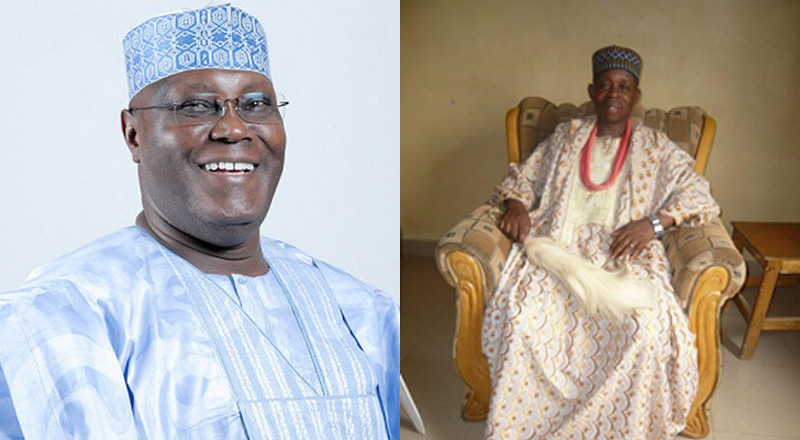
A socio-cultural group of Yoruba leaders under the aegis of the Yoruba Elders’ Union (YEU) has declares support for the former two terms Vice President of the federal Republic of Nigeria during the General Olusegun Obasanjo administration from 1999 to 2007 – His Excellency Abubaka Atiku of the Peoples Democratic Party (PDP) – during the forthcoming 2023 general election. This decision was taken at their meeting in Lagos on Tuesday, 7th of February, 2023.
Prof. Muhammad Omolaja, the President of the Union, said that YEU considered all the presidential candidates from various political parties using, inter alia, criteria such as competence, experience, health, and general acceptability of the candidates. Alhaji (Prince) Muhammad Omolaja said that H. E. Abubakar Atiku stands clear among his presidential candidate colleagues as regards competence and health.
READ ALSO:
- Chelsea, Man U willing to pay €120m for Osimhen
- Street hawking of new naira notes(VIDEO)
- FG raises N742.56bn Sukuk fund for road projects
- Lecturer arraigns for defiling his 10-year-old daughter in Lagos
In terms of the experience at the presidency level, the Yoruba leaders found that only Alhaji Abubakar Atiku has it among the candidates having served as the Vice President for eight years, and therefore, it will be easier for him to take off upon his election as the President than for a new person who will have to spend about 6 months or more to study the situation in the office before taking off properly and effectively! The challenges in the Nigeria of today would not allow this delay to ameliorate the prevailing sufferings of the Nigerian masses. As regards acceptability, the Yoruba leaders also agreed that H. E. Abubakar Atiku is the most widely accepted presidential candidate across the six geopolitical zones of the country. Abubakar Atiku has been building his network of politics and business for over 40 years! Hence, he is well known in the north, south, west and east of the country.
At the human relations level, Prof. Omolaja said that H. E. Abubakar Atiku is the most detribalized among all the candidates. He relates very well with people from different parts of the country. He married from the southwest (Yoruba), Southeast (Igbo) and from the north (Hausa/Fulani), and he doesn’t discriminate on religious affairs. His choice of a Muslim/Christian ticket also makes him superb in this respect!
READ ALSO:
- Petrol price hike: Petroleum minister orders NMDPRA to sanction filling stations
- INEC drags Adeleke, Oyetola to court over Osun tribunal ruling
- Kogi gov wife Rashida arraigned over N3bn money laundering
Prof. Omolaja, after the meeting while addressing the journalist, said that already the facts on ground favour Alhaji Abubakar Atiku over and above other presidential candidates. For instance, about three weeks to the election, Abubaka Atiku is clearly leading in the northeast, northwest, north central and south-south geopolitical zones; that is, Atiku and PDP are already leading in four out of the six geopolitical zones of the country. The southeast will probably be dominated by Peter Obi of the Labour Party (LP) who is from Anambra State with Atiku coming second. However, in the southwest, it is either Bola Ahmed Tinubu of the All Progress Congress (APC) from Lagos State comes first with H. E. Abubakar Atiku coming second; and vice versa. It is apparently clear that the situation in the northeast from where the All Progressives Congress (APC) picked their presidential running mate, Alhaji Shetima from Borno State, cannot make a significant difference as the northeasterners will definitely not drop being the region producing the President for a Vice President!
Apart from this, the northern belt of Nigeria is more than the southern belt in terms of the population, political consciousness and number of States; that is, 17 States in the south and 19 States plus the federal Capital Territory of Abuja in the north. In any case, anytime there are two or more serious presidential candidates in the southern Nigeria, the northern candidate always carry the day! For example, in the 1979 presidential election when Obafemi Awolowo was in the race from the southwest and Nnamdi Azikiwe was in the race from the southeast, Alhaji Shehu Shagari from the north won the election. Again, it was the same in 1983 when Alhaji Shehu Shagari won for his second term in office as the Executive President and Commander-In-Chief of the Armed Forces of the federal Republic of Nigeria. It is crystal clear from all indications that history is about to repeat itself in favour of H. E. Alhaji Abubakar Atiku in the forthcoming February 25, 2023 presidential election.
Because of the fact that at this time around, the atmosphere is not clear for the country to produce a President of the southern belt origin, the Yoruba Leaders therefore urge all well meaning Nigerians especially Yoruba sons and daughters and the Southerners in general to forget about all sentiments and come out en masse to cast their votes for H. E. Abubakar Atiku of the PDP during the February 25, 2023 presidential election. This will allow the incoming President Atiku to support the zoning of the presidential candidature to the south after the tenure of his administration.









Politics
APC Sweeps Enugu LG Election, Wins All 17 Chairmanship, 260 Councillorship Seats
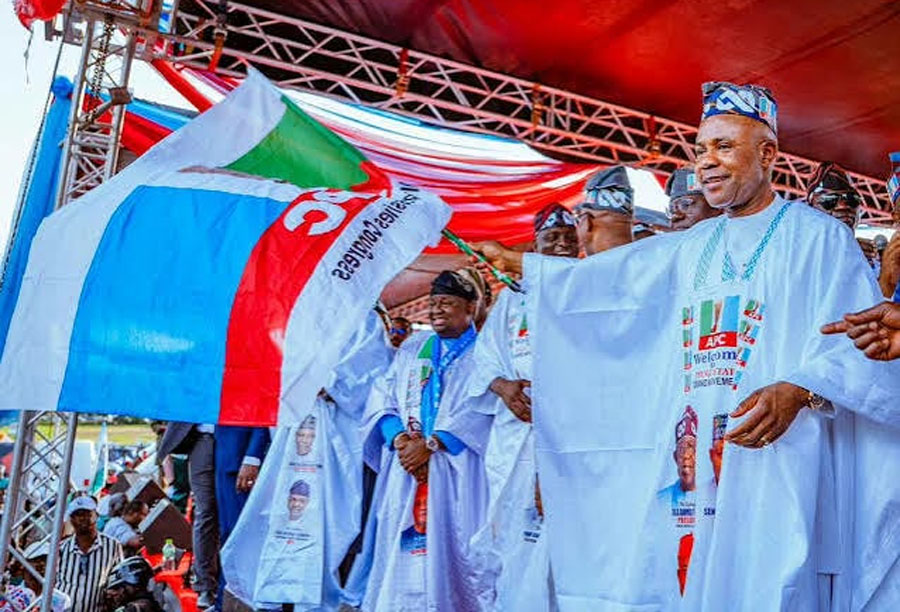
APC Sweeps Enugu LG Election, Wins All 17 Chairmanship, 260 Councillorship Seats
The All Progressives Congress (APC) has won all 17 local government area chairmanship seats and all 260 councillorship positions in the Enugu State local government election held on Saturday, September 26, 2026.
The results were declared on Sunday by the Chairman of the Enugu State Independent Electoral Commission (ENSIEC), Professor Christian Ngwu, after the completion of the collation exercise.
Ngwu announced that APC candidates secured the highest number of valid votes in all 17 local government areas and were consequently returned as elected chairmen. The commission also declared APC candidates winners of the 260 councillorship positions across the state’s 260 wards.
The outcome gives the APC control of the elected leadership of all 17 local government councils and the 260 political wards in Enugu State.
The election was contested by seven political parties, with voters choosing council chairmen and councillors across the state.
READ ALSO:
- Five Arrested Near US-Used RAF Fairford in UK Terror Probe
- Kano Upgrades Five PHCs to General Hospitals, Begins Assessment
- Iran Claims Capture of Second US Underwater Drone in Strait of Hormuz
Declaring the results, Ngwu said the successful candidates had satisfied the requirements of the law and recorded the highest number of valid votes in their respective constituencies.
He congratulated the winners and urged them to regard their election as a call to duty and an opportunity to serve the people. He also commended security agencies and other stakeholders who participated in the electoral process.
The declaration followed an election that recorded low voter turnout in several parts of the state. Reports from Enugu metropolis indicated that only a small number of voters were present at some polling units, while electoral materials arrived late at some locations.
The election also took place under significant movement restrictions. The state government and security agencies had restricted vehicular and human movement across Enugu on election day as part of measures to maintain security and ensure a peaceful exercise. Essential workers, accredited election officials and other authorised persons were exempted from the restriction.
Security agencies had also deployed personnel across the state’s 17 local government areas and 260 wards ahead of the election, while political parties, candidates and their supporters were urged to avoid electoral malpractice and actions capable of disrupting the exercise.
The 2026 result marks a change from the previous Enugu local government election held on September 21, 2024, when the Peoples Democratic Party (PDP) won all 17 chairmanship seats and all 260 councillorship positions.
With ENSIEC’s declaration and the presentation of certificates of return, the commission has concluded the announcement of the Enugu LG election results, confirming the APC’s sweep of the state’s 17 councils and 260 wards.
APC Sweeps Enugu LG Election, Wins All 17 Chairmanship, 260 Councillorship Seats
Politics
2027: Lagos APC Steps Up Grassroots Mobilisation Ahead of Atiku, Obi Challenge
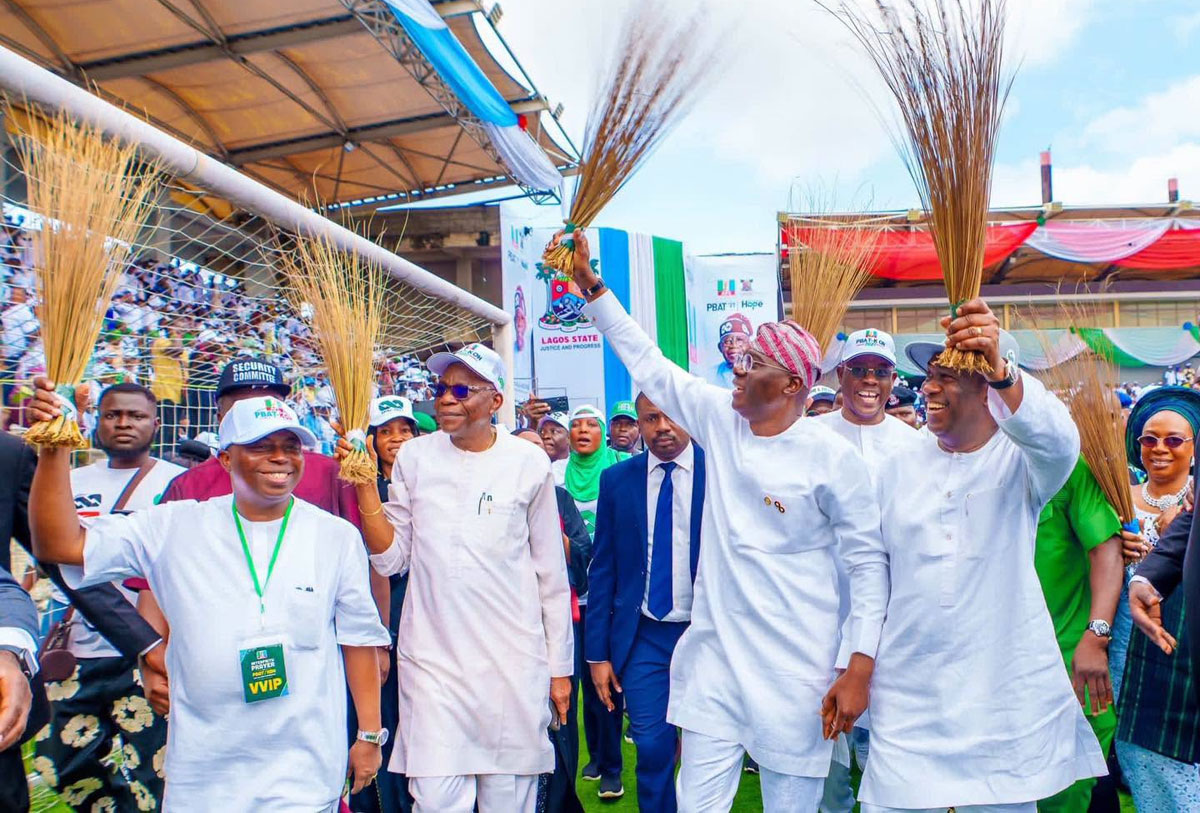
2027: Lagos APC Steps Up Grassroots Mobilisation Ahead of Atiku, Obi Challenge
The Lagos State chapter of the All Progressives Congress (APC) has intensified preparations for the 2027 general elections, with the party strengthening its grassroots mobilisation across senatorial districts, local government areas, wards and polling units.
The move comes as political parties continue to build their campaign structures ahead of the elections, with Atiku Abubakar and Peter Obi among the presidential candidates listed for the 2027 contest.
For the 2027 presidential election, Atiku Abubakar is the presidential candidate of the African Democratic Congress (ADC), while Peter Obi is the presidential candidate of the Nigeria Democratic Congress (NDC). Obi’s running mate is Rabiu Musa Kwankwaso, who is also contesting on the NDC ticket.
The Lagos APC leadership says its immediate priority is to strengthen the party’s organisation at the grassroots and maintain regular engagement with voters across the state.
APC Lagos Chairman Cornelius Ojelabi said the party would decentralise its mobilisation efforts, placing particular emphasis on activities at the polling-unit level.
He described the strategy as “Operation Man Your Polling Booth”, under which party members would take responsibility for mobilisation and coordination around their respective polling areas.
READ ALSO:
- Deputy Director’s Death: NLC Shuts Delta Secretariat, Begins Indefinite Strike
- 2027: NDC State Chairmen Reject Obi-Kwankwaso Movement’s Parallel Structures
- South Africa: 27 Killed, 26 Injured in Separate Mass Shootings
Ojelabi also said the party was targeting five million votes in Lagos from a projected electorate of about seven million. The five-million figure is an APC campaign target and should not be interpreted as an independently verified forecast of the party’s eventual votes.
The mobilisation drive follows the inauguration of a 1,235-member Lagos APC campaign council for the 2027 elections.
Governor Babajide Sanwo-Olu was named chairman of the campaign council, while Deputy Governor Obafemi Hamzat serves as deputy chairman and former Senator Musiliu Obanikoro as Director-General.
The wider campaign arrangement also includes prominent Lagos APC figures, including former governors Babatunde Fashola and Akinwunmi Ambode, who have been assigned roles within the party’s advisory and mobilisation structures.
The broader APC campaign structure also places emphasis on grassroots engagement and mobilisation, youth mobilisation, women mobilisation, community support and other areas.
Hamzat has urged party campaigners to rely on facts, data and verifiable records when engaging voters, saying campaign messages should focus on policies, projects and measurable achievements.
The Lagos APC has also directed its 2027 candidates to suspend overseas travel until after the election, with the party saying candidates should remain available for campaign and grassroots mobilisation activities.
Ojelabi has similarly called on party members to conduct their campaigns peacefully and avoid violence, hatred and other conduct that could undermine the electoral process.
The renewed Lagos APC grassroots mobilisation comes against the background of the 2023 presidential election in the state, when Peter Obi, then the Labour Party candidate, secured 582,454 votes, while Bola Tinubu of the APC polled 572,606 votes.
The political landscape has since changed significantly.
For the 2027 presidential election, Atiku is contesting under the ADC, while Obi is contesting under the NDC, with Kwankwaso as his running mate.
The new party alignments have also produced different campaign structures from those that existed during the 2023 election.
Within the NDC, the party has given Obi and Kwankwaso a role in nominating key officials of the presidential campaign council, while the separate Obi-Kwankwaso Movement has also developed its own support structure.
The relationship between the NDC’s formal structures and the Obi-Kwankwaso support movement has generated differing positions among party officials in some states, although other state chapters have said they are working harmoniously with the support groups.
Against this backdrop, the Lagos APC is focusing on consolidating its own grassroots political structure, with particular attention to senatorial districts, local government areas, wards and polling units.
Lagos remains a significant focus of national politics because of its large electorate and its importance in presidential and state-level elections.
As preparations continue, the APC and opposition parties are building their campaign machinery, mobilising supporters and seeking to strengthen their presence among voters across the state ahead of the 2027 elections.
2027: Lagos APC Steps Up Grassroots Mobilisation Ahead of Atiku, Obi Challenge
Politics
2027: NDC State Chairmen Reject Obi-Kwankwaso Movement’s Parallel Structures
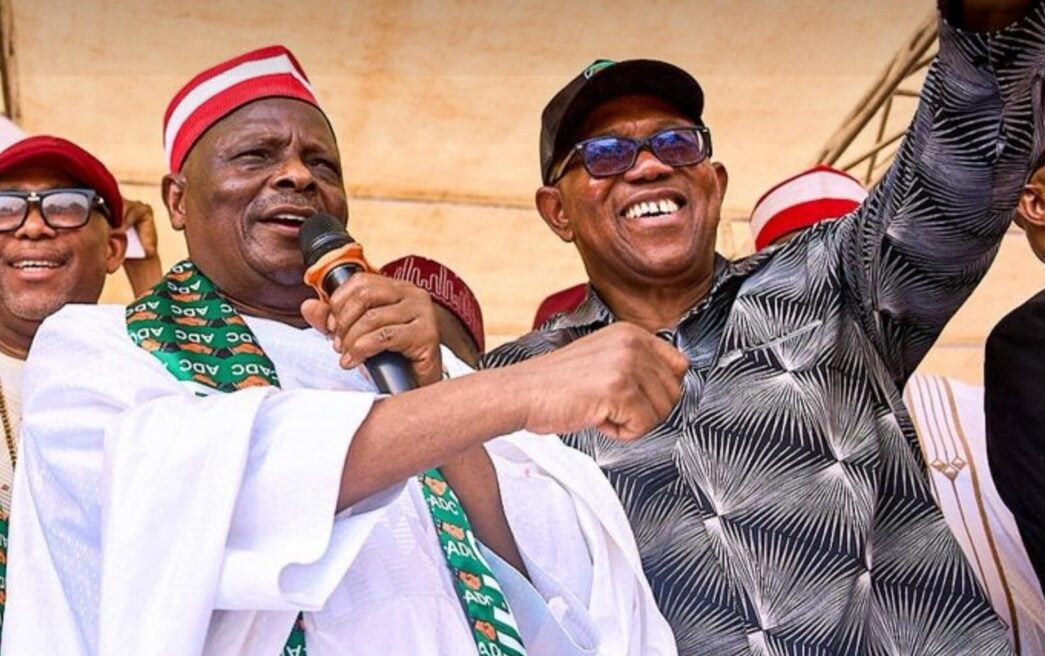
2027: NDC State Chairmen Reject Obi-Kwankwaso Movement’s Parallel Structures
State chairmen of the Nigeria Democratic Congress (NDC) have rejected the creation of parallel political structures by the Obi-Kwankwaso Movement (OK Movement) ahead of the 2027 general elections, insisting that support groups should not take over functions reserved for the political party.
The position comes amid an ongoing disagreement between the NDC and the OK Movement over the organisation of the campaign for the party’s presidential candidate, Peter Obi, and his running mate, Rabiu Musa Kwankwaso.
The dispute began after the OK Movement unveiled a 59-member Presidential Campaign Council on September 17. The structure included zonal and state coordinators as well as directors responsible for mobilisation, women’s affairs, strategy, security, legal affairs and other areas.
The movement named John Ughulu as Director-General of the campaign council and Saadatu Sani as secretary.
The NDC subsequently dissociated itself from the council, saying it was not authorised or constituted by the party. National Chairman Moses Cleopas said the public should disregard the structure and stressed that only the party’s appropriate organs could constitute or announce an official NDC campaign council.
READ ALSO:
- Abuja Police Arrest Woman, Two Hotel Workers Over Man’s Body Dumped Under Bridge
- Bauchi Police Arrest 26-Year-Old Man Over Rape Of 50-Year-Old Woman
- 2027: Lawal Challenges Wike To Clarify Allegiance Over Rainbow Coalition
The disagreement deepened after the OK Movement insisted that it was an independent political organisation with its own leadership, structures and internal processes.
The movement also said it would not collapse or surrender its national, state, local government and ward structures to the NDC.
However, NDC leaders have maintained that support groups can mobilise for the party’s candidates but should not establish structures that perform the functions of the political party or its official campaign organisation.
NDC National Leader Seriake Dickson has said support groups should complement the party rather than compete with it or operate as parallel structures.
The position has also received a response from Obi himself.
Obi, speaking on Arise TV’s Prime Time, said the NDC was the political party to which he and his supporters belonged, while the OK Movement, Obidient groups and Kwankwasiyya should operate as support groups.
He also said the creation of a presidential campaign council by a support group was not appropriate and disclosed that he had not been consulted before the OK Movement announced its 59-member council.
Despite the disagreement, the NDC has taken steps towards establishing its own official campaign machinery.
The party previously gave Obi and Kwankwaso authority to nominate key officials of the NDC Presidential Campaign Council, including the Director-General, Deputy Director-General for the North, campaign spokesman, deputy spokesman, Head of New Media and finance officials, in consultation with the party leadership.
The latest disagreement therefore centres on the distinction between the official NDC campaign structure and independent support organisations backing the Obi-Kwankwaso ticket.
While NDC state chairmen have insisted on the authority of the party’s structures, the OK Movement continues to maintain that it has the right to retain its own organisational framework.
The parties and support groups have not indicated that the dispute has affected the candidacy of Obi and Kwankwaso, but the disagreement has become a prominent issue in the organisation of the 2027 opposition campaign.
2027: NDC State Chairmen Reject Obi-Kwankwaso Movement’s Parallel Structures
-

 News2 days ago
Anambra Releases ₦473m Salary Arrears Document as Obi’s Debt Claim Sparks Fresh Dispute
-
 News2 days ago
Keyamo: ₦70,000 Minimum Wage No Longer Enough as Cost of Living Soars
-
 metro2 days ago
EFCC Chairman Raises Alarm Over Alleged Theft of Nigeria’s Public Funds
-
 Sports2 days ago
AFCON 2027 Qualifier: Nigeria Fight Back to Beat Madagascar 2-1 in Uyo
-
 Politics2 days ago
2027: Otti Explains Why He Supports Tinubu Despite Remaining in Labour Party
-
 metro2 days ago
Viral Anti-Obi Video: Lagos Police Move Against Inspector Osumah Frank
-
 metro2 days ago
Umahi Announces First Niger Bridge Reopening Next Week, Orders Tinubu Pictures
-

 metro2 days ago
Anambra Police Arrest 25-Year-Old Suspect Linked to 2023 Kidnap, Murder