
Politics
2027 Presidency: NNPP Bars Kwankwaso From Presidential Ticket, Opens Race to Other Aspirants
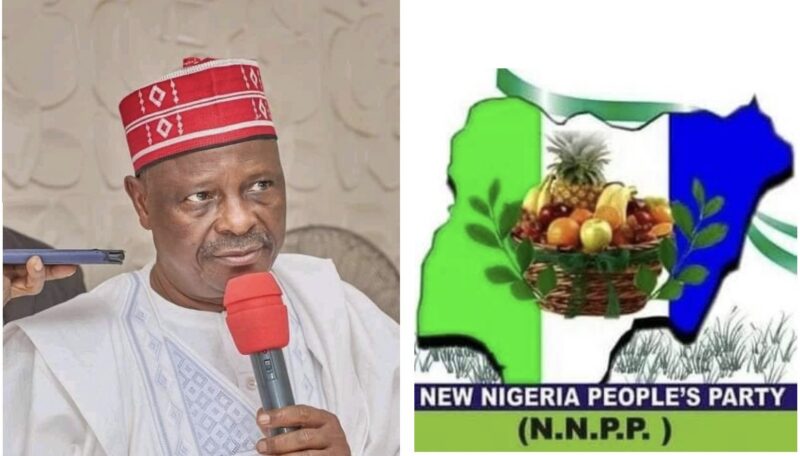
2027 Presidency: NNPP Bars Kwankwaso From Presidential Ticket, Opens Race to Other Aspirants
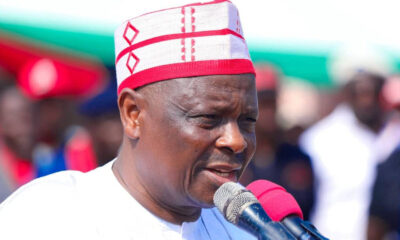
The New Nigeria Peoples Party (NNPP) has declared that its 2023 presidential candidate, Sen. Rabiu Kwankwaso, will not be allowed to contest for the party’s presidential ticket in the 2027 general election.
The party’s National Secretary, Mr Ogini Olaposi, made the position clear in a statement issued on Sunday in Lagos, stressing that the NNPP’s 2027 ticket would be open only to bonafide party members through a transparent and competitive process.
Olaposi explained that Kwankwaso’s ineligibility stemmed from unresolved disputes between the NNPP and the Kwankwasiya Movement, noting that the Memorandum of Association entered into by both groups in 2022 expired after the 2023 general elections.
According to him, alleged anti-party activities by key figures within the Kwankwasiya Movement after the presidential election led to the expulsion of top members, including Kwankwaso and Elder Buba Galadima, a decision he said had not been reversed.
READ ALSO:
- AFCON 2025: Petković Admits Super Eagles’ Superiority After Nigeria Defeat Algeria 2-0
- Tehran Threatens Military Retaliation Amid Mass Protests, U.S. Warnings
- Saudi Charity Commissions 700-Capacity Orphanage, 5,000-Seater Mosque in Kano
“The NNPP ticket for 2027 is open to all members, unlike in 2023 when it was solely given to Kwankwaso,” Olaposi said.
He disclosed that the party already has intending presidential aspirants, including two from the NNPP diaspora, adding that the party remains open to more contenders and political alliances ahead of 2027.
Olaposi also dismissed claims attributed to Kwankwaso regarding conditions for joining another political party, describing them as unrealistic.
“It is laughable that Kwankwaso is saying that if he must decamp to any political party, including the APC, they must offer him their presidential ticket,” he said.
The NNPP scribe further argued that Kwankwaso lacks the nationwide political appeal to make such demands, insisting that President Bola Tinubu and the All Progressives Congress (APC) would approach the 2027 elections based on governance performance rather than individual influence.
He claimed that Kwankwaso’s political influence in Kano State had diminished, citing the defection of several key Kwankwasiya members to the APC.
Olaposi urged political parties interested in alliances ahead of 2027 to engage only with the NNPP’s recognised National Working Committee, which he said has been endorsed by the courts.
“Kwankwaso and his group remain expelled and cannot negotiate for the NNPP. The NNPP National Working Committee will decide all alliances in 2027,” he stated.
2027 Presidency: NNPP Bars Kwankwaso From Presidential Ticket, Opens Race to Other Aspirants








Politics
Atiku, Other Opposition Leaders Reject Tinubu‑Signed Electoral Act 2026

Atiku, Other Opposition Leaders Reject Tinubu‑Signed Electoral Act 2026
Nigerian opposition leaders, including former Vice‑President Atiku Abubakar, Peter Obi, Rotimi Amaechi, and David Mark, have rejected the recently amended Electoral Act 2026 signed into law by President Bola Ahmed Tinubu, describing it as a threat to free, fair, and credible elections ahead of the 2027 general election.
The opposition bloc, comprising major parties like the Peoples Democratic Party (PDP), New Nigeria Peoples Party (NNPP), and African Democratic Congress (ADC), criticized the speed and process through which the National Assembly passed the legislation, warning that it disproportionately benefits the ruling All Progressives Congress (APC).
At a press briefing in Abuja, Ajuri Ahmed of the NNPP alleged that the law positions President Tinubu as the sole viable presidential contender while weakening transparency. He highlighted the inclusion of a manual results transmission clause, questioning why, when statistics show results can be electronically transmitted from every polling unit, the provision was retained. (african.business)
Ahmed also cited the recent FCT Area Council elections as evidence of potential bias in the act, saying the new INEC Chairman’s performance revealed gaps in election management that could compromise future polls. He questioned the rush with which President Tinubu signed the act, contrasting it with delays on other legislative bills.
READ ALSO:
- Kaduna Residents Storm Govt House, Demand Probe of El‑Rufai
- Fatal Keffi Road Accident: Driver Avoiding FRSC Patrol Causes 6 Deaths
- Ex‑NNPC GM Jailed for 87 Months in $2.1m Bribery Case
Opposition Demands
- Fresh Amendment of Electoral Act: Opposition leaders insist that the National Assembly should review and amend the act to eliminate provisions that could undermine election integrity.
- Mandatory Real-Time Electronic Results Transmission: They emphasized that all polling unit results should be transmitted electronically to prevent manipulation and fraud.
- Transparent Candidate Nomination Processes: They called for reforms ensuring fair access for all parties, arguing current provisions favor the ruling APC. (punchng.com)
The opposition stressed that their objections are non-partisan, aimed solely at safeguarding Nigeria’s democracy, protecting voters’ rights, and ensuring credible elections in 2027. They also urged civil society groups, rights organizations, and Nigerians to support efforts for transparent and accountable electoral reforms.
The ruling APC has defended the amendments, claiming they clarify electoral procedures and strengthen the legal framework for elections. However, critics maintain that the manual results transmission provision leaves room for disputes and potential manipulation, threatening public confidence in the electoral process. (independent.ng)
The controversy surrounding the Electoral Act 2026 amendment continues to deepen political tensions in Nigeria, with the opposition insisting that fresh legislative reforms are necessary to guarantee fair and credible elections.
Atiku, Other Opposition Leaders Reject Tinubu‑Signed Electoral Act 2026
Politics
‘Peter Obi Fuels Political Tension in Edo’ — Govt Responds After ADC Attack in Benin City
‘Peter Obi Fuels Political Tension in Edo’ — Govt Responds After ADC Attack in Benin City
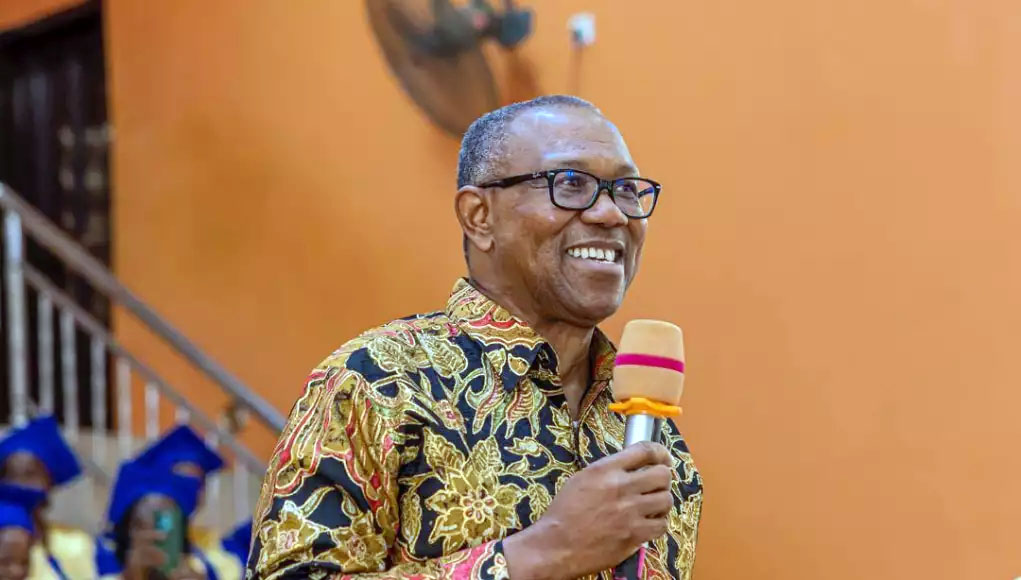
The Edo State Government has strongly reacted to a recent attack on supporters of the African Democratic Congress (ADC) in Benin City, accusing former presidential candidate Peter Obi of fanning political instability in the state.
Speaking during a live interview on Channels Television, the Edo State Commissioner for Information, Kassim Afegbua, described Obi as a “problem in Edo politics”, claiming that his involvement in any political party often triggers internal conflicts and public disorder. “Peter Obi is a problem to the politics of Edo because any party he belongs to is crisis, crisis, crisis,” Afegbua said.
The statement came after gunmen reportedly disrupted an ADC-related gathering, including attacks near party offices and the residence of former APC national chairman John Odigie-Oyegun, causing minor injuries and property damage. The commissioner alleged that the event was not properly coordinated with security agencies, and suggested that elements within the ADC may have provoked unrest under the guise of political mobilization.
READ ALSO:
- Tinubu Urges Senate to Amend Constitution for State Police Amid Rising Insecurity
- Bill Gates Apologises for Epstein Ties, Admits Two Extramarital Affairs
- Five Children Die, Eight Hospitalised After Ramadan Meal in Taraba
Afegbua stressed that the state government remains committed to maintaining peace and denied any involvement in the attack. He confirmed that security agencies are investigating the incident, and anyone found culpable would face prosecution. The commissioner also warned that Edo would not become a theatre for political confrontation ahead of upcoming elections.
The attack has been widely condemned. ADC supporters, known as Obidients, accused the Edo government of intimidation and political bias, insisting that the gathering was peaceful before being disrupted by unidentified assailants. Civil society groups and opposition figures, including former Vice President Atiku Abubakar, also condemned the violence, calling for transparent investigations and accountability.
Governor Monday Okpebholo reiterated the state’s commitment to peace and security, attributing the incident to internal party disputes within the ADC rather than a politically targeted attack. He urged all political actors to exercise restraint and avoid exploiting local tensions for partisan advantage.
Observers note that the incident highlights rising political tensions in Edo State as the 2027 elections approach. Analysts warn that unchecked hostility and violent clashes could undermine democratic engagement, threaten public safety, and deepen mistrust between political parties and the electorate.
‘Peter Obi Fuels Political Tension in Edo’ — Govt Responds After ADC Attack in Benin City
Politics
Adamawa: Speaker, 13 Lawmakers Quit PDP Ahead of Fintiri’s Expected Defection to APC

Adamawa: Speaker, 13 Lawmakers Quit PDP Ahead of Fintiri’s Expected Defection to APC
The political atmosphere in Adamawa State has shifted dramatically following the resignation of the Speaker of the State House of Assembly, Bathiya Wesley, and 13 other lawmakers from the Peoples Democratic Party (PDP).
The mass exit, announced on the floor of the House during plenary, is widely seen as a strategic move to pave the way for the anticipated defection of Governor Ahmadu Umaru Fintiri to the All Progressives Congress (APC). Political insiders say the coordinated resignations are intended to remove internal party obstacles ahead of the governor’s expected switch, which has been the subject of intense speculation for months.
Governor Fintiri is believed to have grown increasingly dissatisfied with the PDP following sharp disagreements with fellow PDP governors during the party’s last congress in Ibadan, Oyo State. The fallout from that meeting reportedly weakened his alignment with the party’s national leadership and strengthened discussions around a possible realignment.
Speculation intensified further after Bola Ahmed Tinubu recently visited Adamawa to commission projects executed by the Fintiri administration. The visit was also reported to have included high-level political discussions, reinforcing claims that a defection plan may be at an advanced stage.
READ ALSO:
- African Virologists Elected to Lead World Society for Virology
- Outrage as US Lawmakers Recommend Repeal of Sharia Codes in Nigeria
- FG Tells Court NAFDAC Fully Empowered to Enforce Sachet Alcohol Ban
Those whose resignations were announced alongside that of the Speaker include the Deputy Speaker, Mohammed Buba Jidjiwa (Jada–Mbulo), Kefas Calvin (Toungo), Bulus Geoffrey (Leko–Koma), Haruna Jilantikiri (Madagali), Kefas Emmanuel (Song), Ahmed Jingi Belel (Maiha), Moses Yerima Zah (Michika), Kate Raymond Mamuno (Demsa), Pwamwakeno Mackondo (Numan), Adun John Alaba (Uba–Gaya), Bulus Kantom (Shelleng), Musa Mahmud Kallamu (Mayo Belwa), and Japhet Hammanjabu (Verre). The lawmaker representing Lamurde State Constituency, Bauna Myandiasa, was notably absent during the plenary session.
Speaking to journalists after the sitting, Musa Mahmud Kallamu, Chairman of the House Committee on Information, said the lawmakers are currently consulting with their constituents, stressing that their final political destination will largely depend on the decision of Governor Fintiri. He noted that the group is keen on moving in a unified direction once consultations are concluded.
Reacting to the development, the APC’s Public Relations Officer in Adamawa, Mohammed Abdullahi, described the unfolding events as evidence that President Tinubu’s administration is attracting politicians across party lines, including members of opposition parties.
Analysts say if Governor Fintiri formally defects, the APC would control 30 states nationwide, leaving the PDP with only three governors, while the Labour Party, Accord Party, and APGA would retain one governor each. Such a shift, observers note, would represent one of the most consequential political realignments in Adamawa since 2015, with significant ripple effects across the North-East and Nigeria’s broader political landscape.
As of press time, Governor Fintiri has yet to make an official declaration, but indications from political circles suggest a decision may be imminent.
Adamawa: Speaker, 13 Lawmakers Quit PDP Ahead of Fintiri’s Expected Defection to APC

-

 Entertainment2 days ago
Nollywood Actor Okemesi Confirmed Dead After Brief Illness
-

 News3 days ago
BREAKING: IGP Kayode Egbetokun Steps Down as Tinubu Names Tunji Disu as New Police Chief
-

 metro1 day ago
Frank Mba, Senior DIGs to Exit Police Service After Disu’s Appointment
-
 metro1 day ago
African Virologists Elected to Lead World Society for Virology
-

 News1 day ago
BREAKING: Tinubu Decorates Tunji Disu as Acting Inspector‑General of Police
-
 News2 days ago
Mother of Three Dies by Suicide After Fiance’s Family Rejects Marriage in Ijebu-Ode
-

 metro1 day ago
Abroad-Based Nigerian Woman Kneels with Children in Emotional Tribute to Husband (VIDEO)
-

 News3 days ago
U.S. Congress Submits Report to Trump on Alleged Christian Persecution in Nigeria