

Sports
2030 World Cup: Tournament to hold across six countries in three continents
2030 World Cup: Tournament to hold across six countries in three continents
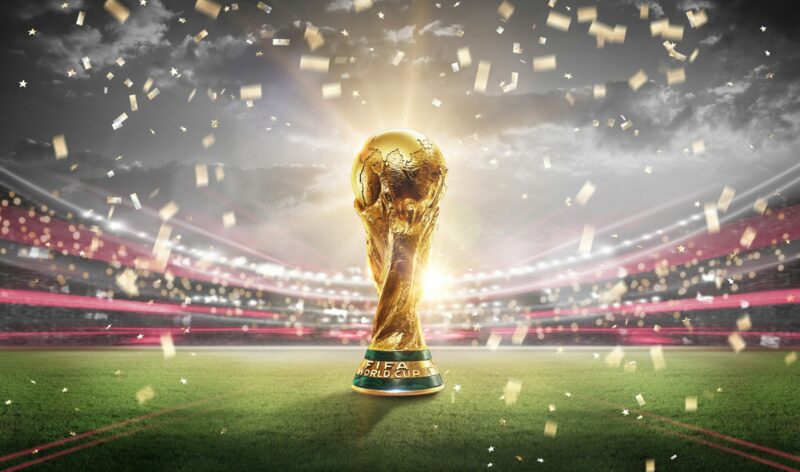
THE 2030 World Cup will be held across six countries in three continents, Fifa has confirmed.
Spain, Portugal and Morocco have been named as the co-hosts, with the opening three matches taking place in Uruguay, Argentina and Paraguay.
The opening matches in South America are to mark the World Cup’s centenary as it will be 100 years since the inaugural tournament in Montevideo.
The decision is set to be ratified at a Fifa congress next year.
Fifa also confirmed only bids from countries from the Asian Football Confederation and the Oceania Football Confederation will be considered for the 2034 finals.
Following that decision, Saudi Arabia announced it would be bidding to host the tournament in 2034 for the first time.
Fifa’s decision to host the tournament across multiple continents has drawn criticism, with one supporter’s body accusing football’s world governing body of engaging in a “cycle of destruction against the greatest tournament on Earth”.
“[It’s] horrendous for supporters, disregards the environment and rolls the red carpet out to a host for 2034 with an appalling human rights record. It’s the end of the World Cup as we know it,” said Football Supporters Europe.
Fifa president Gianni Infantino said: “In a divided world, Fifa and football are uniting.
“The Fifa Council, representing the entire world of football, unanimously agreed to celebrate the centenary of the Fifa World Cup, whose first edition was played in Uruguay in 1930, in the most appropriate way.
READ ALSO:
- Pastor, brother sentenced to death for murder in Akwa Ibom
-
JUST IN: Senate confirms ministerial nominee who slumped during screening, two others
-
[BREAKING] Mohbad: Lagos state police command declares Primeboy wanted
“In 2030, we will have a unique global footprint, three continents – Africa, Europe and South America – six countries – Argentina, Morocco, Paraguay, Portugal, Spain and Uruguay – welcoming and uniting the world while celebrating together the beautiful game, the centenary and the Fifa World Cup.”
Montevideo in Uruguay, the city which hosted the first World Cup match in 1930, is poised to stage the opening game in 2030 with matches in Argentina and Paraguay to follow.
The rest of the 48-team tournament will then move to north Africa and Europe.
The change of hemispheres means World Cup teams could find themselves playing in two different seasons at the same tournament.
If the 2030 proposal is approved, Morocco would become only the second African nation to host a World Cup, after South Africa in 2010.
Spain has been named as joint-host weeks after former football federation chief Luis Rubiales resigned following criticism for kissing Jenni Hermoso at the Women’s World Cup.
Appearing in court, Rubiales was given a restraining order by a Spanish judge, but denied sexually assaulting Hermoso.
Spain last hosted the World Cup in 1982, with Italy winning the tournament for the third time.
Portugal has never hosted the tournament, but Euro 2004 was held there.
As in previous World Cups, Uruguay, Argentina, Paraguay, Spain, Portugal and Morocco will all qualify automatically as co-hosts.
Fifa’s decision to host the tournament across multiple continents comes after the governing body ‘made false statements’ about the reduced environmental impact of the 2022 World Cup in Qatar.
Fifa said the tournament would be the first “fully carbon-neutral World Cup” but could not provide proof the claims were accurate.
In November, BBC Sport reported how environmentalists called Fifa’s carbon-neutral claim “dangerous and misleading” and warned the tournament could have had a carbon footprint three times greater than stated.
READ ALSO:
- BREAKING: Ministerial nominee Balarabe faints during screening
-
BREAKING: Presidency finally breaks silence on Tinubu submitting forged certificate to INEC
-
Tinubu attended Chicago varsity, registrar testifies in US court
Freddie Daley, a researcher for Global Economy Policy at the University of Sussex, says Fifa’s decision to expand the World Cup across three continents is “concerning” after its false promises on reducing carbon footprint.
“A World Cup of this size and scale will involve a lot of air travel, a lot of fan travel, a lot of athlete travel and I am very unsure whether Fifa will be able to deliver this in a sustainable and climate friendly way,” said Daley.
“I think Fifa’s actions so far point towards them not being very credible on what they have promised to do in regards to climate and climate action.
“Fifa as an organisation has huge responsibility to citizens around the world to help educate on climate, raise awareness and also bring them on that journey to net zero as part of the energy transition.
“Announcements like this today make me question their integrity on climate and their support for the energy transition.”
Frank Huisingh, founder of Fossil Free Football, a group aiming to stop the use of fossil fuels in the sport, said the move was “outrageous but also not surprising”.
“We know Fifa’s track record and we know they want to go for big tournaments with a lot of fan travel and a lot of emissions,” he said.
“It is just a very bad idea.”
“This is Fifa showing complete disregard for fans as fans and fans as humans,” said Katie Cross, CEO and founder of Pledgeball, a fan charity which campaigns for greater sustainability in football.
Saudi Arabia’s decision to bid for the 2034 World Cup is in line with its initiative to become a global leader in sport after hosting a number of events in the country since 2018, involving football, Formula 1, golf and boxing.
But the Gulf kingdom has been accused of investing in sport and using high-profile events to improve its international reputation – a process known as sportswashing.
READ ALSO:
- BREAKING: Senate resumes plenary, expected to screen 3 ministerial nominees
-
Police officer dismissed for allegedly raping 16-year-old girl in police detention
-
Suspect in kidnapping of 9-year-old Charlotte Sena in upstate New York identified
In a recent interview with Fox News, Saudi Arabia’s Crown Prince Mohammed bin Salman said he does not care about the accusations.
“If sportswashing is going to increase my GDP by 1%, then we’ll continue doing sportswashing,” Bin Salman said.
Prince Abdulaziz bin Turki bin Faisal, Saudi Arabia’s Olympic and Paralympic chief, says the World Cup bid “constitutes an important and natural step in our journey as a country passionate about football”.
Fifa also announced Russia will be readmitted to its under-17 competitions for the first time since the country’s invasion of Ukraine 19 months ago.
The move follows Uefa’s decision last week to allow Russian sides to compete at U17 level in European competitions after they were suspended when the invasion began in February 2022.
Fifa said the decision will be conditional on teams playing as the “Football Union of Russia” rather than Russia, without the country’s flag or anthem, and wearing a neutral kit.
Uefa’s move drew criticism from the English Football Association which said it “did not support” the decision, adding “our position remains that England teams won’t play against Russia”.
But Uefa said boys and girls should not be punished for the actions of adults, adding in a statement: “Football should never give up sending messages of peace and hope.”
BBC







Sports
Teenager dies, several injured as Spain World Cup celebration ends in tragedy
Teenager dies, several injured as Spain World Cup celebration ends in tragedy
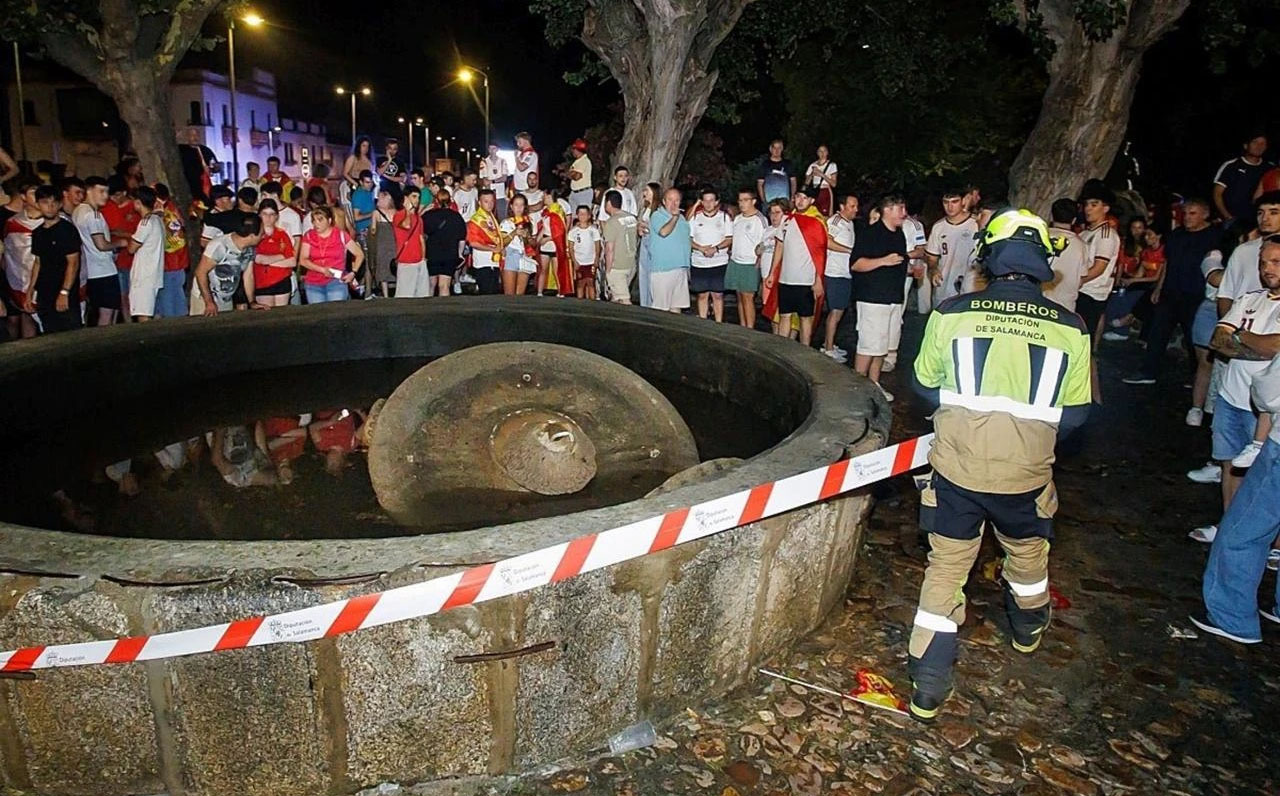
What began as jubilant celebrations of Spain’s 2026 FIFA World Cup victory ended in heartbreak after a 13-year-old boy was killed and several others were injured when a public fountain collapsed in the western Spanish town of Ciudad Rodrigo.
The tragic incident occurred shortly after 12:30 a.m. local time on Monday as hundreds of football supporters gathered around the Árbol Gordo fountain to celebrate Spain’s 1-0 extra-time victory over Argentina in the World Cup final.
According to emergency services, multiple distress calls were received after part of the fountain gave way while numerous fans had climbed onto the structure during the celebrations. The collapse sent people tumbling to the ground and triggered panic among the crowd.
The 13-year-old victim was rescued from the rubble and rushed to a nearby medical facility but later died from injuries sustained in the accident. Several other people were also injured, with local authorities confirming that some victims required hospital treatment.
In a statement, the Ciudad Rodrigo City Council expressed deep sorrow over the tragedy and extended its condolences to the family of the deceased teenager.
“What should have been a celebration of Spain’s team in the football World Cup turned into tragedy,” the municipality said.
READ ALSO:
- BREAKING: Captured Ansaru leaders plead guilty to 32 terrorism charges
- Troops arrest suspected Sudanese terrorist fighter, Ghanaian woman in Borno
- Six dead, 15 rescued as Jigawa canoe accident leaves several missing
The local authority also declared three days of official mourning, with flags to be flown at half-mast in memory of the young victim.
Authorities have launched an investigation into the collapse to determine its exact cause. Preliminary findings indicate that the historic fountain may have failed under the weight of the large number of supporters who climbed onto it during the spontaneous celebrations. Officials said they are also examining the structural condition of the monument and the circumstances that led to the accident.
The tragedy unfolded just hours after Spain secured its second FIFA World Cup title and its first since 2010, defeating Argentina 1-0 after extra time in the final played at MetLife Stadium in the United States. Ferran Torres scored the decisive goal in extra time to hand Spain another historic triumph on football’s biggest stage.
The victory sparked massive celebrations across the country, with thousands of supporters filling streets, city squares and public landmarks in Madrid, Barcelona, Valencia, Seville and several other cities. Fans waved Spanish flags, sang victory songs and celebrated late into the night as the national team ended a 16-year wait to reclaim the World Cup trophy.
However, the fatal accident in Ciudad Rodrigo cast a shadow over the nationwide festivities and renewed concerns about public safety during large sporting celebrations. Authorities have urged football supporters to celebrate responsibly and avoid climbing fountains, monuments and other public structures that are not designed to support large crowds.
The incident has also reignited discussions about crowd management and emergency planning during major public events, with safety experts calling for stricter enforcement of public safety measures to prevent similar tragedies in the future.
As investigations continue, tributes have poured in for the young victim, while Spain’s World Cup celebrations have been tempered by grief in Ciudad Rodrigo, where residents are mourning the loss of a life during what should have been a moment of national joy.
Teenager dies, several injured as Spain World Cup celebration ends in tragedy
Sports
Messi’s final World Cup ends in heartbreak as Spain sweep title, FIFA’s top individual awards
Messi’s final World Cup ends in heartbreak as Spain sweep title, FIFA’s top individual awards
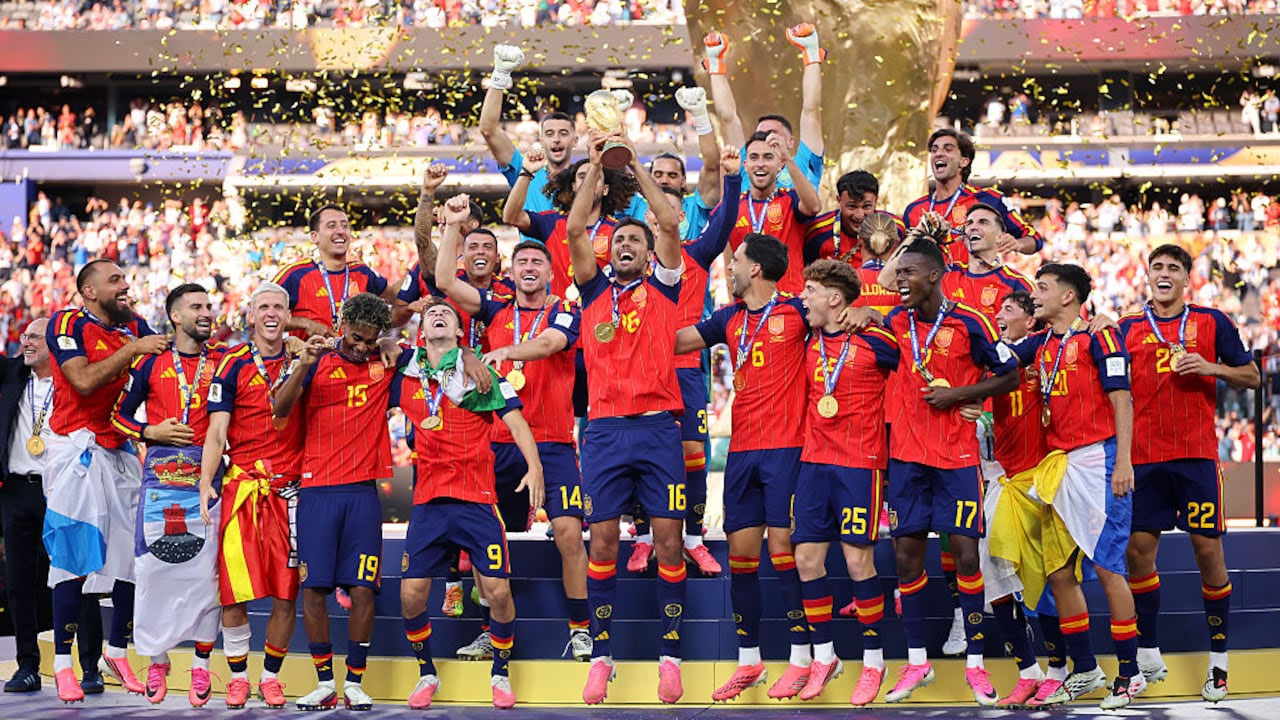
Spain crowned a historic 2026 FIFA World Cup campaign by sweeping the tournament’s major individual awards after defeating Argentina 1-0 after extra time in Sunday’s final at MetLife Stadium, New Jersey.
Luis de la Fuente’s side lifted their second FIFA World Cup title, 16 years after their maiden triumph in South Africa in 2010, and etched their name into football history by becoming the first team to win the tournament after conceding just one goal throughout the competition.
The decisive moment came in extra time when Ferran Torres struck the winner to seal Spain’s memorable victory over Argentina in a tightly contested final. The triumph capped a remarkable month-long campaign built on tactical discipline, defensive resilience and attacking efficiency, with La Roja emerging as the standout team of the tournament.
Spain’s dominance was further reflected in the post-tournament awards, with three of their players claiming four of the five major honours presented by FIFA.
Manchester City midfielder Rodri was named the winner of the Golden Ball as the tournament’s best player after delivering a series of commanding performances throughout Spain’s unbeaten campaign. The midfield maestro controlled matches with his composure, vision, passing accuracy and leadership, providing the platform for Spain’s success from the heart of midfield. The award added another prestigious honour to Rodri’s growing collection of individual accolades and reinforced his reputation as one of the world’s finest midfielders.
READ ALSO:
- Spain dethrone Argentina in extra time to lift 2026 FIFA World Cup trophy
- Just in: Senegal’s President Diomaye Faye Emerges New ECOWAS Chairman
- 16 soldiers killed as terrorists attack military base in Niger Republic
France captain Kylian Mbappé won the Golden Boot after finishing as the tournament’s highest scorer with 10 goals in eight appearances. Mbappé secured the award after another prolific World Cup campaign, becoming the first player to finish as the tournament’s top scorer in two consecutive editions. The French forward also extended his remarkable World Cup record, taking his career tally to 22 goals to become the highest-scoring player in the history of the men’s FIFA World Cup.
Spain goalkeeper Unai Simón received the Golden Glove following an outstanding tournament between the posts. The Athletic Bilbao shot-stopper conceded only one goal throughout Spain’s victorious campaign, kept seven clean sheets and set a new World Cup record by going 650 consecutive minutes without conceding. His commanding presence, crucial saves and calm distribution proved instrumental in Spain’s historic defensive record.
Barcelona teenager Pau Cubarsí was named the Best Young Player after emerging as one of the biggest revelations of the tournament. The 19-year-old centre-back displayed remarkable maturity, composure and tactical awareness throughout the competition, helping Spain keep some of the world’s most dangerous attacking players quiet on their way to lifting the trophy.
The FIFA Fair Play Award was presented to the Netherlands in recognition of the team’s exemplary discipline and sporting conduct throughout the tournament.
Argentina, led by Lionel Messi in what is widely expected to be his final World Cup appearance, finished as runners-up after falling to Spain in the final. England claimed third place after defeating France 6-4 in an entertaining third-place play-off.
Spain’s triumph will be remembered as one of the greatest campaigns in FIFA World Cup history. Besides reclaiming football’s biggest prize for the first time since 2010, La Roja combined attacking quality with extraordinary defensive consistency, conceding only once in eight matches while collecting the majority of the tournament’s top individual honours.
Full list of 2026 FIFA World Cup award winners
- Champions: Spain
- Runners-up: Argentina
- Third place: England
- Fourth place: France
- Golden Ball (Best Player): Rodri (Spain)
- Golden Boot (Top Scorer): Kylian Mbappé (France) – 10 goals
- Golden Glove (Best Goalkeeper): Unai Simón (Spain)
- Best Young Player: Pau Cubarsí (Spain)
- FIFA Fair Play Award: Netherlands
Messi’s final World Cup ends in heartbreak as Spain sweep title, FIFA’s top individual awards
Sports
Spain dethrone Argentina in extra time to lift 2026 FIFA World Cup trophy
Spain dethrone Argentina in extra time to lift 2026 FIFA World Cup trophy
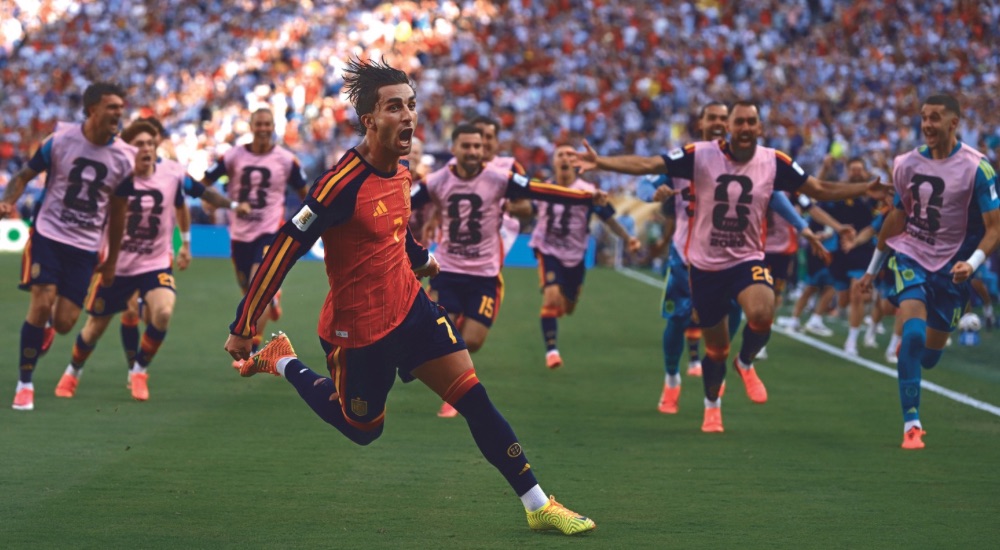
Spain have been crowned 2026 FIFA World Cup champions after edging Argentina 1-0 in a dramatic extra-time victory at MetLife Stadium in New Jersey, ending the South American nation’s title defence and securing their second World Cup trophy.
A decisive strike from substitute Ferran Torres in the second half of extra time proved enough to separate the two sides after 90 minutes of disciplined defending, tactical battles and missed opportunities.
The victory marks Spain’s first FIFA World Cup triumph since lifting the trophy in South Africa in 2010, reaffirming the country’s status among international football’s elite and highlighting the success of a talented new generation led by Lamine Yamal, Pedri, Nico Williams and Ferran Torres.
Spain entered the final in impressive form after a series of commanding performances throughout the tournament and continued to dominate possession against Argentina. Luis de la Fuente’s side dictated the tempo from the opening whistle, patiently building attacks while limiting the defending champions to very few clear scoring opportunities.
Despite Spain’s dominance, Argentina goalkeeper Emiliano Martínez produced several important saves to frustrate the European champions. He denied efforts from Lamine Yamal and Dani Olmo during regulation time, ensuring the match remained level despite sustained Spanish pressure.
READ ALSO:
- 16 soldiers killed as terrorists attack military base in Niger Republic
- Choirmaster Jailed 25 Years for Raping Teenager During Deliverance in Anambra
- New York Mayor Says He Is Exploring Possible Arrest of Netanyahu During UN Visit
Argentina, seeking to retain the World Cup title they won in 2022, struggled to establish control in midfield and found it difficult to create meaningful chances for captain Lionel Messi and the attacking line. Spain’s organised defence successfully restricted Argentina’s movement and prevented the holders from finding their usual attacking rhythm.
The contest took another dramatic turn late in normal time when Enzo Fernández received a second yellow card and was sent off after a mistimed challenge, forcing Argentina to play the remainder of the match with 10 players.
Even with a numerical disadvantage, Argentina defended resolutely and forced the game into extra time, where Spain continued to press for the breakthrough.
The decisive moment arrived early in the second period of extra time when Ferran Torres capitalised on a well-worked attacking move to fire the ball past Martínez, sparking celebrations among Spanish players and supporters.
Argentina attempted a late response, but Spain remained composed defensively and controlled possession during the closing stages to protect their slender advantage until the final whistle.
The victory completes an outstanding campaign for Spain, who combined defensive discipline, technical quality and attacking creativity throughout the tournament. Their triumph also reflects the emergence of a new generation of Spanish footballers capable of competing successfully on the biggest international stage.
For Ferran Torres, the winning goal capped an impressive tournament and further strengthened his reputation as one of Spain’s most dependable attacking players.
Meanwhile, the defeat ends Argentina’s hopes of becoming the first nation in more than six decades to successfully defend the FIFA World Cup title. The final could also represent the last World Cup appearance for Lionel Messi, whose international career includes a World Cup title, multiple Copa América triumphs and numerous individual honours.
Spain’s latest success adds another major trophy to an already remarkable era for the country’s football programme and signals a bright future under a squad filled with emerging stars.
Spain dethrone Argentina in extra time to lift 2026 FIFA World Cup trophy
-
 metro1 day ago
He Was Not Like That Before — Father Says 2-Year-Old Changed After Kidnapping
-

 metro4 hours ago
Oyo High Court affirms Muslim students’ right to wear hijab in public schools
-
 metro1 day ago
Meet Oyinkansola Badejo-Okusanya: Only Second Woman to Lead NBA in 93 Years
-
 Sports22 hours ago
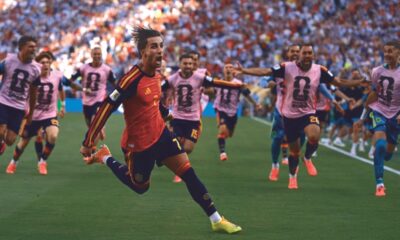
Spain dethrone Argentina in extra time to lift 2026 FIFA World Cup trophy
-

 metro6 hours ago
JUST IN: Four police officers arrested for allegedly extorting ICPC Chairman
-
 Business3 days ago
Dangote Refinery Raises $2.5bn, Eyes Africa’s Biggest IPO in August
-

 metro2 days ago
We Passed Through Hell: Oyo Teacher Recounts 56 Days of Horror in Kidnappers’ Den
-

 Sports3 days ago
Messi says facing Lamine Yamal in World Cup final after iconic baby photo is ‘crazy’