
Business
No budgetary provision for COVID-19 vaccines – Finance minister
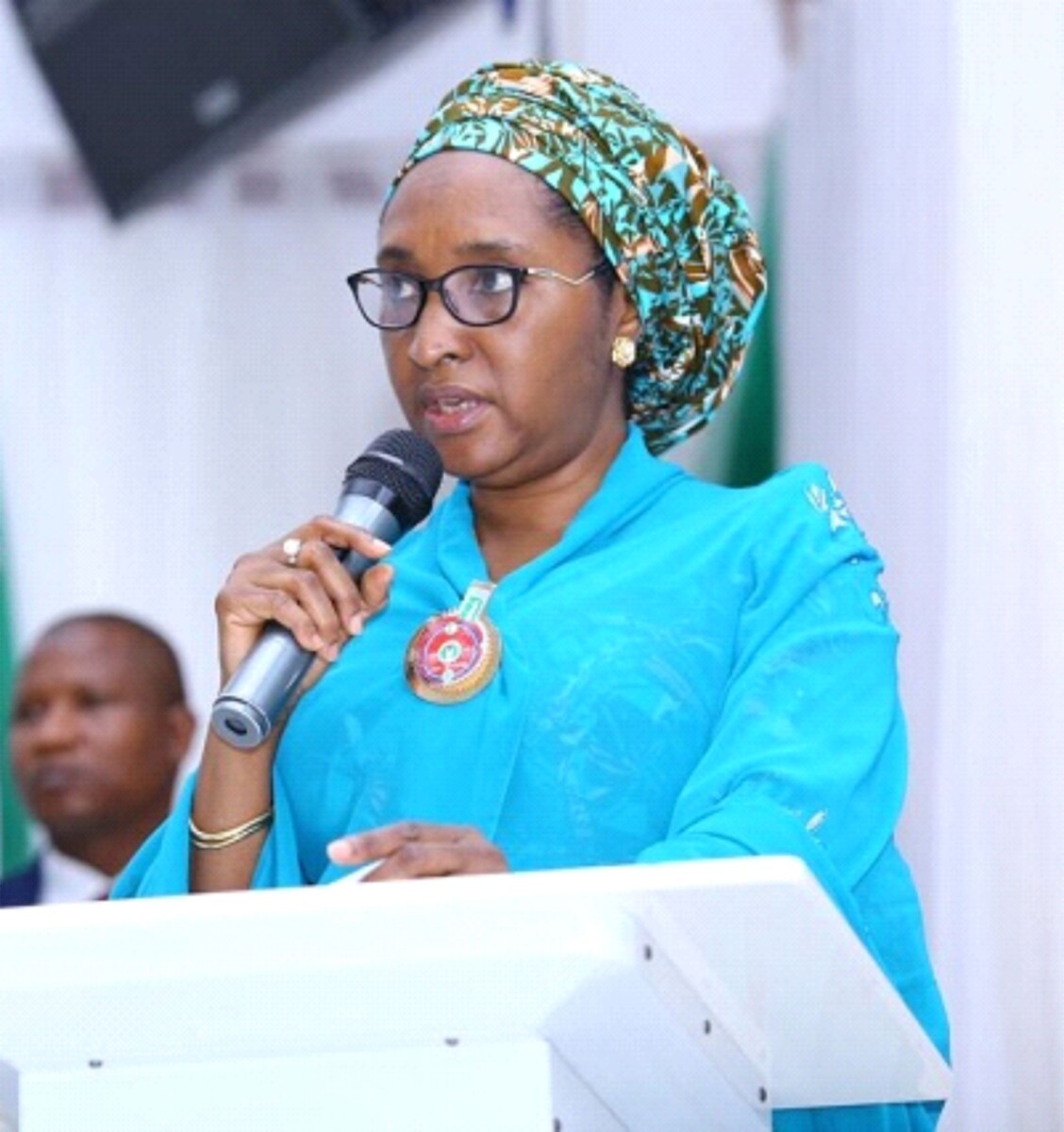
Minister of Finance, Budget and National Planning, Mrs Zainab Ahmed, has said that there is no provision in the 2021 budget to procure COVID-19 vaccines.
She stated this during a virtual presentation of the 2021 budget in Abuja, adding however that the government was working on the type and quantity of COVID-19 vaccines to procure.
Nigeria is expected to receive about 100,000 doses of the Pfizer and BioNTech approved COVID-19 vaccines by the end of January.
But the minister said her ministry and the Ministry of Health would meet to finalise the amount to be allocated to vaccine procurement in the next two weeks.
The country, under phase two of its COVID-19 vaccination scheme, will also get 42 million extra doses of vaccines through the COVAX facility.
The government is targeting to vaccinate about 40 per cent of Nigeria’s population in 2021.
Ahmed expressed the hope that the National Assembly would provide a supplementary budget for additional spending on COVID-19 vaccines, when needed.
She said, “We agreed that the effort needed to be done so that we have clarity as to whether the provisions in the budget will be adequate or we have to make additional provisions by way of a special supplementary budget to make more provisions for COVID-19 vaccinations.”
On whether there was a provision for fuel subsidy in the 2021 budget, Ahmed stated that no such provision was made for it.
She also foreclosed subsidy on electricity due to the recent suspension of the hike in electricity tariff.
The minister, however, added that the Finance Act, among others, exempted workers within the N30,000 minimum wage bracket and below from personal income tax deductions.
According to her, another key provision in the Act is the exemption of all micro and small companies earning N25 million or less as annual turnover from paying the Tertiary Education Tax.
The Act also excluded commercial airline tickets, commercial aircraft spare parts and components; interests in land and buildings; animal feed and hire, rental or lease of agriculture equipment for agricultural purposes from 7.5 per cent Value Added Tax (VAT) charge.
She said, “The key guiding principle of the Finance Act 2020 is to ensure that there is a balance between broader macroeconomic strategies to attract investment, grow the economy, create jobs as well as provide immediate fiscal strategies for accelerated domestic revenue mobilisation, in response to the COVID-19 pandemic and the domestic / global economic downturn.
“Specifically, the Finance Act 2020 adopts counter-cyclical fiscal policies in response to the COVID-19 pandemic by providing fiscal relief for taxpayers; reforms fiscal incentive policies to prioritise job creation and accelerate economic recovery and growth; and fosters closer coordination of monetary, trade and fiscal policies.”
Ahmed added that the 2020 Finance Act also provided for the establishment of a N500 billion crisis Intervention Fund as well as other sources approved by the National Assembly to fund the Federal Government’s expenditures.
Proceeds from unclaimed dividends of listed companies and unutilised amounts in dormant bank accounts outstanding for six years or more would be channelled to the fund, she stated,
The unclaimed dividends and bank balances are subject to a perpetual trust to be managed by the Debt Management Office (DMO), with governing council to be chaired by the finance minister and co-chaired by a nominee from the organised private sector who is of impeccable integrity and reputation.
Ahmed, however, added that genuine beneficiaries would be able to claim their funds back from the Federal Government at any time.
The minister also spoke on the performance of the revised 2020 budget, noting that the Federal Government expended a total of N1.8 trillion on capital projects.
According to her, the N1.8 trillion represents about 89 per cent of the total provision for capital projects.
She explained that out of the amount spent, N118.37 billion was released for COVID-19-related capital expenditure.
Ahmed said while the Federal Government projected N9.97 trillion for expenditure in 2020, it spent about N10.08 trillion, representing 101 per cent performance.
Debt service, she also stated, gulped N3.27 trillion while personnel cost, including salaries and pensions, accounted for N3.19 trillion.
She noted that the crude oil price benchmark was retained at $40 per barrel although the World Bank forecast $44 per barrel average crude oil price in 2021.
She added that crude oil production was projected to increase from 1.80 million barrels per day (mbpd) in 2020 to 1.86mbpd in 2021, as economies recover from recession, and moderated by the Organisation of Petroleum Exporting Countries (OPEC) quota agreements.
Ahmed stated that the aggregate revenue available to fund the N13.5 trillion 2021 budget was projected at N7.99 trillion (36.9 per cent higher than the 2020 projection of N5.84 trillion).
To promote fiscal transparency, accountability and comprehensiveness, she said the budgets of 60 Government-owned Enterprises (GOEs) were integrated in the Federal Government’s 2021 budget.
“In aggregate, 30 per cent of projected revenues is to come from oil-related sources while 70 per cent is to be earned from non-oil sources. Overall, the size of the budget has been constrained by our relatively low revenues,” she added.
The minister also explained that the deficit of N5.6 trillion will be funded via domestic and external borrowings of N2.34 trillion apiece.
She said N2.5 billion was expected as privatisation proceeds.
The budget also has an aggregate capital expenditure of N4.37 trillion or 32.2 per cent of total expenditure, which is 62.9 per cent higher than the 2020 Revised Budget, inclusive of capital component of statutory transfers and GOEs.
At N3.32 trillion, the provision for debt service for 2021 is 24.5 per cent of total expenditure and 12.6 per cent higher than 2020 revised budget, according to her.
The minister also put the provision to retire maturing bonds to local contractors / suppliers at N200 billion.
Director-General, Budget Office of the Federation (BoF), Mr Ben Akabueze, said the country was expecting donations of COVID-19 vaccines to cover 20 per cent of its population while 50 per cent would be acquired to achieve herd immunity.
Akabueze said, “To have herd immunity, 70 per cent of the population has to be vaccinated. Already, vaccine for 20 per cent of the population will be donated while the balance of 50 per cent will be paid for by the government.”









Business
NNPC Remits N1.804 Trillion to Federation Account in February

NNPC Remits N1.804 Trillion to Federation Account in February
The Nigerian National Petroleum Company Limited (NNPC) has remitted N1.804 trillion to the Federation Account in February 2026, marking a significant jump from the N726 billion recorded in January, according to its latest Monthly Financial and Operational Report Summary.
The sharp increase highlights improved oil and gas revenue performance in Nigeria, stronger production output, and ongoing fiscal reforms aimed at boosting transparency and accountability in the petroleum sector.
NNPC Ltd reported that its total revenue increased to N2.68 trillion in February, up from N2.57 trillion in January, driven by higher crude oil sales, improved gas earnings, and operational efficiency gains across its assets. The company also recorded a profit after tax of N136 billion, reflecting improved financial performance despite fluctuations in global crude oil markets and domestic operational challenges.
According to the report, Nigeria’s crude oil and condensate production averaged 1.51 million barrels per day (bpd) in February 2026. NNPC attributed the output stability to improved asset reliability, faster resolution of evacuation constraints, and enhanced coordination with upstream operators across key oil fields.
READ ALSO:
- JUST IN: FG Publishes List of 48 Individuals, Groups Linked to Terrorism Financing in Nigeria
- 2027: Oyo APC Governorship Aspirant Saheed Oladele Resigns From Party
- 42-Year-Old Married Woman Declared Missing Found in Hotel with Man
The rise in remittances follows major fiscal policy changes introduced by President Bola Ahmed Tinubu in February 2026, including an Executive Order mandating full remittance of oil and gas revenues to the Federation Account. The directive also suspended the retention of management and frontier exploration fees previously deducted by NNPC Ltd and established an inter-agency committee led by the Minister of Finance to enforce compliance.
Officials say the reforms are designed to strengthen public revenue management in Nigeria, reduce leakages, and improve transparency in the oil sector.
The company said improved output was supported by infrastructure upgrades, better asset management, and stronger collaboration with industry stakeholders. It also highlighted progress on the Ajaokuta–Kaduna–Kano (AKK) gas pipeline project, noting that construction works are advancing toward early gas delivery to Abuja, a key milestone for Nigeria’s domestic gas expansion strategy.
The performance aligns with broader recovery trends in Nigeria’s oil industry, supported by efforts to curb crude theft, improve pipeline security, and enhance upstream efficiency. Data from the Nigerian Upstream Petroleum Regulatory Commission (Nigerian Upstream Petroleum Regulatory Commission) also indicates fluctuations but overall resilience in production levels, as the sector continues stabilisation reforms.
Analysts say sustained growth in NNPC remittances will depend on consistent crude production, stable global oil prices, and continued enforcement of fiscal transparency measures. As of the time of filing this report, NNPC Ltd has not provided additional breakdowns beyond its monthly financial summary.
NNPC Remits N1.804 Trillion to Federation Account in February
Auto
CFAO Mobility Open Day to offer special deals on new vehicles, parts, diagnostics

CFAO Mobility Open Day to offer special deals on new vehicles, parts, diagnostics

CFAO Mobility has announced plans to host the 2026 edition of its flagship CFAO Mobility Open Day, aimed at showcasing a wide range of innovative mobility solutions.
In a statement, the company said the event would take place on Thursday, April 30, 2026, at Harbour Point, Victoria Island, Lagos, from 9am to 6pm.
The Open Day is expected to bring together leading global automotive and equipment brands in a dynamic exhibition tailored to meet diverse mobility needs.
Participating brands are Toyota, BYD, Mitsubishi, Suzuki, Fuso, JCB, Howo, Sino Equipment, King Long, TechKing Tyres, Yamaha, Winpart and Auto Fast.
According to CFAO Mobility, attendees will experience an extensive display of products and services, ranging from brand-new vehicles and motorcycles to outboard engines, fleet management solutions, spare parts and aftermarket services.
The event, which is free and open to the public, will also feature test drives, professional vehicle diagnostics and exclusive spare-parts deals, offering participants a hands-on and engaging experience.
The company urged car enthusiasts, business owners and prospective buyers to take advantage of the Open Day to explore mobility solutions tailored to their personal and business needs.
With over 120 years of presence in Nigeria, CFAO Mobility remains a key player in the mobility and healthcare sectors.
It added that the Open Day reflects its continued commitment to delivering innovative, customer-focused mobility solutions.
Business
Naira Strengthens to ₦1,359.31/$ as CBN Data Shows Further Gain in Official Market
Naira Strengthens to ₦1,359.31/$ as CBN Data Shows Further Gain in Official Market
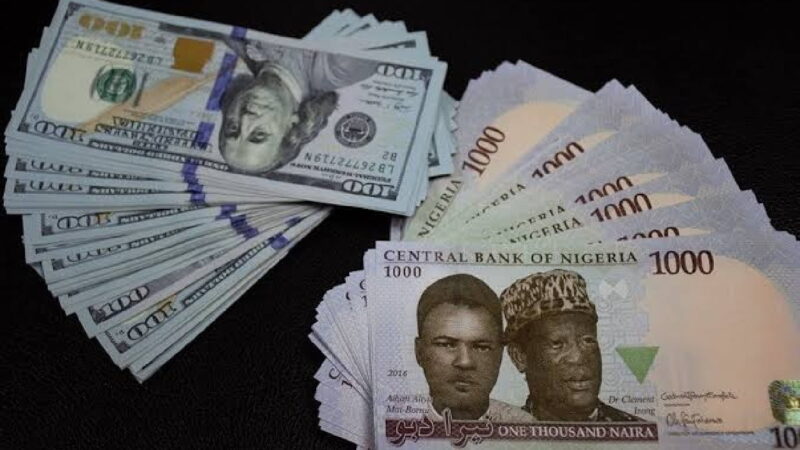
The Naira continued its positive performance on Thursday, appreciating further in the official foreign exchange market to close at ₦1,359.31 per US dollar, according to data published by the Central Bank of Nigeria (CBN).
The latest figure represents an improvement of ₦12.50 compared to the previous trading day, reflecting a 0.9 percent gain from Wednesday’s closing rate of ₦1,371.82/$.
The appreciation highlights continued stability in the official foreign exchange window, where recent policy measures have helped improve liquidity and reduce pressure on the local currency.
Market analysts attribute the naira’s relative strength to ongoing foreign exchange reforms by the CBN, increased dollar supply in official channels, and tighter regulation aimed at narrowing the gap between official and parallel market rates.
READ ALSO:
- Nigeria May Face ₦2,000 Petrol Price Without Intervention, TUC Warns FG
- US Embassy Suspends Abuja Visa Appointments Over Security Concerns
- ADC Crisis: Mark-Led Faction Sues INEC Over Party Leadership Removal
The CBN has in recent months intensified efforts to stabilise the currency through measures such as improved FX market transparency, better coordination with market participants, and steps to attract foreign portfolio inflows.
Despite the gains in the official market, traders note that the parallel market remains more volatile, with rates still influenced by strong demand for foreign currency from importers, travellers, and businesses outside official allocation channels.
Economists say the recent appreciation could help ease short-term inflationary pressure, particularly on imported goods, fuel pricing, and manufacturing inputs, although they caution that sustained stability will depend on broader macroeconomic fundamentals.
These include stronger foreign reserves, improved export earnings—especially from crude oil—and continued investor confidence in Nigeria’s economic policy direction.
The naira’s performance also comes amid renewed attention on Nigeria’s broader economic outlook, with stakeholders closely monitoring the impact of monetary tightening and ongoing fiscal reforms.
As of the latest trading sessions, market participants expect the CBN to maintain its current policy stance in the near term as it works to consolidate recent gains in the foreign exchange market in Nigeria.
Naira Strengthens to ₦1,359.31/$ as CBN Data Shows Further Gain in Official Market

-
 Africa2 days ago
ECOWAS Recruitment 2026: Over 30 Job Vacancies Open for Nigerians (How to Apply)
-

 Health2 days ago
Sleeping Positions: How They Affect Your Health and Which Ones to Avoid
-

 Politics2 days ago
Court Stops ADC Congress, Orders Status Quo in Leadership Row
-
 metro2 days ago
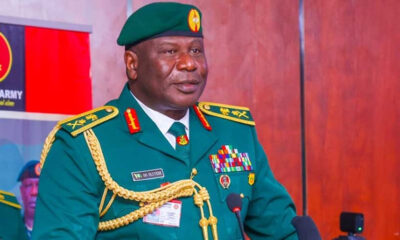
Boko Haram Attack in Borno: Brigadier-General, Soldiers Killed as ISWAP Overruns Military Base
-
 Politics11 hours ago
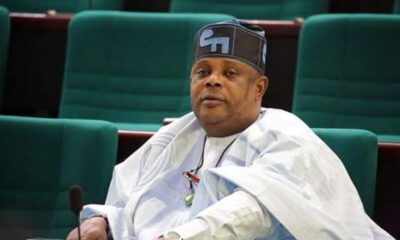
Did Faleke Just Reveal Lagos’ Next Governor? Party Moves Begin
-
 metro2 days ago
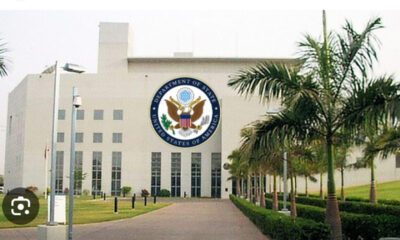
US Evacuates Embassy Staff in Nigeria, Lists 23 States as ‘Do Not Travel’
-

 Education1 day ago
Germany Opens Fully Funded Scholarships for Nigerians, Africans
-
 metro49 minutes ago
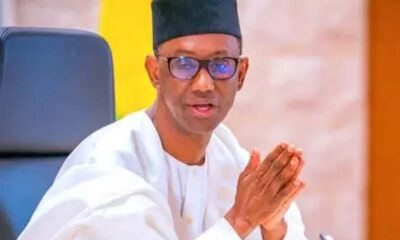
JUST IN: FG Publishes List of 48 Individuals, Groups Linked to Terrorism Financing in Nigeria
You must be logged in to post a comment Login