
metro
72m telephone lines partially deactivated
As part of measures to improve security in the country, all telephone lines which Subscriber Identification Modules (SIM) not linked to National Identity Numbers (NIN) have been partially deactivated.
The deactivation order took effect yesterday following President Muhammadu Buhari’s directive.
To effect the order, all outgoing calls by defaulting subscribers have been barred.
About 72.7million lines may be affected by the directive.
A joint statement by the Nigerian Communications Commission (NCC) Director of Public Affairs, Dr Ikechukwu Adinde and National Identity Management Commission (NIMC) Director of Corporate Communications Mr Kayode Adegoke, announced the decision yesterday.
However, there is an open window for defaulters to do so at designated NIMC centres nationwide.
Data made available by NCC in February showed that there are 303,636,267 connected GSM mobile lines in the country out of which 197,768,482 were active.
The statement explained that of 125 million SIMs submitted for immediate linkage with NIN, 78 million had so far been issued unique NINs. Unique NIN is simply the attachment of subscribers’ names to their SIMs.
In the past two years, the govt has shifted the period of the enforcement of the policy to ensure that subscribers were captured in the database of NIMC.
The statement reads: “On behalf of the Federal Government, the Minister of Communications and Digital Economy, Isa Ali Ibrahim Pantami, has commended Nigerians and legal residents for their support during the exercise to link the National Identification Number (NIN) to the Subscriber Identification Module (SIM).
“As of date, over 125 Million SIMs have had their NINs submitted for immediate linkage, verification and authentication. Similarly, the National Identity Management Commission (NIMC) has issued over 78 Million unique NINs till date.
THE NATION


metro
INEC’s New BVAS Update Will Automatically Reject Mismatched Polling Unit Results
INEC’s New BVAS Update Will Automatically Reject Mismatched Polling Unit Results
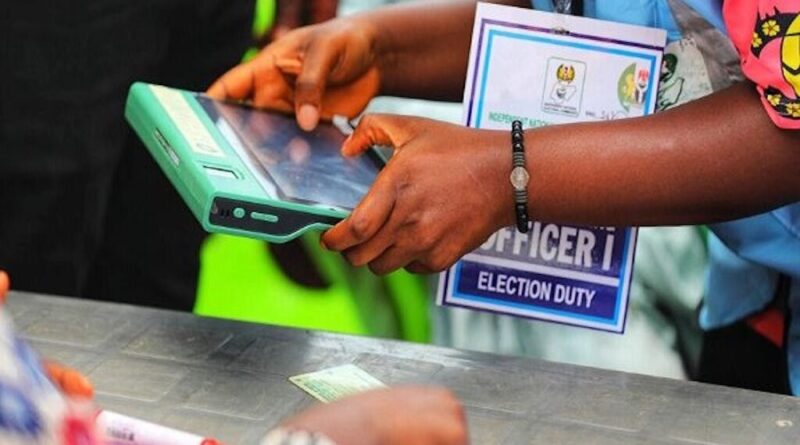
The Independent National Electoral Commission (INEC) has clarified that its latest software update for the Bimodal Voter Accreditation System (BVAS) will automatically detect and reject mismatched figures between what is entered on the device and what appears on physical result sheets at polling units, a move aimed at strengthening the integrity of elections in Nigeria.
INEC’s Deputy Director of Information and Publicity, Wilfred Ifogah, explained the enhancement on Sunrise Daily on Channels Television on Thursday, saying the updated BVAS can now read and cross‑check figures on official result sheets against the data entered by presiding officers before results are formally tabulated on Form EC8A.
According to Ifogah, after votes are counted and aggregated at the polling unit, the presiding officer inputs the figures into the BVAS device. The tool then compares this input against the numbers on the scanned result sheet. If the figures do not match, the BVAS will reject the entry and block the upload, ensuring that only consistent and verified results are transmitted into the electoral database.
“If the figures do not correspond with what is recorded, it will not pick it up,” Ifogah said, adding that this enhancement is a critical measure to prevent manipulation, clerical errors, and inflated results at the polling unit level before collation begins.
READ ALSO:
- Ex‑NNPC GM Jailed for 87 Months in $2.1m Bribery Case
- Osimhen Now Worth €150m Following Napoli Exit, Galatasaray VP Claims
- BREAKING: Senate Issues Arrest Warrant for CAC Registrar General
BVAS Mock Trials and Readiness Ahead of Elections
INEC also disclosed that the commission conducted mock trials of the new BVAS update in 289 polling units across the Federal Capital Territory (FCT) prior to the recent Area Council elections. The mock deployment was designed to stress‑test the validation feature, identify challenges, and ensure smooth functionality during live elections.
Officials say the trial showed that the enhanced BVAS technology can effectively identify discrepancies and reduce the likelihood of incorrect result uploads — an issue that has fueled suspicion and court challenges in past elections.
The upgrade forms part of INEC’s broader push to improve transparency, accuracy and trust in Nigeria’s electoral process. INEC’s BVAS system is already equipped with internal safeguards that prevent over‑voting (where total votes exceed the number of accredited voters) and flag anomalies during accreditation and result capture. The new update goes further by validating data between paper result sheets and electronic entries before results are accepted into the system.
INEC’s Rationale and Public Assurance
INEC has faced recurring concerns from political parties, observers, and civil society over result discrepancies between physical result sheets at polling units and what is later collated at state and national levels. In response, the commission has increasingly emphasised its commitment to deploying technology to promote credible elections.
Ifogah stressed that the BVAS enhancement does not replace human judgment but acts as a digital check to ensure what is entered electronically aligns with what has been physically recorded by election officials. He said the innovation provides an additional layer of accountability, helping to reduce opportunities for manipulation at the earliest stage of result transmission.
INEC has also promised continued training for presiding officers and election officials on the new BVAS functionalities to ensure they are comfortable with the processes before future nationwide elections, including the 2027 general elections.
INEC’s New BVAS Update Will Automatically Reject Mismatched Polling Unit Results
metro
Ex‑NNPC GM Jailed for 87 Months in $2.1m Bribery Case
Ex‑NNPC GM Jailed for 87 Months in $2.1m Bribery Case
A United States federal court has sentenced Paulinus Okoronkwo, a Nigerian-American and former General Manager of the Nigerian National Petroleum Corporation (NNPC), to 87 months in prison for accepting a $2.1 million bribe from Addax Petroleum, a Switzerland-based subsidiary of the Chinese state-owned oil giant Sinopec.
The sentencing follows Okoronkwo’s conviction in August 2025 on charges of transactional money laundering, tax evasion, and obstruction of justice. The court found that he abused his position at NNPC’s upstream division to receive the illicit payment, which was disguised as consultancy fees but intended to secure favourable drilling rights in Nigeria.
According to prosecutors, the $2.1 million bribe was wired to Okoronkwo’s law firm’s trust account in Los Angeles in October 2015. Evidence presented at trial showed that Addax executives falsified records, misled auditors, and dismissed staff who questioned the transaction, all to conceal the bribery scheme.
READ ALSO:
- Osimhen Now Worth €150m Following Napoli Exit, Galatasaray VP Claims
- BREAKING: Senate Issues Arrest Warrant for CAC Registrar General
- Saudi Arabia Bans Poultry, Egg Imports from Nigeria, 39 Other Countries
In addition to the prison sentence, Judge John F. Walter ordered Okoronkwo to pay $923,824 in restitution to the Internal Revenue Service (IRS) and forfeit $1,039,997, representing proceeds from the sale of a Valencia, California property purchased using the bribe money. Court filings indicate that nearly $1 million of the illicit funds was used as a down payment on the home, which was not declared on Okoronkwo’s 2015 federal tax return.
Okoronkwo, 58, later practised immigration, family, and personal injury law in Los Angeles’ Koreatown before the State Bar of California suspended his law license in January 2026 pending disciplinary proceedings. He also obstructed justice in 2022 by lying to federal investigators about the source and use of the bribe money.
The case underscores the United States’ commitment to enforcing anti-corruption laws and targeting foreign officials who exploit the US financial system for illicit gains. It also highlights the potential legal risks for oil industry executives engaging in corrupt practices tied to international contracts.
Ex‑NNPC GM Jailed for 87 Months in $2.1m Bribery Case
metro
BREAKING: Senate Issues Arrest Warrant for CAC Registrar General
BREAKING: Senate Issues Arrest Warrant for CAC Registrar General
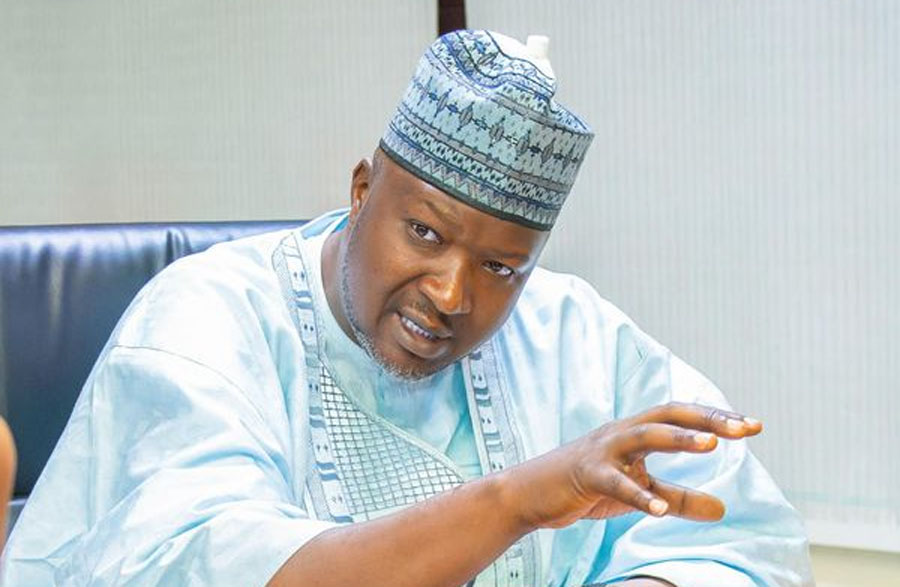
The Senate Committee on Finance has issued a warrant of arrest for Hussaini Ishaq Magaji, the Registrar General of the Corporate Affairs Commission (CAC), following repeated instances of refusal to appear before the panel during the ongoing budget defence session with the Federal Ministry of Finance and its agencies.
The development escalates tensions between the legislature and the CAC, the agency responsible for registering and regulating companies, business names, and incorporated trustees in Nigeria—a key institution for corporate governance and investment facilitation.
According to Senator Sani Musa, Magaji has serially ignored invitations and official summons to clarify discrepancies in the CAC’s revenue accounts, often sending junior officers in his place instead. “The Registrar General has refused on multiple occasions to honour invitations by this committee,” Musa said, stressing the importance of transparency and accountability in agency operations.
READ ALSO:
- Saudi Arabia Bans Poultry, Egg Imports from Nigeria, 39 Other Countries
- Suspected Lakurawa Terrorists Attack Mosque in Kebbi, Kill Five Worshippers
- Tinubu Charges Acting IGP Tunji Disu to End Impunity, Rebuild Public Trust in Police
Senator Orji Uzor Kalu was reportedly the first to raise the issue, urging the panel to recommend Magaji’s removal from office to President Bola Tinubu if noncompliance persists. Meanwhile, Senator Adams Oshiomhole proposed withholding the CAC’s 2026 budget allocation until the Registrar General personally appears before the committee. He also recommended that the CAC be barred from spending its Internally Generated Revenue (IGR) without prior approval from the National Assembly.
Lawmakers said the warrant is part of the Senate’s constitutional oversight powers, aimed at compelling officials to respond to lawful legislative requests and maintain financial accountability in government agencies. Observers note that failure to comply could trigger legal challenges or further escalation between the executive and legislative branches.
As of now, Magaji has not publicly responded to the Senate’s directive. The warrant is expected to be executed by the Nigeria Police Force or relevant authorities to ensure his presence before the committee for questioning.
The case underscores the Senate’s commitment to enforcing accountability within Nigeria’s public institutions while highlighting the critical role of the CAC in corporate regulation and national economic governance.
BREAKING: Senate Issues Arrest Warrant for CAC Registrar General

-
 News2 days ago
BREAKING: IGP Kayode Egbetokun Steps Down as Tinubu Names Tunji Disu as New Police Chief
-

 Entertainment1 day ago
Nollywood Actor Okemesi Confirmed Dead After Brief Illness
-

 metro24 hours ago
Frank Mba, Senior DIGs to Exit Police Service After Disu’s Appointment
-

 metro20 hours ago
African Virologists Elected to Lead World Society for Virology
-

 News23 hours ago
BREAKING: Tinubu Decorates Tunji Disu as Acting Inspector‑General of Police
-
 News2 days ago
Mother of Three Dies by Suicide After Fiance’s Family Rejects Marriage in Ijebu-Ode
-

 metro22 hours ago
Abroad-Based Nigerian Woman Kneels with Children in Emotional Tribute to Husband (VIDEO)
-

 News2 days ago
U.S. Congress Submits Report to Trump on Alleged Christian Persecution in Nigeria