

metro
Rivers: HURIWA speaks on how Wike camp is undermining Tinubu’s accord

Rivers: HURIWA speaks on how Wike camp is undermining Tinubu’s accord
The Human Rights Writers Association of Nigeria (HURIWA) has strongly criticized the Minister of the Federal Capital Territory, Nyesom Wike, for accusing Rivers State Governor Siminalayi Fubara of betraying a presidential peace accord.
In a statement issued on Monday, HURIWA argued that it was Wike, not Fubara, who sabotaged the accord brokered by President Bola Tinubu, labeling Wike’s actions as a breach of trust and an affront to the principles of governance.
Reacting to Wike’s recent media statements, HURIWA, in a statement by its national coordinator, Emmanuel Onwubiko, noted that Wike’s claim of Fubara’s alleged betrayal is unfounded and a deliberate attempt to mislead the public.
The association pointed out that Governor Fubara demonstrated good faith and loyalty to the presidential directive by withdrawing a sensitive court case he was well-positioned to win.
This move, HURIWA argued, was a clear indication of Fubara’s commitment to fostering peace and stability in Rivers State.
“It is hypocritical for Wike to accuse Governor Fubara of disloyalty when the minister himself has actively sabotaged the accord,” HURIWA stated. “While Fubara complied with the President’s directive and withdrew a critical legal matter in a gesture of reconciliation, Wike continued to pursue multiple suits in various courts, culminating in a controversial judgment declaring his factional speaker as legitimate. This is the ultimate betrayal of the accord and an insult to the President’s efforts to mediate peace.”
READ ALSO:
- Police arrest Akwa Ibom pastor for defiling own daughter
- Two suspected kidnappers who killed man for recognising them arrested in Edo
- China executes man drove car into crowd killing 35
The association further alleged that Wike’s actions expose a pattern of political manoeuvring aimed at undermining the Rivers State government and destabilizing the administration of Governor Fubara.
According to HURIWA, Wike’s loyalty to President Tinubu appears to be superficial and driven by personal interests rather than genuine commitment to national unity or governance.
“Wike’s loyalty to the President is nothing more than window dressing. His continued legal battles against Governor Fubara’s administration show a calculated effort to disrupt governance in Rivers State and create a parallel power structure that benefits his political interests,” HURIWA added.
HURIWA dismissed Wike’s call for reconciliation as unnecessary, asserting that Governor Fubara does not need reconciliation with someone whose actions would likely undermine the state’s resources and governance.
The association noted that the Rivers State treasury is not a public purse to be allegedly plundered in the name of political compromise.
“Governor Fubara does not need Wike’s reconciliation, which would undoubtedly come at the cost of the public purse,” the statement read. “The people of Rivers State deserve a government focused on delivering development and stability, not one entangled in endless political schemes orchestrated by individuals seeking to protect their personal interests.”
The association also condemned the current situation in the Rivers State House of Assembly, where factionalism has led to the creation of a parallel assembly. HURIWA described the defection of 27 lawmakers to the All Progressives Congress (APC) and the ensuing power struggles as a direct consequence of Wike’s alleged divisive politics.
“The political crisis in Rivers State is a reflection of Wike’s obsession with controlling the state even after his tenure as governor,” HURIWA asserted. “The defection of lawmakers and the emergence of a factional speaker are part of a calculated plan to weaken Governor Fubara’s administration and maintain an undue grip on the state’s political landscape.”
HURIWA called on President Tinubu to take a decisive stand against actions that undermine peace accords and destabilize governance at the state level. The association urged the President to hold all parties accountable and ensure that political actors respect the rule of law and the democratic process.
“The President’s intervention was a step in the right direction, but it must be followed by firm action to hold accountable those who betray the accord,” HURIWA stated. “Rivers State deserves peace, stability, and development, and this can only be achieved when the rule of law prevails, and political actors prioritize the interests of the people over their ambitions.”
HURIWA concluded by expressing confidence in Governor Fubara’s leadership and commitment to the people of Rivers State. The association called on the governor to remain steadfast in his efforts to deliver good governance, despite the challenges posed by Wike’s political machinations.
“The people of Rivers State elected Governor Fubara to lead them, not to engage in endless battles with his predecessor. We urge the governor to stay focused on his mandate and continue to work for the progress and prosperity of Rivers State,” HURIWA stated.
Rivers: HURIWA speaks on how Wike camp is undermining Tinubu’s accord





metro
ICPC recommends prosecution of alleged fake PFIPC boss after Tinubu-ordered investigation
ICPC recommends prosecution of alleged fake PFIPC boss after Tinubu-ordered investigation
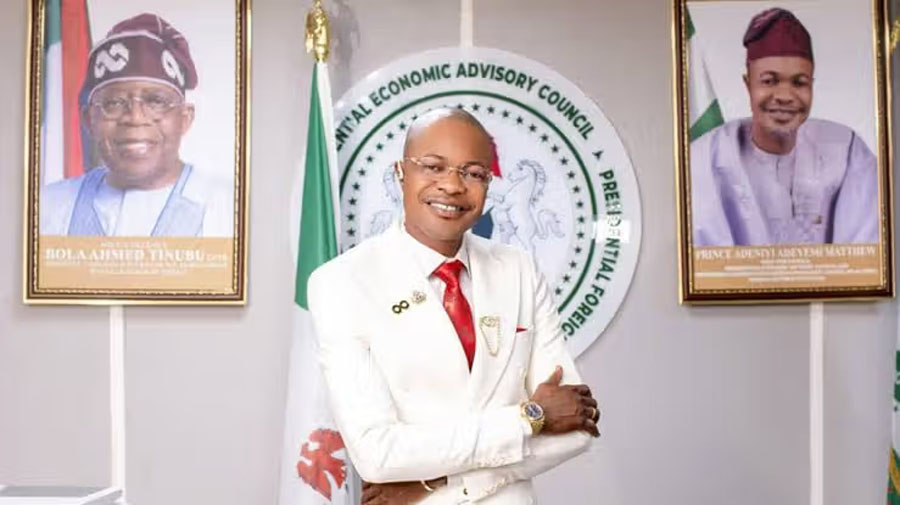
The Independent Corrupt Practices and Other Related Offences Commission (ICPC) has recommended the prosecution of Adeniyi Adeyemi Matthew, the alleged mastermind behind the controversial Presidential Foreign Investment Promotion Council (PFIPC), following an interim investigation ordered by President Bola Tinubu.
The recommendation comes exactly 30 days after President Tinubu, on July 7, 2026, directed the anti-corruption agency to investigate allegations surrounding the purported council and submit its findings within one month.
Presenting the interim report to the President at the Presidential Villa in Abuja on Thursday, ICPC Chairman, Dr. Musa Adamu Aliyu (SAN), said the investigation established that Adeyemi was never appointed by the Federal Government and that the so-called Presidential Foreign Investment Promotion Council (PFIPC) has no legal existence.
Briefing State House Correspondents after submitting the report, Aliyu disclosed that President Tinubu also directed the commission to make its findings public in the interest of transparency and accountability.
“As you may recall, on the 7th of July, Mr. President directed the ICPC to conduct an investigation into the fake Presidential Foreign Investment Promotion Council and submit a report within 30 days. Today, within the stipulated period, we have submitted an interim report based on our interactions with all stakeholders involved,” he said.
According to the ICPC chairman, investigations revealed that the appointment letter presented by Adeyemi was completely forged and did not originate from the Presidency. He added that the suspect allegedly produced several forged government documents, including a fake appointment letter and fabricated official records, to create the impression that he headed a legitimate presidential agency.
READ ALSO:
- Military Salary Hike Sparks Mixed Reactions as South-East Youths Weigh Enlistment
- Osun Account Freeze: EFCC Insists It Has 72-Hour Power Without Court Order
- Osun Election: ‘Prepare to Sign Your Uncle as Dancer’ — Uzodimma Fires Back at Davido
Aliyu further stated that the commission found that the PFIPC, which was also referred to in some documents as the Presidential Foreign Intervention Promotion Council, was never created by any Act of the National Assembly, executive order or any valid instrument of government. He said a purported Federal Government gazette cited to legitimise the organisation was also fake and did not pass through the legally prescribed process for government publications.
The commission said its investigation uncovered what it described as an elaborate network of fictitious government institutions allegedly created by Adeyemi. According to Aliyu, investigators discovered two additional organisations allegedly established by the suspect: the FCT Investment Promotion Agency (FIPA) and the Foreign Investment Promotion Agency/Public-Private Partnership (FIPA-PPP).
He explained that fake legislative instruments styled as enabling Acts were allegedly produced to support the creation of the organisations and were subsequently used to open bank accounts in their names. The ICPC chairman disclosed that investigators identified two commercial bank accounts allegedly opened to facilitate the activities of the fictitious agencies.
Aliyu also revealed that Adeyemi allegedly gained unlawful access to offices previously occupied by the defunct Presidential Economic Advisory Council (PEAC). According to him, the suspect used the premises to project the image of a legitimate government institution and allegedly appropriated the identity, facilities and operational instruments of the former council to lend credibility to the operation.
Despite the sophistication of the alleged scheme, the commission said investigators found no evidence that Federal Government funds were approved, released or paid to the fake PFIPC. Aliyu also absolved both the Presidency and the Central Bank of Nigeria (CBN) of any direct involvement, stating that investigators found no weaknesses within the two institutions that contributed to the alleged fraud. He maintained that the forged appointment letter did not originate from the Presidency.
Although the Presidency and the CBN were cleared, the ICPC identified significant institutional weaknesses across several Ministries, Departments and Agencies (MDAs), saying inadequate verification procedures, poor inter-agency coordination and weak internal controls created opportunities for the suspect to operate.
The agencies where lapses were identified include the Office of the Secretary to the Government of the Federation (SGF), the Office of the Head of the Civil Service of the Federation, the Office of the Accountant-General of the Federation, the Budget Office of the Federation and the National Information Technology Development Agency (NITDA). Aliyu said some public officers failed to carry out due diligence and comply with established operational procedures, describing the lapses as acts of omission and negligence.
Based on its findings, the commission recommended the immediate prosecution of Adeyemi. It also proposed administrative sanctions against public officers whose negligence allegedly enabled the activities of the fake agency, alongside institutional reforms aimed at strengthening internal controls across government institutions.
“Our recommendations are that Mr. Adeniyi Adeyemi should be prosecuted,” Aliyu said, adding that disciplinary measures should be taken against public officials whose actions or inaction facilitated the illegal operation.
The ICPC chairman stressed that the report submitted to President Tinubu is an interim report, noting that investigations are continuing to identify additional collaborators and strengthen the criminal case before charges are filed in court. He confirmed that Adeyemi has already been questioned by investigators and that his statements formed part of the evidence reviewed during the investigation.
Responding to questions on allegations involving about ₦400 million, Aliyu declined to provide details, saying the issue remains part of the ongoing criminal investigation.
He also disclosed that President Tinubu has not given a fresh deadline for the completion of the probe, while assuring Nigerians that the commission will continue its investigation and ensure that anyone found culpable is brought to justice in accordance with the law.
The findings represent one of the most significant outcomes of the Federal Government’s ongoing efforts to strengthen accountability in public institutions, improve governance standards and combat the use of forged government documents and fictitious agencies to deceive citizens, investors and public institutions.
ICPC recommends prosecution of alleged fake PFIPC boss after Tinubu-ordered investigation
metro
Osun Account Freeze: EFCC Insists It Has 72-Hour Power Without Court Order
Osun Account Freeze: EFCC Insists It Has 72-Hour Power Without Court Order
The Economic and Financial Crimes Commission (EFCC) has firmly defended its decision to restrict an Osun State Government account, asserting that it possesses the legal authority to impose a temporary freeze for up to 72 hours without obtaining a court order. EFCC Director of Public Affairs, Wilson Uwujaren, stated that the action was backed by law and taken after suspicious transactions were detected on the account over the past week. Speaking on Arise Television on Thursday, Uwujaren said the commission acted to preserve the account pending further investigation. “As we indicated in the statement released by the Commission, we took that step to preserve the account of the Osun State Government. We observed in the past one week that activities on that account looked suspicious, and based on the mandate of the Commission, we took the step of placing a restriction on that account to preserve it,” Uwujaren said. He clarified that the commission did not freeze all of Osun State’s accounts, stressing that the restriction applied to only one account. “That restriction order does not mean that all the accounts of Osun State have been frozen. No. It is just a targeted restriction on one account of the Osun State Government,” he explained. Uwujaren said investigators noticed multiple transfers from the account to several corporate entities within one week, prompting the intervention. “The essence, like I said, is just to preserve that account because we observed suspicious activities on that account in terms of the transfer of funds to a number of entities within one week. So we had to take that decision to place a restriction on that account, not minding the fact that there is an election process in place,” he said. He argued that failing to act could have attracted criticism if public funds were later diverted. “We have the responsibility under the law to do so because if we don’t take that step and, for instance, funds are looted from the account of the Osun State Government, I’m sure the Nigerian public will also ask, ‘Where was the EFCC when those funds were being moved?'” Uwujaren stated.
Uwujaren maintained that the restriction would not disrupt governance, noting that the state still had access to other accounts. “It does not stop the Osun State Government from running the government of the state because they have access to other funds in the other accounts that they have. In any case, the payment of salaries and other expenditures by the state government happens just once in a month. What we have done is not a blanket freezing of the account,” he said. He added that the restriction would be lifted once the commission was satisfied that activities on the account were no longer suspicious.
READ ALSO:
- Osun Election: ‘Prepare to Sign Your Uncle as Dancer’ — Uzodimma Fires Back at Davido
- Abuja Earth Tremor: Minister Orders Hourly Monitoring, Assures Residents of Safety
- Tinubu Orders EFCC to Unfreeze Osun Govt Accounts, Says Timing ‘Embarrassing’
On the legality of the action, Uwujaren said the commission derived its powers from the EFCC Act and the Money Laundering (Prohibition) Act. “A number of people have asked whether the Commission has the power to do so under the law. I can assure you that we have the power to place a temporary restriction on an account. Section 34 of the EFCC Act and Section 7, Subsection 6 of the Money Laundering (Prohibition) Act 2022 give us that authority to take that step,” he said. He explained that the commission could impose a temporary restriction for up to 72 hours before approaching the court if necessary. “The restriction order can last within 72 hours before we can come with a court order if we need to provide a court order,” Uwujaren stated.
Uwujaren revealed that the EFCC is currently investigating about 18 other states over suspected financial infractions, though he declined to name them to avoid jeopardising ongoing probes. The EFCC spokesman said the action against Osun was not an isolated case, noting that the commission had previously restricted an Edo State Government account over suspected movement of funds into suspicious accounts.
The EFCC had earlier disclosed that it had been investigating the Osun State Government since March 2026 over the alleged fraudulent handling of about N11 billion in Ecology Funds, Intervention Funds and Federation Account Allocation Committee (FAAC) allocations. The commission said some state officials, including the Accountant General, had already been questioned as part of the investigation. The EFCC head of media and publicity, Dele Oyewale, explained that the Commission was compelled to place a Post-No-Debit order on the account after detecting what it described as “precipitate and unwarranted” movement of funds to different suspicious accounts from August 2, 2026. “The Commission noticed huge transfers of funds into different corporate entities and had to swiftly halt the trend by freezing the accounts from which such heavy funds are being moved,” Oyewale stated. The EFCC insisted its action was not politically motivated despite the timing ahead of the Osun governorship election, stressing that it could not overlook financial infractions on account of the poll. “While the Commission is fully aware of the impending governorship election in Osun State, it has a responsibility to act in defence of the sanctity of the funds of the state. It will be uncharitable for the Commission to allow an excuse of an upcoming election to fold its arms to perform its legally-assigned functions,” the EFCC stated.
The controversy has triggered a fierce legal debate, with legal experts pointing to the 72-hour limit for temporary investigative restrictions established by the Court of Appeal in the case of EFCC v. Attorney-General of Benue State. The appellate court held that the anti-graft agency could place a stop order on an account suspected to be connected with financial crime for 72 hours without a court order. Beyond that period, however, the commission must obtain a court order if it intends to maintain the restriction. The appellate court made clear that once the 72-hour period expires without the necessary judicial authorisation, the restriction lapses and the financial institution is required to restore normal access to the account.
READ ALSO:
- Osun Account Freeze: Atiku Accuses Tinubu of Weaponising State Institutions Against Opposition
- Former Finance Minister Kemi Adeosun Loses Husband, Niyi Adeosun
- 176 Kwara Abductees Regain Freedom After Six Months in Captivity
Uwujaren’s comments came after Governor Ademola Adeleke challenged the legality of the account restriction and directed the state’s Attorney General, Oluwole Jimi-Bada (SAN), to contest the action at the Federal High Court in Osogbo. Adeleke described the action as unlawful and a threat to democracy, arguing that it was taken without any court order. The governor alleged that the freezing of the account was the latest in what he described as a coordinated campaign of intimidation against his administration ahead of the August 15 governorship election. He claimed that several Accord Party members had been killed, while about 60 members were arrested and transferred to Abuja where they remain in detention without formal charges. He also accused former Governor Gboyega Oyetola of orchestrating the alleged harassment through federal agencies because, according to him, the All Progressives Congress (APC) candidate “cannot win” the forthcoming governorship election. “All I ask is for the EFCC chairman to explain to the good people of Osun State and Nigerians in general why he froze the Osun State Government account and provide evidence to support whatever reason he presents. This and other actions being taken against Osun State are turning our democracy into a huge joke,” Adeleke said.
The Nigerian Bar Association has also faulted the EFCC over the freezing of Osun State Government’s bank account, saying the anti-graft agency lacks the constitutional power to impose a blanket restriction on a state’s finances without due legal process. NBA President Afam Osigwe (SAN) warned that any directive restricting withdrawals from accounts belonging to a state government would effectively cripple governance and amount to an abuse of power. “No government agency or any person has the right or the power to restrict withdrawals from the account of any state because, first of all, the order has the effect of grounding the activities of a government,” Osigwe said. “If the EFCC knows that any particular account is being used for the purpose of fraud, it may be able to obtain a court order, but it cannot make a blanket order freezing the accounts of any state. Such an order would be unconstitutional and also violate the powers of the EFCC and may actually amount to an abuse of power,” he added. Osigwe urged First Bank not to comply with the EFCC’s directive unless it is backed by a valid court order.
Osun Account Freeze: EFCC Insists It Has 72-Hour Power Without Court Order
metro
Abuja Earth Tremor: Minister Orders Hourly Monitoring, Assures Residents of Safety

Abuja Earth Tremor: Minister Orders Hourly Monitoring, Assures Residents of Safety
The Federal Government has activated enhanced seismic monitoring following a light earth tremor that shook parts of the Federal Capital Territory on Tuesday, with the Minister of Solid Minerals Development, Dele Alake, directing the Nigerian Geological Survey Agency (NGSA) to provide hourly updates on seismic developments around Abuja. The directive came after the NGSA confirmed that several buildings across Abuja experienced vibrations on August 4, 2026, with the agency’s Seismic Monitoring Station in Utako recording the event at exactly 11:23:27 a.m.
According to the NGSA, the earth movement originated from a depth of one kilometre beneath the earth’s surface and spread across a distance of four kilometres within five seconds. The agency classified the incident as a “light event of I to II magnitude” on the Mercalli Intensity Scale, explaining that such tremors pose no threat to lives or property. “This is a characteristic feature of a surface earth tremor that poses no threat to lives and properties except for the discomfort of the shake and fear of possible destruction,” the agency stated.
READ ALSO:
- Tinubu Orders EFCC to Unfreeze Osun Govt Accounts, Says Timing ‘Embarrassing’
- Osun Account Freeze: Atiku Accuses Tinubu of Weaponising State Institutions Against Opposition
- Former Finance Minister Kemi Adeosun Loses Husband, Niyi Adeosun
Alake, who is currently in Washington, D.C., United States, engaging American investors on joint venture opportunities in Nigeria’s solid minerals sector, responded through a statement issued by his Special Assistant on Media, Lara Owoeye-Wise. He directed the NGSA to submit hourly reports on any fresh seismic developments for his regular review and, where necessary, onward communication to other relevant government agencies. The minister assured residents that proactive measures had been deployed to safeguard lives and property across affected locations, noting that government agencies are closely monitoring the situation. “Residents should go about their lawful activities without anxiety. Necessary measures have been deployed to ensure public safety,” Alake said.
Nigeria experiences occasional low-intensity earth tremors despite lying outside the world’s major earthquake zones. Isolated tremors have been recorded in parts of the country over the years, including in Abuja, Kaduna, Kogi, Oyo and Bayelsa states. The Nigerian Geological Survey Agency operates a network of seismic monitoring stations across the country to detect and analyse such events, providing early scientific assessments to guide emergency response and reassure the public. Experts have consistently noted that most tremors recorded in Nigeria have been of low magnitude and have not resulted in significant damage to lives or property, but they underscore the importance of continuous seismic monitoring and emergency preparedness.
Abuja Earth Tremor: Minister Orders Hourly Monitoring, Assures Residents of Safety
-

 metro2 days ago
Troops arrest four suspected Boko Haram, ISWAP suppliers, intercept 20 relatives
-

 Opinion2 days ago
WHO WILL SPEAK FOR WASILAT? WHEN TRADITION BECOMES HUMILIATION, JUSTICE MUST SPEAK
-
metro3 days ago
TikToker undergoes cleansing after filming Oloolu procession in Ibadan
-
 Education1 day ago
BREAKING: 61.54% Pass Rate as WAEC Releases 2026 WASSCE Results – How to Check Results
-
 News1 day ago
Tinubu Meets Jim Ovia, NELFUND CEO at Aso Rock as Student Loans Hit ₦303bn
-

 metro2 days ago
Police Probe AIG Jimoh Over VeryDarkMan’s Corruption Allegations
-

 metro2 days ago
N78 Million Solar Inverters, 410 Cattle, 10 Guns Recovered as Kaduna Police Arrest 25 Suspects
-

 metro1 day ago
Boat Operators Rescue Woman Who Jumped Into Lagos Lagoon From Carter Bridge