

metro
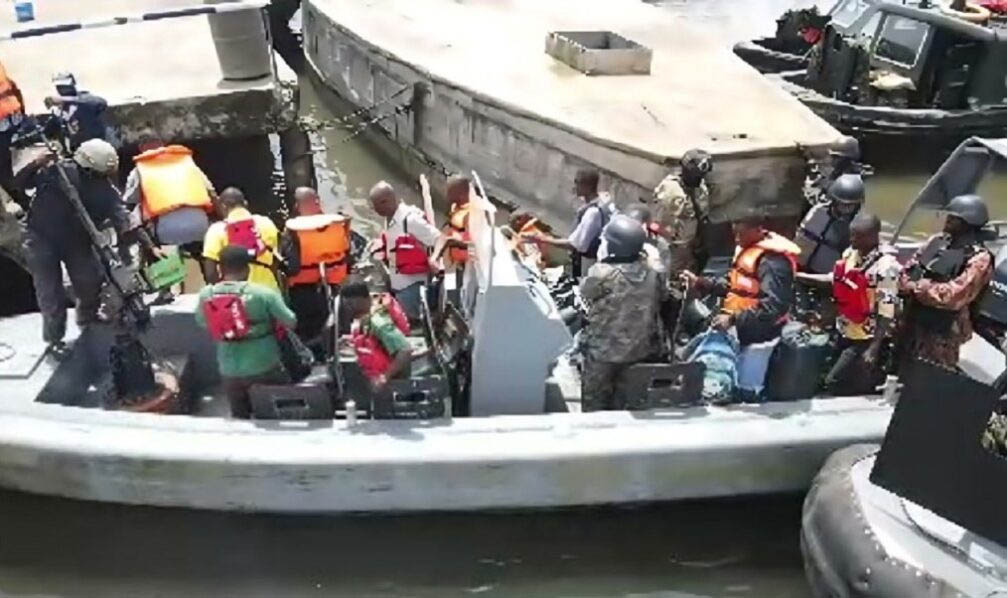
Pirates seize passenger boat in Rivers, 12 people missing
Pirates seize passenger boat in Rivers, 12 people missing
A passenger boat carrying 20 people en route to Bonny was intercepted by sea pirates around the Isaka area in Okrika Local Government Area this afternoon.
According to a security briefing made available to the Executive Chairman of Bonny Local Government Area, Anengi Barasua Claude-Wilcox, nine persons have been rescued and returned to Port Harcourt thanks to the swift intervention of government security operatives.
She noted The operatives are still working to rescue the remaining 12 passengers.
READ ALSO:
- Woman arrested for killing neighbour with stone in Rivers
- Playing Scrabble with the murderous king of Orile-Ifo
- Gunmen kidnap poly student, stray bullet kills woman in Delta
Preliminary investigations reveal that the boat driver disobeyed rules by passing through Kilometer 10, a prohibited channel for commercial boat drivers.
She, however, noted that the Bonny Local Government Council is working closely with neighboring local governments and security agencies to resolve the situation.
Relatives of the victims and the public are urged to remain calm.
This incident comes after a similar incident where the Nigerian Navy Forward Operating Base in Bonny rescued 20 passengers, including women and children, from pirates on the Port Harcourt-Bonny sea route.
Pirates seize passenger boat in Rivers, 12 people missing









metro
Alleged Coup Plot: How Attack on Aso Rock, Airports Was Planned — Court Documents

Alleged Coup Plot: How Attack on Aso Rock, Airports Was Planned — Court Documents
Fresh investigative details presented before the Federal High Court in Abuja have exposed the operational layout and specific task assignments given to officers and civilians involved in an alleged plot to violently overthrow President Bola Tinubu‘s administration. The security records show that the suspects mapped out coordinated attacks on strategic locations across the country, targeting the Presidential Villa, Radio House, major airport runways, and the personal residences of senior military commanders. Prosecution teams pursuing treason charges against the accused persons disclosed that the plan relied on internal insider support, with the conspirators aiming to seize authority, disrupt national communications, and block military responses during the operation, painting a chilling picture of how close the country may have come to a violent disruption of constitutional order.
At the centre of the investigation is Colonel Mohammed Ma’aji, an officer of the Defence Space Administration, whom investigators identified as one of the principal masterminds and coordinators of the alleged conspiracy. According to investigative files, individual operational tasks were assigned to specific members of the group to ensure the takeover of power centers in Abuja, with a clear chain of command and designated responsibilities that revealed a well-structured plot. One of the primary suspects, Mr. Usman, was tasked with directing the assault on the Presidential Villa, making him responsible for the most critical objective of the entire operation. The records indicate that Usman had already conducted preliminary physical surveys inside the presidential complex with the assistance of an insider, Police Inspector Ahmed Ibrahim, who was attached to the Presidential Clinic, providing the plotters with invaluable intelligence about the layout, security arrangements, and potential vulnerabilities within the heavily fortified seat of government.
READ ALSO:
- Gumi Questions FG’s Refusal To Dialogue With Bandits, Boko Haram, Cites Niger Delta Precedent
- Police deny IGP Olatunji Disu issued shoot-on-sight order for illegal firearm carriers
- 2026 Ballon d’Or: Kane, Yamal lead race for football’s biggest prize
Investigators also uncovered discussions regarding a proposed power blackout at the seat of power, a tactic designed to sow confusion and disable electronic security systems during the initial stages of the attack. Zekeri Umoru, an electrician employed by Julius Berger Nigeria Plc at the Villa’s maintenance department, revealed during questioning that planners considered cutting off electricity supply to the complex at the start of the attack, believing that darkness would give them a tactical advantage over security forces. However, Umoru warned against the idea, stating that a sudden blackout would immediately alert security forces and cause duty staff to be detained and questioned, potentially undermining the element of surprise and alerting authorities to the attack before it could fully unfold. Umoru further stated that the planners aimed to recruit up to nineteen personnel from among Villa workers, soldiers, and State Security Service (SSS) officers, indicating that the plotters believed they had significant internal support within the presidential complex. He noted that after he pointed out the risks of the blackout plan, the leader of the group suggested using armed force to force entry if internal assistance failed, demonstrating a willingness to resort to violence if their covert infiltration strategy proved unsuccessful.
The coup plot strategy extended beyond the executive villa to broadcast stations and military command centers, reflecting a comprehensive plan to control the narrative and neutralize any organised resistance. Major Abdulkarim Ibrahim was initially assigned to secure the Armed Forces Headquarters, but his duty was later shifted to Radio House in Abuja, where his role was to read the official overthrow broadcast to the nation, effectively announcing the coup’s success and legitimising the new regime. Ibrahim explained that Lieutenant-Colonel Shamsuddeen Bappah was originally chosen to make the announcement before the responsibility was transferred to him, suggesting that the plotters were carefully selecting the most credible figures to front the new order. Bappah was subsequently reassigned to take control of the 102 Battalion in Zuma, Niger State, a strategic military installation that would have been critical in securing the coup’s success and preventing loyalist forces from mounting a counteroffensive. Simultaneously, key military commanders were marked for immediate isolation, a tactic designed to decapitate the existing military leadership and prevent a coordinated response. Major Muhammad Jiddah was tasked with taking over the residence of the Chief of Army Staff, while Major Daniel Yusuf was assigned to secure the home of the Chief of Defence Staff, ensuring that the most senior military officers would be neutralised before they could mobilise their forces. Air Force Leader S.B. Adamu was assigned to take over Air House, while Captain Akinwale Yusuf was expected to seize a divisional military headquarters in Lagos, extending the plot beyond Abuja and demonstrating its nationwide scope. Additionally, retired Colonel M.M. Adamu was designated to coordinate troop movements from the entrance of Niger Barracks in Abuja, serving as a logistical hub for the operation.
Disrupting aviation transport was also treated as a priority, as conspirators believed that active flights could allow government loyalists to organize a counter-strike by airlifting troops or evacuating key officials. To stop commercial and private flights in Abuja, the plan included placing an armed gun truck directly across the airport runway, a dramatic and highly visible act intended to ground all aircraft and prevent any airborne response to the coup. In Lagos, Lieutenant Sunday Felix was tasked with gathering security intelligence at the airport, a role that leveraged his knowledge of VIP travel protocols. Felix stated, “I knew the airport’s security arrangements due to my role in traffic control during visits of VIPs,” which helped him map out vulnerabilities and identify the weakest points in the airport’s defences, providing the plotters with crucial information for planning their disruption of aviation operations.
READ ALSO:
- Houthis Launch Missile at Saudi Arabia as Regional Tensions Escalate Amid US-Iran Strikes
- Bandits Abduct Zamfara LG Chairman, Kill Four Security Operatives
- Expose Criminals Among You or Face Consequences, Bago Tells Fulani Leaders
Investigative files further show that the group planned to draw heavy weapons, armored vehicles, and soldiers from multiple military bases, indicating a well-resourced operation with significant military backing. Colonel Mohammed Ma’aji allegedly planned to source weapons from the 45 Special Forces Battalion in Bida, one of Nigeria’s most elite military units, suggesting that the plotters had access to sophisticated weaponry and specialised personnel. Other officers, including Lieutenant-Colonel Ponfa Dangnap and Lieutenant-Colonel Abdulrahman Hayatu, promised to provide gun trucks, ammunition, and troops from their respective units, while Naval officer Bayawo Abdullahi also agreed to supply 14 personnel and three operational Hilux vehicles, demonstrating the multi-service nature of the conspiracy. However, the investigative reports reveal sharp disagreements among the officers regarding the treatment of senior military leadership, exposing fractures within the group that may have contributed to its ultimate failure. Major Ibrahim stated that he advised against killing senior commanders, arguing that successful historical takeovers relied on securing cooperation rather than violence, and that executing the service chiefs would only harden resistance against the new regime. Following these objections, the group leader agreed that service chiefs would only be arrested, a compromise that reflected the strategic debate within the conspiracy. In contrast, Major A.D. Dauda claimed that Ma’aji explicitly stated that the Chief of Defence Staff would have to be killed or arrested to prevent any interference, indicating that some plotters favoured a more ruthless approach to neutralising the military hierarchy. Dauda noted that this particular disagreement caused him to step back from the group, demonstrating that the ethical and strategic divide was significant enough to cause some conspirators to reconsider their involvement.
The investigative documents also reportedly revealed that the suspects adopted coded expressions to conceal their discussions about the plan, employing language that would sound innocuous to anyone who might intercept their communications. The suspects referred to themselves as “farmers,” while the wider alleged movement was described as “farming,” a framing that suggested a peaceful, agricultural activity rather than a violent conspiracy. “Fertilisers” allegedly referred to logistics such as money, vehicles, weapons and supplies, while “harvest” represented the proposed execution day, creating a comprehensive coded vocabulary that allowed the plotters to discuss their plans openly without arousing suspicion. Investigators have since identified dozens of serving and retired military officers, a police officer, Islamic clerics, politicians, businessmen and civilians who were questioned over their alleged involvement in the failed plot, revealing the extensive network of individuals who were either directly involved or aware of the conspiracy. Six people are currently on trial at the Federal High Court on charges of treason, terrorism, and money laundering, while 36 serving military personnel are facing separate proceedings before a General Court Martial, reflecting the scale of the investigation and the seriousness with which authorities are treating the alleged plot.
Alleged Coup Plot: How Attack on Aso Rock, Airports Was Planned — Court Documents
metro
Gumi Questions FG’s Refusal To Dialogue With Bandits, Boko Haram, Cites Niger Delta Precedent
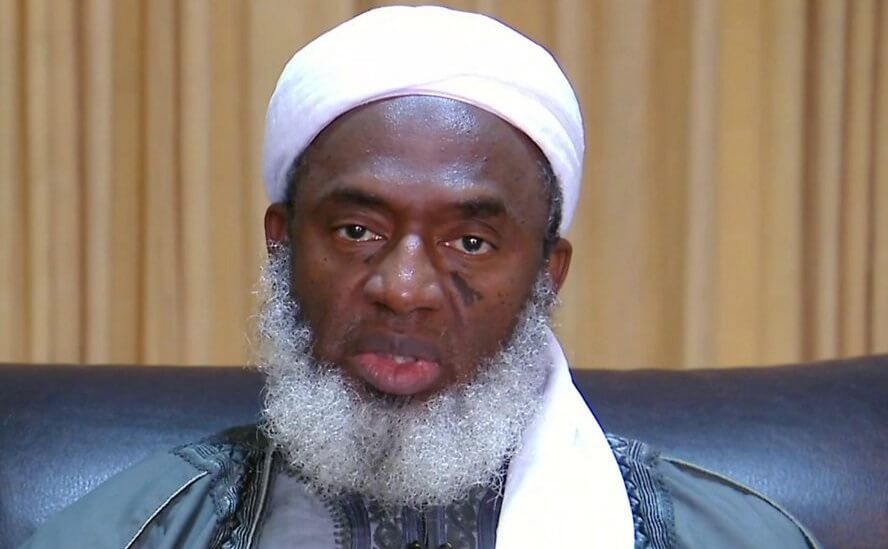
Gumi Questions FG’s Refusal To Dialogue With Bandits, Boko Haram, Cites Niger Delta Precedent
Controversial Islamic cleric, Sheikh Ahmad Gumi, has questioned why the Federal Government has not adopted dialogue with Boko Haram insurgents and armed bandits, drawing comparisons with peace efforts that helped end militancy in the Niger Delta. In a Facebook post on Saturday, Gumi recalled that former President Goodluck Jonathan and former Vice President Yemi Osinbajo engaged Niger Delta militants through visits to their camps as part of efforts to restore peace in the region. According to him, those engagements paved the way for programmes that significantly reduced militancy in the oil-producing region, demonstrating that dialogue could be an effective tool in resolving conflicts that seemed intractable. “The former President Jonathan visited delta militants in the creeks, so also the former vice president Osinbajo. They all came up with a program to tame the militants,” Gumi wrote, emphasising that the Nigerian government had successfully used engagement strategies in the past and could replicate such approaches in the current context. He wondered why a similar strategy has not been extended to armed groups operating in northern Nigeria, asking: “Who is going to visit BH and Bandits to tame them without fools castigating them?” , expressing frustration that those who advocate for dialogue are often met with public condemnation rather than constructive engagement.
Gumi has repeatedly advocated dialogue and rehabilitation as part of efforts to tackle insecurity in the North-West and North-East, positioning himself as a bridge between armed groups and the government. Over the years, he has visited bandit camps, particularly in Zamfara State, arguing that negotiations can complement military operations in achieving lasting peace, and that a purely kinetic approach has failed to yield the desired results. He has consistently maintained that the approach used to address the Niger Delta crisis should also be considered in tackling insecurity in northern Nigeria, pointing to the amnesty programme as a successful model of conflict resolution. The cleric has previously criticised the Federal Government’s classification of bandits as terrorist organisations, warning that the move could escalate insecurity and eliminate opportunities for dialogue, effectively closing the door on peaceful resolution. According to Gumi, some bandit groups had previously shown a willingness to negotiate and should not have been labelled terrorists, as such designations push them further into criminality and make engagement nearly impossible. “We don’t want to push them into terror beyond what they are doing now because it can get worse,” Gumi said in a viral video, cautioning that the government’s approach could backfire. He argued that some bandits in Zamfara State had in the past apprehended members of Boko Haram and handed them over to security agencies, suggesting that not all armed groups were aligned with extremist ideologies. The cleric further lamented that the designation has effectively shut down channels for engagement between clerics and armed groups, stating that “the only door that is remaining is for us clergy to go in and negotiate with them; that is closed permanently” , leaving little room for alternative pathways to peace.
READ ALSO:
- Police deny IGP Olatunji Disu issued shoot-on-sight order for illegal firearm carriers
- 2026 Ballon d’Or: Kane, Yamal lead race for football’s biggest prize
- Houthis Launch Missile at Saudi Arabia as Regional Tensions Escalate Amid US-Iran Strikes
His approach has remained controversial, drawing both praise and sharp criticism from various quarters of Nigerian society. While some have credited his interventions with facilitating the release of kidnapped victims, critics argue that engaging armed groups risks legitimising those responsible for killings, kidnappings and other violent crimes, potentially encouraging more criminal activity. The cleric has consistently denied supporting terrorism, insisting that his contacts with bandits and insurgents are solely aimed at ending violence through peaceful negotiations, and that his primary concern is the safety and well-being of ordinary Nigerians caught in the crossfire. In a statement issued in May 2026, Gumi expressed concern over what he described as persistent misrepresentation of his views, stating unequivocally that any suggestion of support for banditry or terrorism does not emanate from him, and urging the public to separate his advocacy for dialogue from endorsement of criminal activity.
The Federal Government introduced the Niger Delta Amnesty Programme in 2009 under the late President Umaru Musa Yar’Adua, marking a significant shift in how the state addressed the militancy crisis in the oil-producing region. The initiative, which was continued by former President Jonathan, encouraged thousands of militants to surrender their weapons in exchange for training, stipends and reintegration, contributing to a significant decline in attacks on oil facilities and restoring relative peace to the region after years of devastating conflict. Jonathan had previously visited militant camps in the Niger Delta while serving as vice president, saying the engagements helped lay the groundwork for the amnesty programme, and that direct interaction with the militants was essential to understanding their grievances and finding a path forward. According to former Niger Delta Minister Elder Godsday Orubebe, Jonathan undertook a perilous mission into the creeks, defying resistance from security chiefs who refused to allow the Vice President to visit the militants, demonstrating the political will required to pursue peace through unconventional means. Osinbajo also met militants, community leaders and traditional rulers during visits to the region as acting president in 2017, maintaining that dialogue should complement security operations in addressing the region’s challenges, and that the government must be willing to listen to all citizens regardless of their past actions. He defended the meetings, saying those in the region were Nigerian citizens with genuine grievances that deserved attention, and that ignoring their concerns would only perpetuate the cycle of violence.
Gumi has also called for a shift from a purely military approach to tackling insecurity, arguing that Nigeria has relied predominantly on military force since 2009, yet insecurity has continued to spread, indicating that the current strategy is not yielding the desired results. He advocated a broader rehabilitation framework involving engagement with armed groups, dislodging them from forests, enrolling their children in schools and creating pathways for surrender through amnesty arrangements, addressing the root causes of banditry rather than merely its symptoms. The cleric’s latest remarks add to the ongoing national debate over the most effective strategy for addressing the prolonged insurgency and widespread banditry affecting several northern states, with opinions sharply divided between those who favour military action and those who believe dialogue offers a viable alternative. While some stakeholders have advocated military action as the primary response, others have argued that dialogue and non-military measures could also play a role in ending the violence, pointing to the Niger Delta experience as evidence that engagement can work. As of the time of this report, the Federal Government had not issued an official response to Gumi’s latest comments, leaving the debate unresolved and the security situation in northern Nigeria continuing to deteriorate.
Gumi Questions FG’s Refusal To Dialogue With Bandits, Boko Haram, Cites Niger Delta Precedent
metro
Police deny IGP Olatunji Disu issued shoot-on-sight order for illegal firearm carriers
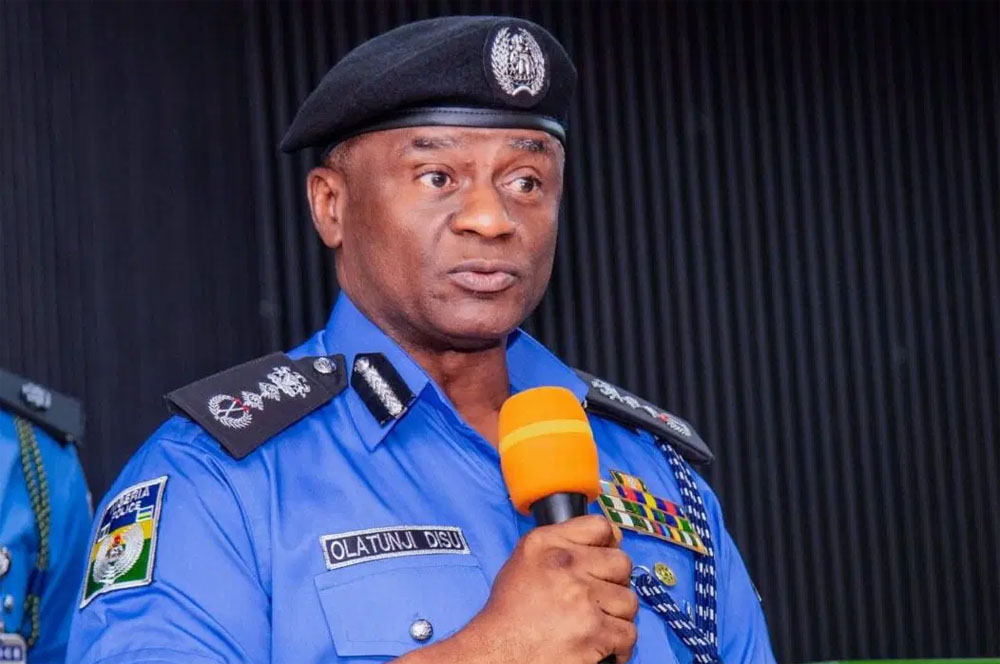
Police deny IGP Olatunji Disu issued shoot-on-sight order for illegal firearm carriers
The Nigeria Police Force (NPF) has dismissed reports alleging that Inspector-General of Police (IGP) Olatunji Disu ordered officers to adopt a shoot-on-sight policy against anyone found carrying illegal firearms, describing the claims as false, misleading and a misrepresentation of the police chief’s remarks.
In a statement issued by the Force Public Relations Officer, CSP Ani Iniedu, the police said the reports, which circulated widely on social media and some online platforms, took the IGP’s comments out of context and created a false impression that he had authorised the summary execution of individuals found with illegal weapons.
According to the Force Headquarters, the controversial remarks were made during a stakeholders’ security meeting in Makurdi, Benue State, where the IGP addressed security challenges facing the state and other parts of the country.
The police clarified that at no point during the meeting did IGP Disu instruct officers to shoot anyone merely for possessing an illegal firearm. Instead, he reminded officers that only security personnel legally authorised under Nigerian law are permitted to carry firearms and stressed the growing threat posed by the proliferation of illegal weapons across the country.
The IGP noted that criminal groups, including kidnappers, armed robbers, bandits, cultists and other violent offenders, continue to rely on illegally acquired firearms to carry out attacks, making it imperative for law enforcement agencies to intensify efforts to recover such weapons and prosecute offenders in accordance with the law.
READ ALSO:
- 2026 Ballon d’Or: Kane, Yamal lead race for football’s biggest prize
- Houthis Launch Missile at Saudi Arabia as Regional Tensions Escalate Amid US-Iran Strikes
- Bandits Abduct Zamfara LG Chairman, Kill Four Security Operatives
The police further explained that the IGP’s remarks focused on the enforcement of Force Order 237, the operational guideline that regulates the lawful use of firearms by police officers while performing their official duties.
According to the Force, Force Order 237 clearly outlines the circumstances under which police officers may use firearms, including situations involving self-defence, the protection of lives, preventing the escape of dangerous suspects, or responding to an imminent threat capable of causing death or serious injury. The guideline does not permit officers to shoot individuals solely because they are found in possession of illegal firearms.
“The Inspector-General reminded officers that the use of firearms is governed by Force Order 237 and that every police officer must operate strictly within the law and approved Rules of Engagement. At no time did he issue a shoot-on-sight directive,” the statement said.
The clarification followed widespread reports suggesting that the police chief had introduced a nationwide shoot-on-sight policy, prompting public concern and debate over the legality of such an order.
The Nigeria Police Force maintained that the reports were inaccurate and urged Nigerians to rely only on official police communication channels for verified information relating to national security.
The Force also reaffirmed its commitment to upholding the 1999 Constitution, respecting the fundamental human rights of all Nigerians and ensuring that policing operations comply with existing laws and professional standards.
It stressed that officers are expected to perform their duties responsibly, lawfully and with respect for due process, adding that the use of force must always remain proportionate, necessary and consistent with established policing guidelines.
The police further warned that the circulation of misleading reports on security matters could create unnecessary fear, undermine public confidence in law enforcement agencies and hamper ongoing efforts to tackle insecurity across the country.
To address the controversy, the Force released the full video of the IGP’s remarks during the Makurdi stakeholders’ meeting, saying the recording provides the complete context of his comments and clearly shows that no shoot-on-sight directive was issued.
Reiterating its position, the Nigeria Police Force assured Nigerians that it remains committed to protecting lives and property, combating violent crime and enforcing the law professionally while operating within the limits of the Constitution, Force Order 237 and other relevant legal provisions.
Police deny IGP Olatunji Disu issued shoot-on-sight order for illegal firearm carriers
-

 metro3 days ago
How to apply for FG’s YouthCred loan and qualify for up to ₦2 million
-
 News3 days ago
NACOMYO urges greater Muslim youth participation in politics at Lagos summit
-
 Politics3 days ago
Ondo Speaker given Sunday deadline to resign or face impeachment
-
 Opinion3 days ago
UI, UCH and the Question of Inclusive Leadership
-

 Business3 days ago
Dangote Refinery resumes naira petrol sales, fixes gantry price at ₦1,215 per litre
-

 News3 days ago
Kalu denies ₦1bn church budget claim, says actual allocation is ₦780m
-
 Politics2 days ago
Presidency, Obasanjo attack Atiku over US lobbying, reopen decades-old loyalty dispute
-

 News3 days ago
Nigerian researcher develops AI system to transform marine conservation, fisheries management