

Opinion
Playing Scrabble with the murderous king of Orile-Ifo
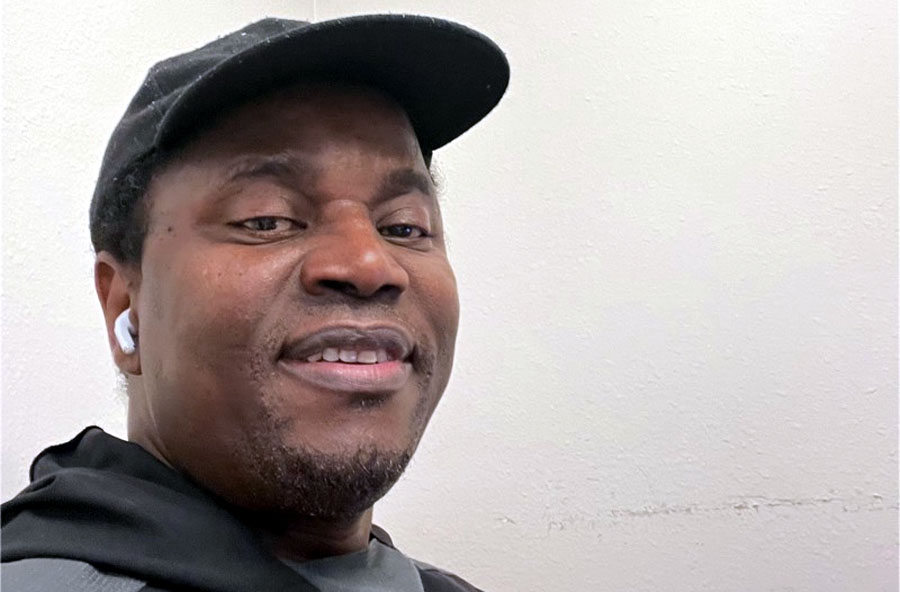
Playing Scrabble with the murderous king of Orile-Ifo
Tunde Odesola
(Published in The PUNCH, on Friday, February 7, 2025)
Despite being jobless during the decade-long Great Depression that ravaged the industrialised West, American architect, Alfred Mosher Butts, never turned his mind into the devil’s workshop nor allowed idleness to find employment for his hands.
Butts reckoned Americans needed an indoor game to ease the stress of the biting depression, so he invented the trademark crossword game called Scrabble in 1938. The word ‘scrabble’, according to the Cambridge Dictionary, means ‘to use your fingers to quickly find something that you cannot see’.
Ever since I learned to play Scrabble in the 80s, and going ahead to become champion at the University of Lagos and Abia State University respectively, wordplay has luxuriated in my heart.
Everywhere I go, I unscramble the words on vehicles, billboards, number plates, packs, etc moulding letters into words to test and increase my word-power, and sharpen my word recall skill. Everywhere I go, I carry a pen, jotter and dictionary with me, writing down words and reading the dictionary from páálí to páálí.
Scrabble is psychedelic: a stimulant when you win; a depressant when you lose.
Though we lived two houses apart on Omotoye Estate, Orile Agege, Lagos, Uncle Paul Bassey – FIFA and CAF instructor – was already a national sports oracle when my homeboys and I were fledgling undergraduates in the second half of the 1980s. Good Lord, Uncle Paul loves Scrabble! Though he was our idol, we didn’t have the chance to know him intimately until one day when I set a trap for him.
READ ALSO:
- Gunmen kidnap poly student, stray bullet kills woman in Delta
- FG asks NCE to scrap JSS, SS education system
- MAN warns against further hike in electricity tariff
That day, as I opened the gate to our house while seeing a friend off, I saw Uncle Paul, aka PB, walking up the road. I put my hand through an opening in the gate and intentionally delayed the locking of the gate from outside while I waited for him to come within earshot.
When he was within range, I greeted him and stepped onto the road, alongside my friend, and I suddenly began, “Yesterday, I played five premiums in a game. I beat Lanre so badly, I felt pity for him.” My friend looked nonplussed, wondering how Scrabble crept into the little talk we were having before we got to the gate.
But the arrow of my message had hit the bull’s eye. Uncle Paul stopped and looked back, “You play Scrabble?” he asked. “Yes, sir,” I said, a laughter of accomplishment welling up inside me. “Can you meet me in my flat at PUNCH Quarters by 10 tonight?” he said. That was the moment I knew my rascality na follow come. We met at 10 pm, played four games and began a lifelong journey of mentorship, love, trust and integrity.
This was how I opened the door of Uncle Paul’s home to my scrabble-playing buddies on the estate and beyond. Here comes our line up: Niyi Adebayo (Poovy), Tayo Odusina (Scrappy), Seyi George, Adeyemi Adebayo aka Kisko (deceased); Leslie, Segun Adeyina (OB), Charles Onyeshidi (Charlo), Dele Taiwo; Duke Orusara (Ikéràbà), Lai Ibidunni (Oòshà), Kola Dada (Ògo), Biodun Oyegunle (Longman), Rashidi Odurinde (Ayétótó), among others. This is the first time ever I’m divulging the secret of how I ambushed PB and lured him to be my friend.
Every Saturday morning, we would gather at PB’s flat, play Scrabble late into night, sleep in his flat while some would go home. We would wake up to Scrabble early Sunday morning and continue till late into the night, with food and drinks provided by PB, whose wife, Aunty, and all-male children were always happy to see us.
Oh, Aunty! May her sweet soul continue to rest in peace. She was particularly pleased to welcome us because we kept her husband company at home during weekends. With many family members living under his roof, Uncle Paul’s house was a beehive. PB, who is currently the Chairman, Akwa United FC, was a former sports editor of PUNCH Newspaper, deputy General Manager, Champion Newspapers, before establishing Today Sports, a national sports newspaper which has been rested.
READ ALSO:
- Hajj: Lagos extends payment of fare to Feb 10
- US citizens, others rushing to Nigeria for kidney transplant – Shettima
- Romance Scam: Nigerian man arrested for defrauding American citizen of $597,000
To play Scrabble, you dip your hand into a small sack containing 100 tiles of calibrated English alphabets and scrabble for seven letters which you put on a rack, unscrambling them to form English words that you place on a tile board to earn a score. If you play all seven letters at once, bingo! – that’s a premium. A premium score gives you 50 additional marks to your original score.
In a video which went viral for its evilness, 73 years old Pa Areola Abraham was first shown kneeling and later prostrating on the floor as a nearby voice, which investigation said belonged to Ogunjobi, rained curses and death threats on him, his wife and children while physical assault lasted.
By his heartless conduct, the suspended king of Orile-Ifo, Òlórí-Òfo Abdulsemiu Ogunjobi, is likely not lettered enough to play the beautiful game called Scrabble. I’ll play some Scrabble with the letters of his village, O-R-I-L-E I-F-O, to x-ray the character of the bloodthirsty beast called king. Unscrambling the eight letters of the hamlet will give you many six, five, four, three and two-letter English anagrams.
However, I’m only going to dwell on the words that describe Ogunjobi, the misfit monarch, retired ruffian and serving scoundrel on the throne. O-R-I-L-E I-F-O will give you F-O-O-L. No be so? Na so. It will also give you F-O-O-L-E-R, F-O-I-L-E-R, O-I-L-E-R and O-R-I-O-L-E.
Are you following me, dear readers? Everyone knows who a fool is, except a fool. The F-O-O-L who calls himself a monarch feels that inasmuch as his face isn’t in the depressing video, he stands absolved. That assumption shows the shallow thinking of the low-cadre officials of the Nigeria Police. In the main, it’s this cadre of officers, with their sawdust thinking, that investigate, prosecute and mess criminal cases up in court.
A F-O-O-L-E-R is someone or a thing that fools, tricks or deceives someone. Ogunjobi has been living in a fool’s paradise, thinking himself a king when he’s worse than a slave. For years, he has masked his barbarity with braggadocio that indigenes of Orile-Ifo fearfully took his butterfly for an eagle, and he soared to perch on the sun…burnt he tumbled down broad daylight ashes.
A F-O-I-L-E-R is a person who frustrates, foils or defeats. As a retired police inspector, Ogunjobi should be a foiler of crime but his attack on the Ile Oluji-born Pa Abraham showed he must have been a foiler of innocent members of the public. Rather than be a legit F-O-I-L-E-R, he must have been an illegal bunkerer, an O-I-L-E-R in the corrupt Nigerian system. I need no ‘Ga’nu si’ alfa or a miracle-inventing pastor or fake babalawo to tell me that Ogunjobi never collected huge bribes while in the police. When you see the mouth of the grasscutter, you will know it can eat foliage.
READ ALSO:
- Reps panel: Ibadan, Warri, Lagoon among 31 proposed new states
- Liverpool thrash Tottenham 4-0 to reach League Cup final
- Decomposing body of kidnapped Anambra Lawmaker found near 2nd Niger bridge
Still scrabbling. When you shuffle the tiles O-R-I-L-E I-F-O, you will get O-R-I-O-L-E. An Oriole is a beautiful, vibrant songbird resplendent in its yellow and black or orange and black plumage. It is found in Europe and North America. Yellow and black colours are good on an oriole. Black and Orange colours are good on an oriole. But they are not good on Ogunjobi, whose skin typifies the mishmash Yellow Fever in Fela Anikulapo-Kuti’s 1976 monster hit.
A Yoruba anagram of O-R-I-L-E I-F-O is O-F-O. O-F-O means a misfortune or empty barrel. I thought Ogunjobi had the Ogun State Governor, Prince Dapo Abiodun; the Inspector General of Police, Kayode Egbetokun; and Aso Rock in his pocket when he boasted of being the owner of Nigeria, the police and that he could kill Abraham without repercussions. But as the empty barrel that he is, Ogunjobi couldn’t meet his bail conditions and has yet to be released from prison days after he was charged to court. I had thought he owned the Central Bank.
The police shouldn’t treat Ogunjobi with the gloves of camaraderie. He should be treated like a criminal suspect because Abraham said in the press conference facilitated by the Committee for the Defence of Human Rights that Ogunjobi had been involved in numerous murders in Orile-Ifo.
The score is now 2-2 between Osun and Ogun states. Osun scored the first goal with its Canadian jailbird king, who belches hemp smoke like a locomotive train. Also in Osun, we have a warmongering king in the Isokan Local Government Area, who called for mayhem in favour of the Peoples Democratic Party. In 2022, Ogun State scored its first goal when the Onifojege of Fojege, Nureni Oduwaye, blinded a chef for dancing with his queen. Ogunjobi has now equalised for Ogun State: 2-2.
The person who stole palm oil from the attic is less guilty than the one who collected the oil from the thief on the ladder and put it down. Yoruba traditional rulers dancing the dance of shame are less guilty than the politicians who enthrone them. During elections, politicians need hoodlums to kill, maim and snatch ballot boxes. After elections, some of the killers turn up to be rewarded with traditional stools. One of such hoodlums has Oshodi in his vice grip and he’s scheming to be rewarded with a crown.
I wonder what would have happened to the septuagenarian if Ogunjobi and his mob had met him on a lonely road at night. Governor Abiodun has taken a commendable step. He should prove he’s got the balls by going further to do what ex-Governor Olusegun Mimiko, did to a Deji of Akure, who publicly fought his wife.
Governor Abiodun, please, do the needful.
Email: tundeodes2003@yahoo.com
Facebook: @Tunde Odesola
X: @Tunde_Odesola
Playing Scrabble with the murderous king of Orile-Ifo

Opinion
2027: Competence, Not Zoning, Should Decide Nigeria’s Next President — Imasuagbon
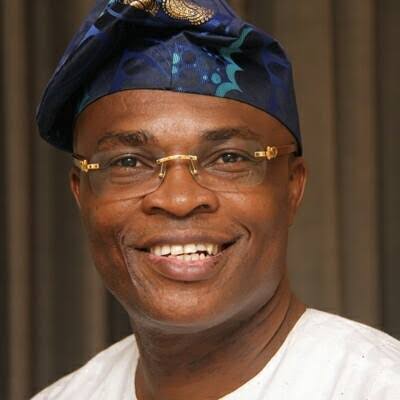
Nigerians should look beyond ethnicity, region and the longstanding debate over rotational presidency when choosing the country’s next leader, according to a chieftain of the African Democratic Congress (ADC), Kenneth Imasuagbon.
The former Edo State governorship aspirant said the priority ahead of the 2027 election should be finding a president with the ability to confront Nigeria’s economic, security and infrastructure challenges.
Speaking to journalists in Benin, Imasuagbon argued that presidential rotation is not a requirement of the Nigerian Constitution and should therefore not outweigh the question of competence.
He said voters should be more concerned about replacing poor schools with better ones, improving healthcare and addressing hardship than debating where the next president comes from.
Imasuagbon specifically appealed to voters in the South to support former Vice President Atiku Abubakar, who is contesting the 2027 presidency on the ADC platform.
According to him, Atiku has demonstrated the experience and determination needed to improve the country, describing the former vice president as someone capable of promoting national unity and fairness.
He also accused the Bola Tinubu administration of worsening economic pressure through policies including the removal of fuel subsidy, while expressing concern about the condition of roads, electricity and other infrastructure.
Imasuagbon argued that the next administration must focus on practical improvements in areas such as power, transportation, employment, security and public services.
The ADC chieftain also dismissed the idea that the ruling All Progressives Congress (APC) would automatically benefit from its incumbency advantage in 2027.
He maintained that the electorate ultimately determines the outcome of an election, arguing that voters could change the political direction of the country if they were determined to do so.
Imasuagbon further criticised what he described as regional and ethnic considerations in the distribution of political appointments and opportunities, insisting that the next president should give Nigerians across different parts of the country a sense of belonging.
His comments come as political parties and their candidates intensify preparations for the 2027 presidential election.
Opinion
Lesson from Dotun Oladipo’s Brave Daughters, by Bamidele Johnson
Lesson from Dotun Oladipo’s Brave Daughters, by Bamidele Johnson
I hope to grow old. I want to see my kids become real adults, find their own feet, make mistakes, recover from them, and perhaps one day complain that their own children are giving them grey hairs. I want that plainly stated before anything else, as everything that follows might read as a man agreeing to an early exit rather than a man simply being honest about the odds.
I want the decades. I want to become the grandfather who repeats the same stories until nobody bothers correcting him anymore. But wanting a thing and being granted are different things. The last year has made that difference harder to ignore than I would like. I have lost many friends recently to keep thinking that optimism is my natural resting state. Some of these men had better blood pressure than mine, better habits, better everything that is supposed to count. It did not save them.
There is no formula I know that reliably separates the men who make it to 70 from those who do not. Anyone who says he knows one is selling something. So, I do not assume that old age is an already booked destination. Even if I once did, which I doubt, the last three years have cured me of such an illusion. As such, I treat it as a hope rather than an expectation, and I have found that a more honest way to live.
It is exactly why I want something placed on record now, while I am still able to place things on record, rather than leave it for people to guess what my wishes were in the fog of a funeral week. If I do not make old bones, my children are not to be asked to read tributes at my funeral. Not one line, however short, however lovingly written.
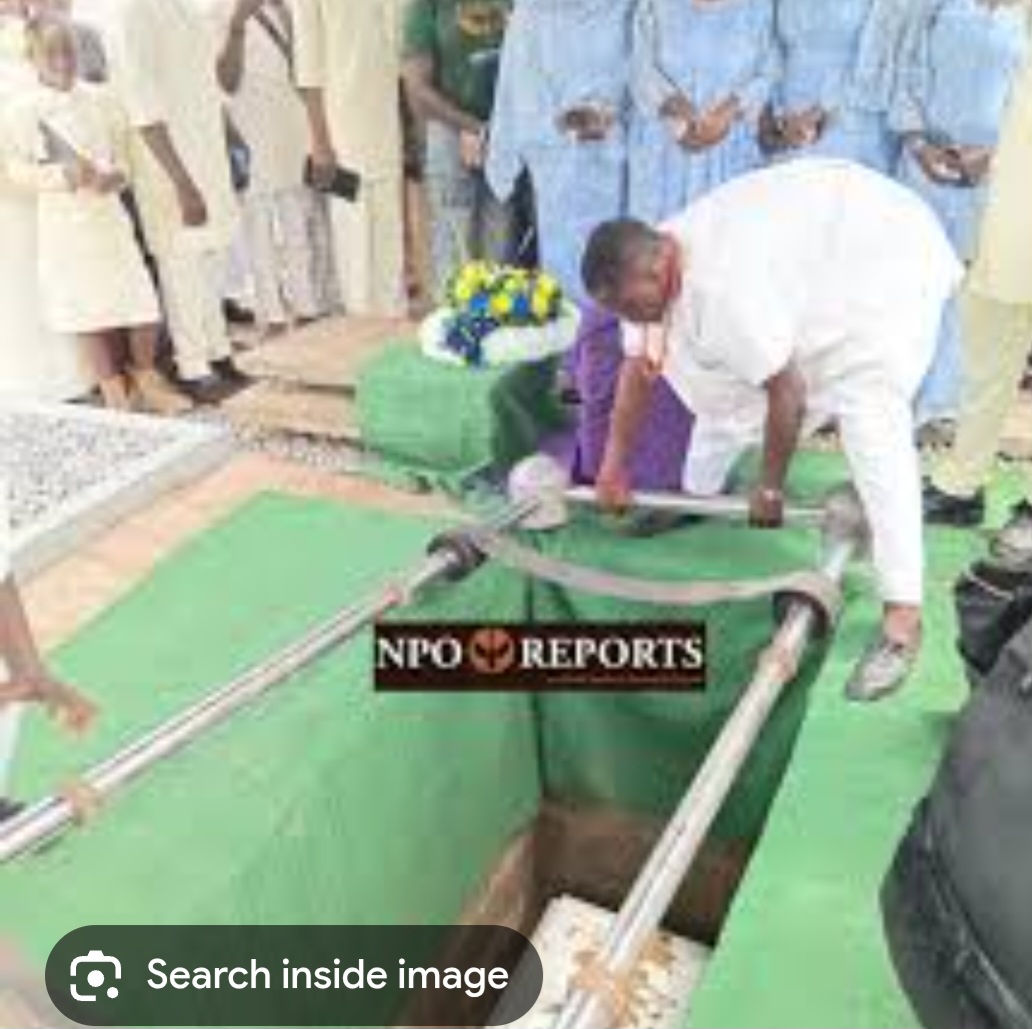
This, for me, was settled today rather than re-opened. At Dotun Oladipo’s funeral service, his three daughters took turns to read their tributes to their dad, and I found myself watching them with awe. There was a kind of strength in them that I do not possess. It is the strength needed to stand in front of a hall brimming with grieving adults and speak about a man they have just lost. Forever. Strength, however, is not the same as ease. I could see plainly what that strength was costing them as they read. Their voices caught. Their composure held and then did not hold and then held again through sheer will.
In front of them, in the pews, men and women considerably older than them came undone in ways the girls themselves were somehow managing to resist. I went mightily close. Some of the sobbing was quiet, the type people try to fold into a handkerchief. Some of it was not quiet at all, the kind that announces itself whether or not you want it.
Those young women honoured their father with a grace that is beyond me. What they did was astonishing. So, what I am attempting is an observation of a custom I have now watched wound people. This was not the first time I had watched this particular ritual extract more than it should from people already running on fumes. I saw an earlier and harder version of it at a friend’s wake back in 2015.
The first son was called forward to read his father’s tribute, and he could not do it. He tried, but the words would not come, and he stood there in front of a crowd of mourners, with his grief simply refusing to organise itself into sentences. The officiating minister, rather than releasing him from the task, urged him to continue. I sat fizzing with sorrow and ire. He could not go on and, eventually, the minister accepted, but not before insisting a while longer than it should have reasonably taken. His younger brother was called up next, presumably on the theory that if one grieving son could not manage it, maybe another one could. He flunked it in the same way. Grief does not distribute itself more conveniently among siblings just because a programme has been printed and needs to be followed.
I have turned that memory over many times since, trying to work out why this part of the rites is treated as mandatory in the first place. I have not found a satisfying answer. Maybe it comes from a belief that a child’s words carry more weight than anyone else’s, which may even be true, but weight is exactly the problem when those carrying it are struggling to hold themselves together with nothing but adrenaline and the fear of dissolving in public.
Maybe it is simply inertia, the reason we still do a hundred things at funerals that nobody can explain the original purpose of. Either way, I have stopped looking for the justification. I no longer think one exists that is good enough to weigh against what I watched happen to that boy in 2015.
So, let this stand as my instruction rather than my preference, the kind of thing I would rather state plainly now than leave for my children to infer later from how uncertain I sound when the subject comes up in passing. If I do not get the old age I am hoping for, my children will not be asked to read a single word over my body. Someone else can speak for me. A friend, a stranger with a steadier voice and a smaller stake in the loss, anyone whose grief will not be quite so total that standing upright becomes almost impossible.
My children, of course, will sit in front and fall apart if that is what the day requires of them, but without the microphone. That, at least, is one small mercy I intend to arrange for them while I am still here to arrange it.
Dotun deserved every bit of the send-off his daughters gave him today, and I suspect he would have been the first to tell them to sit down and let someone else carry the weight for a while. He did not get a say in that, as none of us ever do once we are the ones being spoken of rather than the ones speaking. Rest well, Dotun. You raised three young women whose strength I will not soon forget. That alone says everything worth saying about the man you were.
Opinion
‘Tinubu Will Win Again in 2027’ — Charismatic Bishops’ Secretary
‘Tinubu Will Win Again in 2027’ — Charismatic Bishops’ Secretary
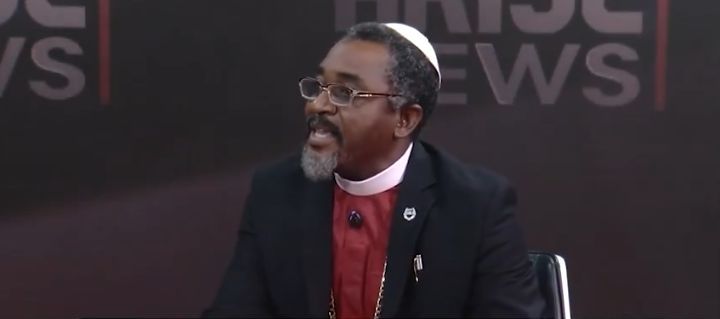
A senior Nigerian cleric, Archbishop Chivir Chianson, has declared that President Bola Tinubu will retain the presidency after the 2027 general election, attributing the prediction to a message he said came from God.
Chianson, who serves as Secretary General of the Charismatic Bishops’ Conference of Nigeria, made the statement while appearing on Arise Television on Saturday.
Rather than basing his prediction on political calculations, the archbishop said his confidence came from what he described as the prophetic role of bishops.
He maintained that the conference had previously spoken about Tinubu’s political future based on what he said was divine revelation and that the President would return for another term.
Chianson also predicted that Tinubu’s performance would improve if he wins the 2027 election.
READ ALSO:
- DSS warns Osun churches, mosques, markets over alleged terrorist attack plot ahead of 2027
- ‘Tinubu Will Win Again in 2027’ — Charismatic Bishops’ Secretary
- Fake miracles, bogus grants: How clerics allegedly fleece Nigerians of millions
Addressing the political opposition, the cleric said the bishops could not be blamed if rival parties failed to unite or organise themselves effectively ahead of the election.
He also sought to clarify the position of the bishops when dealing with government, saying their role in speaking truth to power did not mean they should approach political leaders with hostility or disrespect.
According to him, the Constitution, alongside their religious convictions, should guide how they engage the President and the country.
Chianson said he was sufficiently confident in his prediction to promise that he would return to the Arise TV studio after the 2027 election, when he expects the result to demonstrate that the bishops’ prophecy was correct.
His comments add a religious dimension to the increasingly active political conversation surrounding the 2027 presidential race.
‘Tinubu Will Win Again in 2027’ — Charismatic Bishops’ Secretary
-

 Politics3 days ago
2027: Northern Lecturers Back Tinubu, ASUU Disowns Endorsement
-
 Sports2 days ago
‘I Was Never the Chosen One’ — Dembele Responds to Mbappe
-

 International1 day ago
Islamic Council Condemns Attempted Attack on Holy City of Mecca
-

 metro2 days ago
Lagos Power Outage: Ikeja Electric Blames TCN as Businesses, Homes Groan
-
 News1 day ago
Keep Politics Out of My Office — Ogbomoso Grand Chief Imam Warns Politicians, Bloggers
-

 Education2 days ago
JAMB Moves 2027 UTME Time — Here’s What Candidates Need To Know
-
 Politics2 days ago
2027: APC Governors Reject Wike’s Rainbow Coalition, Insist on Party Loyalty
-

 metro2 days ago
A Son Wouldn’t Have Done Better — Dangote Speaks on Daughters, Succession