

Health
US citizens, others rushing to Nigeria for kidney transplant – Shettima

US citizens, others rushing to Nigeria for kidney transplant – Shettima
Vice President Kashim Shettima has observed that Nigeria is witnessing a surge in reverse medical tourism, with patients from the United States and other countries thronging the nation’s hospitals to seek affordable and high-quality kidney transplants.
The vice president attributed the choice of Nigeria for treatment to affordability and high-quality expertise within the country’s medical community.
Speaking on Thursday during a courtesy visit by the Nigerian Association of Nephrology (NAN) at the Presidential Villa ahead of the association’s 37th Scientific Conference, Mr Shettima stressed the need for further investments in specialised medical education to sustain this progress.
He said, “There is reverse medical tourism these days fundamentally because of the level of care at some of our hospitals. Recently, 13 patients from the United States came to Nigeria for kidney transplants at Zenith Medical and Kidney Centre because it is much cheaper here, and they receive the same level of expertise available anywhere in the world.”
The vice president praised Olalekan Olatise, chief medical director of Zenith Medical and Kidney Centre, for his contributions to kidney care, describing him as “a very decent man who is highly altruistic” in his efforts to assist humanity.
Mr Shettima, however, noted the financial strain on patients, many of whom sell their homes or rely on government support to afford transplants.
“While getting a kidney transplant is a significant challenge, life after a transplant presents even more difficulties. Many patients struggle with the cost of post-transplant care, including immunosuppressants, which are essential to maintaining their health,” he said.
The vice president recalled healthcare initiatives he had embarked on during his tenure as Governor of Borno State, as well as the success of ongoing free maternal care programmes he introduced.
“At a hospital in my neighbourhood, we provide a bag of rice and beans to every new mother. They record about 30 births daily, more than even the University of Maiduguri Teaching Hospital (UMTH). Over 4,000 deliveries have been recorded in less than eight months, with all medical expenses covered, including caesarean sections,” VP Shettima said.
The vice president also reiterated the need for Nigeria to build its medical workforce, noting that when he was in Borno State as governor, he took 60 female students to study medicine in Sudan.
“About 58 of them completed their education and passed the Medical and Dental Council of Nigeria (MDCN) licensing exams. Most of them are now in their medical residency programmes. The beauty of training women in medicine is that they are more likely to stay back and serve their communities.
“We must make deliberate and targeted investments in specialised healthcare education in this country,” the vice president said.
Earlier, Mr Olatise, who also serves as the Chairman of the Local Organising Committee (LOC) for the 37th Scientific Conference and Annual General Meeting of the Nigerian Association of Nephrology, said the conference with the theme, “Revolutionizing Kidney Care in Nigeria: Evidence-Based Innovations,” will take place in Abuja from 19 to 21 February.
The association also announced plans to honour Vice President Shettima with the Kidney Champion Award in recognition of his advocacy and direct support for kidney patients, including funding immunosuppressants and proposing the establishment of a specialised laboratory for post-transplant care.
“We have noticed the role the vice president is playing in looking after kidney patients in the country. He has been involved in purchasing immunosuppressants, providing post-transplant care, and even considering setting up a lab to monitor calcineurin inhibitor (CNI) levels for kidney patients. This award is a recognition of his commitment,” Olatise said.
The conference is expected to attract over 600 participants, including Nigerian medical professionals based abroad, pharmaceutical companies, hospitals, and manufacturers of dialysis consumables.
US citizens, others rushing to Nigeria for kidney transplant – Shettima










Health
“Cheap Alcohol Fuels Banditry”: NAFDAC Chief Stands Firm on Sachet Ban

Nigeria’s top food and drug regulator has linked the widespread availability of pocket-sized alcohol directly to violent crime and a mounting public health crisis.
Health
Kano diphtheria outbreak: Over 50 children reportedly dead as lawmakers demand urgent action
Kano diphtheria outbreak: Over 50 children reportedly dead as lawmakers demand urgent action
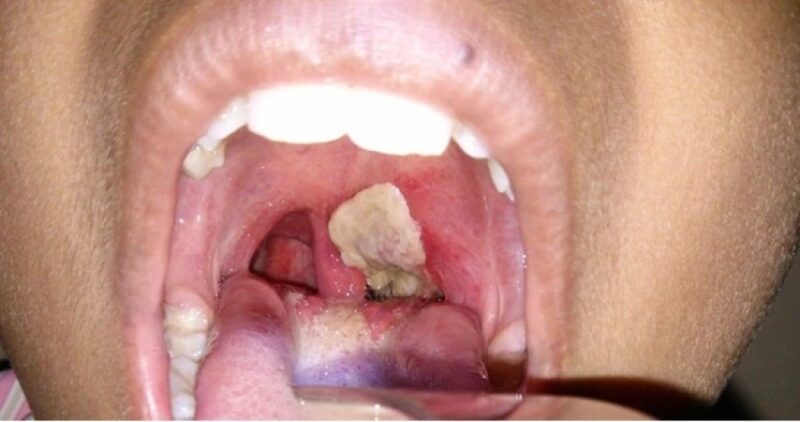
The Kano State House of Assembly has called on Governor Abba Kabir Yusuf to urgently intervene in a reported diphtheria outbreak in Rano Local Government Area, where lawmakers say more than 50 children have died.
The alarm was raised during Monday’s plenary after the member representing Rano Constituency, Ibrahim Muhammad, presented a motion of urgent public importance before the House, presided over by Speaker Ismail Falgore.
Muhammad said the outbreak had particularly affected communities in Ridin and Sabuwar Kaura, where more than 50 children were reportedly killed by the disease.
He said emergency measures had already been initiated, including the purchase of medication and deployment of health workers to the affected communities. However, the lawmaker stressed that the response needed to be significantly strengthened to contain the outbreak and prevent additional deaths.
Muhammad appealed to Governor Yusuf and the Kano State Commissioner for Health to provide further emergency assistance to the affected communities, warning that the disease had spread extensively in the area.
He also expressed concern over the recurrence of the outbreak, noting that a similar incident had reportedly claimed several lives in the area last year.
The situation, according to another lawmaker, has also raised concerns beyond Rano. Supporting the motion, the member representing Kiru Constituency, Usman Abubakar Tasiu, said the outbreak had reportedly spread to communities in Kiru, including Kwarin Dangora, Dangora town and Yelwa.
READ ALSO:
- 2027: APC Denies Withdrawing Tinubu Campaign Council List Amid Controversy
- Stop Inviting African Dictators, Falana Tells NBA Over George Weah Invitation
- UNIZIK Suspends Professor Over Viral Sexual Assault Allegation as Probe Continues
Tasiu disclosed that an APC youth leader in Kiru reportedly lost two children to the disease within one day. He called for the establishment of an emergency committee to coordinate the response across affected local government areas.
He proposed that the emergency response should cover Rano, Tudun Wada, Kibiya, Bunkure, Bebeji and Kiru, amid concerns that transmission could spread further without stronger intervention.
Another lawmaker, Saleh Ahmad, representing Dawakin Tofa Constituency, urged the state government to intensify vaccination and other preventive measures. He warned that diphtheria is contagious and can spread rapidly to neighbouring communities.
The Majority Leader of the House, Lawan Husseini, also urged the state government to invoke the provisions of the state’s Health Protection Law to contain the outbreak.
According to Husseini, the law empowers the government to provide emergency relief and free healthcare while allowing authorities to isolate affected persons and restrict movement where necessary in areas affected by infectious diseases.
The Assembly subsequently approved the motion and directed its Committee on Health to engage the Ministry of Health on the implementation of the law and the provision of emergency relief to affected communities.
The latest development is particularly concerning because Kano has historically carried a large share of Nigeria’s diphtheria burden. Previous health surveillance data showed that Kano recorded thousands of suspected and confirmed cases during Nigeria’s prolonged diphtheria outbreak, alongside hundreds of deaths.
Diphtheria is a serious bacterial infection that can cause severe illness and death, particularly among people who are unvaccinated or inadequately vaccinated. The disease can spread through respiratory droplets and close contact, making rapid detection, treatment, contact tracing and vaccination important components of outbreak control.
The reported deaths in the current Rano outbreak are based on statements made by Kano lawmakers. The specific death toll should therefore be treated as reported by the Kano State House of Assembly pending further confirmation from relevant health authorities.
The lawmakers’ intervention puts additional pressure on the state government to verify the scale of the current outbreak, strengthen disease surveillance, provide medicines and other emergency supplies, intensify vaccination and ensure that affected residents have timely access to treatment.
The immediate priority is to prevent further deaths and stop the reported spread of the disease from Rano to neighbouring communities.
Kano diphtheria outbreak: Over 50 children reportedly dead as lawmakers demand urgent action
Health
FG strengthens emergency response, releases medical hotlines for Nigerians
FG strengthens emergency response, releases medical hotlines for Nigerians
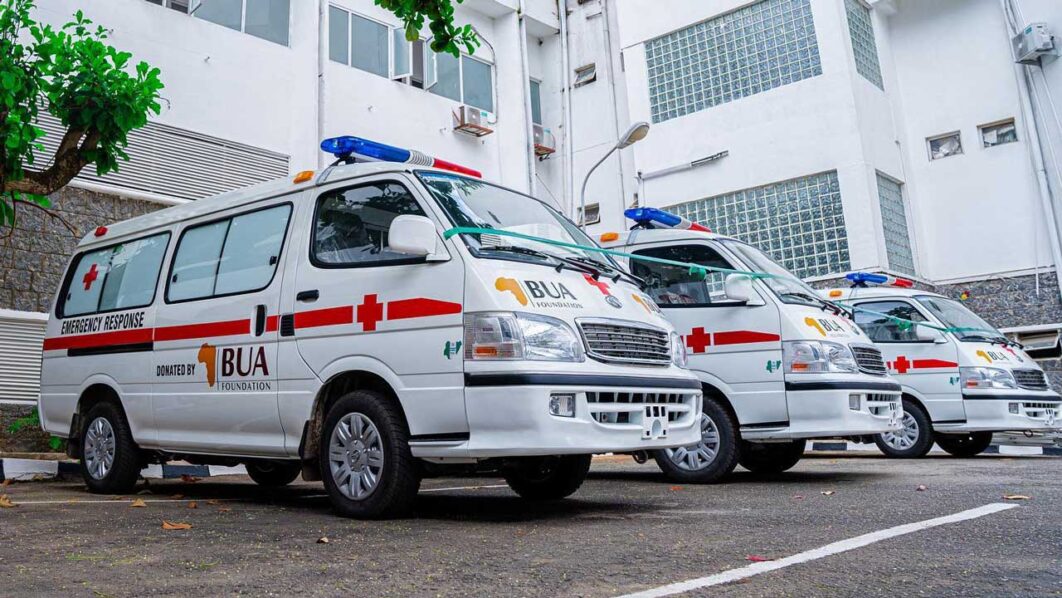
The Federal Government has urged Nigerians to dial 112 whenever they face a medical emergency requiring urgent attention, as it released a list of emergency medical call centre numbers covering states across the country and the Federal Capital Territory (FCT).
The National Emergency Medical Service and Ambulance System (NEMSAS) said the toll-free 112 emergency number serves as a central access point for emergency medical assistance, while several states have additional dedicated numbers to facilitate faster responses.
NEMSAS said its emergency response system is designed to provide rapid intervention, professional medical care and life-saving services, with emergency responders available around the clock.
The agency released emergency contact numbers covering 35 states and the FCT, although it listed the emergency call centres in Benue and Imo as not operational.
Under the emergency contact arrangements, residents of Abia can call 112 or 08000000800, while those in Adamawa can use 112, 1755 or 07011111443.
In Akwa Ibom, the listed numbers are 112, 08000022322 and 08000022422, while residents of Anambra can call 112, 5111 or 08002200008.
Residents of Bauchi can dial 112 or 07038636433, while Bayelsa residents can use 112 or 08002200223. NEMSAS listed Borno as 112 or 08000000033, while Cross River has 112 as its listed emergency number.
For Delta, the listed contacts are 112, 07041008130 and 07041008131, while residents of Ebonyi can call 112, 08086446891 or 08086445736.
READ ALSO:
- Atiku Vows to Restore Fuel Subsidy If Elected in 2027
- M23 Rebels Impose Ebola Movement Restrictions as DRC Conflict Complicates Outbreak Response
- ‘Show Me the Law’: Lawyer Questions FG’s Reluctance to Defend Kanu’s Conviction
In Edo, residents can use 112, 739 or 09037999871, while Ekiti lists 112, 08000606606, 0811111122, 0811111133, 0811111144 and 0811111155.
Residents of Enugu can call 112, 09074996090 or 07066466429, while Gombe lists 112 or 07033825646. Jigawa has 112 as its listed emergency number, while Kaduna residents can call 112 or 08064111599.
For Kano, the listed emergency contacts are 112, 09019999920 and 09049999914. Katsina and Kebbi each have 112 listed as their emergency number.
Residents of Kogi can dial 112, while Kwara residents can call 112, 09062010001 or 09062010002.
In Lagos, the listed emergency numbers are 112 and 767, while Nasarawa residents can use 112 or 08144911269.
Residents of Niger State can call 112, 08022422953 or 08155577513, while those in Osun can use 112, 08111110532 or 08111110561.
For Ogun, the listed numbers are 112 and 08112000033, while Ondo residents can call 112 or 08055300300.
Residents of Oyo can dial 112 or 615, while Plateau lists 112 or 09136982496.
In Rivers, residents can call 112, 09040222281, 09040222283 or 09040222285, while Sokoto residents can use 112, 07045963318 or 07071765080.
For Taraba, the listed emergency contacts are 112, 07041122777 and 07041100777, while Yobe residents can call 112, 09169981792 or 08000090009.
Zamfara has 112 as its listed emergency number, while residents of the FCT can call 112, 09157892931 or 09157892932.
The release is part of ongoing efforts by the Federal Government to strengthen emergency medical services in Nigeria, improve ambulance response and reduce delays in transporting patients to appropriate healthcare facilities.
NEMSAS has previously disclosed that emergency medical service structures have been established across the 36 states and the FCT, although the level of operational readiness differs from one state to another.
The agency has also identified challenges affecting the nationwide use of 112, including connectivity problems and inadequate public awareness. It has called for stronger collaboration with telecommunications providers to improve access to the emergency line.
To complement the national number, NEMSAS has therefore encouraged states to maintain dedicated emergency call centres and provide alternative contacts for residents.
The Federal Government is also pursuing a digital emergency dispatch platform designed to connect emergency callers, ambulance operators and healthcare facilities. The system is expected to support faster dispatch, patient tracking, referrals and coordination between emergency responders and treatment centres.
NEMSAS has expanded the deployment of emergency response assets, including ambulances and other vehicles designed to reach communities that may be difficult to access with conventional emergency vehicles.
The agency’s Rural Emergency Service and Maternal Transport (RESMAT) programme is also aimed at improving access to emergency transportation for pregnant women, newborns and other residents in underserved communities.
NEMSAS has called for greater public awareness of emergency services and urged Nigerians not to delay seeking help when confronted with life-threatening situations.
The agency advised residents to save 112 and their relevant state emergency numbers on their mobile phones so they can quickly request assistance when needed.
NEMSAS stressed that its emergency medical response service operates 24 hours a day, seven days a week, and that prompt access to professional emergency care can be critical in saving lives.
FG strengthens emergency response, releases medical hotlines for Nigerians
-

 Auto3 days ago
Kaduna to Lead Govt Patronage of Local Vehicles as Sani Unveils Peugeot 5008
-

 metro2 days ago
El-Rufai Demands ₦10bn from Defence Minister Over Southern Kaduna Killings Allegation
-

 metro3 days ago
Socialite Igho ‘Tiny’ Ubiribo Dies After Penis Enlargement Surgery
-

 metro2 days ago
Catholic priest leaves priesthood, weds Kenyan woman after 12 years in Kenya
-

 News2 days ago
Lagos Moves to Slash Agency Fees, Curb Rent Hikes With New Tenancy Bill
-

 metro2 days ago
Oyoland Grand Chief Imam Celebrates Dr Sharafudeen Raji for Service to Islam
-

 Politics2 days ago
Why Did Peter Obi Attend Seyi Makinde’s Campaign Launch? Here’s What He Said
-

 metro2 days ago
No US Case Against Tinubu, Family Enjoy Unimpeded Transit for UNGA — Ambassador Ibrahim