

Business
NECA, MAN reject new Customs, NPA port charges hike
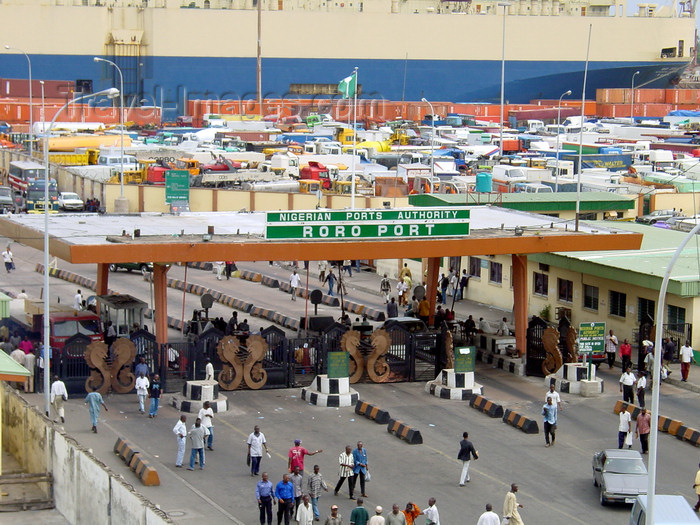
NECA, MAN reject new Customs levy, NPA port charges
The introduction of a fresh four per cent administrative charge on Free-on-Board (FOB) value of imports by the Nigeria Customs Service (NCS) as well as the proposed 15 per cent increase in port charges by the Nigerian Ports Authority (NPA) have drawn the anger of employers of labour and manufacturers among other critical stakeholders.
They kicked against the new charges, warning that the move to raise government revenue target would have dire consequences on operations cost, employment capacity and prices of goods and services passed by the final consumers.
Last week, the NCS in a statement, said the directive to implement the four per cent charge was in line with the provisions of the Nigeria Customs Service Act (NCSA) 2023.
It explained that the FOB charge, which is calculated based on the value of imported goods, including the cost of goods and transportation expenses incurred up to the port of loading, is essential for driving the effective operation of the service.
It urged all stakeholders to comply with the directive, which it said was conceived after extensive consultation with relevant stakeholders.
But the Nigeria Employers’ Consultative Association (NECA), Manufacturers Association of Nigeria (MAN) have come out to criticise the new policies, which they noted as ill-timed and therefore called for a halt to their implementation.
For instance, NECA described the introduction of the four per cent levy by the NCS as a desperate attempt to meet its N10 trillion revenue target contained in the 2025 proposed national budget.
It said the new charges would squeeze N2.84 trillion from private businesses and increase duty paid by industries by 80 per cent.
MAN, on its part, urged the NPA to shelve the proposed 15 per cent increase in port charges, noting that it was ill-advised and signalled a departure from the Federal Government’s commitment to improving the country’s ease of doing business.
Director General of NECA, Mr. Adewale-Smatt Oyerinde, said in a statement that the new charges contradicted the ongoing tax reform efforts led by the Presidential Fiscal Policy and Tax Reforms Committee, chaired by Mr. Taiwo Oyedele, aimed at harmonising taxes and supporting business sustainability.
Oyerinde said, “With a revenue target of N10 trillion set for the NCS in the 2025 budget by the National Assembly, this levy appears to be a desperate attempt to meet revenue projections at the expense of businesses and ordinary Nigerians.
“While the government may achieve its revenue goals, the unintended consequences will be severe—higher costs of goods, business closures, rising unemployment, and worsening economic hardship for millions of citizens.”
The NECA leader also criticised the NCS for prioritising revenue generation over its core mandate of trade facilitation and economic development. According to him, this approach is counterproductive and directly contradicts the government’s ‘Ease of Doing Business’ agenda.
NECA called for an immediate reversal of the levy and urged the government to engage with stakeholders to develop a more sustainable and business-friendly approach to revenue generation.
“Government must take urgent steps to ease the financial burden on businesses and citizens, rather than implementing policies that will worsen economic hardship and stifle business growth,” NECA said.
In his reaction to the NPA’s proposed increase of port charges by 15 per cent, Director General of MAN, Mr. Segun Ajayi-Kadir, in a statement kicked against the hike.
He said, “Nigeria’s current economic climate is characterised by rising inflation, foreign exchange challenges, and declining industrial capacity utilisation.
“Many businesses are experiencing a worrying downturn due to unsustainable operating costs. Increasing port tariffs is therefore ill-timed and could signal a departure from the government’s avowed efforts and commitment to the ease of doing business.
“It is inevitable that this additional strain on industrial activities will ultimately lead to reduced capacity utilisation and possibly job losses.
“Furthermore, Nigeria must remain competitive in regional trade. Neighbouring countries with more efficient and cost-effective ports will become far more attractive alternatives, leading to increased cargo diversion.”
The manufacturers’ association suggested that reducing turnaround time for vessels and improving cargo clearing processes could significantly boost revenue instead of increasing port charges.
It also advised the government to address bureaucratic bottlenecks that delay cargo clearance in order to ensure faster throughput and more efficient revenue collection, adding that improving port infrastructure would enhance operational efficiency and attract more business, leading to natural revenue growth.











Auto
Omoda, Jaecoo Storm Europe as Global Sales Surge 123% to 73,421
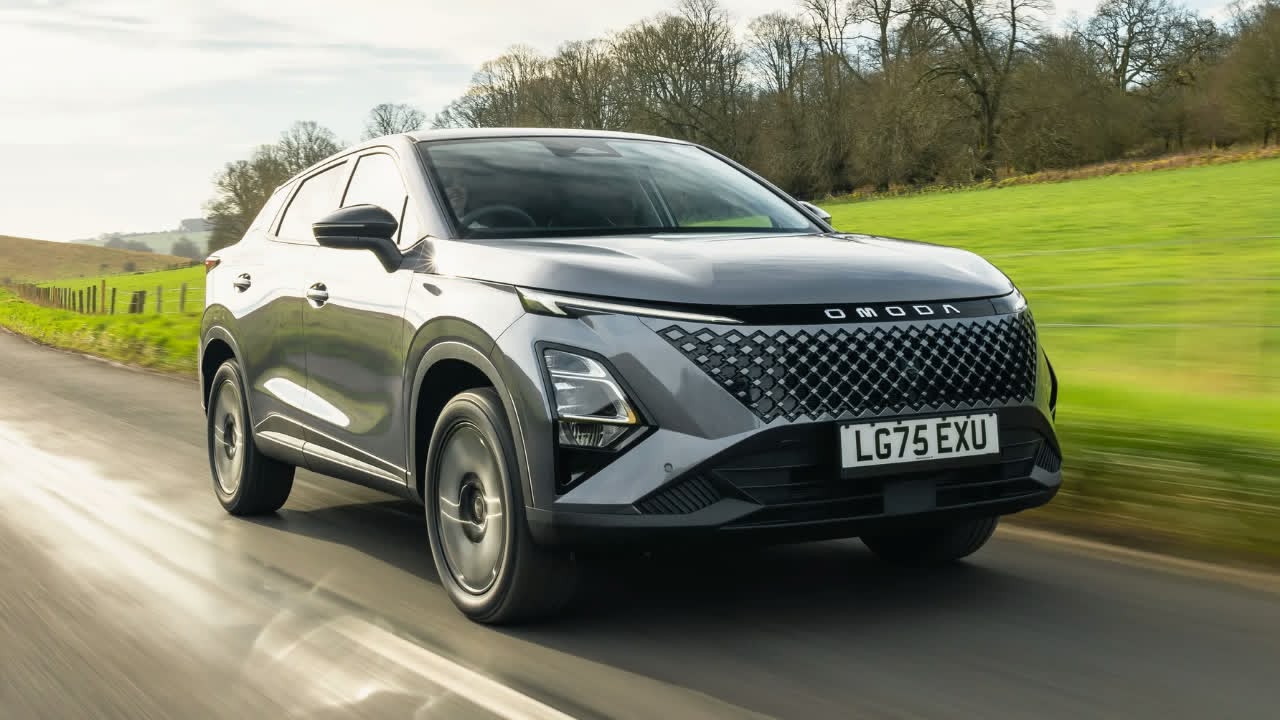
Omoda, Jaecoo Storm Europe as Global Sales Surge 123% to 73,421
Chinese automotive brands strengthen foothold in UK, Spain, Italy and France as new-energy vehicles drive growth
Omoda and Jaecoo are accelerating their European expansion, buoyed by surging demand in key markets and a growing appetite for electrified vehicles, as the automotive brands recorded a 123 per cent year-on-year increase in global sales to 73,421 units in September 2026.
The latest performance underscores the brands’ growing international reach, with cumulative sales for the first nine months of the year reaching 587,846 units, according to figures released by the company.
The United Kingdom emerged as a major growth driver, with the brands recording 22,296 registrations in September, more than double their performance in the corresponding period of 2025. The volume translated into a 6.37 per cent market share and second place among automotive brands in the country for the month.
A standout performer was the Jaecoo 7, which recorded 10,813 registrations in the UK during September to become the country’s best-selling new-car model for the month. Its cumulative registrations for the first nine months of the year stood at 39,473 units.
The model’s performance highlights the growing competitive presence of the Chinese automotive brands in a market traditionally dominated by established European, Japanese and South Korean manufacturers.
READ ALSO:
- 16-Year-Old Girl Recounts Horror of Hookup Encounter, Says Man Threatened Her With Knife, Acid
- Ex-Super Eagles Coach Westerhof Battles Colon Cancer in Critical Condition, Wife Seeks Help
- NRC Denies Ticket Racketeering, Says Abuja-Kaduna Rail Demand Exceeds Seats by 10-Fold
Beyond sales, Omoda and Jaecoo are also deepening their long-term commitment to the UK through plans to establish a research and development centre at UTAC Millbrook in Bedfordshire. The proposed facility will focus on areas such as chassis tuning and advanced driver-assistance systems, enabling the brands to tailor their vehicles more closely to European driving conditions and customer expectations.
Spain, Italy and France also delivered strong performances, reinforcing the brands’ broader European growth strategy.
In Spain, September registrations increased by 91.5 per cent year-on-year to 4,010 units, lifting the brands’ market share to a record 4.3 per cent. Electrified vehicles accounted for 98 per cent of their sales in the country, highlighting the importance of alternative-powertrain models to their European strategy.
Italy recorded 4,678 registrations in September, giving the brands a 3.31 per cent market share. Their cumulative registrations between January and September rose by 256.23 per cent to 32,945 units, reflecting a rapid expansion in one of Europe’s important automotive markets.
France, another market in which the brands are building their presence, recorded combined September registrations of 3,003 units. Jaecoo contributed 2,589 units, an impressive showing approximately six months after its entry into the French market.
The gains across these countries point to an increasingly coordinated European push, with Omoda and Jaecoo seeking to translate their expanding product portfolios into stronger market positions.
Electrification drives global growth
New-energy vehicles (NEVs) remained a major contributor to the brands’ worldwide performance, with sales reaching 53,957 units in September, representing an 184 per cent increase year-on-year.
The volume accounted for approximately 73.5 per cent of total monthly sales, underlining the growing contribution of electrified models to the brands’ global business.
The figures suggest that electrification is becoming central to Omoda and Jaecoo’s expansion, particularly in markets where consumers are increasingly considering hybrid and other electrified powertrains alongside conventional petrol vehicles.
With rising registrations in major European markets, expanding technical development plans and strong demand for the Jaecoo 7, the brands are seeking to consolidate their position in an increasingly competitive automotive landscape.
Sustaining the momentum will depend on their ability to maintain product appeal, strengthen dealer and after-sales networks, and respond to the differing regulatory requirements and consumer preferences across Europe.\
Omoda, Jaecoo Storm Europe as Global Sales Surge 123% to 73,421
Railway
NRC Denies Ticket Racketeering, Says Abuja-Kaduna Rail Demand Exceeds Seats by 10-Fold
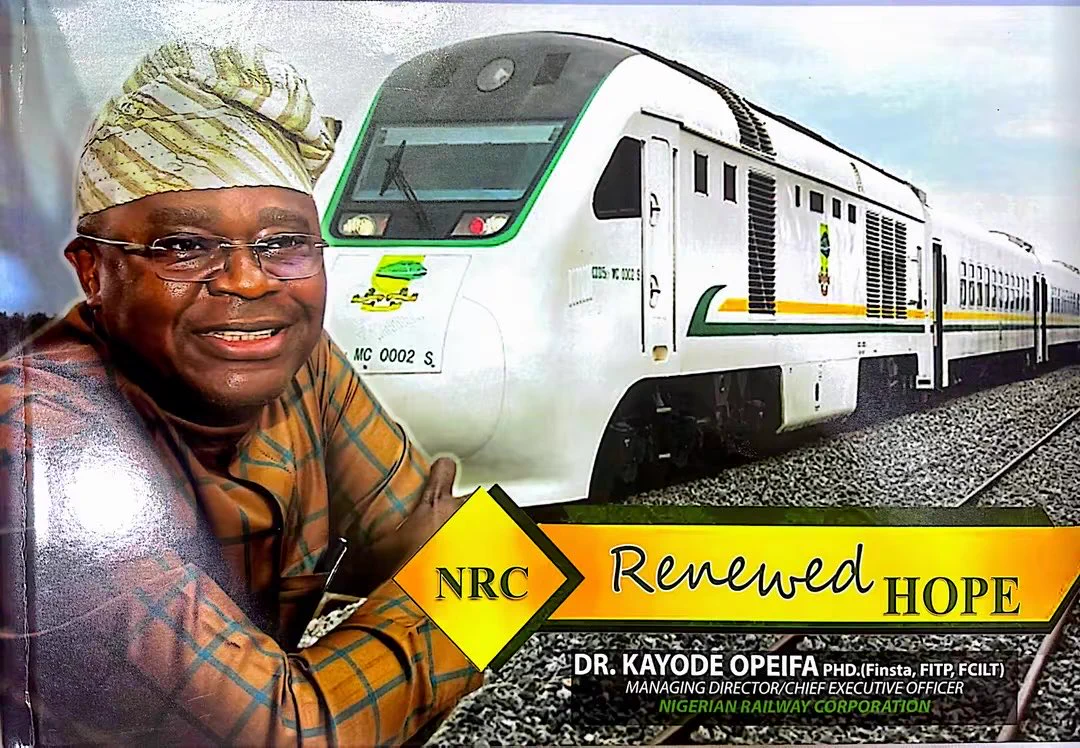
NRC Denies Ticket Racketeering, Says Abuja-Kaduna Rail Demand Exceeds Seats by 10-Fold
The Nigerian Railway Corporation has denied allegations that it deliberately creates artificial scarcity of tickets on the Abuja-Kaduna Train Service to facilitate their resale at exorbitant prices, blaming the persistent shortage on surging passenger demand and the activities of ticket touts exploiting the system.
The corporation, in a statement signed by its Chief Public Relations Officer, Callistus Unyimadu, said demand for rail services on the corridor had exceeded available capacity by more than 10 times, creating a severe imbalance between the number of passengers seeking tickets and the limited seats available.
The clarification followed a viral social media video by Instagram blogger Faizah Raji, operating under the handle @wearegst, who accused the NRC of withholding tickets from its official electronic booking platform and reselling them through unnamed agents at prices reportedly twice the approved fares.
However, the NRC described the allegations as misleading, insisting that the corporation neither buys nor sells train tickets but facilitates passenger access to the railway service through approved ticketing arrangements.
According to the management, Raji had acknowledged in her account that the corporation warned passengers to purchase tickets exclusively through authorised platforms but subsequently bought a ticket from an agent after failing to secure one through the official portal.
The NRC said while her experience might be genuine, patronising unofficial ticket sellers despite repeated warnings did not establish the corporation’s involvement in the alleged racket.
It warned passengers that tickets obtained through unauthorised agents, particularly those purchased with another person’s identification details, could be invalid and expose travellers to financial losses or denial of boarding.
The corporation explained that electronic ticketing across its standard-gauge railway operations was handled by private concessionaires under public-private partnership arrangements approved by the Infrastructure Concession Regulatory Commission and the Federal Executive Council before 2023.
READ ALSO:
- FG Draws Red Line on Fuel Subsidy, Warns of Naira Crisis if Reforms Are Reversed
- NRC Denies Ticket Racketeering, Says Abuja-Kaduna Rail Demand Exceeds Seats by 10-Fold
- Tinubu Reappoints INEC Commissioner, Nominates Six Others Ahead of 2027 Elections
It identified SecureID/TPS as the ticketing service provider for the Abuja-Kaduna Train Service, Global Software Digital Solutions for the Lagos-Ibadan Train Service, and Fane Warri-Itakpe Ticketing Solutions Limited for the Warri-Itakpe Train Service.
NIN verification introduced to combat ticket fraud
The NRC traced the growing challenge of ticket racketeering to fraudulent practices that persisted despite measures introduced to strengthen passenger identification and railway security.
It said the government introduced the use of the National Identification Number as a condition for purchasing train tickets following the 2022 train attack, partly to curb ticket racketeering.
However, according to the corporation, fraudsters subsequently devised ways of obtaining multiple NINs to purchase tickets in bulk for resale to unsuspecting passengers.
To tackle the practice, the NRC introduced an additional verification procedure in 2025, modelled on the system used at the Murtala Muhammed International Airport Terminal 2 in Lagos.
Under the arrangement, passengers’ NIN details are checked against the information used to purchase their tickets, while personal identification cards are also required before boarding.
The corporation said its verification system at Idu and Kubwa in Abuja, as well as Rigasa in Kaduna, is integrated with the National Identity Management Commission database, enabling officials to retrieve the photograph associated with the NIN used for a ticket purchase.
This, it explained, helps officials identify passengers attempting to travel with tickets purchased using another person’s identity.
The NRC, however, acknowledged that security challenges at the Rigasa station, which it described as having been hurriedly adopted, had occasionally made enforcement difficult because of limitations in its access-control infrastructure.
NRC vows crackdown on racketeering
Despite the challenges, the corporation declared zero tolerance for ticket racketeering, warning that any employee found participating in or colluding with fraudulent ticket sellers would face summary disciplinary action.
It also said the electronic ticketing concessionaires had been directed to improve the accessibility and ease of use of their booking platforms to ensure passengers could obtain tickets more conveniently while complying with established procedures.
The management maintained that the growing preference for train travel among Nigerians had placed considerable pressure on available capacity, reinforcing the need for passengers to use only approved booking channels.
It described the purchase of tickets through third parties using another person’s NIN or name as unacceptable and an act of economic sabotage that undermines the integrity of the railway system.
The corporation assured passengers that it remained committed to improving customer service, strengthening security and ensuring that rail travel became a preferred alternative for Nigerians.
It reiterated its commitment to providing safe, affordable, reliable and convenient train services across the country’s railway corridors while intensifying efforts to prevent criminal activities and protect the corporation’s reputation.
NRC Denies Ticket Racketeering, Says Abuja-Kaduna Rail Demand Exceeds Seats by 10-Fold
Auto
Naija Driver 2026: Online CBT Screening Holds today
Naija Driver 2026: Online CBT Screening Holds today
LAGOS, NIGERIA — The race to identify Nigeria’s safest and most skilled drivers enters a decisive phase today, Saturday, October 17, as registered candidates nationwide prepare for the 11am online computer-based test (CBT) screening of the inaugural Nigerian Drivers Challenge, Naija Driver 2026.
The organisers have urged candidates to log in prepared, with a functional laptop or desktop computer, webcam and reliable internet connection, warning that smartphones and tablets will not be supported for the 20-minute, 40-question examination.
-

 metro2 days ago
Suspended Archbishop Ibezim Drags Anglican Primate to Court, Challenges Six-Month Leave
-
 Politics3 days ago
2027: Kwankwaso Signals Fuel Subsidy Comeback as NDC Vows to Crash Petrol Prices
-
 Sports3 days ago
Real Madrid Demand Tebas’ Exit After Explosive Nazi Propaganda Row
-

 Entertainment3 days ago
ToluwaniSings’ Final Hours: Aide Reveals Desperate Search Across 8 Hospitals
-

 metro2 days ago
Imodi-Ijebu Muslim Community Bets on 20 Chiefs to Drive Education, Economic Growth
-

 metro2 days ago
NAPTIP Raises Alarm as Parents Allegedly Trade Children for Sex, Arrests Woman in Abuja
-

 metro3 days ago
Osun Murder: Three Arrested as Police Recover Weapons, Link Suspect to Earlier Killings
-
 metro3 days ago
NAF Deploys Pumps in Desperate Push to Recover Submerged Aircraft After Crash Killed 25