

Opinion
The witches on Portable’s road to madness (2)
The witches on Portable’s road to madness (2)
Tunde Odesola
As the crowd moved in the pillar of early morning fog, their song became discernible on the dewy road of the thickly forested Aji town. The road in front of Enwe Nwanjo’s house was that type of decades-long, durable earthen road built and maintained with townspeople’s sweat, long before government came and built its own road of potholes amid applause and blinding camera lights.
So, it was on this road that the crowd was trekking, singing a medley of Igbo Christian songs, with tenor, soprano, alto and bass twanging from honeyed throats – in fantastic acapella.
I love good music, so I listened and watched. I thought the crowd was moving up the road that stretches beyond the nearby Aji High School, but right in front of Enwe Nwanjo’s multi-residence house, the crowd turned into the expansive compound, still singing.
“Who are these?” I wondered, struggling to make out their faces in the fog. Then, I heard familiar voices. They were students who lived in the students’ quarters built around the main building where I lived. They stopped smack in the middle of the compound and said a prayer like football players do before a match. Then, they dispersed into their various rooms.
But one of them didn’t go to the students’ quarters. In the fog, she headed straight to the main building. “Who is this familiar figure?” I wondered as the figure moved closer to the house. “Haa! It’s Eucharia, my Eucharia! What!? How come? So, she wasn’t the one in the room? Who then were those lovebirds inside her room?
My chest heaved a sigh of relief to see Eucharia wasn’t the one in the cozy blue room but I was curious to know who those two bedmates were. Eucharia came up to the balcony and greeted in her melodious voice, “Ndi corper, good morning. You no sleep?”
READ ALSO:
- FG terminates Oyo-Ogbomoso expressway contract given to RCC
- Uproar in Senate as Akpabio attempts to walk out Natasha Akpoti-Uduaghan
- MKO won June 12 ,1993 presidential election, I regret annulling it – IBB
My face creased into a frown, then a wry smile. “I just came out to enjoy the early morning breeze,” I said. “Uhmm, you and cigarette!?” she said as she made for her apartment. “Where una dey come from?” I asked. “From church, we go do vigil,” she said.
She knocked on her door gently and waited. She knocked again. After a moment, the door swung back but before she could enter and close the door, I leapt up from my chair and was right behind her. Using the advantage of my height, I scanned the whole room ultra-carefully as she walked in with her back to me. What I saw was shocking!
I saw a little girl between eight and nine years old who came to open the door. She went back and curled up in bed, pulling the sheet over her head. Ha!? Eucharia probably woke her up from dreamland.
“Who is this,” I asked. “My niece,” she replied, “I went to Nsukka yesterday and I came back with her.” “I was wondering who was inside the house. I peeped through the keyhole and saw two people in bed,” I stated jokingly. “You must be seeing double,” she said, laughing. Little did she realise I really saw double.
When I sat back later and put what happened to me in perspective, I came to a profound understanding of the power of the mind. The incident buttresses my belief that the mind is the most powerful part of human physiology. It strengthened my resolve that I can achieve anything if I put my mind to it. When people give up on life and watch their dreams die, they do so from the mind.
In Eucharia’s case, it was my mind that sent suspicion signal to my brain which imaged the signal to my eyes and my eyes duly manifested the negative content of my mind.
I hadn’t settled down to drinking when I first peeped into Eucharia’s room. So, what my eyes saw wasn’t a product of drunkenness. It was a product of a mind wandering off. As a sound mind can be the teleport to self-actualisation so can an unsound mind be the shoestrings of the sneakers of a potential marathon champion, tied together while running. It’s all in the mind.
READ ALSO:
- FAAC meeting postponed as N1.7tn remittances tear states, NNPC apart
- Nigeria imports 25 million litres of petrol daily – FG
- Man kills sister, her twin babies in Abia community
Today, social media has broken the backbones of witches and wizards, just like it is exposing the ruts of fake religious leaders, traditional rulers, celebrities and all.
Hitherto, in our communal mind, we believed witches and wizards were everywhere, sucking blood and cracking bones. So, we hid ourselves from ourselves – nobody wanted people to know the names of their children, their ages, their pictures, what they ate, where they lived, what they did, their achievements etc.
But nowadays, people live on the internet, showing off their families and achievements. So, I ask: where are the witches and wizards against whom we sing, “Oro nla le da, eh eh eh, oro nla le da…” when tragedies happen? Are they no more potent? Are witches and wizards too old-fashioned to join social media to wreak havoc?
It’s strange that people drive recklessly under the influence, killing others along with them, yet relatives and friends turn their mouths up to the heavens like homeless sparrows, crying and blaming the devil together with his witchy disciples. It’s all in the mind.
In most cases, after suffering self-inflicted tragedies, some people go to the same dreaded witches and wizards in search of redemption while some go after pastors and alfas who are not better than bats – blind, blatant, blasphemous and base.
When you see some people falling for the miracle pranks of some manipulative pastors, alfas and babalawos, you wonder why the gullible worshippers can’t see through the foolery, but it’s not their fault, it’s their minds, in which the clerics live rent-free.
Please, tell me why do people believe a stinking, poorer-than-poor babalawo has the power to use a human head for money ritual? If there was ever a ritual potion for money-making, babalawos and their families would be richer than Elon Musk and they won’t tell anyone about the potion.
From the outset of his career, controversial musician Habeeb Okikiola Badmus aka Portable declared himself ‘were olorin’, and people took it as a metaphor that means ‘mad musician’. Little did people know Portable was truly mad.
READ ALSO:
- As electricity generation reaches 5,543MW, ‘more consumers moving to Band A’
- FG stops fuel tankers exceeding 60,000 litres from Nigerian roads
- We’ll bomb B’Haram, other terrorists across Africa, says US Air force
Going by his antecedents and being very sure Portable was suffering from ángàná, I came to an audacious editorial conclusion last week when I headlined the first part of this article, “The witches on Portable’s road to madness (1).”
In validation of my headline, Portable, during the week, personally declared himself a patient of the Neuro-Psychiatric Hospital in Aro, Abeokuta. In an online video, Portable raved, “I am mad. I have medication for madness. You can go and ask about me in Aro. I have a card there…I am mad.”
Portable calls himself a child of grace. Truly, he’s one. But when the mind is messed up, especially with drugs, grace wears the toga of a prefix and becomes disgrace. If the disgrace becomes consistent, the disgrace wears an embroidered suffix and changes to disgraceful.
From North America to Asia, Europe, South America, Antarctica, Oceania and Africa, drug use has destroyed the careers of many superstars. From Michael Jackson to Witney Houston to Bobby Brown, Elton John, Majek Fashek and countless others, drug use has been the bane of many music careers.
Portable is a dot in the galaxy of the aforementioned superstars but his example teaches a lesson in gratitude, decency and humility.
A dirty-looking hussler, the child of grace received favour from hip-hop star, Olamide, who collaborated with him to produce Za Zoo Zeh, a song written by Portable. If not for Olamide’s collaboration, Za Zoo Zeh wouldn’t have blown the Nigerian music charts.
He who the gods want to ruin, they first make mad. Portable became mad and he turned against Olamide. Olamide simply ignored him. Portable went ahead to diss another Nigerian music star, Davido, whom he first ingratiated himself to, but later turned against when Davido wouldn’t collaborate with him.
Since hitting the limelight, Portable has been a fly in the ointment of the Nigerian music industry, fighting everyone in sight. His online fight with his ex-lover and ex-wife of the late Alaafin, Queen Dami, was despicable, to say the least. The only fight he fought which got the approval of the general public was his fight against Bobrisky, the cross-dresser.
Since Olamide cracked the nut of fame for him, Portable has seen himself as the biggest Nigerian musician, calling himself the late Abami Eda, Fela Anikulapo-Kuti, yet begging bigger stars to feature him in their songs. No bi juju bi dat? It is not juju, it’s hard drugs.
It’s hard drugs that could make him beat up the environmental officials from the Ogun State Ministry of Physical Planning and Urban Development, who faulted his building construction. He ran into hiding for many days before finally giving himself up to the police amid altercations between him and his elder brother, Akeem, who expressed joy over his travails.
Portable needs psychiatric help fast. The witches on Portable’s road to madness are in his mind. Though he has lost money and goodwill to this travail, his court trial should run its course and justice should be served to teach celebrities and people in authority that the law is not totally dead in Nigeria.
*Concluded.
The witches on Portable’s road to madness (2)











Opinion
2027: Competence, Not Zoning, Should Decide Nigeria’s Next President — Imasuagbon
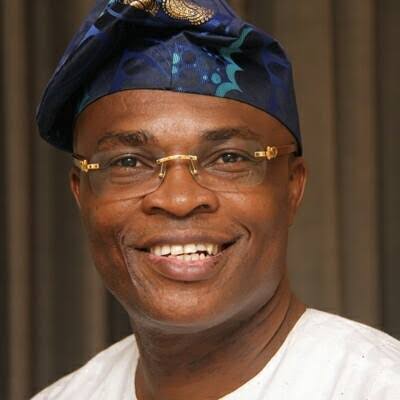
Nigerians should look beyond ethnicity, region and the longstanding debate over rotational presidency when choosing the country’s next leader, according to a chieftain of the African Democratic Congress (ADC), Kenneth Imasuagbon.
The former Edo State governorship aspirant said the priority ahead of the 2027 election should be finding a president with the ability to confront Nigeria’s economic, security and infrastructure challenges.
Speaking to journalists in Benin, Imasuagbon argued that presidential rotation is not a requirement of the Nigerian Constitution and should therefore not outweigh the question of competence.
He said voters should be more concerned about replacing poor schools with better ones, improving healthcare and addressing hardship than debating where the next president comes from.
Imasuagbon specifically appealed to voters in the South to support former Vice President Atiku Abubakar, who is contesting the 2027 presidency on the ADC platform.
According to him, Atiku has demonstrated the experience and determination needed to improve the country, describing the former vice president as someone capable of promoting national unity and fairness.
He also accused the Bola Tinubu administration of worsening economic pressure through policies including the removal of fuel subsidy, while expressing concern about the condition of roads, electricity and other infrastructure.
Imasuagbon argued that the next administration must focus on practical improvements in areas such as power, transportation, employment, security and public services.
The ADC chieftain also dismissed the idea that the ruling All Progressives Congress (APC) would automatically benefit from its incumbency advantage in 2027.
He maintained that the electorate ultimately determines the outcome of an election, arguing that voters could change the political direction of the country if they were determined to do so.
Imasuagbon further criticised what he described as regional and ethnic considerations in the distribution of political appointments and opportunities, insisting that the next president should give Nigerians across different parts of the country a sense of belonging.
His comments come as political parties and their candidates intensify preparations for the 2027 presidential election.
Opinion
Lesson from Dotun Oladipo’s Brave Daughters, by Bamidele Johnson
Lesson from Dotun Oladipo’s Brave Daughters, by Bamidele Johnson
I hope to grow old. I want to see my kids become real adults, find their own feet, make mistakes, recover from them, and perhaps one day complain that their own children are giving them grey hairs. I want that plainly stated before anything else, as everything that follows might read as a man agreeing to an early exit rather than a man simply being honest about the odds.
I want the decades. I want to become the grandfather who repeats the same stories until nobody bothers correcting him anymore. But wanting a thing and being granted are different things. The last year has made that difference harder to ignore than I would like. I have lost many friends recently to keep thinking that optimism is my natural resting state. Some of these men had better blood pressure than mine, better habits, better everything that is supposed to count. It did not save them.
There is no formula I know that reliably separates the men who make it to 70 from those who do not. Anyone who says he knows one is selling something. So, I do not assume that old age is an already booked destination. Even if I once did, which I doubt, the last three years have cured me of such an illusion. As such, I treat it as a hope rather than an expectation, and I have found that a more honest way to live.
It is exactly why I want something placed on record now, while I am still able to place things on record, rather than leave it for people to guess what my wishes were in the fog of a funeral week. If I do not make old bones, my children are not to be asked to read tributes at my funeral. Not one line, however short, however lovingly written.
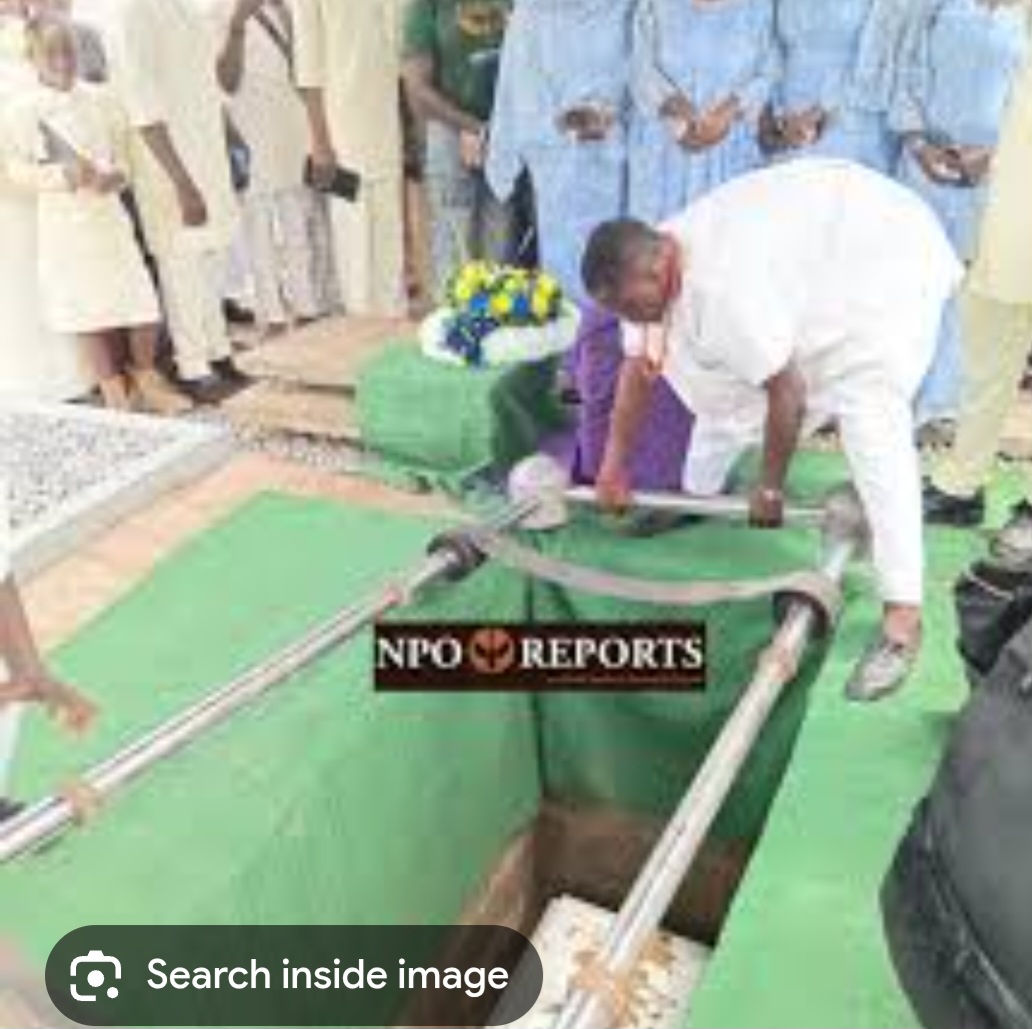
This, for me, was settled today rather than re-opened. At Dotun Oladipo’s funeral service, his three daughters took turns to read their tributes to their dad, and I found myself watching them with awe. There was a kind of strength in them that I do not possess. It is the strength needed to stand in front of a hall brimming with grieving adults and speak about a man they have just lost. Forever. Strength, however, is not the same as ease. I could see plainly what that strength was costing them as they read. Their voices caught. Their composure held and then did not hold and then held again through sheer will.
In front of them, in the pews, men and women considerably older than them came undone in ways the girls themselves were somehow managing to resist. I went mightily close. Some of the sobbing was quiet, the type people try to fold into a handkerchief. Some of it was not quiet at all, the kind that announces itself whether or not you want it.
Those young women honoured their father with a grace that is beyond me. What they did was astonishing. So, what I am attempting is an observation of a custom I have now watched wound people. This was not the first time I had watched this particular ritual extract more than it should from people already running on fumes. I saw an earlier and harder version of it at a friend’s wake back in 2015.
The first son was called forward to read his father’s tribute, and he could not do it. He tried, but the words would not come, and he stood there in front of a crowd of mourners, with his grief simply refusing to organise itself into sentences. The officiating minister, rather than releasing him from the task, urged him to continue. I sat fizzing with sorrow and ire. He could not go on and, eventually, the minister accepted, but not before insisting a while longer than it should have reasonably taken. His younger brother was called up next, presumably on the theory that if one grieving son could not manage it, maybe another one could. He flunked it in the same way. Grief does not distribute itself more conveniently among siblings just because a programme has been printed and needs to be followed.
I have turned that memory over many times since, trying to work out why this part of the rites is treated as mandatory in the first place. I have not found a satisfying answer. Maybe it comes from a belief that a child’s words carry more weight than anyone else’s, which may even be true, but weight is exactly the problem when those carrying it are struggling to hold themselves together with nothing but adrenaline and the fear of dissolving in public.
Maybe it is simply inertia, the reason we still do a hundred things at funerals that nobody can explain the original purpose of. Either way, I have stopped looking for the justification. I no longer think one exists that is good enough to weigh against what I watched happen to that boy in 2015.
So, let this stand as my instruction rather than my preference, the kind of thing I would rather state plainly now than leave for my children to infer later from how uncertain I sound when the subject comes up in passing. If I do not get the old age I am hoping for, my children will not be asked to read a single word over my body. Someone else can speak for me. A friend, a stranger with a steadier voice and a smaller stake in the loss, anyone whose grief will not be quite so total that standing upright becomes almost impossible.
My children, of course, will sit in front and fall apart if that is what the day requires of them, but without the microphone. That, at least, is one small mercy I intend to arrange for them while I am still here to arrange it.
Dotun deserved every bit of the send-off his daughters gave him today, and I suspect he would have been the first to tell them to sit down and let someone else carry the weight for a while. He did not get a say in that, as none of us ever do once we are the ones being spoken of rather than the ones speaking. Rest well, Dotun. You raised three young women whose strength I will not soon forget. That alone says everything worth saying about the man you were.
Opinion
‘Tinubu Will Win Again in 2027’ — Charismatic Bishops’ Secretary
‘Tinubu Will Win Again in 2027’ — Charismatic Bishops’ Secretary
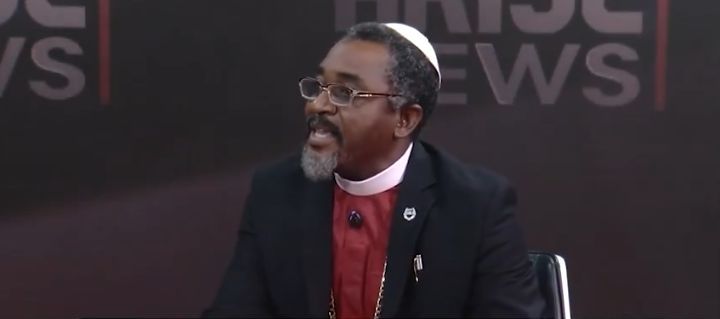
A senior Nigerian cleric, Archbishop Chivir Chianson, has declared that President Bola Tinubu will retain the presidency after the 2027 general election, attributing the prediction to a message he said came from God.
Chianson, who serves as Secretary General of the Charismatic Bishops’ Conference of Nigeria, made the statement while appearing on Arise Television on Saturday.
Rather than basing his prediction on political calculations, the archbishop said his confidence came from what he described as the prophetic role of bishops.
He maintained that the conference had previously spoken about Tinubu’s political future based on what he said was divine revelation and that the President would return for another term.
Chianson also predicted that Tinubu’s performance would improve if he wins the 2027 election.
READ ALSO:
- DSS warns Osun churches, mosques, markets over alleged terrorist attack plot ahead of 2027
- ‘Tinubu Will Win Again in 2027’ — Charismatic Bishops’ Secretary
- Fake miracles, bogus grants: How clerics allegedly fleece Nigerians of millions
Addressing the political opposition, the cleric said the bishops could not be blamed if rival parties failed to unite or organise themselves effectively ahead of the election.
He also sought to clarify the position of the bishops when dealing with government, saying their role in speaking truth to power did not mean they should approach political leaders with hostility or disrespect.
According to him, the Constitution, alongside their religious convictions, should guide how they engage the President and the country.
Chianson said he was sufficiently confident in his prediction to promise that he would return to the Arise TV studio after the 2027 election, when he expects the result to demonstrate that the bishops’ prophecy was correct.
His comments add a religious dimension to the increasingly active political conversation surrounding the 2027 presidential race.
‘Tinubu Will Win Again in 2027’ — Charismatic Bishops’ Secretary
-

 Politics3 days ago
2027: Northern Lecturers Back Tinubu, ASUU Disowns Endorsement
-

 Sports3 days ago
‘I Was Never the Chosen One’ — Dembele Responds to Mbappe
-

 International1 day ago
Islamic Council Condemns Attempted Attack on Holy City of Mecca
-

 metro2 days ago
Lagos Power Outage: Ikeja Electric Blames TCN as Businesses, Homes Groan
-
 News1 day ago
Keep Politics Out of My Office — Ogbomoso Grand Chief Imam Warns Politicians, Bloggers
-

 Education2 days ago
JAMB Moves 2027 UTME Time — Here’s What Candidates Need To Know
-
 Politics2 days ago
2027: APC Governors Reject Wike’s Rainbow Coalition, Insist on Party Loyalty
-

 News3 days ago
I Wanted to Disgrace Tinubu — Omokri Reveals What He Discovered at Chicago Varsity