

metro
375 Nigerians seek asylum in Sweden

375 Nigerians seek asylum in Sweden
A total of 375 Nigerian nationals submitted asylum applications in Sweden in 2024, with a significant number of them being women between the ages of 25 and 44, according to new statistics from the Swedish Migration Agency.
Of the total, 239 were first-time applicants, while 136 individuals sought to renew or extend existing temporary protection. Nigeria placed ninth globally and fourth among African countries in terms of the volume of asylum requests, based on data published on the agency’s “Asyl” portal.
Eritrea topped the list among African nations, recording 2,692 applications, followed by Somalia (1,316), Ethiopia (597), and Nigeria (375).
READ ALSO:
- India, Pakistan agree to ceasefire after days of strikes
- North West, North-East to get €300m EU projects
- 3 northern PDP senators defect to APC after meeting with Tinubu
A demographic review of the figures indicates that nearly half of Nigerian applicants were adults of working age, particularly between 25 and 44 years. No applications were filed by Nigerians aged 65 or older.
There was also a marked gender imbalance among first-time applicants: “Women accounted for nearly two-thirds—159 women compared to 80 men,” the report noted.
The agency documented that 60 children accompanied their parents or guardians during the asylum process.
375 Nigerians seek asylum in Sweden









metro
24 Hours in Darkness: Iju Ishaga Residents, Businesses Count Losses as Ikeja Electric Fails to Restore Power

24 Hours in Darkness: Iju Ishaga Residents, Businesses Count Losses as Ikeja Electric Fails to Restore Power
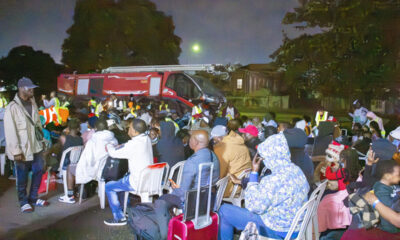
Residents of Iju Ishaga, Ake-Ayo and adjoining communities in Lagos have been thrown into frustration as a prolonged blackout entered its second day, forcing households and businesses to battle with the consequences of more than 24 hours without electricity.
The power outage began at about 5pm on Sunday, September 27, 2026, and had persisted as of Monday evening, leaving residents scrambling for alternative sources of electricity.
For many residents, the blackout has gone beyond the inconvenience of darkness, with business owners counting losses and households spending additional money on fuel to power generators.
Small businesses that depend heavily on electricity have been particularly affected.
Operators of laundries, barbing salons, hairdressing shops, restaurants, food businesses, refrigeration outlets and other electricity-dependent enterprises have either had to suspend operations or resort to generators at additional cost.
Residents said the prolonged outage was putting further pressure on household finances, with many already struggling with the rising cost of fuel and other essential commodities.
One resident said electricity supply disappeared around 5pm on Sunday and had still not returned as of Monday evening.
The resident said many people initially expected the fault to be resolved within a few hours but became increasingly frustrated as the outage stretched into the following day.
The situation has also affected households dependent on electricity-powered water pumps, while residents with refrigerators and freezers have expressed concern about food and other perishable items.
Residents demand explanation
Frustrated consumers contacted personnel of Ikeja Electric Distribution Company to demand information about the cause of the outage and when supply would be restored.
A conversation with an Ikeja Electric staff member on Monday indicated that the company was aware of the problem and that efforts were being made to resolve it.
However, residents were still waiting for full restoration as of Monday evening.
The specific cause of the latest outage affecting Ake-Ayo, Iju Ishaga and surrounding communities had not been independently established as of the time of filing this report.
Previous prolonged outages in parts of Ikeja Electric’s network have been linked to faults involving distribution infrastructure as well as incidents on the transmission network.
Businesses bear the brunt
The prolonged blackout has created a fresh financial burden for small business operators in the affected communities.
For laundry operators, every hour without electricity can mean delayed jobs and customers waiting longer for their clothes.
Barbers and hairdressers have also been forced to depend on generators, while restaurants, food vendors and businesses dealing in frozen products face the additional challenge of preserving their stock.
Some business owners said the cost of purchasing fuel to run generators could further reduce their already narrow profit margins.
For households, the situation has also meant additional expenditure on fuel and other alternatives to electricity.
Anger mounts
As the outage continued into Monday evening, residents became increasingly frustrated over the absence of electricity and uncertainty surrounding the restoration time.
They appealed to Ikeja Electric to provide regular and transparent updates whenever prolonged faults occur, particularly when large communities are affected.
Residents also called for improved maintenance of electricity infrastructure to reduce the frequency and duration of outages.
The latest incident has once again highlighted the difficulties faced by residents and small businesses that depend on public electricity supply but are often forced to maintain generators as backup.
For the affected residents of Iju Ishaga, Ake-Ayo and neighbouring areas, the immediate demand is simple: restore the power and end the darkness.
But with the outage already stretching beyond 24 hours, many households and businesses are left counting the financial cost of another prolonged blackout.
24 Hours in Darkness: Iju Ishaga Residents, Businesses Count Losses as Ikeja Electric Fails to Restore Power
metro
Why Akpabio Rejected ‘Acting President’ Title — Rufai Oseni

Why Akpabio Rejected ‘Acting President’ Title — Rufai Oseni
LAGOS — Arise Television Morning Show anchor, Rufai Oseni, has offered insight into why Senate President Godswill Akpabio reportedly rejected the title of “Acting President” during the recent absence of President Bola Tinubu and Vice President Kashim Shettima from the country.
In a commentary that has sparked widespread debate across political circles, Oseni suggested that Akpabio’s refusal to embrace the title was not merely a matter of constitutional propriety, but a reflection of the legislature’s unwillingness to assert its independence as a co-equal branch of government.
The controversy arose when, with both the President and Vice President out of the country, some political associates reportedly began referring to Akpabio as the acting president. Akpabio swiftly moved to quell the speculation, clarifying that he remains the Senate President and that there is no vacancy in the presidency, noting that President Tinubu was still running the country from abroad.
However, Oseni, speaking on his morning show, argued that the situation raises fundamental questions about the balance of power in Nigeria’s presidential system. He contended that the Senate President’s eagerness to dismiss the acting title highlights a deeper issue: the National Assembly’s reluctance to genuinely challenge or check the executive arm of government.
Oseni pointed to the legislature’s earlier endorsement of a state of emergency in Rivers State as evidence that the current leadership under Akpabio would not stand up for the independence of the parliament. He questioned whether a Senate President who shies away from the constitutional implications of a power vacuum can effectively champion the legislature’s role as a separate arm of government.
“The refusal to accept the acting president title is not just about protocol; it is about the willingness of the National Assembly to assert its constitutional independence,” Oseni said during the broadcast. “If the Senate President cannot stand up for the legislature in a moment like this, it raises serious questions about the checks and balances in our democracy.”
The political analyst’s remarks have reignited conversations about the relationship between the executive and the legislature under the current administration, with critics arguing that the National Assembly has become increasingly subservient to the presidency.
While Akpabio’s allies maintain that his decision was a mark of respect for constitutional order and the sitting president, Oseni’s analysis suggests that the move may have wider implications for the balance of power in Abuja.
As the debate continues, observers say the incident underscores the ongoing tension between constitutional duty and political reality in Nigeria’s democratic experiment.
Why Akpabio Rejected ‘Acting President’ Title — Rufai Oseni
metro
Lagos Club Robbery: Police Arrest Suspect After N5m Bounty

Lagos Club Robbery: Police Arrest Suspect After N5m Bounty
The Lagos State Police Command has arrested a suspected member of the gang that allegedly robbed clubgoers outside Ghost and Spirits Lounge on Ekoro Road, Abule Egba, Lagos.
The suspect was reportedly identified from video footage of the incident, which showed several people being attacked outside the entertainment venue in the early hours of the morning.
The Lagos club robbery reportedly occurred at about 4am on Saturday after some customers had left the lounge and gathered around their vehicles.
Footage from the scene showed several clubgoers sitting around a vehicle when the suspected robbers approached.
READ ALSO:
- Five Arrested Near US-Used RAF Fairford in UK Terror Probe
- Kano Upgrades Five PHCs to General Hospitals, Begins Assessment
- Iran Claims Capture of Second US Underwater Drone in Strait of Hormuz
One of the suspects, reportedly dressed in a green shirt and cap, appeared to move among the people before allegedly targeting one of the victims.
Another member of the group was reportedly seen in an SUV parked across the road before a gunshot was fired, causing some of the people at the scene to run for safety.
The suspect in the green shirt was then allegedly seen taking a wristwatch from one of the victims, while other members of the group reportedly collected valuables before escaping in their vehicle.
Following the incident, the management of the lounge announced a N5 million reward for information leading to the arrest of the perpetrators.
The reward and subsequent investigation helped the police identify and track one of the suspects, who was eventually arrested.
A police source said the suspect was in custody and being interrogated, with investigators seeking information that could lead to the arrest of the other alleged members of the gang.
The Lagos Police Command has also intensified efforts to locate the remaining suspects, who are reportedly still at large.
The incident has raised concerns among residents and nightlife customers in Abule Egba, particularly over the security of people leaving entertainment venues during the early hours.
Police authorities have urged residents with useful information about the suspects or the robbery to assist the investigation.
The arrested suspect remains presumed innocent unless proven guilty in court, while investigations continue into the alleged robbery and the identities and whereabouts of the other suspects.
Lagos Club Robbery: Police Arrest Suspect After N5m Bounty
-
 Sports3 days ago
AFCON 2027 Qualifier: Nigeria Fight Back to Beat Madagascar 2-1 in Uyo
-

 metro3 days ago
Viral Anti-Obi Video: Lagos Police Move Against Inspector Osumah Frank
-
 News1 day ago
Fake Agency Scandal: Gbajabiamila Says He Never Betrayed Tinubu’s Trust
-
 metro2 days ago
$155m Left Behind, $750m Liabilities: Anambra Govt Opens Fresh Obi Files
-

 metro3 days ago
Ogun Man Arrested Over Alleged Killing of Neighbour After ‘Rough Play’ With Child
-

 Politics3 days ago
2027: Fayemi Denies Galadima’s Claim He Is Coordinating Opposition Group Against Tinubu
-

 metro2 days ago
Woman Busted With Alleged Alcohol Hidden in Water Pack at Ogun Prison
-

 International1 day ago
Iran Claims Capture of Second US Underwater Drone in Strait of Hormuz