

metro
Assault by female trader over N100 causes ex-police officer’s death
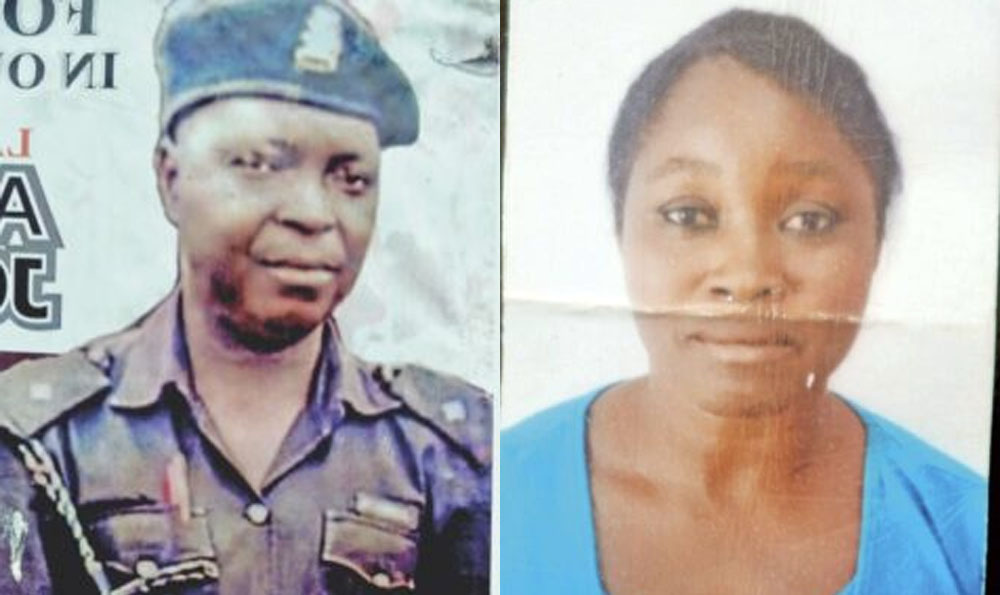
Assault by female trader over N100 causes ex-police officer’s death
Retired Assistant Superintendent of Police Joseph Ahaba appeared to have adopted a Christ-like philosophy in matters pertaining to children. He welcomed them warmly and often sought to fulfil their modest needs and desires.
Yet never in his most troubling dreams could he have foreseen that an interaction with a child would lead to his untimely demise.
It was just a few steps from his residence in Angwan Adamu, Ado, Nasarawa State, at the close of October 2024.
His wife, Mrs Hajara Joseph, revealed his deep affection for children, and recounted that the couple had been blessed with nine children, though they tragically lost one some years ago. The memory of that departed child continued to haunt her husband’s heart, she recalled.
She remarked: “My husband never quite recovered from that loss. Whenever his thoughts turned to the boy, he would sink into a deep melancholy for days.”
She further recalled instances illustrating his tenderness: “There was a day he nearly expelled me from the house for chastising one of the children. On another occasion, he harshly rebuked me when the children complained of hunger. To verify their claims, he feigned sleep in the parlour and observed me surreptitiously serving the children, who subsequently went outside to eat.
“Hours later, when I served him his meal, the children clustered around him. When he inquired whether they had eaten, they replied in the negative. My husband, without hesitation, offered them his portion and returned to the bedroom to apologise to me for having earlier spoken harshly.”
Such was the depth of Mr Ahaba’s affection for children that Mrs Joseph expressed disbelief at the notion that her husband could have physically assaulted a child, as was later alleged.
READ ALSO:
- EFCC says Atiku media aide lied on Channels TV
- Eighteen injured in Hamburg knife attack as woman arrested
- EU calls for ‘respect’ after Trump threatens 50% tariffs
Other neighbours around his residence also testified to how he related nicely with their children and expressed surprise that he was alleged to have beaten up someone’s child.
Genesis of tragedy
Following his retirement from the Nigeria Police Force a decade ago, Mr Ahaba had been receiving monthly pension payments from his Retirement Savings Account via African Alliance. However, these payments ceased over a year prior to the incident, significantly affecting his financial wellbeing.
Mrs Joseph recounted that on the fateful evening, her husband had departed their home around 7pm for his customary evening walk and made a purchase worth ₦400 from a local female trader named Obiageli, for which he paid in full.
“After he left, the woman’s six-year-old son ran after him, claiming that his mother said he still owed ₦100,” she said. “The child grabbed my husband’s shirt. My husband calmly explained that he had already paid ₦400 and instructed the boy to relay that to his mother, adding that should she remain insistent, he would return later to settle the difference.”
Shortly thereafter, the boy returned to his mother in tears, alleging that Mr Ahaba had assaulted him.
According to Mrs Joseph, her husband had by then made his way towards their home and paused at the invitation of a fellow Igala woman, one Dora, who suggested he rest from the sun on her veranda. She offered him sachet water, which he was quietly drinking when Obiageli stormed onto the scene.
“She seized his mobile phone and smashed it against the ground,” Mrs Joseph recounted. “She then grabbed his head and repeatedly bashed it against the wall until Dora rushed to intervene and managed to pry her off.”
Her husband, she said, uttered not a single word in retaliation. Upon returning home, he narrated the entire episode to her in quiet disbelief.
By the following morning, however, his face was severely swollen. Upon arrival at the hospital, doctors determined that surgery on his head was required.
Legal proceedings and declining health
The matter was promptly reported to the New Nyanya Police Division. Obiageli was arrested and charged before a magistrate’s court for assault, and subsequently granted bail.
READ ALSO:
- Senate assigns forensic experts to trace crude oil theft
- Supreme Court dismisses governors’ suit over N1.8tn looted funds
- Foreign students at Harvard seek legal help after US halts enrolment
Whilst the case was pending, Mr Ahaba’s health rapidly deteriorated. He lost his sight and, tragically, succumbed to his injuries seven days following the attack.
Mrs Joseph stated that they duly informed the police of his passing. Nevertheless, she expressed profound disappointment that throughout the seven months and eight days during which her husband’s body lay in the mortuary, the police never paid a courtesy visit to the family nor extended any formal condolences.
The late officer was eventually laid to rest at Abejukolo Town in Omala Local Government Area of Kogi State on the 10th of May this year.
One of Mr Ahaba’s sons expressed his dismay that, even after formally notifying the police of their father’s death, the assault case continued unimpeded before the court.
“The numerous adjournments drained us emotionally,” he said. “Eventually, we informed the prosecutor that our family was no longer interested in pursuing the matter.”
Police response and institutional oversight
At the New Nyanya Police Station, an officer who requested anonymity confirmed that the suspect had been arrested and initially charged with assault. However, he declined to comment on whether the division had been formally informed of Mr Ahaba’s demise.
A senior officer at Force Headquarters queried why the charge had not been withdrawn following the victim’s death, pointing out that the suspect should have been re-arrested and the case file reclassified as culpable homicide. He asserted that the matter should have been transferred to the State Criminal Investigation Department in Lafia for thorough investigation.
“The prosecutor ought to have advised the Divisional Police Officer of New Nyanya Police Division accordingly,” he noted. He further advised the bereaved family to submit a formal petition to the Nasarawa State Police Commissioner to ensure justice.
In response, the Nasarawa State Police Public Relations Officer, Deputy Superintendent Ramhan Nansel, stated that he was previously unaware of the case. He asked whether the family had officially updated the police regarding the victim’s death.
The spokesperson said he would present the matter to the state police commissioner, so that legal advice could be sought in order to do what the law says in such a case.
Assault by female trader over N100 causes ex-police officer’s death











metro
How I Sold My Twins for N300,000, Stole 13 Other Children — Suspect
How I Sold My Twins for N300,000, Stole 13 Other Children — Suspect
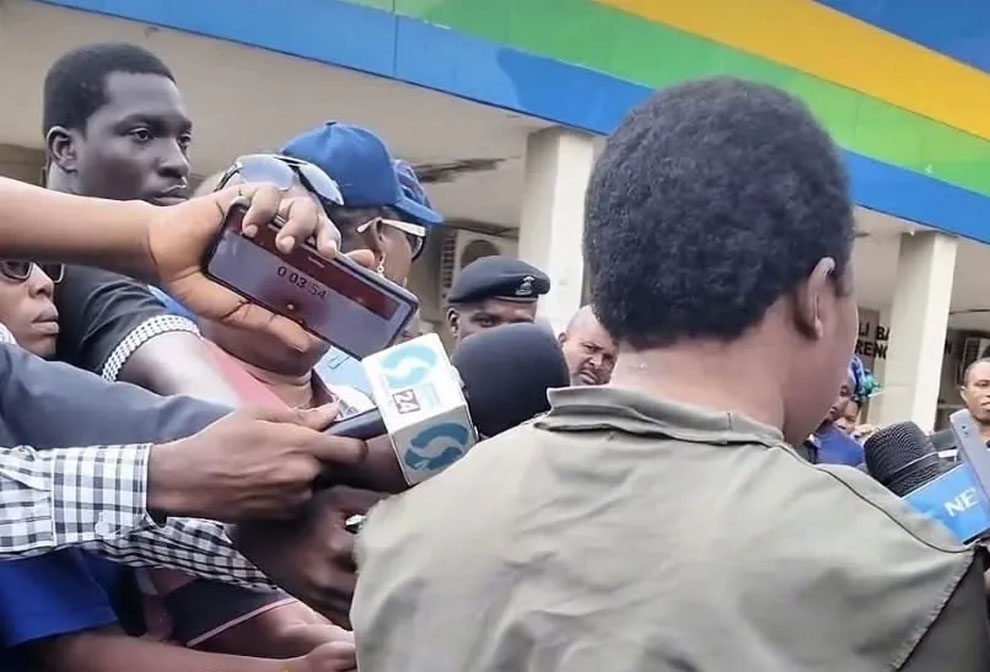
A 50-year-old suspected child trafficker, Adejoke Popoola, has confessed to selling a newborn boy and a set of twins she gave birth to before stealing at least 13 other children for onward sale, in a case that has uncovered an interstate trafficking syndicate operating across Oyo, Ogun and Delta States.
Popoola, also known as Orente Alagbo, made the startling disclosure on Monday while speaking with journalists at the Oyo State Police Command headquarters in Ibadan, following her arrest on August 4. She claimed she had been involved in the alleged activities since October 2024, after her herb-selling business was gutted by fire, which she said pushed her into the illicit trade as a means of survival.
Popoola stated that she sold a newborn baby boy and a set of male twins, with the twins sold to a clinic in Ogeere for ₦300,000. She said she sometimes received between N80,000 and N120,000 for other children, and up to N900,000 for some victims, depending on the age and gender of the child. “God blessed me with the gift of pregnancy. Anytime a man has sex with me twice, I get pregnant, and it is always difficult to abort,” she said. “I have sold two sets of children, a newborn boy and twins as well, last year. I sold the twins to … clinic; she also resells them to her customers in Lagos. She has a baby industry. When the owner of the pregnancy rejects the pregnancy, that is when I sell.” Popoola, who said she has seven children of her own aged between six and 34, added that she became involved in the alleged operation after meeting a woman she identified as Oluwakemi, who she said operated a “baby industry” and supplied children to buyers in Lagos, revealing the existence of a well-organized trafficking network.
The suspect also admitted to stealing children through various deceptive methods. She explained that she would sometimes disguise herself as a prospective tenant to gain access to homes before taking children when their parents were not around. “I steal babies. I will go to their place and say I want to rent a house. Then, if I do not see anyone, if I see their children, I will just steal their children,” she said. Popoola claimed that a woman she worked with at Ogeere Market taught her how to steal children, providing her with the skills and confidence to carry out the abductions. She further alleged that she sometimes posed as a spiritualist, targeting parents with children living with disabilities, preying on their desperation for healing. “Parents bring their disabled children to me because they cannot talk, sit, or walk. So, I will promise them that I can help them to heal, then I will go and pick another person’s child for them,” she said, revealing a particularly cruel method of operation.
READ ALSO:
- No More Embassy Visits: Step-by-Step Guide to Nigeria’s Contactless Passport Renewal
- Lagos police arrest four suspected robbers, recover 25 phones in Mushin
- Benue Govt Blasts Obi Over ‘Unapproved’ Visit: ‘He Is Looking For Our Trouble’
One of the most chilling incidents she recounted involved the abduction of three-year-old Ifakunle Ifagbenro during an Egungun festival in Oyo Town on June 29. She said she travelled to the festival two days earlier, joined the family during prayers and even contributed money to gain their trust before volunteering to carry the boy during the procession. “When the Egungun left, the boy told his mother that he did not want to stay at home and wanted to join the procession. So, I volunteered to help hold the boy,” she said. “I joined them for the procession and, in the evening, I picked up the boy, laid him on my back and ran away with him.” She claimed she received N900,000 for selling Ifagbenlo, making him one of her most lucrative targets.
Popoola claimed that of the children she allegedly kidnapped, six had died while 17 were rescued by police. The deceased children were identified as Musharaf Lawal Tajudeen, two; Greatness Adeagbo, five; Sainat Amoo, two; Taiwo Usman, two; Daniel Solomon Olayinka, seven; and Miracle Olaniyi, four. She explained that some of the children died due to illness or neglect while in custody, while others reportedly succumbed to the harsh conditions in which they were kept.
The Oyo State Commissioner of Police, Abimbola Olugbenga, said the investigation began with a petition dated July 29, 2026, submitted by Popoola herself over allegations including conspiracy, cyberbullying, threat to life and defamation. Detectives later linked the case to the disappearance of Ifakunle during the masquerade festival, as video footage from the event showed Popoola carrying the child moments before he vanished. Popoola was arrested on August 4, and her statement provided the first major breakthrough in dismantling the syndicate. She allegedly named Adekanbi Janet, also known as Hosanna, as her accomplice. Janet was arrested in Mowe, Ogun State, where four children and two pregnant young women were rescued from her custody, revealing the scale of the operation.
READ ALSO:
- Yamal Fires Back at Mbappé: “I’m Not Going to Beg” for Ballon d’Or
- Osun Police Arrest Woman After Vigilante Member Dies During Sexual Encounter in Ile-Ife
- Igbo Group Rejects Tinubu Endorsement, Pledges Grassroots Support for Peter Obi in 2027
The investigation later extended to Agbor, Delta State, where four children allegedly stolen from Oyo State were rescued from persons suspected to have bought them. Two suspects, Christopher Joy, 48, and Rosemary Jesse, 53, were arrested and allegedly confessed to involvement in the trafficking network, confirming the interstate dimension of the criminal enterprise. The investigation also uncovered an alleged ritual dimension, with suspects confessing that children who died in custody were sold to ritualists. This led to the arrest of Muritala Fasasi, an Islamic cleric, and Yakubu Azeez, a herbalist, who were allegedly involved in purchasing the bodies of deceased children for ritual purposes.
The police said it has so far rescued 17 children and arrested seven suspects in connection with the investigation. The rescued children include Ifakunle Ifagbenro, 3; Musibau Olasupo, 5; Sulaimon Osamo, 7; Murina Fidaus, 3; Aminat Yusuf, 3; Taiwo Olamilekan, 3; an infant aged nine days; Rafiat Waheed Babalola, 2; Quwiyat Alade, 5; Rejoice Divine, 3; Alhaji Divine, 5; Eniolorunda, 3; Victoria, 3; Isoma Prince, 3; Roqeeba, 4; Boluwatife Odedeyi, 3; and Ireoluwa Elizabeth Olapade, 7. The CP urged parents and guardians whose children recently went missing to visit the command headquarters in Eleyele, Ibadan, to identify the rescued children and facilitate their reunification with their families, as some of the children have yet to be claimed.
How I Sold My Twins for N300,000, Stole 13 Other Children — Suspect
metro
No More Embassy Visits: Step-by-Step Guide to Nigeria’s Contactless Passport Renewal

No More Embassy Visits: Step-by-Step Guide to Nigeria’s Contactless Passport Renewal
metro
Lagos police arrest four suspected robbers, recover 25 phones in Mushin
Lagos police arrest four suspected robbers, recover 25 phones in Mushin
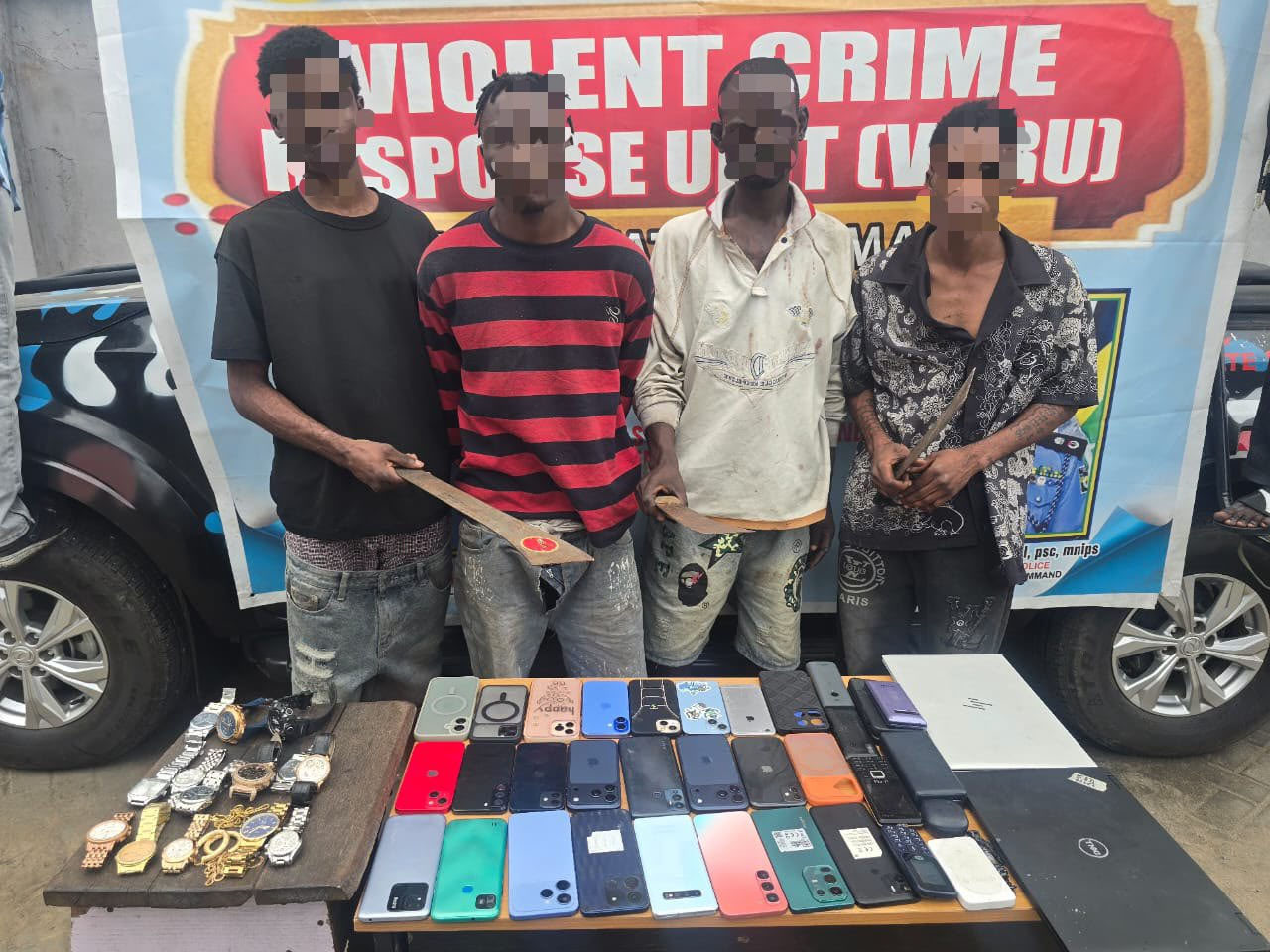
The Lagos State Police Command has arrested four suspected members of an alleged armed robbery syndicate operating around the Iju-Ishaga and Oke-Aro areas of Lagos State, recovering 25 mobile phones and other items during a raid on their hideout.
The suspects were arrested at their alleged hideout in Idi-Oro, Mushin, following what the police described as credible intelligence and sustained surveillance by operatives of the Command’s Violent Crime Response Unit (VCRU).
The suspects were identified as Damilare Oluwatobi, 28; Lekan Adenuga, 30; Haruna Sheriff, 22; and David Balogun, 24.
According to the police, the operation followed intelligence gathered on the activities of the alleged robbery syndicate, which was reportedly linked to criminal operations in parts of Lagos.
During a search of the hideout, VCRU operatives recovered 25 mobile phones, two laptop computers, gold jewellery, including a necklace and earrings, and three cutlasses.
The police described the arrests as a significant development in efforts to tackle armed robbery and violent crime in Lagos, while investigations continue to establish the circumstances surrounding the recovered items and identify their owners.
READ ALSO:
- Benue Govt Blasts Obi Over ‘Unapproved’ Visit: ‘He Is Looking For Our Trouble’
- Yamal Fires Back at Mbappé: “I’m Not Going to Beg” for Ballon d’Or
- Osun Police Arrest Woman After Vigilante Member Dies During Sexual Encounter in Ile-Ife
The suspects are currently in police custody and are assisting investigators with the ongoing investigation. The Command also said efforts were being intensified to apprehend other suspected members of the alleged syndicate who may be connected to the criminal activities.
The development was confirmed by the Lagos State Police spokesperson, SP Abimbola Adebisi, who said the suspects were arrested by operatives of the VCRU following sustained intelligence gathering.
The Lagos State Commissioner of Police, CP Tijani Fatai, commended the VCRU operatives for their swift response and intelligence-led approach, describing the operation as part of the Command’s broader efforts to dismantle criminal networks across the state.
Fatai reaffirmed the police commitment to protecting residents and tackling criminal activities, particularly armed robbery and other violent crimes.
He also urged residents to remain vigilant and promptly report suspicious activities to the police through the Command’s emergency lines.
The police listed the emergency contacts as 07061019374, 08065154338, 08063299264, 08039344870, 08080193432 (Marine), and 09168630929.
The latest arrests come as the Lagos Police Command continues to rely on intelligence-led operations to identify and disrupt criminal groups operating across the state.
The four suspects remain in custody while the investigation continues, with the police expected to determine the extent of their alleged involvement and pursue other individuals suspected to be connected to the syndicate.
Lagos police arrest four suspected robbers, recover 25 phones in Mushin
-

 metro3 days ago
APC rally: Suspected thugs attack journalists, smash Radio Nigeria vehicle in Kano
-

 Education2 days ago
FG Opens N2.5bn Grant Window For 50 Student Innovators Under “Next Moonshot Initiative”
-

 Politics2 days ago
Peter Obi, Others Challenging Tinubu Cannot Transform Nigeria — Datti Baba-Ahmed
-
 Politics3 days ago
Kano Political Earthquake: Kwankwaso Loyalists Dump NDC, Defect to APC in Major 2027 Blow
-

 Entertainment3 days ago
Wizkid Mocks Davido’s Family Wealth: “Rich and Empty” — Afrobeats Feud Escalates
-

 Auto2 days ago
Kaduna to Lead Govt Patronage of Local Vehicles as Sani Unveils Peugeot 5008
-

 metro2 days ago
Socialite Igho ‘Tiny’ Ubiribo Dies After Penis Enlargement Surgery
-

 Politics2 days ago
Demystifying the Political Monolith: Wike’s ‘See Finish’ Doctrine and Nigeria’s New Political Calculus