

metro
Ponzi scheme director arraigned in P’Harcourt over N13.8bn fraud

Ponzi scheme director arraigned in P’Harcourt over N13.8bn fraud
The Economic and Financial Crimes Commission (EFCC) has arraigned Precious Williams, a director at Glossolalia Nigeria Ltd and Pelegend Nigeria Ltd, over a staggering N13.8 billion money laundering case linked to a fraudulent investment scheme.
Williams was docked on Monday before Justice S.I. Mark of the Federal High Court in Port Harcourt, Rivers State, on a 14-count charge that includes money laundering, conspiracy, advance fee fraud, and obtaining money under false pretence.
According to the EFCC, Williams allegedly masterminded a fake investment scheme through which she and her companies defrauded unsuspecting victims of billions of naira. The funds were reportedly funneled through her companies under the guise of offering high returns on investment.
Court documents revealed that the fraudulent activities were carefully orchestrated and involved multiple accounts and corporate fronts used to mislead investors and launder the proceeds.
A statement shared by EFCC spokesperson Dele Oyewale, on Monday, said the charges stemmed from a complex fraud allegedly orchestrated in collaboration with Maxwell Chizi Odum (still at large) and MBA Trading and Capital Investment Limited (also at large).
He stated that the defendant allegedly received billions of naira into various corporate bank accounts as part of the scheme.
According to the anti-graft agency, Ms Williams used different entities for the scheme. They are Glossolalia Nigeria Limited, Pelegend Nigeria Limited, Phenom 413 Events Limited (company representative at large) and Doxasterz Oil and Gas Limited.
READ ALSO:
- Why I endorsed Tinubu, omitted Shettima – APC Vice Chair
- Five Nigerian fraudsters jailed 129 years in US for stealing $17m
- Nigerian woman Ifeoluwa Akinwunmi arrested with N1.8bn drugs in India
One of the counts alleged that, sometime between 24 August 2019 and 15 February 2020, she took possession of N10 billion from Maxwell Chizi Odum and MBA Trading and Capital Investment Limited through Sterling Bank account number 0064260799, knowing the funds were proceeds of unlawful activity involving over 3,000 unsuspecting investors.
Another charge alleged that Ms Williams, through a Polaris Bank account, received N1.005 billion between December 2019 and November 2020, knowing the money was part of fraudulent proceeds.
The EFCC said the funds were collected under the false pretense of offering 10 to 15 per cent monthly returns on investments, which were never paid back.
Ms Williams pleaded not guilty to all charges during her arraignment on Monday.
Following her plea, prosecution counsel E.K. Bakam requested the court to remand the defendant and fix a date for trial.
Defence counsel Tochukwu Maduka, who is a Senior Advocate of Nigeria (SAN), informed the court of a pending bail application.
Mr Maduka urged the court to grant bail to allow the defendant to prepare for her defence.
However, the prosecution opposed the application, arguing that it was premature as it was filed before the charge amendment and formal arraignment.
Mr Bakam asked the court to reject the application and request a fresh filing.
Mr Mark ruled in favour of the prosecution, ordering that the defendant be remanded in the Port Harcourt Correctional Centre.
The judge adjourned the matter to 17 June for a bail hearing.
How the scheme worked
According to petitions received by the EFCC, Ms Williams was involved in the collection and laundering of funds from thousands of Nigerians who invested in MBA Trading and Capital Investments Limited between 2019 and 2020.
READ ALSO:
- Lagos suspends planning approvals along Lagos-Calabar coastal road
- Netanyahu says killing Iran’s supreme leader would end conflict
- IG, Conference of Speakers clash over creation of state police
The firm, via aggressive marketing by agents and social media promotions, promised 10 to 15 per cent monthly returns, with a six-month lock-in period after which capital could be withdrawn or reinvested.
But many victims were reportedly lured in by promises of guaranteed returns and ended up losing their capital.
EFCC warns against ponzi schemes
The EFCC has repeatedly warned Nigerians to avoid Ponzi schemes. On 9 May, the Acting Zonal Director of the EFCC Enugu office, Assistant Commander of the EFCC Aisha Abubakar, issued a fresh warning during the Nigeria Security and Civil Defence Corps’ 2025 Annual Management Retreat in Enugu.
Speaking on the topic “Get-Rich-Quick Syndrome and the Youth Vulnerability”, she said Ponzi schemes have “destroyed lives, eroded trust, and undermined national development.”
She blamed rising youth involvement on financial illiteracy, peer pressure, digital exposure, and social media-driven fantasies of wealth.
She cited schemes like MMM Nigeria, MBA Forex, Chinmark Group, and the recent collapse of CBEX, which promised 100 per cent ROI within 30 days, as examples of destructive financial frauds masquerading as investment platforms.
The EFCC said it is continuing efforts to track down other suspects in the MBA investment fraud, including Maxwell Odum, and others currently at large.
The commission also recently secured a final forfeiture order on over N6.67 billion worth of shares and funds traced to Cititrust Holdings Plc—another company accused of operating a Ponzi scheme.
In March 2025, EFCC operatives arrested 28 suspects in Minna, Niger State, for operating Q-Net Ltd, a fraudulent investment platform disguised as network marketing.
The suspects allegedly collected between $790 and $850 (N1.46 million) per person from victims under the guise of international affiliations.
EFCC’s preventive role
Ms Abubakar stated that beyond enforcement, the commission is prioritising prevention through roadshows, digital campaigns, and partnerships with financial regulators like the Central Bank of Nigeria, SEC, and international bodies including INTERPOL.“
“Cybercrime has created a market system where fraudsters obtain a competitive advantage and drive out legitimate businesses,” she said. “This undermines national defence, global trust, and the Nigerian economy.”
Ponzi scheme director arraigned in P’Harcourt over N13.8bn fraud







metro
Niger Mosque Abductions: Terrorists Execute 30 of 500 Captive Muslim Worshippers
Niger Mosque Abductions: Terrorists Execute 30 of 500 Captive Muslim Worshippers
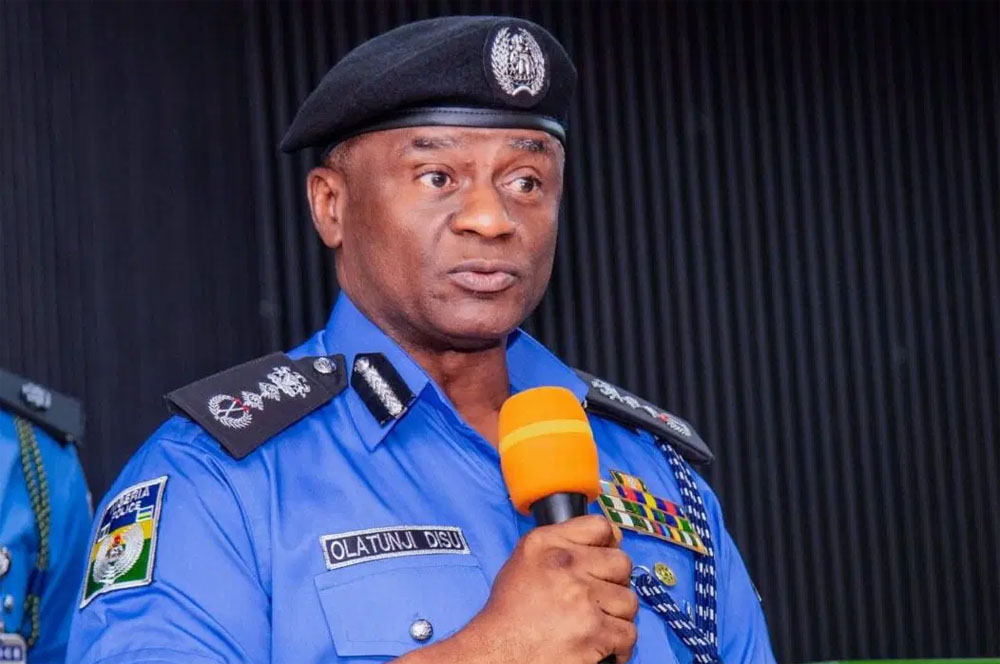
MINNA, NIGERIA – The mass abduction of worshippers from mosques in Niger State has escalated dramatically, with armed terrorists reportedly executing some of the hundreds of captives seized during Friday prayers. The Inspector-General of Police, Olatunji Disu, travelled to Niger State on Saturday to assess the security situation and ordered reinforced rescue operations.
The attacks occurred on Friday, 21 August 2026, at approximately 2pm. Police spokesperson Wasiu Abiodun confirmed that armed men simultaneously attacked mosques in four communities – Dekara, Kpenya, Sabon-Gida and Gidan-Zana – in the Borgu Local Government Area, while Muslims were observing Friday prayers. Witnesses described scenes of chaos. A Dekara resident, speaking on condition of anonymity, said the terrorists surrounded the mosque shortly after prayers began. “As soon as the imam said ‘Assalamualaikum’, the bandits surrounded the mosque and took people away.” Local residents estimate that more than 60 people were abducted from Dekara Central Mosque alone. In Gbezhin community, no fewer than 100 people remained unaccounted for as of Sunday evening. The terrorists later released a video claiming to hold approximately 500 captives, including women and children, with the sound of children crying audible in the footage.
On Saturday, the terrorists issued a warning to surrounding communities, ordering residents to vacate their homes within 30 minutes and threatening: “We will kill anyone we meet when we return.” Those threats appear to have been carried out. A Dekara resident told Daily Trust: “We received information that some of the abducted worshippers have been killed, but we do not know the exact number. Soldiers and vigilantes have moved to recover the bodies, but all routes accessible to security personnel have been planted with improvised explosive devices.” The Niger State chapter of the Christian Association of Nigeria (CAN), through its chairman, Bishop Bulus Dauwa Yohanna, confirmed that approximately 30 worshippers who attempted to flee were shot dead by the gunmen. This figure corresponds with reporting by NPO Reports.
The continuing violence and execution threats have triggered mass displacement. Resident Usman Musa told journalists that more than 200 residents from Gbezin had fled to neighbouring Benin Republic for safety. Another resident added that approximately 230 residents from Gidan-Zana and Sabon-Gida were taking refuge in Gawungi, inside Benin, while others had fled to Kwara State to stay with relatives.
Among those abducted are several prominent community figures. According to Ismaila Yahaya, the 90-year-old village head of Ka’ada was among those taken. He is the biological father of the District Head of Dekara and had only recently been released from a previous kidnapping. The violence in Borgu Emirate has not been confined to the mosque attacks. The Niger State Government confirmed that Alhaji Ahmed Yusuf, the village head of Galla, was killed by armed men at his residence. Governor Mohammed Umaru Bago expressed condolences, describing the killing as evidence of the bandits’ “extreme arrogance”.
Amid the escalating crisis, Inspector-General of Police Olatunji Disu visited Niger State on Saturday, 29 August, meeting with Deputy Governor Yakubu Garba at the Government House in Minna. He conveyed his condolences to the families of the victims and pledged that “the safe rescue of the kidnapped victims and bringing the perpetrators to justice remains the focus of current operations”. Disu has ordered the deployment of elite reinforcements to Niger State, including counter-terrorism units, tactical squads and the police air wing. Assistant Inspector-General of Police Victor Olaiya of Zone 7 has been dispatched to coordinate rescue efforts. Addressing officers at the Niger State Police Command, the Inspector-General said: “Nigerians are watching to see the police do what is right. I am not here for ceremony, but to bring a strong message of support to officers and soldiers working under difficult conditions.”
The Nigerian Supreme Council for Islamic Affairs (NSCIA) described the attacks as “heinous and barbaric”, calling on the Federal Government to “move beyond sporadic rescue operations” and establish a permanent, intelligence-driven and community-centred security architecture. The Christian Association of Nigeria’s Niger State chapter urged the government to provide adequate security at places of worship nationwide, stressing that “an attack on any place of worship is an attack on the sanctity of worship and a threat to the wider community”. Amnesty International also urged Nigerian authorities to secure the safe release of the abducted worshippers, noting that at least 1,100 people were abducted in the country between January and April 2026, with the actual figure likely to be far higher.
As of press time, the Niger State Government said it had not received any contact or demands from the kidnappers. Information Commissioner Obed Nuhu, speaking in a television interview, said the attacks were suspected to have been carried out by Lakurawa and Boko Haram elements, though the exact number of victims remained unverified.
Niger Mosque Abductions: Terrorists Execute 30 of 500 Captive Muslim Worshippers
metro
Kano Police Trace 12 Stolen Vehicles, Arrest 10 Suspects
Kano Police Trace 12 Stolen Vehicles, Arrest 10 Suspects
The Kano State Police Command has arrested 10 suspected members of an alleged interstate car theft syndicate and recovered 12 vehicles linked to the group.
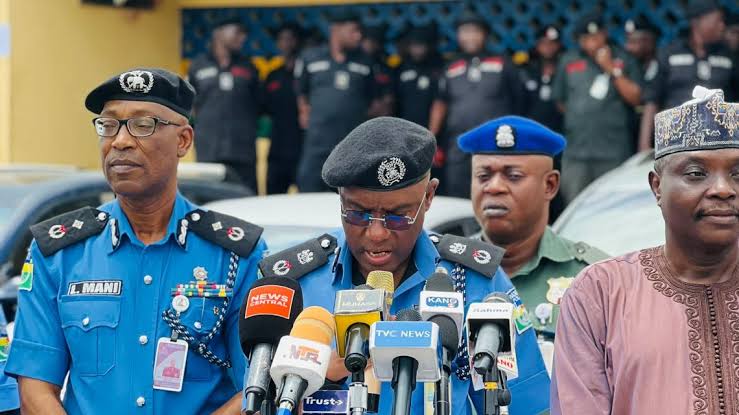
Commissioner of Police Ibrahim Adamu Bakori disclosed this on Wednesday during a briefing at the Tarauni Area Command.
According to him, five suspects were first arrested in Adamawa on September 7, leading to the recovery of a Mercedes-Benz GLK 350. Further investigation resulted in the recovery of 10 additional vehicles from Kano and neighbouring states.

Five more suspects were arrested on September 12 at Kwankwasiyya City Quarters, Tarauni, where police allegedly recovered a stolen Toyota Hilux.
Bakori said preliminary findings showed that the suspects allegedly operated across Kano, Katsina, Bauchi, Gombe and other states. He said the group allegedly stole vehicles, hid them at different locations and moved them across state borders for resale.
The commissioner noted that 11 of the 12 recovered vehicles were unregistered, making it difficult to trace their owners.
He urged vehicle owners to register their vehicles and display valid number plates, while warning that unregistered vehicles could make criminal investigations more difficult.
Bakori said investigations were ongoing and efforts were underway to arrest other suspected members of the syndicate.
Kano Police Trace 12 Stolen Vehicles, Arrest 10 Suspects
metro
Osun Govt Vows to Prosecute Those Behind Recent Killings
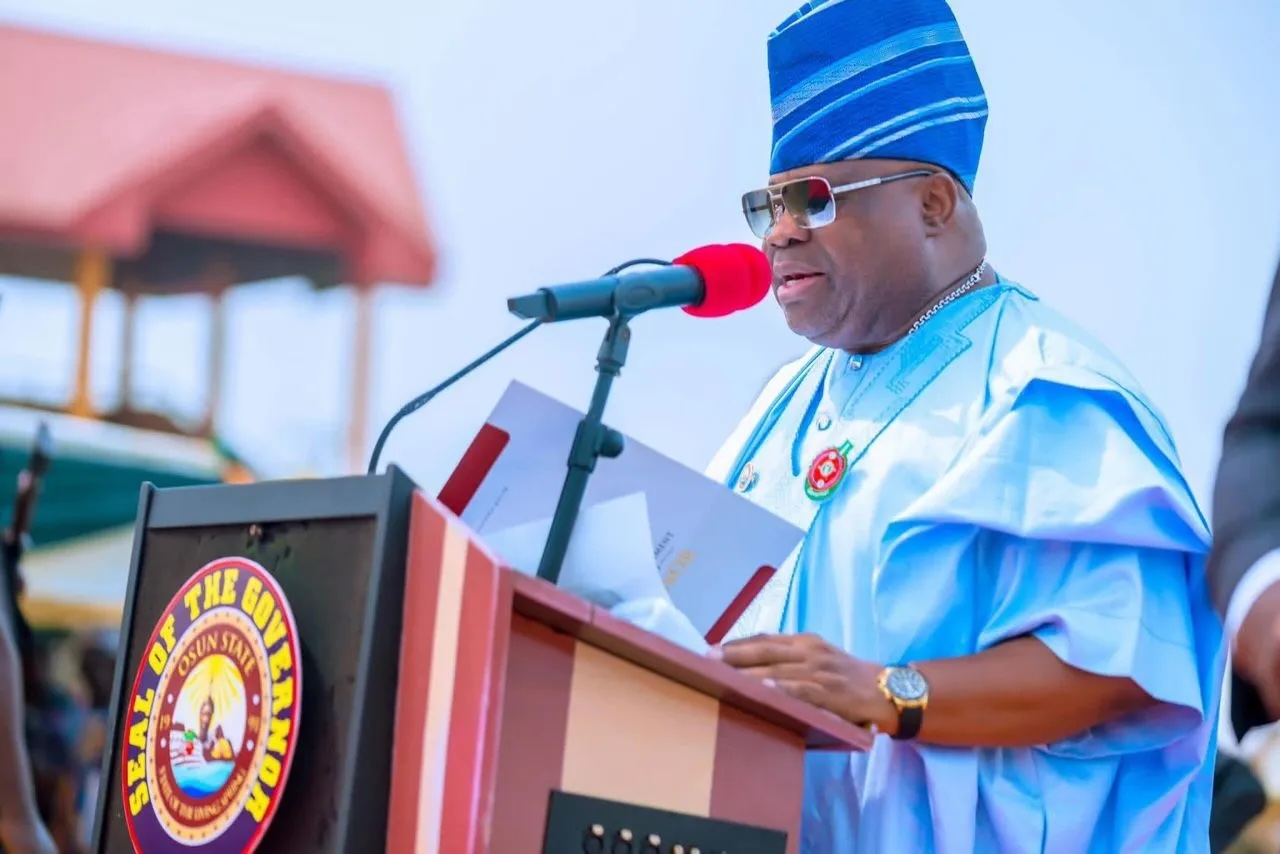
Osun Govt Vows to Prosecute Those Behind Recent Killings
The Osun State Government has vowed to prosecute anyone found responsible for the recent killings and violent clashes across the state.
The government also denied allegations that it was protecting those suspected of killing Olalekan Oyeyemi amid a leadership dispute in the state chapter of the National Union of Road Transport Workers (NURTW).
Speaking on Wednesday, the Special Adviser to Governor Ademola Adeleke on Security Matters, Samuel Ojo, said the administration would allow security agencies to investigate the cases without interference.
Adeleke Summons Security Chiefs
Following the recent violence, Adeleke called an emergency security meeting attended by commanders from the police, DSS, Army, NDLEA, Immigration, Correctional Service, Civil Defence and Amotekun.
Deputy Governor Kola Adewusi represented the governor at the meeting.
Ojo said the security chiefs agreed to intensify efforts to stop further killings and restore peace across Osun.
He also dismissed claims that the government was shielding suspects in Oyeyemi’s murder, saying the police and DSS had been directed to thoroughly investigate the case.
Meanwhile, two NURTW leaders, Gbedegesin and Kareem Akeem, had alleged that Oyeyemi was killed because some union leaders opposed his proposed emergence as the next state chairman.
Transportation Commissioner Sesan Oyedele, however, denied that the government endorsed Oyeyemi for the position. He said the union leaders only informed him of their decision to choose the deceased.
About five people have reportedly been killed between August 24 and September 15 in Ikire, Ile-Ife and Osogbo in incidents linked to motor park disputes and alleged cult-related clashes.
Osun Govt Vows to Prosecute Those Behind Recent Killings
-
 Politics2 days ago
2027: Northern Lecturers Back Tinubu, ASUU Disowns Endorsement
-

 metro2 days ago
Police Arrest Mother Over Alleged Brutal Abuse of 7-Year-Old Girl in Anambra
-

 Sports2 days ago
‘I Was Never the Chosen One’ — Dembele Responds to Mbappe
-
 News3 days ago
Nwifuru Dismisses Cubana Chief Priest as ‘Attention-Seeker’
-
 Politics3 days ago
2027: Sowore Promises ₦500,000 Minimum Wage, Free Education, 24-Hour Electricity
-
 metro3 days ago
Grand Chief Imam calls for professional communication structure for Rabitoh 1964
-

 Education2 days ago
JAMB Moves 2027 UTME Time — Here’s What Candidates Need To Know
-
 Politics2 days ago
2027: APC Governors Reject Wike’s Rainbow Coalition, Insist on Party Loyalty