

Health
NAFDAC denies banning Tummy Tummy noodles, Maggi, others

NAFDAC denies banning Tummy Tummy noodles, Maggi, others
The National Agency for Food and Drug Administration and Control (NAFDAC) has disowned an audio recording claiming it has shut down the manufacturing facility of Tummy Tummy noodles in Anambra State and imposed a ban on tinned tomatoes and Maggi seasoning cubes.
This is contained in a Wednesday statement signed by Director General of the agency, Prof. Mojisola Adeyeye.
Adeyeye disclosed that the audio recording is recirculating on social media and messaging platforms after first surfacing in October 2023, when it was thoroughly investigated.
Adeyeye said, “NAFDAC categorically disclaims the contents of the recording and fully dissociates itself from it.”
She added, “Contrary to the claims made in the recording, the Tummy Tummy noodles facility in Anambra State was not sealed.
“A NAFDAC inspection team conducted an unscheduled visit to the facility, collected samples of four different noodle variants, and submitted them to the Agulu Laboratory for evaluation.
READ ALSO:
- Court strikes out N12.3bn fraud case against Otudeko after EFCC settlement
- N3.1bn fraud: Court dismisses ex-Gov Suswam no-case submission
- Just in: 3 senators, 4 Reps dump PDP for APC
“The results returned satisfactory, with no infractions recorded.”
The NAFDAC DG disclosed that the individual who created the audio falsely claimed to be acting in collaboration with the agency and alleged the presence of “acetyl methyl” as a preservative in the product.
“This was unfounded and misleading. NAFDAC found no evidence to support the claims and reiterates that the company was not in violation of any safety or regulatory standards.
“Furthermore, following widespread concern in 2023 about the presence of ethylene oxide in instant noodles, NAFDAC conducted a comprehensive investigation at both factory and market levels.
“Findings confirmed that ethylene oxide or its derivative was NOT present in any instant noodles or seasonings produced in Nigeria.
“Additionally, mycotoxin levels and heavy metals were within internationally acceptable limits, confirming the safety of Nigerian-made noodles.”
Similarly, Adeyeye affirmed that there is no ban on tinned tomatoes or Maggi seasoning cubes in Nigeria.
She urged the public to disregard the misleading audio and refrain from spreading unverified content.
“NAFDAC remains proactive and committed to its mandate of safeguarding public health by ensuring that only safe, high-quality, and properly regulated food and drug products are available to Nigerians,” Adeyeye stressed.
NAFDAC denies banning Tummy Tummy noodles, Maggi, others







Health
‘We Are Ignorant, We Don’t Read’ — NAFDAC DG Raises Food Safety Concerns
‘We Are Ignorant, We Don’t Read’ — NAFDAC DG Raises Food Safety Concerns
The Director-General of the National Agency for Food and Drug Administration and Control (NAFDAC), Prof. Mojisola Adeyeye, has said poor understanding of food safety guidelines and regulatory responsibilities remains a major challenge in Nigeria.
Adeyeye made the remarks while explaining the roles of government agencies in regulating food products and agricultural practices across the country.
“We are ignorant in this country. We are very ignorant. We don’t read. We don’t understand,” the NAFDAC DG said.
She explained that several government agencies are responsible for different stages of the food chain, from production on the farm to consumption, stressing that NAFDAC’s mandate primarily covers processed and semi-processed foods.
According to Adeyeye, the Federal Ministry of Agriculture has the primary responsibility for fresh agricultural produce sold in markets.
“NAFDAC mandate is for processed or semi-processed foods. So the oranges you buy in the market, we don’t control the oranges you buy in the market,” she said.
However, she said NAFDAC has regulatory responsibilities when pesticides are used in agricultural production because the agency approves, regulates and controls such products.
Adeyeye said NAFDAC works with the Ministry of Agriculture to train farmers on the proper use of pesticides, including the quantity to apply and the appropriate period between treatment and harvesting.
READ ALSO:
- 2027: Galadima Alleges APC Offering N50m, N200m to Lawmakers to Step Aside
- ‘No Decent Wages, No Credible Elections’ — Sowore Threatens 2027 Boycott
- NSITF Exposes Fake Recruitment Scam, Warns Nigerians Against Fraudsters
She said some farmers may misuse agricultural chemicals because they do not fully understand instructions on pesticide labels.
“We have about 56 per cent illiteracy. If it’s a literate country, they will read: ‘Put one teaspoon in one gallon.’ Sometimes our people don’t understand. And they think the more you put, the better,” she said.
The NAFDAC chief said the agency’s Veterinary Medicine and Allied Products Directorate also trains farmers and other stakeholders on the appropriate use of pesticides.
She, however, noted that NAFDAC cannot independently reach the entire farming population because of the number of farmers across the country.
“We cannot go to one million farmers in Nigeria. NAFDAC cannot do that. It is the Ministry of Agriculture that should be doing that,” Adeyeye said.
She added that while NAFDAC has an obligation to support farmer education because of its role in regulating pesticides, the Ministry of Agriculture should take the lead in educating farmers on fresh produce and agricultural practices.
Adeyeye also said many Nigerians do not understand the specific responsibilities of government agencies involved in food regulation, resulting in misplaced expectations about what NAFDAC can regulate.
The comments come amid continuing concerns over food safety, pesticide misuse, counterfeit products and consumer protection in Nigeria.
Adeyeye disclosed that NAFDAC receives more than 200 complaints from Nigerians through its complaint channels each month. The agency also reported receiving 225 complaints involving suspected counterfeit products in August.
She said complaints from consumers provide important leads for NAFDAC’s investigations and enforcement activities.
The agency has continued to urge Nigerians to pay attention to product information, follow safety instructions and report suspected counterfeit, substandard or unsafe products through its established channels.
‘We Are Ignorant, We Don’t Read’ — NAFDAC DG Raises Food Safety Concerns
Health
LASUTH Doctors Suspend Strike in Third Week After Agreement With Lagos Govt
LASUTH Doctors Suspend Strike in Third Week After Agreement With Lagos Govt
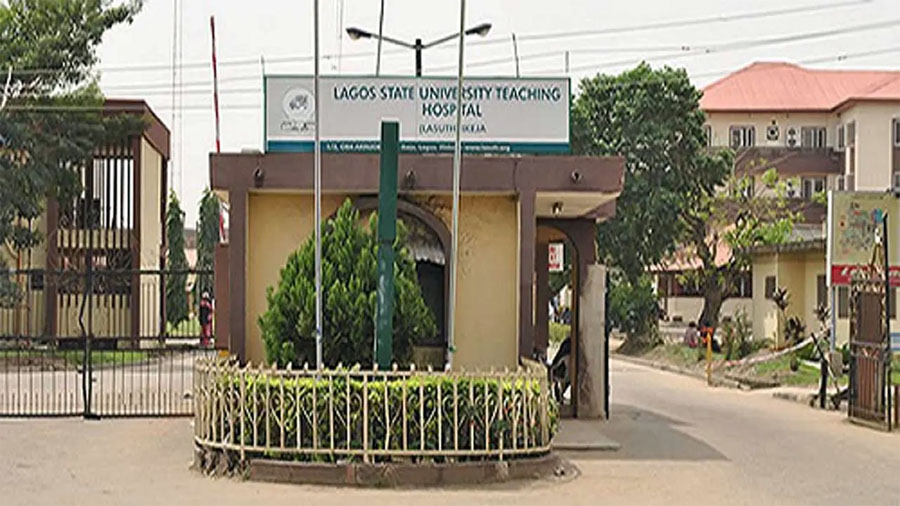
Resident doctors at the Lagos State University Teaching Hospital (LASUTH) have suspended their indefinite strike in its third week after reaching an agreement with the Lagos State Government on some of their outstanding welfare and remuneration demands.
The doctors, under the Association of Resident Doctors, LASUTH (LASUTH-ARD), commenced the industrial action on September 11, 2026, following unresolved concerns over specialist allowance, salary shortfalls, advancement arrears and professional allowances.
The suspension followed negotiations between representatives of the doctors and the Lagos State Government, with the development paving the way for the doctors to return to their duties at the tertiary healthcare institution.
LASUTH-ARD agreed to suspend the strike for 10 weeks to allow the government time to implement the issues covered by the agreement.
The 10-week period does not mean the doctors are remaining on strike for another 10 weeks. Rather, they have returned to work and suspended the industrial action during the period while monitoring the government’s implementation of the agreement.
At the end of the 10 weeks, the doctors are expected to reconvene and review the level of implementation before deciding on their next course of action.
READ ALSO:
- Anambra Police Arrest 25-Year-Old Suspect Linked to 2023 Kidnap, Murder
- 2027: Otti Explains Why He Supports Tinubu Despite Remaining in Labour Party
- EFCC Chairman Raises Alarm Over Alleged Theft of Nigeria’s Public Funds
The dispute had centred largely on the non-payment of specialist allowance to Grade Level 14 resident doctors, particularly Senior Registrars I (SR1).
The doctors had also demanded payment of outstanding salary and advancement arrears, as well as 25 months’ arrears under the revised Professional Allowance Table (PAT).
Another major demand was a detailed and transparent breakdown of the salary components being used by the Lagos State Government to pay resident doctors.
Before declaring the indefinite strike, LASUTH-ARD had issued a seven-day ultimatum to the state government over the outstanding issues.
The doctors acknowledged some interventions by the government, including payment of the 2026 Medical Residency Training Fund (MRTF) and implementation of the revised professional allowance table.
However, the association maintained that critical welfare and remuneration issues remained unresolved, prompting the industrial action.
The Nigerian Association of Resident Doctors (NARD) had backed the LASUTH doctors during the dispute and called for a resolution of the outstanding issues.
The strike had disrupted some healthcare services at LASUTH, with patients affected by the withdrawal of services by resident doctors.
With the suspension now agreed, the doctors are expected to resume normal duties while the implementation of the agreement is monitored.
The development provides temporary relief from the industrial dispute, but the underlying issues will remain subject to the government’s compliance with the commitments reached during negotiations.
The 10-week suspension therefore gives both sides a period to implement and assess the agreement. If the doctors determine at the end of the period that the outstanding issues have not been adequately addressed, the association will decide on its next course of action.
For now, however, the LASUTH resident doctors have returned to work, bringing the current phase of their industrial action to a suspension after entering its third week.
LASUTH Doctors Suspend Strike in Third Week After Agreement With Lagos Govt
Health
MTN, Gates Foundation Launch $25m AI Maternal Health Initiative for 500,000 Nigerian Women
MTN, Gates Foundation Launch $25m AI Maternal Health Initiative for 500,000 Nigerian Women
MTN Group Foundation and the Gates Foundation have launched a four-year AI-enabled maternal healthcare initiative in Nigeria with a target of helping 500,000 women access higher-quality maternal health services by 2030.
Known as the Nigeria Maternal Health Multiplier, the initiative will combine artificial intelligence, mobile technology, affordable smartphones, data access and improved connectivity to support pregnant women, frontline health workers and primary healthcare facilities, particularly in underserved communities.
The partnership, announced in New York on the sidelines of the 81st United Nations General Assembly (UNGA 81), comes with an initial investment of approximately $25 million between 2026 and 2030 through direct and in-kind contributions from MTN and the Gates Foundation.
The organisations said the initial funding is intended to serve as an anchor investment that can attract additional resources and potentially support the expansion of the model into other African markets.
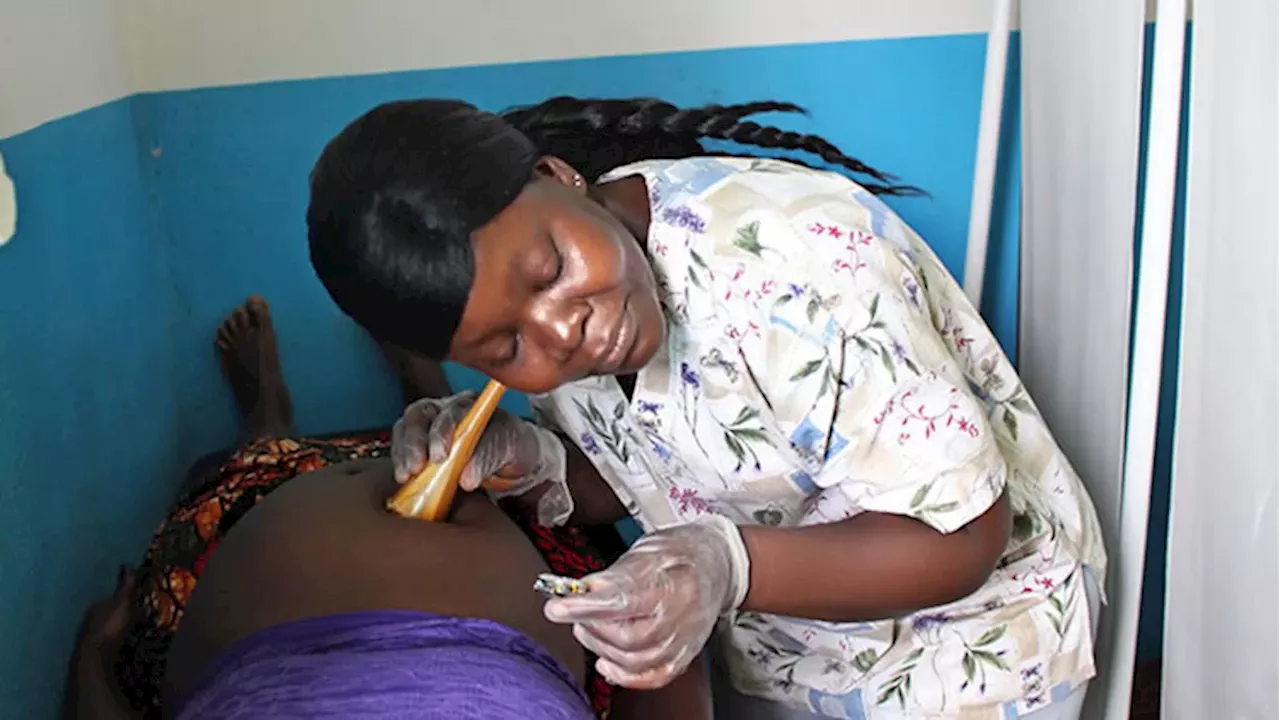
Under the programme, 5,000 frontline health workers will be equipped with digital tools designed to help them identify pregnancy and childbirth complications earlier, while 500 health facilities will be supported to provide more consistent and higher-quality maternal healthcare.
The programme will focus on three major areas: AI-enabled, phone-based decision-support tools for mothers and health workers; affordable smartphones and mobile data for pregnant women; and improved connectivity at primary healthcare facilities.
The digital tools are expected to provide women with trusted health information throughout pregnancy, childbirth and the postnatal period, while giving frontline workers access to real-time guidance that can assist in identifying warning signs and responding to complications.
READ ALSO:
- Niger Mosque Attack: Bago Says 63 Abducted, 14 Freed, Three Killed
- UNGA 81: Trump Threatens to ‘Annihilate’ Iran if No Deal Is Reached
- Mambilla: Malami Defends $200m Settlement, Rejects ICC Corruption Findings
The initiative is designed to work within Nigeria’s existing healthcare system rather than operate as a separate medical service. It will build on the Federal Government’s Maternal and Neonatal Mortality Reduction Innovation Initiative (MAMII), which is being implemented by the Federal Ministry of Health and Social Welfare under the country’s Sector-Wide Approach to health reform.
Nigeria was selected as the first implementation market because of the scale of its maternal health challenges.
According to MTN and the Gates Foundation, Nigeria accounts for nearly 30 per cent of maternal deaths globally, despite progress made in reducing maternal mortality over the past decade. The organisations also said only about 59 per cent of Nigerian women complete four or more antenatal care visits, potentially leaving some pregnancy complications undetected until they become severe.
Globally, maternal deaths have fallen by about 40 per cent since 2000, but progress has slowed in recent years. The organisations said the risk of maternal death remains dramatically higher in sub-Saharan Africa than in Western Europe.
The MTN-Gates initiative is therefore being positioned as a technology intervention aimed at closing some of the gaps that prevent women and health workers from receiving or acting on timely health information.
MTN Group President and Chief Executive Officer Ralph Mupita said technology could make maternal healthcare more personalised, predictive and accessible.
Mupita said the partnership would seek to put trusted and locally relevant health information directly into the hands of mothers and healthcare professionals, with the ambition of developing a model that could eventually be scaled across Africa.
Gates Foundation Chief Executive Officer Mark Suzman said artificial intelligence has significant potential to improve healthcare, but its benefits should reach people who are most likely to be excluded by the cost of emerging technologies.
The foundation said its contribution would include expertise in maternal, newborn and child health, digital health innovation, responsible AI and evidence-based scale-up, while MTN would contribute its telecommunications infrastructure, digital inclusion capabilities, device distribution networks and local market experience.
Nigeria’s Minister of Communications, Innovation and Digital Economy, Bosun Tijani, welcomed the initiative, saying one of the country’s challenges has been ensuring that useful innovations are supported by the systems needed to drive adoption.
READ ALSO:
- Obasanjo Family, Orji Kalu Among Nigerians Linked to $271m US Property Investigation
- Nationwide Blackout Looms As Electricity Workers Give NAF Three-Day Ultimatum
- Phyna, Nkechi Blessing Take Social Media Feud To Boxing Ring In Lagos
Tijani said partnerships such as the MTN-Gates programme could help translate Nigeria’s digital transformation into practical services for people who need them most.
The Coordinating Minister of Health and Social Welfare, Muhammad Ali Pate, also welcomed the partnership, saying strengthening primary healthcare and empowering frontline health workers are central to the government’s health-sector reforms.
Pate said initiatives that work with existing health systems could help reach women who remain underserved.
The new programme comes as the Federal Government intensifies efforts to reduce maternal and neonatal mortality through MAMII and other interventions.
MAMII, launched in November 2024, targets 172 local government areas across 33 states. According to the Federal Ministry of Health and Social Welfare, the targeted areas represent about 20 per cent of Nigeria’s LGAs but account for approximately 55 per cent of maternal deaths.
The government has set a target of reducing maternal mortality by 30 per cent and neonatal mortality by 20 per cent in the targeted areas by 2028, while providing free, timely and comprehensive maternal healthcare to about 2.9 million pregnant women.
The Federal Government said more than 250 health facilities were implementing MAMII as of September 2026 in states including Bauchi, Borno, Kaduna, Kano, Katsina and Ogun.
More than 32,000 women and 1,700 newborns had reportedly benefited from emergency obstetric and neonatal care under the initiative, while the National Emergency Medical Treatment and Ambulance Service had transported nearly 79,000 beneficiaries to appropriate healthcare facilities.
The government also reported a 20 per cent increase in fourth-visit antenatal attendance in MAMII-supported areas during one quarter.
The government has simultaneously introduced incentives intended to encourage women to use maternal and newborn healthcare services.
At a September 14 event in Abuja, the Coordinating Minister of Health and Social Welfare said more than 60,000 women had received free Caesarean sections and other emergency obstetric services through the National Health Insurance Authority, while more than 120,000 frontline health workers had been retrained.
The government also reported that thousands of healthcare facilities had been revitalised and more than 6,000 women affected by obstetric fistula had received corrective treatment and empowerment support.
Minister of State for Health and Social Welfare Iziaq Salako said the 2023/2024 Nigeria Demographic and Health Survey indicates that a Nigerian woman faces approximately a one-in-19 lifetime risk of dying from pregnancy-related causes.
He also said Nigeria accounts for close to 29 per cent of global maternal deaths, highlighting the continuing scale of the country’s maternal health burden.
The MTN-Gates initiative adds a digital component to these broader government interventions by addressing access to information and connectivity alongside conventional healthcare services.
For example, a health worker in a connected primary healthcare facility could use the programme’s digital tools to receive guidance when assessing a pregnant woman, while a woman with access to the supported phone and data services could obtain health information and follow-up support without relying exclusively on physical visits to a healthcare facility.
The initiative, however, is not intended to replace doctors, nurses, midwives or other healthcare professionals. Its stated purpose is to provide additional digital decision-support, connectivity and health information within the existing healthcare system.
The partnership also reflects growing interest in using AI in African healthcare, particularly in areas where shortages of healthcare personnel, limited connectivity and geographical barriers can affect access to services.
The organisations said the programme’s combination of connectivity, devices, data and AI-enabled tools is intended to make digital maternal healthcare more accessible to women who might otherwise be excluded by cost or location.
The initiative’s immediate targets are 500,000 women, 5,000 frontline health workers and 500 health facilities by 2030.
MTN and the Gates Foundation said the approximately $25 million initial investment is expected to catalyse additional funding, with the longer-term ambition of developing a scalable approach that could be adapted for other African countries.
The programme therefore places artificial intelligence and digital connectivity alongside antenatal care, emergency obstetric services, health-worker training, facility upgrades and government incentives in Nigeria’s broader effort to reduce preventable maternal and newborn deaths.
MTN, Gates Foundation Launch $25m AI Maternal Health Initiative for 500,000 Nigerian Women
-

 metro3 days ago
Tragedy Strikes FMC: Medical Director Loses Two Daughters—A Doctor and a Pharmacist—Within 48 Hours
-

 metro3 days ago
Transporters Urge IGP Disu to Arrest Illegal Highway Tax Collectors
-

 Politics3 days ago
2027: Soludo Govt Accuses Peter Obi Of Plot To Destroy APGA
-

 metro3 days ago
Army, DSS, Amotekun Kill ISWAP Commander Planning Attacks in Southern Nigeria
-

 metro3 days ago
Kidnappers torture abducted corps members, slash ransom to N100m
-

 News3 days ago
BREAKING: Many Feared Dead as Helicopter Crashes in Ondo Community
-

 metro3 days ago
Grand Chief Imam of Oyoland Urges Rabitah 1964 to Regulate ‘Yorubaland’ Islamic Titles
-

 metro2 days ago
Ondo Air Tragedy: Soldiers, Families Among 32 Killed In NAF Crash