

Education
239 UNILAG first-class lecturers quit over poor pay – Ex-VC Ogundipe

239 UNILAG first-class lecturers quit over poor pay – Ex-VC Ogundipe
No fewer than 239 first-class graduates of the University of Lagos, UNILAG, employed as lecturers, left the institution within seven years.
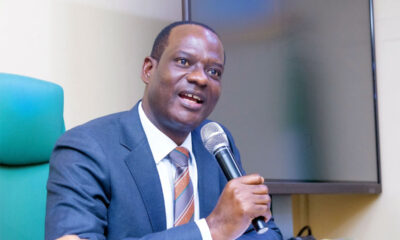
Prof. Oluwatoyin Ogundipe, the immediate past Vice-Chancellor of UNILAG, made the announcement on Tuesday while speaking as a guest speaker at The PUNCH Forum, entitled “Innovative Funding of Functional Education in the Digital Age”, held at The PUNCH Place, Lagos-Ibadan Motorway.
Ogundipe provided figures, stating that UNILAG retained 256 first-class graduates as instructors between 2015 and 2022, but just 17 remained on the institution’s payroll by October 2023.
He ascribed the enormous flight to inadequate pay, unfavourable working conditions, and low motivation among lecturers.
Ogundipe said, “At UNILAG, we decided that those with first-class honours should be employed. What is remaining is not up to 10 per cent. All of them have gone. One day, I asked the man in charge to give me this information.
“In 2015, 86 were employed; in 2016, 82; during my time, that is, 2017 to 2022, 88 were employed. As of October 2023, only 17 were on the ground. They have gone. Very soon, in the next 10 years, you will have only females in the universities if something is not done.”
The ex-UNILAG VC mentioned that unless the government adequately funds the sector, universities will, in the next decade, be dominated by women, while poorly prepared candidates will gain entry into postgraduate programmes.
“Many of us are tired. By the time you get home, there is no light, and the Federal Government is saying they are giving us N10m to access as loans. You can see how our lives have been devalued. Can I use N10m to build a security post?
“How do you encourage them? Many of our colleagues, especially the young ones, are tired. The unfortunate thing is that two things will happen in the universities soon. Women will be the ones to occupy universities, like we have in secondary schools. Second, the calibre of people who will come for postgraduate studies will be people who are not supposed to come,” he added.
READ ALSO:
- Nnamdi Kanu seeks Trump, AU intervention for release
- Osun monarch jailed five years in US for COVID-19 fraud
- Looming strike: ASUU asks NASS, others to intervene
Ogundipe decried the education sector’s persistent underfunding, stating that both federal and state budgets have regularly stayed below 10%, falling far short of UNESCO’s required 15-26%.
He urged lawmakers to pass legislation requiring each first-generation university to receive at least N1 billion each year to rehabilitate decaying infrastructure.
According to him, many colleges are compelled to rely on internally generated revenue, which should be directed towards research.
Ogundipe, who is also the Pro-Chancellor of Redeemer’s University in Ede, Osun State, expressed concern that infrastructure, technology, teacher salaries, research assistance, and digital facilities in institutions were either overburdened or altogether absent.
“In the period from 2015 to 2025, Nigeria’s education sector has faced tremendous fiscal restraint. Federal budget allocations—even after headline increases in absolute naira terms—have consistently remained below 10 per cent and most years hover between 4.5 and 7.5 per cent.
“The consequences of chronic underfunding are immediate and profound: Nigeria has the highest number of out-of-school children worldwide, estimated at between 10 and 22 million. Over 60 per cent of primary education funding is absorbed by teacher salaries, often with little left for capital expenditure or innovation,” he said.
Ogundipe pushed for new funding alternatives beyond government appropriations, including public-private partnerships, alumni endowments, philanthropy, education bonds, optimising digital platforms, and tying funding to demonstrable outcomes.
He said, “UNESCO positions innovative financing as a critical tool for bridging the nearly $100bn annual financing gap impeding educational attainment in low- and lower-middle-income countries.
READ ALSO:
- Police rescue 13 people abducted on Benin-Ore Expressway
- We want Obi, Jonathan to join PDP presidential race — Senator Moro
- PDP members seeking presidential ticket zoning to North selfish — Bode George
“Innovative mechanisms for education include shared risk/reward models for infrastructure, investors repaid only if outcomes are achieved, risk capital to support EdTech and innovative schools, leveraging the Nigerian diaspora for targeted investments, debt swaps for education, education technology grants, corporate donations, and capacity-building linked to business and reputation.”
While pushing state and federal governments to increase funding, the ex-UNILAG VC also noted key responsibilities for the commercial sector, alumni, civic society, faith-based organisations, and donor agencies.
“The private sector should see education support not just as social responsibility but as enlightened self-interest in building the workforce, the talent, and the markets of tomorrow. Invest not only in infrastructure but also in people, curricula, and research that advance national development.
“To alumni, home and abroad, remember that the institutions that made you now need you. Give, mentor, endow, advise, and advocate for your alma mater and the next generation.
“To civil society and faith-based groups, continue to be the vanguards of inclusion, equity, and grassroots school transformation. To the Nigerian media, lead the narrative, demand reforms, report boldly and analytically, and make education funding a national priority.
“To international and donor agencies, partner with us, but let us increasingly build our domestic resource mobilisation and institutional resilience. Above all, to every Nigerian, let us see education as the most sacred trust we must pass to our children. Our fingerprints, our footprints, and our names should be found in the library buildings, the digital labs, the scholarships, and the lives changed,” Ogundipe said.
239 UNILAG first-class lecturers quit over poor pay – Ex-VC Ogundipe






Education
Cross River Seals 58 Schools in Crackdown on Unapproved Education Centres
Cross River Seals 58 Schools in Crackdown on Unapproved Education Centres
The Cross River State Government has shut down 58 unapproved schools in an intensified statewide crackdown on institutions operating without the mandatory Approval to Operate (ATO), warning proprietors against reopening without official authorisation.
The enforcement exercise, being conducted by the state Ministry of Education through its Department of Quality Assurance, targets schools that have failed to meet the regulatory requirements for operating nursery, primary and secondary educational institutions.
The Commissioner for Education, Stephen Odey, said the exercise was aimed at enforcing education standards, protecting pupils and students, and ensuring that schools operate within the state’s approved regulatory framework.
The government said the inspections would continue across Cross River State’s 18 local government areas as authorities work to identify unapproved institutions and ensure compliance with existing regulations.
Odey warned that schools sealed during the operation must not resume activities until they have obtained the necessary approval from the relevant authorities. He also cautioned proprietors against violating closure orders, saying offenders could face further sanctions.
READ ALSO:
- INEC Raises Alarm Over Fake APC Result Naming Okorocha, Seeks DSS, Police Probe
- Fitch Gives Tinubu Fresh Economic Boost as Nigeria’s Outlook Turns Positive
- Ronaldo Hits 980th Career Goal as Al-Nassr Win After Portugal Fallout
According to the state government, the enforcement campaign is not intended to victimise school owners but to ensure that all educational institutions meet the minimum requirements for safe and effective teaching and learning.
Among the schools identified in the government’s October 10 announcement were Impact Group of Schools, Gospel Beacon Academy and Divvy Bliss Schools in Calabar Municipality.
Others included Warriors Seed Academy, Children of Promise Christian School and Future Amazing International Schools in Calabar South.
In Odukpani Local Government Area, the government listed De-Royal Academy School, Maria Assumpta Nursery/Primary School and Success Kids Nursery/Primary School among the affected institutions.
Five schools were also identified in Akamkpa Local Government Area: Creative Brain International School, St. Luck’s Anglican Nursery/Primary School, Our Lady of Perpetual Help, Hot Brain Academy and Armour Christian International School.
The latest closures followed earlier enforcement exercises announced by the government during the week. On October 9, authorities reported identifying 15 schools operating without approval in Calabar Municipality, Odukpani and Yakurr. On October 8, another nine schools were reported shut in Calabar Municipality, while 14 schools were identified in Calabar South on October 7.
The successive operations form part of the government’s effort to strengthen school regulation and quality assurance across the state. However, the individual batches should not be added together without a consolidated list confirming that no school has been counted more than once.
The government has urged proprietors of affected schools to approach the appropriate authorities to regularise their operations and obtain the necessary approvals before reopening.
Parents and guardians have also been encouraged to verify the approval status of schools attended by their children to ensure that the institutions comply with the state’s requirements.
The closures could disrupt learning for pupils and students whose schools have been affected, particularly where families need to find alternative institutions. The government has not provided a consolidated public list of all 58 schools in the reports reviewed or announced a common reopening date for the affected institutions.
The crackdown follows an earlier warning issued by the state government in August 2025, when it announced plans to close unapproved nursery, primary and secondary schools from September of that year.
The state government has maintained that compliance with school approval requirements is necessary to uphold educational standards and ensure that institutions operate within the law.
Cross River Seals 58 Schools in Crackdown on Unapproved Education Centres
Education
FG Releases Eight-Month Arrears After SSANU Strike Threat

FG Releases Eight-Month Arrears After SSANU Strike Threat
The Federal Government has released eight months’ salary arrears owed members of the Senior Staff Association of Nigerian Universities (SSANU), less than 48 hours after the union issued a 14-day ultimatum threatening an indefinite strike.
SSANU had issued the ultimatum over the implementation of the 2026 FGN/SSANU Agreement and demanded payment of outstanding entitlements, warning that failure to act would lead to a “total, comprehensive and indefinite strike action.”
The union’s demands included payment of outstanding Consolidated University Teaching and Tertiary Institutions Salary Structure (CONTTA) arrears calculated from January 1, 2026.
It also demanded payment of two months’ salaries withheld during the 2022 industrial action, as well as one-year arrears arising from the approved 25 per cent and 35 per cent salary increases.
READ ALSO:
- Yobe: 9-Year-Old Boy Burns Stepmothers, Brothers To Death In Revenge Attack
- 2027: Donald Duke Pledges To Bring Petrol Price Down To N300 Per Litre
- Olu of Warri Denies N2.7tn Pipeline Deal, Demands Evidence From Dokubo
Confirming the release, SSANU National President, Mohammed Haruna Ibrahim, said members would begin receiving alerts reflecting the payment.
Ibrahim commended the Minister of Education, Tunji Alausa, for intervening in the matter and facilitating the release of the funds.
However, the payment does not resolve all of the union’s outstanding demands. SSANU has maintained that the government must settle the remaining arrears and ensure full implementation of the 2026 agreement.
The development has nevertheless eased an immediate threat of disruption in the Nigerian university system, coming just days after the union warned of a nationwide industrial action.
SSANU has urged affected members to liaise with their respective university managements to ensure that the released funds are properly and promptly paid.
The latest development comes amid continuing concerns over university workers’ salaries, arrears and welfare, as well as the implementation of agreements between the Federal Government and university-based unions.
FG Releases Eight-Month Arrears After SSANU Strike Threat
Education
Why JAMB Is Taking UTME To Canada — Registrar Explains

Why JAMB Is Taking UTME To Canada — Registrar Explains
The Joint Admissions and Matriculation Board (JAMB) has explained why it is taking the Unified Tertiary Matriculation Examination (UTME) to Canada, saying the move is aimed at expanding access to Nigerian tertiary education rather than making money.
JAMB Registrar, Professor Segun Aina, said the board is working to establish a UTME examination centre in Ottawa, Canada, from 2027 to enable eligible Nigerians living in Canada and other parts of North America to sit the examination without travelling to Nigeria solely for the exercise.
The planned centre followed Aina’s visit to the Nigerian High Commission in Ottawa, where discussions were held on arrangements for conducting the examination.
JAMB said the initiative is part of its effort to make the Nigerian university admission system more accessible to Nigerians in the diaspora, particularly those seeking admission into universities and other tertiary institutions in Nigeria.
“For Nigerians in Canada, the UTME is coming closer to home,” the board said while announcing the plan.
However, the decision has generated questions over the likely number of candidates who would use the centre and whether establishing an examination facility in Canada would be financially viable.
Responding to such concerns, Aina said the number of candidates was not the primary consideration for establishing foreign examination centres.
READ ALSO:
- FULL LIST: NAF Releases Names Of 25 Victims Killed In Ondo Crash
- Supreme Council For Sharia Secretary-General Nafiu Baba-Ahmed Dies
- Former NADECO Leader Ralph Obioha Dies At 80
He explained that JAMB currently conducts the UTME in about 10 foreign countries as a service to improve access to education, adding that the board also conducts examinations in correctional service centres for the same reason.
According to the registrar, Nigerians relocate abroad for different reasons, while children of Nigerian public servants posted overseas may also need to sit the UTME without returning to the country specifically for the examination.
Aina said the absence of a JAMB examination centre in North America had previously made it difficult for prospective candidates in the region to participate in the UTME locally.
He added that JAMB does not necessarily need to acquire or rent a permanent building or employ a new workforce to establish the Ottawa centre.
The registrar explained that the board works with Nigerian diplomatic missions in countries where it conducts overseas examinations, using temporary spaces within high commission premises and relying on diplomatic mission staff to assist with the exercise.
Aina also said no money had been spent on the proposed Canadian centre so far.
He explained that his visit to Canada coincided with a conference and that he used the opportunity to initiate discussions with the Nigerian High Commission about the proposed examination arrangement.
JAMB‘s spokesperson, Fabian Benjamin, also defended the initiative, saying more than 100 prospective candidates in Canada had already indicated interest in sitting the examination there.
The proposed Ottawa centre is expected to serve eligible Nigerians in Canada as well as those in other parts of North America who wish to gain admission into Nigerian tertiary institutions.
JAMB said the move would reduce the barriers faced by Nigerians abroad and strengthen their connection with the country’s education system.
The board also said the initiative would provide an opportunity to showcase Nigerian tertiary education internationally and create more pathways for Nigerians in the diaspora to pursue higher education in Nigeria.
The proposed JAMB Canada centre is expected to commence operations with the 2027 UTME.
Why JAMB Is Taking UTME To Canada — Registrar Explains
-
 Africa3 days ago
FBI Raids Ghana Scam Centre, Detains Over 130 in $10m Fraud Probe
-

 metro3 days ago
EFCC Re-Arraigns Two Over Alleged £110,000 Money Laundering, ₦500m Fraud
-
 metro2 days ago
How Parents Raised Millions to Free 20 Abducted NYSC Members
-

 News3 days ago
World Bank Raises Nigeria Growth Forecast, Demands More Jobs, Poverty Reduction
-

 metro2 days ago
[UPDATED] Lagos Train Crash: 55-Year-Old Motorist Survives as Honda Car Is Wrecked at PWD Crossing
-

 metro3 days ago
Flood Submerges Enugu Road, Strands School Children, Passengers
-

 metro2 hours ago
Tension in Kano as Phone Traders Confront Chinese Sellers Over Cheaper Phones
-
 metro3 days ago
BREAKING: FG Unveils 10 Measures to Cushion Fuel Price, Inflation Pressures