

Education
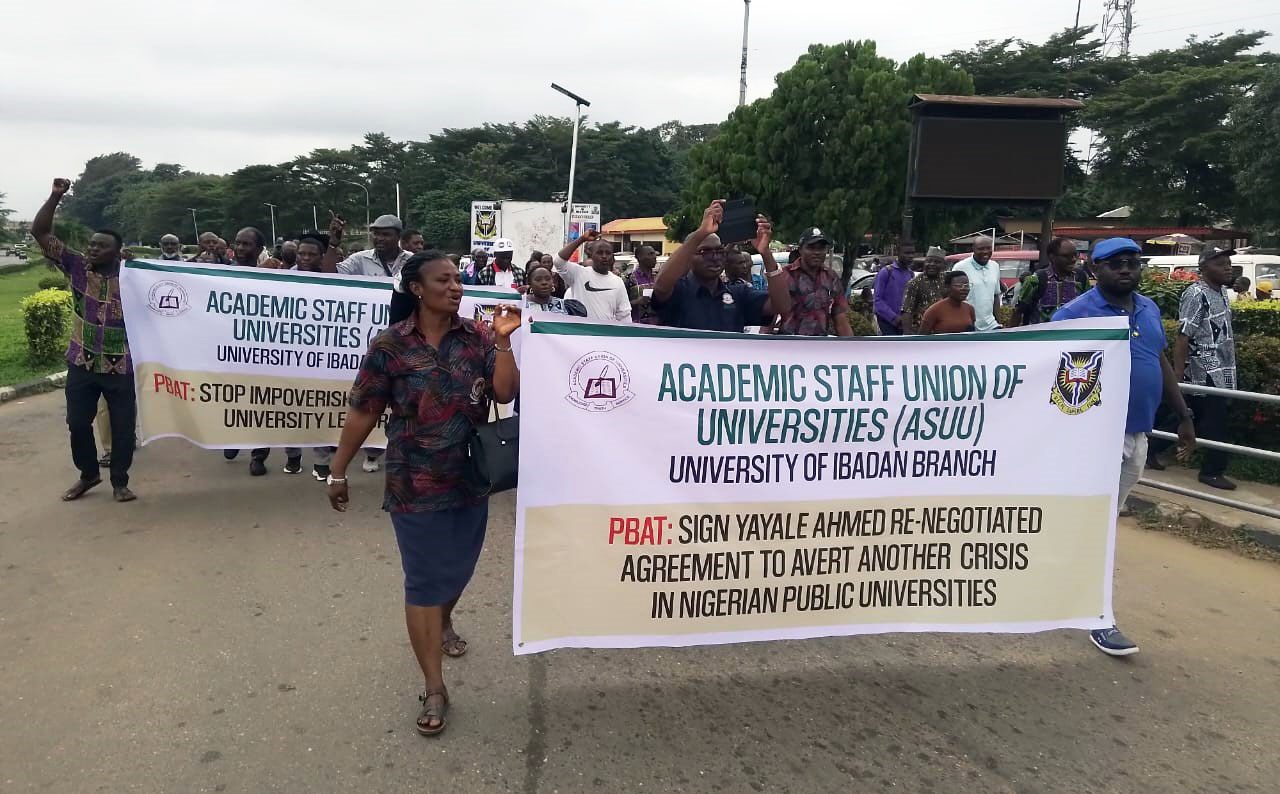
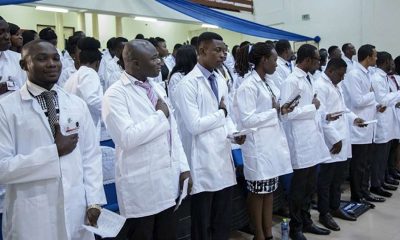
FG, ASUU meet today over planned lecturers strike
FG, ASUU meet today over planned lecturers strike
In a bid to finally close the chapter on the lingering 2009 ASUU agreement, a high-stakes meeting is expected in Abuja today as the federal government is expected to make a counter offer to the university teachers in a bid to translate years of stalled renegotiations into concrete, implementable commitments with the Academic Staff Union of Universities, ASUU.
Informed sources hinted that the Minister of Education, Dr. Maruf Tunji Alausa, will join the Minister of Labour and representatives of the National Salaries, Incomes and Wages Commission, NSIWC, and the Solicitor-General to meet ASUU leaders in Abuja to examine how to finally implement the renegotiated 2009 FGN–ASUU agreement and related reports produced in the most recent round of negotiations.
According to officials, the meeting will be tasked with delivering a clear timetable for signature and phased implementation.
The urgency of the move comes amid warnings from ASUU branches nationwide that their patience is exhausted, after a renegotiation process concluded in December 2024 and formally submitted to government in February 2025.
READ ALSO:
- Two children killed after gunman fires into US Catholic school
- Dino Melaye dragged to court for tax evasion
- Derailment: Abuja-Kaduna railway corridor may remain shut for one month, says Opeifa
Union leaders insist that the draft must now be signed and implemented to avert another nationwide shutdown of public universities.
Recall at a briefing in Abuja, the Zonal Coordinator of ASUU, Abuja Zone, Prof. Al-Amin Abdullahi, stressed that the union had kept its part of the bargain and expected government to demonstrate seriousness by adopting the report without delay.
The 2009 agreement remains the touchstone of the dispute, signed under the late President Umaru Musa Yar’Adua, which promised comprehensive reforms to Nigeria’s public universities, including sustained revitalisation funding, institutional autonomy, a negotiated salary and conditions package for academics, and a monitoring framework for implementation.
Its partial or non-implementation across successive administrations has led to recurring strikes.
Analysts estimate that since 1999, cumulative industrial action by ASUU and other unions has cost the system the equivalent of nearly five years of lost academic time, a disruption that has eroded confidence in the country’s higher education sector.
But stakeholders and government insiders argue that what differentiates the current process is the approach of Education Minister, Tunji Alausa, who has combined immediate remedial action with longer-term structural reforms.
READ ALSO:
- Ooni-Alaafin rift: Powers of monarchs end at LG level, ex-gov aide says
- U.S court convicts Oluwasegun Baiyewu for wire fraud, money laundering
- Transfer: Why we opted out of Lookman’s move – Inter chief Marotta
Earlier this year, the Tinubu administration released N50 billion to settle earned academic allowances, EAA, owed university lecturers and staff, a debt that had festered for almost two decades and repeatedly fuelled strike actions.“The move, credited directly to Alausa’s intervention, was received across campuses as a restoration of trust and a demonstration that government could finally match promises with delivery.
FG, ASUU meet today over planned lecturers strike








Education
2026 WAEC results: Official raises fresh concerns over irregularities, glitches
2026 WAEC results: Official raises fresh concerns over irregularities, glitches
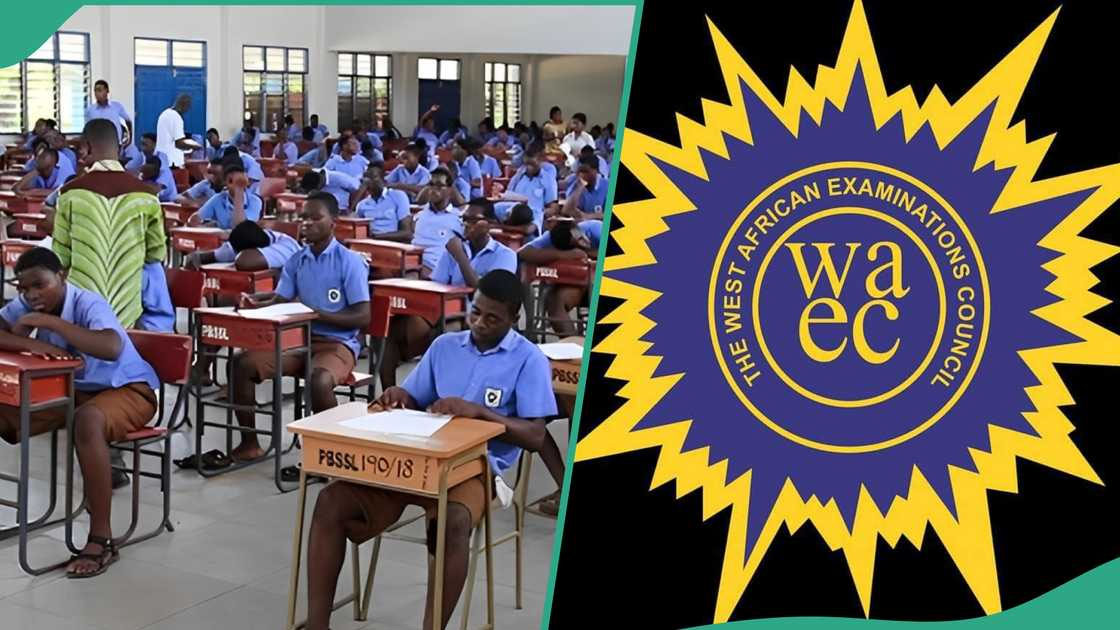
The controversy surrounding the 2026 WAEC results has intensified after an official of the West African Examinations Council (WAEC) raised concerns over alleged irregularities and technical glitches linked to the examination and result-processing process.
The development has renewed questions about the credibility of the 2026 West African Senior School Certificate Examination (WASSCE) results, with candidates, parents, schools and education stakeholders seeking clarification over reported discrepancies.
The concerns were reportedly raised by Olanrewaju Fadehan, Head of Examinations at the WAEC office covering Anambra State, in a video that has circulated on social media.
Fadehan reportedly highlighted concerns about possible technical challenges and irregularities, adding to complaints from some candidates and schools about unexpected grades in the recently released results.
The allegations are significant because the 2026 WASSCE comes amid WAEC’s increased adoption of Computer-Based Testing (CBT) as part of its move towards digital examinations.
The transition required schools to invest heavily in computer laboratories, internet connectivity and other infrastructure needed to support the new examination format.
Some education stakeholders have, however, raised questions about whether technical difficulties experienced during the transition could have affected some candidates.
Fadehan reportedly referred to concerns over candidates’ performances in some subjects, including Igbo, where some schools and stakeholders have questioned results that they considered unexpectedly poor.
The development has prompted renewed calls for WAEC to explain how candidates’ answers were processed, marked and standardised before the results were released.
Some schools have also expressed concern over sharp differences between candidates’ previous academic performances and the grades contained in their 2026 WAEC results.
READ ALSO:
- KC Luxury: Court orders NDLEA to produce socialite over continued detention
- Kaduna police arrest suspected kidnappers, gunrunners as 75 kidnapped travellers are rescued
- Tinubu, APC governors set October 1 target for cheaper transport fares nationwide
The concerns have particularly attracted attention where schools believe that candidates who consistently performed well during internal assessments received unexpectedly low grades in the examination.
The adoption of CBT has become a central part of the discussion, with some schools reportedly investing substantial amounts of money to prepare for the new examination system.
Some institutions reportedly spent millions of naira on computer facilities and related infrastructure ahead of the examination.
While the transition to digital testing is expected to improve examination security, efficiency and transparency, stakeholders have argued that technical challenges must not disadvantage candidates.
The latest allegations have therefore increased calls for WAEC to establish a transparent process for investigating complaints and correcting any result affected by a genuine technical or administrative error.
Some education groups have previously called for an independent review of the 2026 WAEC results, citing complaints from candidates, parents and schools.
The Initiative for School Excellence and Education Foundation had also threatened legal action over concerns about the results and demanded greater transparency from the examination body.
WAEC, however, has maintained that the examination and result-processing exercise followed established procedures.
The council has previously urged candidates, parents, schools and members of the public to disregard unverified claims circulating on social media and rely on official information.
WAEC’s Head of Public Affairs, Moyosola Adesina, said the examination was conducted in accordance with the council’s established procedures and relevant education policies.
The examination body has also defended the integrity of its assessment processes and indicated that results are subjected to quality-control measures before publication.
The latest concerns from an examination official are nevertheless likely to increase pressure on WAEC to provide further explanations, particularly on the specific technical issues and alleged irregularities being reported.
For candidates, the issue is particularly important because WAEC results are required for admission into many Nigerian universities, polytechnics, colleges of education and other tertiary institutions.
An unexpectedly low grade or an incorrect result could affect a candidate’s eligibility for admission or force them to sit for another examination.
Parents and schools are therefore calling for any legitimate complaints to be investigated promptly and for affected candidates to receive appropriate remedies where errors are established.
The controversy also highlights the challenges associated with Nigeria’s growing reliance on computer-based examinations.
Digital testing can offer significant advantages, including faster processing, stronger examination security and reduced opportunities for certain forms of malpractice. However, the system also requires reliable infrastructure, adequate technical support and effective contingency measures.
Stakeholders have consequently urged examination authorities to ensure that technical problems do not undermine candidates’ performances or the credibility of examination results.
For now, the reported irregularities remain allegations, and WAEC has not formally acknowledged that systemic failures affected the overall 2026 results.
The examination body is expected to face continued calls for clarification as affected candidates and schools seek answers to their complaints.
The outcome of any review or investigation will be closely watched by candidates, parents, schools and the wider education community, particularly as the 2026 WAEC results play an important role in determining the next academic steps of thousands of Nigerian students.
2026 WAEC results: Official raises fresh concerns over irregularities, glitches
Education
JAMB clarifies O’Level verification, says previously uploaded results remain valid

JAMB clarifies O’Level verification, says previously uploaded results remain valid
The Joint Admissions and Matriculation Board (JAMB) has reassured candidates that O’Level results previously uploaded on its platform remain valid, following concerns over the Board’s new result verification arrangement.
The clarification is expected to ease concerns among candidates preparing for the 2026/2027 admission exercise, particularly those who had already submitted their WAEC, NECO and other O’Level results and were unsure whether they needed to repeat the process.
JAMB said candidates who uploaded their O’Level results during the current registration exercise, after the release of their examination results or in previous years under the earlier upload system do not need to re-upload their results simply because the new verification process has been introduced.
The Board also said such candidates are not required to obtain a new verification code under the new arrangement.
JAMB Acting Director of Public Affairs and Protocols, Dr Fabian Benjamin, made the clarification in a statement issued in Abuja following what the Board described as numerous complaints and enquiries from candidates.
Benjamin explained that results submitted through the previous upload process remain available on JAMB’s platform and will continue to be recognised for admission purposes.
“Candidates in this category are therefore not required to take any further action regarding the verification code,” the Board stated.
The Board urged candidates who have already uploaded their results not to panic or make unnecessary repeat submissions.
According to JAMB, the introduction of the new verification system is not intended to invalidate legitimate O’Level results that were previously uploaded. Rather, it is designed to strengthen the verification and authentication of candidates’ academic qualifications.
The new arrangement is aimed at helping to prevent the use of fake or falsified O’Level results in Nigeria’s tertiary education admission process.
JAMB explained that candidates whose results were uploaded under the previous system would have their qualifications subjected to the appropriate verification by their respective institutions where necessary.
READ ALSO:
- Four killed as disagreement sparks deadly unrest in Lagos community
- First Lady Oluremi Tinubu gives N819m to 1,638 widows of fallen heroes
- Champions League: Yaya Touré becomes first African coach to reach league phase
This means that the new process primarily concerns the authentication of results, rather than requiring every candidate with an existing valid upload to start the process again.
The distinction is important for candidates who may have interpreted the introduction of a verification code as a requirement to upload their results afresh.
JAMB’s clarification means that a candidate whose O’Level result is already properly uploaded should not create a duplicate submission solely because the Board has introduced an additional verification mechanism.
However, candidates who have not yet uploaded their O’Level results remain required to do so when their results become available.
JAMB’s admission guidelines provide that candidates awaiting O’Level results should upload them to the Board’s portal once they are released. The Board also requires institutions to consider candidates’ relevant qualifications as part of the admission process.
The verification process is part of JAMB’s wider effort to improve data integrity and credibility in the admission system.
With millions of candidates seeking admission into Nigerian universities, polytechnics, colleges of education and other tertiary institutions, the accuracy of academic records remains a major consideration in admission processing.
The Board has increasingly relied on digital systems and data-sharing arrangements to enable institutions to access and verify candidates’ information.
JAMB’s Central Admissions Processing System, CAPS, is also central to the admission process, providing institutions with a platform through which admission recommendations and candidate information are processed.
For candidates, the latest clarification means that they should avoid unnecessary duplicate uploads and instead monitor their JAMB profiles for any official notification requiring further action.
Candidates who encounter genuine problems with their O’Level results or other records have also been advised to use JAMB’s official channels rather than relying on unauthorised agents.
The Board has repeatedly warned candidates against handing their registration details or sensitive information to individuals who claim they can manipulate admission records.
Candidates are particularly advised to ensure that their names, dates of birth and other personal details are correctly reflected across their relevant examination and JAMB records.
Any legitimate discrepancy that affects admission processing should be addressed through the approved JAMB procedure.
The latest clarification is also significant for candidates who recently uploaded WAEC results following the release of their examination results.
Such candidates do not need to repeat the upload merely because the new verification system has been introduced, provided their results were successfully uploaded to the JAMB platform.
The Board stressed that the objective of the new verification arrangement is to strengthen confidence in the admission process and ensure that candidates presenting O’Level qualifications possess genuine results.
JAMB’s clarification therefore provides a simple message to affected candidates: previously uploaded O’Level results remain valid, and there is no need for unnecessary re-uploading or a new verification code solely because of the new system.
Candidates are nevertheless encouraged to follow official updates from JAMB and their chosen institutions, particularly as the 2026/2027 admission process progresses.
The Board said the verification measures would help protect the integrity of the admission system while ensuring that genuine candidates are not subjected to unnecessary administrative difficulties.
JAMB clarifies O’Level verification, says previously uploaded results remain valid
Education
Law School Sanctions Best Ethics Student Over Attire in Circulated Photo
Law School Sanctions Best Ethics Student Over Attire in Circulated Photo
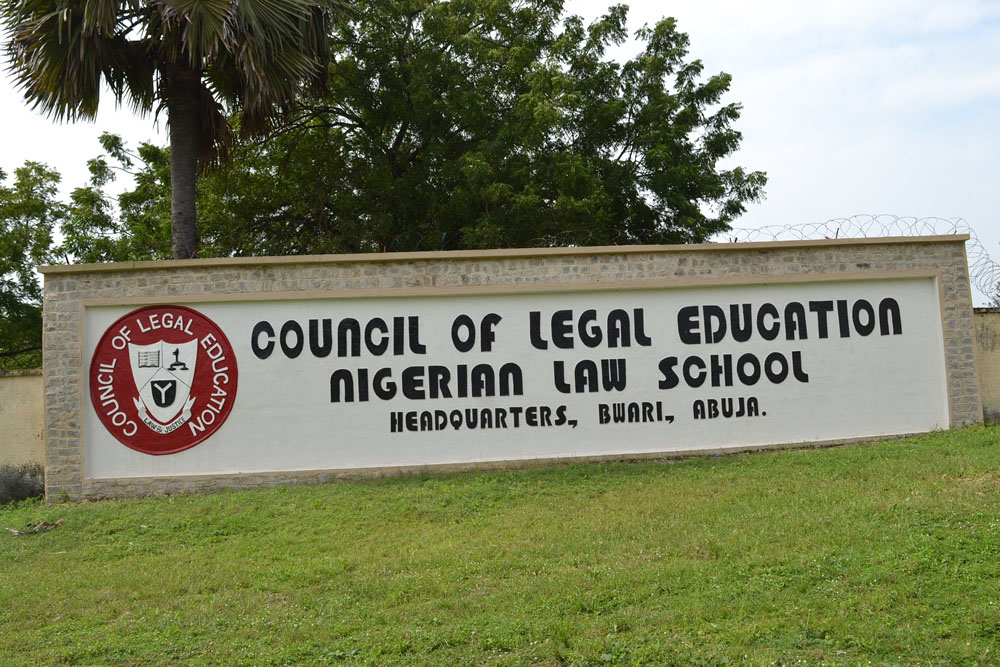
The Council of Legal Education (CLE), governing body of the Nigerian Law School, has withdrawn the prize awarded to the institution’s best graduating student in professional ethics following the circulation of a photograph online that the council deemed inconsistent with professional standards and decorum.
The council announced its decision after reviewing the circumstances surrounding the award and the photograph involving the recipient. In a statement dated August 19, 2026, signed by Aderonke Osho, Secretary to the Council and Director of Administration, the CLE said the attire worn by the recipient in the photograph was considered inconsistent with the standards expected of legal professionals. The statement reads in part: “The council considered the circumstances surrounding the award of the prize for the best graduating student in professional ethics and approved the withdrawal of the prize from the recipient, arising from the circulation of a photograph online depicting the recipient in attire considered inconsistent with the professional standards and decorum.”
READ ALSO:
- Veteran Yoruba actor, Ijala master Alabi Ogundepo dies at 84
- US Intensifies Military Training for Nigerian Troops in Bauchi
- Awujale: Fusengbuwa Ruling House sues Abiodun, kingmakers over stalled selection
Although the council did not officially disclose the name of the affected graduate or the specific graduating set, reports have identified the 2026 best graduating student in professional ethics as Ogechi Ifezie. Ifezie was among the students honoured during the 2026 Call to Bar ceremonies held from July 7 to 10 at the Body of Benchers Complex in Abuja. Records from the 2026 Nigerian Law School awards show that Ifezie, who studied at the Nigerian Law School‘s Lagos Campus after graduating from the University of Nigeria, Nsukka, was listed as the first-prize winner for Professional Ethics. The Ike Obiora Foundation, which supported her as a scholarship beneficiary, had previously described her as a first-class graduate and noted her achievement as the overall best student in Professional Ethics.
The 2026 Call to Bar ceremonies also recognised several other outstanding graduates across various law subjects. Israel Adeniyi emerged as the Overall Best Graduating Student, while other course leaders included Ifeoluwa Ajaiyeoba for Civil Litigation, Timilehin Adebayo for Criminal Litigation, Emmanuel Oyelami for Corporate Law, and Francis Obiahu Alu for Property Law.
Beyond the withdrawal of the prize, the CLE also approved sanctions against two other students found culpable of indiscipline-related misconduct, though the details of these sanctions were not disclosed. The council reiterated its commitment to maintaining discipline, professionalism, and appropriate conduct among students of the Nigerian Law School. The council did not provide further details about the photograph, including where or when it was taken, beyond its reference to the image being circulated online. It also did not state whether the decision affects the recipient’s status as a newly qualified lawyer or any other awards received during the Call to Bar ceremonies. The council’s action underscores its role in upholding professional standards and signals that academic excellence is expected to be matched by conduct considered appropriate for members of the legal profession.
Law School Sanctions Best Ethics Student Over Attire in Circulated Photo
-

 News3 days ago
Renewed Hope Mass Transit: FG Launches 100 Electric Buses for Federal Workers
-

 News2 days ago
PFIPC Probe: ICPC Indicts Civil Servants Over ₦1.3bn Fake Agency Scandal
-
 Africa3 days ago
Xenophobic attacks: Ghana rejects MTN’s $1.8m donation for affected citizen
-

 Aviation2 days ago
FAAN reinstates Bolt at airports, denies fixing taxi fares
-

 Politics3 days ago
Ogun 2027: Radio Interview that Triggered APC Move for Hunye’s Arrest, Prosecution
-

 metro3 days ago
Mother, teacher allegedly stage son’s kidnapping, demand N15m ransom from father
-

 metro3 days ago
One killed, three injured as gunman opens fire at Kano wedding
-

 metro3 days ago
Several Bandits Feared Killed as Security Forces Repel Attack in Sokoto