

Politics
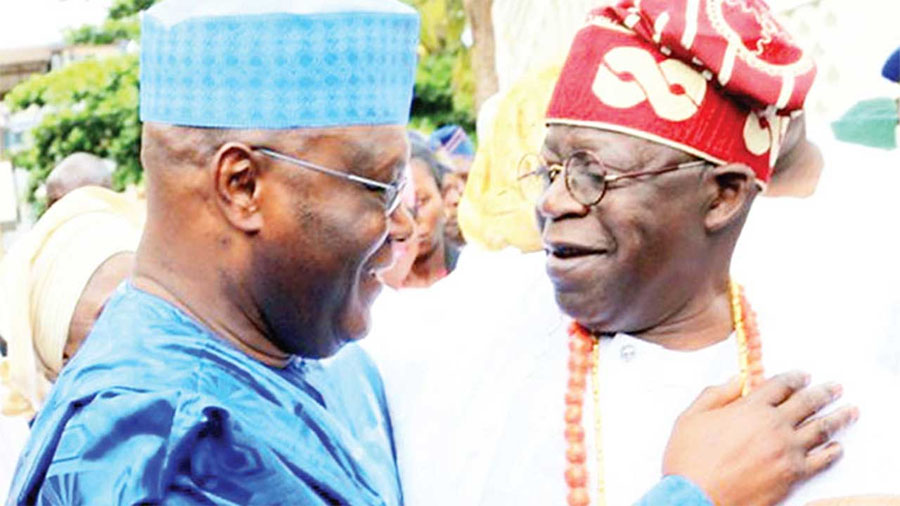
Tinubu, Atiku clash over Buhari’s northern support base
Tinubu, Atiku clash over Buhari’s northern support base
NIGERIA’s march toward 2027 has reached a point of no return. Quiet realignments have burst into bold declarations of loyalty, and long-standing alliances are now being tested in dramatic fashion.
The latest twist: loyalists of late former President Muhammadu Buhari have shifted allegiance to former Vice President Atiku Abubakar, even as President Bola Tinubu staged a high-profile visit to Buhari’s family in Kaduna.
The stakes could not be higher. This is no longer about personalities alone, it is about who truly inherits Buhari’s political bloc.
Realignment game changer
A few days ago, State chairmen of the defunct Congress for Progressive Change, CPC, Buhari’s original political platform, held a private meeting at Atiku’s residence in Abuja.
Once regarded as the backbone of Buhari’s northern power base, these figures declared firm support for Atiku’s coalition under the African Democratic Congress, ADC.
One CPC leader left no room for doubt: “Bring it out, make it visible. Politics does not operate in the corner; bring your politics out. That is essentially what we are here to emphasise. We are the true followers of Buhari, and we are here today, Sir… The CPC bloc is intact. President Muhammadu Buhari has left an unprecedented mark in the history of this country, and we will not allow it to be lost.”
It was more than a protest. It was a direct challenge, one capable of shifting the centre of gravity in northern politics, across states where Buhari’s name still commands emotional and organisational weight.
Atiku’s loyalty embrace
Atiku welcomed the group without ambiguity, casting the meeting as part of a struggle to protect what Buhari stood for.
READ ALSO:
- We don’t monitor such records: GWR rejects Mandy Kiss’ ‘100 men in 24 hours’ attempt
- Senator Natasha remains defiant, says she won’t apologize
- BREAKING: Kogi Lawmaker Natasha Akpoti-Uduaghan resumes at Senate [VIDEO]
“I am particularly delighted to receive you today. This meeting represents a continuation of your journey and your struggles. I believe that with your support, we will be able to translate this journey into success,” he said.
He urged them to mobilise during voter registration, stressing that symbolism must become structure, and endorsements must translate into votes.
Tinubu, Atiku clash over Buhari’s northern support base







Politics
‘Join the Hunt’ — Soludo Urges Igbos to Strategically Align Ahead of 2027

‘Join the Hunt’ — Soludo Urges Igbos to Strategically Align Ahead of 2027
Anambra State Governor Chukwuma Soludo has urged the Igbo people to adopt a more strategic approach to politics, arguing that stronger engagement with the political centre is necessary for the South-East to secure a greater share of national opportunities.
Soludo made the call while speaking to residents of Ekwusigo Local Government Area of Anambra State, where he commissioned the three-kilometre Ozu-Inyaba-Ozubulu-Ihembosi Road and other projects executed in the area.
Speaking largely in Igbo, the governor used a hunting analogy to explain his argument, saying those who want a share of the national “inheritance” must participate in the process through which decisions and resources are determined.
He said the 2027 elections should not be approached solely through emotions or political sentiments, urging voters to consider what their political choices would deliver for the region.
Soludo also questioned the records of politicians who, according to him, return to the South-East during election periods to seek votes but have not adequately addressed longstanding problems affecting the people.
He cited the persistent erosion crisis in Ekwusigo as an example and questioned what politicians who had been involved in public affairs for years had done to resolve it.
Although he did not name anyone in the reported remarks, the comments were seen as a reference to former Anambra State governor Peter Obi, who has remained a prominent figure in the political debate over the South-East’s future.
The governor said the Igbo people should no longer waste their votes without considering the practical benefits that could accrue to the region from their political choices.
He argued that the South-East needed to participate more directly in national political structures rather than remaining isolated and subsequently complaining about marginalisation.
Using his hunting analogy, Soludo said that if others joined a hunt and returned with an elephant, those who stayed away could not reasonably expect to determine how the proceeds were shared.
He linked the argument to the political strategy of the All Progressives Grand Alliance (APGA), saying the party was positioning itself to secure what he described as the rightful inheritance of the Igbo people and Anambra State.
READ ALSO:
- 18 Suspects Transferred to US Over 2021 Killing of Haitian President Moïse
- My Heart Has Always Been Home With You — Tinubu’s Powerful Message to Oluremi at 66
- Tinubu’s UNGA Absence Fuels Questions Over Planned Trump Meeting
“This is where APGA is; Igboland will be better. Anambra will get its right,” he said.
Soludo has consistently promoted closer cooperation between APGA and the Federal Government led by President Bola Ahmed Tinubu.
APGA has declared support for Tinubu’s bid for a second term in the 2027 presidential election, with the party arguing that strategic partnerships could give the South-East greater influence at the national level.
Soludo had earlier said APGA adopted Tinubu as its preferred presidential candidate for 2027, citing what he described as strategic and ideological considerations.
The governor has subsequently presented the relationship between APGA and the Federal Government as a practical political partnership aimed at securing development opportunities for Anambra and greater influence for the South-East.
However, the political alignment has generated disagreement, including within the opposition space and among some APC members in Anambra.
The Anambra APC has previously disputed claims of a broad political partnership between APGA and APC, maintaining that the two parties remain separate political organisations.
Soludo’s latest comments also included a defence of APGA’s relevance in Igbo politics.
He described APGA as a platform through which several Igbo politicians rose to prominence and criticised politicians who benefited from the party before moving to other political organisations.
The governor said APGA intended to retain its political strength in Anambra while supporting Tinubu at the presidential level in 2027.
His position effectively places APGA’s 2027 strategy around retaining political control in Anambra while backing Tinubu’s presidential bid.
Meanwhile, Soludo’s comments about political participation and the region’s development have attracted criticism from some commentators, who have questioned whether the governor’s strategy has produced sufficient benefits for Anambra.
Critics have also raised questions about the state’s continuing erosion crisis, infrastructure and the extent of federal support received by the state under the current political arrangement.
The latest remarks come as political parties and prominent politicians intensify preparations for the 2027 general elections, with the political strategy of the South-East increasingly featuring in debates over regional representation, federal influence and access to national resources.
Soludo’s argument is that the region can improve its bargaining position by engaging strategically with the political centre rather than remaining outside national power structures.
‘Join the Hunt’ — Soludo Urges Igbos to Strategically Align Ahead of 2027
Politics
APC Wins Four of Five By-Elections as APM Takes Bauchi Seat
APC Wins Four of Five By-Elections as APM Takes Bauchi Seat
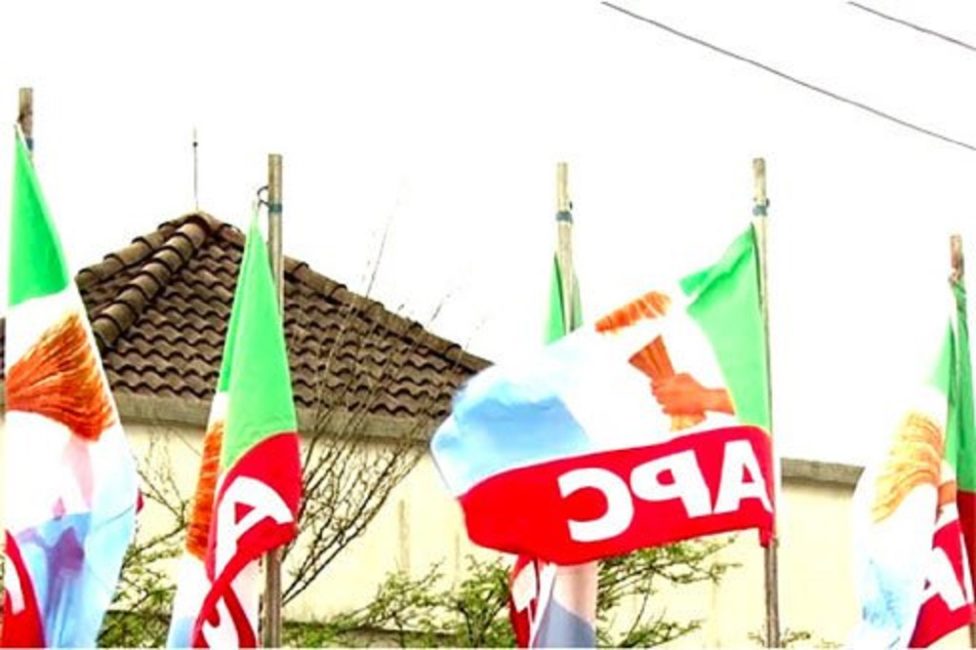
The All Progressives Congress (APC) won four of the five legislative by-elections conducted across Gombe, Kano, Bauchi and Delta states, while the Allied Peoples Movement (APM) secured the remaining seat in Bauchi.
The elections, conducted by the Independent National Electoral Commission (INEC) on Saturday, September 19, 2026, were held to fill one vacant federal constituency seat and four vacant state assembly seats.
The APC victories came in the Gombe/Kwami/Funakaye Federal Constituency of Gombe State, Dawakin Kudu State Constituency in Kano, Udu State Constituency in Delta and Disina State Constituency in Bauchi.
The APM won the Sakwa State Constituency in Zaki Local Government Area of Bauchi State.
In Gombe, APC candidate Kallamu Usman MaiJama’a won the Gombe/Kwami/Funakaye Federal Constituency election with 41,121 votes. The Labour Party candidate polled 3,553 votes, while the APM candidate received 872 votes.
In Kano, APC candidate Husseini Datti emerged winner of the Dawakin Kudu State Constituency election with 22,890 votes. The Peoples Redemption Party scored 270 votes, while the Peoples Democratic Party recorded 108 votes. Other parties recorded lower figures.
In Delta State, APC candidate Okolosi Ator won the Udu State Constituency seat with 8,724 votes, while the PDP candidate polled 214 votes.
The APC also secured the Disina State Constituency seat in Bauchi, where its candidate, Yakubu Ali, obtained 5,846 votes. The APM candidate scored 5,225 votes, while the PRP candidate received 3,701 votes.
The second Bauchi contest produced a different result, with Adamu Yakubu of the APM winning the Sakwa State Constituency seat with 8,515 votes. The APC polled 3,771 votes, the PDP 2,076, and the PRP 727.
The results followed INEC’s conduct of the five polls across the four states after the seats became vacant through different circumstances, including death, resignation and defection.
READ ALSO:
- Atiku Offers Scholarship to Viral Niger Teen Miner After 37 Miners’ Deaths
- NDLEA Seizes N3.4bn Drugs, Arrests Fake Police Officer in Nationwide Crackdown
- Oyo: Police Arrest Serving Air Force Personnel Over Alleged Robbery, Abduction
The Gombe/Kwami/Funakaye federal seat became vacant following the death of the former lawmaker, Yaya Bauchi Tongo, in June 2026. In Bauchi, the Sakwa seat became vacant following the death of its former occupant, while the Disina seat became vacant after the lawmaker resigned to pursue another political position.
The Udu seat in Delta became vacant following the defection of its former occupant, Collins Egbetamah, from the APC to the Nigeria Democratic Congress. The Dawakin Kudu seat in Kano became vacant after its former occupant, Rabiu Shuaibu, left the state assembly to contest the Dawakin Kudu/Warawa Federal Constituency election.
Ahead of the polls, INEC deployed sensitive materials and electoral personnel to the affected constituencies, while security agencies announced deployments aimed at maintaining order before, during and after voting.
INEC Chairman, Professor Joash Amupitan, monitored the elections from the commission’s National Situation Room in Abuja and described the exercise as an important operational test ahead of the 2027 general elections.
Amupitan said the five by-elections would provide the commission with lessons on logistics, technological deployment and the readiness of field personnel.
He stressed that bye-elections should not be treated as routine exercises because each poll provides an opportunity for INEC to assess and improve its electoral processes ahead of larger elections.
Reports from the four states indicated that voting was generally peaceful, although some operational challenges were recorded.
In parts of Gombe and Kano, reports indicated relatively low voter turnout, while some Bimodal Voter Accreditation System (BVAS) challenges were reported during the Delta election.
The Bauchi election also recorded a security incident, with the state police command reporting the arrest of 47 suspects in parts of Shira Local Government Area.
According to the police, the suspects allegedly posed as members of a state-owned security outfit and were found in possession of items including guns, cutlasses and sticks. The arrests were made in connection with the election security operation.
The results have also drawn attention because of their timing ahead of the 2027 general elections, although the outcome of five constituency-level by-elections does not by itself determine the outcome of the wider 2027 elections.
APC National Chairman, Professor Nentawe Yilwatda, congratulated the party’s candidates who won the four seats and commended APC members, campaign teams and party leaders involved in the contests.
Yilwatda also acknowledged voters, INEC, security agencies and other stakeholders who participated in the elections, while urging the successful candidates to remain committed to their constituents.
President Bola Ahmed Tinubu also congratulated the successful candidates. He urged the newly elected lawmakers to justify the confidence placed in them by their constituents and called on unsuccessful candidates to accept the results in good faith.
The INEC election results portal continued to receive result sheets from the five constituencies after the polls, providing an electronic record of results uploaded from polling units.
The commission is scheduled to conduct the next nationwide presidential and National Assembly elections on January 16, 2027, followed by governorship and state House of Assembly elections in participating states on February 6, 2027.
The September 19 by-elections therefore provide INEC and participating political parties with an opportunity to review electoral logistics, voter participation, technology deployment and election security before the larger 2027 electoral cycle.
APC Wins Four of Five By-Elections as APM Takes Bauchi Seat
Politics
2027: NDC Predicts Wider Obi Victory Over Tinubu in Lagos
2027: NDC Predicts Wider Obi Victory Over Tinubu in Lagos
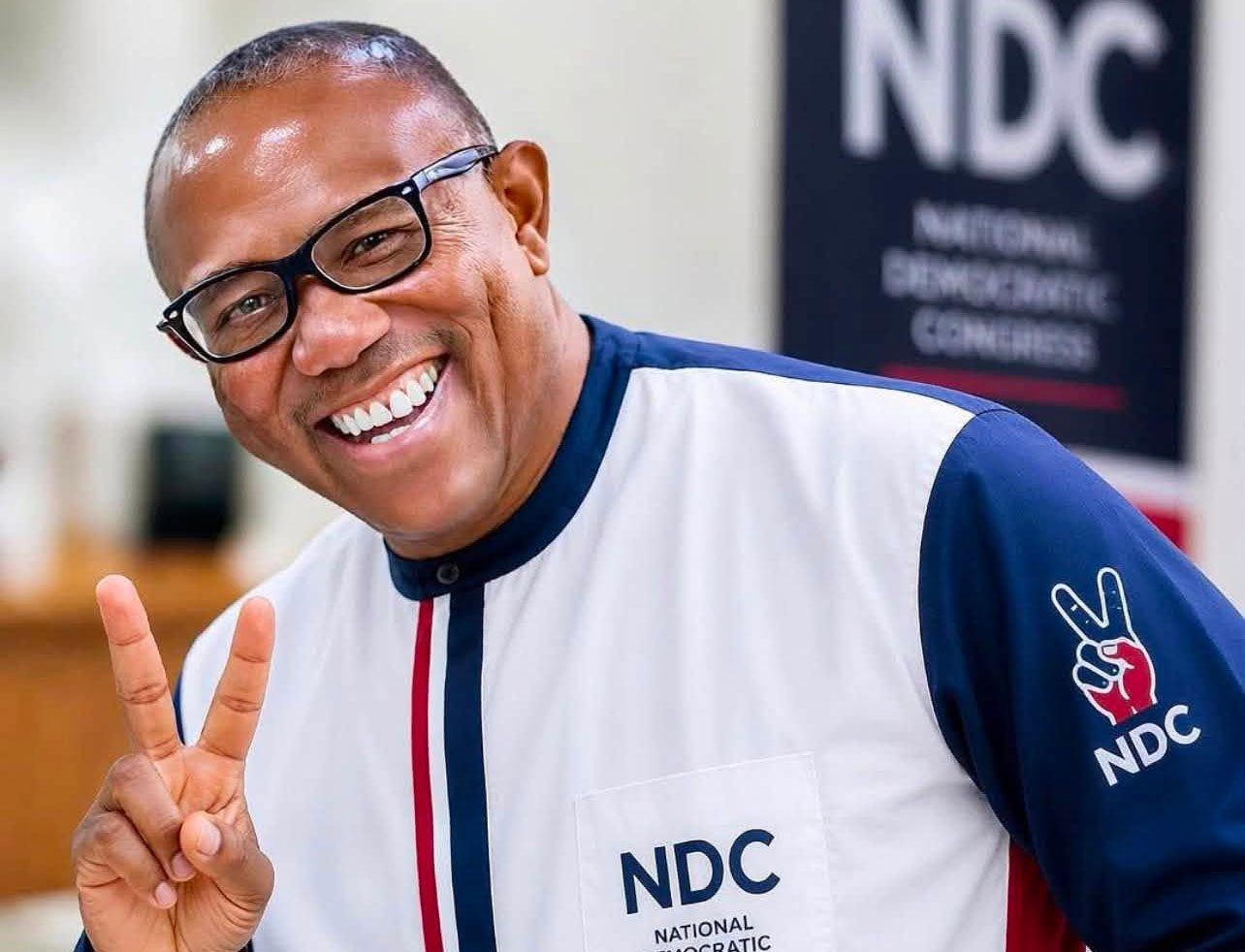
The Nigeria Democratic Congress (NDC) has expressed confidence that its presidential candidate, Peter Obi, will defeat President Bola Ahmed Tinubu in Lagos State in the 2027 presidential election, predicting that the former Anambra State governor will win by a wider margin than he did in 2023.
The party’s National Publicity Secretary, Osa Director, said Obi’s victory over Tinubu in Lagos during the 2023 presidential election was not accidental, describing it as a reflection of the political mood in the state.
Director said the NDC expected Obi to build on his previous performance if the 2027 election was conducted under conditions the party considers free and fair.
He also challenged the All Progressives Congress (APC) and its supporters to allow voters to determine the outcome of the election without intimidation, violence, inducement or other forms of electoral malpractice.
According to him, the NDC has studied the lessons of the 2023 election and is preparing to strengthen its structures and protect its votes across the country.
Director said the party was prepared to confront any challenges that could arise during the election, including alleged attempts to intimidate voters or disrupt the electoral process.
Another NDC candidate in Lagos, Ladipo Johnson, also expressed confidence in Obi’s prospects in the state, attributing the expected improvement to what he described as dissatisfaction with the Tinubu administration.
Johnson said Obi would win Lagos again and by a wider margin, adding that the NDC had become stronger following the realignment of opposition politicians and political groups ahead of the 2027 election.
READ ALSO:
- Olawepo-Hashim: My Political Ideology Differs From Obi, Atiku
- Ortom and His 23 Cars’ ‘Bonus’, by Dele Sobowale
- Abuja Demand Rises as Jetour Brings X70 Plus Experience to FCT
He also raised concerns about possible voter intimidation, harassment and vote buying, urging Nigerians to protect their votes and ensure that electoral choices are respected.
However, the claims by Director and Johnson about Obi’s expected performance in Lagos are political predictions by NDC officials and do not constitute an established election outcome.
The 2023 presidential election remains the latest completed presidential contest in Lagos. Obi won the state with 582,454 votes, narrowly ahead of Tinubu, who polled 572,606 votes, according to results declared by the Independent National Electoral Commission (INEC).
Obi won nine of Lagos State’s 20 local government areas, including Ajeromi-Ifelodun, Amuwo-Odofin, Eti-Osa, Ikeja, Kosofe, Oshodi-Isolo, Somolu, Ojo and Alimosho.
Tinubu won the remaining 11 local government areas: Agege, Apapa, Badagry, Epe, Ibeju-Lekki, Ifako-Ijaiye, Ikorodu, Lagos Island, Lagos Mainland, Mushin and Surulere.
The result made Lagos one of the closely watched states in the 2023 presidential contest, particularly because Tinubu had previously served as governor of the state and maintained a significant political structure there.
The political landscape has since changed considerably ahead of the 2027 election.
INEC has published its final list of presidential candidates, with 18 candidates cleared to contest the January 16, 2027 presidential election.
Tinubu is listed as the APC presidential candidate, while former Vice President Atiku Abubakar is contesting under the African Democratic Congress (ADC). Obi is listed as the presidential candidate of the NDC, with former Kano State Governor Rabiu Musa Kwankwaso as his running mate.
The changes mean that the party alignments and political structures involved in the 2027 contest are different from those that shaped the 2023 election.
Obi’s move from the Labour Party to the NDC has also changed the political platform through which he is seeking the presidency, while Kwankwaso’s emergence as his running mate has brought another major political bloc into the NDC structure.
For the NDC, Lagos remains an important target as it seeks to expand Obi’s support beyond the areas where he performed strongly in 2023.
The party’s argument is based partly on the margin by which Obi won Lagos in 2023 and its assessment of the current political environment in the state.
The APC, meanwhile, remains a major political force in Lagos, where it has maintained a strong organisational structure over several election cycles.
The 2027 contest will therefore take place against a different political backdrop, with new party alliances, candidates and campaign structures competing for the support of Lagos voters.
Beyond Lagos, the NDC is seeking to build a nationwide campaign around Obi’s candidacy, while the APC and other parties are also working to consolidate their respective support bases.
Issues likely to shape the campaign include the economy, cost of living, security, employment, governance, electoral credibility and the performance of the federal government.
The NDC has continued to emphasise the need for a credible electoral process, with its officials urging security agencies, electoral authorities and political parties to ensure that voters can cast their ballots without intimidation.
For now, the prediction that Obi will defeat Tinubu by a wider margin in Lagos remains the stated expectation of the NDC and its candidates.
The actual result will depend on the votes cast and officially declared in the 2027 presidential election.
2027: NDC Predicts Wider Obi Victory Over Tinubu in Lagos
-

 Sports3 days ago
Falconets Thrash England 3-0, Face Colombia in U-20 World Cup Quarter-Finals
-

 Politics3 days ago
Yayi Ancestry Row: Stepmother Sets Record Straight as Legal Battle Looms
-

 International3 days ago
BREAKING: Bloodbath at Pakistan Mosque as Suicide Blast Kills 21, Injures 103
-

 metro2 days ago
Mambilla: ICC Raises Questions Over $500,000 Payment to Atiku’s Former Wife
-
 metro3 days ago
Tinubu Orders Full Probe Into 37 Miners’ Deaths in NSCDC Custody
-

 metro2 days ago
Niger Miners’ Deaths: Families Demand Compensation, Justice for Victims
-

 Entertainment2 days ago
“She Wanted to Stay Single”: Rema Opens Up About Rejection That Inspired Hit Song ‘Oh No’
-

 metro3 days ago
Xenophobia: FG Brings 33 More Nigerians Home From South Africa