

Business
One million Nigerians will get N5,000 stipends for six months – FG
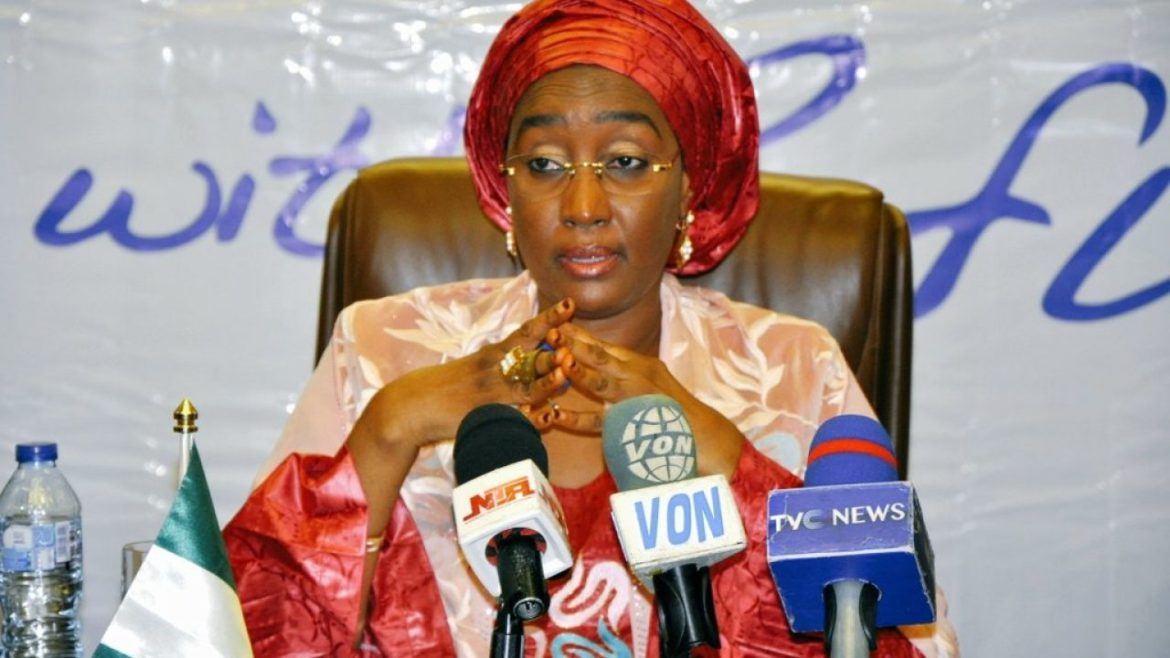
The Federal Government has said one million Nigerians impacted by COVID-19 pandemic will receive N5,000 cash for six months.
Minister of Humanitarian Affairs Disaster Management and Social Development Mrs Sadiya Farouq, said this on Tuesday while giving an update on the National Social Investment Programmes in Abuja.
She said the pilot scheme commenced earlier this year with 3,115 beneficiaries in Lagos and Abuja, adding that the intervention would be up-scaled.
She said a Rapid Response Register (RRR) has been put in place as a shock responsive intervention register specifically targeted at the urban informal workers impacted by COVID-19 pandemic.
The minister also said plans for the second batch of beneficiaries under the Government Enterprise and Empowerment Programme were nearing completion and would be made public soon.
“The Federal Ministry of Humanitarian Affairs, Disaster Management and Social Development remains committed to the continued implementation of the National Social Investment Programmes (NSIP), in line with Mr President’s policy to unfailingly lift 100 million Nigerians out of poverty in 10 years, especially through innovative Youth Empowerment and Gainful Employment.”
The ministry, according to the minister, has restarted the National Home-Grown School Feeding programme, saying 9,196,823 pupils in classes 1 to 3 in public primary schools will receive one nutritious meal daily in all 54,619 schools nationwide.
She said the programme had been expanded to accommodate additional five million children in line with the directives of President Muhammadu Buhari.
The minister directed the 550,000 shortlisted applicants for the N-Power Batch C programme to log on to the National Social Investment Management System (NASIMS) self-service portal and enroll their biometric data to qualify for final selection.
She said the second batch of another 500,000 will subsequently be made in line with President Buhari’s directive to engage 1,000,000 beneficiaries under the Batch C.
The minister said, “I am also pleased to inform you that the ministry has recommenced the National Home-Grown School Feeding programme. A total of 9,196,823 pupils in classes 1 to 3 in public primary schools will receive one nutritious meal daily in all 54,619 schools nationwide.
“The programme is being expanded to accommodate an additional five million children in line with the directives of President Muhammadu Buhari.
“The outcomes of this programme include increase in school enrolment, improved nutrition for benefiting pupils, boosting of local economies and facilitating job creation through the activities of 103,028 cooks, 100,000 small holder farmers and numerous aggregators and commodity transporters engaged nationwide.”








Auto
Abuja Roars to Life as Jetour X50 Headlines Three-Day Motoring Experience
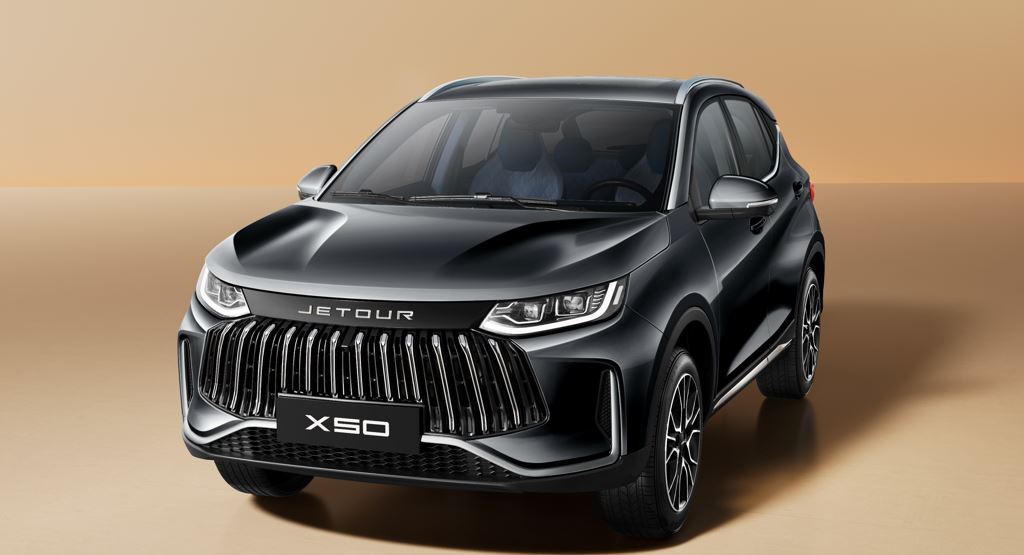
Abuja Roars to Life as Jetour X50 Headlines Three-Day Motoring Experience
Abuja is gearing up for a major motoring spectacle as Jetour Nigeria brings its fast-growing brand experience to the Federal Capital Territory, with the stylish Jetour X50 set to take centre stage in a three-day showcase of performance, technology and automotive innovation.
Scheduled for September 22 to 24, 2026, the Jetour Experience Abuja will move beyond the conventional vehicle exhibition, giving motorists and prospective buyers the opportunity to test-drive the X50, interact with automotive specialists and experience a range of entertainment and interactive activities.
The Abuja activation follows the strong reception recorded during Jetour Nigeria’s recent Lagos experience and forms part of the automaker’s strategy to deepen customer engagement while expanding its footprint across Nigeria.
Backed by an expanding authorised dealer network comprising Elizade Nigeria Limited, Mandilas Autos, Germaine Auto Centre, Kojo Motors, R.T. Briscoe, Tab Autos and New Era AutoVehicle Services, Jetour is also strengthening access to vehicle sales, after-sales support, genuine spare parts and certified technical services nationwide.
At the heart of the Abuja experience will be the Jetour X50, a compact SUV designed to combine contemporary styling, performance and a technology-rich driving environment.
Powered by a 1.5-litre turbocharged engine paired with a dual-clutch transmission, the X50 has positioned itself as a strong contender in Nigeria’s competitive compact SUV segment.
Jetour has equipped the model with a range of premium features, including a 360-degree camera, Blind Spot Detection, 10.5-inch infotainment system with Apple CarPlay and Android Auto, wireless charging and leather upholstery.
The combination of technology, comfort and performance is part of Jetour’s strategy of offering premium motoring features at competitive price points.
The Abuja event also highlights Jetour’s aggressive expansion strategy in Nigeria, following the brand’s recognition with industry accolades including Fastest Growing Auto Brand and Auto Brand of the Year.
With its expanding dealer network providing nationwide sales and after-sales support, Jetour is seeking to deepen customer engagement while making its vehicles and ownership services more accessible to motorists across the country.
As Abuja prepares to welcome the Jetour Experience, the three-day activation is expected to provide motorists with an opportunity to see, feel and drive the X50 while experiencing first-hand what is driving the brand’s growing appeal in Nigeria.
Business
Dangote Refinery Sets ₦525 Per Share for Landmark IPO
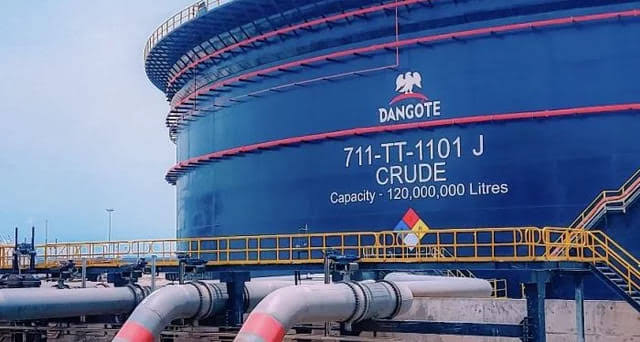
For ₦5,250, Nigerians could soon own a piece of the refinery that has reshaped the country’s fuel market.
Business
After two decades, Tinubu approves Cabotage fund for Nigerian shipowners
After two decades, Tinubu approves Cabotage fund for Nigerian shipowners
President Bola Tinubu has approved the disbursement of the Cabotage Vessel Financing Fund (CVFF) to qualified Nigerian shipowners, more than 20 years after the fund was established to promote indigenous participation in the country’s maritime industry.
The approval, announced on Sunday, September 6, 2026, is expected to end years of uncertainty surrounding the CVFF and provide Nigerian shipowners with access to long-term financing for the acquisition of vessels and expansion of their operations.
The Minister of Marine and Blue Economy, Adegboyega Oyetola, disclosed the development in a statement issued by his Special Adviser, Bolaji Akinola.
Oyetola directed the Nigerian Maritime Administration and Safety Agency (NIMASA) and the 12 approved Primary Lending Institutions (PLIs) to fast-track the processing and disbursement of the fund to eligible applicants.
According to the minister, the move is designed to unlock investment in Nigeria’s maritime sector, increase indigenous ship ownership, strengthen the country’s participation in coastal and offshore shipping and create thousands of employment opportunities.
NIMASA has so far received 92 applications from prospective beneficiaries seeking financing under the CVFF programme. Twenty applications have already been forwarded to the approved lending institutions, while one has been reviewed and sent forward for final approval.
The development marks the latest stage in the Federal Government’s efforts to transform the CVFF from a long-standing pool of accumulated funds into an operational financing facility for Nigeria’s indigenous shipping industry.
The CVFF was created under the Coastal and Inland Shipping (Cabotage) Act to provide financial support to qualified Nigerian operators for the acquisition of vessels and development of domestic shipping capacity.
The facility is particularly important because Nigeria’s maritime sector has historically relied heavily on foreign-owned vessels for several coastal and offshore operations, limiting the amount of revenue retained by indigenous operators.
Through the CVFF, the government seeks to enable qualified Nigerian shipowners to acquire modern vessels, expand their fleets and compete more effectively for contracts within the domestic maritime market.
READ ALSO:
- Hate Speech, Threats During Campaigns Attract ₦10m Fine, 12 Months Jail – INEC
- Market Fire in Indonesia Kills 11, Including Six Children
- Three Women Killed, 10 Injured in Multiple Crash on Lagos-Ibadan Expressway Bridge
- Socialite Igho ‘Tiny’ Ubiribo Dies After Penis Enlargement Surgery
The fund is structured to provide long-term financing at a relatively low interest rate, with the current framework designed to make vessel acquisition more accessible to indigenous operators.
NIMASA had previously disclosed that the financing arrangement would provide for a single-digit interest rate, a two-year moratorium and an eight-year repayment period.
Under the framework, NIMASA is expected to provide 50 per cent of the financing, while the participating lending institutions would contribute 35 per cent and beneficiaries would provide the remaining 15 per cent as equity.
The number of participating Primary Lending Institutions was increased from five to 12 to widen access to the facility, improve competition among lenders and reduce delays associated with loan processing.
The expansion is also expected to give applicants more options when seeking financing and strengthen the financial oversight of the programme.
Oyetola had earlier directed NIMASA in April 2025 to begin the process of operationalising the Cabotage Vessel Financing Fund, reviving efforts to disburse the facility after years of administrative stagnation.
The process received another boost in January 2026 with the launch of the CVFF Application Portal in Lagos.
The portal was designed to provide eligible shipowners with a more transparent and structured process for submitting applications and tracking their financing requests.
The latest presidential approval therefore builds on several reforms introduced by the Ministry of Marine and Blue Economy and NIMASA over the past two years.
The CVFF has a long history of delayed disbursement.
In December 2019, the Federal Government announced that then-President Muhammadu Buhari had approved the release of the fund to indigenous shipowners, with the accumulated amount at the time reportedly estimated at N44.64 billion.
Despite the announcement, the fund did not translate into sustained financing for Nigerian shipowners.
In 2023, the House of Representatives intervened over concerns surrounding the management and proposed disbursement of the fund.
The House investigated the amount accumulated under the scheme, the proposed financing arrangements and the process for selecting beneficiaries.
Following the investigation, lawmakers approved the disbursement of an estimated $360 million to qualified Nigerian shipowners.
However, the implementation of the disbursement continued to face delays.
By April 2025, NIMASA estimated the value of the fund at about $700 million and announced plans to commence disbursement under a revised financing structure.
The latest approval by President Tinubu is therefore another significant attempt to move the fund from years of accumulated resources and administrative delays to actual financing for indigenous operators.
The Federal Government expects the programme to have an impact beyond vessel ownership.
According to Oyetola, the initiative could generate more than 30,000 direct and indirect jobs across shipyards, marine engineering companies, maritime logistics firms and other businesses connected to the maritime value chain.
Greater indigenous ownership of vessels could also stimulate demand for shipbuilding, vessel repairs, marine engineering, maritime insurance, logistics and other specialised services.
The government believes this could help Nigeria retain a larger share of the economic value generated from activities within its territorial waters.
The CVFF disbursement is also coming as Nigeria seeks to improve its international maritime profile.
In August 2026, the United States Coast Guard lifted a 12-year Condition of Entry imposed on Nigerian vessels arriving at US ports.
The restriction, introduced in 2014 over concerns about maritime security standards, had subjected Nigerian vessels to additional requirements when entering US ports.
Its removal is expected to improve the operating environment for vessels trading between Nigeria and the United States, potentially reducing additional compliance costs and improving turnaround times.
The development has added momentum to Nigeria’s efforts to strengthen maritime safety, security and compliance with international standards.
For the Federal Government, strengthening indigenous shipping capacity remains a key component of its broader Blue Economy strategy.
The administration has identified the maritime sector as an area capable of attracting investment, creating jobs, expanding trade and increasing Nigeria’s revenue from its extensive coastal and offshore economic activities.
For Nigerian shipowners, however, the immediate focus will be on whether the latest approval translates into actual access to financing.
With 92 applications already received and 20 forwarded to lending institutions, the next stage will involve detailed assessment, approval and eventual release of funds to successful applicants.
The government’s challenge will be to ensure that the process remains transparent, commercially sustainable and accessible to genuinely qualified Nigerian operators.
After more than two decades of delays, investigations and repeated promises of disbursement, President Tinubu’s latest approval represents a major opportunity to finally make the Cabotage Vessel Financing Fund a functioning source of capital for Nigeria’s indigenous shipping industry.
After two decades, Tinubu approves Cabotage fund for Nigerian shipowners
-

 metro3 days ago
APC rally: Suspected thugs attack journalists, smash Radio Nigeria vehicle in Kano
-

 Education3 days ago
FG Opens N2.5bn Grant Window For 50 Student Innovators Under “Next Moonshot Initiative”
-
 Politics2 days ago
Peter Obi, Others Challenging Tinubu Cannot Transform Nigeria — Datti Baba-Ahmed
-
 Politics3 days ago
Kano Political Earthquake: Kwankwaso Loyalists Dump NDC, Defect to APC in Major 2027 Blow
-

 Entertainment3 days ago
Wizkid Mocks Davido’s Family Wealth: “Rich and Empty” — Afrobeats Feud Escalates
-

 metro2 days ago
Socialite Igho ‘Tiny’ Ubiribo Dies After Penis Enlargement Surgery
-
 Auto2 days ago
Kaduna to Lead Govt Patronage of Local Vehicles as Sani Unveils Peugeot 5008
-

 Entertainment3 days ago
Kneeling to Propose Is Why Western Marriages Fail — Pete Edochie Sparks Fresh Debate