

News
Tinubu’s reforms ended governors’ dependence on borrowing for salaries – Akpabio

Tinubu’s reforms ended governors’ dependence on borrowing for salaries – Akpabio
Senate President Godswill Akpabio on Tuesday declared that state governors no longer need to borrow money to pay workers’ salaries, crediting the change to the economic reforms introduced by President Bola Tinubu’s administration.
Speaking during his address to lawmakers as the Senate resumed plenary after a two-month, two-week recess, Akpabio commended the President’s policies, noting that they have begun to stabilize the economy and improve the financial autonomy of state governments.
“I can confidently say that through the engineering of President Bola Tinubu and his team, no state government today is borrowing to pay salaries. So, for this, we say kudos to the administration,” he said.
Nigeria has over the years relied heavily on loans from international financial institutions to finance infrastructure projects.
In May, President Tinubu sought the National Assembly’s approval to borrow $21.5 million and ¥15 billion, along with a €65 million grant.
The government claimed the funds will be used to support key infrastructure and security projects, including the expansion of power grids and transmission lines, development of irrigation systems to strengthen food security, installation of a nationwide fibre optics network, procurement of fighter jets to boost national security, and enhancement of rail and road infrastructure across the geopolitical zones.
Similarly, many state governments have, over time, resorted to borrowing to pay workers’ salaries. For instance, Gombe State Governor Muhammadu Yahaya revealed that between 2013 and 2019, the previous administration in the state borrowed about ₦1.3 billion monthly to meet salary obligations.
READ ALSO:
- Alleged certificate forgery: Tinubu accepts Minister Nnaji’s resignation
- Alleged certificate forgery: Tinubu accepts Minister Nnaji’s resignation
- $4.5bn fraud case: Emefiele’s phone forensic analysis halted amid EFCC – defence dispute
Under the Central Bank of Nigeria’s (CBN) Salary Bailout Facility (SBF), several states also obtained loans to offset wage arrears.
According to a Nairametrics report, 31 state governments collectively borrowed ₦457.17 billion through the SBF to pay salaries. States such as Imo, Kogi, Kano, Edo, Benue, and Osun were among those listed.
In addition, reports show that between January and June 2023, state governors borrowed about ₦46.17 billion from three commercial banks, Access, Zenith, and Fidelity to pay salaries.
For example, Access Bank recorded an outstanding balance of ₦58.84 billion in state salary bailout facilities as of June 30, 2023, down from ₦101.81 billion in December 2022.
However, since the removal of fuel subsidy, reports indicate that allocations to state governments have tripled in some cases.
President Tinubu has argued that the policy has significantly improved the financial standing of state governments.
Supporting this claim, Kaduna State Governor Uba Sani disclosed that before the subsidy removal in May 2023, the state had to borrow to pay salaries, but it can now meet its wage obligations without borrowing and even operate with a surplus.
The improved revenue has enabled some states to raise workers’ salaries above the ₦70,000 national minimum wage. Lagos and Rivers now pay ₦85,000, while Enugu, Akwa Ibom, Niger, and Bayelsa pay ₦80,000 to their workers.
In his address, Mr Akpabio commiserated with victims and families affected by recent tragedies across the country.
“Our country has walked through both shadow and sunshine while we were away. We grieve with the families who lost their loved ones in the cruel boat tragedy on the Niger River in Kogi State, and in the bloody outrage at a mosque in Katsina.
“We mourn also the 12 forest guards slain in Oke-Ode, Kwara State, cut down while protecting our environment — martyrs of service who remind us that insecurity knows no boundaries,” he added.
Mr Akpabio also sympathised with victims of flooding in Bayelsa, Sokoto, Zamfara, and other states.
“We commiserate with our compatriots across the flood-ravaged states of Bayelsa, Sokoto, Zamfara and others, as the 2025 flood season continues to uproot lives and destroy livelihoods.
“We urge urgent coordination between the federal and sub-national governments to mitigate these devastations before they become annual calamities. To every home afflicted by these disasters, insecurity, hunger, and hardship, we extend to them the hand of fellowship and the prayer of comfort. We promise them that we shall not flinch from the duty of relief and redress for our people.
“While our hearts grieve, our hopes endure because of glimmers of progress. Nigeria’s oil production has climbed toward 1.8 million barrels per day, driven by reforms and renewed investor confidence. We must ensure that this blessing does not become another fleeting windfall, but a foundation for fiscal discipline, infrastructure renewal, and job creation,” he said.
Tinubu’s reforms ended governors’ dependence on borrowing for salaries – Akpabio






News
FG Targets 95% NIN Coverage by December 2026
FG Targets 95% NIN Coverage by December 2026
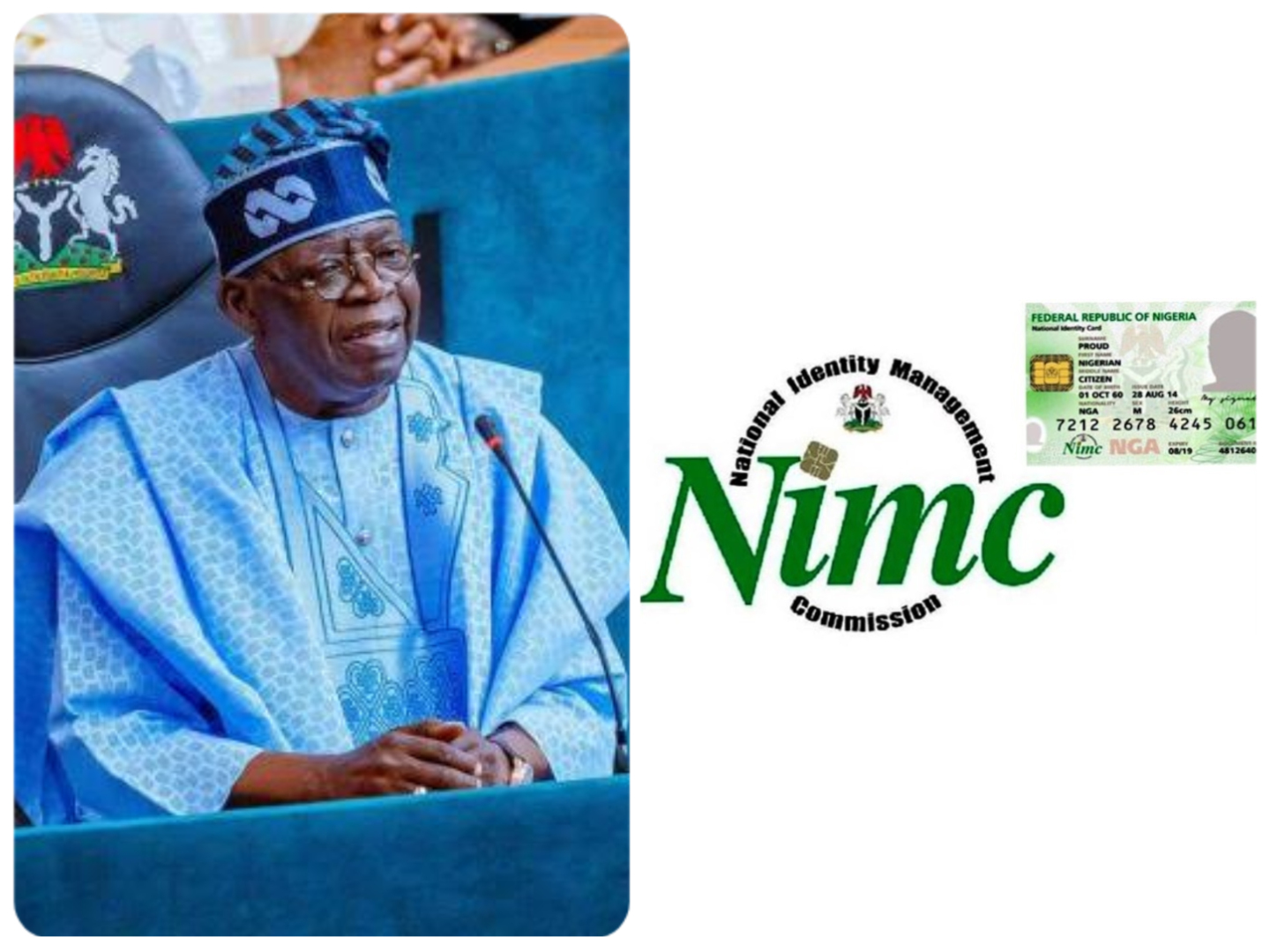
The Federal Government is targeting 95 per cent National Identification Number (NIN) coverage nationwide by December 2026 as it expands Nigeria’s digital identity system.
President Bola Tinubu announced the target during the 2026 National Identity Day celebration in Abuja, where he was represented by Chief of Staff Femi Gbajabiamila.
The President said NIN enrolment had risen to about 142 million, up from more than 80 million recorded when his administration came into office.
To reach the new target, the government plans to expand registration through ward-level enrolment, mobile registration initiatives and licensed agents. Reports from the event said free enrolment is being extended to all 8,809 wards across the country.
Identity System for Digital Economy
Tinubu said the government wants to build an identity infrastructure that can support Nigeria’s growing digital economy.
He said a secure national identity could make it easier to access services while supporting areas such as digital banking, healthcare, transportation and government programmes.
The President also said the expansion must go hand in hand with safeguards for citizens’ privacy and dignity.
Beyond enrolment numbers, he said the government was working towards a more connected digital public system, including electronic health records, e-transport services and a more coordinated national data architecture.
The NIMC’s ongoing expansion therefore aims not only to register more Nigerians and legal residents, but also to make the identity system a key part of how people access digital and public services.
FG Targets 95% NIN Coverage by December 2026
Education
25 Universities, Teaching Hospitals Get Solar Power Under REA Programme
25 Universities, Teaching Hospitals Get Solar Power Under REA Programme
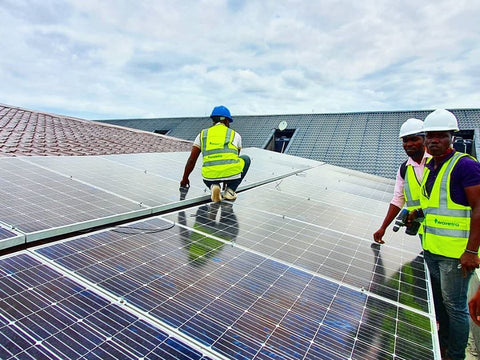
Twenty-five federal tertiary institutions have been connected to solar electricity under the Rural Electrification Agency’s (REA) Energizing Education Programme.
The REA Managing Director, Abba Aliyu, disclosed this during the commissioning of a 3MW captive solar hybrid power project at Yakubu Gowon University, Abuja.
According to Aliyu, the programme covers 22 federal universities and three affiliated teaching hospitals and has deployed more than 100MW of clean energy.
He said the initiative now benefits over 300,000 students and 50,000 academic and administrative staff.
Aliyu added that the new 3MW facility would power key university facilities, including lecture halls, laboratories, ICT systems, administrative buildings and campus lighting.
Meanwhile, Minister of Power Joseph O. Tegbe said reliable electricity was essential to supporting teaching, research, healthcare and digital services in universities.
He stressed that the long-term performance of the solar projects would be more important than their commissioning.
Vice-Chancellor of Yakubu Gowon University, Prof. Hakeem Babatunde Fawehinmi, also said dependable electricity was critical to the institution’s academic and research activities.
25 Universities, Teaching Hospitals Get Solar Power Under REA Programme
News
OAU Investigates Death of Final-Year Student as Police Begin Probe
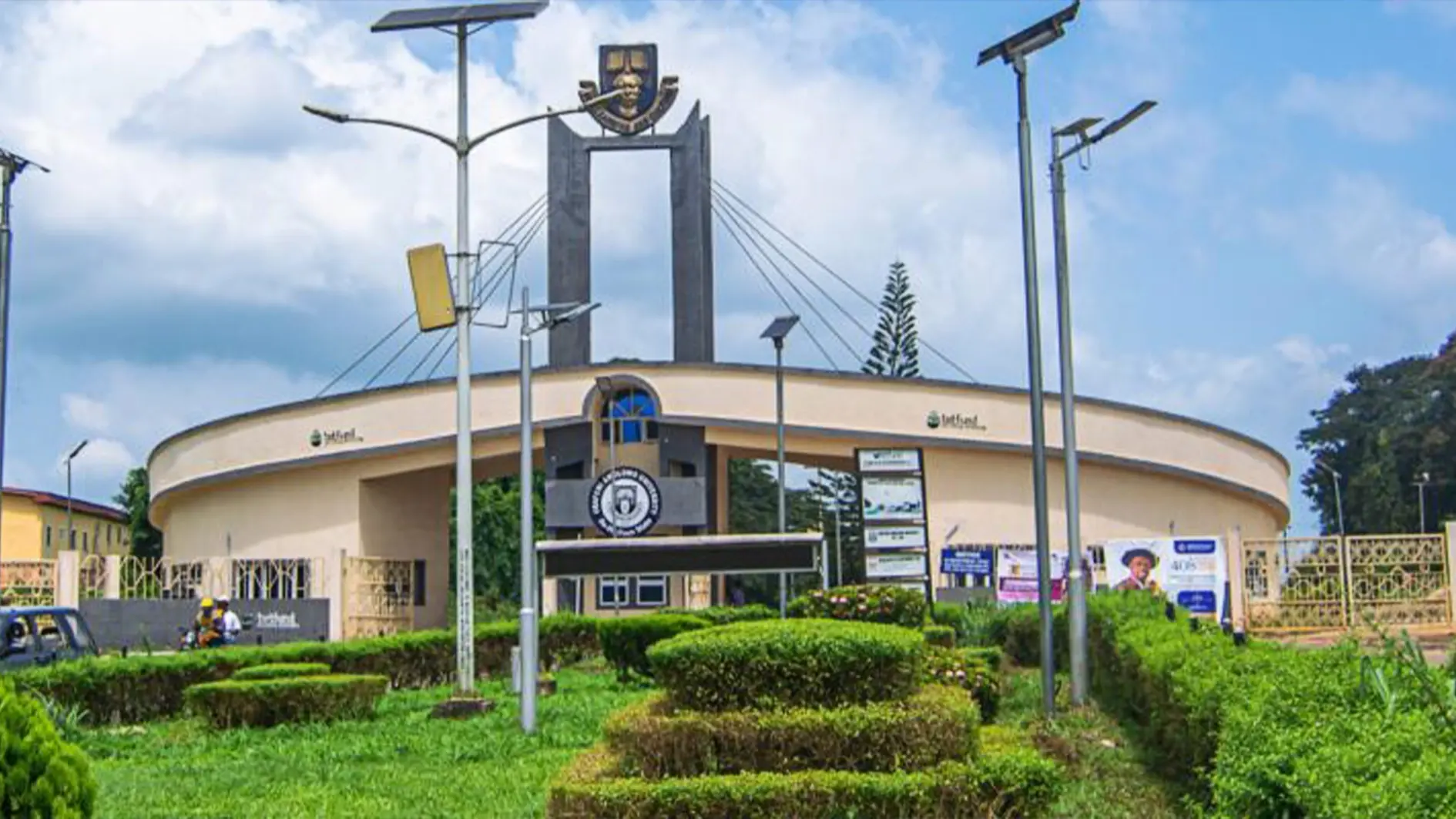
OAU Investigates Death of Final-Year Student as Police Begin Probe
Obafemi Awolowo University (OAU), Ile-Ife, Osun State, is investigating the death of a final-year student of the institution.
The student, Oluwole Oluwosegun, was studying Materials Science and Engineering at the university.
According to the university’s Public Relations Officer, Olarewaju Abiodun, the incident occurred on Tuesday afternoon at the student’s off-campus residence around the Damico area of Ooni Layout, Ile-Ife.
After receiving the report, the university’s Quick Response and Security (QRS) Team went to the location. The team also contacted the Nigeria Police, after which officers from the ‘A’ Division in Moore, Ile-Ife, joined them at the scene.
The university later took the student to its Health Centre, where a medical doctor confirmed his death.
READ ALSO:
- 57-Year-Old Man Arrested Over Sexual Abuse of Stepdaughter in Edo
- US-Based Nigerian Lawyers Disbarred: Full List of Fraud, Theft and Misconduct Cases
- Katsina Police Rescue Two Kidnapped Women, Arrest Suspected Kidnappers
Police Begin Investigation
Following the incident, university authorities handed relevant information and items recovered from the scene to the police to support their investigation.
The police have since begun inquiries into the circumstances surrounding the student’s death.
Meanwhile, the university said it had informed the appropriate student affairs authorities to provide necessary follow-up, particularly regarding the welfare and emotional support of students affected by the incident.
Vice-Chancellor Professor Simeon Bamire also expressed condolences to the student’s family, friends, classmates and colleagues.
The university further encouraged students facing severe emotional distress, relationship difficulties, financial pressure or other personal challenges to seek help from trusted people and available university support services.
Professor Bamire reaffirmed the institution’s commitment to the welfare of its students and staff, stressing that no student should feel they must face overwhelming difficulties alone.
OAU Investigates Death of Final-Year Student as Police Begin Probe
-

 Politics3 days ago
2027: Northern Lecturers Back Tinubu, ASUU Disowns Endorsement
-

 metro3 days ago
Police Arrest Mother Over Alleged Brutal Abuse of 7-Year-Old Girl in Anambra
-

 Sports2 days ago
‘I Was Never the Chosen One’ — Dembele Responds to Mbappe
-

 International1 day ago
Islamic Council Condemns Attempted Attack on Holy City of Mecca
-

 metro2 days ago
Lagos Power Outage: Ikeja Electric Blames TCN as Businesses, Homes Groan
-

 Education2 days ago
JAMB Moves 2027 UTME Time — Here’s What Candidates Need To Know
-
 News1 day ago
Keep Politics Out of My Office — Ogbomoso Grand Chief Imam Warns Politicians, Bloggers
-
 Politics2 days ago
2027: APC Governors Reject Wike’s Rainbow Coalition, Insist on Party Loyalty