

Business
How Defence Headquarters foils deadly coup plot targeting Nigeria’s top leaders

How Defence Headquarters foils deadly coup plot targeting Nigeria’s top leaders
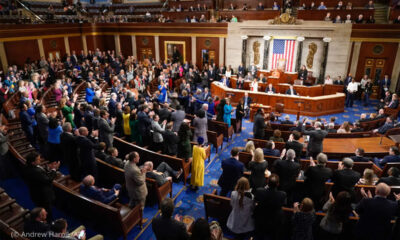
In what security insiders have described as the most dangerous coup attempt in Nigeria’s recent history, the Defence Headquarters (DHQ) has successfully thwarted a violent conspiracy aimed at toppling the Federal Government and assassinating senior political and military figures.
The plot, uncovered several weeks ago by the DHQ’s internal intelligence unit, was led under the watch of former Chief of Defence Staff, General Christopher Musa, and Chief of Defence Intelligence, Major General Emmanuel Undiandeye. According to exclusive findings by PRNigeria, the conspiracy involved plans for coordinated attacks on top officials in the Presidency, principal officers of the National Assembly, key security chiefs, and the National Security Adviser.
“The coup would have been bloody beyond imagination,” a senior security source revealed. “It wasn’t just about seizing power—it was a blueprint for mass elimination and the total paralysis of Nigeria’s leadership structure.”
The revelation comes amid ongoing investigations into the arrest of 16 military officers for alleged breaches of service regulations. While initial reports of a coup attempt were dismissed by both the Federal Government and DHQ as “false and misleading,” fresh intelligence confirms the existence of a sophisticated and dangerous plot.
READ ALSO:
- Vinicius Jr. apologises for El Clasico outburst after Substitution
- Pump prices may spike as Tinubu imposes 15% import duty on petrol, diesel
- U.S. ends automatic work permit extensions for Nigerians, other immigrants
Sources say the conspiracy was detected solely through the DHQ’s counterintelligence operations, without the involvement of other security agencies. The suspects had reportedly acquired tactical vehicles and equipment for covert mobility and had infiltrated sensitive government zones to enable swift execution of their plans.
Investigators have expanded the probe to include civilian collaborators. Forensic experts are currently tracking financial transactions and communications, with billions of naira traced to bank accounts allegedly linked to political sponsors believed to be financing the operation.
Contrary to speculation, none of the detained officers have ties to the Office of the National Security Adviser. Military insiders described the suspects as disgruntled personnel—many of whom had failed promotion exams or remained in stagnant postings. “That frustration was weaponised,” a source close to the investigation said. “They were manipulated into believing they were fighting for justice or reform. In truth, they were pawns in a dangerous political game.”
Security analysts have noted the unusual composition of the conspirators, which reportedly included individuals from both Christian and Muslim backgrounds, and from Northern and Southern regions of the country. “This was a reckless and unfathomable alliance that defied Nigeria’s usual ethno-religious fault lines—united only by a shared willingness to undermine democracy,” one analyst observed.
In response to the revelations, the Defence Headquarters reaffirmed its commitment to democratic governance, stressing that the Armed Forces remain loyal to the Constitution and the President. The DHQ’s swift and discreet handling of the threat has earned praise from security experts, who caution that while the immediate danger may have been neutralized, the underlying grievances that fueled the plot must be addressed to prevent future unrest.
How Defence Headquarters foils deadly coup plot targeting Nigeria’s top leaders
. PRNIgeria





Auto
Côte d’Ivoire woos Nigerian auto investors to regional mobility expo
Côte d’Ivoire woos Nigerian auto investors to regional mobility expo
- 150 global brands to storm Abidjan
Côte d’Ivoire is making a bold bid to become West Africa’s automotive and mobility hub with the launch of EQUIP AUTO Côte d’Ivoire, an international trade exhibition expected to attract more than 150 exhibitors and brands from across Europe, Asia and Africa in a move aimed at deepening regional trade and cross-border investment.
The maiden edition of the exhibition will hold from November 26 to 28, 2026, at the Abidjan Exhibition Centre, bringing together about 10,000 industry professionals, investors, policymakers and members of the public from across the automotive value chain.
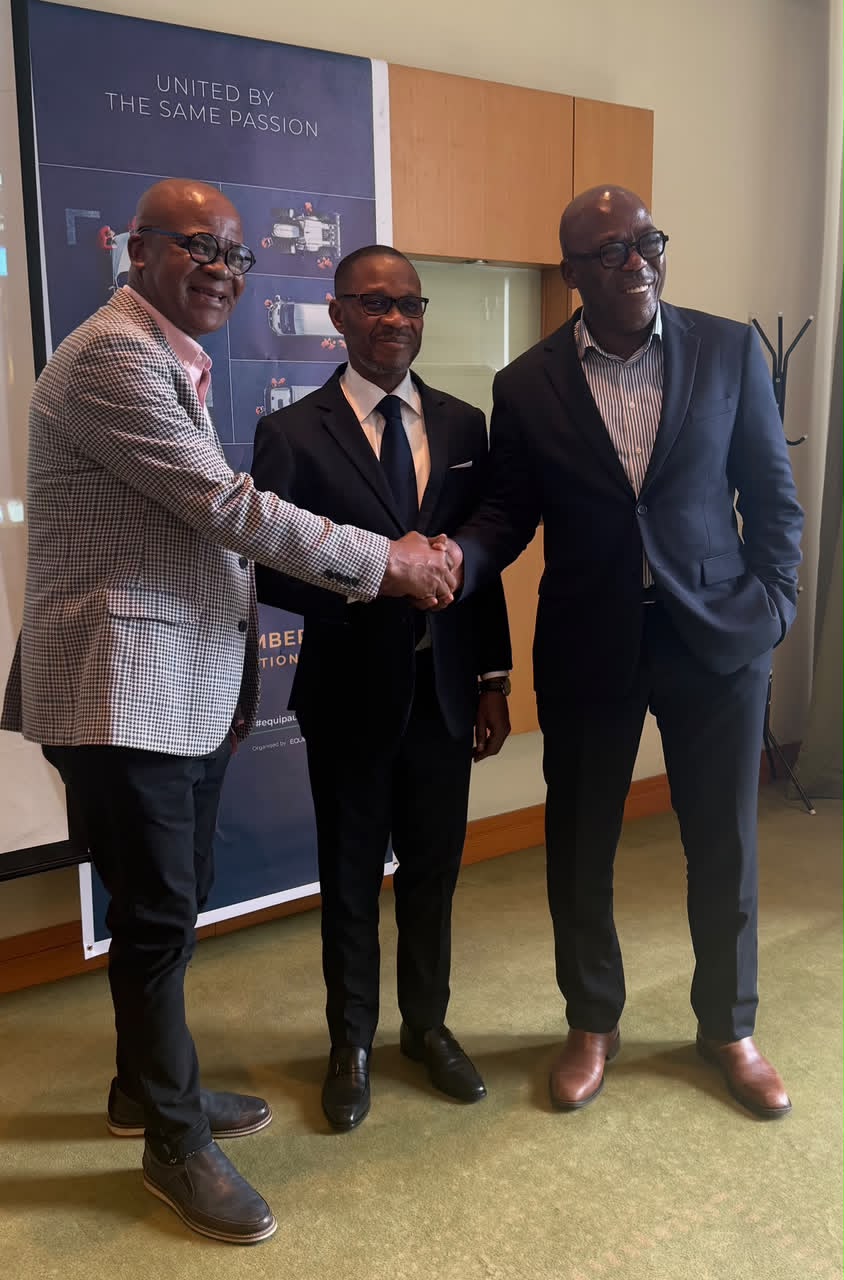
Speaking at a press conference in Lagos on Wednesday, President of Interlinks Auto and MIWA AFRICA SARL, Mr. Luc Azilinon, described the event as a major milestone in expanding the globally recognised EQUIP AUTO brand into sub-Saharan Africa.
The briefing, held at the Radisson Blu Hotel, Victoria Island, was convened by the Managing Director/Chief Executive Officer of Promosalons Nigeria, Cameroon and Gabon, Mr. Akin Akinbola, whose organisation represents the organisers of EQUIP AUTO Côte d’Ivoire in Nigeria and Cameroon.
According to Azilinon, the exhibition is being organised through a collaboration between EQUIP AUTO Paris and MIWA AFRICA SARL and is designed to become West Africa’s leading business platform for mobility and the automotive industry.
He said the three-day event would feature exhibitions, thematic workshops, conferences, business-to-business and business-to-consumer meetings, product demonstrations and live vehicle testing.
The exhibition will cover passenger vehicles, light commercial vehicles, heavy-duty and industrial vehicles, transport, automotive aftermarket, agriculture and public works, reflecting the realities and growth potential of the West African market.
Azilinon disclosed that exhibitors are expected from Germany, France, Türkiye, Italy, Algeria, Nigeria, Cameroon, India, China, South Korea and Japan.
“Our ambition is to position EQUIP AUTO Côte d’Ivoire as the leading platform for developing business in West Africa by combining innovation with business opportunities and establishing the region as a strategic mobility hub for Africa,” he said.
He added that the event’s innovative B2B2C format would create a strategic meeting point for vehicle manufacturers, distributors, repairers, fleet operators and government agencies, while giving participants access to cutting-edge technologies and mobility solutions tailored to regional needs.
According to him, the exhibition is also expected to stimulate regional trade, strengthen cross-border partnerships, support the modernisation of automotive infrastructure and distribution networks, and facilitate the expansion of international companies into West African markets.
Explaining why Côte d’Ivoire was selected to host the inaugural edition, Azilinon cited the country’s political stability, investor-friendly environment, strategic infrastructure and growing economic influence within the Economic Community of West African States.
He noted that Côte d’Ivoire has maintained strong institutional stability following the 2025 elections, recorded major investments in transport, energy and construction, and hosts the Port of Abidjan, one of West Africa’s busiest maritime gateways.
He also pointed to the country’s robust economic performance, with a growth rate of 6.5 per cent in 2024, driven by agriculture, agribusiness, infrastructure and services.
The Ivorian Ambassador to Nigeria, Ambassador Kalilou Traoré, was represented at the event by Dr. Kaslime Kouassi, underscoring the country’s commitment to strengthening economic and commercial ties across the region through the automotive sector.
Aviation
Obi Must Apologise, Pay ₦25,000 or Face FAAN Action — Keyamo Issues Ultimatum
Obi Must Apologise, Pay ₦25,000 or Face FAAN Action — Keyamo Issues Ultimatum
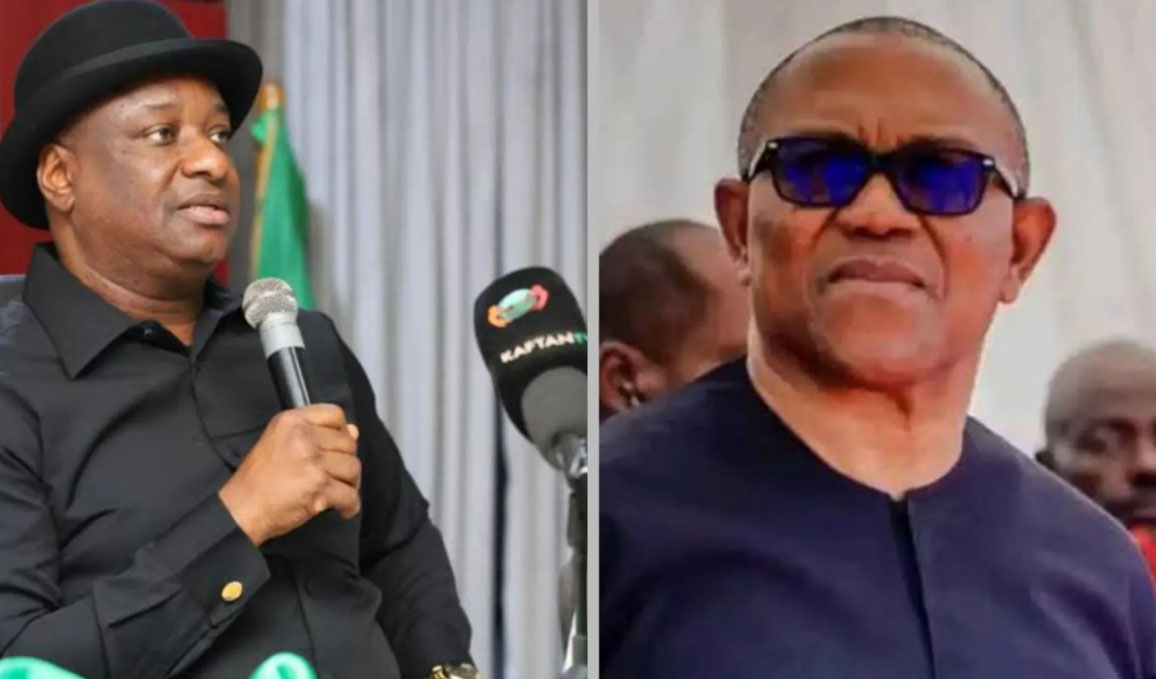
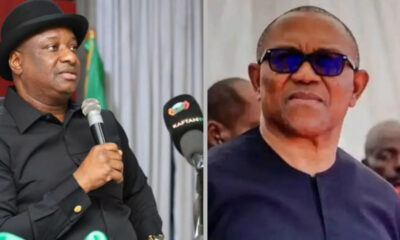
The Minister of Aviation and Aerospace Development, Festus Keyamo, has issued a seven-day ultimatum to Nigeria Democratic Congress (NDC) presidential candidate Peter Obi, demanding a public apology and payment of a ₦25,000 fine over a parking violation at Abuja’s Nnamdi Azikiwe International Airport. Keyamo’s demand follows an internal investigation he ordered after Obi publicly claimed his vehicle was unjustly clamped as part of a political persecution campaign by the Federal Government. The minister released CCTV footage which he says contradicts Obi’s account, insisting the former Anambra governor violated airport regulations and then used his influence to evade the prescribed fine. In a statement posted on his X page, Keyamo declared that what had emerged was a clear case of an opposition candidate trying to whip up unnecessary sentiments for a wrong he and his driver committed.
According to the minister’s detailed narrative, the incident occurred on July 4, 2026, and the CCTV footage tells a very specific story. Obi arrived at the domestic terminal at approximately 8:28 p.m., driven by a police officer, and entered the building with two other occupants. The police driver then parked the vehicle in a designated drop-off zone—almost blocking the entrance—and also left the vehicle unattended. The driver briefly returned at about 8:32 p.m. to retrieve an item but abandoned the vehicle again. Airport security personnel then clamped the tyres, with Keyamo insisting nobody knew the vehicle belonged to Obi at the time. When the driver discovered the clamp, he contacted Obi, who spoke with an airport manager and requested the vehicle’s release—which was granted without payment of the ₦25,000 fine. Keyamo emphasised that the vehicle remained unattended for about 30 minutes in a restricted zone, describing this as a security risk under global airport standards.
READ ALSO:
- Grand Chief Imam warns Bennylee against religious provocation, urges respect for judicial process
- DSS arraigns five suspected Ansaru members over Oyo school abduction, alleged killings
- PFIPC probe: HoS admits failure to verify recruitment documents
However, the Peter Obi Media Office and the Obidient Movement have strongly rejected Keyamo’s narrative, accusing the minister of releasing poorly edited propaganda and manipulating CCTV footage to criminalise the opposition leader. They have raised several counter-claims that directly challenge the minister’s version of events. On the timing dispute, the Obidient Movement argues that timestamps on Keyamo’s own footage show Obi’s vehicle arriving at 20:28 and being clamped at approximately 20:34—six minutes, not thirty. The group accused Keyamo of zooming into the seconds display to confuse viewers into believing they were looking at the minute counter. On the identity of the driver, Obi’s spokesman, Idris Zekeri Jnr, stated that Peter Obi does not have any police or civil defence personnel attached to him in Abuja, challenging Keyamo’s reference to a “police driver”. Obi’s camp also claims the incident Keyamo publicised is entirely different from the one Obi narrated during his interview, suggesting a pattern of targeting the opposition figure. Furthermore, both the Obidient Movement and Obi’s media office insist other vehicles were parked in the same area without being clamped, pointing to selective enforcement targeting Obi. They also questioned why Keyamo showed no similar enthusiasm in investigating high-profile incidents involving Adams Oshiomhole and KWAM 1—known associates of the President.
The Presidency has weighed in on the matter, with presidential spokesman Bayo Onanuga backing Keyamo’s position. Onanuga stated that the evidence completely debunked Obi’s falsehood that he was unduly targeted and persecuted, insisting that he and his police driver broke a simple parking rule at the Airport.
Keyamo has made two formal demands, warning that failure to comply within seven days would prompt him to direct the Federal Airports Authority of Nigeria (FAAN) to take further action. First, Obi must tender an unreserved, public apology to the airport workers he accused of persecution. Second, Obi must voluntarily return to the airport and pay the ₦25,000 fine for wrongful parking, which he allegedly evaded through influence peddling. The minister declared that Obi cannot be bigger than the law.
Meanwhile, legal analyst Ekemini Udim, a Senior Partner at Justice Chambers, has questioned the minister’s authority to impose a fine, arguing that Keyamo is not a court of law. Udim cited a Court of Appeal decision which held that the Federal Road Safety Commission cannot impose fines without taking offenders before a magistrate’s court, arguing the same principle should apply to FAAN. Furthermore, he noted that under the principle of criminal liability, it is the person who commits the offence that should be made to pay for the offence—suggesting that if Obi was not the driver, he cannot be held personally liable.
Obi Must Apologise, Pay ₦25,000 or Face FAAN Action — Keyamo Issues Ultimatum
Railway
NRC graduates 31 locomotive pilots to power rail expansion, freight reforms
NRC graduates 31 locomotive pilots to power rail expansion, freight reforms
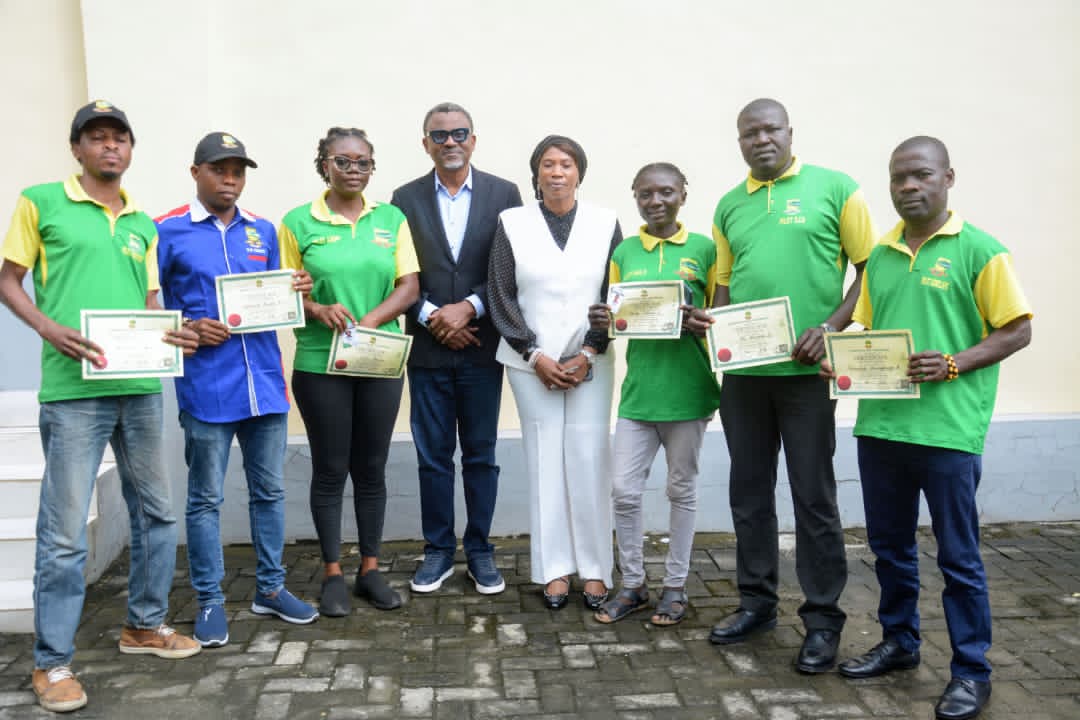
The Nigerian Railway Corporation (NRC) has strengthened its drive to reposition rail transportation with the graduation of 31 newly trained locomotive pilots, declaring that a new generation of skilled operators will be at the heart of the Federal Government’s railway expansion and freight revolution.
Speaking at the graduation ceremony, the Managing Director of the NRC, Dr. Kayode Opeifa, described locomotive pilots as the “driving force” behind the corporation’s ongoing reforms, stressing that the graduates would play a pivotal role in improving safety, efficiency and reliability across Nigeria’s rail network.
Represented by the Director of Administration and Human Resources, Dr. Monsurat Omotayo, Opeifa said the graduates had completed more than one year of rigorous classroom and practical training, reflecting the corporation’s commitment to professionalism and operational excellence.
He said the pilots would be central to the expansion of railway operations nationwide, particularly as the Federal Government pursues partnerships with state governments to develop rail infrastructure and provide affordable, reliable transportation.
According to him, the corporation’s Track Access Policy and freight transportation reforms remain top priorities.
“As locomotive pilots, you will be at the centre of these initiatives and the future of railway transportation in Nigeria,” Opeifa said.
He assured the graduates—including two women—that the corporation would continue to invest in their professional development through exposure to global best practices aimed at enhancing operational safety and efficiency.
Earlier, the Assistant Director, Motive Power, Mr. Abiodun Olokun, disclosed that 45 employees drawn from different operational departments were selected for the training programme conducted at the NRC Training Schools in Lagos and Zaria, Kaduna State.
He explained that while 31 trainees successfully completed the programme, 11 were retained for further practical training to strengthen their competence. Two others did not meet the required performance standard, while one trainee was unable to complete the programme after being involved in a road accident. The three were returned to their respective departments.
Olokun said the trainees underwent three months of intensive classroom instruction, followed by six months of practical exposure across operational departments and simulator training in Zaria.
“The programme was designed to expose the trainees not only to locomotive operations but also to the entire railway operating environment,” he said.
Chief Locomotive Instructor Mr. Godwin Edet described the graduates as exceptional in both theory and practical performance, expressing confidence that they could compete favourably with locomotive operators anywhere in the world.
The Technical Adviser to the Managing Director on Railway Operations and Services, Mr. Adeife Olukolade, urged the graduates to strictly adhere to the operational rule book, noting that discipline and compliance with safety procedures remain the best safeguards against accidents.
Also speaking, the Director of Operations, Mr. Akin Osinowo, reminded the new pilots that they would be responsible for the safety of hundreds of passengers and the movement of freight, an area receiving renewed government attention.
The Director of Civil Engineering and New Lines, Engr. Adekunle Ayeni, described the graduation as a sign of renewed hope for the corporation and called for the recruitment and training of younger engineers to replace ageing personnel.
Similarly, the Deputy Director, Mechanical, Electrical, Signals and Telecommunications, Engr. Habeeb Olakunle Alaka, urged the graduates to collaborate closely with engineers by providing operational feedback that would improve equipment performance and overall efficiency.
Speaking on behalf of the graduating class, Amina Oden thanked the management for investing in their development and pledged that the graduates would uphold the highest standards of professionalism, discipline and dedication in the discharge of their duties.
The ceremony ended with the presentation of souvenirs to the NRC Managing Director, Dr. Kayode Opeifa, and the Director of Operations, Mr. Akin Osinowo, by the graduating locomotive pilots.
-
 Politics2 days ago
Tinubu tells 2027 rivals: We’ll wrestle ourselves to the finishing line
-
 Aviation8 hours ago
Obi Must Apologise, Pay ₦25,000 or Face FAAN Action — Keyamo Issues Ultimatum
-
 News1 day ago
Police detain Osun SSG, five others as ₦4.8m, voter cards are recovered
-

 Education2 days ago
BUK, Northwest University students demand prompt payment of NELFUND upkeep allowances
-
 metro3 days ago
Oyo Receives Two Surveillance Aircraft Worth ₦7.7 Billion to Strengthen Security Operations
-
 Politics3 days ago
Osun 2026: APC Inaugurates 292-Member Campaign Council, Declares Victory a Must
-
 metro2 days ago
Army Colonel Killed, Wife, Aides Injured as Gunmen Storm Home in Coordinated Attack
-
 Education2 days ago
Alausa Warns States as Many Risk Losing $552m World Bank HOPE Education Fund