

metro
Senator Andy Uba cleared as police drop ₦400m fraud case after settlement

Senator Andy Uba cleared as police drop ₦400m fraud case after settlement
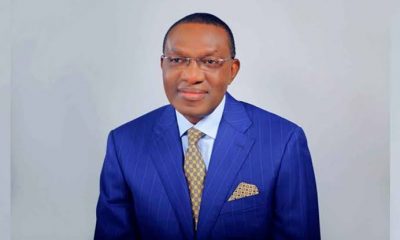
The Federal High Court in Abuja has struck out a high-profile fraud case against former Senator Andy Uba and his associate, Benjamin Etu, following the repayment of ₦400 million to the complainant, Dr. George Uboh.
At the resumed hearing before Justice Mohammed Umar, counsel to the Inspector-General of Police, Aminu Abdullahi, announced that the prosecution had filed a notice of discontinuance in accordance with Section 108(5) of the Administration of Criminal Justice Act (ACJA), 2015. The move came after all parties reached an amicable settlement.
“We filed and served a notice of discontinuance this morning,” Abdullahi told the court, confirming that the disputed sum had been fully refunded by the defendants.
According to Abdullahi, Uba—who previously represented Anambra South Senatorial District—and Etu resolved all claims and liabilities with Dr. Uboh, who acknowledged receipt of the funds. Defence counsel C. F. Odiniru supported the withdrawal and submitted an affidavit detailing the terms of the settlement, including a signed agreement dated November 5.
READ ALSO:
- Sanwo-Olu reintroduces Building Permit Amnesty to help Lagos property owners regularise structures
- Gabon unveils 27-man squad ahead of crucial World Cup playoff against Nigeria
- Chinese envoy reaffirms strategic partnership with Nigeria amid U.S criticism
Justice Umar, noting that the matter had been overtaken by events, granted the prosecution’s request and struck out the charges, formally discharging both defendants. Odiniru had urged the court to dismiss the case entirely under Section 108(3) of the ACJA, citing the absence of any lingering dispute.
The case, filed in 2024, had previously drawn attention when the court threatened to issue a bench warrant for Uba’s arrest over repeated absences that stalled proceedings. The Attorney-General of the Federation had earlier approved the police’s prosecution of Uba and Etu.
The defendants were initially charged with obtaining money under false pretence, allegedly promising to secure a top appointment in the Niger Delta Development Commission (NDDC). The amended charges in March 2025 accused Uba, Etu, and a third suspect, Hajiya Fatima (still at large), of conspiring in 2022 to defraud Uboh of ₦400 million.
Dr. Uboh had petitioned the police in April 2023, submitting documentary evidence and voice recordings to support his claims. The police had planned to call six witnesses before the case was resolved out of court.
With the refund completed and the charges dropped, the legal chapter involving the former lawmaker and his associate has officially closed.
Senator Andy Uba cleared as police drop ₦400m fraud case after settlement









metro
Adeboye Fires Back at Journalists Over Viral Jonathan Protest Photo, Says It Was Prayer Walk

Adeboye Fires Back at Journalists Over Viral Jonathan Protest Photo, Says It Was Prayer Walk
The General Overseer of the Redeemed Christian Church of God (RCCG), Pastor Enoch Adeboye, has denied participating in a protest against former President Goodluck Jonathan, explaining that a widely circulated photograph showing him carrying a placard was taken during a prayer walk in 2020, five years after Jonathan left office.
Adeboye made the clarification on Sunday, November 1, 2026, during the church’s November Thanksgiving Service, where he accused some journalists of misrepresenting the circumstances surrounding the photograph and misleading Nigerians.
The cleric acknowledged carrying a placard during the exercise but insisted that it was not a political protest against Jonathan’s administration, as claimed in reports and social media discussions.
According to him, the exercise was a prayer walk organised in response to a directive from the Christian Association of Nigeria (CAN) asking churches across the country to hold prayer walks around their locations to seek divine intervention over insecurity and killings.
Adeboye explained that he participated in the exercise around the RCCG headquarters in Ebute Meta, Lagos, rather than leading a demonstration against any government.
He expressed surprise that the photograph had been repeatedly presented as evidence that he protested against Jonathan, who left office in May 2015.
“True, I carried a placard. I can’t deny that. It was not a protest. It was a prayer walk. We wanted to pray,” he said.
The RCCG leader explained that the exercise took place in 2020, during the second term of former President Muhammadu Buhari, and not during Jonathan’s administration.
He criticised the journalist responsible for the report, accusing the individual of failing to establish the actual date and circumstances of the event before publishing the story.
READ ALSO:
- Edo Youths Chase Policemen, Vigilantes From Checkpoint Over Alleged Extortion
- Lami Dawa: CAN Takes 14-Year Jail Sentence to Appeal Court, Borno Govt Reacts
- Hijab Controversy: MURIC Demands Suspension of Law School Exams, Threatens Peaceful Protests
Adeboye recalled that when he first heard the allegation, he found it amusing because the dates alone contradicted the claim.
He said the photograph was taken five years after Jonathan had left office, questioning how the exercise could have been presented as a protest against the former president.
The cleric also recalled his experience as an undergraduate at the University of Nigeria, Nsukka (UNN) in the 1960s, where he said he had opportunities to attend courses in other departments to broaden his knowledge.
He specifically recalled lessons on investigative journalism, stressing that journalists should investigate claims and establish facts before presenting them to the public.
According to him, the controversy demonstrated how an inaccurate report could gain widespread acceptance when readers and media practitioners failed to verify the original circumstances.
He lamented that many Nigerians accepted the narrative without checking when the photograph was taken or the purpose of the gathering.
“That means that things don’t appear as they may seem. Investigate, if you have a story, before you take it to the press,” he recalled from his journalism lessons.
Adeboye subsequently expressed disappointment over the way sections of the media reported his statements and concluded his criticism with the remark, “God have mercy on journalists.”
The photograph at the centre of the controversy was taken during a prayer walk on February 2, 2020, when Adeboye led RCCG members in Lagos to express concern over insecurity, killings and other security challenges in Nigeria.
The exercise followed a three-day fasting and prayer programme declared by CAN. Reports published at the time indicated that the procession began at the RCCG national headquarters in Ebute Meta, proceeded towards Atan Cemetery in Yaba and returned to the church.
Photographs from the event showed Adeboye carrying a placard bearing the inscription, “All Souls Are Precious to God.”
The prayer walk took place under Buhari’s administration, which succeeded Jonathan’s government in May 2015.
The controversy has resurfaced amid criticism from some Nigerians who have questioned Adeboye’s public comments on the economic difficulties and insecurity under President Bola Ahmed Tinubu.
Some social media users had contrasted the cleric’s participation in the 2020 prayer walk with what they described as his perceived reluctance to organise similar public demonstrations over the country’s current challenges.
Others had alleged that his position towards Tinubu’s administration was influenced by shared Yoruba heritage and the fact that the First Lady, Oluremi Tinubu, is an ordained assistant pastor in the RCCG.
Adeboye’s latest clarification, however, focused on correcting the historical claim that he carried the placard in protest against Jonathan.
The cleric also addressed reports about his comments on the abduction of schoolchildren and teachers in Oriire Local Government Area of Oyo State, accusing some media organisations of taking portions of his speech out of context.
He said he had spoken about the abduction during an engagement in the United States, where he met some highly placed American officials.
According to him, he challenged the suggestion that nothing was being done to rescue the abducted children, saying he believed efforts were already underway to secure their release.
Adeboye said he had prayed for the victims and expressed confidence that they would return alive.
He also explained his comments about US President Donald Trump’s earlier directive to American military officials concerning possible air strikes against terrorists in Nigeria.
The cleric said his comparison between Trump’s directive and President Tinubu’s response to the kidnapping was intended to explain the responsibilities of the two commanders-in-chief after issuing instructions to their security personnel.
He argued that Tinubu had directed security officials to rescue the abducted children and should be allowed to expect them to carry out the assignment.
However, Adeboye complained that reports focused on a brief portion of his lengthy address, presenting him as saying that Tinubu had done everything necessary to address insecurity.
He insisted that his broader message included an appeal for continued American assistance to Nigeria, particularly in addressing those sponsoring terrorism.
The cleric said he had thanked the US for its intervention but also maintained that Washington needed to do more to help Nigeria tackle insecurity.
He argued that the United States should extend its assistance beyond military strikes to addressing the financiers and sponsors of terrorist activities.
Adeboye’s comments have renewed discussions about the responsibilities of religious leaders, media accuracy and the importance of verifying public statements before drawing conclusions about their positions on political and national issues.
Adeboye Fires Back at Journalists Over Viral Jonathan Protest Photo, Says It Was Prayer Walk
metro
Edo Youths Chase Policemen, Vigilantes From Checkpoint Over Alleged Extortion
Edo Youths Chase Policemen, Vigilantes From Checkpoint Over Alleged Extortion
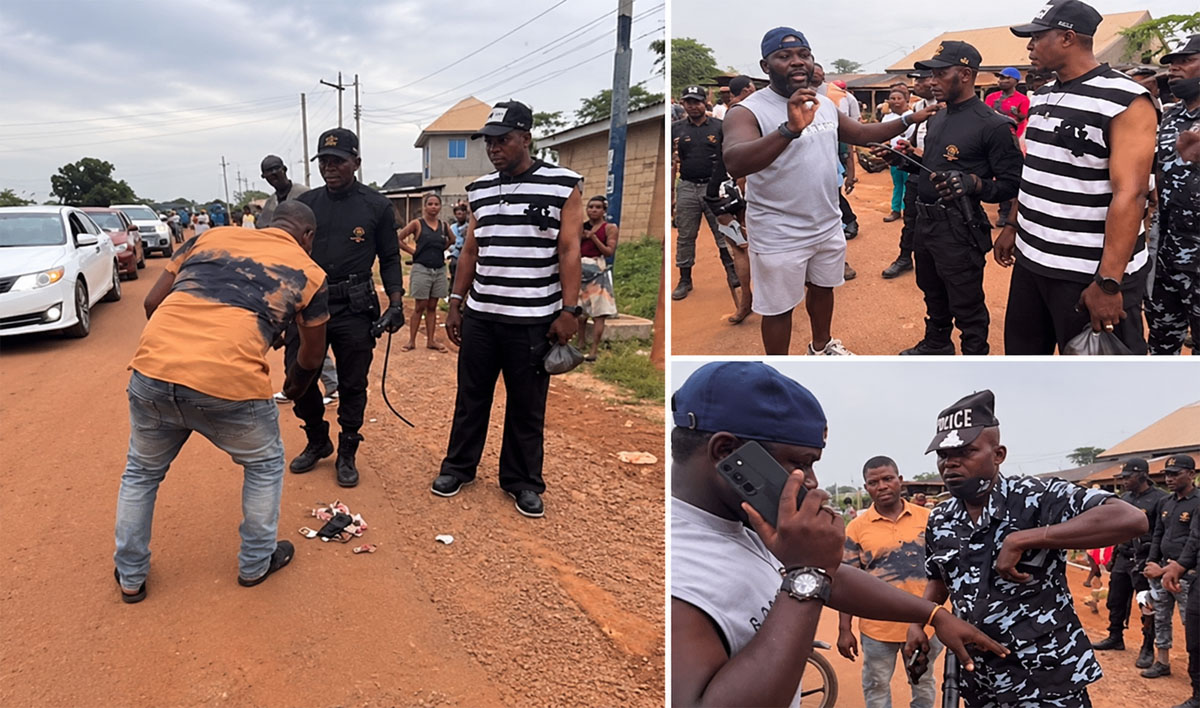
Tension erupted along the Auchi–Aviele Road in Edo State after a group of angry youths confronted policemen and members of the Vigilante Group of Nigeria (VGN) over allegations of extorting motorists and commercial motorcycle operators at a checkpoint.
A video of the confrontation, which circulated on social media on October 31, 2026, showed the youths challenging the security personnel, searching them and demanding an explanation for money allegedly collected from road users.
The youth leader claimed that the group recovered ₦4,200 from the checkpoint after discovering that the officers and vigilantes had allegedly collected money from commercial motorcyclists and other motorists within less than 30 minutes.
The confrontation, which was captured in the viral footage, involved armed police officers who were seen responding to the youths’ demands as they insisted on searching the personnel.
In one scene, the youth leader, dressed in shorts and a sleeveless shirt, directed members of his group to search one of the officers.
The policeman reportedly responded, “Nothing dey my body,” as he raised his hands to allow the search.
Another voice in the background was heard saying, “Hold on! Let them search youth.”
The officer was subsequently frisked, with the person conducting the search indicating that nothing had been found on him.
During the confrontation, a policeman believed to be leading the security team attempted to hand his mobile phone to the youth leader, apparently to enable him to speak with an unidentified person who could help resolve the situation.
READ ALSO:
- Lami Dawa: CAN Takes 14-Year Jail Sentence to Appeal Court, Borno Govt Reacts
- Hijab Controversy: MURIC Demands Suspension of Law School Exams, Threatens Peaceful Protests
- Breaking: Two Fresh Ebola Cases Emerge in North-East, says NCDC, begins test
However, the youth leader rejected the offer, shouting, “I no wan talk!” He subsequently struck the officer’s hand during another attempt to hand over the phone.
The youths later demanded that the policemen and vigilantes leave the checkpoint before moving to another location to explain their intervention.
Explaining the reason for their action, the youth leader said they had received information that security personnel stationed along the Auchi–Aviele Road were allegedly extorting motorists, passengers and commercial motorcycle operators.
He claimed that the group discovered that the officers and vigilantes had collected ₦4,200 from road users within less than 30 minutes of operating at the checkpoint.
“We found out that they had already collected ₦4,200 from bike men and others. I’m taking this money to the Area Commander,” he said.
The youth leader also called on the Edo State Commissioner of Police to investigate the alleged activities of the security personnel and establish whether their deployment to the checkpoint had been officially authorised.
He specifically mentioned the Divisional Police Officer (DPO) of Agbede Police Station, alleging that the policemen involved told the youths they were acting on the DPO’s instructions.
He further claimed that the vigilantes said they had been deployed by their superior in Aviele.
The youth leader questioned why security personnel assigned to protect road users would allegedly demand money from them while carrying out their official duties, particularly amid the economic difficulties facing many Nigerians.
He also argued that the amount allegedly collected within such a short period could have increased considerably if the checkpoint had remained operational for several hours.
According to him, the officers could have collected between ₦80,000 and ₦100,000 if they had continued operating at the location.
He maintained that the recovered ₦4,200 would be handed over to the Area Commander and urged the police authorities to investigate the allegations, including the claimed involvement of the Agbede DPO.
The incident has generated reactions on social media, with several Nigerians expressing concern over allegations of police extortion at checkpoints and demanding greater accountability from security personnel.
The circulating video has also renewed discussions about the conduct of officers at roadblocks and the need for effective supervision of personnel deployed to maintain security on major roads.
However, the allegations against the officers and their superiors have not been independently established, and the confrontation itself does not amount to proof of criminal wrongdoing.
As of November 1, 2026, there was no reported official response from the Edo State Police Command addressing the allegations or confirming whether an investigation had commenced.
The incident is likely to intensify calls for the police authorities to investigate the circumstances surrounding the checkpoint, establish whether any unauthorised collections occurred and take appropriate action if misconduct is established.
Edo Youths Chase Policemen, Vigilantes From Checkpoint Over Alleged Extortion
metro
Lami Dawa: CAN Takes 14-Year Jail Sentence to Appeal Court, Borno Govt Reacts

Lami Dawa: CAN Takes 14-Year Jail Sentence to Appeal Court, Borno Govt Reacts
The Christian Association of Nigeria (CAN) has confirmed that an appeal has been filed against the 14-year prison sentence imposed on Lami Samuel Dawa in Borno State, as fresh details of the court proceedings emerge and the state government says it is unaware of the circumstances surrounding the case.
The conviction has generated considerable controversy, particularly following reports that Dawa was sentenced to 14 years in prison for allegedly influencing a Muslim woman to convert to Christianity.
However, statements from her legal representatives and details reportedly contained in the court judgment suggest that the case involved more complicated allegations relating to the custody, movement and religious upbringing of a minor.
The development has prompted Christian organisations to call for caution, with CAN insisting that the legal process must respect the constitutional rights of everyone involved.
CAN President, Archbishop Daniel Okoh, said the association was concerned about the circumstances surrounding Dawa’s conviction and the reports linking the case to religious conversion.
He stressed that every Nigerian has the constitutional right to choose, practise or change their religion without coercion, intimidation or unlawful punishment.
Okoh said the association was monitoring developments and would pursue appropriate legal and institutional channels to ensure that the matter received proper attention.
The association also confirmed that an appeal had been initiated against the judgment, expressing the expectation that the appellate process would provide an opportunity for the issues surrounding the conviction to be properly examined.
READ ALSO:
- Breaking: Two Fresh Ebola Cases Emerge in North-East, says NCDC, begins test
- 2027 Presidency: Allah’s Will Must Prevail, Tinubu Declares in Makkah
- Rhodes-Vivour Tackles Lagos Government Over Threat to Seal Residents’ Boreholes
Dawa was sentenced to 14 years’ imprisonment by the Borno State High Court in Maiduguri on May 5, 2026. The judgment was delivered by Justice A.B. Kumdila in a case involving five defendants.
Although initial reports largely presented the matter as a religious conversion dispute, the account provided by the Christian Lawyers Fellowship of Nigeria (CLASFON), which represented Dawa and the other defendants, offered additional details about the prosecution’s allegations.
The chairman of CLASFON‘s Maiduguri branch, Ephraim Yidawi, cautioned against portraying the case as one in which a Christian woman was simply convicted for preaching Christianity to a Muslim who voluntarily changed her religion.
According to him, the charges included conspiracy to abduct a child, enticing a minor to leave parental custody, removing a child from her parents’ lawful custody, depriving the child of access to education and interfering with her religious practice.
Yidawi disclosed that the other four defendants were discharged and acquitted, while Dawa was convicted. He also confirmed that steps had been taken to challenge the judgment through an appeal.
Further details published by Muslim News Nigeria on November 1, 2026, indicated that the person at the centre of the case was a 16-year-old girl identified as Aisha Kabir Saleh.
The publication said it obtained a certified copy of the judgment, which reportedly showed that the case was heard under suit number BOHC/MG/CR/154/2025.
According to the account of the proceedings, the prosecution alleged that the defendants were involved in arrangements that resulted in the girl leaving her family home in Maiduguri and travelling to Christian institutions in Jos.
The girl reportedly told the court that she had converted to Christianity at the age of 13, while she was still a minor.
She further alleged that after returning to Maiduguri, Dawa encouraged her to leave her parents’ home again, provided her with a telephone and SIM card, and arranged for her journey to Jos.
The prosecution also alleged that she was instructed to change out of her school uniform before leaving and was given money for the trip.
These allegations formed part of the prosecution’s case and should be distinguished from the court’s specific findings against each defendant.
The charges reportedly covered conspiracy to abduct a child, enticing a minor away from parental custody, abduction and removal from lawful custody, deprivation of education, interference with the minor’s religious practice and conversion, as well as screening an offender and evidence.
Dawa’s conviction was reportedly linked to the offence of depriving a parent of the lawful custody of a child under Section 210 of the Borno State Penal Code.
The distinction is significant because the available accounts do not support reducing the entire case to a conviction for preaching Christianity or facilitating religious conversion.
The Pentecostal Fellowship of Nigeria (PFN) has also appealed for restraint in public discussions surrounding Dawa’s conviction.
The organisation’s National Secretary, Bishop David Bakare, said the fellowship had been informed about the development and was monitoring the situation.
Bakare cautioned that some accounts circulating on social media did not adequately reflect the circumstances of the case.
He urged Christians and other Nigerians to establish the facts and understand the court proceedings before reaching conclusions or making public statements capable of inflaming religious tensions.
He also welcomed the appeal process, expressing the fellowship’s intention to continue monitoring developments.
The PFN’s position underscores the need for religious organisations and the wider public to distinguish between the constitutional right to freedom of religion and separate allegations involving the custody and welfare of a minor.
Meanwhile, the Borno State Government has said it has no knowledge of the circumstances surrounding Dawa’s conviction.
The state’s Commissioner for Information and Internal Security, Usman Tar, reportedly made the clarification when contacted by journalists.
Tar described the matter as a technical and legal issue, indicating that he was not familiar with the case.
The government’s response comes amid growing public attention and calls for clarification over the circumstances that led to the 14-year prison sentence.
The controversy has renewed discussions about the relationship between religious freedom, parental custody and the protection of children under Nigerian law.
Section 38 of the 1999 Constitution guarantees freedom of thought, conscience and religion. The provision includes the right of individuals to change their religion or belief and to practise their faith.
Section 42 also prohibits discrimination against citizens on grounds including religion.
These constitutional protections have featured prominently in reactions to Dawa’s conviction, particularly among Christian organisations concerned about the implications of the case for religious freedom.
However, allegations involving the movement of a minor, parental custody, access to education and the circumstances surrounding a child’s religious upbringing raise separate legal questions.
The appellate court will have an opportunity to examine the conviction, the applicable provisions of the Borno State Penal Code and the arguments advanced by Dawa’s legal representatives.
For CAN and other Christian organisations, the immediate concern is that the appeal should receive proper legal consideration and that nobody should be punished unlawfully for exercising constitutionally guaranteed religious rights.
The case is therefore expected to remain in the public spotlight as Nigerians await further developments in the appeal and possible clarification of the legal issues surrounding the conviction.
Lami Dawa: CAN Takes 14-Year Jail Sentence to Appeal Court, Borno Govt Reacts
-
 metro2 days ago
Captured Bandit Exposes Alleged Military Arms Supplier, Claims Gang Collected ₦1bn From Two Customs-Linked Kidnappings
-
 metro1 day ago
Ogun Murder: Suspect Reveals How He Strangled, Macheted Retired Civil Servant Over N3.45m
-
 Politics1 day ago
2027: G100 Coalition Moves to Unite Opposition as Leaders Meet Cardinal Onaiyekan
-
 Africa2 days ago
Midnight Horror : Woman Slaughters Husband, Two Children, Escapes Murder Conviction
-

 metro2 days ago
‘You Must Treat Me With Respect’ – Oshiomhole Blasts Rufai Oseni During Heated Live TV Interview
-

 International1 day ago
Romance Scam: FBI Declares Nigerian Woman Wanted, Offers ₦6.7m Reward
-

 metro1 day ago
N100,000 Deposit: FG Opens Homeownership Window for Teachers, Nurses, Police Officers
-
 metro1 day ago
Ghanaian Teen Chased, Shot Dead on Way to School in New York