

International
US Navy Conducts Second Strike on Alleged Venezuelan Drug Boat
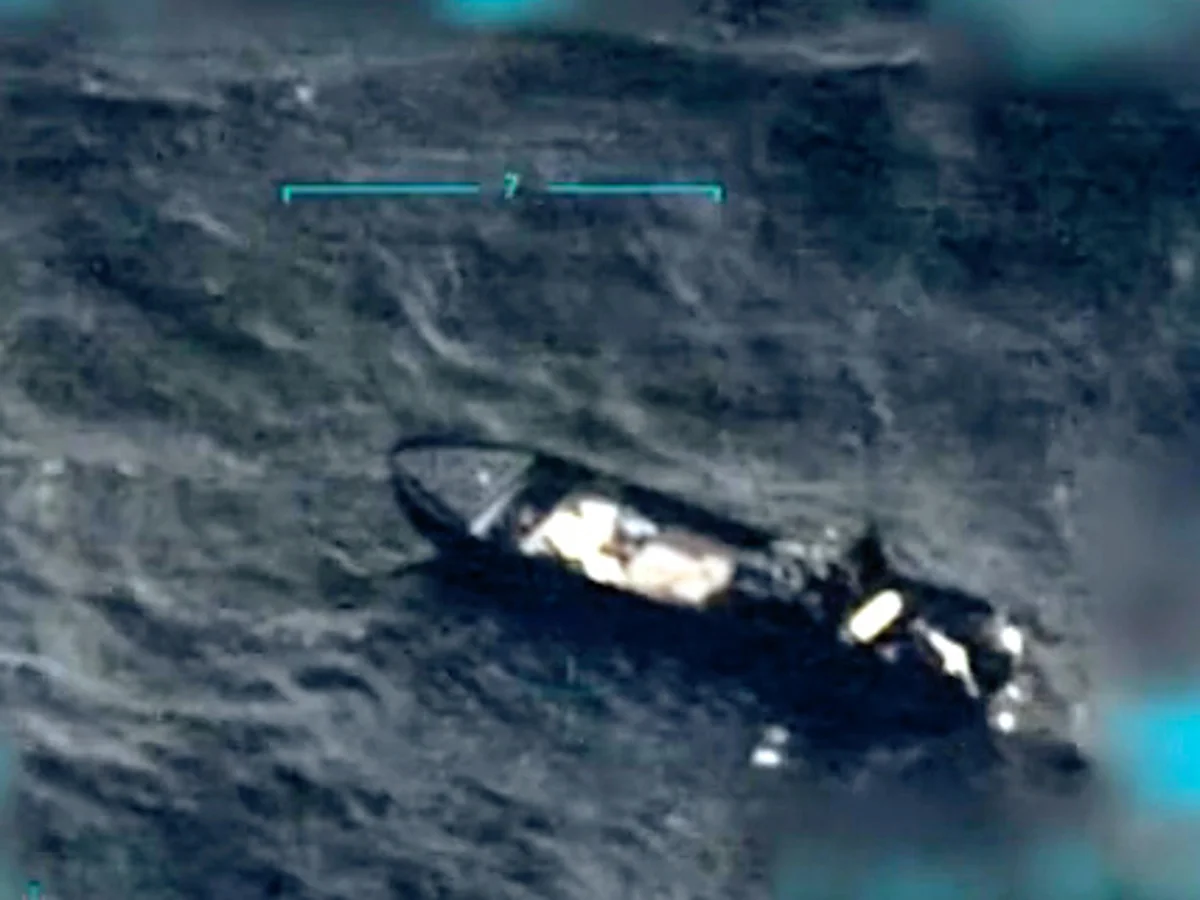
US Navy Conducts Second Strike on Alleged Venezuelan Drug Boat
The White House has confirmed that a top US Navy commander, Admiral Frank Bradley, authorised a second military strike on an alleged Venezuelan drug boat, following reports that two people survived an initial attack. Press Secretary Karoline Leavitt stated on Monday that Bradley acted “within his authority and the law,” and clarified that Defence Secretary Pete Hegseth did not order a “kill everyone” directive, contrary to media claims.
The second strike reportedly occurred after survivors clung to the burning vessel, prompting renewed concerns over the legality of US military operations targeting alleged drug-smuggling boats in international waters near Venezuela and Colombia. Over 80 people have been killed in these operations since early September, part of a broader US anti-narcotics mission in the Caribbean.
Both Republican and Democratic lawmakers have called for congressional reviews. The Senate Armed Services Committee, chaired by Senator Roger Wicker, said it will seek testimony from the admiral in charge, as well as audio and video evidence, to determine the exact nature of the orders. The House Armed Services Committee has also pledged a bipartisan investigation into the operation.
READ ALSO:
- Niger School Abductions: Ribadu Promises Swift Rescue, Cites US, UK, France Support
- Abbas Rejects SERAP Claim Linking Him to ₦18.6bn NASC Project Mismanagement
- Diaspora Nigerians Demand Urgent Reform of NIN, Passport Processing Systems
Experts have questioned whether the second strike could be considered legal under international law, highlighting protections for shipwrecked sailors or incapacitated combatants under the Geneva Conventions. The Trump administration maintains the operations are part of a non-international armed conflict against narco-terrorist groups, which it claims are subject to lethal targeting.
The strikes have further escalated tensions with Venezuela, with President Nicolás Maduro and the National Assembly condemning the attacks and pledging an investigation. US officials have accused Maduro of leading the Cartel of the Suns, an organisation allegedly involved in drug trafficking and terrorism, allegations Maduro denies.
In recent weeks, Trump has also discussed the potential deployment of US ground forces to Venezuela and reportedly pressured Maduro to resign during a phone call, offering him a safe departure under certain conditions, which were rejected. The escalating crisis has raised international concerns over the use of lethal force and the potential violation of humanitarian law in anti-drug operations.
US Navy Conducts Second Strike on Alleged Venezuelan Drug Boat
BBC







International
Outrage as Israeli Settlers Torch Mosque, Burn Vehicle in Occupied West Bank
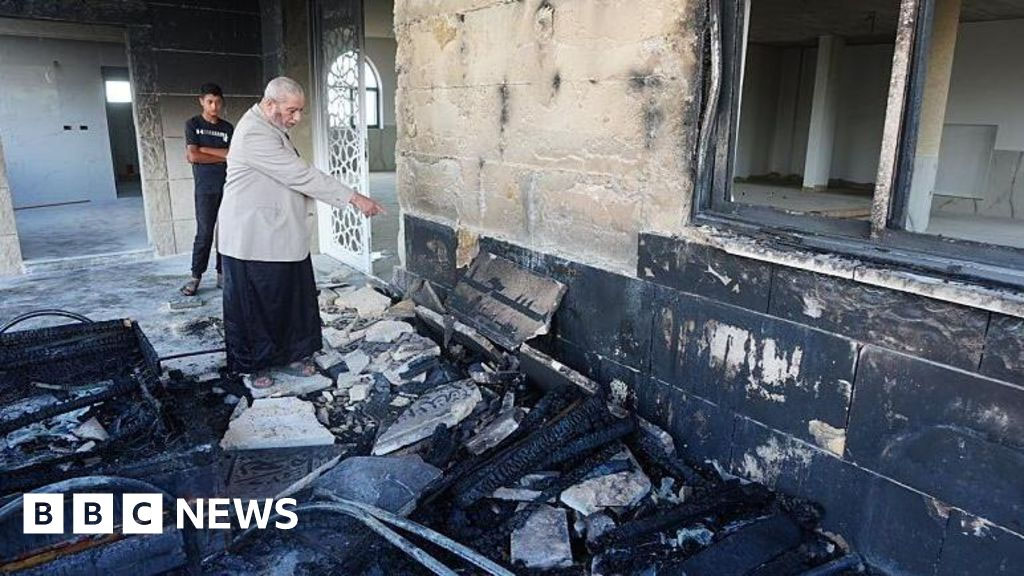
Israeli settlers have reportedly set fire to a mosque, a vehicle and an olive tree in a Palestinian village in the occupied West Bank, in an attack that has renewed concerns about violence against Palestinian communities and religious sites.
The incident occurred in the early hours of Wednesday, October 14, 2026, when a group of settlers raided Mikhmas, also spelt Mukhmas, northeast of occupied Jerusalem.
According to the Palestinian news agency WAFA, the Jerusalem Governorate reported that dozens of settlers entered the village shortly after midnight and set fire to a mosque and a nearby olive tree. A vehicle was also completely burned during the attack.
Reports from the scene showed damage to the mosque’s entrance. No injuries were reported in the initial accounts of the incident.
Mohammed Kanaan, a member of Mikhmas’ municipal council, told Anadolu Agency that the attackers set fire to a prayer room and a vehicle at about 2 a.m. local time. He said residents alerted the relevant authorities and requested the intervention of firefighting crews.
Reports also indicated that nationalist and racist slogans were spray-painted on the mosque and other buildings in the village. The extent of the damage and whether anyone had been arrested in connection with the attack were not immediately clear.
READ ALSO:
- Attempted Suicide: ‘If You Survive, We’ll Jail You’ – Akpabio
- Yamal Inspires Barcelona Comeback to Sink Osimhen’s Galatasaray
- Press Freedom: Judge Blocks Trump’s Ban on Three Major US Media Outlets
The attack adds to continuing concerns over Israeli settler violence in the occupied West Bank, where Palestinian residents have reported assaults, intimidation, property destruction and attacks on farmland.
The incident is particularly sensitive because it involved a Muslim place of worship. Religious sites and civilian property are protected under international humanitarian law, and deliberate attacks against them raise serious legal concerns.
The latest incident also comes amid the annual olive harvest, an important source of income for many Palestinian farming families. The Palestinian Colonization and Wall Resistance Commission said on Monday that it had documented 136 attacks linked to the olive harvest since the beginning of October. The reported incidents included beatings, intimidation, gunfire, theft of olives and farming equipment, and damage to trees.
The burning of the mosque in Mikhmas follows other reported arson attacks on mosques in the West Bank in recent months. In July, two mosques in the Palestinian villages of Qusra and Kour were set on fire following deadly clashes in the territory.
Reuters reported at the time that the Israeli military had confirmed evidence of arson and graffiti at the affected mosque sites and condemned attacks on religious places. The incidents prompted renewed calls for measures to prevent further attacks and hold those responsible accountable.
The wider situation in the Israeli-occupied Palestinian territory remains tense, with attacks by settlers and Israeli military operations contributing to insecurity for residents. Palestinian officials have repeatedly called for stronger protection of communities and accountability for attacks on civilians and their property.
The circumstances surrounding Wednesday’s mosque attack remain under investigation, and it was not immediately clear whether Israeli authorities had announced arrests or opened a formal inquiry.
The incident has once again highlighted concerns over the safety of Palestinian religious sites, homes and agricultural land, as calls grow for effective action against violence in the occupied West Bank.
Outrage as Israeli Settlers Torch Mosque, Burn Vehicle in Occupied West Bank
International
Press Freedom: Judge Blocks Trump’s Ban on Three Major US Media Outlets

Press Freedom: Judge Blocks Trump’s Ban on Three Major US Media Outlets
A federal judge in the United States has blocked President Donald Trump’s attempt to bar journalists from CNN, MS NOW and Politico from accessing the White House, ruling that the news organisations are likely to succeed in their legal challenge against the administration.
US District Judge Timothy Kelly, who was appointed by Trump during his first presidential term, issued a preliminary injunction on Tuesday, October 13, extending protections that allow reporters from the three media organisations to cover the president and his administration while the lawsuit continues.
The ruling found that the administration’s decision to revoke the journalists’ White House press credentials likely violated their constitutional rights to freedom of the press, free speech and due process.
The decision extends an earlier temporary court order issued on September 24, which required the administration to restore the reporters’ access after the media organisations challenged the ban.
Trump announced the ban on September 18, accusing the three outlets of publishing what he described as false and unfair reports about him and his administration. Journalists who attempted to enter the White House the following day were reportedly turned away, with their press credentials revoked.
CNN, MS NOW and Politico subsequently filed a lawsuit, arguing that the administration had targeted them because of their reporting and had unlawfully restricted their ability to cover the government.
The organisations maintained that the decision amounted to unconstitutional retaliation against journalists whose coverage displeased the president.
In his ruling, Kelly said the plaintiffs were likely to succeed not only on their due-process claim but also on their two First Amendment claims. The First Amendment protects freedom of speech and the press, while the Fifth Amendment provides due-process protections against arbitrary government action.
READ ALSO:
- Money Rituals: Four Arrested in Kwara Over Suspected Human Parts
- Osogbo Cultism Crackdown: Six Suspects Arrested as Police Recover Drugs, Charms
- 2027 Elections: INEC Reveals Why Pantami, Adebutu, Others Were Excluded
The judge also expressed concern that revoking the journalists’ credentials could discourage reporters and news organisations from publishing stories critical of the president.
Kelly noted that Trump’s public comments suggested the ban was intended, at least in part, to influence how the affected organisations reported on him.
The judge also questioned the administration’s reliance on national security as a justification for the restrictions, finding that the evidence presented did not adequately establish that security concerns motivated the president’s initial decision.
The White House had argued that reports published by the three organisations raised concerns about accuracy, professionalism and the disclosure of sensitive information. Government lawyers cited specific articles they said contained falsehoods or raised national security concerns.
However, the judge found that the administration had not sufficiently demonstrated that the initial revocation of the journalists’ credentials was based on national security grounds. He also raised concerns about the lack of advance notice before the journalists lost access.
The court’s decision does not amount to a final judgment on the entire lawsuit. Instead, the preliminary injunction preserves the journalists’ access while the case proceeds, unless an appellate court intervenes.
The ruling represents a setback for the administration’s effort to restrict access for the three news organisations. It also highlights the constitutional limits on the government’s ability to penalise media outlets over their editorial coverage.
The case has drawn wider attention to the relationship between the Trump administration and the US news media, particularly questions about whether government officials can restrict journalists’ access to official premises in response to unfavourable reporting.
Although presidents and news organisations have frequently clashed over coverage, the lawsuit raises a specific legal question: whether the government can revoke established press access because it objects to the content or viewpoint of a news organisation’s reporting.
Lawyers representing CNN, MS NOW and Politico welcomed the decision, arguing that the administration’s actions violated constitutional protections and threatened independent journalism.
The lawsuit will now continue as the parties pursue their respective legal arguments. The preliminary injunction allows the affected journalists to maintain White House access during that process, subject to any further court orders.
Press Freedom: Judge Blocks Trump’s Ban on Three Major US Media Outlets
International
French Students Return to Streets as Anger Over School Conditions Grows
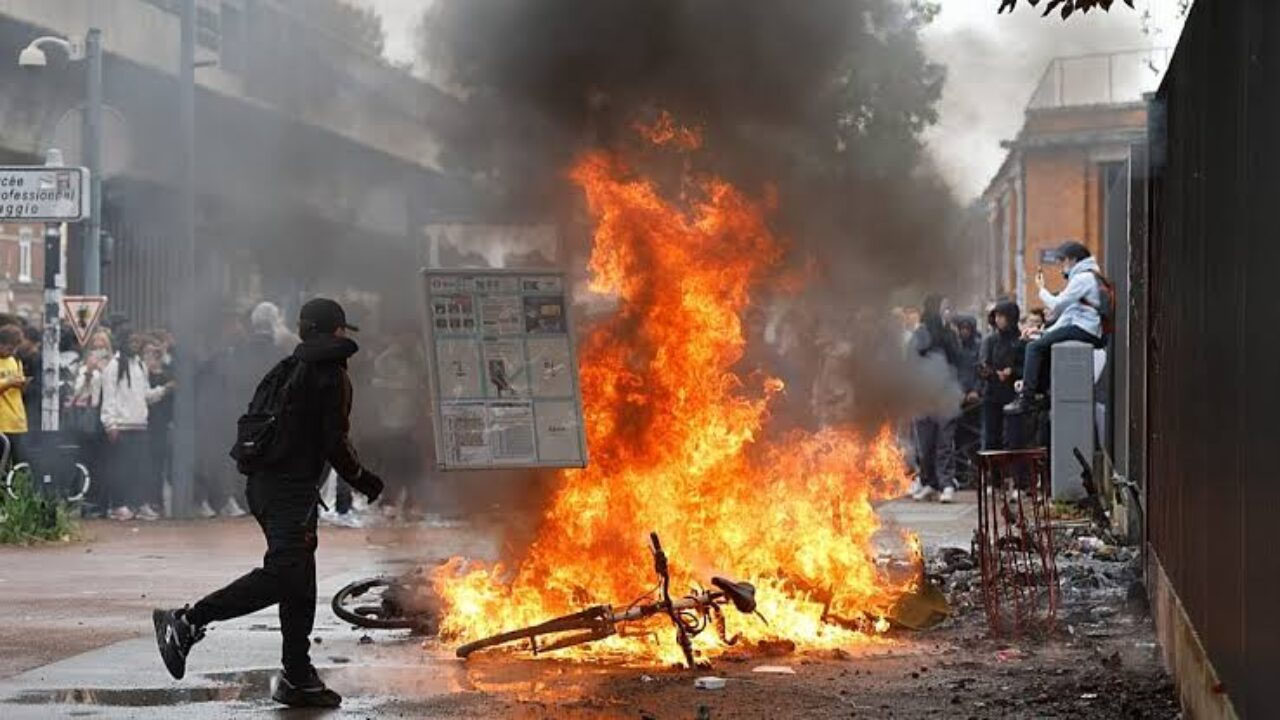
Students across France are preparing for fresh nationwide demonstrations on Tuesday, October 13, as growing frustration over poor school conditions, teacher shortages and inadequate education resources continues to fuel unrest.
The planned protests come after weeks of demonstrations, school blockades and confrontations with police, putting further pressure on President Emmanuel Macron’s government to address concerns over the country’s education system.
The movement, which began in September, has spread from individual high schools to cities across the country, attracting university students, education workers and trade unions in support of demands for improved learning conditions.
Student organisers have urged more young people, parents and workers to participate in the latest demonstrations, insisting that previous government assurances have not adequately addressed their concerns.
The protests have focused on underfunded schools, overcrowded classrooms, teacher shortages, deteriorating school buildings and unequal access to educational opportunities.
Students have also criticised the government’s handling of their demands, arguing that announcements of future improvements must be accompanied by concrete measures.
READ ALSO:
- Oyo School Kidnappings: How ANSARU Allegedly Used Children to Pressure FG
- Drama as Dutch Police Use Batons, Dogs to Shut Down Nigerian Wedding; Two Arrested
- LAWMA Deploying CCTV Cameras to Hunt Down Illegal Dumpers, says MD
The demonstrations have continued despite a government commitment to deploy 3,000 additional teachers to schools experiencing severe staffing shortages.
Education Minister Édouard Geffray announced the emergency recruitment and deployment plan last week, saying the additional teachers would be assigned to high-priority schools.
The government’s response followed discussions with student representatives, but protest leaders have maintained that the proposed measures do not go far enough to resolve the broader problems affecting schools.
The unrest intensified on October 8, when tens of thousands of people took to the streets across France. The Interior Ministry reported that approximately 71,500 people participated in demonstrations nationwide, including about 24,500 in Paris.
The protests were accompanied by clashes in several locations, with police using tear gas to disperse some gatherings. Authorities also reported arrests and injuries among demonstrators and security personnel.
On October 9, France’s Education Ministry said 141 high schools remained closed, either fully or partially, as a result of the movement.
The demonstrations have also drawn international attention. The United Nations human rights office expressed concern over incidents of violence linked to the protests and school blockades, calling attention to the need to protect the rights and safety of those involved.
Meanwhile, the French government has faced criticism over its handling of the unrest, including allegations of excessive force by security personnel. Authorities have defended the need to maintain public order while acknowledging the importance of addressing students’ concerns.
The crisis comes as France debates its public spending priorities and seeks to reduce its budget deficit. The government must balance calls for greater investment in education against pressure to control public debt.
The protests have therefore become part of a wider debate about public services, inequality and the opportunities available to young people.
With students preparing to return to the streets on Tuesday, the government faces renewed pressure to demonstrate that its promises will translate into meaningful improvements in classrooms across the country.
Student organisers have indicated that demonstrations could continue if their demands remain unresolved, leaving the authorities with the challenge of restoring normal school activities while addressing the concerns driving the movement.
French Students Return to Streets as Anger Over School Conditions Grows
-
 metro2 days ago
₦8.7bn Erosion-Control Budget Gap Raises Questions as Anambra Gullies Expand
-
 Politics2 days ago
Obi Positioning for SGF Role Under Atiku’s ADC Ticket – Sowore
-

 metro2 days ago
How Bandits Demand ₦300m Ransom for Abducted Kaduna Couple, Baby in Viral Video
-
 International3 days ago
US Names 24 More Nigerians in Fresh Fraud, Money Laundering Crackdown
-

 News3 days ago
OASIS Foundation Webinar: Physician Urges Healthy Living to Prevent Chronic Diseases
-
 metro2 days ago
Child Soldiers, Baby Factories: US Raises Alarm Over Official Complicity in Nigeria
-
 Africa3 days ago
Djibouti Boat Disaster: 139 Migrants Dead, Dozens Missing
-
 Politics2 days ago
Okonkwo Alleges Return of Subsidy, Accuses NNPC of Plotting Trillions in ‘Lost Profit’