

News
UNILAG set to hold 51st convocation
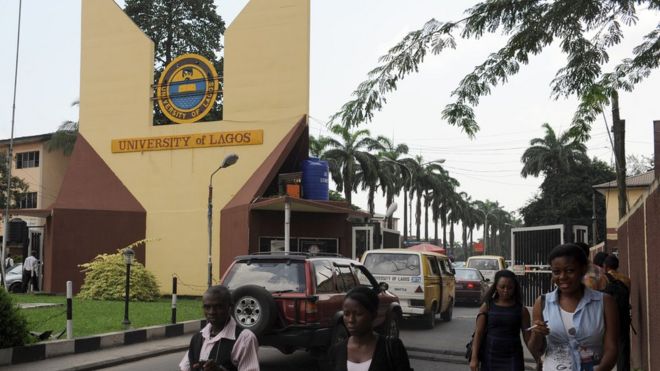
A pre-convocation press briefing to be addressed by the vice-chancellor, Oluwatoyin Ogundipe, would hold on June 30.
More than one year after the hopes of 13,489 fresh graduates of the University of Lagos (UNILAG), Akoka, to receive their honours were abruptly dashed as a result of the cancellation of the institution’s 51st convocation ceremonies, the institution has announced new dates for the ceremonies.
The cancellation, which followed the directive of the National Universities Commission (NUC) based on an instruction by the minister of education, Adamu Adamu, was announced on March 5, 2020.
The announcement came just 24 hours after the university’s vice-chancellor, flanked by the members of the management and senate of the institution, addressed a press briefing to announce the schedules of activities to mark the ceremonies.
The decision, which attracted public condemnation, was the climax of the frosty relationship between the Ogundipe-led university management and the governing council which was chaired by Wale Babalakin, an alumnus of the university and a lawyer.
But a notice issued on Wednesday by a principal registrar, corporate affairs office at the communication unit of the office of the vice-chancellor. Nonye Oguama, noted that a pre-convocation press briefing to be addressed by the vice-chancellor, Oluwatoyin Ogundipe, would hold on June 30, 2021.
Convocation cancellation
Since 2017 when Mr Ogundipe assumed office as the university’s 12th substantive vice-chancellor, the relationship between his management and the governing council led by Mr Babala has been frosty.
The relationship peaked in May, 2019, when the governing council set up an investigative committee to probe allegations of financial mismanagement, among others, against Mr Ogundipe.
There were queries and counter-queries between the two quarters leading to peaceful protests by workers’ unions on the campus.
The climax was when Mr Babalakin complained to the minister that the scheduled convocation ceremonies did not receive his blessings and urged the minister to halt the process.
But the university management said the same governing council approved the N70 million budget for the ceremonies, and countered the claim that it wasn’t carried along.
The workers’ unions on the campus, and particularly the university’s chapter of the Academic Staff Union of Universities (ASUU) also intervened and argued that the law governing the university puts the matter of convocation under the purview of the university senate, the management and the chancellor.
The union said the pro-chancellor, who is the governing council chairman, has no role to play in matters of convocation.
But in his reaction to Mr Babalakin’s complaint, the minister through the ministry’s permanent secretary, Sonny Echonu, wrote to the NUC, as the regulatory agency, to inform the university of its suspension order.
The University received a memo from the NUC on March 3, less than 24 hours after the VC’s pre-convocation press briefing, confirming the decision of the minister.
Many graduands, parents and well-wishers who had arrived Lagos from far distances including overseas ahead of the ceremonies, were disappointed by the last-minute action, and heaped the blame on the governing council.
Some national dailies including The Guardian, wrote editorials on the development, analysing the possible consequences of the action on the image and branding of the ivory tower.
The crisis eventually consumed the university’s governing council as President Muhammadu Buhari, in November, 2020, announced its dissolution and reinstated the then suspended vice-chancellor.
Varsity sends results to graduands
As a damage control measure, the university opted to send to each of the graduands a soft copy of the statement of results.
The decision, which was endorsed by the university’s senate, was aimed at assuaging the angry graduands and offered them an opportunity to own a document that could help in their career or further academic pursuits.
New date set
Apparently following the constitution of a new governing council, the university has said it is committed to covering the lost grounds.
“The coronavirus pandemic did a huge blow too, but without letting down the guard, we are prepared to reclaim the glory and return the university to the right path to excellence,” Mr Ogundipe said recently.
The university has, therefore, lined up series of activities to mark the aborted 51st ceremony, including exhibition and convocation lectures.
According to the notice by Mrs Oguama, the governor of the central bank of Nigeria, Godwin Emefiele, will on July 5, deliver the convocation lecture.
The event is scheduled to be chaired by the overseer of citadel global community church, Tunde Bakare.
“The congregation for the award of first degrees, diplomas, certificates and prizes to graduating students of the faculties of education, social sciences, arts, environmental sciences and science will take place in the morning and afternoon sessions on Tuesday, July 6,” the notice states in part.
The event is scheduled to end on July 8 with the congregation for the award of PhD, degrees and best PhD award of the school of postgraduate studies and conferment of honorary doctorate degrees, emeritus professorship and distinguished professorship.

News
FG to Give Students 100MB Free Data Daily From October 1
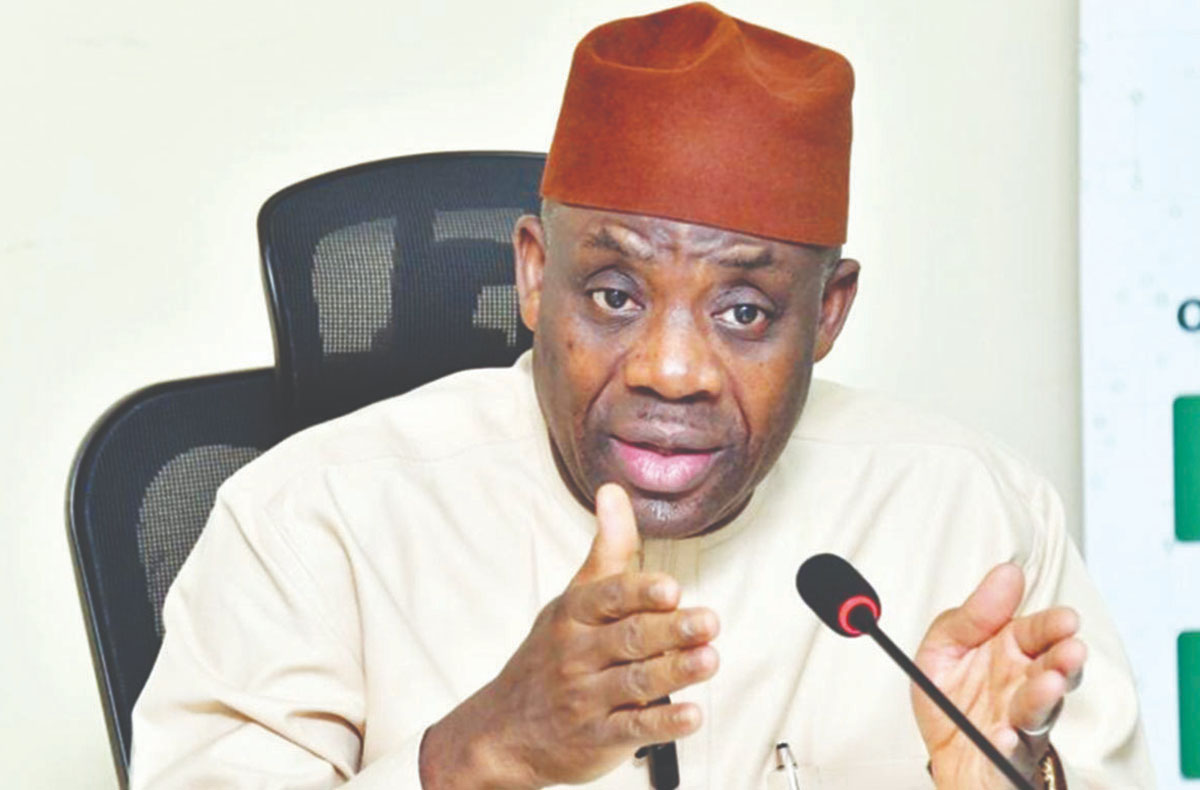
FG to Give Students 100MB Free Data Daily From October 1
ABUJA — The Federal Government has announced plans to provide Nigerian students with 100 megabytes of free data every day from October 1, 2026, to enable them access approved educational websites and digital learning platforms without paying data charges.
The initiative, known as the Zero-Rated Access to Educational Platforms and Content in Nigeria, is being implemented by the Nigerian Communications Commission (NCC) in partnership with the Federal Ministry of Education, telecommunications operators and other stakeholders.
Minister of Education, Dr Tunji Alausa, announced the commencement date on Thursday in Abuja at the launch of the initiative.
“Let me let out the secret. This will be made available to Nigerian students from October 1st, 2026,” Alausa said.
The minister said the programme would initially cover learners in public senior secondary schools and tertiary institutions, with plans to extend it to other categories of learners as implementation progresses.
Under the framework, participating mobile network operators (MNOs) will provide a daily 100MB zero-rated data allowance that students can use to access educational websites and digital platforms approved under the programme.
The allocation, however, is not unrestricted free internet data. It will apply to whitelisted educational platforms and websites approved by the relevant authorities.
Alausa said the initiative was designed to address the cost of internet access, which he identified as a major barrier to digital education, particularly for learners from low-income households.
“Our ambition must be that, ultimately, no Nigerian learner should be denied access to quality educational content simply because he or she cannot afford data,” the minister said.
He explained that removing data charges from approved educational resources could enable students to use mobile phones, tablets and computers as virtual classrooms and libraries, particularly where physical educational resources are limited.
READ ALSO:
- Two Arrested in London Over Suspected Links to Iran Intelligence
- Lagos Woman Jailed for Dumping Refuse in Drain During Rainfall
- Peter Obi’s Benue Convoy Blockade Raises Questions Ahead of 2027
The minister also said the government was working on measures relating to internet access for children below 16 years, with further details expected to be announced.
He stressed that online educational content made available to young people must be “appropriate, credible, safe and aligned with our educational objectives and our curriculum.”
Alausa said the Federal Government was also advancing the digitalisation of Nigeria’s education sector through initiatives including the Nigeria Education Data Infrastructure, Digital Nigeria Education Management Information System and the Learner Identification Number (LIN).
He disclosed that more than 240,000 schools had been geo-mapped and geolocated across the country.
The government is also digitising the Annual School Census to provide more accurate information on enrolment, teachers, classrooms, laboratories, libraries, connectivity and school safety.
According to the minister, better education data would help government improve planning, monitor developments and target interventions more effectively.
The NCC Director of Policy, Competition and Economic Analysis, Ayuba Shuaibu, said the commission and the Federal Ministry of Education would jointly determine the educational platforms that qualify to be whitelisted under the initiative.
He said eligible platforms would include learning management systems, digital libraries, educational repositories, teacher-development platforms, and technical and vocational training platforms.
“The framework also adopts the operator’s consult model for the initial rollout of the initiative. Under this model, a daily zero-rated data allowance of 100 MB will be provided by the participating MNOs for usage on approved websites and platforms,” Shuaibu said.
He explained that the initial rollout would provide zero-rated access to students in public secondary schools and public tertiary institutions, allowing them to use selected educational resources without incurring data charges.
The framework also contains requirements covering cybersecurity, consumer protection, child protection and data protection, while providing safeguards relating to net neutrality, fair competition and inclusivity.
NCC Executive Commissioner for Stakeholder Management, Rimini Makama, said millions of learners were unable to take advantage of digital learning platforms because of the cost of internet data.
She said the initiative was intended to ensure that a learner’s location or household income did not determine whether they could access educational content online.
“The Zero-Rated Access Initiative exists to erase that line. Its principle is simple: no learner should be shut out of educational content because of where they live or what their family earns,” Makama said.
She said the NCC, mobile network operators under the Association of Licensed Telecommunications Operators of Nigeria (ALTON), the Federal Ministries of Communications and Education and other stakeholders had undertaken research, benchmarking, testing and consultations before developing the framework.
Representing the Minister of Communications, Innovation and Digital Economy, Dr Bosun Tijani, at the event, Director of the National Frequency Management Council Secretariat, Adetunji Adeyemo, described the initiative as an important step towards making digital education more affordable and accessible.
He pledged the ministry’s continued support for programmes aimed at promoting digital inclusion, affordable connectivity and access to knowledge, particularly for learners in underserved communities.
NCC Executive Vice-Chairman and Chief Executive Officer, Dr Aminu Maida, said the initiative was about more than simply providing internet connectivity.
“It is not about providing connectivity; it is about giving people connectivity to gain knowledge,” Maida said.
He noted that the telecommunications industry was continuing to invest in network infrastructure and disclosed that operators had committed to upgrading about 12,000 network sites in 2026, with about 70 per cent already completed.
According to Maida, improving connectivity in unserved and underserved communities would be essential to ensuring that digital education initiatives reach learners outside major urban centres.
In his closing remarks, NCC Executive Commissioner for Technical Services, Abraham Oshadami, identified MTN Nigeria, Airtel Nigeria and Globacom among the major mobile network operators supporting the programme.
He thanked the operators for their commitment to providing the data allowances required for learners to access approved educational platforms.
The initiative follows earlier consultations by the NCC with telecommunications operators, education authorities, digital learning providers and other stakeholders on ways to reduce the cost of accessing educational content online.
The commission had previously said that the high cost of data remained one of the challenges limiting digital learning and educational technology adoption in Nigeria.
With the October 1 rollout, the government hopes to remove at least part of that financial barrier for students in public senior secondary schools and tertiary institutions.
However, students will only be able to use the 100MB daily allowance on educational websites and platforms approved under the scheme. The initiative does not amount to 100MB of unrestricted free internet that can be used for social media, streaming, messaging or other general online activities.
The government and the NCC are expected to monitor the rollout, usage and impact of the programme as they work towards expanding digital inclusion and access to quality educational content across Nigeria.
FG to Give Students 100MB Free Data Daily From October 1
News
Agunbiade fires back at Deji Yesufu: Don’t mistake Boko Haram for Islam
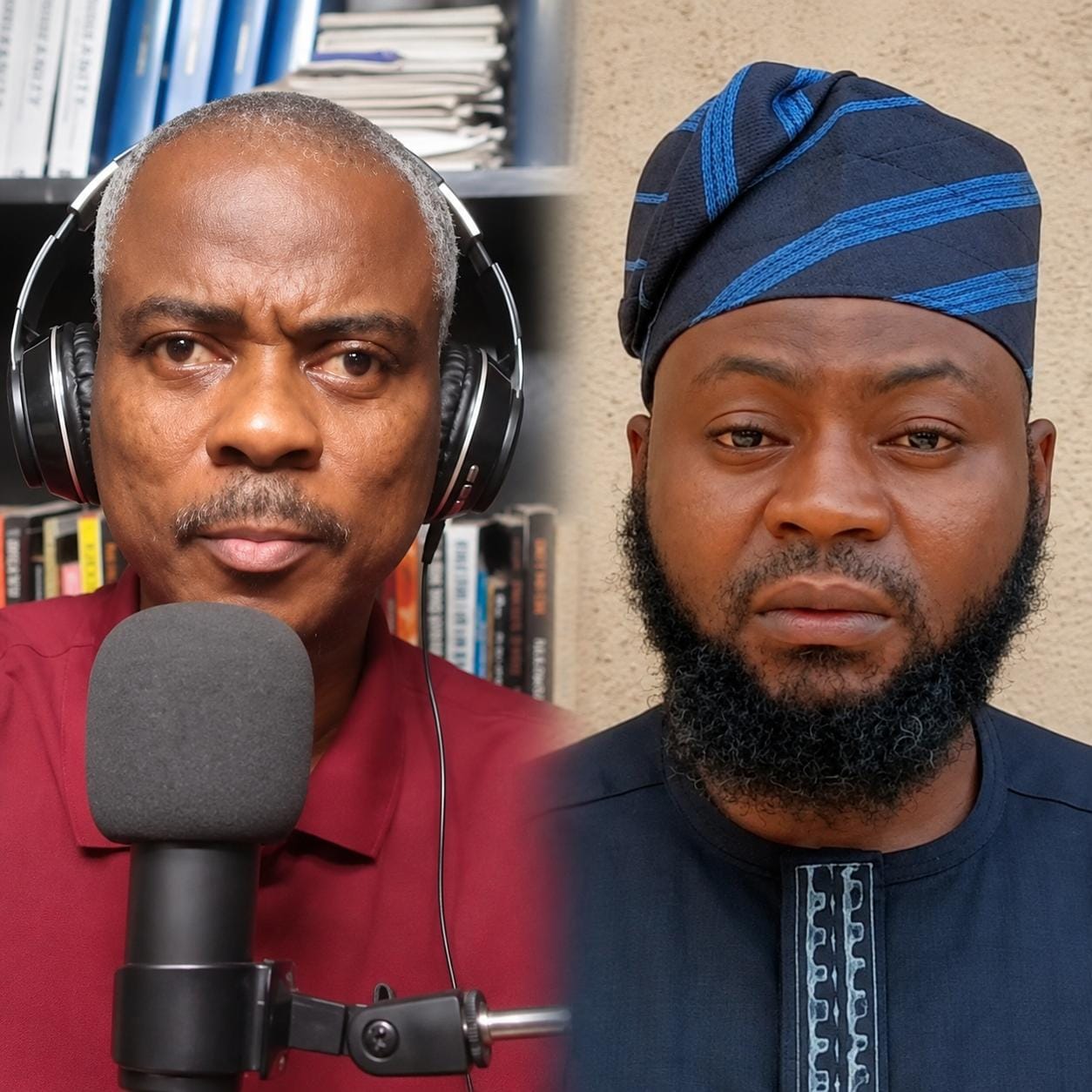
Agunbiade fires back at Deji Yesufu: Don’t mistake Boko Haram for Islam
• Says ‘Islam began with Iqra, not ignorance’
• Rejects claim Muslims use taqiyyah to deceive Christians
• Defends peaceful practice of Shari’a in Oyo
• Says Nigeria belongs equally to Muslims, Christians
An Islamic scholar and member of Rabwa Islamic Propagation, Riyadh, Saudi Arabia, Mallam Ibrahim Agunbiade, has fired back at Deji Yesufu over his recent commentary on Islam, warning against using the activities of Boko Haram and other extremist organisations to define the religion.
Agunbiade, in a strongly worded response issued on Thursday, said equating Islam with terrorism amounted to what he described as a dangerous distortion of the religion.
He said while he welcomed Yesufu’s call for dialogue and peaceful coexistence, he disagreed with what he regarded as the attempt to portray Islam through the actions of violent groups that had “abused the name of Islam.”
The response followed Yesufu’s write-up titled, “Islam: An Open Letter to Edmund Obilo.”
Agunbiade argued that the proper way to understand Islam, the Qur’an and Shari’a was through knowledge, context and intellectual honesty, rather than through the activities of extremist organisations.
“Boko Haram does not represent Islam, and terrorism cannot be used as the standard by which Islam is judged,” he declared.
‘Islam began with Iqra, not ignorance’
Taking his argument to what he described as the foundation of Islam, Agunbiade pointed to the first revelation received by Prophet Muhammad, saying the first command from Allah was Iqra—“Read”.
Quoting Qur’an 96:1, he said, “Read in the name of your Lord who created.”
He also cited Qur’an 39:9, where Allah asks whether those who possess knowledge can be equated with those who do not.
Agunbiade said the emphasis was significant because Boko Haram had become notorious for violence associated with hostility towards Western education.
“How, then, can an organisation associated with attacking schools, teachers and education be presented as the authentic Islam whose first revealed command was Iqra?” he asked.
He added: “Islam began with Iqra, not ignorance. It began with knowledge, not the destruction of schools.”
READ ALSO:
- Breaking the Cycle of Collective Guilt: When a Ruling Party Voice Backs Peter Obi
- Ahead of Dry Season Surge, NCDC Urges Proactive Measures Against Lassa Fever
- One Killed, Two Rescued as Two-Storey Building Collapses During Demolition in Lagos
According to him, Boko Haram should be understood as a violent extremist organisation and not as the embodiment of Islamic teachings.
‘Don’t rip Qur’an verses out of context’
The Islamic scholar also took aim at the use of selected Qur’anic verses to portray Islam as inherently hostile to Christians and Jews.
He specifically referenced Qur’an 5:51 and 9:29, arguing that presenting the verses as blanket commands for Muslims to hate or kill Christians and Jews ignored the historical and textual circumstances surrounding them.
Agunbiade urged critics of Islam to approach the Qur’an as a complete text rather than extracting individual verses and presenting them in isolation.
He pointed to Qur’an 2:256, which states that there is “no compulsion in religion”, as well as Qur’an 60:8, which instructs Muslims to act kindly and justly towards those who do not fight them because of their religion.
He argued that such verses demonstrated the need to examine the Qur’an within its broader context.
According to him, the same principle should apply to hadiths dealing with Jews and Christians.
He said a hadith relating to a specific historical conflict, territory or circumstance should not automatically be transformed into a universal instruction governing peaceful Muslim-Christian relations in contemporary Nigeria.
Agunbiade rejects ‘taqiyyah’ deception claim
The scholar also rejected the claim that Muslims practise taqiyyah as a general religious licence to deceive Christians and other non-Muslims.
He described the claim as a serious misrepresentation of the concept.
Agunbiade explained that taqiyyah had a particular theological and historical context, especially within Shi’a thought, relating to concealment of faith under persecution.
He therefore challenged the portrayal of taqiyyah as a universal Islamic doctrine authorising Muslims to lie to Christians.
‘Millions of Muslims live peacefully with Christians’
Agunbiade further dismissed the argument that there was no such thing as a moderate Muslim.
He said the daily reality of Nigeria contradicted such a claim.
According to him, millions of Muslims and Christians across the country work together, trade together, attend schools together and live as neighbours without allowing their religious differences to degenerate into violence.
He argued that judging an entire religion by the actions of extremists was fundamentally unfair.
“To label all Muslims as potential extremists because some criminals claim Islamic justification for their crimes is no more reasonable than judging Christianity by the actions of every violent person who claims to be a Christian,” he said.
‘Iran, Hamas, Hezbollah, Houthis are not Islam’
Agunbiade also cautioned against lumping Iran, Hamas, Hezbollah and the Houthis together as if they represented Islam as a whole.
He said the Muslim world comprised different schools of thought, political systems, cultures and movements.
He argued that Hamas, Hezbollah and the Houthis had different histories, political objectives and circumstances and should therefore be assessed individually.
He, however, drew a line at attacks on innocent civilians.
“Most importantly, deliberate attacks on innocent civilians cannot be justified by Islamic principles, regardless of who commits them,” he said.
‘Shari’a is not being introduced into Oyo’
The scholar also challenged concerns over the alleged “introduction” of Shari’a into Oyo State.
Agunbiade insisted that Shari’a was not new to the state, arguing that Muslims had practised aspects of Islamic law peacefully for decades.
He cited the existence of a Shari’a arbitration panel at Oja’Oba Central Mosque in Ibadan, where, according to him, Muslims voluntarily take disputes for resolution according to Islamic principles.
He said such voluntary religious arbitration should not be confused with terrorism or extremist activity.
“This is not Boko Haram. It is not terrorism. It is peaceful religious dispute resolution,” he stressed.
Agunbiade also pointed to Section 275 of the 1999 Constitution, which provides for the establishment of a Sharia Court of Appeal in a state subject to the constitutional requirements.
He said discussions about Shari’a should therefore be separated from discussions about terrorism.
According to him, Muslims, like Christians, are entitled to practise their religion within the provisions of Nigerian law.
‘Nigeria is not the property of one religion’
Agunbiade also rejected any suggestion that Nigeria’s development could be credited to one religious community.
He declared that Nigeria belonged to all Nigerians, regardless of religious affiliation.
He said Muslims and Christians had contributed significantly to the country’s development in education, medicine, law, politics, business, science, agriculture, security and public service.
The scholar maintained that the country’s problems would not be solved by turning Muslims against Christians or Christians against Muslims.
Instead, he urged Nigerians to unite against corruption, insecurity, poverty, injustice, poor governance and extremism.
‘Condemn Boko Haram, not Islam’
Agunbiade ended his response with a call for religious tolerance and responsible public discourse.
He said Nigerians must learn to distinguish between a religion and individuals or organisations that commit crimes while claiming religious justification.
“Let us condemn Boko Haram without condemning Islam.
“Let us oppose terrorism without demonising Muslims.
“Let us defend Christians without portraying Muslims as their enemies.
“Let us defend Muslims without excusing criminals who misuse the name of Islam,” he said.
He urged Nigerians to approach sensitive religious issues with knowledge, context and intellectual honesty.
Returning to the first revelation of the Qur’an, Agunbiade said Iqra should serve as a guide for contemporary debates about Islam.
“The first command of the final revelation was Iqra. Read. Let that command guide our discussion of Islam,” he said.
He added: “Nigeria needs knowledge, justice, dialogue and mutual respect. It does not need religious caricature.”
Agunbiade’s position, he said, was ultimately a call for Nigerians to reject religious stereotyping and choose dialogue over confrontation in addressing differences between the country’s two major faith communities.
Agunbiade fires back at Deji Yesufu: Don’t mistake Boko Haram for Islam
International
Truly Depraved Rapist Jailed for 17 Years After Violent Attack on Woman
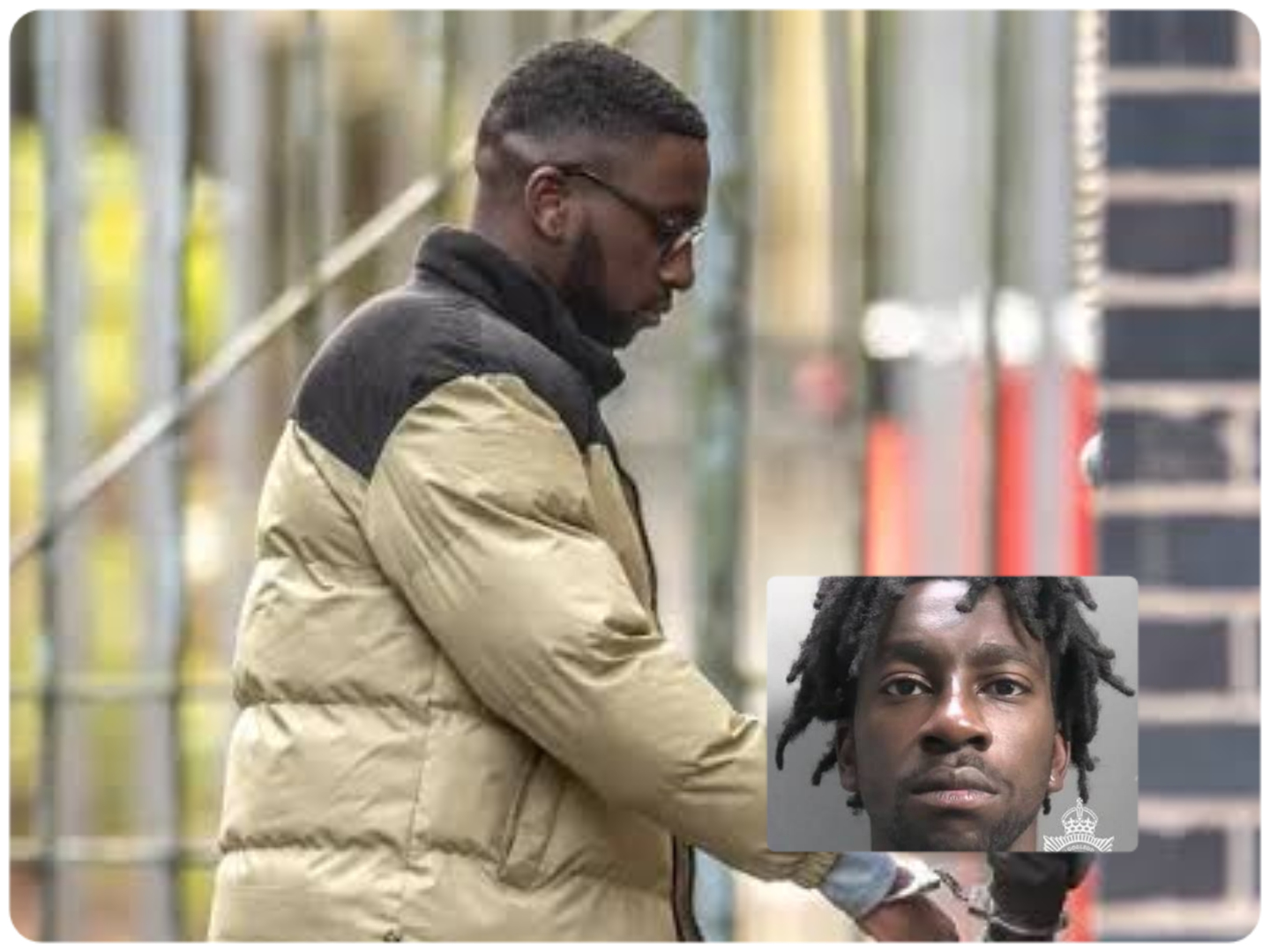
A 24-year-old Nigerian national, Gift Oladele, dragged a young woman into woodland and violently raped her has been jailed for 17 years after a judge described his actions as “truly depraved”.
Gift Oladele carried out the attack in Wrexham, North Wales, in September last year after approaching the victim, who was 19 at the time, as she walked home from a night out.
Oladele was convicted of rape and sexual assault at Mold Crown Court in March. He was sentenced on Thursday.
How the Attack Happened
The court heard that Oladele approached the woman and her friends outside a takeaway in Wrexham city centre. He initially appeared friendly and flirtatious before offering to walk home with her.
According to prosecutor James Coutts, Oladele accompanied the woman until they reached an isolated area, where he grabbed her by the mouth and forced her into the woods.
He then carried out a violent rape.
“She described being terrified,” Coutts told the court. “She did what she thought she needed to do to get through the attack.”
Oladele threatened to find and harm the victim if she reported the rape. He also threatened to take photographs of her and post them online.
Despite the threats, the woman returned home and immediately told her parents, who contacted the police.
Oladele was arrested the following day at his cousin’s home in Wrexham. Officers said he had attempted to hide a mobile phone, which contained searches relating to sexual attacks.
The court heard that Oladele had a “fascination in forced sexual abuse and rape” and that he appeared to be acting out a fantasy shown in the videos he had searched for.
Victim Describes Lasting Trauma
In a victim impact statement, the woman told the court that she continued to wake up from nightmares in which Oladele had tracked her down.
“I’m petrified,” she said.
She also described taking medication to prevent HIV infection after the assault and suffering long-term emotional and psychological effects.
“I feel ashamed, and somehow damaged, since what he did to me,” she said.
“The emotional impact has been very significant.
“I can’t go anywhere on my own anymore.
“I feel unsafe.”
Judge Simon Mills praised the woman for her courage during and after the attack.
“You showed exceptional courage during the incident and afterwards,” he told her.
Previous Conviction and Deportation Appeal
At the time of the Wrexham attack, Oladele was already on bail over another rape allegation in Manchester dating from November 2024.
He had also been jailed in 2022 for a sexually motivated attack.
The court heard that Oladele was later due to be deported to Nigeria but successfully challenged the decision on human rights grounds.
An immigration tribunal judge described the deportation case as “finely balanced”, acknowledging the seriousness of Oladele’s previous offence and the public interest in deporting foreign criminals.
However, the tribunal also considered his ties to the United Kingdom, where he had grown up, and the consequences of relocating to Nigeria.
The Home Office made two attempts to appeal the decision, but both appeals were rejected.
Judge Calls Defendant Dangerous
During sentencing, The Judge described Oladele’s actions as “truly depraved”.
“You subjected her to a terrible violation,” he said.
“You are a dangerous offender.”
The judge said Oladele posed an exceptionally high risk of harm to young women and had shown “absolutely no remorse whatsoever”.
The Home Office described the case as horrific and said Oladele’s imprisonment was the right outcome.
The victim’s account has highlighted not only the brutality of the attack but also the lasting fear and emotional damage that sexual violence can cause long after the offender has been convicted.
-

 Politics2 days ago
Why Did Peter Obi Attend Seyi Makinde’s Campaign Launch? Here’s What He Said
-

 News2 days ago
Lagos Moves to Slash Agency Fees, Curb Rent Hikes With New Tenancy Bill
-
 metro3 days ago
Catholic priest leaves priesthood, weds Kenyan woman after 12 years in Kenya
-
 metro3 days ago
El-Rufai Demands ₦10bn from Defence Minister Over Southern Kaduna Killings Allegation
-
 Education2 days ago
FG opens six-month teacher certification for BSc, HND, ND holders – How to Apply
-
 metro2 days ago
Osun Police Arrest Woman After Vigilante Member Dies During Sexual Encounter in Ile-Ife
-

 Politics13 hours ago
Amaechi will be caged politically, Wike shouldn’t bother about Ikwerre votes — Wihioka
-
 Politics9 hours ago
Remi Tinubu Appeals To South-East Voters, Says She Wants To ‘Enjoy Nigeria’ In Old Age